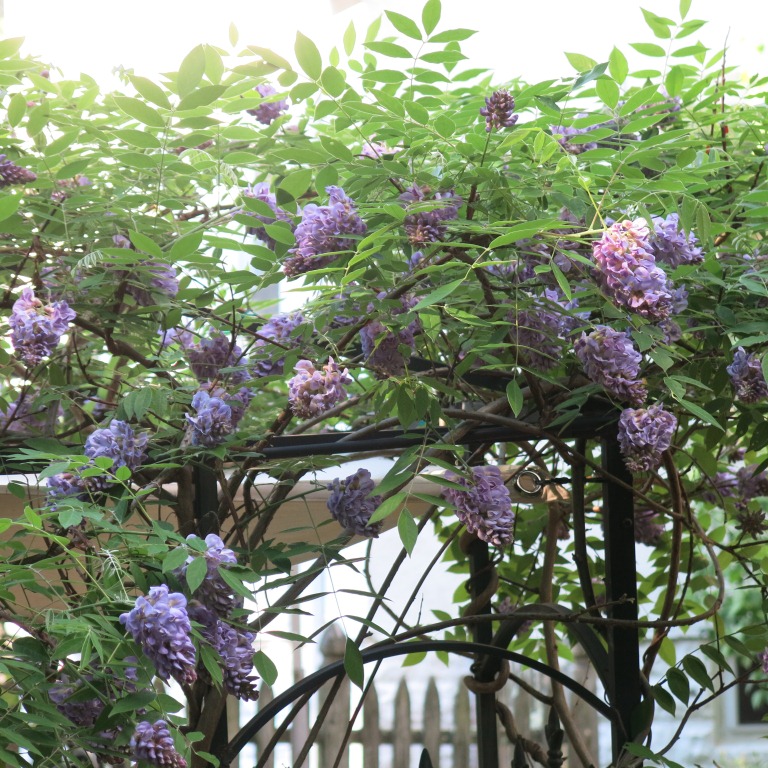
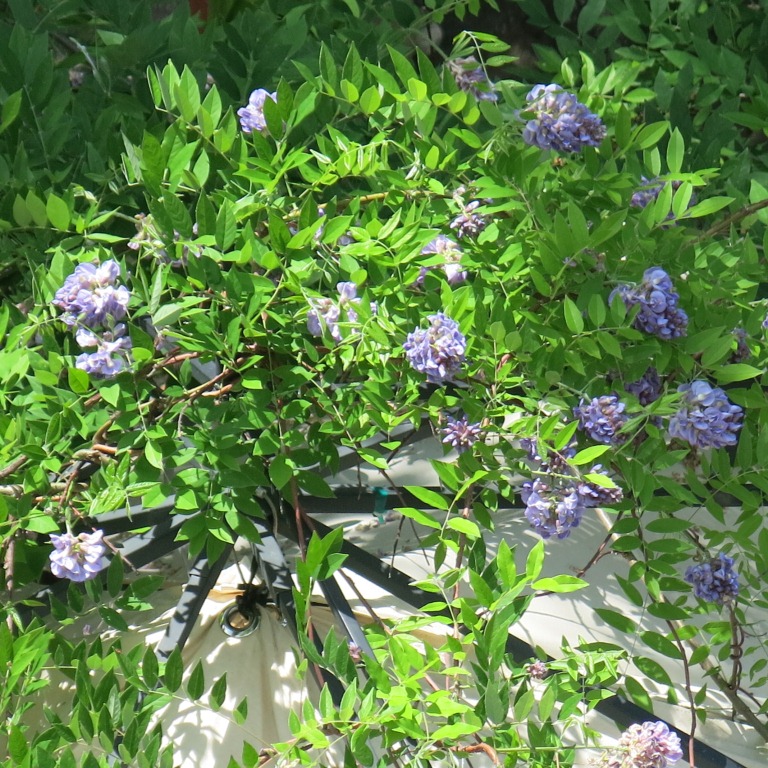
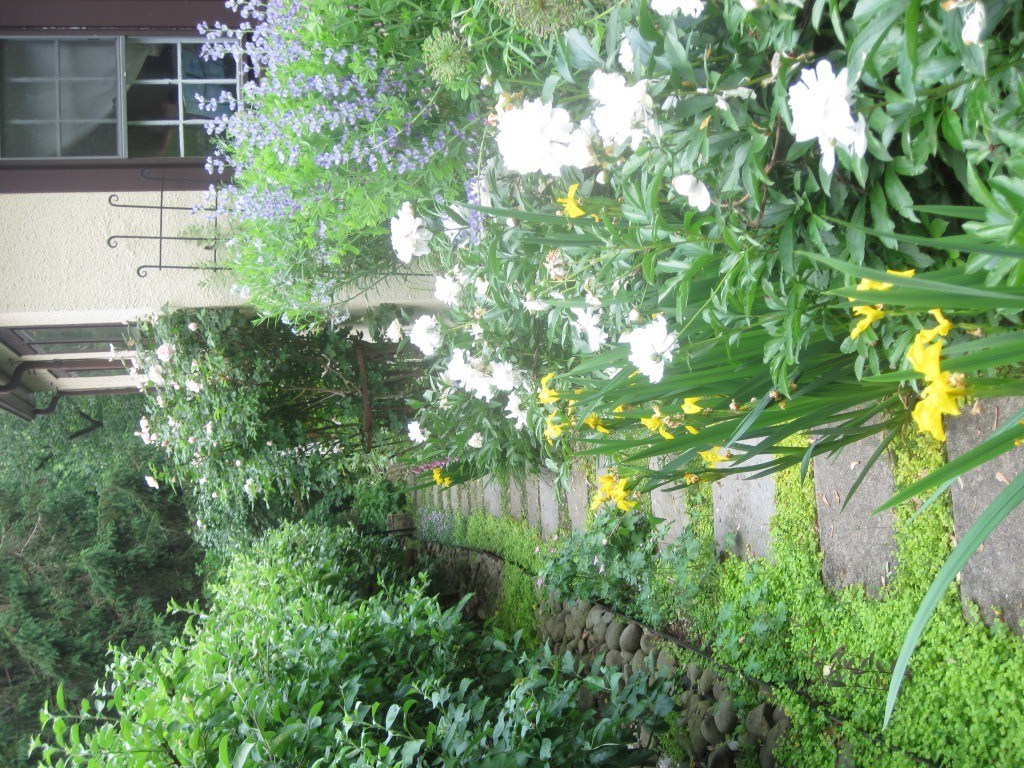
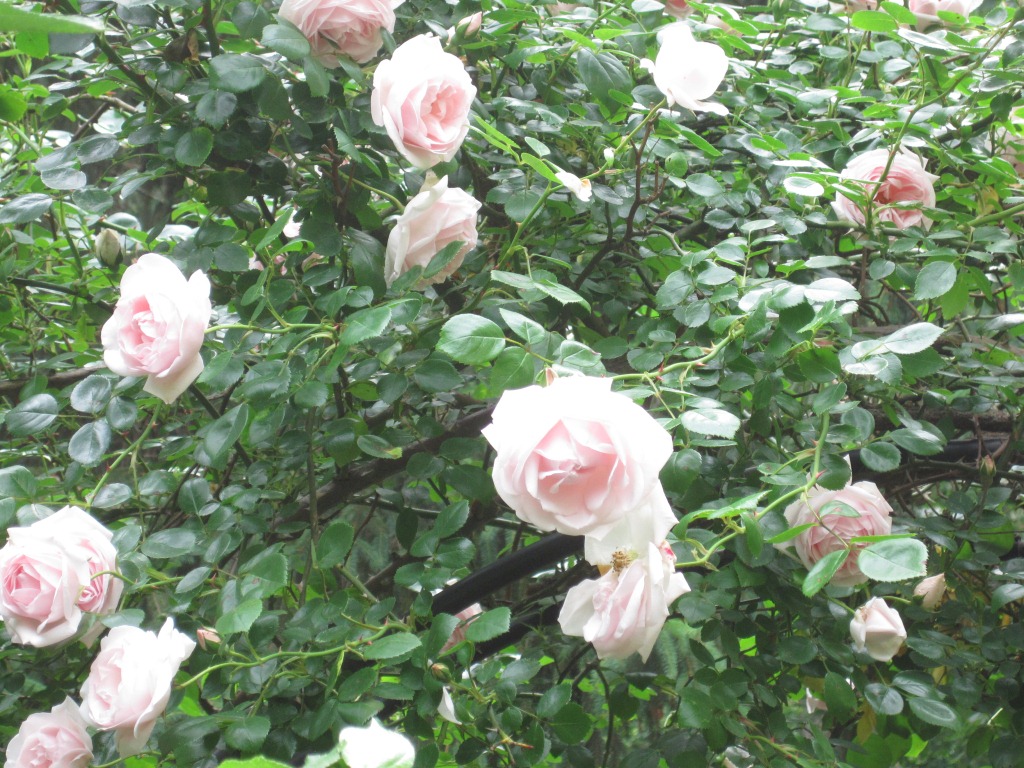
View Finder

IMG_3000It has been a challenging winter. Even though spring is a mere two weeks away, it will be a while before the deep snow has melted and fresh earth will emerge in sight. At this point, staring at the white expanse has become tiresome – is there anything living underneath? I’ve certainly been doing my share of staring.

Given our severe winters, the landscape is prone to being inundated by snow. While one may read about resisting cutting back plants such as ornamental grasses and other perennials in the autumn and keeping them to adorn the winter scenery as well as provide food for the birds, the reality is that they will be buried quite early by snow. Nothing will be visible enough to serve any purpose. Come spring, there will be the unpleasant chore of clearing the sodden mess.

Instead, I’ve found that the hardscaping and trees play a prominent part in relieving the monotonous white of winter. Different elements can be incorporated to give depth, interest and visual texture in the garden. Now is the right time to consider what we can add – treat the snow like a blank canvas!

In general, these elements are important through all the seasons but I’m going to focus on some points just for this snow burdened season. So we can feel that much more excited about the scenery.

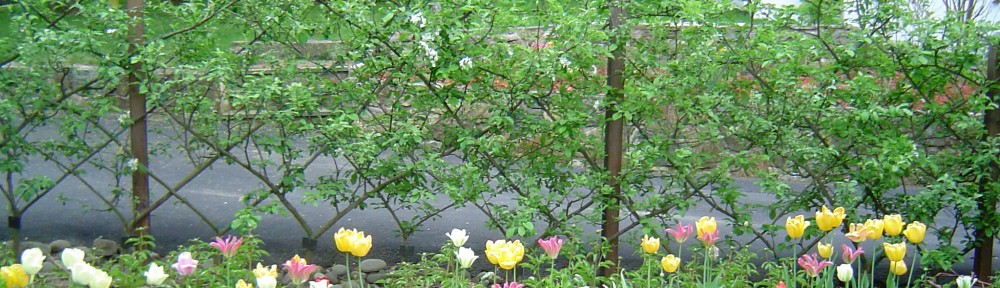
Boundaries can be well used to make a winter-scape alive with pattern and shapes. Depending on the height and material used, snow will reveal new designs and direct our eyes to look at the familiar in a new way. Ironwork seems obvious – the curls and swirls will work nicely against the snow. But even humble wooden fences can rise to the occasion. Hedges take on unique organic shapes that imitate mounds and bluffs under thick coverings of snow. Undulating forms present artful chiaroscuro.If you can, consider your boundaries – while they are meant to contain and limit, they can have other expansive uses.

If one is fortunate to have a pond or stream on the property, then the feature guarantees an escape from monotony. Reflections on the water, visiting wildlife, icy sculptures formed by the wind on the water and the sounds of water freezing and thawing all contribute to making such an ecosystem a world unto its own. To enjoy them in winter, make sure they are visible from the house and somewhat accessible to walk to even if one needs to wear snowshoes. A stroll to the water can be a part of a mindful, meditative practice. A quick getaway from the busyness of our days.

There are many choices of trees and shrubs that provide year round interest. Their shapes, the colors and patterns of bark, deciduous or evergreen, are all factors to take into account. When planting in spring or fall, factor in how you’d like to enjoy the view in winter and situate them accordingly. It will upgrade your cold season vista.

Gates and railings also enhance the snow-scape. From ornate designs traced by the snow to more modern shapes, these seemingly dismissive elements can add just the right flourish.

Sunlight, whilst not particularly in ones power to regulate, casts stunning shadows and designs on the snow. A humdrum expanse can be transformed to stunning by sunshine. Take this into your plans when installing any of the elements mentioned above. The contrast of dark shapes and shadows against the pristine white is pure drama.

Finally, something as simple as a bird-feeder or two will bring to life any garden. The avian activity will entertain as much as they will add beauty whilst serving the birds much needed sustenance. Boring will be a forgotten word.

We cannot predict if this winter is a sign for future winters to come but, at least we can be creative about how we cope no matter what. With grace, beauty and forethought.
IMG_7865
IMG_7863
IMG_2392
IMG_2393
IMG_2395
IMG_0234
IMG_0398
IMG_0447
IMG_8274
IMG_1389
(c) 2015 Shobha Vanchiswar
[do_widget “Blog Subscriptions (Jetpack)”]

Spring Dreams

It is SO cold in the northeast! A banner winter. Today, the streets are sparsely populated because who in their right mind would venture out without very good reason? Even the birds are laying low. Somewhere safe and cozy I hope. As the wind blows the snow into a mad frenzy, my housebound self is working to keep calm with visions of spring.

The hyacinth bulbs cooling in the refrigerator since early November, have been brought out. Sitting pretty in their jewel-hued glass forcing vases, they’re a sight to please anybody. Each day I glimpse a teensy bit more of the sap green, arrow-like tips emerging. Does my heart a world of good.
Meanwhile, the assorted amaryllis are still going strong. They are so well worth the investment I made last fall. Since late December, I’ve been enjoying their blooms and they are not even close to being done yet. Apart from keeping me in good spirits, their exuberance often serves as muse to my art.
It isn’t only the flowers that bring so much joy. The very anticipation of them as I observe daily the emerging buds and leaves is absolutely life affirming. So full of promise and beauty. I sincerely hope you too are celebrating your days with such living treasures.

Feeling buoyed by the springlike atmosphere indoors, my thoughts naturally drift to the possibilities outside. Nothing big is planned as other non-horticultural happenings take priority this year. The modestly sized garden is already intensively planted but as we all know, there is always room for a few more. So, I’ve ordered a blueberry bush that seems perfect for my plot. It is the variety BrazelBerries Blueberry Glaze. Only 2-3 feet tall with glossy, dark green leaves and pink flowers in the spring, it already appeals to me. The bush can be clipped like boxwood so one foresees uses for it in more formal locations. The berries are supposed to have an intense flavor – I can almost taste them over Sunday pancakes and yogurt parfaits in the summer. I’m looking forward to getting to know this future resident in my garden.

I’m now contemplating ordering a pink lilac that reblooms. This too is compact in size. Only 4-5 feet tall. Its pink, heavily scented flowers bloom in May and then intermittently till fall. I’m pretty sure I can squeeze this gem in somewhere bordering the meadow. Pink Perfume belongs to the Boomerang family of reblooming lilacs.

Creeping phlox (P. subulata) to replace the aging, straggly ones in the checkerboard garden have already been ordered from my local nursery. As are the replacement ferns and heuchera for the vertical garden. Vegetable and flower seed packets are looking attractive in their tray on the dining table as they await my attention in mid-March. They remind me that no matter what, life goes on and spring is on its way.

What are your dreams for the garden? I’d love to hear about them. Please share any suggestions, ideas or thoughts!

Hyacinths
IMG_3011
IMG_4845
IMG_3478
IMG_3479
(c) 2015 Shobha Vanchiswar
[do_widget “Blog Subscriptions (Jetpack)”]

Winter Weary

Are we all in agreement that this winter has tested our patience, endurance and good will? Snow, ice, high winds, freakishly low temperatures – you name it, we got it. Cabin fever has set in. Expressly manifested with bouts of grumpiness.

I’ve heard from many that they’re going stir crazy as even winter walks are hampered by dangerous terrains of ice and bitterly cold temperatures. So what’s a person to do? Take heart.

For one thing, we are past the half-way point of the season. Doesn’t sound encouraging enough? Observe how the days are lengthening – the sun is setting later every day. The light at the end of the long winter tunnel is distinctly visible. We are headed towards it!

At the beginning of winter didn’t you have a list of sorts of all the things you hoped to do in the ‘quiet’ months? I did. Well? How has it been going? Not as well I’d hoped. I started off okay but then I allowed a certain apathy to set in and did not accomplish as much. With just about six weeks to go till we officially transit to spring, I am determined shake off the lethargy.

A week ago, I placed my plant order at my local nursery. This is only necessary if one needs a large number of a particular plant or something very special. Otherwise, just keep a list going and purchase as soon as the nurseries are ready with their season’s inventory. But get that list done! Right away.

Seed orders can be placed now. Peruse the catalogs and websites. Decide what you’d like to try out this year, plan on repeat favorites too. While you’re at it, get all the supplies you need for seed starting. Growth medium, seed trays, Gro-lights etc., Have tools sharpened. Replace lost or broken ones. Draw up plans and designs for new beds and gardens. Take note of all the steps needed to make them a reality. In other words get yourself as ready as you can. Once the thaw occurs, you will be prepared to move into the garden at once.

How about the reading you thought you’d get done by the fireside? It’s not too late. I’ve started making inroads into the stack of tomes I’d set aside as well as the few scientific papers I thought would be interesting. Nothing like emerging from the depths of winter feeling a bit smarter. Consider all the impressive pearls of wisdom one could drop at summer soirées.

You did say you were going to eat healthy this year right? Maybe grow some of your own veggies? What are you waiting for? Work out plans for a potager – start simple. Maybe just salad greens, Swiss chard and herbs. Research and try out recipes. Focus on a few for each season so you are eating in rhythm with nature. Use the snowbound days to get into this habit. There are plenty of delicious, healthy, easy recipes available on the Internet.

Looking ahead to events and deadlines for projects, this is an excellent period to tackle all the small details that often get overlooked in the rush that occurs nearer those dates. Vacation plans and reservations, graduation/anniversary celebrations, upcoming lecture and exhibit commitments ( think slides to choose to present, making archival prints to offer at the exhibit, contact list for publicity, new business cards), subscription and membership renewals to organizations that enrich our lives, schedule meetings and appointments for ongoing projects, potential projects, physicals and other routine check ups, research big purchases to be made in the near future such as cars, appliances and homes, get a head start on taxes. See? There is plenty to keep one fully occupied! And super-organized at the end. Don’t forget to thank me at that time.

So as the snow continues to come down soft and furious, I’m deeply grateful for this span of weeks to do the things I complain I never have the time to do right. Watch out spring, here I come!

NYC spokesperson

NYC spokesperson


IMG_8344
IMG_8092
IMG_0234
IMG_0399
(c)2015 Shobha Vanchiswar
[do_widget “Blog Subscriptions (Jetpack)”]

Is It Time Yet?

I recently read an article on Horologium Florae or Flower Clocks. It is a concept that began with Carl Linnaeus – to design a clock in the ground with plants whose flowers open at specific times of day. By observing which flower was open or closed, one could ostensibly tell what hour was at hand.

It is a charming concept. In theory, it should work beautifully. Pumpkin blossoms open at 6 am, rose mallow between 9 and 11 am, goat’s beard close its flowers at noon, evening primrose shine after sunset and close at noon of the following day. You get the picture. In reality, it has never been truly accomplished. That’s not to say attempts haven’t been made – too many variabilities have prevented any success. On cloudy days, the evening primrose might stay open all day.

Latitude, temperature, sunny/cloudy days, rain, changing length of day/night, light intensity, humidity, preferred pollinators all play important roles in determining exactly when or if a flower opens or closes. For example, a flower that opens at night, does so to attract pollinators like the sphinx moth. However, when conditions change, it either stays open too long into the next day so, day pollinators get to the flowers thus making the flower too depleted for its natural pollinator. Or, the flowers may not open at all so once again, the moth cannot play its designated role.

Growing up, I recall coming across a few attempts at flower clocks in public gardens. Already familiar with traits of common plants, I’d observe how poorly the flowers told time. I remember thinking that if I went by such a clock, I’d become the Mad Hatter and rush about saying I’m late, I’m late. The friend who had sent the article that started me thinking about this subject said that from now on, she was not going to apologize for being late. Instead, she’d say she was on flower time. To which I responded that people would think she’d been smoking the flowers.

Personally, I prefer the idea of becoming so familiar with one’s immediate outdoors that a general sense of time can be kept quite accurately and organically. Birdsong is one way to understand time of day.
It is common for different species to do their dawn singing at different times. The dawn chorus can start as early as 2am! And it progresses sequentially by type of bird. The romantic in me would like to determine parts of my day by listening for favored birds like cardinals, chickadees and blackcaps.
As a child, we lived quite close to the local zoo. Early each morning just before sunrise, the white peacocks would fly out to settle in the tall mango trees in my neighborhood. The birds would remain there all day and leave at sunset. They would spend their time gossiping loudly. The sound was not particularly pleasing but it amused me no end to imagine visitors coming away never having seen the white peacocks, the pride of the zoo.

In the summer, when the sun burnishes the lower half of the Heritage rose on the path outside my studio, I know it is about 6 pm. Time to cease all work and settle down to appreciate the garden. Preferably with a cool drink in hand.

In the early weeks of spring, the tulips close by 4 pm. Tea time. The roses waft their fragrance most strongly just after the sun reaches its zenith. Time to go back into the house, open the windows to draw in the perfume and cool off. The clove-like scent of summer phlox at dusk call one to linger in the garden for a little while longer. Time to just be.

Gardeners are more likely to tell the course of time by the progress of a season; as when a fruit is ripe. Or certain flowers are in bloom. As soon as summer starts losing heat, my Concord grapes will be ready for harvest. The lilacs burst open all of a sudden just in time for Mothers Day. A week after the cherry blossoms drop off, the pear trees put on their show. Closely followed by the apples. When the ornamental grasses in the front of the house glow gold in the evening light, there is just about an hour left of daylight to finish all outdoor chores.

I have a dream that one day, I will be so in tune with nature that I will know the hour by the subtle movements of the leaves, by specific bird calls, by the order in which different flowers are visited daily by the bees, by the degree of warmth of the grass beneath my bare feet. I want to know time by the tilt of the sunflower heads, the moment the first dew drops form on the leaves of the lady’s mantle, when the squirrels emerge from their nests in the dawn, when the robins call it a day.

When Einstein said – The only reason for time is so that everything doesn’t happen at once, I do believe he was in a garden.

The images below are for you to contemplate your own horologium florae.

IMG_1016
IMG_1021
IMG_3638
IMG_3736
IMG_3755
IMG_3789
IMG_3812
IMG_0842
In case you are interested in reading the article that started me off on this article, – click here
(c)2015 Shobha Vanchiswar
[do_widget “Blog Subscriptions (Jetpack)”]

Ridin’ The Storm Out

Storms make the oak grow deeper roots – George Herbert

With a two day snow storm underway, my thoughts have rested mostly on the outdoors. Did I protect the vulnerable plants properly? Were the roses pruned so no limbs are in danger of breaking or tearing in the high winds swirling around? Are the hydrangeas going to be brave and not succumb like they did last winter and petulantly produced no flowers in the summer? Will the espalier be safe from the rodents this time around? I am fervently invoking every higher power in the universe to please, please safeguard my precious garden.

Storms are inevitable in any season. Hurricanes bringing lashing rains, blizzards delivering record snow, gale force winds, damaging sleet and hailstones are all events one experiences at one time or other. However, these past few years have brought more violent disturbances of the atmosphere than before. Extreme temperatures have not helped either. I do believe it is time we accepted that this erratic weather pattern is going to become the norm. Better we seriously buckle down to taking the right actions to protect our gardens before more loss and damage is incurred.

So, lets start a check list:
Design the garden with storms in mind – obviously, this is best done when you are starting from scratch. But, for most of us, it means that from now on, we must purchase plants that are hardy and have characteristics that make it more capable of coming through storms. Deep roots, tolerant of very low temperatures, species that are likely to shed leaves quickly in high winds so the branches are less likely to break from the weight of wet leaves. Flood tolerance might be a requirement if your land is prone to them. Red maples, cypresses and others can withstand a variety of water conditions. If one lives along the coast, salt tolerances from surges might be a necessity. Ascertain the mature size of trees and shrubs so there is no danger of problems with buildings, power lines and fences in the future. That native species do best cannot be overemphasized. Seriously.

Stay on top of maintenance – once the most suitable plants are in place, taking proper care of them is of the highest priority. This is a year round task. Encourage healthy root systems. Stake wherever required, prune diligently, fertilize and water as needed, weed, clean up, cut back and, as much as possible have good air circulation between the plants. Remember, over-watering or over-fertilizing will lead to weak, shallow roots. Make sure that you have a practical plan to protect items like furniture, barbecues, pots, statuary and such when anticipating bad weather.

Check the garden every season to be sure trees and shrubs are trimmed and shaped so they not only look their best but are safe in storms. Thinning the foliage will permit winds to go through the branches as opposed to pushing against the growth and possibly uprooting them. This selective pruning is a practice best initiated when the plants are young.

When getting any hardscaping work done, do not cut away at tree roots as this can destabilize the tree when a storm hits. You are better off removing the tree. Position it elsewhere if that is possible. On the subject of hardscaping, keep all structures in good repair. Loose stones, cracked walls, rotting wood spell disasters waiting to happen.

Keep the garden free of leaf and twig piles that can choke storm drains or become harmful missiles when winds pick up.

When a storm is imminent – the list of chores is of course dependent on the season.
Mow the lawn before the storm. It’ll be easier to clear debris after.
Harvest all ripe fruit and vegetables. It might at times be prudent to pick off the unripe fruits if there is danger of them becoming weapons for rowdy winds to hurl around. Cut flowers in bloom to enjoy indoors. Seed pods are also worth picking off for two reasons. One, they can be dried and saved for new plants and two, will not be scattered by the wind where they might sow themselves at random and become a nuisance.
Secure or bring in all pots. Likewise, keep all outdoor furniture from harm.
Stake all vulnerable plants.
Use sheets of plastic or fleece to shelter plants and statuary from cold snaps and sudden frost.
Keep snow shovels, deicers (preferably the least toxic variety), grit or sand, flashlights, batteries, candles, radio and, water handy.

After the storm – do not be hasty in trying to set everything right in the garden. Immediately after violent weather, the plants will most certainly look tortured (ever ridden in a convertible with hair loose and top down?). Give the garden a little time to recover some composure. You will often find that the damage was not as bad as first perceived.
The most immediate task is to clear debris from the lawn and beds.
Check for damages. This is the time to note what was neglected, what was inadequate and what simply failed. Plan repairs, remedies, replacements and, removals as needed.
If a tree was toppled and you think it might be uprighted and saved, keep the exposed roots moist and protected till the chore can be accomplished. Very probably some sort of additional help by way of expert action and tools will be needed.
Remove damaged limbs and branches. Give the plant time to gain back its health.
Fallen trees – if the tree has no chance of recovering, clear it away. If they have fallen in the woods or someplace away from scrutiny, they can be left as is to support a population of new vegetation and critters and eventually it will decompose into the soil thereby enriching it. Otherwise, have the tree cut up and moved away so that whatever was damaged in the fall can be taken care of.
Branches hanging from power lines must be left to the power companies to deal with.
It is worth your time and money to get the advice of an arborist whenever there are trees in question.
Decide what plants did well and what did not. Rethink your planting selections.
Any hardscaping damage should be similarly addressed. Timely action is the solution.

Now sit back and relax. The ride might get bumpy but you’ve done your bit.
Here are images from previous storms:
IMG_1388
IMG_1404
IMG_7185
IMG_7182
IMG_0398
IMG_0446
(c)2915 Shobha Vanchiswar
[do_widget “Blog Subscriptions (Jetpack)”]

Sowing Dreams

We might be in the depths of winter but the gardening season has begun. It begins with dreams. Beautiful, perfect, improbable garden dreams. I cannot think of a better beginning.

As the seed and plant catalogs arrive, my heart beats faster. Excitement is high. The images in them are mouthwatering and every greedy instinct I possess kicks into high gear. I covet every plant. While I already know where and what is needed in my already burgeoning garden, I’m happy to fantasize impossible-to-grow-here specimens. For a few fleeting moments every so many hours, I envision a myriad combination of plants. In my day dreams I have assorted dogwoods, redwoods, elms and even coconut palms in my quarter acre piece of Paradise in the currently frigid northeast. Not all at the same time – even in my dreams I cannot be that wild. I imagine all sorts of shrubs and perennials and I’ve developed a a fun pastime where I mentally design beds of plants that will look stunning together but in reality cannot co-exist. Adonis lilies mingling with agapanthus in the perennial bed anyone? How about an allée of plumeria trees under-planted with peonies? I have a mental plan for a perfume garden surrounded by a low hedge of rosemary, an entryway arch supporting creeping, night-blooming jasmine and inside, there will be a pergola covered with wisteria. Paths of thyme will take me past lilacs and roses encircled by phlox, lilies and gardenias.

It is so much fun to go into these reveries. Abandoning all the natural restrictions, to create gardens in the air is positively therapeutic. It is the first step to creativity. But there is another big benefit. In the process of dreaming, one learns about oneself. The colors, patterns and shapes one prefers. Whether fragrance is important. The season that is most enjoyed and why. It can be eye-opening.

Emerging from it all can be the design for your actual garden. Taken by the idea of lavender borders but cannot grow the plant where you live? Perhaps Blue Wonder or Walker’s Low catmint will fit the bill. The look will be similar. Russian sage might work too. Another approach is to use your dream list and then substitute invasive non-natives with native alternatives. For example, get rid of Japanese honeysuckle and plant instead the American variety. For fragrance, add Clematis viorna. If you like the strong vertical style of Miscanthus species for fall/winter interest, go for our native split-beard bluestem or switchgrass or little bluestem or Indiangrass instead. Similarly, rather than the Burning Bush euonymus, plant oak-leaf hydrangea for fall color. All sorts of matters can get sorted out this way. The least of which will be your growing knowledge of innumerable plants.

I carry the newly arrived catalogs with me. Then I dive into mini-reveries every time I must wait and kill some time. Keeps me calm, feeling productive and makes time fly. So, go ahead, let your imagination run riot. Come spring, you’ll be well on your way to creating the garden of your dreams.
Flower seed packets:
Packets of flower seeds Vegetable seed packets:
Vegetale seed packets

I'm enjoying this bright beauty right now.

I’m enjoying this bright beauty right now.


Dream big and stay warm!

Dream big and stay warm!


(c)2015 Shobha Vanchiswar

[do_widget “Blog Subscriptions (Jetpack)”]

Give Us This Day

This week, the world comes together to bid farewell to 2014 and welcome 2015. Collectively we face the new year with resolve and optimism. It really is the only way to move forward isn’t it? Perhaps this will be the best year yet.

As I review this outgoing year, I am filled with thanks to everyone who made it a good one for me. Be it small or big, their presence made all the difference. For all the events that brought joy, for all the lessons learned, for all the love received I am grateful beyond measure. I hope I reciprocated in equal amounts the kindness, laughter and help that came my way. I honestly tried.

Moving forward into the new year, I will carry within me that deep sense of gratitude. Like everybody else, I have the desire to be and do better. But that is in essence a quotidian goal. Each day is a fresh chance to improve ourselves and the world we live in.

I have just one intent for 2015 – to spend as much time as possible in the garden, in nature. No doubt this will improve my health physically, mentally and spiritually. As my constant muse, I expect the time with nature to greatly inform my creative efforts. When I’m creative, I’m in a good place. That in turn gives me impetus to be there for the people and causes that give meaning and purpose to my life. It really is that simple. And profound.

At the end of each day, I will ask myself if I did my best. And every sunrise will give me a new opportunity to try again. Ultimately, that is the biggest gift of all – to be forgiven for our past transgressions and proffered a crisp, empty day to fill up with our best.

I wish every one of you that gift – to wake up to each day of 2015 with hope, joy and a commitment to doing your best. Let nature be your guide.
May each day bring miracles.
DSC01116
DSC01066
DSC05064
(c)2014 Shobha Vanchiswar

[do_widget “Blog Subscriptions (Jetpack)”]

The Lore, Love And Lure Of Spices

Holiday baking is underway all over the country and beyond. The air in most homes is redolent with cinnamon, ginger, cloves, anise, nutmeg, cardamom, pepper, saffron, vanilla and other aromatic ingredients. We couldn’t imagine all the goodies of the season without these spices. Yet, does one ever pause to marvel at the ease with which we obtain them? Carrying list in hand, we get to the supermarket, locate the baking aisle and select the spices from the shelves. Familiar slim bottles holding powders in various shades of brown. We never think about spices unless a recipe calls for them.

Like so much else, we have become accustomed to taking the availability of spices for granted. As common as salt right? We no longer marvel at the way spices shaped world history. Yet, from the beginning of civilization, spices have been heavily sought. Be it for their fragrance and flavor or their power to preserve both food and body, spices have been in use forever. Egyptian tombs dating from 3000 BC have been found to contain spices. Wars have been fought , countries taken over, trade deals made, Gods appeased and eternal life assured because of these innocuous looking materials.

Each type of spice was once worth its weight in gold. Or emeralds and diamonds. It is true. Spices commanded an unsurpassed value. And here we are, sauntering into the grocery store to casually pick up a jar of cinnamon or mace. Nothing to it.

Growing up in India, we were taught in school about the lure of spices and tea that led to widespread colonization of South-East Asia. Columbus was looking for a faster route to get to India and her riches when he came upon America. Yet, we were not taught to fully appreciate the plants that yielded the sought after spices. It is possible that everybody assumed the knowledge because Indian cuisine is perhaps the one that uses the most variety and quantity of herbs and spices. Kind of like not being surprised that others coveted what we’d already used and enjoyed for centuries. In retrospect, I wish we had studied the spice plants as part of botany class, learned their cultivation and trade in commerce, mathematics and geography, their impact on humanity in history, and their properties and applications in biology and chemistry. That is a complete education in itself. It would not only have been interesting and relevant but, might have served brilliantly to show how every subject in school is connected.

Why spices were so expensive is not simply a matter of where the plants grow. Growing, harvesting and processing them is no simple achievement. A great deal of effort is required to yield a small amount of the spice. Often, the work can be risky or dangerous.

While we each make and/or partake of foods with spice this holiday season, I thought I’d pick one spice and tell you very quickly how it gets to us. Use this reading moment as a time to breathe deep and appreciate what we rarely give our attention. In a season fraught with traditions and history, lets take a walk to a faraway place, witness age-old practices and, properly meet the hitherto insufficiently appreciated clove.

Lets make the journey to Zanzibar. Mysterious, exotic Zanzibar. Heavily scented Zanzibar of the Spice Islands off the coast of east Africa. Evoking tales of the Arabian Nights and ancient legends told by Persian traders using Zanzibar as a base for voyages between the Middle East, India, and Africa. Zanzibar was once the world’s largest producer of cloves.

Cloves are the dried aromatic flower buds of a tree in the family Myrtacea Syzygium aromaticum. The trees were introduced from Indonesia in the turn of the 19th century. They are harvested September through November which coincides with the short rainy season. Harvesting is hard work as it must be done by hand. The bunches of cloves are found deep in the foliage and are difficult to reach. On lower branches, they can be grabbed and pulled off but higher branches demand that the picker climb the tree which can grow to 50 feet. In the rain, imagine how perilous this can be. Every member of a family must help in the harvest.

The picked bunches are carried in gunny sacks from farm to village where leaves and buds are separated and dried in the sun. Again, by hand. The leaves are dried and pressed for perfume and oil. Clove oil is still used to treat toothaches.

The buds themselves are taken to one of three collection stations and sifted by hand to clean the harvest. Dirt, twigs and other particles are removed. This procedure is painstaking and necessary for yielding a product of high quality.

The sifted and cleaned cloves are weighed and only then the farmer is paid. Heaviness, dryness and aroma are inspected and packaged accordingly. Strong aromas and whole, intact cloves fetch higher prices.

From here, they are transported and go on to be sold locally or exported for use in cooking, medicine or cosmetics.

That is a long, strenuous journey don’t you think? Can you imagine eating foods without any of the spices?! No cinnamon babka, no gingerbread cookies, no chutneys, no steak au poivre, no mulled cider, no anything delicious!

Coming back to our holiday baking, it gives a renewed appreciation for the spices doesn’t it? I for one am resolved to send a silent thanks each time I reach for a spice. Once again, plants have shaped our civilization. They remind us to be grateful and mindful. Spices improve not only our foods but, our hearts and minds as well.

Happy indulging one and all! May the holidays be seasoned perfectly with joy and laughter.

Some years ago, I visited coffee,tea and spice plantations in southern India. While I cannot locate photos of that visit, I unearthed a few watercolors I made. So, thats what I’m including here. I’m sure if you are interested to see more, you will discover a plethora of images on the Internet!

Coffee and tea

Coffee and tea


Pepper and cardamom

Pepper and cardamom


IMG_4790
(c)2014 Shobha Vanchiswar
[do_widget “Blog Subscriptions (Jetpack)”]

Cultivating Giving And Gratitude

‘Tis the season for giving. You already knew that. The media informs us of it every second of the day. The businesses have already taken care of all the worries and inconveniences. Short on cash? No problem. There are layaways, store credit with no interest till year 2016 when presumably you will be well off, free shipping, sales and heavy discounts and of course, their everyday low prices. Strapped for time? Personal shoppers, on-line shopping, experts who will tailor your gift list for people you didn’t know you knew or loved, will take care of that problem. Gift wrappers, tree decorators, party planners, caterers, clean up services, even people who will eat and exercise for you are on the ready to serve you. No need to interrupt your uber-busy life.

Personally, the garden reminds me all the time to be grateful, to give freely, to be in the moment. The time, energy and love I lavish on it is directly proportional to the difference I make and how I feel. To begin with, getting my hands dirty, getting on my knees, bending and lifting as I go about tending to the garden, keep me humble. The sore muscles, achy joints, broken nails, scratched skin and seasonal allergies are evidence that nothing worthwhile comes easy. My efforts are rewarded with beauty and bounty. Much to be thankful and awed by. By taking care of the needs of a garden, I am forced to be mindful. My time spent cultivating it is reciprocated in a better understanding of nature, the world at large and my own self. As I better my garden, I find that I have bettered myself. The tutorial here is really about giving more of oneself. Having a lovely garden is the gift I give to family, my world, myself. For nurturing this piece of land, nature returns the favor in the many life lessons and innumerable brushes with grace.

Here is my take on giving. Each act of giving must involve the self in a deep way. When you have money, time, health and general wherewithal, it is easy to give. Write a check, sign up for a couple of hours at the soup kitchen, join a committee to fund raise – heck, head the committee why don’t you, purchase toys for underprivileged kids, train and run a marathon for a cure. You get the idea. All of that is noble, necessary and commendable. But, now, ask more of yourself. Make that check bigger by letting go of your dream for one more pair of designer shoes. After writing that check, ask what else you can do for that cause. Extend your hours at the soup kitchen and forget about the movie you hoped to take in. It’ll be on Netflix soon enough. Even better, you can pick up the DVD for free from the library. It will not hurt to see it a few months late. Take the toys you purchased and personally deliver it to the children. Spend some time with the recipients and get to know them. Skip the blow-out sales at the mall and shop local. Help your community thrive. So you didn’t get all the trendy bargains but, you helped more people than you know. Having fewer but more meaningful presents to give is good. Give by reaching deep within yourself.

The point I’m trying to make is this: give till it hurts a wee bit. Make it matter. Making a personal sacrifice so you can be of the most help is the spirit of true giving. It creates a mindfulness of how and what you give. Accommodating opportunities to volunteer and help despite tight schedules, lack of funds and/or other limitations and obligations is when we are called upon to rise to the occasion and show our true intentions. Please don’t get me wrong. Any gift is worthy. But, in these times of extreme consumerism we are all too caught up in the frenzy of thoughtless giving (and getting). The bigger, the more expensive the better. It is also the easiest. Meanwhile, since most folk do not have deep pockets, this results in feelings of being inadequate and insufficient. Worse, one witnesses the rearing of the ugly heads of discontent and envy. Often, people then don’t give at all. Sadly, it is not about wounded feelings but about bruised egos that gets in the way of giving.

Every little bit helps. So if you can only give $1.00, that is fine but perhaps you can also give the gift of time. The homemade, handmade and heart made are often the most cherished. Creativity and imagination go a long way in increasing the giving possibilities.

As a whole, we need to stop feeling sorry for what we don’t or cannot have or afford. Cease to look outside our lives and instead look within. Compare yourself to no one. Consider your blessings. The body you have is beautiful as is. It permits you to do the things you need to do. Cherish that. It probably could use more exercise, less dessert and better sleep. Well, you can do something about it but right now, give thanks for this perfectly imperfect body. The same goes for everything else in your life.

Between sincere gratitude and pure generosity, we have all the ammunition we need to make a serious difference in bettering our world. Everybody thinks they are too busy and frankly, I’m tired of hearing that refrain. The fact is, if we care enough about anything, we always find time for it. If we want to have or do something badly enough, we always get it done. It’s that simple. But please, I beg you, lets not brag about it, consider ourselves ‘experts’ or expect accolades. You know what you do and that is enough.

Instead, let your garden proclaim your goodness.
IMG_1025
IMG_1020
IMG_1032
IMG_2405
IMG_2415

Don’t forget! It is the season to write notes to friends and family – my botanical cards are available for just that purpose. The 8-card packs are also good for hostess and teacher gifts. Just saying. 15% percent of the sales goes to the Rocky Hills Preservation efforts of the Garden Conservancy.

(c)2014 Shobha Vanchiswar
[do_widget “Blog Subscriptions (Jetpack)”]

Is Grateful Dead?

The garden has been put to bed. The final rounding up of leaves, mulching of beds and last of the bulbs were planted this past Sunday. It happened a bit later than usual due to the shockingly cold weather we recently experienced. There is a certain satisfaction that comes from completing the seasons chores before repairing indoors for the winter. One feels like one has delivered on being a responsible grown-up.

With my favorite holiday approaching fast, thoughts of gratitude filled my mind as I went about the tasks in the garden. Having this patch of earth to cultivate and call my own is in itself a prized gift. To tend land is so basic to humans and yet not always appreciated enough by those of us who primarily
garden more for pleasure than necessity. By having a garden, I feel I have been specially chosen and given custody of it for posterity.

The rewards of gardening are innumerable and I often wax eloquent on the subject. For maintaining physical, mental and emotional health, putting hands to earth cannot be beat. This has always been understood through the ages but research has established the sustained benefits of connecting with nature. Gives our puttering around the garden solid credibility.

As I take care of the myriad to-dos, I recall the many high points I’ve enjoyed through the growing seasons. The flowers, the vegetables, the birds and the babies they hatched here, the butterflies that never failed to thrill, the inspirations for my writings and my art, the visitors on Open Day so generous with their praise and, countless moments that awed and humbled. The garden hosted so many gatherings with loved ones: it provided place and reason for much laughter and fellowship. It also provided solace when I needed it and a sanctuary for quiet and contemplation. I am overcome with gratitude for my piece of paradise.

Looking back at the year I see how much I’ve been given in the garden and beyond. Even in the difficult moments, there were always the ‘helpers’. By allowing myself a retrospective of sorts, I am empowered by the received bounty and come the New Year, I can look ahead to being and doing better. In the big picture, all the minor grievances fade into oblivion. I firmly believe gratitude begets hope and optimism. The mainstays of all human endeavors. The work of one who attends to the land is the very embodiment of hope and optimism.

Those of us privileged to have a house with property often take it for grated or acquire it as a symbol of some level of success and affluence. In the context of the population at large, we fail to consider how few of us are given this precious gift. Being thankful should be the first and last thoughts in our minds every single day. But on Thanksgiving day, we should be rejoicing in this and all the people in our lives full on. Nothing else should matter. Surely we owe ourselves at least one day of the year to be completely present and give thanks mindfully and deliberately. Consciously counting ones blessings is perhaps the single most powerful factor in how well we live our lives.

So, when we are bombarded and barraged by retailers and media to toss away the opportunity to spend valuable time with family and friends and instead spend the time shopping, we ought to take serious umbrage. No person or organization should be permitted to invade our lives and disrupt the most fundamental essence of our humanity – to share our selves and break bread together. That is priceless and sacred.

From the depth of my heart I wish each of you a Thanksgiving rich in blessings and grace.
Here are some of the things for which I’m grateful:
IMG_1608

Weeding help!

Weeding help!


Beauty

Beauty


IMG_2133
IMG_2562
IMG_2435
IMG_3102
IMG_3906
IMG_3969
IMG_4258
(c)2014 Shobha Vanchiswar
[do_widget “Blog Subscriptions (Jetpack)”]