Call Of The Cicadas

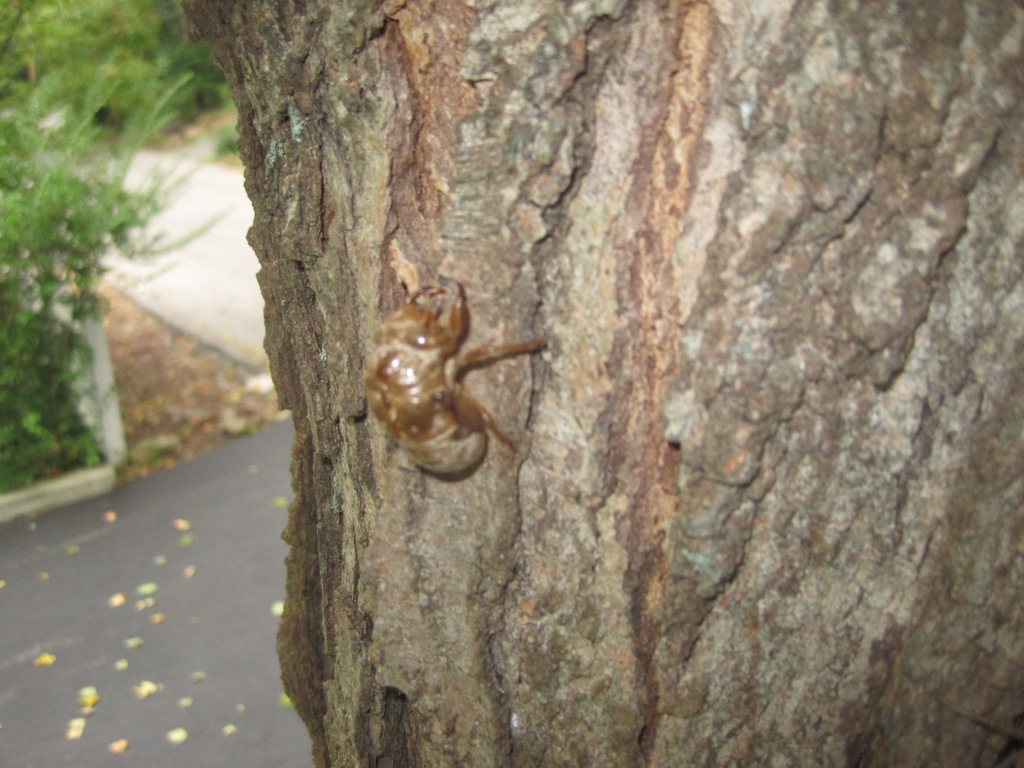
I’m waiting for the cicadas. When they come, it will be an experience to remember. Once in seventeen years is certainly an occasion. From what I understand, there will be quite a crowd. A rather loud crowd. But then, wouldn’t you want to party hard if you were released from underground after all that length of time?

I’ve heard the apprehension and even the horror that some folk have about this cicada invasion. I understand that not everybody is curious or interested. However, I’d like to reassure them that there is nothing to fear. Firstly, cicadas have been thought to be the same as locusts. Not so. True locusts are related to grasshoppers. Cicadas are in a taxonomic class of their own. They are not really harmful or dangerous. They do not bite humans and will not decimate your prize roses or tomatoes. Females lay their eggs by creating little slits in the bark of trees and shrubs but the botanicals themselves are not at risk. They simply acquire a few scars. I believe the media have hyped the situation. You were around seventeen years ago, do you remember it being absolutely horrendous? We wouldn’t react adversely if there was a glut of butterflies. The rather vociferous tree frogs are indulged every summer. So why the anti-cicada stance? Admittedly, cicadas might look threatening but just consider them to be nothing but gentle giants.

I remember how alarmed I was when I noticed nickel sized holes randomly positioned along a side path in my garden. My mind was put at ease by an expert at the New York Botanical Gardens who explained to me about cicadas. That was seventeen years ago. I’ve come a long way since then.

As for the classic cicada noise and the numbers that will be gathering all over, think of it as a huge, cacophonic teenage party. Except, there will be no drinking, no doing drugs nor will anything be broken. There will however be lots of making out – if things go according to plan. But these party creatures will all be adults. So it is entirely above board.

If you are thinking how it will affect your season, take a few deep breaths and shift your attitude. Stop fighting nature particularly when in the big picture, this is so utterly benign. Putting up netting where you will be dining outdoors would allow you to enjoy your meals without being surprised by healthy offerings of raw proteins. In certain parts of the world they are consumed for just that. If need be, a comfortable set of earplugs will cut out the cicada song. At the very worst, you will spend a bit of extra time indoors. But whatever you do, please do not think about using chemicals and such to kill the cicadas. If you do, there will be plenty of other useful critters that will also be eliminated. In addition, the toxin will find its way into the water table. No good will come from taking unnecessary drastic measures. Can we just learn to be more accommodating – the cicadas will not bother you again for another seventeen years.

I suggest we invoke our inner child and spend this cicada season with curiosity and wonder. Take a little time to check out the iridescent colors of their wings. Listen to their sound as you would to new music. Keep an open mind. Before you know it, the cicadas will have gone. Who knows what will be seventeen years from now.

If all this is sounding too cute, consider the following: In Ancient Greece, they represented immortality, In France, cicadas are symbols of good luck. In Japan, they signal reincarnation. In Javanese culture, their song indicates the start of the dry season when non-rice crops can be planted . In China, the periodic moulting of cicadas is seen as the transformation a person must go through to reach enlightenment. And in Mexico, cicadas are known as the ones that sing till they die.

Now, tell me, do you want to mess with your karma and harm such a noble creature?
Live and let live.
Cicada
Cicada


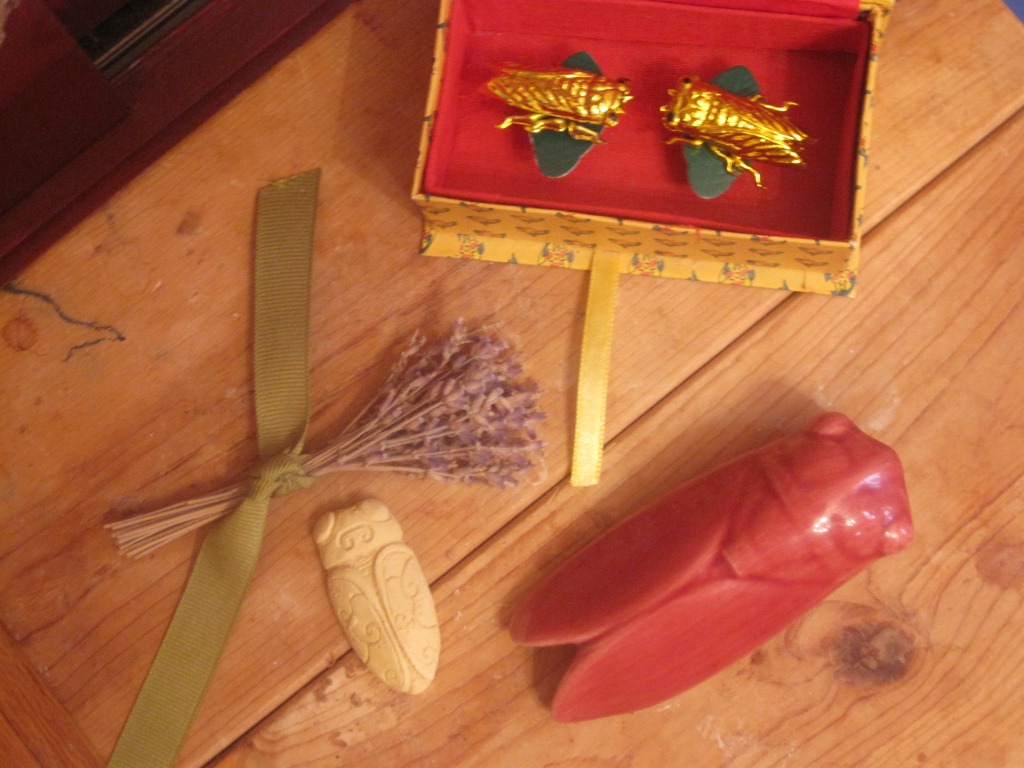
Cicada talismans - I have them all over in my home and garden.

Cicada talismans – I have them all over in my home and garden.


(c) 2013 Shobha Vanchiswar

Put Your Best Game Face On!

Just as your face and most particularly, your smile are what contribute significantly to a first impression, so is it the facade of your house and specifically the front garden that informs the world about who the residents are. When reviewing this part of your property, ask yourself if it conveys the right message. If it is, then that must be enormously satisfying I’m sure. If not, how can it be improved? A little tweaking or a complete face-lift? Of course, if you couldn’t care less about the front garden, then stop reading! Because I’m going to discuss exactly that. But wait just a second! Are you saying you don’t even bother to keep this area neat, tidy and presentable? You do, right? Then, ha! You care. Read on.

Man or woman, everybody pays attention to how their face looks (and we also pay close attention to other people’s faces). Some more than others. It all depends on how much time and effort one is willing to expend. Putting it another way, it depends on how important it is to you. Chances are you will be similarly disposed to how you address your front garden. And that is A-okay. The main thing is to have your face or front garden reflect the best you. Just as those of us who cannot stand to wear too much make up and feel uncomfortable if we do, a fussy, high maintenance garden ( yes, such a thing exists) will look incongruous. So lets consider the front of your property.

Get outside onto the street, face the house and take a hard look at what you see. Assess it honestly. Chances are there is room for improvement. Note down everything you think can be done. Make the list in order of priority or urgency. Think simple. The ugly hedge might not require replacing – a proper trimming could be all that needs doing. On the other hand, a sickly tree ought to be removed before it topples over and causes damage. It is a good idea to look at the front area at different times of day and keep in mind the different seasons.

Perhaps over the years, as surrounding trees and shrubs grew, what was once a sunny area is now shady and the plants are no longer thriving. Time to replace the plantings with those more suitable. Similarly, if trees were lost due to age or storms, a shady area is now more exposed to the sun. While it might feel a bit daunting to rethink a whole area, these are actually the ‘perks’ of a gardening life. Something to challenge us, shake uu out of our humdrum ways. If you really are at a loss on how to go about making big changes, ask fellow gardeners or even get a garden designer’s advice.

Assuming the exterior of your house is in good shape, lets start on the area that leads one up to it.
Literally. How does the walkway to the house look? Does it need repair, repaving or replacing? You are going for attractive but sensible. Paved pebbled or gravel paths are not kind to feet ( especially when in high heels) and the former can get slippery when wet or iced over. Too narrow or too wide might need some correction. Likewise, look at other hardscaping such as walls. They should be in good repair and preferably softened with greenery. Remember, you are going for an appearance that appeals to others but must primarily make you very pleased to see your home every single time.

Look at matters of practical maintenance. Is the front garden easy enough to keep routinely tidy? Watering should be convenient. All parts of the area should be accessible for cleaning, weeding, pruning etc., Otherwise, it’ll be prone to neglect.

Check the boundaries. In a formal set up, these delineations are attractive elements themselves. Hedges are kept very neat and clipped. In less formal gardens, the boundaries can be blurred with some creative planting. Stone walls are lovely but need the hardness reduced with plants that either front them or scramble on them. Likewise, other types of fences must serve the dual purposes of marking off the property as well as participating in the general garden design.In any case, some thought needs to be put in.

Lighting is an item that is often overlooked. If your walkway is long, a single light by the front door is inadequate. Think of additional sources of light for the dark hours but keep them discrete. Also, if there is a beautiful specimen tree or special sculpture, you might want to highlight it with a bit of muted illumination. Be sure none of the lights shine into neighboring homes.

If you have the means, redesign your space so parked cars are not the most visible items seen when viewing your home from the front.

Don’t overlook what is known as ‘front door impact’. Plants that are striking such as topiaries or standards. Large pots with interesting, exuberant plants. Something that says one has arrived at a special place and can anticipate more of the same beyond the front door.

Finally, we approach the most fun part of the garden – the plantings. If all there exists is an expanse of lawn and some foundation plantings, you can do much better than that! Unless huge lawns are required for regular rounds of croquet, they ought to be reduced and made more interesting by creating additional flower beds or planting attractive small or mid-size trees. Beef up the foundation plantings with plants that provide color, cheer and visual interest through the seasons. Have fun with your choices and select what you personally enjoy. The garden should say something about you remember?

If you wish, extend the garden right up to the house with creative combinations of plants in hanging pots or window boxes. Add drama at the gate or entrance to the walkway with a collection of pots ( larger the better). Think outside the box and change ho-hum to oh! My!

In my case, I want my front garden to say open, friendly, optimistic, creative, interesting and thoughtful people live here. Rather ambitious you say? That’s where the optimism helps.What do you want your front garden to say?

Note: You have the opportunity to see if I’ve succeeded in my mission by coming to my garden on Open Garden Day this Saturday May 25. Click on ‘Happenings’ page to get details.

Perennial Bed

Perennial Bed


The walkway

The walkway


View from the street

View from the street


Window box - changed seasonally

Window box – changed seasonally


Other perennial bed

Other perennial bed

Forewarned Is Forearmed

As gardeners, we often take it as a personal failure when a plant succumbs to disease or dies in spite of our best efforts. There is always the question of what more could one have done that nags us in those quiet hours of the night. Okay, so they hound the likes of me and other plant obsessed people.

As frequent as it might be sheer negligence or excessive nurturing that kills a plant, there are in actuality more universal, insidious reasons at work. Pests like the long horned borer, fungi that kill Impatiens, the red lily beetle are all devastating and none are the direct result of an individual gardener. Some of these ‘criminals’ are stowaways from foreign lands – ensconced in the wood of crates and other packing material. Still others are brought in surreptitiously by gardeners keen to have an exotic in their garden. Cuttings, seeds, bulbs and entire plants have all been smuggled by those not ever intending to cause any harm. But, much harm has indeed been done.

Often, bugs from elsewhere have no natural predators in their adopted country. Hence, they can be unstoppable till humans come up with a choice poison. The pests can go undetected for several years. Then, when weather conditions support their growth, we suddenly notice a dreadful disease affecting a specific plant specimen. Thus, we see that there are actually two factors at work here. The murderous bug as well as the climate.

It is all too obvious our climate has changed. According to experts, we will be seeing more of the likes of hurricanes Irene and Sandy. The USDA plant hardiness zones have all been ‘upgraded’. So, if you are in Zone 5, you can probably now consider yourself in Zone 6. Pretty incredible right? I personally find it a bit disconcerting that one day my treasured agapanthus that grow in pots and spend the winters cosseted in the greenhouse, will one day, in the not so distant future, be a happily thriving clump in a sunny corner of the garden all year round.

But, coming to the immediate, at the Rocky Hills talk given by the highly respected plant pathologist Margery Daughtery this past Thursday, the audience was confronted with the problems of both boxwood blight ( Calonectria pseudonaviculata) and Impatiens afflicted by powdery mildew ( Plasmopara obducens ). In each of these cases, the epidemic is a result of the climate providing the best conditions for the pests. For the time being, these diseases are here to stay. It is safe to assume that scientists are busy trying to find ways to counteract the problems. But until such time, Daughtery advices that we refrain from planting new boxwoods and impatiens. Something else to know, the ubiquitous pachysandra is in the boxwood family and susceptible to the same blight.

Instead of boxwood, she suggests finding alternatives that could work just as well. Who knew that Lonicera, our native honeysuckle, can be trimmed to give similar shape, structure and function! I’m itching to try this and will do so as soon as I decide on a good location in the garden.

The familiar bedding staple that is Impatiens walleriana, is for the time being, a lost cause. Daughtery’s alternatives are New Guinea impatiens or begonias. Simple enough right?

Nurseries will not be carrying Impatiens until an all clear is announced. Most will also be cautious with selling boxwood. Instead of lamenting the loss, we gardeners must stand in solidarity and do our part. First and foremost, no sneaking in plants or seeds from foreign countries. Maintain good garden hygiene and strict organic practices. This includes composting kitchen and garden waste, mulching thoroughly, watering only as necessary and getting rid of all diseased material in tightly closed garbage bags with the regular trash. We need to fill our gardens with plants appropriate to our climate, preferably native to our country and with due consideration to genetic diversity.

Boxwood blight and the powdery mildew should be seen as the serious signals that they are. We’ve been warned.

Red Lily Beetle

Red Lily Beetle


Healthy boxwood hedge trimmed to shape.

Healthy boxwood hedge trimmed to shape.

(c) 2013 Shobha Vanchiswar
I (Shobha) will be giving a talk on gardening on May 7, 2013. Click here for details.

God Is In The Details

So, you’ve designed your garden. The sizes and positions of flower beds, the separate potager, the terrace for entertaining, plants, shrubs and trees have been sourced, and because I’m the eternal optimist, you’ve finally committed to a compost bin. In general, you’re ready to create your own bit of paradise. But hang on just a minute. Have you taken care of the details? Remember –

It’s the little details that are vital. Little things make big things happen.
John Wooden

A garden can appear to be lovely but in order for it to function well, there are several details to consider. Some are obvious and some quite subtle. You’d be surprised how often both kinds are overlooked. Based on my experience, I’ve come up with a rough list. Here we go –

1. Access to water from the various parts of your property. Even if you have installed drip irrigation, it is a good idea to have multiple sources of water handy. Unless of course, the garden is fairly tiny and a single hose would be adequate to reach everywhere.
2. Are there well marked paths connecting the areas of the garden? These don’t have to be permanent paths of stone or brick. Simple pavers or gravel/wood bark marking the trail would do. Personally, I’m not big on anything that can be painful underfoot. Just remember, weeds will grow and need to be diligently controlled. Pavers should be placed so they are easy to step on without demanding too much of a stretch of the leg.
3. On the subject of paths, It has been said that the ideal width is where two people can comfortably walk side by side. I generally ensure that a wheelbarrow can be pushed along without any trouble. Edging the paths is a matter of taste and style – do you like it a bit wild with plants spilling over or more formal and restrained is up to the gardener.
4. If you are madly in love with swathes of grass ( I’m not judging), and you entertain regularly, bear in mind that shoes with heels are not happy at all walking on such a surface.
5. Now we come to steps. Chose material that is neither too slippery nor too rough. Wood and certain types of stone are best. A friend of mine once called me over to see her new ‘Moroccan’
terrace. I arrived to see gorgeous, handmade Moroccan tiles covering the surface of the terrace and steps. It was too late to tell my friend she’d made a big mistake. Needless to say, this area was treacherous even when slightly wet and entirely unusable all through the winter.
6. There are ideal dimensions when building stairs. The height of the risers should be 7 inches, the depth 11 inches, the width no less than 36 inches and the stair rail between 30 to 34 inches above the step.
7. The garden should be designed to heighten the senses. Plant aromatic herbs and fragrant plants where they can be enjoyed as one passes by. I also like placing plants like roses, jasmine, lilac and wisteria near the house so they can send their fragrance through open windows. Similarly, plants that encourage our tactile nature should find themselves within easy reach of a visitor.
8. Every garden should have several places to rest or just stop to look at a view. Benches, statuary, water features are all critical elements in a well designed garden.
9. If possible, add features like hammocks, chaise longues that invite one to nap, read or day dream. Umbrellas and trees can provide shade.
10. It is best if the vegetable garden is within picking distance from the kitchen and outdoor cooking area. If that is not feasible, at least keep some culinary herbs near by.
11. In your entertaining space, apart from the dining table, keep additional surfaces where guests can put down a drink while they scrutinize your prize worthy roses or eggplants or hydrangea. Otherwise, for days afterwards you will be unearthing glassware from the oddest areas. Balanced in the fork of a shrub, upturned over a branch, nestled in the boxwood, in a flower pot …
12. In planning your garden, consider ‘borrowed’ views to visually expand your garden. Furthermore, try to ensure that the garden looks interesting from all directions. There will be a natural way in which you like your visitors to walk the garden. The reverse walk should be pleasant as well.
13. For yourself, the perennial gardener, keep tools like secateurs and favorite weeder close by. I also keep a collection of vases to plunge freshly cut flowers in them right away. A few not so so precious ones are kept so I can send a friend home with a bunch of peonies and such.
14. Finally, keep your garden as a true reflection of yourself.

This list is by no means complete. It is a good start. And sometimes the end. It’ll do. By all means add other thoughts that seem compelling to you and I have overlooked. Do please let me know?

A path at Rocky Hills

A path at Rocky Hills


Ready for a gathering

Ready for a gathering


Heritage rose up close. It has a lovely lemony fragrance.

Heritage rose up close. It has a lovely lemony fragrance.


A path that links the front and back of the property.

A path that links the front and back of the property.


Artichoke in copper

Artichoke in copper


Walkway made interesting

Walkway made interesting


Wisteria

Wisteria


(c) 2013 Shobha Vanchiswar

Holy Heuchera!

I’m in love with Heuchera. This is not a love that made me swoon and swept me right off my feet but one that has grown from a long friendship. A friendship that came about by sheer happenstance. Isn’t that the way so many good relationships develop? When we aren’t trying too hard or analyzing too much, when we’re more relaxed and open to receive what or who comes our way. And so it was with me and Heuchera.

Several years ago, I was trying to add visual oomph to an oft overlooked, shady part of the garden. Amongst the assorted greens, I added the almost acid yellow of Hackonechloa grass and needed a dark color to balance this palette. Shade tolerant, purple or burgundy hued, low to medium height and easy to grow were the characteristics that were required. At the nursery, as I trolled the aisles of happy perennials screaming “pick me!” and trying hard to suppress my impulse to adopt them all, I came across a plant that appeared to fit the bill. That was how I first met Heuchera. Rosettes of obsidian, palmately lobed leaves and quite unpretentiously handsome overall, it was ideal. An appropriate addition to the garden.

Once I realized how dependable this newcomer was, I looked for more to fill in various shady corners of the garden. To my sheer delight, I discovered that Heuchera come in a variety of shades ranging from dark to chartreuse to variegated. A multitude of hybrids between various Heuchera species has been developed. One could make a whole bed of the many Heuchera to create a stunning botanical rendition of a Flemish tapestry. Commonly called coral bells, because of the coral colored flowers on long racemes that rise well above the main body of the plant, Heuchera are not generally selected for their blooms. Its the foliage that make them so interesting and vital. FYI – the flowers also come in white, green and red colors.

That they are hardy, virtually pest free, shade loving and easy to propagate by division only increases their value in the garden. I’ve had Heuchera in pots that stay outside and unprotected all winter and to date, they have survived remarkably well. That is impressive don’t you agree?

But wait, it gets better. Heuchera are true North American originals! They grow in different habitats so there’s something for a garden anywhere in the world. The leaves are edible though I have not been inclined to nibble at them. Natives of the American northwest used to make a digestive tonic from the roots. Again, I’m not recommending that anybody try out a recipe. Though personally, I’m happy to know that they are standbys in case of famine or a sudden inclination towards gluttony.

With a truly extensive array of blossom sizes, shapes, colors, foliage types and geographic range, they are quite valuable in any garden. Besides, who can resist cultivar names like ‘Burgundy frost”, “Raspberry regal”, “Smokey rose”, “Purple petticoats” or, “Chocolate veil”?

I do believe this love affair is for keeps.

A Heuchera trinity

A Heuchera trinity


Greenhouse with Heuchera outside
More!

More!


(c) 2013 Shobha Vanchiswar

Dear Diary

Glimpse Of Spring
She arrived without fanfare
a quick visit
a prelude to the grand arrival
She thought she’d be unnoticed
but I saw her
I caught a glimpse of Spring last week.

Dear Diary

Since we are planning and preparing for a new season of gardening, now is a good time to start keeping a garden journal. Putting down ideas, plans, designs, progress, day to day horticultural happenings are extremely useful and enlightening. My paternal grandmother wrote a diary every day and I remember being very intrigued by that. She never encouraged me to do the same but I must have inherited the journaling gene because since my 20s, I have always kept journals. At first it was about my life in general – I vented, ruminated and, celebrated all the goings on. I wrote about my hopes and plans. The pages of my journals bore witness to my tears over disappointments, pride over triumphs and mostly a whole lot of mundane rubbish.
As a scientist, I learned to keeping meticulous notes of my work on a daily basis. Once I acquired some land on which to garden, maintaining a log of my activities combined with my observations and thoughts was natural. Keeping notes leaves nothing to memory which is notoriously unreliable. The records allow for comparing, referencing and following the progress of the garden over the years.
I’m always shocked by how inaccurate I am when remembering something that occurred in the garden. My garden entries are testimonials to this fact. I’ll be informing no one in particular about the delay in or early blooming of certain flowers only to read that the pattern is exactly the same as before. The same for how I recall the weather and how it affected my garden. If word of how poorly I recall these matters got out, those who must deal with me on a regular basis might rethink the association. But the truth is, most people have the same problem. Hence, it is well worth the time and effort to write down all relevant points.
Tasks, expenses, opinions, successes, failures, ideas and dreams all get written down. What is in bloom or in fruit, what the temperatures have been and how much rain has fallen are noted. Pests and problems are lamented. Nothing at length: just succinct reporting. There is the most to write about during the busy season which of course means there is the least time available to do so. I have often lapsed in putting down all the garden goings on and lived to regret it. A forgotten brilliant idea is plainly useless.
I do take lots of photos and they are incredibly helpful. But like a doting parent, I tend to capture the garden only when it is on it’s best behavior and not when it is throwing a tantrum and presenting itself in a weedy, pest ridden state. Amends are being made and I have begun to capture those not so proud moments. Photos do not however convey emotions, opinions and dreams. What I think I must do, might do, want to do can’t be surmised from an image. So it is still necessary to record those down.
Journals don’t get written with a view to leaving a legacy but there is a part of me that harbors the thought that perhaps one day when this piece of earth is no longer mine, my writings will enable the next gardener to understand why, what and how it used to be.
What would be interesting is to see how influential what goes on in the garden has on my writings in my personal diary which, over the years has become more reflective and less self absorbed. Did I write deep, poetic and/or witty thoughts the same week the garden looked great and all the related tasks got done? Do the seasons in the garden parallel the seasons in my life? I’ll bet there is a direct correlation but, I’ll set that project aside for now. There is much else to get done.
Journals

Three hyacinths

Three hyacinths


Making a start

Making a start


On it's way!

On it’s way!


Voila!

Voila!


(c) 2013 Shobha Vanchiswar

Mind Altering Magic In The Garden

I have a growing need to simplify, bring greater calm and positive thoughts into my own life. Like Thoreau, I too yearn to “simplify, simplify”. I once read somewhere that creativity flows from a quiet mind. It’s true. I’m at my most creative when my mind is calm and not full of clutter. Each time I’m frustrated with my progress or substandard efforts, I’ve learned to bring my attention to what is producing the static and disturbing my thoughts. Anger, remorse, worry, anxiety, fear and, sadness are all factors that get in the way of creating. These emotions are human but it is what we do about them that determines who is enlightened and who is not. Being all too human myself, I struggle on a daily basis to reach for that higher level of being. Nothing helps me in this endeavour more than the garden.
A good hour of weeding has on many occasions resulted in solutions for conflicts or concerns. A more physically demanding chore like pruning, digging or mowing gets rid of negative energy and anger. I turn to relaxing tasks such as watering and deadheading to comfort me when I’m feeling blue or tense. Certainly, any length of time spent in nature is restorative. Nature unfailingly inspires in me a need to be and do better.
However, sometimes, it is other people’s negative energy that thwarts one’s own efforts. For those who live with me, I’m known to send them and their bad moods into the garden to take care of some chore or other. I’m yet to be disappointed by the change when they return. Nothing short of a miracle.
But I’ve been thinking further. Consider elements that always serve a noble if elusive purpose. They are fun to boot. How about mazes, labyrinths and tunnels? Any one of these brings a consistent sense of curiosity, wonder and humor into our everyday lives. A childlike openness to the possibilities of magic and imagination.
I doubt anybody can resist walking through a maze, labyrinth or tunnel. The challenge of finding one’s way out of a well designed maze ellicits a feeling of giddy excitement tempered with a mere hint of fear. I remember my visit to that famous maze at Hampton Court, England. We were three adults and one child. It took us a while to find the exit but the fun we had is still vivid in my mind.
Labyrinths are a bit different. While irresistibly calling to be walked, it magically makes the walker slow down and focus on the path itself. Pretty soon, the mind is calmer and the breathing deeper. On completion of the circuit, the person is in an entirely different, more deliberate state of being. I have discovered a lovely labyrinth on our frequent drives to southern Vermont. It belongs to a church but is very much open to the public. I cannot emphasize how much it means to me visit this place every time we’re passing by. Similarly, last summer, we visited the Heritage Museum and Gardens in Cape Cod. Here, the labyrinth was bigger and contained mighty trees that seemed to stand like sentinels safeguarding both the spirit of the place as well as those who entered it. I watched children who started out running and then gradually quietened down as they followed the purposefully laid out trail.
Tunnels in gardens are rather interesting. They needn’t be long at all. Simply entering one spurs the imagination.What it guides you through and leads up to can be quite exciting. I’ve walked through wisteria tunnels that were heady with scent, laburnum ‘walks’ that cast an other worldly golden light and then the one in Giverny so strewn with bright orange nasturtiums scrambling all over the path that one was forced to look down the whole way. You emerge from a tunnel with a renewed appreciation of freedom.
It is plainly impossible to ignore any of these elements in a garden. So, how come there are hardly any private gardens with a maze, labyrinth or tunnel? They are not as complicated as they might seem. The upkeep need not be costly. So many options come to mind! My own garden precludes them due to the lay of the land but believe me, I’m thinking very hard about it. One day in the not too distant future, such a feature might just be added.
Meanwhile, here is a suggestion, okay it’s a fantasy of mine – consider a maze or labyrinth that must be traversed to get to one’s front door. A perfect antidote for those coming home from stressful hours at work or fighting heavy traffic or simply in a foul mood from real or perceived problems. Imagine a teenager returning from school full of typical whines and tales of woe. By the time they get through this imaginative ‘walkway’, they’ll be in a kinder, gentler state of mind. It’s as though you put out a big sign saying – “ Leave ill-tempers and negative thoughts at the door please”. I do believe, certain unwanted solicitations and pollsters would be reluctant to attempt stopping by. It gets better and better!

Tunnel of wisteria underplanted with lavender.

Tunnel of wisteria underplanted with lavender.


Nasturtiums almost covering the path. Giverny.

Nasturtiums almost covering the path. Giverny.


Labyrinth in New York

Labyrinth in New York


Simple and elegant.

Simple and elegant.


Labyrinth at Heritage Gardens

Labyrinth at Heritage Gardens


Lovely interplay of light and shadow.

Lovely interplay of light and shadow.

(c) 2013 Shobha Vanchiswar

The Listening Garden

When my daughter was very young, we’d go on Listening Walks. We’d explore the neighborhood in total silence. On our return home, we’d talk about the outing. The experience taught us both to be more present in the walk as we observed sights, smells and sounds. Bird calls, busy squirrels, barking dogs, passing cars, lawn mowers, footsteps, the wheels of the stroller, the wind, the rustle of clothing as one walked, the aroma of wood smoke, cigarettes or roses, – everything was noted. Later, we’d decide if the dog’s bark was friendly or not, what sort of birds we’d heard and seen, the sounds created by different footwear. All of this provided for much richer, textured walks plus some interesting post-walk discussions. By keeping ourselves quiet, we not only heard better but saw and smelt more acutely. Admittedly, for the exhausted parent of an active, precocious child, these walks were as close to a spa experience as I was going to get. Today, we both look back very fondly on those Listening Walks.

Recently, while visiting an elderly friend who is losing his sight and hence unable to garden the way way he used to, I started thinking about how to keep his time in the garden still very enjoyable. I’ve been pondering the Listening Garden.

Some elements lend themselves naturally to such a garden. Water features like fountains and streams, bird houses and baths to attract the chatty feathered ones. Wind chimes are possibly something many would add but I personally am not a fan. I find their sounds intrusive and distracting. Instead, I prefer to hear the winds make their passage through ornamental grasses and trees. So of course, choosing appropriate plant material is important.

The aforementioned grasses are a significant part of a Listening Garden. Different grasses make different sounds. Next time, pay close attention and you’ll learn! Plants that make seed pods that rattle in the breeze are also good. Baptisia, columbines, sweet peas and such are excellent candidates. Interspersing the garden beds with plants that have a free, loose style of growing will also create a type of gentle wind music. Asters, mallows, cleomes, agastaches, cosmos and cimicifugas come to mind. Juxtaposed with more solid shrubs like boxwoods, you’re on your way to organizing a botanical orchestra. Leave hydrangea blossoms and other papery flowers to dry on the plants and they will make a sound akin to that made by the brush stick hitting a drum. A sustained swish.

Include plants that are particularly attractive to birds, bees and other insects. The critters will be wonderfully noisy. There is something quite satisfying about hearing bees and birds going about their business. It is the sound of a healthy garden. I will continue to do some research and seek out more ‘listening’ plants for my friend. I welcome all suggestions. It goes without saying that including the element of smell is crucial. After all, what is a garden without fragrance? It is not just the perfumed flowers that I want to add. As one walks around the garden, brushing against the leaves of scented geraniums and herbs like lavender and verbena stirs the olfactory memory.

Similarly, I shall not overlook the plants that feel good to touch. Velvety lamb’s ears, sand-papery leaves of echinacea and bergamot, plumey Russian sage …

Listening Gardens are not solely about sound nor are they just for the sight impaired. Everybody can benefit. Ultimately, ‘listening’ with all of the senses makes for mindful, deliberate, joyous living.

Baptisia seed pods

Baptisia seed pods


Echinacea

Echinacea


Feathery grass for sound and texture

Feathery grass for sound and texture

Hydrangea

Hydrangea


Bees visit the asters

Bees visit the asters


Cicada

Cicada


David Austin 'Heritage' roses

David Austin ‘Heritage’ roses

(c) 2013 Shobha Vanchiswar

A Study In White

A Study In White

Plate glass roads wind
under crystal chandeliered branches
Silver gilded ponds reflect
vast cellophane wrapped marshes

Dagger edged roof lines
threaten crackle glazed hedges
Diamond encrusted shrubs sway
alongside tinsel tossed grasses.

—-
How lovely the winter landscape appears after a snow storm. The purity of the white lends itself to the stillness of the season. All is quiet and calm. Even the birds at the feeder are hushed. The beauty of the white landscape makes this gardener think about white gardens exploding with perfume and elegance. Twinkling white lights showcasing night blooming jasmine and moon flowers. Even in this cold, I can imagine the summer breezes carrying the scent.
White gardens are not new but they were made mainstream by Vita Sackville-West’s white garden in Sissinghurst, England. I’m not sure why this garden suddenly caught the attention of so many but my guess is that the time was right. People were ready for something different. Even bold. Not the least of course is that Vita’s garden looked absolutely lovely. Click here to see it www.invectis.co.uk/sissing/.
What made this garden work? Or for that matter, why don’t all attempts at white gardens work? After all, there is a plethora of choices for such projects. Roses, lilies, phlox, tulips, snowdrops, hellebores, campanulas, hydrangeas, viburnums, azaleas, rhododendrons, alliums, irises, peonies, lilacs, tuberoses, wisteria … my goodness, the list never ends! Yet, many attempts at white gardens turn out to be boring. The answer then is quite simple. It is the non-whites that make or break such a garden. There must be colors that contrast with or complement the white. Inherently, white is influenced by it’s surrounding. As a result what appears strictly white is invariably tinged with a soupçon of some other color. Artists have always known this.
At Sissinghurst, the grays and greens completed the garden. Chosen with care, they made the whites stand out. Green seems an easy, obvious color to go with the white. But if all the green is the same shade then it only goes to give the design a two dimensional quality. To provide texture and interest, select different greens, deep grays, some yellow, a splash of chocolate, a kiss of pink, a wash of blue. Think stems, leaves, ornamental grasses, berries and, seed pods enhancing the white flowers. Consider shapes, silhouettes, sizes. Finally, pay attention to the light. Bright sunlight on a white garden can either wash out the effect or blind the eye. So position this garden where the early morning or evening light plays it up. Even better if the garden can also be viewed at night when the white flowers seem to glow and the night pollinators can be observed. It is no wonder that white gardens are also called moon gardens.
To understand how to think about the color white, bring yourself back to the snowscape outside. Notice the way contrasting barks, evergreens and colorful birds heighten the white while gray stones, old rosy hued bricks and weathered wood soften it by imbuing some pale color. In my opinion, to successfully create a white garden is more challenging than any other color-themed garden. It is not a matter of just placing anything white in this space. Details are of utmost significance. Subtle, understated effects are key. There is actually plenty of color here but it is just not obvious. Think Audrey Hepburn as opposed to Dame Edna. A top notch white garden is always stylish and chic.
If you desire to create a white garden, this is an excellent time to plan for it. As you contemplate the scenes outside, thumb through plant catalogs and books to identify your selections. You have the advantage of time. Choose with thought and care. You’re aiming for brilliant not blah. Be sure to include some fragrant flowers. Take into account heights, widths and what sort of shadows will be cast. Do not discount surrounding structures like walls, buildings and fences. Prepare your design and write up the list. Get everything ready so when the weather warms up, you will be all set to make this garden. And while you’re at it, plan for that party under a full summer moon and white twinkling lights.
DSC07005
IMG_2392
IMG_2315
IMG_0235
IMG_2415
IMG_2413

Happy Valentines Day!

Happy Valentines Day!

(c) 2013 Shobha Vanchiswar

A Case For Compost

I was recently asked what I would suggest if someone were to attempt just one new thing in the garden. That took some thinking on my part. It finally came down to two things. To plant a tree or start a compost heap. And the winner is – a composter.


Composting is one of those practices whose benefits are many and far reaching. The initial effort of setting up a composting system is not difficult. Nor is it expensive. And once you get into the habit of adding kitchen and garden waste to the compost bin, it’ll dawn on you that this is perhaps the most rewarding experience you’ve ever had.


It seems the main hurdle is to accept that composting is very doable and quite the necessity. If you recycle your paper, plastics, glass and such, why then are you not composting? Humans have been composting from time immemorial. There really is nothing to it. So get started. Make it the one new thing you add to your increasingly healthy life style.


There is a glut of information on the Internet on the science and process of composting. So I’m not going to go into that. Just take a little time to get your information and make it happen. If you live in an apartment and you do not have the space for composting outdoors, worm bins are available. There is simply no excuse. Cities like San Francisco require it’s residents to set aside compostables along with recyclables. In my opinion, this should be mandate country wide.


Compost is in essence the result of decayed organic matter. It fertilizes, mulches and enriches the soil. The simplicity of it all is so brilliant that it’s a shame that we ever resorted to more costly and less effective alternatives. Imagine, the stuff you’d otherwise chuck out can be so rewarding. I can’t think of anything else with such returns. Once you start getting a regular supply of compost, you’ll never again use another product. Your garden will thank you by flourishing and your wallet will be pleasantly plump.. Is there anything more satisfying?


As I’ve said in previous articles, I maintain two compost piles. All garden waste is deposited in the woods at the rear end of the property. This is not a contained heap. We just keep adding leaves, plants and other garden waste throughout the year. The mature compost is ready for large scale use every spring. All kitchen scraps go into a smaller compost unit. It is monitored more closely as stuff is added on a daily basis. Regular stirring and frequent compost removal for immediate purposes keeps this bin busy. Vegetable and fruit scraps, tea leaves, coffee grounds and egg shells provide my garden with sweet smelling, rich compost. Each day, if the kitchen pail is not full enough, it means we are not eating enough of the good kinds of food. What a gentle but firm way to keep tabs on healthy eating!


I’ve found that composting has given me a heightened awareness of nature and how she operates. My relationship to my environment has strengthened. As a result, it has made me more mindful of everything else that I do. How and what I purchase, what I eat, wear or use, and not the least, understanding my place in the big picture. I’m appreciative of how we are all in this together. Microbes, fungi, worms and humans cooperating to keep nature in balance. Biology at it’s best. This sort of conscious living has huge physical and mental health benefits. You think I’m exaggerating? Give composting an honest try and get back to me in a year. We’ll talk then.


Once you’ve begun composting, you can then add tree planting to your objectives. The fun never ends.

(c) Shobha Vanchiswar 2013