Mind Altering Magic In The Garden

I have a growing need to simplify, bring greater calm and positive thoughts into my own life. Like Thoreau, I too yearn to “simplify, simplify”. I once read somewhere that creativity flows from a quiet mind. It’s true. I’m at my most creative when my mind is calm and not full of clutter. Each time I’m frustrated with my progress or substandard efforts, I’ve learned to bring my attention to what is producing the static and disturbing my thoughts. Anger, remorse, worry, anxiety, fear and, sadness are all factors that get in the way of creating. These emotions are human but it is what we do about them that determines who is enlightened and who is not. Being all too human myself, I struggle on a daily basis to reach for that higher level of being. Nothing helps me in this endeavour more than the garden.
A good hour of weeding has on many occasions resulted in solutions for conflicts or concerns. A more physically demanding chore like pruning, digging or mowing gets rid of negative energy and anger. I turn to relaxing tasks such as watering and deadheading to comfort me when I’m feeling blue or tense. Certainly, any length of time spent in nature is restorative. Nature unfailingly inspires in me a need to be and do better.
However, sometimes, it is other people’s negative energy that thwarts one’s own efforts. For those who live with me, I’m known to send them and their bad moods into the garden to take care of some chore or other. I’m yet to be disappointed by the change when they return. Nothing short of a miracle.
But I’ve been thinking further. Consider elements that always serve a noble if elusive purpose. They are fun to boot. How about mazes, labyrinths and tunnels? Any one of these brings a consistent sense of curiosity, wonder and humor into our everyday lives. A childlike openness to the possibilities of magic and imagination.
I doubt anybody can resist walking through a maze, labyrinth or tunnel. The challenge of finding one’s way out of a well designed maze ellicits a feeling of giddy excitement tempered with a mere hint of fear. I remember my visit to that famous maze at Hampton Court, England. We were three adults and one child. It took us a while to find the exit but the fun we had is still vivid in my mind.
Labyrinths are a bit different. While irresistibly calling to be walked, it magically makes the walker slow down and focus on the path itself. Pretty soon, the mind is calmer and the breathing deeper. On completion of the circuit, the person is in an entirely different, more deliberate state of being. I have discovered a lovely labyrinth on our frequent drives to southern Vermont. It belongs to a church but is very much open to the public. I cannot emphasize how much it means to me visit this place every time we’re passing by. Similarly, last summer, we visited the Heritage Museum and Gardens in Cape Cod. Here, the labyrinth was bigger and contained mighty trees that seemed to stand like sentinels safeguarding both the spirit of the place as well as those who entered it. I watched children who started out running and then gradually quietened down as they followed the purposefully laid out trail.
Tunnels in gardens are rather interesting. They needn’t be long at all. Simply entering one spurs the imagination.What it guides you through and leads up to can be quite exciting. I’ve walked through wisteria tunnels that were heady with scent, laburnum ‘walks’ that cast an other worldly golden light and then the one in Giverny so strewn with bright orange nasturtiums scrambling all over the path that one was forced to look down the whole way. You emerge from a tunnel with a renewed appreciation of freedom.
It is plainly impossible to ignore any of these elements in a garden. So, how come there are hardly any private gardens with a maze, labyrinth or tunnel? They are not as complicated as they might seem. The upkeep need not be costly. So many options come to mind! My own garden precludes them due to the lay of the land but believe me, I’m thinking very hard about it. One day in the not too distant future, such a feature might just be added.
Meanwhile, here is a suggestion, okay it’s a fantasy of mine – consider a maze or labyrinth that must be traversed to get to one’s front door. A perfect antidote for those coming home from stressful hours at work or fighting heavy traffic or simply in a foul mood from real or perceived problems. Imagine a teenager returning from school full of typical whines and tales of woe. By the time they get through this imaginative ‘walkway’, they’ll be in a kinder, gentler state of mind. It’s as though you put out a big sign saying – “ Leave ill-tempers and negative thoughts at the door please”. I do believe, certain unwanted solicitations and pollsters would be reluctant to attempt stopping by. It gets better and better!

Tunnel of wisteria underplanted with lavender.

Tunnel of wisteria underplanted with lavender.


Nasturtiums almost covering the path. Giverny.

Nasturtiums almost covering the path. Giverny.


Labyrinth in New York

Labyrinth in New York


Simple and elegant.

Simple and elegant.


Labyrinth at Heritage Gardens

Labyrinth at Heritage Gardens


Lovely interplay of light and shadow.

Lovely interplay of light and shadow.

(c) 2013 Shobha Vanchiswar

The Listening Garden

When my daughter was very young, we’d go on Listening Walks. We’d explore the neighborhood in total silence. On our return home, we’d talk about the outing. The experience taught us both to be more present in the walk as we observed sights, smells and sounds. Bird calls, busy squirrels, barking dogs, passing cars, lawn mowers, footsteps, the wheels of the stroller, the wind, the rustle of clothing as one walked, the aroma of wood smoke, cigarettes or roses, – everything was noted. Later, we’d decide if the dog’s bark was friendly or not, what sort of birds we’d heard and seen, the sounds created by different footwear. All of this provided for much richer, textured walks plus some interesting post-walk discussions. By keeping ourselves quiet, we not only heard better but saw and smelt more acutely. Admittedly, for the exhausted parent of an active, precocious child, these walks were as close to a spa experience as I was going to get. Today, we both look back very fondly on those Listening Walks.

Recently, while visiting an elderly friend who is losing his sight and hence unable to garden the way way he used to, I started thinking about how to keep his time in the garden still very enjoyable. I’ve been pondering the Listening Garden.

Some elements lend themselves naturally to such a garden. Water features like fountains and streams, bird houses and baths to attract the chatty feathered ones. Wind chimes are possibly something many would add but I personally am not a fan. I find their sounds intrusive and distracting. Instead, I prefer to hear the winds make their passage through ornamental grasses and trees. So of course, choosing appropriate plant material is important.

The aforementioned grasses are a significant part of a Listening Garden. Different grasses make different sounds. Next time, pay close attention and you’ll learn! Plants that make seed pods that rattle in the breeze are also good. Baptisia, columbines, sweet peas and such are excellent candidates. Interspersing the garden beds with plants that have a free, loose style of growing will also create a type of gentle wind music. Asters, mallows, cleomes, agastaches, cosmos and cimicifugas come to mind. Juxtaposed with more solid shrubs like boxwoods, you’re on your way to organizing a botanical orchestra. Leave hydrangea blossoms and other papery flowers to dry on the plants and they will make a sound akin to that made by the brush stick hitting a drum. A sustained swish.

Include plants that are particularly attractive to birds, bees and other insects. The critters will be wonderfully noisy. There is something quite satisfying about hearing bees and birds going about their business. It is the sound of a healthy garden. I will continue to do some research and seek out more ‘listening’ plants for my friend. I welcome all suggestions. It goes without saying that including the element of smell is crucial. After all, what is a garden without fragrance? It is not just the perfumed flowers that I want to add. As one walks around the garden, brushing against the leaves of scented geraniums and herbs like lavender and verbena stirs the olfactory memory.

Similarly, I shall not overlook the plants that feel good to touch. Velvety lamb’s ears, sand-papery leaves of echinacea and bergamot, plumey Russian sage …

Listening Gardens are not solely about sound nor are they just for the sight impaired. Everybody can benefit. Ultimately, ‘listening’ with all of the senses makes for mindful, deliberate, joyous living.

Baptisia seed pods

Baptisia seed pods


Echinacea

Echinacea


Feathery grass for sound and texture

Feathery grass for sound and texture

Hydrangea

Hydrangea


Bees visit the asters

Bees visit the asters


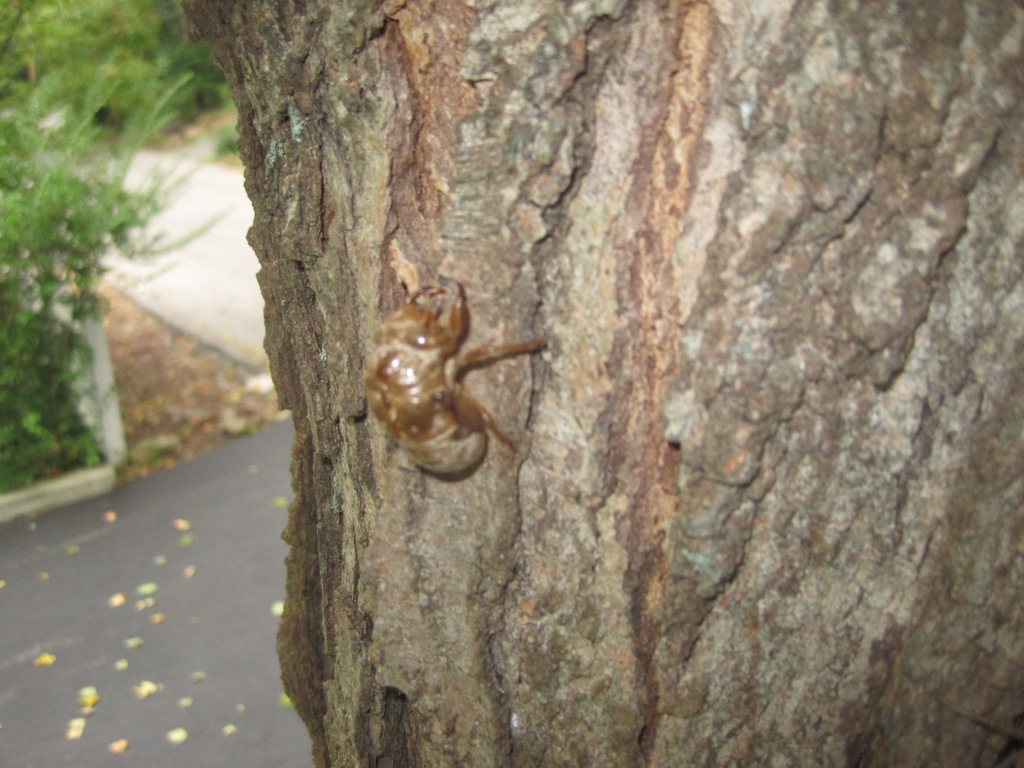
Cicada

Cicada


David Austin 'Heritage' roses

David Austin ‘Heritage’ roses

(c) 2013 Shobha Vanchiswar

A Study In White

A Study In White

Plate glass roads wind
under crystal chandeliered branches
Silver gilded ponds reflect
vast cellophane wrapped marshes

Dagger edged roof lines
threaten crackle glazed hedges
Diamond encrusted shrubs sway
alongside tinsel tossed grasses.

—-
How lovely the winter landscape appears after a snow storm. The purity of the white lends itself to the stillness of the season. All is quiet and calm. Even the birds at the feeder are hushed. The beauty of the white landscape makes this gardener think about white gardens exploding with perfume and elegance. Twinkling white lights showcasing night blooming jasmine and moon flowers. Even in this cold, I can imagine the summer breezes carrying the scent.
White gardens are not new but they were made mainstream by Vita Sackville-West’s white garden in Sissinghurst, England. I’m not sure why this garden suddenly caught the attention of so many but my guess is that the time was right. People were ready for something different. Even bold. Not the least of course is that Vita’s garden looked absolutely lovely. Click here to see it www.invectis.co.uk/sissing/.
What made this garden work? Or for that matter, why don’t all attempts at white gardens work? After all, there is a plethora of choices for such projects. Roses, lilies, phlox, tulips, snowdrops, hellebores, campanulas, hydrangeas, viburnums, azaleas, rhododendrons, alliums, irises, peonies, lilacs, tuberoses, wisteria … my goodness, the list never ends! Yet, many attempts at white gardens turn out to be boring. The answer then is quite simple. It is the non-whites that make or break such a garden. There must be colors that contrast with or complement the white. Inherently, white is influenced by it’s surrounding. As a result what appears strictly white is invariably tinged with a soupçon of some other color. Artists have always known this.
At Sissinghurst, the grays and greens completed the garden. Chosen with care, they made the whites stand out. Green seems an easy, obvious color to go with the white. But if all the green is the same shade then it only goes to give the design a two dimensional quality. To provide texture and interest, select different greens, deep grays, some yellow, a splash of chocolate, a kiss of pink, a wash of blue. Think stems, leaves, ornamental grasses, berries and, seed pods enhancing the white flowers. Consider shapes, silhouettes, sizes. Finally, pay attention to the light. Bright sunlight on a white garden can either wash out the effect or blind the eye. So position this garden where the early morning or evening light plays it up. Even better if the garden can also be viewed at night when the white flowers seem to glow and the night pollinators can be observed. It is no wonder that white gardens are also called moon gardens.
To understand how to think about the color white, bring yourself back to the snowscape outside. Notice the way contrasting barks, evergreens and colorful birds heighten the white while gray stones, old rosy hued bricks and weathered wood soften it by imbuing some pale color. In my opinion, to successfully create a white garden is more challenging than any other color-themed garden. It is not a matter of just placing anything white in this space. Details are of utmost significance. Subtle, understated effects are key. There is actually plenty of color here but it is just not obvious. Think Audrey Hepburn as opposed to Dame Edna. A top notch white garden is always stylish and chic.
If you desire to create a white garden, this is an excellent time to plan for it. As you contemplate the scenes outside, thumb through plant catalogs and books to identify your selections. You have the advantage of time. Choose with thought and care. You’re aiming for brilliant not blah. Be sure to include some fragrant flowers. Take into account heights, widths and what sort of shadows will be cast. Do not discount surrounding structures like walls, buildings and fences. Prepare your design and write up the list. Get everything ready so when the weather warms up, you will be all set to make this garden. And while you’re at it, plan for that party under a full summer moon and white twinkling lights.
DSC07005
IMG_2392
IMG_2315
IMG_0235
IMG_2415
IMG_2413

Happy Valentines Day!

Happy Valentines Day!

(c) 2013 Shobha Vanchiswar

To Dream The Impossible Dream

Every February I dream a big dream. As I peruse garden books, magazines, seed and plant catalogs, I start envisioning new designs and projects for my garden. Never mind that many of them are impossibly large for my modestly sized Eden or prohibitively expensive or totally inappropriate for this climate. All is permissible in dreams. So let me be.

In my dream, the weather is invariably perfect. Days of sunshine and nights of steady drizzle. Temperatures are just this side of cool in spring and appropriately warm in summer. Humidity levels are most comfortable every day – where the sweat on the brow dries fast but not too fast.

There are no pests in my dream. None whatsoever. Birds, bees and butterflies thrive. Pollination is rampant and nests are happily built and occupied.

Healthy, happy plants abound. Following my exact designs, they grow to the right heights and shapes, in their assigned spaces. Chosen for color, texture, form and function, they perform precisely as envisioned.

And the flowers! They are blooming on cue and in right succession. The garden is awash in painterly hues all through the seasons. The combinations selected and arranged with care are mightily stunning.
Brilliant testimonials to the creative gardener.

This paradise is not without work. After all, getting my hands dirty and tending to chores will be highly rewarding in such a place. The weeds which are not too abundant come up with just a quick tug. The soil is rich and friable. Deadheading, staking, pruning and mowing keep me happily busy. Yet, I’m left with ample time to sit and enjoy my horticultural masterpiece.

What a dream! Please, let me indulge. It’ll get me through the winter.
DSC02525
DSC02980
DSC02969
DSC02965
DSC02964
(c) 2013 Shobha Vanchiswar

Out With The Old

January Snowscape

January Snowscape


The first month of the new year is coming to a close. The newness has worn off but hopefully not the enthusiasm to do better, strive higher. I’ve been examining how easily we, as a society, assume that new is always better. Is it?

I’m not talking about experiences like that of cracking open a brand new exercise book. How many people remember the smell of new paper and the firm smoothness of that first right-hand page? I’m thinking more on the lines of products that promise to cut short your effort and time. Not new and improved but new and different. Let me explain the distinction.

Spring loaded secateurs made the task of pruning and clipping much easier. It was the same tool made better by the spring action. A simple tweak. It put no pressure on the user to relearn anything or perform the task in a different way. That is new and improved.

New and different is not so simple. Consider the lawn mower. The manual push reel mower does a good job. But it can be slow and one labors a bit in pushing it around. So, enter the power mower. Gets the job done in half the time. The gardener can now afford to take a nap in the hammock. But, not just anybody can use this mower anymore. The young tween has lost his lucrative enterprise since, using a power mower demands a more mature understanding on how to operate it and a greater degree of muscle strength to keep control of the machine. Along with that, there’s a demand for an energy source be it electric or gas, as well as a jump in noise and air pollution. Not to mention a spike in mower related visits to the ER.

I won’t elaborate further. Instead, give yourself some time to think about this topic. There might be a shift to how you approach the new. There are indeed some things that have been true godsends and there are those that one wishes had never been invented. We need to be mindful of what or which ‘new’ we embrace. I’d love to know your thoughts.

I recently saw this sign “ Try Something New, Learn From The Old”. More food for thought.

More snow

More snow

DSC07003

Paperwhites

Paperwhites

(c) Shobha Vanchiswar 2013


Getting Started

Its about now that I start yearning for something to do in the garden. The once most welcomed respite from the hard work has begun to wear thin. My fingers itch to feel the soft, friable soil as I restart the vegetable beds. I miss the green smell of spring and chatter of the returning birds. But its still very much the cold days of winter. So what is a die hard gardener to do?

For starters, a calender of the new year is purchased. One of those simple, no frills kinds with big, blank squares for each day. Referring to the calender from last year, I start filling in those white spaces with the necessary and routine garden tasks for each month. Pretty soon, it is marked up with chores galore. From starting seeds, planting, staking and mulching to weeding, pruning and deadheading, everything gets put down. By giving each aspect of gardening due time and consideration I’ve ensured that I’m starting off organized and prepared. A visual heads up of what needs doing prevents clashes with duties from other realms of life. Most of all, in step with the sugar maples, it gets the gardening sap flowing through my veins. I start actively dreaming and planning. My growing season has begun. I have stuff to do.

Next, I commence the forcing of the bulbs kept chilled since late October. Hyacinths, muscari, crocuses and miniature tulips have been occupying prime real estate in the refrigerator. Each week, for the rest of winter, I start some of these bulbs in pots and glass forcing vases. As the bulbs stir from their hibernation and push up shoots and eventually their jewel hued flowers, the days are no longer bleak and barren. The garden indoors has banished all that. I’m in good company till the garden outside is back in business. Joy.

Tell me, how do you handle the need to get through winter quickly?

P.S. While we’re talking calenders and marking down important stuff, here is something for you to put down in yours: May 25 is my garden’s 2013 Open Day through the Garden Conservancy. That is the Saturday of Memorial weekend. From 10 am to 4 pm. Put it down in bold! Rocky Hills will also be open on that day. Make a day of it. I’ll be arranging with local restaurants and businesses for special deals. Stay tuned!

Amaryllis tall and proud

Amaryllis tall and proud

Hyacinth in glass forcer

Hyacinth in glass forcer

More hyacinths

More hyacinths

Hyacinths and muscari

Hyacinths and muscari

Early spring tulips

Early spring tulips

Visitors at my first Open Day. 2008

Visitors at my first Open Day. 2008

Murali and me at the end of that first Open Day. Tired but so happy.

Murali and me at the end of that first Open Day. Tired but so happy.


(c) Shobha Vanchiswar 2013

A Case For Compost

I was recently asked what I would suggest if someone were to attempt just one new thing in the garden. That took some thinking on my part. It finally came down to two things. To plant a tree or start a compost heap. And the winner is – a composter.


Composting is one of those practices whose benefits are many and far reaching. The initial effort of setting up a composting system is not difficult. Nor is it expensive. And once you get into the habit of adding kitchen and garden waste to the compost bin, it’ll dawn on you that this is perhaps the most rewarding experience you’ve ever had.


It seems the main hurdle is to accept that composting is very doable and quite the necessity. If you recycle your paper, plastics, glass and such, why then are you not composting? Humans have been composting from time immemorial. There really is nothing to it. So get started. Make it the one new thing you add to your increasingly healthy life style.


There is a glut of information on the Internet on the science and process of composting. So I’m not going to go into that. Just take a little time to get your information and make it happen. If you live in an apartment and you do not have the space for composting outdoors, worm bins are available. There is simply no excuse. Cities like San Francisco require it’s residents to set aside compostables along with recyclables. In my opinion, this should be mandate country wide.


Compost is in essence the result of decayed organic matter. It fertilizes, mulches and enriches the soil. The simplicity of it all is so brilliant that it’s a shame that we ever resorted to more costly and less effective alternatives. Imagine, the stuff you’d otherwise chuck out can be so rewarding. I can’t think of anything else with such returns. Once you start getting a regular supply of compost, you’ll never again use another product. Your garden will thank you by flourishing and your wallet will be pleasantly plump.. Is there anything more satisfying?


As I’ve said in previous articles, I maintain two compost piles. All garden waste is deposited in the woods at the rear end of the property. This is not a contained heap. We just keep adding leaves, plants and other garden waste throughout the year. The mature compost is ready for large scale use every spring. All kitchen scraps go into a smaller compost unit. It is monitored more closely as stuff is added on a daily basis. Regular stirring and frequent compost removal for immediate purposes keeps this bin busy. Vegetable and fruit scraps, tea leaves, coffee grounds and egg shells provide my garden with sweet smelling, rich compost. Each day, if the kitchen pail is not full enough, it means we are not eating enough of the good kinds of food. What a gentle but firm way to keep tabs on healthy eating!


I’ve found that composting has given me a heightened awareness of nature and how she operates. My relationship to my environment has strengthened. As a result, it has made me more mindful of everything else that I do. How and what I purchase, what I eat, wear or use, and not the least, understanding my place in the big picture. I’m appreciative of how we are all in this together. Microbes, fungi, worms and humans cooperating to keep nature in balance. Biology at it’s best. This sort of conscious living has huge physical and mental health benefits. You think I’m exaggerating? Give composting an honest try and get back to me in a year. We’ll talk then.


Once you’ve begun composting, you can then add tree planting to your objectives. The fun never ends.

(c) Shobha Vanchiswar 2013

Resolving Resolutions!

It’s what everybody talks about this time of year. Even those who don’t make resolutions. I fall into that category. Sort of. Let me explain.


With age, has come some wisdom. I know not to set myself up for broken resolutions. Isn’t that what happens to most resolves? So I got tired of the guilt and sense of falling short of my expectations. I do indeed want to cultivate healthy habits, be a better person etc., but those, I decided, are life long goals. Each day I try to eat well, exercise, be positive, make a difference, be loving and so on. Some days are more successful than others. I don’t beat myself up on the not so great days. Every sunrise opens a new day to try again.


At the start of a new year, I review my big goals. Then I resolve to keep the ball rolling forward in each of those areas. Each day I move ahead in the right direction. On some days only inches are gained and on others, leaps are made. It’s all positive. And every degree of effort matters.


For purposes of this column, I’ll stick to gardening resolutions. In truth, as always, everything can be extrapolated to other areas of life.


Review the past year in the garden. What was successful and what was not. And why it was so. Knowing the reason is important if you want to learn. Think about what work was enjoyable, doable, difficult or neglected. How the tasks are perceived will explain a great deal about the garden itself. If you don’t remember to deadhead then naturally, the plants were a bit messy looking and went to seed quickly. Ditto for weeding.


Having done this, ask yourself if you’re reasonably satisfied with the overall performance. Yours as well as that of the garden. An honest answer will quite naturally point you to the appropriate approach for the ensuing year. Often you can be well satisfied even if there are areas you know that need rethinking or improvement. Again, that’s in the garden and yourself. Garden and gardener are usually evaluated together.


Things that failed are often more valuable in teaching us. With successes, one has a tendency to bask in it and simply repeat the same action. There’s nothing wrong with that. However, taking the time to understand the why of the success is neglected. After all, if it ain’t broke why fix it right? Failure on the other hand forces a confrontation. Which then leads to enlightenment. In the end, it is precisely that which makes us become better gardeners. Information gained in one project will be found useful elsewhere as well.


Let me give an example. A couple of years ago, I designed two almost identical perennial beds for a client. They were to give symmetry to an ordinary level path that led to the terrace. The new beds looked lovely. Having all the same growing conditions, the two beds were expected to thrive equally. And they did in the first year. However, from the second season on, one bed began to struggle for no apparent reason. The shrubs in particular were having a hard time. We tried replacing with new, healthy ones but again, they did not do well. With all things being equal, this was puzzling. The client even suggested we take out all the ‘failures’ and go with just the successes. That would’ve been easy. But I couldn’t let it rest at that. There was a reason for the problem and I had to find it.

Poring over old and new plans of the property, I saw that one bed was above a very old, long forgotten septic tank. The path separating the beds was a boundary of sorts. The reason the shrubs were unable to grow was because their roots quickly hit the concrete roof of the tank thus stunting their growth.


So instead of identical beds, we went for dissimilar ones. This actually proved to be even more striking in appearance than the first design. You see?


To sum up, there are no garden failures. Instead, think of everything as a lesson. Some are just harder than others. And as for the new year’s resolutions, plan on learning a whole lot more this year, do something useful in the garden every day, be accountable and keep moving forward.


I wish each and every one of you a happy, healthy and peaceful 2013.


(c) Shobha Vanchiswar 2013

As The Year Comes To An End


With the winter solstice having just passed and the new year approaching, there’s a sense of reflection and renewal. It is that time when one looks at the year gone by and moves to the one ahead. In that vein, I offer you this poem:


Minute By Minute


Light lingers

minute by minute

Hope grows

minute by minute


As seasons pass

through birth and death

The cycle closes

And then starts again


Earth warms

minute by minute

Sun climbs

minute by minute


Calenders marked

with future plans

Days to meet

And then look back upon


Live purposefully

minute by minute

Make it matter

minute by minute.

(c) Shobha Vanchiswar 2012

Just In Time For Gift Giving – Book Review

The Unexpected Houseplant by Tovah Martin

In the interest of full disclosure, I have, for a couple of decades at least, been a fan of Ms. Martin’s writings. I have a deep respect for her work. Tovah and I have met. She wrote a wonderful article about my garden in Westchester magazine in 2010 (Less Is More by Tovah Martin). So, by no means is this an unbiased review. However, since nobody asked me to write about this book, I had no reason to do so if I didn’t actually like it. I purchased the book because I’ve appreciated Martin’s previous books. Then I went through it. Now I want to shout from the roof top – Go get a hold of this book! It is sumptuous. Pretty and practical, making it a must read. Give a copy to a friend.

Tovah is a lyrical writer. She liberally and cleverly sprinkles Latin names of plants as though that’s how everybody speaks, and sneaks in horticultural wisdom in the guise of anecdotal stories.The reader emerges feeling not only smarter but quite inspired to follow her ideas and suggestions.

The Unexpected Houseplant really is about the unexpected. To dig up something from the garden and bring it in to cheer up the dark winter days might not be novel. But, did it ever occur to you to bring in a clump of euphorbia? That certainly never occurred to me. The very vision of the chartreuse green bracts punching up the winter’s gray is delightful. Similarly, one is encouraged to try other perennials indoors. Just for the season. Using the garden as a sort of horticultural lending library appeals to me enormously.

How best to show the plants off is demonstrated beautifully in the photographs. The right container makes all the difference. Each plant specimen is treated as an individual, and placed in what serves it uniquely. Much artistic thought has gone into this. I’m left feeling a bit envious of Martin’s collection. Yet, I’m sure if I looked around my house, I’m likely to find unexpected, imaginative planters.

With lots of advice and information, this is a good book to learn about enjoying plants in the house. It takes a fresh look on the subject. I’m all set to add to my indoor plant collection and get through the winter with patience, joy and grace.

IMG_7890(c) Shobha Vanchiswar 2013