Resolving Resolutions!

It’s what everybody talks about this time of year. Even those who don’t make resolutions. I fall into that category. Sort of. Let me explain.


With age, has come some wisdom. I know not to set myself up for broken resolutions. Isn’t that what happens to most resolves? So I got tired of the guilt and sense of falling short of my expectations. I do indeed want to cultivate healthy habits, be a better person etc., but those, I decided, are life long goals. Each day I try to eat well, exercise, be positive, make a difference, be loving and so on. Some days are more successful than others. I don’t beat myself up on the not so great days. Every sunrise opens a new day to try again.


At the start of a new year, I review my big goals. Then I resolve to keep the ball rolling forward in each of those areas. Each day I move ahead in the right direction. On some days only inches are gained and on others, leaps are made. It’s all positive. And every degree of effort matters.


For purposes of this column, I’ll stick to gardening resolutions. In truth, as always, everything can be extrapolated to other areas of life.


Review the past year in the garden. What was successful and what was not. And why it was so. Knowing the reason is important if you want to learn. Think about what work was enjoyable, doable, difficult or neglected. How the tasks are perceived will explain a great deal about the garden itself. If you don’t remember to deadhead then naturally, the plants were a bit messy looking and went to seed quickly. Ditto for weeding.


Having done this, ask yourself if you’re reasonably satisfied with the overall performance. Yours as well as that of the garden. An honest answer will quite naturally point you to the appropriate approach for the ensuing year. Often you can be well satisfied even if there are areas you know that need rethinking or improvement. Again, that’s in the garden and yourself. Garden and gardener are usually evaluated together.


Things that failed are often more valuable in teaching us. With successes, one has a tendency to bask in it and simply repeat the same action. There’s nothing wrong with that. However, taking the time to understand the why of the success is neglected. After all, if it ain’t broke why fix it right? Failure on the other hand forces a confrontation. Which then leads to enlightenment. In the end, it is precisely that which makes us become better gardeners. Information gained in one project will be found useful elsewhere as well.


Let me give an example. A couple of years ago, I designed two almost identical perennial beds for a client. They were to give symmetry to an ordinary level path that led to the terrace. The new beds looked lovely. Having all the same growing conditions, the two beds were expected to thrive equally. And they did in the first year. However, from the second season on, one bed began to struggle for no apparent reason. The shrubs in particular were having a hard time. We tried replacing with new, healthy ones but again, they did not do well. With all things being equal, this was puzzling. The client even suggested we take out all the ‘failures’ and go with just the successes. That would’ve been easy. But I couldn’t let it rest at that. There was a reason for the problem and I had to find it.

Poring over old and new plans of the property, I saw that one bed was above a very old, long forgotten septic tank. The path separating the beds was a boundary of sorts. The reason the shrubs were unable to grow was because their roots quickly hit the concrete roof of the tank thus stunting their growth.


So instead of identical beds, we went for dissimilar ones. This actually proved to be even more striking in appearance than the first design. You see?


To sum up, there are no garden failures. Instead, think of everything as a lesson. Some are just harder than others. And as for the new year’s resolutions, plan on learning a whole lot more this year, do something useful in the garden every day, be accountable and keep moving forward.


I wish each and every one of you a happy, healthy and peaceful 2013.


(c) Shobha Vanchiswar 2013

As The Year Comes To An End


With the winter solstice having just passed and the new year approaching, there’s a sense of reflection and renewal. It is that time when one looks at the year gone by and moves to the one ahead. In that vein, I offer you this poem:


Minute By Minute


Light lingers

minute by minute

Hope grows

minute by minute


As seasons pass

through birth and death

The cycle closes

And then starts again


Earth warms

minute by minute

Sun climbs

minute by minute


Calenders marked

with future plans

Days to meet

And then look back upon


Live purposefully

minute by minute

Make it matter

minute by minute.

(c) Shobha Vanchiswar 2012

Just In Time For Gift Giving – Book Review

The Unexpected Houseplant by Tovah Martin

In the interest of full disclosure, I have, for a couple of decades at least, been a fan of Ms. Martin’s writings. I have a deep respect for her work. Tovah and I have met. She wrote a wonderful article about my garden in Westchester magazine in 2010 (Less Is More by Tovah Martin). So, by no means is this an unbiased review. However, since nobody asked me to write about this book, I had no reason to do so if I didn’t actually like it. I purchased the book because I’ve appreciated Martin’s previous books. Then I went through it. Now I want to shout from the roof top – Go get a hold of this book! It is sumptuous. Pretty and practical, making it a must read. Give a copy to a friend.

Tovah is a lyrical writer. She liberally and cleverly sprinkles Latin names of plants as though that’s how everybody speaks, and sneaks in horticultural wisdom in the guise of anecdotal stories.The reader emerges feeling not only smarter but quite inspired to follow her ideas and suggestions.

The Unexpected Houseplant really is about the unexpected. To dig up something from the garden and bring it in to cheer up the dark winter days might not be novel. But, did it ever occur to you to bring in a clump of euphorbia? That certainly never occurred to me. The very vision of the chartreuse green bracts punching up the winter’s gray is delightful. Similarly, one is encouraged to try other perennials indoors. Just for the season. Using the garden as a sort of horticultural lending library appeals to me enormously.

How best to show the plants off is demonstrated beautifully in the photographs. The right container makes all the difference. Each plant specimen is treated as an individual, and placed in what serves it uniquely. Much artistic thought has gone into this. I’m left feeling a bit envious of Martin’s collection. Yet, I’m sure if I looked around my house, I’m likely to find unexpected, imaginative planters.

With lots of advice and information, this is a good book to learn about enjoying plants in the house. It takes a fresh look on the subject. I’m all set to add to my indoor plant collection and get through the winter with patience, joy and grace.

IMG_7890(c) Shobha Vanchiswar 2013


Surreptitious Solitude

Have you been collecting all the seed and plant catalogs arriving in the mail? Printing out ideas you come across while surfing the web? And tearing out pages from magazines that display your dream gardens? I have. They all go into a folder where they await temptingly. That is what I like to call my fantasy folder. Typically, I save it till mid to late January just when winter seems to drag on and on.

In this digital age when almost everything I do is on-line, I prefer the actual paper collection of material. I find it easier to lay out the pages or parts thereof to get a full design. Marking ideas or comments aids me in how I create. I like spreading things out to think things through. But if you’d much rather have everything on your gadget of choice, then by all means do so. Whatever works. I myself get too distracted when on the Internet. I find it too easy to get side tracked. Then before I know it, a whole lot of time has gone wasted.

What I’ve discovered is that the catalogs are perfect escapes when one is caught up in the frenetic and stressful pace of December. Even those of us who are more simple in our approach to the holidays, feel the pressure of the season. Baking, cards, gifts, recitals, parties, decorating, year end reviews, tips and bonuses …. the list goes on. Taking a breather is easier said than done.

So I’ve come up with a way to escape mentally even as I’m surrounded by the merry madness. I carry a couple of seed/plant catalog with me. I go through them whenever I have to wait in line or for an appointment, in the train/plane, before a child’s recital or any place I need some quite time. To others I look like I’m shopping for gifts. Very apropos don’t you think?

As I thumb through the pages, I have taken myself to a different season and sometimes to a different place altogether. I imagine perfect gardens. I dream of growing plants that wouldn’t survive where I actually live. I lose myself in fantastical horticultural pursuits. Then, suddenly the lights in the auditorium dim and I’m back in the moment feeling nicely refreshed. And that’s not all. I have actually made a few notes, started a list, ear marked certain pages for more leisurely and realistic planning. Progress has been made. And no one’s the wiser about my unseasonal anti-social behavior.

Time very well spent I’d say.

Enjoy the photographs that bring spring to mind:

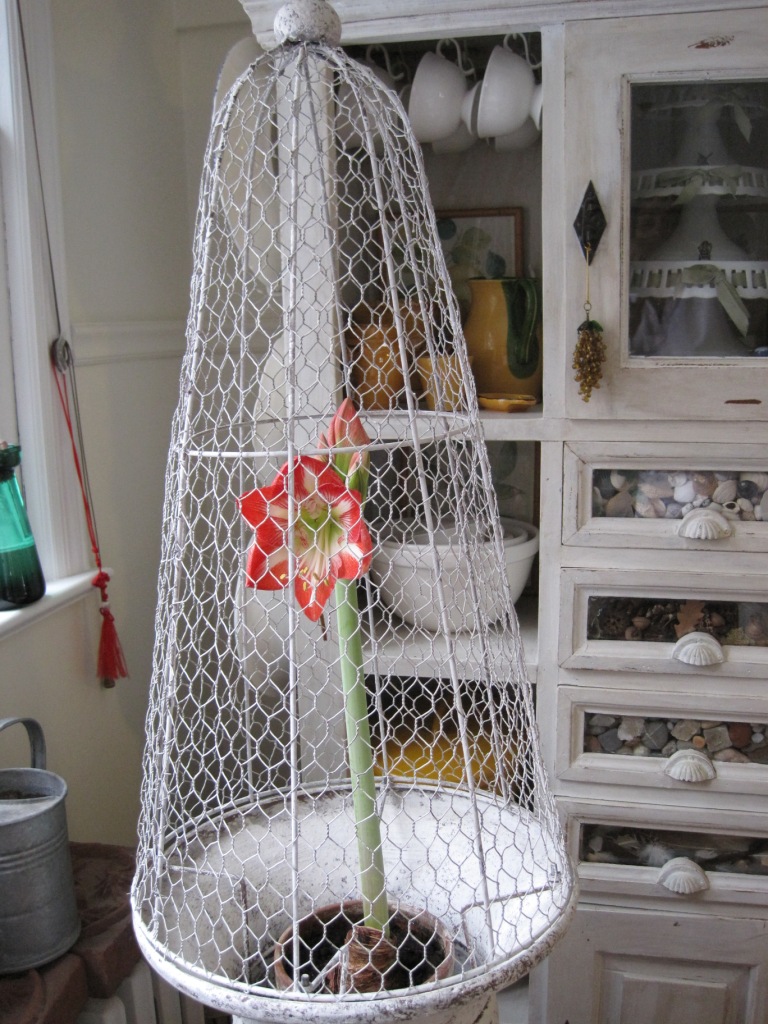
Amaryllis


Hellebores – harbingers of spring


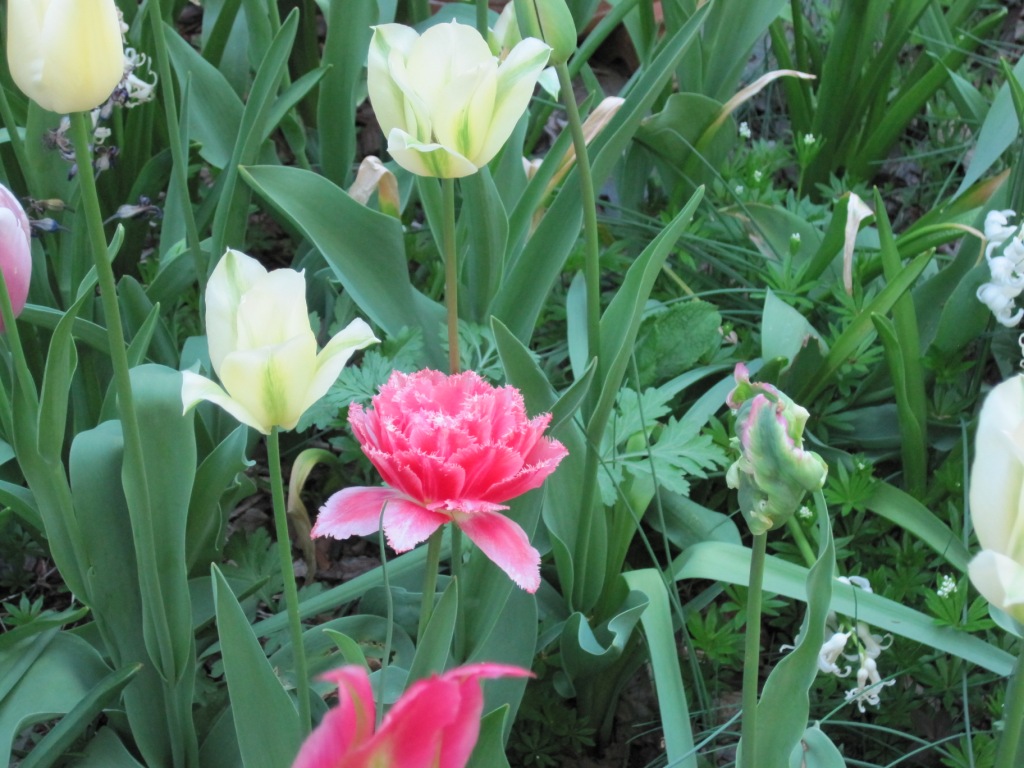
Tulips


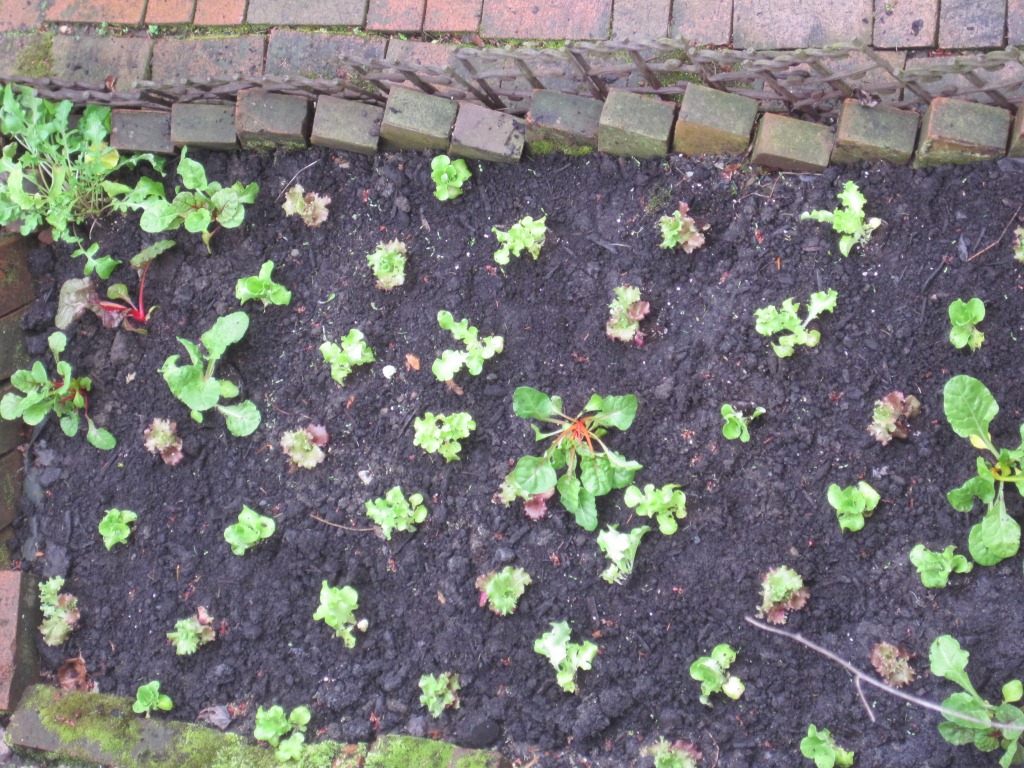
Early spring plantings in potager


A “garden” chair


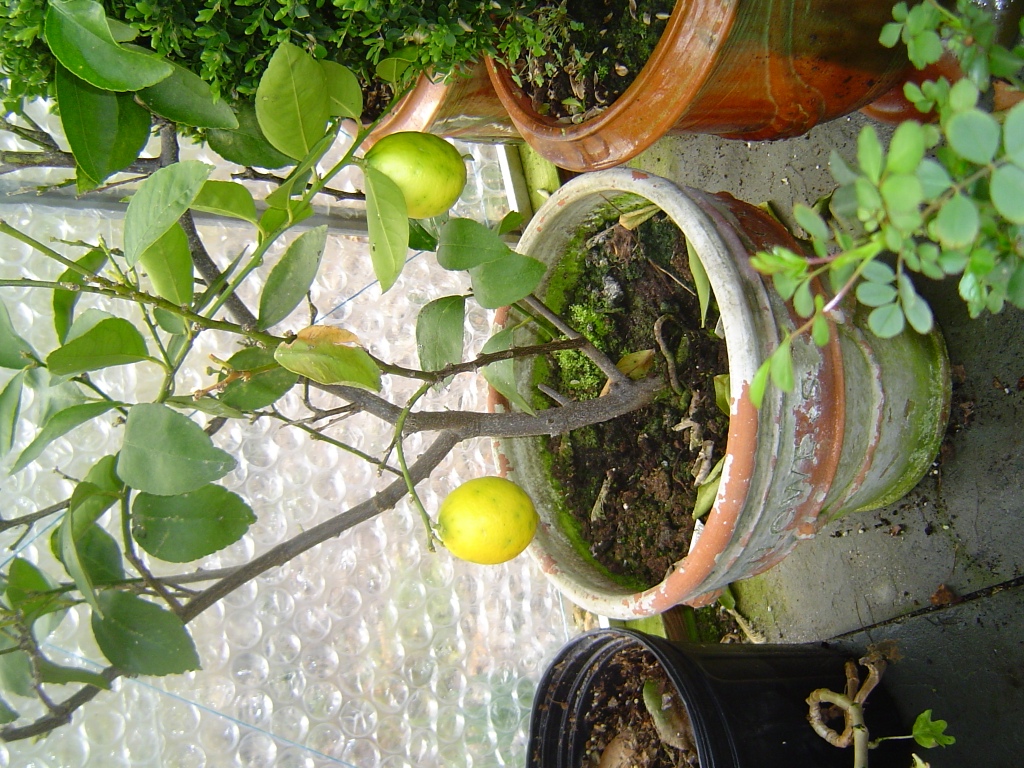
Meyer lemons in the greenhouse


(c) Shobha Vanchiswar 2012

To Forgive Is Divine. And To Forget?

As I’ve said many times before, the garden is my teacher. A life coach of the highest order. On par with any TED talk and that is giving high praise indeed. Gardening keeps me on the straight and narrow. It’s how I communicate and stay connected to the Universe.

Following on the heels of Thanksgiving when gratitude was very much acknowledged, I’ve been thinking a great deal about forgiveness. Mostly because it is something I struggle with. The minor, petty annoyances are easy to forgive but it’s the hurt caused by those who matter to me that demand that in which I find myself sadly deficient. I’d like to think all of us are born this way because there is comfort in not being alone. Yet, it’s up to each of us to learn to forgive routinely and in our own unique way. To some, pardoning comes with an enviable grace. The Amish community that immediately forgave the shooter who killed several of their dear ones comes to mind. To others it does not seem to be of much importance whatsoever. Those are the same ones who are perfectly comfortable stopping at a soup kitchen because the food is free and then proceed to the movies in a cab. And then there are those like me who must consciously and deliberately work to conquer their baser instincts.

There is well documented evidence that the act of forgiving lowers the blood pressure as well as the heart rate. That in itself is good motivation. However, it is so much more beneficial than that. By getting rid of negative emotions and grudges, life can be lived to it’s fullest. By shedding oneself of such energy saboteurs, we are at liberty to move forward and achieve amazing things. Like everything else in my life, I’ve turned to the garden to provide guidance. It teaches by example. Does that sound absurd to you? It did to a friend to whom I’d mentioned it. But, the garden did not let me down.

In this situation, I became acutely aware of how often my botanical haven has forgiven my own transgressions. When I’ve failed in providing adequate water during a particularly brutal summer, it did not die on me. Instead, it slowed its growth and still managed to reward me with flowers and food.
Each year when I go away on vacation, the weeds exploit my absence. They crowd out young plants, suffocate others and prevent still others from receiving enough sunlight. So much so that on my return home, I venture into the garden with a good degree of trepidation. What I never fail to be amazed by is how valiantly the legitimate plants have coped. Once I start removing the offending weeds, the plants waste no time in returning to the business of productivity. There is no sulking, no tantrum or recrimination.

When I inadvertently trample on a plant and render it decapitated, there is no reproach. Quietly it senses that my guilt is enough punishment and patiently strives to grow anew. I have made so many horticultural mistakes and caused so much harm over the years and still the garden has been steadfast as teacher and friend. I’ve received gifts of such value that no price can be placed. Its as though the care I’ve tried to give over the years is remembered and appreciated while past misadventures are forgotten. So if all my abuse, albeit unintended, can be forgiven, surely I too can try and pay that lesson forward?

It’s always harder to do whats right or good. Applying organic practices is more time consuming. Eating healthy is more expensive. A diet that is largely plant based requires more preparatory work.Trying to do good is fraught with hurdles. Ever noticed that? Composting takes more effort than tossing everything in the garbage. Recycling has one cleaning and removing labels first. To think kindly of a difficult person is a real effort and its easier to think bad. Likewise being environmentally conscious. I’ve often wondered if it’s the Universe’s way of testing us to see how earnest we are in our intentions. That’s why it is so hard to get folk to do whats right consistently. Think about it. Turning the other cheek is easier said than done.

Therefore, I’m really going to take my cues from my forgiving garden. My first step was to take a big deep breath and as I exhaled, I forgave the rascally squirrels that ate every single fruit in the garden this year. I will no longer question their motive in knocking down unripe fruit and barely taking a nibble. You know what? It actually lightened my mood. Letting go of grudges is hugely freeing. It opened up spaces within as though my heart just got bigger. I’m working on the Japanese beetles that decimated several plants as well as a couple of humans who behaved no better with me.

In this feel good season of gratitude and kindness, do give forgiveness a try. It’ll be a rather nice way to ease into the new year. A proper fresh start in many ways. Please do tell me about your experiences and how and what works for you. I really want to know.

Will I now forget as well? Lets not get carried away. One self-improvement at a time please.

Lilies 2011 or Lillies BJB (Before Japanese Beetles)

Lilies 2012 or Lilies ABJ (After Japanese Beetles)

Echinacea 2011 or Echinacea BBJ

Echinacea 2012 ABJ

Foliar damage by Japanese Beetles

Apples BS (Before Squirrels). There’s no AS!!

Pears BS.

(c) Shobha Vanchiswar 2012

Dealing With December

Things To Do This Month

  1. Finish mulching garden beds, shrubs and trees.
  2. Clean up vegetable garden. I clear away the plants and put down a layer of compost topped with hay. This should mulch and fertilize the beds and have them ready for planting in the spring. In the past, instead of hay, I’ve usually planted ‘green manure’ which is a cover crop of wheat grass or clover. But given the wild weather pattern, I’m not sure the seeds will have a fair chance to sprout. Hence the hay.
  3. Tie back climbers like roses, clematis. Be sure the plants as well as the supports on which they grow are secure.
  4. If a heavy snowfall tends to push apart and damage certain shrubs, tie them up with several turns of string all along it’s length. This will give the shrub more ‘solidity’ and keep it from falling apart with the weight of snow.
  5. Keep shovels and sand /grit on the ready. Salt damages plants so I don’t use it to melt the ice on paths, driveways and steps.
  6. Create burlap fences to act as wind breaks around vulnerable plants. I do this for all the roses.
  7. Protect all outdoor statuary and pots. I cover mine with thick sheets of plastic and then cover that with burlap. The latter is just for aesthetic effect.
  8. Remember to always keep bird feeders filled. If temperature is above freezing, provide some water as well.
  9. Pay attention to indoor plants. Water as needed, fertilize monthly, turn pots around so all sides of the plants receives sunlight. Try not to get the air too dry or the room too hot or too cold. In addition, stay vigilant for early signs of disease, stress or infestation.
  10. Hope you have paperwhites and amaryllis growing in the house right now. I cannot imagine getting through the month without these bulbs. Creates instant cheer. Watching the bulbs send out leaves and buds all the way till the flowers open is one big, happy making experience. And who doesn’t need more happy?

Looking Ahead

December is almost here but lets face it, once Thanksgiving is over, November feels pretty much done. December is fraught with to-do lists and commitments. Shopping, writing and mailing greeting cards, children’s holiday recitals and concerts, parties, decorating for the season, possibly a trip and that which goes with it, and then, the holidays themselves. In theory, all of this is supposed to be fun but, in actuality, there is some fun mixed in with a fair amount of stress and anxiety. How unfortunate that we should bring this upon ourselves. But it doesn’t have to be this way. Just stop for a bit. Hear me out. This could make all the difference.

Think global and act local. Arm yourself with your list of giftees. Beside each name, note down a couple of their interests. Now, make another list of charities and organizations that you think are worthy of consideration. Match up the two lists. By this I mean, assign a charity, museum or botanical garden membership, concert subscription to each person who has an interest in that cause. Make a donation or purchase in that individual’s name.

Next, take that list of people, and go into your local business district. For each person buy them something from the shops that depend on your patronage. With each of these gifts, add the card that informs about the donation/subscription/membership made in their name. Your budget will of course determine how much you can spend and you will make selections accordingly. If money is very tight then think of gifts that you can make or bake, skills you can use to teach or help out like baby sitting, weeding, planting, painting etc.,

The recipients will not only get something they like but your thoughtfulness will be appreciated. The local businesses, charities and organizations benefiting from this will also be grateful. Oh the good karma points you would have racked up!

Buy the food for your party from local stores, purchase cards that provide funds to UNICEF and other such invaluable groups. It’ll be well worth the time gained in not driving all over the place and by saving on gas, the environment too has been protected.

A shopping jaunt in your own community will have you meeting friends, making friends and generally feeling all warm and fuzzy inside. Add that to the good feelings that are generated from the donations and support you have provided and your December will be the best month ever. Now you have the time to enjoy the parties and recitals. Write cards by the fireplace where family and music can keep you company. You are right where you need to be. In the moment.

Just keep it simple and focus on what is truly important. Its not about the cost or size of the present. It’s the thought and time you’ve given to each person. Those are priceless.

My personal list of charities and organizations:

  1. Mukta Jeevan orphanage for children with HIV and AIDS. It’s outside Mumbai, India
  2. The Garden Conservancy. www.gardenconservancy.org
  3. The New York Botanical Garden. www.newyorkbotanicalgarden.org
  4. The Brooklyn Botanical Garden. www.bbg.org
  5. Wave Hill Gardens. www.wavehill.org
  6. Untermyer Garden. www.untermyergardens.org
  7. UNICEF. www.unicef.org
  8. American Heart Association. www.aha.org
  9. American Cancer Association. www.cancer.org
  10.  Friends of the Chappaqua Library. www.chafriends@wlsmail.org
  11. Metropolitan Museum of Art. www.metmuseum.org
  12. New York Philharmonic. www.nyphil.org
  13. Orpheus Chamber Orchestra. www.orpheusnyc.org
  14. Hudson Valley Shakespeare Festival. www.hvshakespeare.org
  15. The Clinton Foundation. www.clintonfoundation.org
  16. Ars Antiqua. www.arsantiqua.org

Burlap clad pot

New Dawn rose in burlap

Star on the ground

Amaryllis in pot

Amaryllis in bloom

(c) Shobha Vanchiswar 2012

Thanksgiving

Thanksgiving is my all time favorite holiday. Primarily because that is all it is about. No presents, cards or commercial hoopla. Just gathering with family and/or friends to break bread and be appreciative of each other and life in general. Nothing more, nothing less. To give thanks is to be aware of what is going on in one’s life. To be present and mindful of everything that is happening, be they wonderful or difficult, gives perspective to where we are, how we got here and where we might choose to go. For this we are thankful.

For myself, working in the garden, being close to nature offers constant guidance to staying mindful. The seemingly small miracles teach big lessons. Diligent work such as regular weeding and tidying not only cleans up the garden but the labor also weeds out the negative thoughts and feelings I might have felt at the outset. The sowing of seeds and planting of bulbs remind me that it takes just a little worthwhile effort to create beauty in the world. The help I receive from the birds and insects to grow this garden teaches me that we achieve great things when we work together. The risks a bird takes to raise her young tell me that despite the naysayers I too can take that leap of faith to do what I believe is right.

Through gardening I know that it is okay to make mistakes and the universe always gives more than one chance to make things right. The past is over, how I live today is up to me and that will determine the future. Events such as the squirrels devouring all the fruit or the weather ruining expectations serve to keep me humble with the knowledge that forces greater than me are in control. What choices I make in how and what I use to make this garden thrive, directly affect how I thrive. In essence, nature is my ever abiding teacher that keeps me centered and points me to my true north.
For this invaluable gift I am forever grateful.

My wish for you is that you always have plenty to be thankful.

————————-
Response to a much asked query:

Who is responsible when a tree belonging to one person falls and/or damages the property of another?

Given recent events, this has been a dilemma faced by many.
The matter is complicated. By law, as I understand it, the tree owner is liable only if he/she was negligent. That is, the tree posed a clear danger, was diseased and therefore weak in health, was warned about the likelihood of it falling etc., but the owner failed to follow up. Otherwise, the person on whose property the tree fell is responsible for tree removal and any damage caused. It was simply “an act of God” type of incident.
This clearly does not seem very fair and it is because the law was set when we were still a mostly rural country. As we got more urbanized and houses were built in closer proximity, the problem is not so easily addressed.
The insurance carrier might be called and, depending on the circumstances, they might pay a part of the expenses. However, when a natural disaster places them in a very costly situation, pressing them for certain things puts the policy holder in a position of either not having the policy renewed or having the deductible raised in the future.
Litigation might seem like a natural course of action for some people. But really? Does one truly want to have conflict with the neighbor next door? Is this the best we can do? What happens if the law that favors the tree owner is upheld? There are always big consequences to suing anybody.
In my view, the best approach is for both parties to split the cost of tree removal and repairs. I’m not saying this is simple. After all, it might not be within a person’s means to shell out what can be a large sum of money. But I have confidence that if one keeps an open mind, is non-judgmental and willing to negotiate, then both parties can come to an amicable solution. Calm and rationale must prevail. It can be an excellent teaching moment for the next generation as well as other neighbors.
I know of two neighbors who came up with a creative answer. One paid the whole bill while the other tutored the first one’s twins in math for a whole year.
If we can resolve such problems in an intelligent, considerate and cooperative way, maybe then we can really think that world peace is a realistic possibility.

A visiting Tom.

(c) Shobha Vanchiswar 2012


We The People

When mighty trees lie strewn like fallen heroes, it unsettles our minds, shocks our senses and disrupts our lives. We mourn their demise and our loss. Amongst the non-humans dearest to us,trees are perhaps only second to pets.

The question I’ve been asking myself most since hurricane Sandy passed this way has been – what more could we have done? With no power, heat, phone or Internet to distract me, I’ve had a lot of time to ask questions and think about such matters. Several days worth of time.

It was all very well to wait for the necessary people to come and set things right, to rail at the powers that be for not getting my life back in order and complain about the hardship of being cold even under several layers of fleece to anyone even remotely willing to listen but what could I have done to lessen the impact of such an event?

First and foremost, let me tell you what I did do. I took care of all pending chores in the garden. Okay, not all by myself. I did have family doing their fair share. In the end, the huge number of bulbs got planted, leaves were raked, perennials cut back, beds mulched, outdoor furniture put away, tender plants moved into the greenhouse, wayward limbs of roses secured, espalier pruned and window box plants (in liners) brought in. Anything that had the potential of becoming airborne was either weighted down or put away. The list seemed endless and the work was done at a somewhat frenetic pace. It got done because I had a list of what needed doing. So do forgive me if I sound somewhat smug. Nobody else (read that as certain people who live with me) has given me any credit for being organized. I don’t do things for accolades but an occasional gold star wouldn’t hurt. However, I remain optimistic.

Fortunately, except for some small branches and twigs, no harm was done to home or garden. I’m immensely grateful for that. Others did not fare so well. When you sit back to assess the damages, the majority of cases were the result of fallen branches and whole trees. Almost all those power losses were directly due to the lines being brought down by trees. How might we have changed this outcome?

We all agree that trees are priceless. Their uses are numerous not the least of which is preventing soil erosion that can become a serious problem in storms and heavy rains. So it’s not a matter of whether we need trees. It’s a matter of which trees to plant and where to plant them.

In a bid for instant gratification, so many ‘fast growing’ trees are planted that nurseries are full of them. I’ve said it before and I’m saying it again, fast growing means shallow roots. These are the first trees to come down in a storm. It does not take much of a storm to accomplish that. Look around and you’ll see that most of the trees strewn all over are of that fast growing class.

Whatever happened to stewardship of the land? Our founding fathers, particularly Thomas Jefferson, exemplified that practice. Are we not obligated to do our bit? Or are we to think of that instant ‘privacy screen’ of evergreen trees as more important? Or how about that charming and impulsive idea of buying live Christmas trees and planting them each year in an orderly row at the edge of the property up close to the street and well below the power lines– they look so cute and evoke warm memories of holidays past. Those trees grow tall and stop looking so cute very quickly. Especially when one or more are tipped over by the likes of hurricane Sandy, or Floyd or Katrina or Hugo or Irene. Down come power lines with those trees. The rest you know. If privacy from the street or neighbor is needed, think instead about clipped hedges or Belgian espalier fences. Maintained at a height of six to eight feet either will serve the purpose handsomely. Or consider trees that don’t grow so tall. There are in addition, dwarf varieties of several favourites.

So okay, we stop planting shallow rooted, fast growing trees close to houses and other buildings and stay clear of power lines. What next?

We now consider the American oaks both red and white, river birchs, yellow poplars, sycamores, elms, red maples and similar stalwarts of this continent. These are the trees to plant! For posterity and majesty. Future generations will thank us as they linger in their shade, play on a swing suspended from one of the sturdy branches, picnic beneath their canopy or simply sit back against a wide trunk and feel content. Again, these too do not belong near houses or power lines because they get too big and their branches can cause harm should they break. Place them where they can rise tall and proud with limbs that spread wide like a giant embrace. Where you can watch them grow and where your children and eventually grandchildren can see them at their best.

A very critical factor in choosing a tree is the height and breadth to which it will finally grow. Tall, wide trees are fine as long as they do not overpower its surroundings. Keep it in balance. Think about the other plants, shrubs, vines and surrounding structures. They must relate to each other.

Trees make shade and therefore shade loving plants get planted around it. If you like the morning sun streaming into your kitchen then, don’t place a big tree on that side. Smaller trees like dogwood or dwarf fruit trees might be more appropriate. Harsh afternoon heat can be dissipated by well positioned trees on the southern side of the property. These same trees if deciduous, will permit warming light in winter when all the leaves are gone. You see? There are indeed right and wrong places for trees.

Trees are not maintenance free. They need water, nutrients and space to grow strong and healthy. Sometimes, they require cabling to give proper stability. Like us, trees age. So it’s important to periodically examine the health of the trees. Rot and disease are not always apparent so the best way to do this is to get a tree expert. He/she will know to read early signs in a dying or diseased tree and prescribe the appropriate action. If several neighbors got together and hired such an expert, it would be very cost effective. A tree in my neighborhood took down power lines in the previous two storms. The branches broke each time. Finally, Sandy uprooted the tree entirely and its now been many days without electricity, heat, phone and Internet. If the owners to whom the tree belonged had had the tree seen by a tree expert after the first storm, then perhaps we would have been spared the frustration we felt. I bear no malice to the owners. We are all guilty of such oversights. But perhaps this can be a valuable lesson for the future.

Finally, in preparation for the next storm, and it will come, can we make a concerted effort to scan our properties and neighborhood to identify all the potential problems? And in true community spirit, lets help each other trim, prune, cut down and clean up. Then perhaps we can look forward to fewer loss of trees and power and maybe less casting of blame on elected officials, power companies and tree services. Personal responsibility goes a long way in making for a thriving, successful democracy. Its for the people, of the people and by the people remember? Besides, raise your hand if you’d like to stop hearing your children whining about yet another day without heat, television, phone and Internet.

I’m not absolving local, state or federal authorities of their responsibilities. But, we get to vote them in or out of office. There is nobody checking on our own responsibilities. Except our conscience. And that fallen icon whose fate was sealed the day it was planted.

Dwarf apple trees

An old cedar

Clipped hedges in Piet Oudolf’s garden.

An ancient olive.

A study in white.

History on record.

Wood and stone.

(c) Shobha Vanchiswar 2012


Where Do Butterflies Go When It Rains? Who Goes Around And Tucks In The Trains?

That refrain from a song by the Carpenters played in my head all through the time Hurricane Sandy was doing her worst. Apart from the understandable concern for the safety of family, friends and property, I could not help thinking, okay obsessing, about how the birds, bees and butterflies coped in the storm. In the big picture, those little creature matter mightily. Consider how much has has been impacted by the drastic decrease in the number of honey bees due to colony collapse disorder. Enough said.

Of course, unlike us humans who need the whirring of assorted machines to predict a change in weather, birds are finely tuned to barometric pressure shifts. They will then flee, seek shelter or actually move into the eye of the storm where all is quiet. This last option can carry them long distances and depending on the duration of the storm, they will remain without food or water which if prolonged will ultimately do them in. Most birds find old nests, tree cavities, dense shrubbery where they can ride out the storm.
No doubt, severe hurricanes and storms cause a rise in avian mortality be it due to starvation, exhaustion, habitat destruction, exposure to pounding rain or wind.

Butterflies are also able to read a drop in barometric pressure and know to seek safe locations. Under leaves, in piles of leaves, thickets and such.

Bees on the other hand, have it down to a science. Contrary to the supposition that they swarm before a storm, these smart creatures do not leave the hive if temperatures fall below 57 degrees Fahrenheit or if the wind speed is more than 12 mph. And of course, they have each other to huddle and keep cozy inside the hive.

Common to all of the creatures mentioned above is what is called ‘communal roosting’. Which just means getting close together sharing warmth and having safety in numbers. Sound familiar?

In times of adversity, the tradition of coming together to do what’s good for the whole seems to prevail across the species. For us humans, it means sharing and giving. For the most part, we are at our best in times of crises. Our pets get included in all the camaraderie.. Their safety is given high priority as well it should. But, what are we doing about those birds, bees and butterflies? Given how important they are to the health of our gardens, farms, forests, park lands and, consequently our own health, surely some attention on our part is required.

True, its not as though one can round up all these vital beings and give them a form of public shelter but perhaps we can provide conditions that lend some level of security in their natural habitats. Obviously, the unnecessary clearing of woods and forests is to be avoided. But it is really what we can do to support the creatures closer to home and farm that will be of direct use. Setting up bird, bat, butterfly houses, ensuring a source of water, growing plants, shrubs and trees that offer both shelter and food will go a long way. At the same time, doing away with toxic fertilizers, insecticides and weed killers should be mandatory. Safe and effective organic alternatives exist so please lets all adopt them. However much one is a neat freak, find it within yourself to keep one corner, a far spot not so easy to view if you prefer, a little wild. By that I don’t mean it should be unsightly. Instead, group together some assorted shrubs to form a thicket. Toss in a thorny bush or two into the mix of deciduous and evergreen plants. Select shrubs that are the natural food sources for the refugees. Situate these shrubs at some distance to allow for some privacy and sense of security. And following a storm, replenish bird feeders and water baths. None of this is so hard to do right?

There will of course be some casualties from each storm but staying tuned to nature and doing whatever is within our abilities would be doing right by ourselves and this earth to which we all belong.

When Sandy was blowing at alarming, ear piercing speeds, it must have been absolutely terrifying for those poor souls. I’d like to think they sensed and were reassured by the positive energy I was sending their way. Please don’t attempt to disillusion me.

Things To Do This Month

1 Clean up debris left by the storm. Rake leaves, pick up branches and twigs, cut away broken or dead tree and shrub limbs.
2. Check stability of supports, fences, gates, paths, steps and such. Fix what needs fixing.
3. Finish planting bulbs and perennials. The ground is still pliable. But hurry!
4. Cut back perennials, remove annuals and generally tidy up.
5. Put away all outdoor furniture and smaller pots.
6. Protect outdoor statuary and large pots.
7. Get amaryllis started so they will be in bloom at the holidays.
8. Fill bird feeders.
9. Keep sand or kitty litter and snow shovels handy.

Birds at the feeder in winter.

Gold finch in the butterfly bush.

Tom turkey visits

Red Admiral on allium

Red, white and blue!

Yet another butterfly – Tiger Swallowtail

(c) 2012 Shobha Vanchiswar


Beaten By Bulbs

Its still a tad warmer than it ought to be at this time of year. So I was hesitant about planting my 750 spring blooming bulbs. Timing is everything. Too early and they start putting out shoots right away; too late and the ground is frozen solid. In the past, I’ve always planted round about now. I did spot a solitary woolly worm ( caterpillar of the tiger moth) but couldn’t remember what the brown band meant at that time. Only later did I recall that a narrow brown band means a harsh winter. The one I saw bore a band almost half the length of the worm. I’ll make up my mind about this prediction in March 2013. Uncertain of when it might get properly cold, I decided to take the risk and go ahead. Besides, my able bodied albeit reluctant helpers (husband and progeny) were free to assist. Like I just said – timing is everything.

Each year the planting gets harder. A rather harsh reminder of aging body parts. Whilst sorting the somewhat large number of bulbs for the respective areas of the somewhat small garden, I was appalled not only by the greed that had prompted this order but also how insane I’d been to take on such a project. I never learn. Like childbirth, I forget the pain and giving no consideration to budget or aforesaid aging body, I keep repeating this laborious project.

First, I set up my helpers with their stash of bulbs and assigned them their areas in the ‘meadow’. Over the years they know what to do. Still, not wanting to take chances, I  gently remind them that each bulb goes in to a depth three times it’s size (and ignore the teenager rolling her eyes). I treat my aides very kindly because as one well knows, good help is hard to come by. Frankly, I cannot dream of planting the bulbs without their assistance. I am careful however to not mention this as I’m afraid they might demand better work conditions and actual salaries. I myself have the toughest area in which to sink in the bulbs. The two perennial beds in front are a challenge as they are chock full of perennials and bulbs from previous years. The odds of hitting a spot already safekeeping a bulb are very high. I’m understandably nervous about rendering a body blow to a precious allium, crocus, hyacinth, ornithogalum, galanthus, muscari, lily, anemone blanda or camassia. Then there’s the fact that I have to dig each hole while contorting my body unnaturally so as not to step on the ornamental grass, asters, monkshoods and sedums currently in bloom and at the same time avoid the frenzied bees swarming around to siphon nectar from said plants. Its like I’m playing a version of Extreme Twister by myself.

The shipment of bulbs

Apportioned bulbs.

Teenager at work. Warms my heart!

Counter-intuitive as it may seem, I’ve decided that its harder to work with the very small bulbs. Easy enough to make the holes but grasping and placing these bulbous miniatures right side up is not so simple. I think little children should be put to work for this task. Their small hands are perfectly suited. Small bulb planting in exchange for some ice-cream sounds pretty commensurate don’t you think? Plus they get to relieve some pent up energy and breathe all the fresh air their young lungs can take. And in the spring, they can be very proud of the beautiful flowers for which they were responsible. I fantasize about starting a business of hiring out well trained youngsters. I could be the equivalent of a modern day, reformed Fagin. Its productive thoughts like these that keep me plugging away.

Finally, the bulbs are all in. A thick layer of compost to function as both fertilizer and mulch is applied all over the beds. I am done! However, the worst is yet to come in oh, about twelve to fourteen hours. That’s when muscles I forget about all year long decide to express themselves. Bending, the act of sitting, walking up or down an incline or stairs are all excruciatingly painful. To make matters worse, every groan elicits laughter from those home grown helpers of mine. They appear unscathed and annoyingly perky. Maybe I’m treating them much too well.

Parrot tulip and camassia. From last spring.

More bulbs in perennial bed.

The meadow in spring.

—————-

Tips for still green tomatoes:
If the weather shows promise of staying warm for a few days longer, remove the leaves shading the unripe fruits. This will allow more sunlight on them and hasten the ripening.
Alternatively, pluck the green tomatoes and wrap each one in newspaper. Store these ‘packages’ in a single layer making sure they’re not touching, in a cool, dry place. The tomatoes will ripen in a few days. Check periodically so they don’t spoil.
Finally, there is always the delicious option of making fried green tomatoes. Yum!

—————–

As I’m getting ready to put this post up, we’re battening down the hatches in preparation for Hurricane Sandy. I don’t mind the end of season garden chores as they needed doing anyway – just not in such a frenzied hurry. But all that could be done is done. With still so many leaves on the trees, I fervently hope the storm is not as bad as the predictions. Lets all keep our fingers crossed and think positive thoughts. Stay safe!

(c) 2012 Shobha Vanchiswar