Playing Cat And Mouse

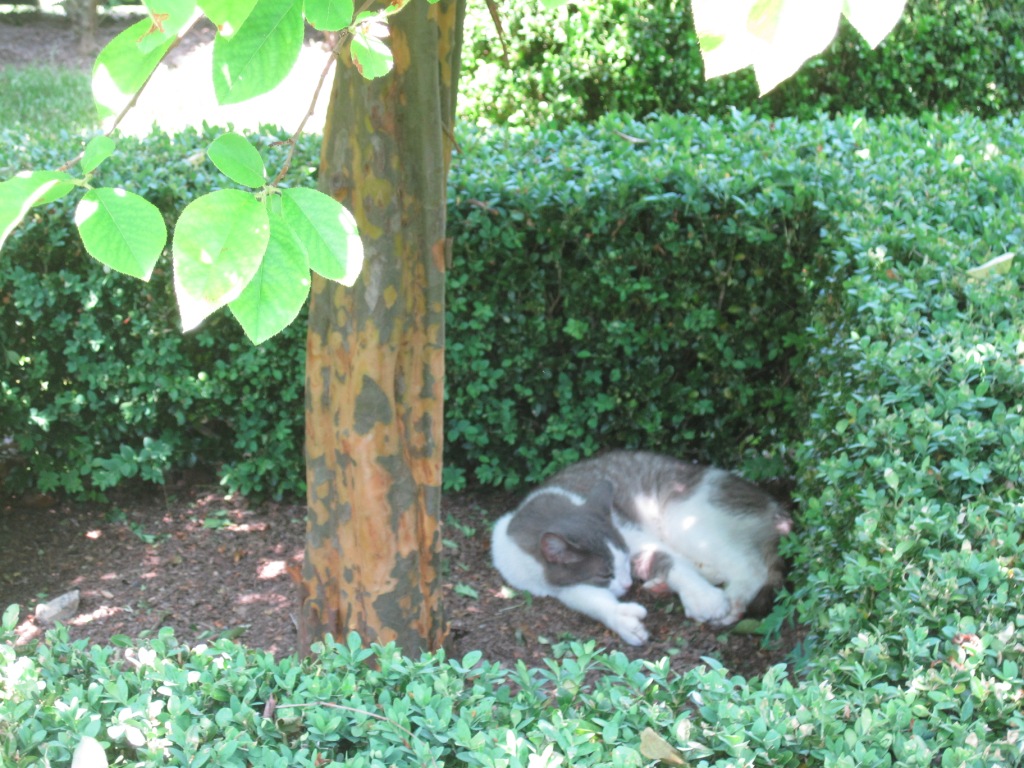
The other day, just as I stepped out with the noble intention of tackling the weeds, I knew something was afoot. The birds were chattering at high decibels and appeared agitated. Just as I began to feel personally affronted, I spotted the neighborhood cat quietly making its way through the meadow to the stone bench where it likes to warm itself and observe the realm at the same time. Aha!

This black cat makes good use of its coloring. It lurks in the areas of dappled light making it difficult to notice. Clever. I don’t know who owns this feline and in principal have no strong objection to it trespassing on my property. I take the occasional dead mouse found around as its payment for entry. Quite appropriate.

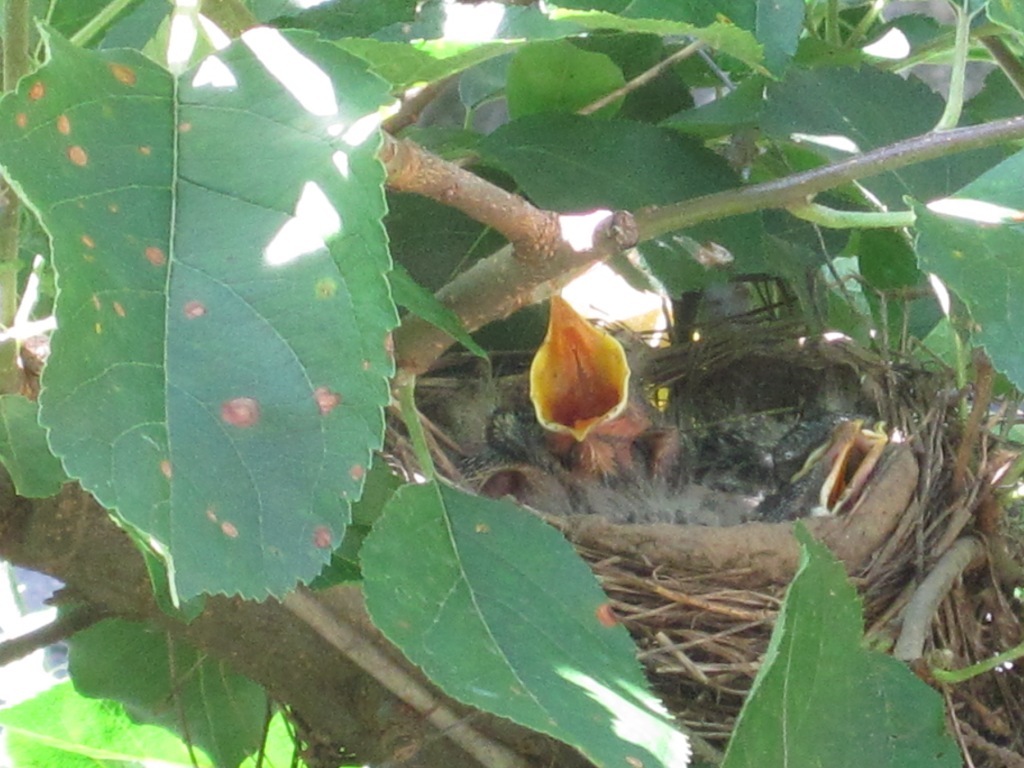
Yet, I resent the way the cats presence upsets the birds. Its true that some of them don’t use any common sense and choose their nesting sites very foolishly. There are at the present, to my knowledge, at least four different pairs of birds tending to their young in the garden. Nature at work, circle of life and whatever else is all very well but the very thought of the eggs or babies in the nest coming under attack really bothers me. I’m irrational that way.

I got to thinking about the matter as I settled down to weed. Always a good activity to get the mind pondering on heavy topics like that. The conclusion is that I’m pretty much the prowling cat when it comes to hunting down the mousy weeds. For all I know, they too shriek at the sight of me. Obviously at a wavelength not perceived by my delicate human ears.

Given that there really isn’t anything natural about gardening and the whole endeavor is contrived, makes me, the gardener, the biggest bully of all. It is all about imposing my will. I exercise my dominance ruthlessly and the result is the garden I’m proud to call my own. Maybe using only organic measures and increasing the native plant population makes me a tyrant with a conscience but a tyrant nevertheless.

So coming back to the cat, I’m resolved to let it be. Live and let live. I hope it feels the same way.

Can you see the black cat in the garden?

Can you see the black cat in the garden?

Babies in a nest

Babies in a nest

IMG_3912(c) 2015 Shobha Vanchiswar

[do_widget “Blog Subscriptions (Jetpack)”]

On Plantsmanship

These past seven days of glorious weather was the sort of gift every gardener covets. Much got accomplished in my garden. Getting my hands in the earth is enormously life affirming. This is where all life begins!

With my garden Open Day less than three weeks away, it has been necessary to amp up the pace of action. The winter that dragged on and on has set us back on many time sensitive tasks. From pruning to seed sowing to getting the compost turned, has been a matter of maintaining grace under fire. It is no fun to focus on chores and miss out on what’s blooming and who is doing what in the garden.

The pruning got done and it has been noted that much of the David Austin ‘Heritage’ rose suffered from the harsh winter. The New Dawn on the two arches, Paul’s Himalayan musk, Bonica and Leda roses have come through all right. With the fruit tree prunings done just a week ago, the espalier is looking neater and the buds are forming nicely. The grapevine prunings are now camouflaging the peony supports. It is best to set up stakes before plants grow too full to manage.

A layer of newspaper, a good two inches thick, has been placed down in the beds and then topped with compost and cedar mulch. The paper works wonders suppressing the weeds and seeds of unwanted self-sowers. It also holds the moisture well and eventually decomposes to further enrich the soil. An excellent and ecologically sound re-purposing of paper. Mulching is crucial to the health of the plants so, it too is best started early in the season.

The composter is now open for the season. It was very satisfying giving it its first turn over of the season. Compost is both mulch and health food. If you doesn’t already make compost, then I strongly encourage you to start doing so this year. It is totally doable and contrary to common belief, do not attract skunks, deer, coyotes or raccoons. A regular application of compost will guarantee the health of the plants and lawn. No other fertilizers needed. Composting is easy, organic and economical. By making your own compost, you will be certain of what it contains and hence you’ll be feeding your plants only the best. As in our own nutrition, home-made is better.

On the subject of food, a comfrey tea is a fabulous elixir for plants. I make this later on in the season when the comfrey plants are done blooming the first time around. I cut back the plant and put the cuttings in a large bin, cover it with water and close it tightly. Placed in a remote location like the woods, I forget about it for a few weeks. The steeping plant renders the water super-rich with all sorts of healthy contents. It also smells very foul – hence the remote location. Filter the water and feed the plants in the garden. They will thank you profusely.

I re-planted the entire checker-board garden. It was looking ragged as the old plants had been there a while. As much as perennials come back every year, many do not remain robust and need to be replaced every four to five years. So, a whole new batch of creeping phlox was planted. Its youthful beauty is disarming. This area will be radiating a pale mauve when the buds open in a few days.

Likewise, the espalier has been under-planted with lavender. Not only will they look pretty but I’m hoping to attract lots more pollinators. The dwarf blueberry I purchased recently has been given a home right next to some roses and across from the pear section in the espalier. I’m already dreaming of blueberry muffins and lavender infused lemonade.

The hellebores, crocus, scillas, iris reticulatas, forsythias and hyacinths are in bloom. The daffodils are popping open daily. The meadow is coming to life.

Still more needs to be accomplished but I’m determined to be fully present in the garden. Yesterday, as I repotted plants, I noticed it was Open House at the bluebird house. No bluebirds came looking but chickadees and sparrows were the prospectives I saw. I shooed away the sparrows.

I also observed that some butterflies had determined that the weather was right for them. There were a few adventurous cabbage whites and admirals flitting around taking advantage of the early blooms.

While we are enthusiastically going about gardening, I thought I’d include the latest list of prohibited and regulated plants in New York state. Check here:

http://www.dec.ny.gov/docs/lands_forests_pdf/isprohibitedplants2.pdf

As in medicine, every gardeners first tenet should be to Do No Harm. Plant wisely.

Do check out the Shop’ page for my note cards and fabric pattern. Prints of my art work are also available – I’m currently working on the Gallery page. Stay tuned!

Please also check the Happenings page to get information about my art show all of May with reception and poetry reading on May 2 and, my garden Open Day on May 9. Mark your calender and come! I look forward to seeing you at all the events.

Setting up the planting pattern in the checkerboard garden

Setting up the planting pattern in the checkerboard garden

Phlox all planted! Don't miss the diagonal pattern.

Phlox all planted! Don’t miss the diagonal pattern.

Up close to a daffodil

Up close to a daffodil

Crocus

Crocus

Grapevine prunings on peony supports

Grapevine prunings on peony supports

My red glove temporarily in the opening of the bluebird house - to ward off sparrows

My red glove temporarily in the opening of the bluebird house – to ward off sparrows

(c)2015 Shobha Vanchiswar

[do_widget “Blog Subscriptions (Jetpack)”]


Nesting Instincts

The birds are getting busy. Even as I gradually shrug off winter apathy and answer the call of spring, the feathered ones are already well into the season. The season of renewal and rebirth is well under way.

A pair of cardinals have commandeered the old apple tree in the meadow. Covered with the exuberant growth of Paul’s Himalayan musk rose, the tree offers the perfect shelter. This rose bears lethal thorns so any nest within is well protected and well concealed. The romance of a home covered in roses appeals to me. Even the knowledge that birds do not have a notable sense of smell, does not hinder my satisfaction that the rambler will be in full bloom and radiating its sweet scent when the baby cardinals are born. This tree has been the keeper of a cardinal nest for some years now and at the last winter storm, I watched the adult pair sit atop the ‘umbrella’ of rambling rose and observe the snow fall. As though they were simply onlookers to a parade from their very own balcony.

Friends of mine have a college of cardinals that resides in his rhododendrons. Which leads me to believe that these birds are indeed quite romantic and select sites based on not just practical. Charming is important as well.

There is a robin who isn’t wasting any time. She ( her industry makes me think it is a she but I’m biased) took her time inspecting various locations in the garden. A site in the espaliered fruit trees has been selected. One by one she ferries small twigs and dried grasses to this place. I haven’t yet determined her mate as I only see one robin at any given time. The focus with which she works is impressive. Sometimes, holding building material in beak, she pauses at a different location. I believe she does so to lead away any creature that might bring harm. So wise.
I’m so glad the dormant oil treatment of the fruit trees has already been completed. Otherwise, it’d have to be put on hold or not done at all so as not to taint the eggs or babies. I do enjoy picking apples and pears in the fall and it would be no fun to find them riddled with bugs.

This year, I’ve put up a bluebird house. I’m hoping fervently that they will come. Earlier in March, a friend spotted a bluebird not too far from my garden so I’m optimistic. The literature on siting the birdhouse is daunting but I’ve done my best. The one fact that bothers me is that apparently, sparrows like such houses too and we are told to thwart them if we see them near a bluebird house. If a sparrows nest is found in the house, it is recommended that it be removed. I know I cannot do it. While I understand that sparrows are not native and their population needs to be curbed, there is simply no way I can do such a thing to a fellow mama. I just can’t. I don’t mind shooing away a house hunting sparrow but remove the nest? Not a chance. So the blue birds had better get to this house first.

I hope that this year I will have the pleasure of encountering a hummingbird nest. Unsurprisingly, these diminutive birds weave fine grasses and plant fibers to make the nest. Then they hold it all together by using spiderweb silk! How does this tiny, exquisite creature know about the super-resilience of this material? It blows my mind how smart and skilled birds are. Nature astounds and impresses consistently.

To support all the construction in progress and yet to happen, I’m hanging up a nesting wreath. It is a plain wreath of grapevine prunings to which I insert feathers, string, ribbons, grasses, mosses and small twigs. Nothing artificial or fake of course. I know birds like to liven it up as, on several occasions I’ve seen nests with a piece of bright ribbon, a strip of foil or even a gold thread woven into it. After all, any good interior designer knows that when working with earthy neutrals, a shot of color or shimmer will give a room just the right pizazz.

So, while I’m not planning to expand my family, the birds have inspired me to do some spring cleaning and repairing and a spot of redecorating. I have been given the cue to make the best possible nest for my loved ones.

I hadn’t planned to but this post segues perfectly to reminding you to consider sprucing up your homes. New curtains or a throw pillow. Upholster a tired looking chair. It is also that time of year to start thinking wedding/engagement/baby shower/hostess gifts. Stock up on stationary to send invites or thank you notes. Yes, despite the ease of e-mails, a handwritten note still works best. So, do check out the ‘Shop’ page for my note cards and fabric pattern. Prints of my art work are also available – I’m currently working on the Gallery page. Stay tuned!

Please also check the Happenings page to get information about the Rocky Hills talk this Thursday, my art show all of May with reception and poetry reading on May 2 and, my garden Open Day on May 9. Mark your calender and come! I look forward to seeing you at all the events.

Baby robins in the espaliered apple trees

Baby robins in the espaliered apple trees

Watchful mama robin

Watchful mama robin


Goldfinch within the buddleia

Goldfinch within the buddleia

Cardinal on top of the thorny Paul's Himalayan rose

Cardinal on top of the thorny Paul’s Himalayan rose

Dove nest in pine bush

Dove nest in pine bush

(c)2015 Shobha Vanchiswar

[do_widget “Blog Subscriptions (Jetpack)”]
Communion In The Garden

This week has a divine quality to it. As though my normal activities have taken on more significance. In this season of renewal and rebirth, I am distinctly aware of the holy and revered. Or it could be the extended hours of light that elevate my spirit. After a particularly harsh winter, I am desperate for signs that better days have indeed arrived. Even as an Alberta Clipper is anticipated today in my neck of the woods, there is a sure impression that spring has begun. That silent presence of the sacred is palpable. In the thawing earth, the emerging snowdrops, in the fattening buds on the pussy willow.

So my mind has been tuned in to the talk of God in the media. Who is God Today? The Future Of God. Faith And Spirituality. Captions to provoke the mind and get one to think, start a dialogue and with any luck, understand ourselves better. I have been ruminating on this matter too.

Nature is my temple. It is amongst the trees, the birds and butterflies that I sense the presence of the source of all energy. In the call of the cardinal, the raindrop beaded Alchemilla, the perfection of the spider’s web, I’m conscious of something bigger than myself. So much bigger.

Who has watched a sunset or sunrise and not been struck with awe? The sight of a rainbow is cause for pause. Every single time. Which one of us is immune to the newly unfurled rose?

Every time I work in my garden, it is in service of that higher presence. I meditate as I weed, I pray for the well-being of that which I plant, I vow to do better in my efforts. As I work, I surrender my fears and anger in the conviction that I will be freed from the shackles that hold me down. Answers to problems are revealed when I’m focused on doing something useful beyond myself. Being occupied in the garden strengthens me physically, mentally and emotionally.

Nature delivers eloquent sermons in showing the cycle of life from seed to fruit and back to seed. I bear witness to miracles all the time – the transformation of the caterpillar to butterfly, the explosion of blooms on what looked like mere sticks just a few weeks ago, the cicadas that know to surface at just the right time. From the tragedies of failed plantings, destroyed nests and hard work coming to naught, I am taught that life has ups and downs but that I cannot stay down. I must get up and keep going. Trusting that things will work out is a matter of faith. Learning to accept what I am dealt is just as important as dreaming big.

In minding nature, I am never lonely. After all, we are each a vital part of a beautiful whole. I see how kindness matters – our returns in the garden are directly proportional to the care we put in. Coming in from the garden, I am invariably converted. I am not the same person who went into the garden earlier. I believe that this is how I pray best. The wind carries my intentions and my wishes. The Universe will deliver.
IMG_6025
IMG_3063
IMG_2919
IMG_2969
Botanical eggs 1
IMG_8458
Robin eggs 5.23.14
(c)2015 Shobha Vanchiswar

[do_widget “Blog Subscriptions (Jetpack)”]
To Suhr With Love

With Henriette
Today, March 17, 2015, I lost a cherished friend and mentor. Henriette Suhr passed away. She died quietly and quickly – exactly as she would’ve wanted. At 98, Henriette had lived a long, very full life. She was prepared and unafraid to die. Her passing will not lead to a funeral or anything traditional because that would not be in accord with her style. A celebration is in order. A party to rejoice in her life and what she meant to all those who knew her.

For each of us, the loss is very personal and at the same time, one that we can all relate to. We understand so well the enormous impact Henriette had on everybody.

I met Henriette twenty-five years ago. A mutual friend thought we ought to meet. I’m forever indebted to that friend. Henriette and her beautiful, beloved Rocky Hills became an integral part of my life. Simply being with her as she went about doing whatever needed doing taught me valuable lessons. She led by example. Everything Henriette did, she did with her unique blend of grace, elegance, artistry, fierce determination and, practicality. Her incredible intelligence combined with a dry sense of humor became her hallmark.

To paraphrase Isaac Newton, if I have gardened further than others, it is because I garden standing on the shoulders of giants. Henriette was one of those giants. But it was not just garden lessons she taught, she showed me how to live.

Henriette took with her a piece of my heart. Rest in peace dear friend. I raise a glass of whiskey and soda to you.
To read about Rocky Hills – click here
(c)2015 Shobha Vanchiswar
[do_widget “Blog Subscriptions (Jetpack)”]

Live Long And Prosper

Leonard ‘Spock’ Nimoy died last week. I was a huge Star Trek fan – of the original series. This was entirely due to Mr. Spock. No, I didn’t have a crush on him. He was way above that. Spock was more like a hero to me. His intellect completely impressed my teenage self. He set the bar high. His logical thinking and calm approach to crisis solving were just as instructive as were his lack of social skills and inability to feel emotion. I understood that one needed to strike a balance to be truly human.

His very last tweet read:
“A life is like a garden. Perfect moments can be had, but not preserved, except in memory.”
He signed off with “LLAP” – a reference to his character’s famous catchphrase, “Live long and prosper”. Don’t you just love that oh so accurate garden reference?!
Mr. Spock was the coolest nerd ever. And Leonard Nimoy was a pretty cool all round human. RIP.

While contemplating the part good science fiction plays in bringing science to the mass as well as inspiring outside-the-box scientific research, I came across three separate efforts to boldly go where no man has gone before. Gives one plenty of food for thought.

For small spaces especially in urban areas but really anywhere one lives it is now possible to have a lush, productive garden. A self-contained eco-system will help grow fresh, organic, healthy food inside the house. It has fish making fertilizer for the plants and plants filtering the water clean for the fish. To top it all, the system improves the air quality. Two graduates from MIT came up with this concept and design and are now marketing for ‘early adopters’ in the Boston area. Check out: https://grovelabs.io/
Given the thrashing that region has taken this winter, having this indoor potager might be just what the Bostonians need in a hurry!

And then there is the case of the Beefalo – a hybrid when bisons were crossbred with cattle. This was an attempt to come up with a hardy, commercial animal but is now the result of a failed hybridizing program. But, they did actually succeed in a bizarre sort of way. Some of these creatures got loose and have created a serious environmental problem in the Grand Canyon.

The animal is super thirsty and consumes about 10 gallons of water each time it lumbers over to a watering hole. This can deplete the water supply rather fast. To make it worse, they pollute the watering holes by defecating right there. Their impressive weight compacts the soil which of course makes it hard for plants to grow. What does grow, the beefalo eats up voraciously. They also take leisurely dust baths. All of which leaves the ground quite utterly bare. They have indeed proved to be hardy.
Meanwhile, other animals indigenous to the area are being pushed out. Insects and rare plants are affected along with the habitat. The ecosystem is thrown out of balance.

I have many opinions on hybridizing programs but I will restrain myself and not make this article my soap box. But if anybody reading this works in such a field of research, please go very, very carefully. Thus far, how have the beefalo, liger, pizzly bear and Africanized bees benefited the earth?

Finally, in a vault inside a mountain on the Arctic archipelago Svalbard, the first consignment of forest tree species seeds have been accepted. This is the Svalbard ‘doomsday’ vault created for protecting global food crop seeds. The tree seeds were those of the Norway spruce and Scots pine both very important economically, ecologically and socially. Researchers hope the tree seed samples will help monitor long-term genetic changes in natural forests.

The vault is designed to withstand all natural and human disasters. The purpose of the depository, owned by the Norwegian government and maintained by the Global Crop Diversity Trust (GCDT) and the Nordic Genetic Resources Center, is to store duplicates of all seed samples from crop collections around the world.
So while we grapple with the influences and damages caused by climate change, forest management, fragmentation of populations, new pests and diseases, preserving these tree seeds along with numerous other seeds of life supporting plants will give us a fighting chance to ensure that future generations can be sustained on this beautiful earth of ours.
This bit of knowledge gives me some peace of mind. As all sorts of research proceeds in the far corners of the world for diverse reasons, lets hope we keep in mind that the world itself is a vast sacred garden. Let it live long and prosper. Please.
Here are some images of the eco-system in my corner of the planet:IMG_6807
IMG_6905
IMG_6943
IMG_6649
IMG_9316
IMG_4051
IMG_4124
(c)2015 Shobha Vanchiswar
[do_widget “Blog Subscriptions (Jetpack)”]
Dancing With Goats

Expressions such as In the arms of goats and Getting my goat have been rather unkind to the frisky, curious , diminutive ruminant. In this month, when Capricorn symbolized by a goat rules, I thought I’d make some amends.

It has been an increasing problem to get rid of fast-growing invasive plants that are seen thriving all along our highways and byways. Any gardener who has dealt with freeing the garden of poison ivy or bittersweet will know exactly how hard that is. Typically, chemicals and/or machinery have been employed. But in either case, there are associated concerns. Chemicals poison the soil and are not good at preventing seeds from sprouting. Machinery disturb the soil too much and that results in erosion.

Enter the Eco-Goats. They are a group of goats that are available for hire one week at a time from May to November to chomp and destroy the offending plants up and down the northeast United States. It is a simple, time-tested biological solution to a more recent biological problem. The animals are more effective than chemicals or other methods because, between their strong, grinding teeth and their multi-chambered stomachs, seeds cannot survive. So once the area is cleared by the goats, no seeds remain to grow back. I do believe the extra bonus is the goat manure – the soil gets enriched while the goats feast!

Machinery brought in to clear the invasives are often too large and in any case cannot be used in steep, wooded areas. Goats can. Tall goats can access plants more than eight feet high. A trip of 35 goats can demolish half an acre of thick vegetation in about four days. Which apparently, is about the amount of time it takes the creatures to get bored with eating the same food.

There are now several well-established goat grazing companies around the country. They have been employed to take on phragmites and kudzu swamped spaces and doing quite well. More and more invasive species are being identified as fodder for the goats. In many cases, insects and other bio-controls have failed to be effective. Super-goats to the rescue! An environmentally sound solution to keep the environment sound.

Now tell me, does this not put a smile on your face?

Having cleared an area in your garden, I have a plant suggestion for you to invite into it. Goat’s Beard! Aruncus dioicus is an American native and an excellent choice to back a border in semi-shade or in a woodland garden. Its large, feathery plumes of white flowers draw butterflies and other pollinators. In fact, it is a host plant to the Dusky Azure butterfly. It blooms in May-June. Growing to a height of 3-6 feet, it spreads slowly rhizomatously to create attractive patches of itself. Goat’s Beard grows well from planting zone 3 all the way to zone 8. Hardy and innocuous.

A rather fitting tribute to the lowly, lively goat I think.

goat

At a farm in Illinois. The goats are kept as pets.

At a farm in Illinois. These goats are kept as pets.


Goat's Beard

Goat’s Beard


Goat's Beard 2
(c)2015 Shobha Vanchiswar

[do_widget “Blog Subscriptions (Jetpack)”]
Sacred Groves, Mighty Cathedrals

Replete with gratitude and Thanksgiving repast, I sought the outdoors for a little reflective time and to come out of the turkey stupor. The rush of cold air instantaneously removed the cobwebs from my mind. I took a walk in the woods appreciating how wonderful it felt to be in this place at this moment. It felt very right.

As much as I enjoy hiking in more open spaces, it is amidst the trees that I’m made aware of my state of grace. Walking slowly along the tall pillars of this hallowed space, my breath is deep and deliberate. My body relaxes as accumulated tensions slip away. The soft light of the late afternoon streams through the high fenestrations in the naked branches bracing the forest’s vault. It creates gentle shadows that will soon merge into a singular darkness.

At first, I’m only conscious of the quiet but, as I let go of the noise in my head, the hushed sounds of life in the woods let me know that I’m not alone. My presence, if noted, does not appear to cause an interruption. Here, there is room for everybody. All are welcome.

Before I know it, I’m feeling more alive and uplifted. Restored in spirit, I head back to the house. It has only been a mere twenty minutes but I know the positive effects will remain much, much longer.

Trees have this power to influence us in ways beyond our understanding. Cultures all over the world have held them precious, sacred. Beyond the fact that trees are the source of fuel and food, shelter and shade, abodes and boats, they have been venerated. Trees have played a central, valued role in human history. Siddhartha became the Buddha under a Bodhi tree. There is the Tree of Knowledge and the Tree of Life. The Wishing Tree and the World Tree. In religion, mythology and literature one finds trees given exalted positions in the human context. All across the globe there are Sacred Groves, Holy Trees, labyrinths amidst trees and, old forests rich in folk lore. We need trees but they can well do without us.

I recall my visit to the Monarch Grove in Pacific Grove, California about ten years ago. Having read that west of the Rockies, Monarch butterflies spend their winters in this stand of eucalyptus trees, I was determined to visit it. It was August so no Monarchs were going to be there but I still felt compelled to go. We found it with some difficulty and as I approached the grove, it looked like nothing much. However, once I stepped into it, an inexplicable calm came over me. I had no doubt whatsoever that this was sanctified space. The Monarchs had blessed it so. Even in their absence, the holiness of the place was palpable. The eucalyptus stood sentinel. Guardians of everything meaningful; maintaining nature’s delicate balance. It was spellbinding. When I left this fragrant, leafy temple, I took with me the sense of having been in the presence of greatness.

I will share here something I’ve never told anyone – when I’m upset or troubled, I choose a tree and pour out all my thoughts and fears to it. Leaning on it or sitting beneath, I vent. The tree silently absorbs my worries and thus unburdens me so I am free to return to the business of living wholly. I call it my Shrieking Tree. Perhaps it ought to be renamed as the Shrink Tree. Has worked wonders for me.

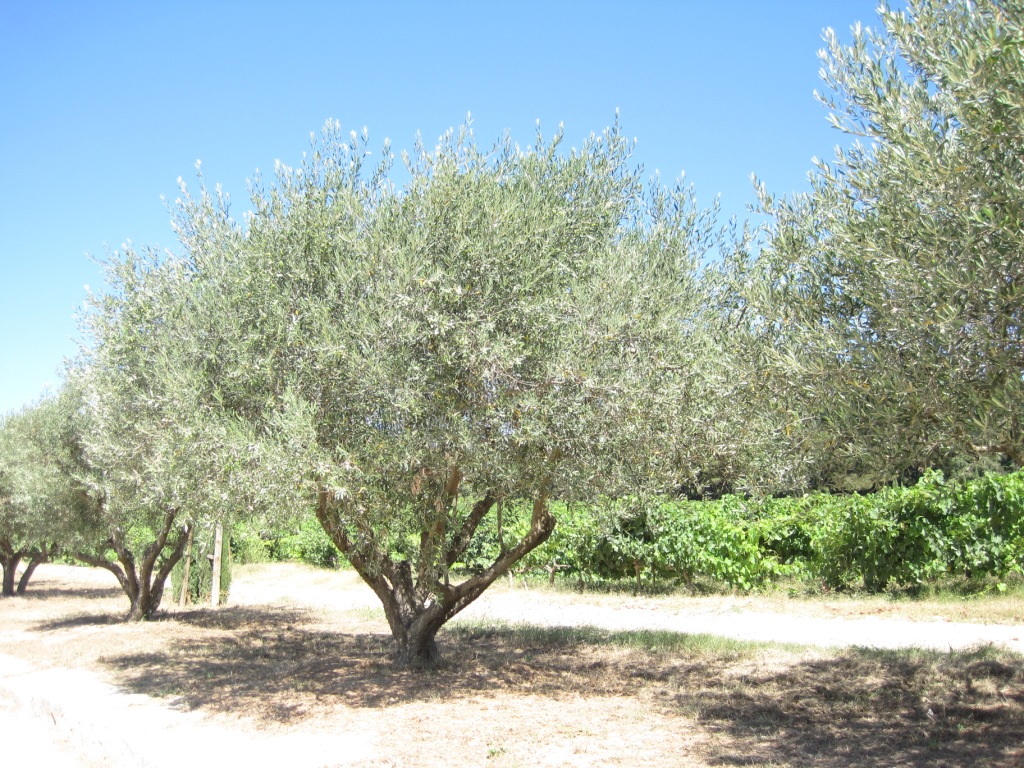
Many years ago, we took our first trip to Provence, France. Topmost on my husband’s must-do list was to hug an ancient olive tree. Who knows why but this cerebral and pragmatic man felt driven to connect with a tree that had stood witness to so much history. It mattered to him. That’s it really, trees are inextricably linked to our human heritage. After all, we used to be arboreal.

Trees are living landmarks. They represent our past and hold our future. They need to be protected, honored and celebrated. Future generations deserve to inherit these treasured monuments of life.

If you haven’t paid much attention to trees lately, been too busy, stressed to the max and feel like you need more hours to the day, I ask you to pause. Trust me, whatever you are doing can wait a bit. Now go outside into the garden or to the nearest park or woods. Pick a good sized tree. Get close and lean into it. Spread your arms around it. Breathe deep.
Notice how you feel. Let the texture of the bark speak to you. Smell the earthiness. Listen to the sounds. Become aware of the dappled light, the temperature of the air and tree, the colors around. Allow the tree to embrace you back. Close your eyes and permit it to comfort you. Remain there for a few minutes or longer. Then, step back and observe how much better you feel. Hug a tree, hug the world.

Ancient olive trees

Ancient olive trees


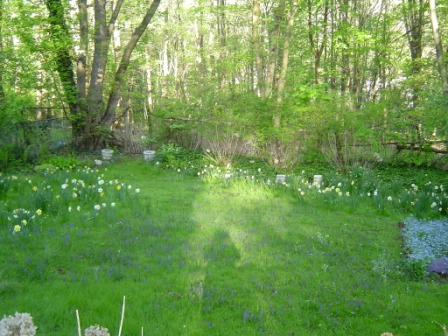
The woods that border my garden

The woods that border my garden


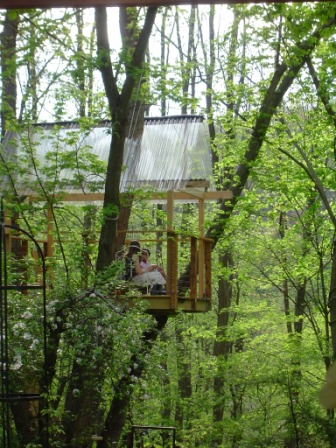
The tree house

The tree house


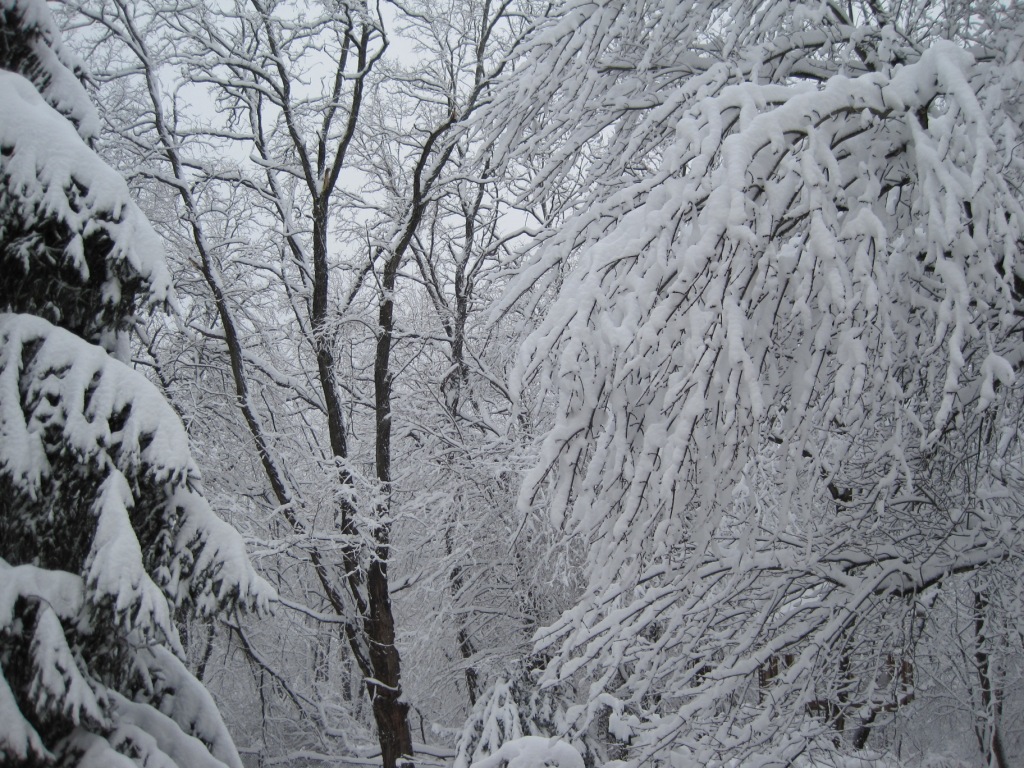
Snow forest

Snow forest


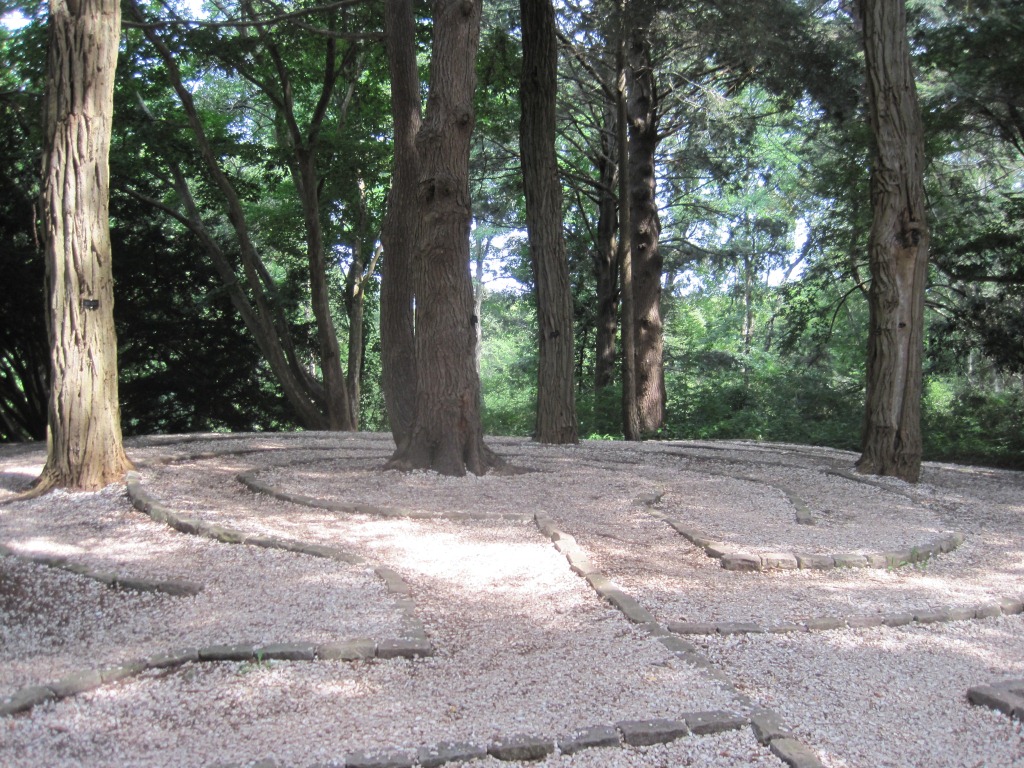
Labyrinth in the woods

Labyrinth in the woods

20140812_050946550_iOS
Note: If you are looking to send secular cards this season, or in need of hostess/teacher gifts, you might want to consider my botanical cards.
(c)2014 Shobha Vanchiswar
[do_widget “Blog Subscriptions (Jetpack)”]

In Nature’s Grace

Every once in a while, we have all experienced something that has felt extraordinary and surreal. Most often, these moments occur unexpectedly and yet, seem so fitting. Like omens or signs that inform us of the good and beauty in our lives and inspire us to do better. A spectacular sunset at the end of a long, hard day, a rainbow following a storm, the first time your baby’s fingers curl around your own. This past Saturday, I was graced with just such a serendipitous event.

There we were, a small group, enjoying the good weather in a friend’s beautiful garden. Over cocktails and small bites, summer trips and other doings were shared. Amidst much laughter and a general sense of well-being, we were in a blissful state of mind. This moment was as good as it gets. And then, the moment got exalted. A hummingbird chose to join us.

It flitted mostly between two pots of pink petunias situated quite close to where we were seated. Apparently unconcerned by our proximity, it permitted us to observe up close. I was in awe of how intimately I could watch it. Normally so quick to move and with fast beating wings blurring one’s vision, hummingbirds, have in the past, proved rather elusive. This was magical.

Not quite able to believe my good fortune, I went crazy with my camera. And still had time to simply watch and admire. That dainty, jewel toned bird hung around for very long. It then surprised us even further as it alighted on one particular member of our group. Twice. Whether it was because her pink pants or white shirt looked like the nearby petunias, who is to know. It still seemed as though she had been specifically anointed.

A little research later on explained that hummingbirds are not afraid of humans and. But I cannot think that what I’d been witness to was so ordinary. For a while there, we forgot ourselves and marveled at one of nature’s ethereal wonders. Our universal delight connected us together even further. Suddenly, we opened up more and got to discussing more personal philosophies. Each of us felt the value of the experience and were a bit transformed for the better. I was reminded once again that I’m divinely privileged to share this Earth with so many wondrous species. We are constantly surrounded by beauty but every now and then, Nature nudges us to truly pay attention. Life is fleeting, be present.

In my research, I came across this: Hummingbirds symbolize great courage, determination, flexibility and adaptability.
Those who have the hummingbird as a totem are invited to enjoy the sweetness of life, lift up negativity wherever it creeps in and express love more fully in their daily endeavors.

I have no idea what my totems are but, I’m perfectly willing to take up the above invitation. Only good can come of doing so.

It is my hope that in sharing the images below, the same good feelings and intentions are passed on to you:
Hummingbird 1
Hummingbird 2
Hummingbird 3
Hummingbird 4
Hummingbird 5
Hummingbird 6
Hummingbird  7
(c)2014 Shobha Vanchiswar

[do_widget “Blog Subscriptions (Jetpack)”]

Summer School

I adore discovering new and surprising information on perfectly ordinary subjects. Since the fabric of life is mostly woven with the routine and the mundane, learning something fresh on a regular basis is what keeps it interesting and exciting. I particularly enjoy facts that remind me that I am part of a much bigger, mysterious, absolutely astounding universe. No doubt you feel the same. Right?

Nature provides an endless source of knowledge and anybody who spends time in it cannot fail to acquire some wisdom. There is gain in every encounter with nature. As part of my Mid-point review (scroll down to see the article from two weeks ago) and my ongoing quest to learn something new everyday, I came up with what I learned since the start of summer. Personal observations, further investigations/research and input from others has kept things around here quite interesting.

I observed that hummingbirds do not like to share. Unlike many birds that feed together at a feeder filled with seeds, these tiny avians prefer to dine solo. A feeder with sugar solution invites them to stop by quite effectively but just watch – while there is plenty of room and libation for all, the bird who is there first will aggressively try to shoo off any other bird also wanting a drink. They spend more time sparring than sipping.

Spiders really do make their webs only in fair weather. IF they continue working during rain, it will be a short storm. You have a better way to predict the weather?

I’ve always known the perfume of flowers is stronger as temperatures rise but now I’ve learned that the fragrance is stronger just before a storm when the air pressure is low. I’ll use that as a reminder to cut flowers to bring indoors before the storm smashes them down.

There is a growing body of scientific evidence establishing a link between urban green spaces and a positive impact on human well-being. Unlike the short lived happiness of pay rises, promotions, purchases or that slice of cheesecake, the positive effect of time spent in nature is sustained for long periods. Reason to get outside and enjoy the green as much as possible. Its no wonder one can come in hot, weary and sore from working in the garden and still feel really invigorated.

Amongst many types of birds, the way to a female’s heart is through her stomach. A male bird will ply his object of affection with juicy morsels of worms and bugs. Charming!

The eggshells of wild birds may act like “sunblock”, scientists in the UK have said. A range of birds’ eggs showed adaptations in pigment concentration and thickness to allow the right amount of sun to reach the embryos. No doubt this information will lead to useful applications amongst us sun loving humans.

We are always wondering if there is life on other planets. But if there is, those life forms must be wondering the same right? If ‘people’ on a planet 65 million light years looked at Earth, they’d see dinosaurs not humans. Imagine that. For now, lets do right by our assigned planet. Because eventually, the time will come when the alien ‘people’ from all those 65 million light years of distance, will see us humans. And we’d better look our best.

As a biologist, I’ve known this next fact but when I mentioned it to some others, they were surprised. So I thought I’d share. Fireflies are not flies. They are beetles. Chemical energy is converted to light energy in a ‘cold’ reaction. This is unusual. Most energy conversions use or generate heat. Thus, fireflies are the exceptions that prove the rule. Huge scientific contribution from a very little guy.

Finally, something to ruminate over: Cows do not naturally eat corn – so why is ‘corn-fed’ beef touted to be superior?

Being curious keeps one engaged and connected to the world around us. There is a comforting reassurance in that. We are all part of the grand web – the spiders as well as the flies. Understanding the seemingly ordinary opens the mind, enriches the spirit. We get a sense of who we are and our place in the large scheme. Q.E.D.

Hummingbird at feeder

Hummingbird at feeder


Hummingbird

Hummingbird


Eggs of a dove.

Eggs of a dove.


Empty spider web in the rain.

Empty spider web in the rain.


#SummerSchool
(c)2014 Shobha Vanchiswar
[do_widget “Blog Subscriptions (Jetpack)”]