Plants That Live In Glass Houses …

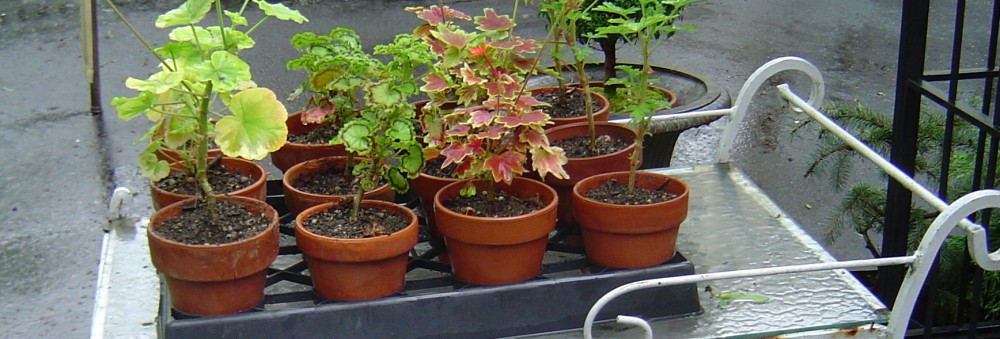
The Great Migration has begun. It started this past Sunday. On what felt like a distinctly mild day in summer, preparations for the imminent cold began. Moving plants into the greenhouse. Its a good prompt for the season. Unlike general chores on the to-do list, this effort is clear in its prerequisites and requisites. It is finite, at which point there is something to show for it.

Don’t let the fact that I’m talking about something most folk do not possess, stop you from paying attention. I think the fundamentals of this effort benefit one and all.

In the interest of plant health and hygiene it is imperative that all residents be cleaned and inspected before entry. This forces me to examine the plants carefully and note what needs repotting, additional organic treatment for simple ailments and, dealing with possible/potential pest infestations. In doing so, I’m taking care of matters that are easily overlooked.

There is only just so much space in a greenhouse. Crowding is achieved rather quickly. Again, this is unhealthy. So, decisions are made about what deserves the prime real estate. With a little thought to the general garden design, hardy plants like boxwood can be situated into the ground. I have two this year that do not look so happy. They’ve been in pots for years and it is is possible that they will recover much better in the ground. I will consider where to plant them and that will make space for more needy candidates seeking shelter.

Plants that are neither hardy nor doing well are tossed. The cost in terms of space and attention is too high for such losers. Its taken me some years to get ruthless.

Those that are selected are given the once over for the space they will require. Good time to cut off dead wood and prune back in general. Height is a major consideration as the highest point in the green house is a mere six feet. Lopping off vertical as well as side growth makes me pretend I’m a big time hairdresser. The end result should look suitably attractive. I wonder if there is a market in the plant world for the ‘Fawcett” or the ‘Anniston’ or the ‘Dorothy Hamill’ or the more likely ‘Einstein’. The more compact size is also advantageous as the energy demand on the plant is reduced. There is less for the roots to feed under less than ideal conditions.

Since I’m pruning anyway, this becomes the time for me to root cuttings of scented geranium, rosemary and bay. And while I’m at it, I may as well propagate some hydrangea. Come spring, there will be several young plants to add to the garden and/or give away. Big dividends for effortless yet, useful work.

In the course of filling the greenhouse, I find myself giving the whole garden the same degree of attention. By starting early enough (but not too early), there is time to do so. Reviewing, editing, deleting, adding, replacing, critiquing are all valuable tasks that are often neglected once the busy-ness of the season takes over. It allows for planning more efficiently and satisfyingly for the next season. I’m made significantly aware of the needs and possibilities. It permits a deeper engagement with the evolution of the garden.

My greenhouse is 12 x 8 sq. feet. By most standards, it is very small. For me, it is a necessary luxury. Heating it for the winter is not cheap. It must be kept clean and well ventilated. Weekly and sometimes bi-weekly watering is required. With plants growing in close proximity, it is crucial to stay vigilant for disease and pests. These ground rules notwithstanding, this glass house is very dear to me. Treasured botanical friends are kept safe here. Several have been in my company for many years. Spring can be jump started because seeds are germinated and nurtured in this warm space while still anticipating the snow melt. Amidst this green sanctuary, I can escape the winter blahs for a while. A soul-lifting, sanity preserving experience. When the jasmine or Brugamansia bloom, they are brought into the house to perfume the nights. Similarly, the primroses in pots display their crayon colors well before their counterparts in the ground outside. Set on a table in the living room, they bring smiles to winter weary countenances. You can see how well this hothouse serves me.

Note: The same approach holds for plants being brought into the house.

Getting ready to root cuttings

Getting ready to root cuttings


Dipping cutting in rooting hormone

Dipping cutting in rooting hormone


Only a bit of the end needs to be covered in the powder

Only a bit of the end needs to be covered in the powder


All ready! Now we wait.

All ready! Now we wait.


Bill Smiles' greenhouse. Mostly orchids because he is the orchid man!

Bill Smiles’ greenhouse. Mostly orchids because he is the orchid man!


Filling up my greenhouse

Filling up my greenhouse


The residents should be well protected when it looks like this!

The residents should be well protected when it looks like this!


(c)2014 Shobha Vanchiswar
[do_widget “Blog Subscriptions (Jetpack)”]

Bloomin’ Onions And Sweet Quamash!

It is already beginning to feel like fall. While the cooler temperatures seem a tad premature, the gardener is already in the season to come. The asters in my garden are popping and the bees seem very happy as they congregate all over the flowers. This year, I remembered to pinch back the asters in July. Their height right now is much more pleasing and less likely to flop over.

The dusky pink flower heads of sedum ‘Autumn Joy’ appear to echo the eupatoriums that blazed all summer long. Although this was not deliberately planned, I like the continuity of color and shape. It has taught me to think along those lines with other plant choices for the various seasons.

The hydrangea are going strong as are the Russian sage and Solidago. In the potager, we continue to harvest herbs, swiss chard and kale. Apples, pears and figs are rounding off meals very satisfactorily. So in the midst of all this bounty, its easy to disregard the signs of autumn. But, we know better don’t we?!

I’m already anticipating the upcoming chores and sourcing plants to add to the boundary of the meadow. Under consideration is a change of plantings in the checkerboard garden but cost might put a damper on that plan. This past weekend, we cleaned and installed each pane of glass in the greenhouse that now stands on a new foundation. My hands have numerous minute cuts from handling all that glass. War wounds to be proud of. When frost threatens, and it will, the tender perennials shall be safely ensconced in the greenhouse.

All the big tasks of cutting back, cleaning up and putting away are best done before the Big Bulb Planting. I’m eagerly anticipating the arrival of my greed driven order of bulbs in early to mid-October.
If you haven’t placed an order or hadn’t really thought about bulbs, consider yourself duly admonished. Imagine that I have looked at you with a mix of shock and derision. And along with, I have verbally expressed matching sentiments. Now, get yourself to a local nursery or go on-line and shop for bulbs.

I personally cannot envision a spring without bulbs. They influence a garden with so much expression and aplomb that it is inconceivable to go without. Given that more is better when planting bulbs, I’m aware that the price of bulbs can scare some timid minds and the faint of heart. Which is exactly why it helps to order in advance from bulb houses. Their prices are best. By the time one purchases at a nursery, the cost has gone up, choices are limited to what is most popular and it feels really prohibitive to buy in quantity. Like a Christmas account, it also helps to put a little bit away each month. I kid you not – I’m that serious about planting bulbs.

However, I do understand that for whatever reasons, one must limit oneself. If you must narrow your selections, go for alliums and camassias. There is plenty going on in early spring. Simply seeing new growth after a long, hard winter is joyous. But later in the season, it is particular nice to see more deliberate drama. Enter the alliums. There is enough of a selection of these members of the onion family to really put in the ‘wow’ factor to any flower bed. Tall, mid-height, short. Big, impressive, ball or dome shaped umbels to smaller, twee ones. Tightly clustered or loose and airy. In hues of pink, blue, mauve, white and the occasional yellow. Alliums are just stunning. Like exploding fireworks.

Camassias are not quite as dramatic but their poker shapes in shades of blue and creamy white punctuate the flower beds rather stylishly. They naturalize easily too.

Both, alliums and camassias are deer resistant. They work well together, enhance indoor flower arrangements and they are at home in formal gardens as well as more naturalistic planting schemes. I have them in my front perennial beds and also in the meadow. In each, they lend a most desirable and yet different impact.

If I haven’t succeeded in convincing your skeptical mind, just go on-line and browse the websites of bulb houses. The luscious images of all the different bulbs will. Fair warning – you will weaken and want far more than you could possibly imagine.
I’ve been shopping at John Scheepers and their wholesale sister Van Engelen for well over a decade. www.johnscheepers.com and www.vanengelen.com. By all means check out other sellers as well. There are indeed several reliable vendors. Prices are all comparable. It is a matter of bulb quality and size and, customer service.

Good news! I’ve responded to the request made by several of you and set up ‘shop’ to sell my botanical note cards. Please check out the page marked Shop. I’ll be adding more collections by and by. Would appreciate your feedback.

Camassia, alliums and tulips

Camassia, alliums and tulips


Allium 'Purple Sensation'

Allium ‘Purple Sensation’


Camassias and alliums

Camassias and alliums


Camassia and myosotis 'blue' up the meadow

Camassia and myosotis ‘blue’ up the meadow


Late May - in the meadow

Late May – in the meadow


IMG_2331
Nectaroscordum - a type of allium

Nectaroscordum – a type of allium


White camassia

White camassia


(c)2014 Shobha Vanchiswar
[do_widget “Blog Subscriptions (Jetpack)”]

Summer School

I adore discovering new and surprising information on perfectly ordinary subjects. Since the fabric of life is mostly woven with the routine and the mundane, learning something fresh on a regular basis is what keeps it interesting and exciting. I particularly enjoy facts that remind me that I am part of a much bigger, mysterious, absolutely astounding universe. No doubt you feel the same. Right?

Nature provides an endless source of knowledge and anybody who spends time in it cannot fail to acquire some wisdom. There is gain in every encounter with nature. As part of my Mid-point review (scroll down to see the article from two weeks ago) and my ongoing quest to learn something new everyday, I came up with what I learned since the start of summer. Personal observations, further investigations/research and input from others has kept things around here quite interesting.

I observed that hummingbirds do not like to share. Unlike many birds that feed together at a feeder filled with seeds, these tiny avians prefer to dine solo. A feeder with sugar solution invites them to stop by quite effectively but just watch – while there is plenty of room and libation for all, the bird who is there first will aggressively try to shoo off any other bird also wanting a drink. They spend more time sparring than sipping.

Spiders really do make their webs only in fair weather. IF they continue working during rain, it will be a short storm. You have a better way to predict the weather?

I’ve always known the perfume of flowers is stronger as temperatures rise but now I’ve learned that the fragrance is stronger just before a storm when the air pressure is low. I’ll use that as a reminder to cut flowers to bring indoors before the storm smashes them down.

There is a growing body of scientific evidence establishing a link between urban green spaces and a positive impact on human well-being. Unlike the short lived happiness of pay rises, promotions, purchases or that slice of cheesecake, the positive effect of time spent in nature is sustained for long periods. Reason to get outside and enjoy the green as much as possible. Its no wonder one can come in hot, weary and sore from working in the garden and still feel really invigorated.

Amongst many types of birds, the way to a female’s heart is through her stomach. A male bird will ply his object of affection with juicy morsels of worms and bugs. Charming!

The eggshells of wild birds may act like “sunblock”, scientists in the UK have said. A range of birds’ eggs showed adaptations in pigment concentration and thickness to allow the right amount of sun to reach the embryos. No doubt this information will lead to useful applications amongst us sun loving humans.

We are always wondering if there is life on other planets. But if there is, those life forms must be wondering the same right? If ‘people’ on a planet 65 million light years looked at Earth, they’d see dinosaurs not humans. Imagine that. For now, lets do right by our assigned planet. Because eventually, the time will come when the alien ‘people’ from all those 65 million light years of distance, will see us humans. And we’d better look our best.

As a biologist, I’ve known this next fact but when I mentioned it to some others, they were surprised. So I thought I’d share. Fireflies are not flies. They are beetles. Chemical energy is converted to light energy in a ‘cold’ reaction. This is unusual. Most energy conversions use or generate heat. Thus, fireflies are the exceptions that prove the rule. Huge scientific contribution from a very little guy.

Finally, something to ruminate over: Cows do not naturally eat corn – so why is ‘corn-fed’ beef touted to be superior?

Being curious keeps one engaged and connected to the world around us. There is a comforting reassurance in that. We are all part of the grand web – the spiders as well as the flies. Understanding the seemingly ordinary opens the mind, enriches the spirit. We get a sense of who we are and our place in the large scheme. Q.E.D.

Hummingbird at feeder

Hummingbird at feeder


Hummingbird

Hummingbird


Eggs of a dove.

Eggs of a dove.


Empty spider web in the rain.

Empty spider web in the rain.


#SummerSchool
(c)2014 Shobha Vanchiswar
[do_widget “Blog Subscriptions (Jetpack)”]

Shaping Up

Its August, its summer, its time to ease up and chill. In my book, that means doing less in the garden. I cover only the bare minimum of required tasks. The fact that I go off on vacation this month does not help matters. As a result, my garden looks distinctly blah at this time. Shabby, shoddy and sad are how I’d describe certain areas.

It occurs to me that I really ought to follow my own advice and prepare in advance for precisely such eventualities. Grumbling around, I find I’m not alone. So, I’ve given the matter some thought and come next August, I’m determined that we present the world with much improved gardens

First and foremost, there is the watering. My policy of watering only the pots and not the beds works effectively for most of the garden. Except the two perennial beds in front. The very beds that are the first to be seen by anybody who approaches the house. The beds look very attractive all spring, and reasonably okay in early summer. But, by mid-summer, when temperatures have soared and rain is erratic, they start to look ragged and unruly. Its taken me a while to admit to myself that I’ve been much too rigid in my no-watering rule. I’ve been expecting too much from these hard working plants. They do indeed grow without extra watering but they simply cannot look lush and bloom prolifically which is what is needed in a flower bed. Mind you, the plants placed here for summer display are mostly native choices. Which is why they can survive okay. However, to thrive, even natives must be provided better conditions. While it does not matter how they do in the wild, within a contrived space like a garden, it does. Hence, my decision to water these beds more regularly. As much as possible, I’ll use rain water from the barrel and when that supply runs low, I’ll use the hose. I shy away from automation because I feel it disconnects me from the plants and leaves me unaware of their needs and progress.

Deadheading and weeding regularly will of course go a long way. Mulching well will reduce the time required for the latter considerably.

The remaining tasks need to be done in advance of summer:

Herbaceous plants need dividing every few years to keep healthy. Otherwise, they stop blooming well.
To do this, the plant is dug up and divided by prising roots apart. New growth from the edges are replanted and the tired, center of the clump is discarded. Fall is a good time to divide plants. Feed with compost. Water well till established.

Borders with many, established plants require staking to stop them from drooping or flopping. Placing the stakes as plants begin to emerge makes the task easier. Natural materials like twigs and bamboo blend into the background very nicely. This practice gives the beds a neat and cared for appearance.

Hedges, certain edging plants like boxwood, topiaries, rambling roses and other climbers need taming. Prune, trim, pin back or tie back as needed. Again, this tidies up the look of the garden.

Voila! The garden looks infinitely better.

I’m sharing images of gardens that look vastly better than mine at this time of year:
IMG_6794
IMG_6797
IMG_6846
IMG_6852
IMG_9229
IMG_9248
#summerplans#shapingup
(c)2014 Shobha Vanchiswar

[do_widget “Blog Subscriptions (Jetpack)”]

Part II – On The Pesky Matter of Illegal Aliens.

Its been tough getting around to the weeds this time of year. The moment I step outside, I feel the heat heavy with moisture as though anointing and wrapping me up to send me into a state of torpor. Mostly, it succeeds. Its so much easier to simply give up and find solace in a cool drink and hot book. But the gardener in me is stubborn and cannot succumb to such temptation. At least not all the time. Snatching time in the transiently shady areas I do a bit at a time. This works somewhat as by the time the sun has made its quotidian circuit, a goodly portion of the garden has been weeded. It leaves me feeling smug and accomplished. Until I make the mistake of visiting gardens tended by obsessively compulsive friends. My own efforts look distinctly shabby.

To top it all, I’ve spied an army of Japanese beetles in the front perennial beds. War has been declared. Armed with a tub of soap solution, the enemy is picked off and tossed into it. I accept that each day is a battle to be won.

Back to the weeds. The reason weeds are so much more resilient and hardy is that the seeds of many species can survive for an incredibly long time (think decades) in the soil. When conditions are favorable, the seeds sprout. In addition, each weed plant produces hundreds of seeds. You do the math.
I did promise to impart some choice nuggets of wisdom and I realize that might well be a matter of opinion. So here goes.

The tip I give out most often and one that is universally liked is the simplest method for getting rid of weeds that show up in areas with flagstones, bricks or gravel. Its hard to tackle weeds in the spaces between. All too often, the chemical control is used. Instead, on a day when rain is not forecast, pour boiling hot water on the weeds. It will do the trick. Thats it. I’ve been doing this quite effectively for years. Frequently, the water from boiling eggs or vegetables is taken outside right away and dumped on the brick walkway just to take care of any weed contemplating a visit.

This next one is a preventative measure – Within a flower or vegetable bed, once the plants have been planted, cover the soil with a good four inches of newspaper. Conceal the newsprint with a layer of dark wood bark mulch. Please refrain from the red mulch as it not only looks like the landscaping in some industrial/commercial properties but it’ll draw the eye to itself rather than the plantings.
The newspaper will suppress weeds, retain moisture and eventually breakdown and integrate into the soil. Compost can also be used for the same purpose. I use newspaper in flower beds and compost in vegetable beds, lawn and other open spaces. The idea of recycling/re-purposing something is both boon and bonus.

In hot weather, weeding is best done in the cooler hours of the morning. This practice gives me enormous satisfaction as it keeps me motivated for the rest of the day. Weeding every other day keeps one on top of the problem and as a result the time required each day is considerably shortened. This is perhaps the strongest and most effective form of weed control. I cannot emphasize it enough. Research shows that being consistent and diligent with weeding, will, over time, reduce the number of viable seeds in the soil. So, fewer weeds and more time to enjoy the hammock and stack of books.

Finally, if you can’t get rid of them, eat them! Okay, maybe not all weeds are edible but many are. Combine young, blanched dandelion leaves, the smallest and most tender sorrel leaves in equal proportion. Dress lightly with lemon, olive oil, sea salt and pepper. Add roast chicken and you have a simple yet lovely meal. To blanch dandelions – upturn a flower pot over a whole dandelion plant in the ground. Without sunlight the leaves grow paler, longer and sweeter. In a bit over a week, the whole head of the plant will bear such leaves. Pick, wash and dry thoroughly.
Another way to eat this plant is to take two blanched heads, washed and dried. Put in warm bowl. The bowl is warmed so fat does not congeal. Fry up thin strips of bacon till crisp. Add bacon and fat to dandelions. The warmth of the bowl and heat of the fat will wilt the leaves. Quickly deglaze pan with a tablespoon of red wine vinegar and tip the hot liquid over the salad. Serve right away with good crusty bread.
A friend of mine used to make wine from young dandelion leaves. It was not half bad.

In Greece, a variety of early spring leaves like chard, sorrel, parsley, mallow, dandelion, nettle tops, poppy tops and rocket are thoroughly cleaned and then boiled in salted water for five minutes. All the water is drained and squeezed out from the wilted greens. Dress with lemon juice, olive oil, salt and pepper. Serve.

A common weed like purslane adds a nice, sour green note to a salad and cuts the bitterness imparted by arugula (rocket) or dandelion.

Through the ages, in many cultures all over the world, a number of what we, today, might call weeds were commonly used for food and/or medicine. They still are. Case in point is the Plantain weed or Plantago Major. Unless you use awful chemicals, and I have faith that you don’t, you have it growing in your garden somewhere. It is native to Europe and parts of Asia, but introduced to North America when the settlers came. The leaves are actually edible and somewhat similar to spinach, though slightly more bitter. They can be used in salads or other culinary uses. Medicinally, the leaves can be made into a tea or tincture, and this is said to help with indigestion, heartburn and ulcers when taking internally. Externally, Plantain has been used for insect and snake bites, and as a remedy for rashes and cuts which we use as a natural antibiotic ointment on cuts and bruises. The natural antibacterial and anti-inflammatory properties of plantain leaf make it great for healing wounds, and for itching or pain associated with skin problems. A tea made from Plantain leaf can be sprayed on mosquito bites to ease the itch.

Thus, you see, its all in our perception. What we choose to include, what we’d rather not encourage and how we view them all is relative. So lets not sweat over the small stuff, theres a summer to be enjoyed.

Disclaimer: Please do not go on my word alone and ingest any weed I’ve mentioned. Personal immunities, allergies and tastes are subjective. Just as foraging for mushrooms in the wild assumes a certain risk, the same goes for plants not routinely cultivated. Do your research and really understand the plants and their properties before nibbling.
As I do not have photos of weeds, I thought you might instead enjoy some photos I took this past week.

This frog looked rather alert -  ready for the unsuspecting fly.

This frog looked rather alert – ready for the unsuspecting fly.


The pattern of the Echinacea 'cone' fascinates me.

The pattern of the Echinacea ‘cone’ fascinates me.


Fern in vertical garden. Such a cooling sight.

Fern in vertical garden. Such a cooling sight.


And what is July without fireworks?!

And what is July without fireworks?!


(c)2014 Shobha Vanchiswar
[do_widget “Blog Subscriptions (Jetpack)”]

On The Pesky Matter Of Illegal Aliens. Part I

I have very strong feelings about allowing in illegal aliens. I think it is a matter of cultural integrity and maintening ones special, exclusive status. Border control must be seriously tightened and constant vigilence is in order. How else can we preserve the integrity of our land? Have I made you feel a little uncomfortable? A tad unsure about where this is going? Worry not, I’m talking about a different type of illegal alien – an unsavory assortment lumped into one abhorrent group under the banner Weeds. Have I got you on my side now?!

Anything not desired in certain parts of the garden is a weed. In my garden, what is strictly not allowed in one area is permitted to run rampant in another. I’m fickle that way. See, its a case of behavior and purpose. While a plant is well-behaved where it is controlled by not-so-perfect conditions, it can run riot elsewhere when given all that it enjoys. Case in point are the hellebores. Given an extra dose of daily sunlight and a thicker layer of mulch in the perennial beds, they do not selfseed as prolifically as they do in semi-shade. I can only vouch for this in my own garden. And it suits me fine. Providing less than perfect conditions is a way to exercise some control over plants that are, in general, well liked and welcome.

But this practical approach has not the slightest impact on true weeds such as chick weed, crab grass, pigweed, curly dock, horsetail, bindweed and so many others. Those are the ones that are not to be tolerated any where. They behave like thugs, gang members and, murderers. Some are super sneaky and go unnoticed by blending in while others grow so fiercely that they can be mistaken for a genuine stalwart of my garden. The very nerve.

Now that we’re well into summer and the horrid, humid heat is on high, the weeds are about the only group of plants that are completely unfazed. Requiring absolutely nothing from me and my numerous horticultural services, they thrive in abundance. I find this quite unfair and take it as a personal affront. After all, I permit just about anything in my ‘meadow’. (Garlic mustard and other invasives are of course forbidden). Even in my handkerchief size front lawn, I’m not going for pristine. Clover, burdock and anything that is green participate in giving me the desired verdant counterpoint to the perennial beds. Between the two areas they must make up at least half the size of my garden. I feel I’m being mighty generous and accomodating to the weeds. But no, they are greedy. They want to trample all over the flower beds, paths and any place restricted. I work so hard to discourage them. Composting and mulching to suppress their residency. Patrolling regularly and pulling them out ruthlessly (and rootfully!). It is plainly an unending chore.

Interestingly, charmers like the rambuctious and strong-willed Mysotis and Ajuga that bloom so beautifully with the daffodils in the meadow know they are not to show up elsewhere and therefore do not do so. Why can’t the weeds learn from example?

Needless to say, I’m a tad miffed. It is just not fun spending so much of the cooler hours of the day in the tiresome pursuit of ridding the cutivated areas of these cunning interlopers. But there it is. No other way around it. Rather grudgingly I admire their persistence and resilience. Someone ought to locate and isolate those specific genes and put them into the plants we love but are ever so fastidious and/or delicate. For the time being, I accept this as the price I must pay for my organic corner of Paradise.

Next week, I shall continue on the subject of weeds and dazzle you with some nuggets of handy information. Wait with bated breath!

A charming quartet in the meadow - daffodils, dandelions, ajuga and forget-me-nots.

A charming quartet in the meadow – daffodils, dandelions, ajuga and forget-me-nots.


The much maligned dandelion is made very welcome in my meadow.

The much maligned dandelion is made very welcome in my meadow.


(c) 2014 Shobha Vanchiswar
[do_widget “Blog Subscriptions (Jetpack)”]

Blurred Lines

There is much chatter in the gardening community. Words like native, natural, informal, climate change, environment, jungle, ecology, organic are bandied about loudly. Even forcefully. As in all situations with many voices and opinions, it results in confusion. The voice that gets recognized and whose opinion might prevail is not necessarily the wisest. Politics ( yes, even in the garden world), public profile and personality all play strong roles in swaying the vote on what is responsible or modern gardening. Gardening is often a victim to trends and fashions which can do more damage than good. The gardener must stay alert so she does not fall prey to them. So, how does she sort out all the information and do the right thing for garden and self? How does she express herself without feeling overwhelmed or for that matter, without being judged in a negative light?

According to the Merriam- Webster dictionary, a garden is a plot of ground where herbs, fruits, flowers, or vegetables are cultivated. The Oxford English dictionary goes one step further in clarification – “A piece of ground, often near a house, used for growing flowers, fruit, or vegetables.” Are we clear on this? Straightforward and simple I should think.

With that said, lets just get comfortable with making a garden to suit our needs – be it for the sake of beauty or food or a combination thereof. This will run the gamut of extremely ornamental gardens that are tasteful and elegant and most often high maintenance to the untidy, charming cottage garden where the rules are very relaxed. The idea is to make a space that closely reflects the gardener’s personality and preferences. To do that in conjunction with values that support and nurture the environment is not difficult. Think organic practices and planting more native trees, shrubs and other plants than non-native representatives. Avoid anything that is invasive or fussy. Composting, using water judiciously, reducing the lawn area are additional factors to include in being a responsible, environmentally conscious gardener. All of this sounds familiar and doable right? Nothing new. I, myself have expounded often on this subject.

Now comes the confusing part. For the purpose of keeping it simple, I see it as two dominant factors to consider. One is the current buzz-phrase of bringing the jungle to suburbia. Several have written about their ‘successful’ experiment and how happy they are with it. I wish them well and if that is what floats their boat, so be it. But I’m not clear as to why exactly that is touted as a more intellectual or informed approach to what one does with their suburban land. Should I hang my head in shame or feel ignorant with my own efforts at creating an attractive, more orderly, organic garden that is quite un-jungle in design and that still supports plenty of birds, bees, butterflies, toads, bats, wasps, snakes, rabbits, occasional deer, surplus of squirrels, nocturnal prowlers like skunks, raccoons and sneaky rodents? Is a garden that looks like a garden suddenly not cool?

If a jungle is desired, wouldn’t it be simpler for the individual to move to the jungle? Exactly what type of jungle is being created? A true recreation of one that can be found in nature and that has arrived on its own to a state of balance? Where canopy, understorey and forest floor are in harmony as are the creatures that inhabit such a place? Or is this a melange of plants whose fruit offer sustenance planted together in a manner that resembles a jungle but would in nature not be found in such proximity to each other? And what of the diverse insects and small animals that reside in jungles – are we all to accept the very critters that forced humans to create their villages so we could live feeling safer not to mention live healthier lives?

For the record, Merriam-Webster defines jungle as -a : an impenetrable thicket or tangled mass of tropical vegetation
b :  a tract overgrown with thickets or masses of vegetation

I don’t pretend to be an expert by any measure but I do know that I represent a large body of intelligent, responsible gardeners who go about cultivating their land to create beauty and produce. I definitely do not desire a jungle around my house. I like a sense of order and even my ‘meadow’ is an area of controlled chaos. The creation of said meadow has got rid of a wasteful lawn, is mowed but once a year, permits the growth of anything that wishes to be here and yet, what meadow in America is naturally full of daffodils, crocuses, alliums, scillas, frittalarias and other bulbs and the whole contained within a boundary of assorted shrubs? You see what I mean? I did it my way.

The other point that has come up is that of planting only natives. As I’ve said before, being scrupulous about this means we rid ourselves of old favorites like lilacs, Asian wisteria, peonies, many roses, hydrangea, most bulbs, innumerable fruit and ornamental trees and, countless more. My take is to plant more natives and include only non-invasive non-natives. Native plants help preserve natural diversity. A few years ago, when I asked about planting perennials in my garden, professor of entomology and wildlife ecology Dr. Douglas Tallamy told me that in planting natives, the emphasis should be on the bigger plants like trees and shrubs because these are the plants that support the native fauna and hence keep a natural equilibrium going. I recommend his book Bringing Nature Home.

Here comes the rub. With the changing climate, some natives are no longer growing where they used to and others from elsewhere ( non-natives) have been observed to be sources of nectar for native pollinators and seed dispersers. This is big. How does one reconcile ones principals of gardening with natives to the climactic changes going on?

There is no simple or immediate answer to this conundrum. For the moment, we must keep doing what is correct for the environment and our conscience. Just be prepared that a shift in what we plant is in the cards.

Keeping that in mind, go ahead and create a garden, enjoy the process as well as the space, take time to get in touch with your inner naturalist and finally, stay informed on developments in the fields of horticulture and environmental sciences. Fads and trends be damned. Follow your heart and the little voice that tells you right from wrong. Lets not kid ourselves and blur the lines between garden and jungle. Humans left the jungle for good reason.

The meadow with camassias in bloom

The meadow with camassias in bloom


Daffodils in meadow

Daffodils in meadow


The orderly herb garden and potager

The orderly herb garden and potager


Part of the resident wildlife

Part of the resident wildlife


Checkerboard garden

Checkerboard garden


Walkway in pristine lawn? Not at all - its merely a green backdrop for that walkway - full of what many would shudder to have in their lawns!

Walkway in pristine lawn? Not at all – its merely a green backdrop for that walkway – full of what many would shudder to have in their lawns!


(c) Shobha Vanchiswar
[do_widget “Blog Subscriptions (Jetpack)”]

Perfectly Imperfect

As I get my garden ready for my Open Day (May 10!), the drive is to show its beauty. I’m not running around plonking down new plants just for appearance. I’m acutely aware that as much as being drawn by the flowers in bloom, it is the design and plan of the garden that must shine. The juxtaposition of unlikely materials such as brick against slate, the unusual solution to a common problem, the provision for outdoor celebrations, applying sustainable gardening practices, being creative and so on. In essence, a garden must teach as much as it must impress. Personally, I want my visitors to leave enriched and inspired in a way that empowers them to approach their own gardens with fresh ideas and a can-do attitude.

With the thought to instruct, it is incumbent then to be honest about what goes on. While the garden gets tidied up and the mess put away, there is no pretending that it is more than what it is. For example, given the longer than usual winter, the emergence of certain plants is slow and it makes no sense to replace it with a new, more mature versions just to create a lush effect. To try and fool a visitor would also be insulting their intelligence. The very quality of the visit is diminished.

On the same vein, the gardener too must be honest with herself. No illusions of grandeur unless of course your garden is in Versailles. Similarly, a vast formal garden should not be declared to be humble or modest. Lets just keep it real. I recall having some neighbors taking offense when I called my home a cottage. Somehow, that implied it was less than good and by extrapolation, they were jostling with the not so affluent. But in truth, my home is indeed of modest proportions and is quite accurately a cottage. It is exactly what suits me and my family. Nothing more nothing less.

A formal garden to this house would be equally pretentious. No matter that copious amounts of time, money and energy go into creating and maintaining its informal style.

The biggest stumbling block for most gardeners is the unrealistic goal for perfection. To them and to everybody caring to listen, I say – allow for imperfection. Its okay. There will always be flaws in everything. You won’t get all the weeds, bugs will find a way to make holes in the leaves of roses, organically grown fruit will have blemishes, the dry shade under the trees will always be a problem area and will never look lush, where the dog likes to hangout will forever look like where the dog likes to hangout. Its all right – it shows that life happens here.

So do your very best to clean, tidy, care for and create beauty in your garden. But at the same time don’t obsess. Think about those gorgeous Persian carpets that all have a mistake deliberately woven in. Because after all, only God can achieve perfection.

I invite you to come to my imperfect but charming garden on May 10. www.gardenconservancy.org/opendays

The cottage and part of the front garden

The cottage and part of the front garden


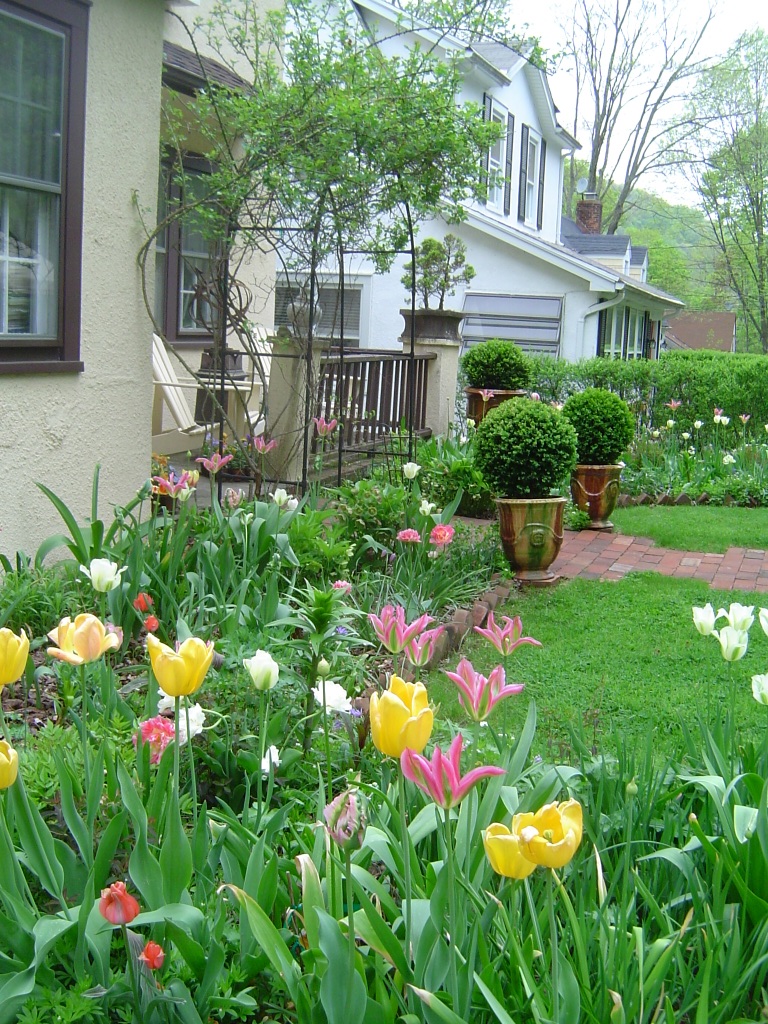
Bulbs in bloom

Bulbs in bloom


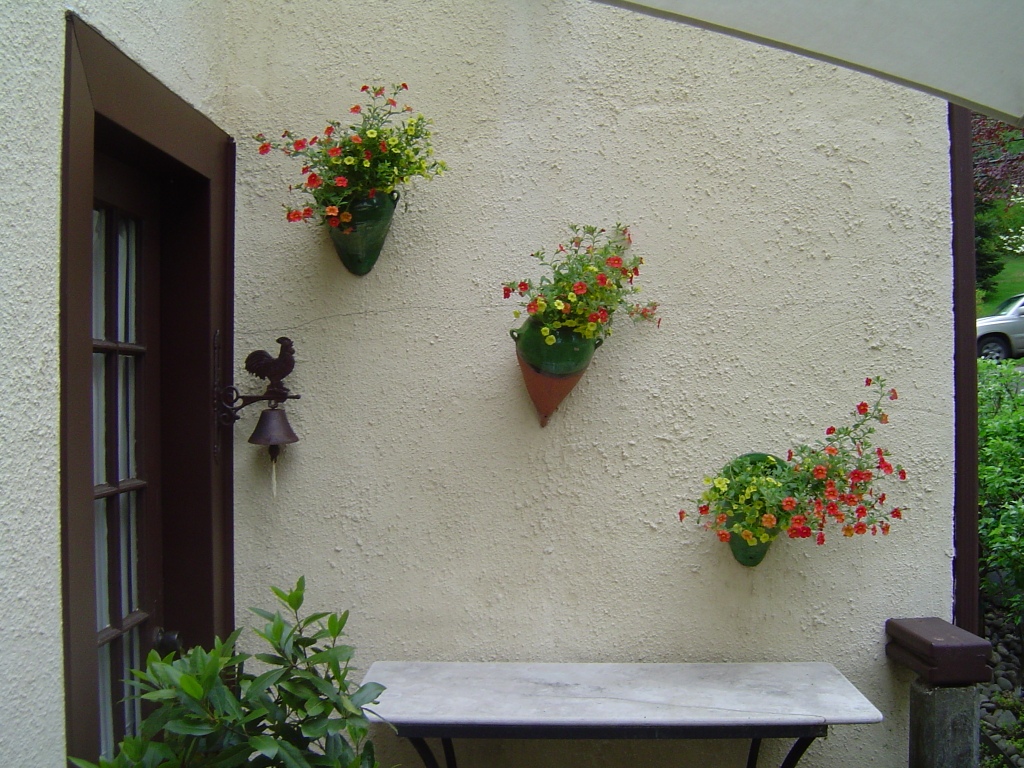
Wall pots in bloom
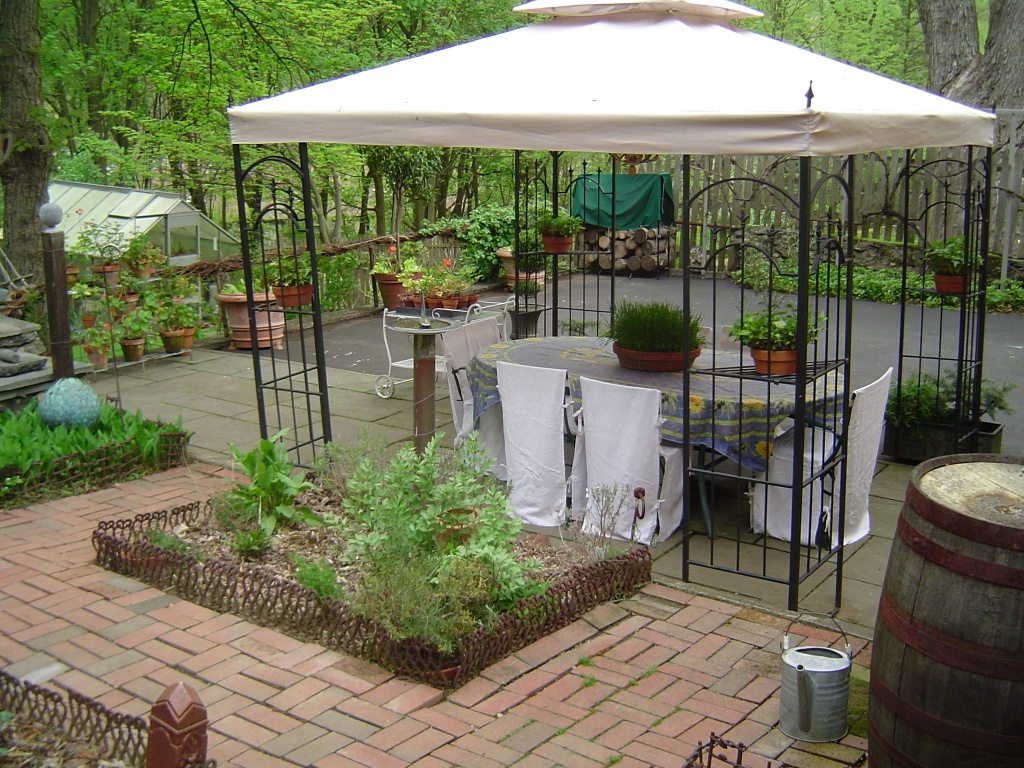
Herb garden and terrace

Herb garden and terrace


Wood burning oven and checkerboard garden

Wood burning oven and checkerboard garden


The 'meadow' and treehouse

The ‘meadow’ and treehouse


(c) 2014 Shobha Vanchiswar
[do_widget “Blog Subscriptions (Jetpack)”]

Know Thine Enemy


Caution: the topic is important and this article is a bit long. So get yourself a drink of choice, settle into something comfortable and read.

As gardeners, we are in an age old battle with pests, marauders and acts of nature. Traps, sprays, baits, decoys and such have occupied the attention of every generation. Growers try to come up with hardier, disease resistant plants all the time. Inventors and scientists attempt to answer the besieged gardener’s prayers with new contraptions and devices while yet more scientists introduce new strains of bugs, genetically modified plants and compounds to do battle. Its always a case of trying to stay one step ahead of the enemy isn’t it?

Just as we treat our own ailments specifically, it behooves us to do the same with our gardens and crops. To truly understand the problem translates to going beyond addressing just the symptoms and targeting the causal agents themselves. General plant hygiene is a necessity. Regularly cleaned equipment and tools, uncontaminated compost, mulch, water and soil, proper air circulation are all part of good plant husbandry. Yet, despite our best efforts, disease and pests will appear. So its important to study up.

While it is beyond the scope of this site to enumerate all the problems and solutions, I want to emphasize that it is incumbent on each of us to take responsibility to learn about such matters and take the appropriate action. To that end, I’d like to summarize a talk I attended recently. Titled “Bees, Trees, and Berries: How global plant movement and change can affect our gardens” it was given by Dr. Margery Daughtery. Informative and interesting, Margery managed to convey a serious, heavy topic with humor and clarity.

To start with, the particularly hard and wild winter is some indication of the climate changes underway. It is up to us to adapt and cope. There has been the thought that the harsh winter might have helped in diminishing the presence of ‘stink bugs’ and other pests. Margery broke the news gently – not true. The pests will be slow to start but being rather well suited to the human lifestyle, they are fully capable of getting through rough times. Be warned and stay vigilant.

Microbes have the happy (for them) ability to mutate. So, as we introduce resistant plants and treatments, we can expect to see many of the pests mutate accordingly. This has been already observed in fungi that cause rust diseases. Meanwhile, something remarkable and alarming has been observed in Europe. The TRSV virus is a well recognized plant pathogen. Its genetic material is RNA. This has mutated and converted to get into the central nervous system of the honeybee. It is now thought of as a significant cause of colony collapse disorder in the European Apis mellifera. Scary right?

Regarding boxwood blight – first and foremost one must be certain the problem is indeed blight and not stress which can be due to the normal effects of winter or the heat of summer. There is a fungicide spray available to prevent the blight. Margery pointed out that it did not make ecological or economic sense to spray year round. Since spikes in the blight have been noted in certain months, it would be prudent to spray just before those periods. What is yet to be determined is exactly when would be those ideal times. Research has been slow. Stay tuned. On the up side, this disease is not wind borne and is slow to spread. Certain types of Korean boxwood appear to be more resistant. Many alternatives to boxwood exist. Let me know if any of you need more information.

Speaking of slow research, there is still no good news with the problem of powdery mildew in impatiens. For now, impatiens lovers are still advised to plant New Guinea impatiens.

The situation with the rose rosette nuisance, if a plant is affected, pull out the whole plant and dispose off with the garbage. Do not compost. Knock Out roses are observed to be more susceptible. Select hardier roses by looking up (Google) university sources whose research is the most reliable. Help steer Extension Centers like Cornell and botanical gardens by seeking and supporting their work. They really are our command central for all matters horticultural.

Planting native trees is one of the single most positive action we can take. Bringing balance to the ecology, maintaining equilibrium of the carbon-cycle and fostering the helpful fauna, forests cannot be beat. As I’ve said here many times, go forth and plant a native tree. Arbor is this Friday – observe it!

This talk was the third and final part of a series. The crux of it is that we must be vigilant about alien diseases and bugs that sneak in not only with plant material from other parts of the world but also hitch rides on palettes and crates for other imports. In my opinion, it is simple enough to say “Grow, make, buy, use American!” but much harder to implement. The world has shrunk and all countries are dependent on each other for so very much. Travel, commerce, tourism has grown. There is no turning back.But we can each do our part I should think?

In the garden, going native is much easier. These plants are naturally hardier, less fussy and more disease resistant. Plant non-invasive, well understood non-natives only. Obtain plants from reputable nurseries and growers – preferably local establishments. Keep in mind, the local places operate under the same conditions as you do. It stands to reason that their plants will do well in your garden.

It ultimately comes down to every gardener to familiarize him/herself with the problems, understand the causes and then act with intelligence and foresight. Know thine enemy indeed.

After such a serious piece, here are some cheery photos. This is why we garden! And remember – my garden is open May 10. Click on the Happenings page for details.
Osteospermum and pansies in urn
Primroses
Red tulips
Fringe tulips. Crystal Palace.
(c) 2014 Shobha Vanchiswar
[do_widget “Blog Subscriptions (Jetpack)”]

Going Back To The Future

When I was growing up in urban India some decades ago, plastic, other synthetics or processed were not mainstream. Shopping bags were made of cloth and we took our own to the shops. Toys were mostly made of wood, paper, cloth or metal. The clothes we wore were of natural fibers such as cotton, linen, silk or wool. Food was stored in glass or metal containers. Meals were prepared from scratch with fresh, seasonal, local produce purchased from vendors in the neighborhood. Water, electricity and fuel were judiciously used. Paper, metal, cloth and glass were recycled after they’d first been thoroughly used and reused, composting was commonly practiced and walking was the most common means of getting to places in the neighborhood. Pure coconut oil was used to keep hair and skin soft and silky, face-packs of plain yogurt and chickpea flour made faces glow while body scrubs of sugar, lemon juice and coconut oil effectively and safely exfoliated our skin. No worries about parabens, artificial coloring or perfumes. The leitmotif that played through our lives was simple, organic, natural.

Fast forward to 2014 USA. We are being coaxed, cajoled and convinced to rethink our current habits and move to, wait for it, simple-organic-natural. What was old is new again. Only this time, there is ample scientific/medical/sociological data to corroborate the advice. Somewhere between the years of my youth and middle-age, we were seduced by products and methods that were brilliantly touted as convenient, time saving and less expensive. We know now that much of this has come at great cost to both the health of our planet as well as our own physical, mental and spiritual wellbeing. But this is not about slamming all things new. Certainly, great progress in understanding and helping our needs has been made. I’m grateful for many modern conveniences and necessities and would not consider turning back the clock all together.

That said, there are several things from yesteryears that we have already adopted back into our lives. Recycling, composting, going organic, energy conservation, avoiding processed foods, shopping local are some of the those. But, it wouldn’t hurt to consider more of the old ways in our gardens and by extension, the earth at large. It is not a matter of whether or not one believes in climate change. It is elementary that every action results in an equal and opposite reaction. So each time we do something to the land or the atmosphere, we are creating a shift in the balance. That, will naturally have consequences.

It stands to reason that we examine and revive some forgotten, yet correct practices. From re-establishing windbreaks of trees to protect the soil and crops to encouraging open pollination, the time is ripe. Looking to the past would be very instructive in how we not only protect the earth but in controlling the damage we have already wrought. Our very survival depends on this.

Take the case of trees. We are either denuding entire forests for purposes of construction or drilling or we are hugging trees and cannot, will not allow any cutting down at all. In both cases, it is misguided and short-sighted. Let me explain with two examples.

The first is the ancient craft of coppicing. This the regular cutting of trees and shrubs to ground level. On the face of it, it might sound destructive but there are clear environmental benefits to be reaped. This cutting down permits light to reach the forest floor which in turn encourages a rich variety of flora and fauna to thrive whilst providing a renewable timber source from the strong re-growth from the coppiced trees or stools. Many trees make new growth from the stump or roots when cut down. Hence, regular coppicing is a sustainable way for to get timber for various uses. Without the filtered light, many plants would never grow. Consequently, the creatures that seek such plants would not venture to these parts. You get the picture.

The forest or woodland is harvested in sections on a rotation basis. This means there is a crop ready each year somewhere in the woods. This traditional method of woodland management is beneficial for great biodiversity. It also maintains trees at a juvenile stage which means coppiced trees will never die of old age.

The second example concerns the Aborigines of Australia. For millenia, they managed the continent like a garden. By effectively using controlled fires they kept the flora in check. The grasslands that resulted from this practice attracted animals which could be hunted to feed the Aborigines and at the same time, they provided huge firebreaks that prevented the devastating fires that are today becoming increasingly common.

With the arrival of Europeans, many new plant species were introduced and the native people were displaced. Without these indigenous caretakers, the plantings went wild. A practice perfected over tens of thousands of years was effectively stopped almost overnight. Experts on fire prevention and environmental preservation are now calling for a return to the old ways. Ironically, there are conservation groups against the use of this ancient method. Their heart is in the right place but they need to understand the obvious science behind it. It really comes down to each of us taking the responsibility of becoming knowledgeable and using that knowledge correctly.

There is plenty we can learn from old, time-tested ways of maintaining our land and our lives. Everything from the past is not bad, naive or based on ignorance. After all, we don’t need to reinvent the wheel. The ancients already gave that to us.

Love the peeling bark. It positively glows in sunlight.

Love the peeling bark. It positively glows in sunlight.


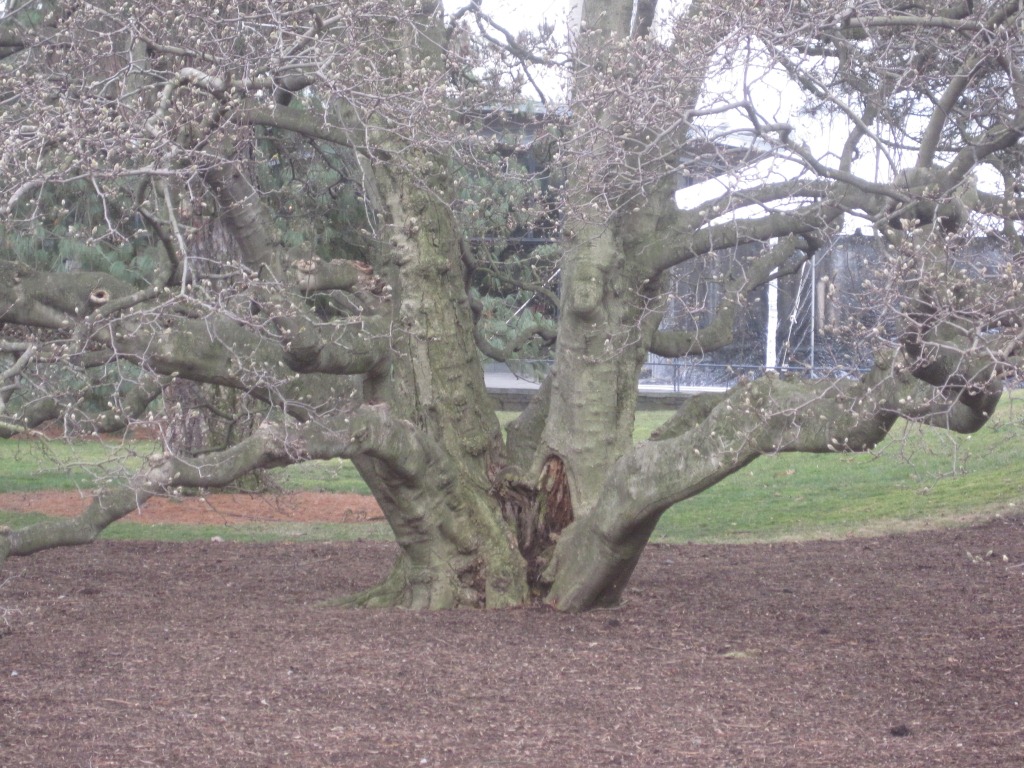
Tree
Tree
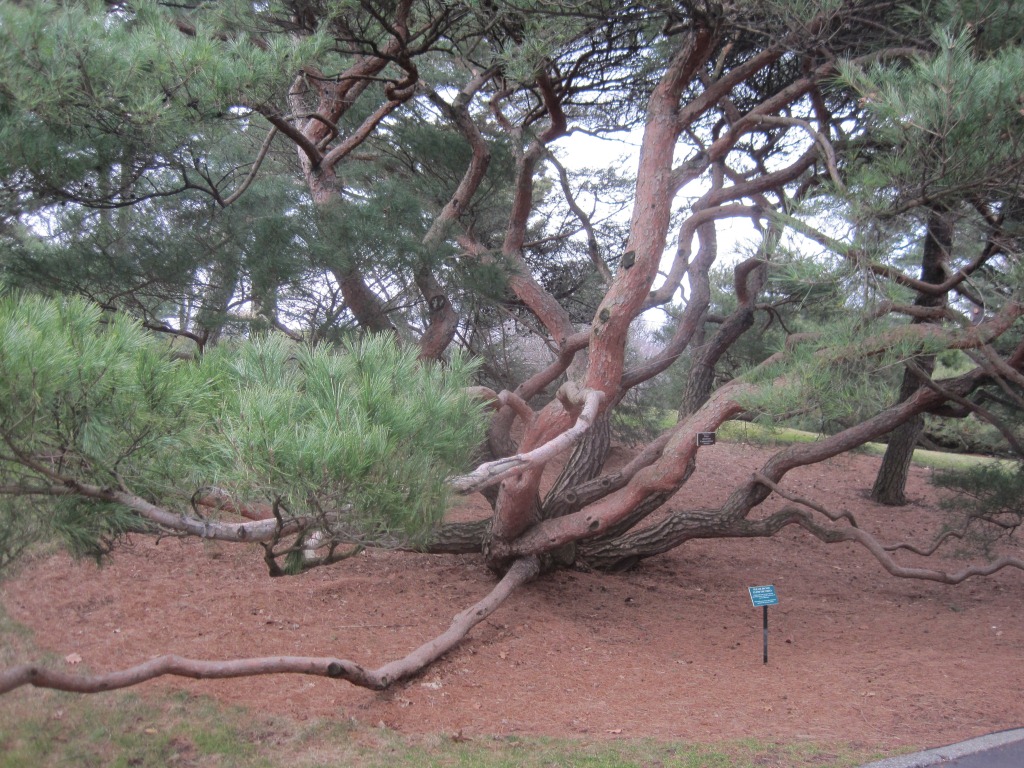
Tree
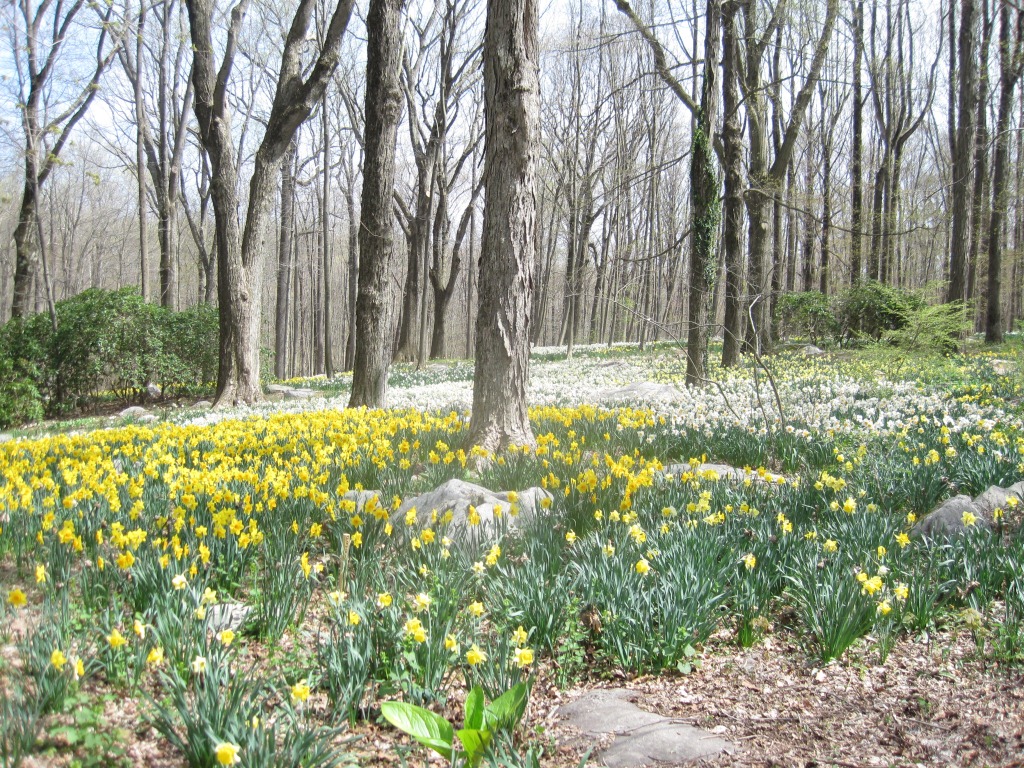
Daffodils in woodlands

Daffodils in woodlands


(c) 2014 Shobha Vanchiswar
[do_widget “Blog Subscriptions (Jetpack)”]