Indian Summer

No, not that kind of Indian summer. I’m talking about summer in India. Okay, so it is still February and not actually called summer in India but it is 90 degrees in Mumbai and definitely feels like summer. So there.

Strange as it feels to bask in this heat having only just left New York in the throes of winter ( which apparently is currently simulating spring), I’m instantly transported to the summers of my early childhood. The scene here is actually nothing like those memories – hot and dusty, it already looks parched and eager for the monsoon rains. The trees and shrubs while appearing to be robust impart an air of exhaustion from the layer of dust choking the leaves. As though newly arrived from great journeys, they hang like weary travelers in need of food, drink and a long shower.

The air is drier than usual. Mumbai being an island in the Arabian Sea, is prone to the humidity characteristic of all coastal regions. I’m not missing the humidity however. The dry heat is much more tolerable. At the markets, ‘winter’ fruits are still found. Grapes and citrus mostly. Guavas are just beginning to emerge on the fruit sellers carts. I see lots of tomatoes which feels kind of odd as I’ve grown accustomed to them flavoring my summers back home but, certainly not unusual for these climes to have tomatoes all year round. It is simply a bit confusing for my jet-lagged mind.

But reverting to my childhood summers, I feel a sense of nostalgia. No doubt the years since have cast a romantic hue on those memories. I might even be mixing up the plants. Still, I remember the hot reds and oranges of the canna flowers punching the white hot days. The bright sunlight sent us kids to seek the shade of porches and trees. Too hot for physical play, we resorted to old-fashioned games with stones and shells that tested our hand-motor skills and did not require much exertion. The sounds of cicadas and other insects provided a back drop of discordant music that was well suited to our own rather unchecked vocals. The birds only bothered to sing in the early morning.

I remember lobbing stones to knock down still green mangoes from their tall trees. Some of those trees did not belong to any of us children but, that never hampered our ambitions. The tart-sweet flesh sprinkled with salt and red chili powder made a most heavenly snack. Ditto for the tamarind fruit. Come to think of it, these were remarkably natural, healthy foods that somehow fooled us into thinking we were indulging in something terribly naughty. Of course, too much of even these resulted in tummy aches and maternal scoldings.

What I recall most intensely were the aromas of the season. During the day, the high temperatures dissipated any smells. But come dusk as the heat abated, the perfume of frangipani competed mightily with the evening jasmine. The roses had a fragrance so strong that I was prone to coveting them. So much so that I’d actually eat the petals as though wanting to contain their power within my body. Gardenias were not as common but whenever they were present, even a single flower in bloom would perfume the air for miles around. There was no getting away from scents those evenings. Almost everything had a smell but the ones that chose to be subtle got overlooked.

It has been many moons since those summers of my youth but memories are strong. It takes only a wave of Mumbai heat to trigger them. And for a spell, I’m transported to my time in the gardens that gave me my life long love for nature. A gift every child should be so blessed to receive.

Note: As I don’t have images of those memorable gardens of my past, I’m offering up some of my watercolor renditions of warm weather flowers. Enjoy! May they evoke your own set of memories and dreams.

And do go see the exhibit I’m in at the ASL this week.

Cleome

Cleome

Nasturtium

Nasturtium

Rose

Rose

Sunflower

Sunflower

Orchid

Orchid

Monarda

Monarda

Lily

Lily

Hollyhock

Hollyhock

(c) 2016 Shobha Vanchiswar

[do_widget “Blog Subscriptions (Jetpack)”]

Feeling February

After a rather mediocre rendition of winter from December and January, February has come on fierce! Snow, ice, freezing rain, high winds, black ice – you name it, we’re getting it. This I recognize. It was beginning to feel a bit unsettling when there were so many above normal temperature days. So now, as inconvenient as it might be, I’m comfortable with the more seasonal weather . Do I like risking life and limb every time I step outside? Absolutely not. My eyes label every dark patch as black ice and my feet begin walking so gingerly that I’ve turned into a poster child for the paranoid.

Still, the mass of snow protecting the garden is heartwarming. I suffered thinking of the plants left exposed to the cold and wind. And I fretted that the milder days might fool the hibernating bulbs into thinking it was time to awaken. So yes, this typical blast of real winter is making me feel better.

It’s funny how we long for sojourns to the tropics when we are in the throes of winter weather and moan about the treachery of traversing the icy roads. Summer cannot come to soon right? Yet, even a slight shift in the climate is cause for alarm. It can bring about big changes quite quickly leaving inadequate time for both flora and fauna to adapt. This then affects everything else. A sudden snowfall in Florida puts paid to the citrus harvest. A mild winter in the North lowers the water table, adversely affects towns reliant on winter sports and related businesses, plants requiring a proper period of cold begin to struggle when the growing season restarts and so on and so forth. As I write, the winds are gusting hard. Fallen trees are blocking off roads and even delaying train service, schools were delayed this morning due to black ice on bus routes and, power outages are spreading. There is no question, our lives are intimately entwined with nature.

Time spent in nature is critical to our mental, physical and spiritual well-being. Mankind has known that from ancient times. Science has confirmed that belief. It is now up to us to oversee that which is so important to our health.

We owe it to ourselves, future generations and all of life to preserve, protect and enjoy this beautiful, bountiful planet.

Recommended reading while you’re cozying up to the fireplace and the wind is howling outside:

The Nature Fix: Why Nature Makes Us Happier, Healthier and More Creative. By Florence Williams

Happy Valentine’s Day one and all!

Note:

February 20 – 25 I have some paintings in NYC group show. Please visit!

IMG_2891

Enjoy these images apropos Valentine’s Day:

Stone hearts

IMG_0721

Heart in the snow

Ooty Bot garden

Dried leaf heart

IMG_8263Cyclamen heart

(c) 2016 Shobha Vanchiswar

[do_widget “Blog Subscriptions (Jetpack)”]


Amaryllis Unplugged

I’ve been doing it all wrong. All these years I’ve grown amaryllis by planting them two-thirds their height in a slightly constraining container of soil, watering once a week and keeping them in a cool-ish, somewhat bright location in the house. Alternatively, I’ve also grown these bulbs in just water. Both methods have been quite effective. No doubt, you too have handled amaryllis the same way. Yes? Am I right? Or is it just me?

Well, come to find out on my recent sojourn to the Netherlands that, none of those efforts are necessary. Sure they may be potted up if you like but in truth, they do not need anything to bloom. That’s right, nothing. No water, no food, no container even. This bit of understanding has blown my mind.

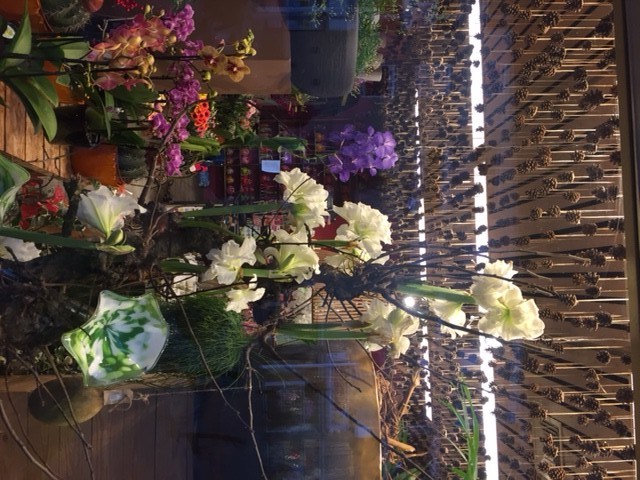
Lingering at the store fronts of the charming flower shops, I noticed that inside one shop, there was a stunning display of white amaryllis on a vertically suspended length of tree branch. The branch had sinuous curves with interesting outgrowths. The bulbs were nestled in crooks and crannies – held in place with ties. But that was it. No soil. They just sat where placed. Each bulb had a stalk or two trumpeting beautiful white flowers. My first thought was the bulbs weren’t real. Wrong. Then I figured it was meant to be a very temporary display. Wrong.

On talking with the florist/owner Oda Schoffelmeer, I learned that amaryllis bulbs bought each season need no help from us. They do not even require a preliminary soaking in water to wake up their roots. The fat, firm bulbs come with everything they need to bloom. It is only when blooming is completed and leaves are put out that they need to be planted in soil and watered – to replenish their depleted stores. Is this not simply amazing? Consider the decorating possibilities!

The bulbs can be also be dipped in wax and placed just about anywhere to bloom. Pick the wax color of your choice! Or, the bulbs can be coated in a thin (non-toxic I imagine) paint. Gold, silver, bronze anyone?!

Needless to say, I am as excited about my new discovery as a puppy in a basket of laundry. I’m off to see if there are still some amaryllis to be had at my local nursery.

My take away – travel really does open minds and it is never too late to learn new things. I’m boarding a plane again in two weeks. Can’t wait to see what’s in store.

Enjoy the images below. And, mark your calenders – I’m in a group exhibit in NYC Feb 20-25.

I apologize in advance to my Facebook readers for the images not being upright. When the photos are taken a certain way, they show up on FB on their sides and I have not figured out how to correct this problem. When I post the article on my website, they go automatically on FB and Twitter. Please let me know if any of you can resolve my dilemma.

The amaryllis display as seen from outside the Bergflora shop in Eindhoven, NL

ca The amaryllis display as seen from outside the Bergflora shop in Eindhoven, NL

The amaryllis placed on the branch

The amaryllis placed on the branch

IMG_2862

Bulbs dipped in hot pink wax. Just sitting there and preparing to bloom.

Bulbs dipped in hot pink wax. Just sitting there and preparing to bloom.

My own amaryllis grown the 'old' way. But, I stopped watering them 10 days ago when I returned from Holland.

My own amaryllis grown the ‘old’ way. But, I stopped watering them 10 days ago when I returned from Holland.

Another view. It is a stunning display even if I say so myself.

Another view. It is a stunning display even if I say so myself.

(c) 2016 Shobha Vanchiswar

[do_widget “Blog Subscriptions (Jetpack)”]

Spring Will Come. I Promise.

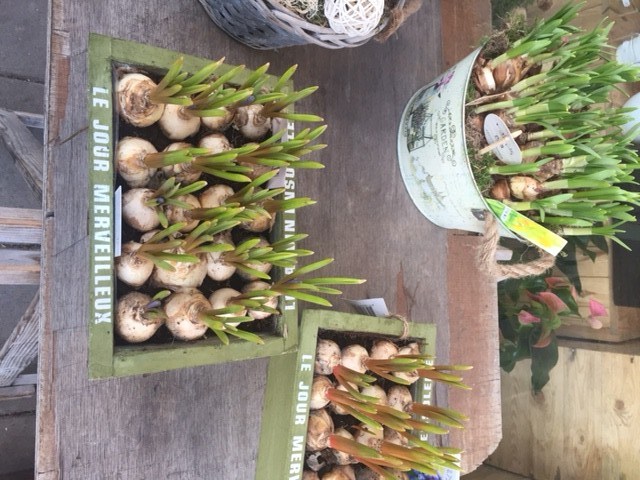
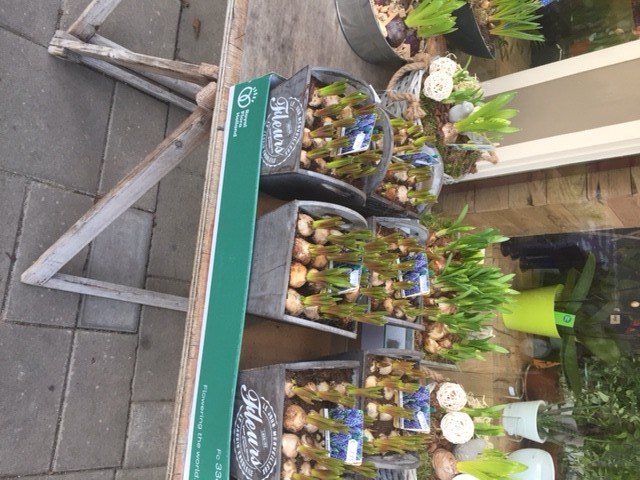
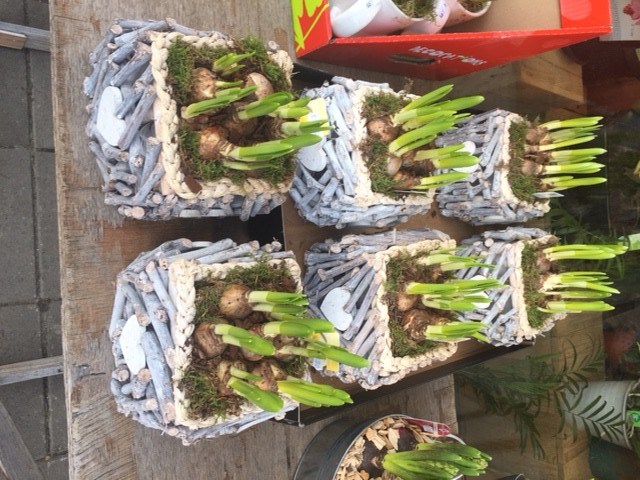
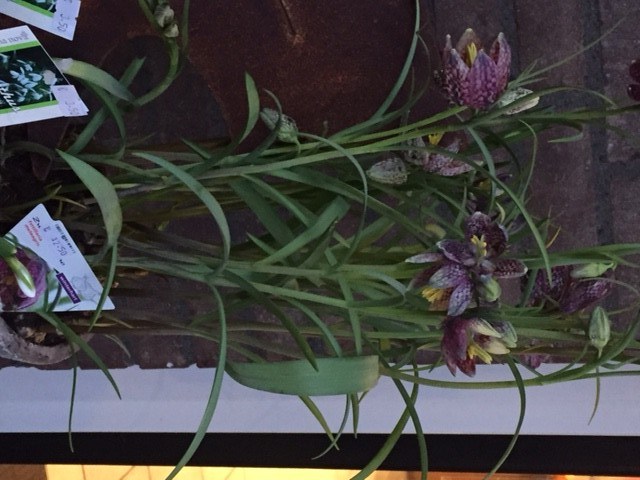
I just returned from an all too brief visit to the Netherlands. Despite the cold, the flower shops there are already in full spring mode. I cannot even begin to express my joy at the sight of spring bulbs displayed in the storefronts. For that period of time, all felt well in the world.

So, instead of belaboring on just how much plants can uplift our spirits and remind us that life goes on, I offer you some of the images that filled my heart with optimism. Let them fill yours.

Remember, no matter how dark our days are right now, spring is on its way. I promise. Stay hopeful, be helpful.

IMG_2850

IMG_2852

IMG_2853

IMG_2854

IMG_2857

IMG_2858

IMG_2860

IMG_2861

IMG_2876

(c) 2016 Shobha Vanchiswar

[do_widget “Blog Subscriptions (Jetpack)”]

Weathering The Storm

I’m writing a day ahead of when I usually do because I’m traveling tomorrow. Presently, while other parts of the country are already hit by bad weather, we in the Northeast are bracing ourselves for a Nor’easter. It’s funny how the knowledge of impending storms alerts our flight or fight responses. At once we gauge how prepared we are to face the ‘enemy’.

The wind has picked up, the skies are overcast and the temperatures have dropped. The birds are nowhere to be seen – they have all sought safe havens. Right away I check if everything outdoors is tethered/secured/put away. Still, I know the winds can tear through trees breaking off limbs and even uprooting them all together. Which in turn, can create further damage. This is of course beyond my control so, I hope for the best. Presumably, the pruning and cutting-back done in the fall will have paid off.

The greenhouse has been fired up and the plants are watered. Short of a truly unpredictably devastating storm, it should be fine.

Indoors, flashlights and candles are on the ready for potential power outages. There is food in the larder and wood in the fireplace. Books and boardgames picked out. Have I missed anything?

News of an impending storm should be less of a call to action and more of an opportunity to up my energy and resolve to do what is right, assess my performance so to speak – to take stock of myself, my home and all that I hold dear. Do I have what’s needed? Are things in good shape? Am I doing all I can to protect and preserve? An ongoing checklist is one way I keep myself organized and accountable. I definitely don’t want to be caught sleeping on the job.

And that’s what it comes down to – preparation. It’s easy to sit back when all is fine but having a plan, keeping necessaries in store and information available in case of conditions worsening is vital. Otherwise, it’ll feel really bad when we’re hit.

When the signs of an approaching storm are all there, it does not pay to sit back. Instead, confront with knowledge and readiness. In place of panic, may calm, resilient , wise minds prevail.

Because, in the end, this too will pass.

My friend Julie's garden after a storm.  Changed her woodland garden some.

My friend Julie’s garden after a storm. Changed her woodland garden some.

The greenhouse

The greenhouse

In the greenhouse

In the greenhouse

Camellia in bud in the greenhouse

Camellia in bud in the greenhouse

In my friend and orchid guru Bill Smiles' greenhouse

In my friend and orchid guru Bill Smiles’ greenhouse

Inside the house

Inside the house

IMG_5003

IMG_5009

(c) 2016 Shobha Vanchiswar

[do_widget “Blog Subscriptions (Jetpack)”]


Doing Right The Old-Fashioned Way

So, here we are in the third week of January. A strange January at many levels but I’ll stick to the weather. Every day of seasonal weather, has been counter-pointed with a not so seasonal day. What is one to make of this irregularity with regard to the garden? Beats me!

While we, as a world community come to grips with climate change and pressure our leaders to implement policies to deal with it, I am doing my level best to do my part in my own little piece of earth. I have no control of the weather itself but I do have the power to make informed, intelligent choices.

From the start, when we bought our house a good 24 years ago, I made a conscious decision to go organic. At that time, it was not so simple or even popular to be organic. It made me seem like a throwback to the ‘60s. A hippie-flower child wanna be. Nurseries did not carry many organic pest-control products, compost was barely understood. This being the years before the Internet or Google, I had to do my research the ‘old-fashioned’ way. That took a fair amount of time but I actually ended up learning more than a search permits today. When specific information can be conjured up instantly, there is no opportunity for detours into related and not so related topics.

I mail ordered my composter and when I excitedly announced its arrival, I was met with responses that ranged from puzzled to amused smiles and told I was so ‘quaint’, a ‘modern hippie’ or ‘trés new age-y’. Re-purposing an oak wine barrel to a water butt elicited similar reactions. Ditto for the manual, push-reel mower that I had such a hard time finding. When I began introducing native plants in the garden, I was told more than once that I was growing ‘very common’ plants. Some pronounced them ‘weeds’.

I sourced neem oil, seaweed and fish emulsion, lady bugs, Bacillus thuringiensis, nitrogen fixing microbes and made other products like comfrey ‘tea’ (best fertilizer!) at home. Those were the good old days!

Today, almost everything is available at my local nursery and what isn’t can be ordered super-easily on-line. Instead of the calender reminding me when to do what and physically making the effort to monitor temperatures and precipitation, I have apps and digital gadgets that have simplified everything. While these have freed me up for other matters and provide a certain peace of mind, they also push me away from my garden to a certain extent. I do not have to actually be in the garden quite as much. I realized this a couple of years ago and missed my 100% hands on approach. So now, although I enjoy the benefits of modern technology, I consciously putter around the garden no matter what. My physical, mental and spiritual well-being depends on it.

I still have the same composter and rain barrel. The mower was upgraded to a lighter, better manual model – there is now a choice! All the organic products are readily available. Towns offer free compost and mulch to their residents. Nurseries now proudly carry numerous native plants and some even have a whole section devoted to them. In fact, in current parlance, organic, native and ecologically sound practices are trending. Our forefathers would no doubt be highly amused by our ‘modern and progressive’ ways.

Meanwhile, I’m determined to plug away ethically, with integrity and, put up with whatever the weather blows my way. There is absolutely no excuse for anybody to do otherwise.

Note: Enjoy my watercolor renderings of a few of the natives that grow in my garden. Do they look common or weedy to you?!

Watercolor-037

Watercolor-024

Watercolor-017

Watercolor-033

Watercolor-002

Watercolor-032

Watercolor-036

(c) 2016 Shobha Vanchiswar

[do_widget “Blog Subscriptions (Jetpack)”]

All Present And Accounted For

At last it feels like winter. This past weekend brought bitter cold and a decent dose of snow. With the wild fluctuations in temperature and precipitation all through the past year, it has been hard to predict how the garden will fare. There have been many moments of anxiety for sure. The welfare of every single plant matters to a gardener. While we’re learning to adapt and adjust, a degree of stress underlies those efforts. So, when it snowed for the first time this year, I was elated. It felt normal.

Finally, there was enough snow to play. Toboggans, X-country skies and walking poles came out in full measure and local parks were alive with winter activities. Normal!

I personally, reveled in the normalcy in the garden. To see the snow cover spread across the ground felt good. The hibernating plants were now cozy and insulated. As well they ought. It was comforting and reassuring. Two factors that have been rather elusive lately.

I’m resolved to enjoy this gift. I’m aware that at present, 49 of the 50 states have snow on the ground which means this is not normal for several. The unpredictability of the weather or anything else is disconcerting. Hence, when we are given a slice of business as usual, we need to savor it.

As such, our own winter conditions here are headed for a dramatic change later in the week. So, I am determined to cherish what I have today.

The way the snow emphasizes all the undulations in the garden, the shadows that contrast so starkly with the pristine white, how the sunlight chisels the snow and makes it shimmer, the clear footprints telling of intrepid birds and squirrels are all a thrill. What gets defined and what gets masked changes the usual landscape to something new and interesting. I’m so fortunate to witness this ephemeral show.

Who knows what tomorrow will unfold. But for now, I’m content. This moment matters.

Enjoy these garden snow scenes:

Breathe slow and deep. Calm the mind and just be.

img_0850

img_0840

img_0837

img_0841

img_0843

img_0847

(c) 2016 Shobha Vanchiswar

[do_widget “Blog Subscriptions (Jetpack)”]

To Have And To Hold

This week, all across our country, families and friends will gather to celebrate my favorite holiday – Thanksgiving. To come together to express gratitude for all the blessings we have received is perhaps the highest, most noble reason to celebrate. In giving thanks, we acknowledge not just the blessings but we essentially own our responsibilities and purpose. Because, with receiving comes accountability.

When we sit at the Thanksgiving table and speak of our thankfulness for the much loved people in our lives, we are at the same time recommitting ourselves to those relationships and our roles in them. To be the best parent/spouse/sibling/friend/child and in doing so, we will not take it all for granted. If we are fortunate enough to have homes, jobs and/or lifestyles that we cherish, then we are depended upon to reciprocate with the necessary attention and diligence.

I gave this essay the title To Have And To Hold. The phrase is not reserved for just marriage vows. Every contract we enter into demands that we uphold that promise. To Have is to accept without any reservation the gifts given to us. To Hold is the pledge to value, protect, hold dear and rejoice in the gifts. These covenants are sacred. As we cherish, we must honor. This is what gives our lives meaning and significance.

My garden is high on my gratitude list. It offers me so much that I can only hope to return the favor to the best of my all too human abilities.
My piece of paradise keeps me humble and awed as it teaches me life lessons in patience, tolerance and crisis management. It is my muse for my art and writing. Its beauty inspires and enchants and in caring for it, it provides me much needed physical and psychological therapy. The garden comforts and cheers, puts life in perspective and still manages to entertain no matter what is happening with the weather, political climate or my private life.

In turn, I pledge anew to do right by my garden. To care for it to the best of my ability. Applying organic methods and a do no harm policy, I vow to protect, sustain and watch over it with love and good cheer.
After all, our health and happiness depend on each of us fulfilling our parts.

I wish each of you a Thanksgiving abundant in blessings.

img_0491

img_0493

img_0532

(c) 2016 Shobha Vanchiswar

[do_widget “Blog Subscriptions (Jetpack)”]

Better Home-makers And Gardeners

The garden was put to bed last weekend. There is enormous comfort and satisfaction in bringing things to a close in a timely, attentive manner.

All tender perennials are safely ensconced in the greenhouse or let to go dormant in the basement.

The hundreds of bulbs got planted carefully and one at a time amidst the herbaceous perennials and previously established bulbs.

New native perennials were added so more beneficial insects and birds will inhabit the garden next growing season.

Plants were cut back and tidied. Dead wood was removed from shrubs and climbers. Roses and wisteria were pruned and secured. Creating breathing room and getting rid of anything that might encourage disease is so important.

A light application of compost and additional mulch of tree bark on the perennial beds should get them through the winter and in good shape to re-emerge nicely in spring.

The vast amounts of fallen leaves have been raked, gathered and added to the compost heap in the woods. Contrary to the advice of some ‘green’ experts, I do not let the leaves remain on my small lawn or in the meadow as they tend to kill the grass, smother other plants and possibly encourage snow mold which is a type of fungal disease. If I had a leaf chopper, then I’d use the chopped up matter to mulch and feed the plants.

All pots have been emptied and cleaned and put away. The very large ones stay outside well wrapped in plastic and burlap.

Likewise, outdoor furniture has been cleaned and put away.

Water hoses lie empty and coiled till required once again when the hot weather returns. The rain barrel too is given a hibernation pass.

Soon, I will get garden tools like secateurs and push mower professionally cleaned, sharpened and/or serviced. They will be eager and ready to serve as soon as the need arises.

Sundries like garden gloves, stakes, markers, hats and, supplies such as organic sprays like seaweed/fish emulsion, dormant oil will be replaced or replenished.

Fulfilling the seasonal responsibilities got me thinking about how hard we gardeners work to dream, plan, make better gardens. Although we aspire to create those better gardens, we should really be putting more effort in becoming better gardeners. The way I see it, to accomplish that takes a resolve similar to one we undertake to be better parents.

Consider how we prepare our home for our children. Clean, hygienic, tidy and welcoming.

There is room to grow and thrive. We provide the best, healthiest food our wallets can offer. Due diligence and protection is necessary so our young do not come to harm and yet have opportunities to be happy, healthy, independent and strong. When a child is unwell or in distress, we respond with alacrity and minister to their needs. With unconditional love, patience and undivided attention, we listen to what our children are saying and/or doing so we can take the appropriate measures to give them the best, most wholesome life possible. We encourage diversity, tolerance and mutual respect so our young can become vital, productive members of society.

All of those points hold true in the garden. And while I’m cognizant of them and try to apply the same parental guidelines, I know I can always do and be better. The kicker is this – it is much easier and far less guilt-inducing to be a good gardener than it is to be a good parent. After all, one’s failure in the garden can always be blamed on the weather.

Some seasonal images:

img_0498

img_0501

img_0503

img_0530

Getting ready to plant bulbs

Getting ready to plant bulbs

The vertical garden

The vertical garden

(c) 2016 Shobha Vanchiswar

[do_widget “Blog Subscriptions (Jetpack)”]

Double Vision

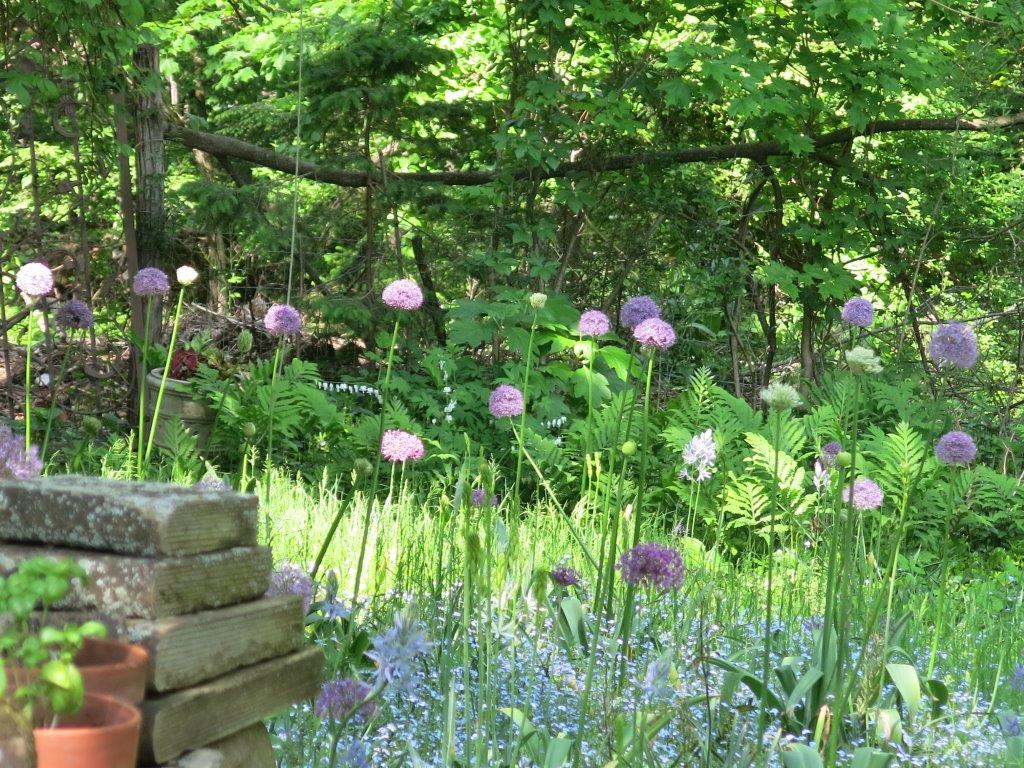
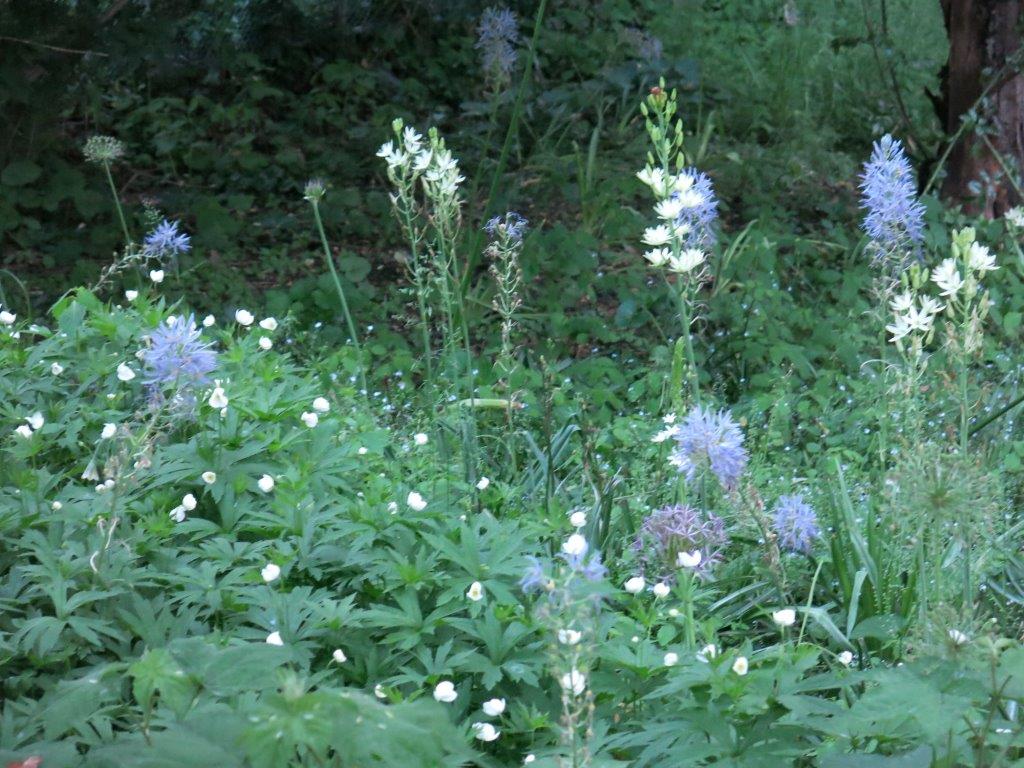
I have two gardens. The one in my mind’s eye is perfect and exactly how I wish it. The other is here on earth, around my house, fodder for pests and vulnerable to the vagaries of weather. Striving to get the real garden reach the ideal of the one I dream about is an eternal quest. The saving grace is that most gardeners share my struggle. No matter where we garden and what size of land we command, the yearning is the same.

Starting in the fall when planting for the next growing season is going full throttle, we are motivated by the vision where all our plans succeed. Through the winter months we plot and plan for the perfect garden. It’s what gets us through the dreary, cold days. The real problem arises if we dwell too much in fantasy land and get carried away. Practicality, patience and common sense must moderate those ambitions. Sometimes, in the eagerness to achieve beauty and form, it is easy to forget about function and balance.

A garden can look beautiful but in truth, it should also provide. It must delight, inspire, feed, comfort, educate and most importantly, do no harm to the environment. This sounds like a tall order but in simply following that last dictum, the rest will happen easily. There is nothing more fundamental to us than to create an attractive, productive, safe haven.

By choosing the right plants for the right location, selecting mostly natives that in turn will attract and support native fauna, employing organic practices, judicious use of precious resources like water and energy consuming tools and in giving diligent care, any spot of land can shine. Truly.

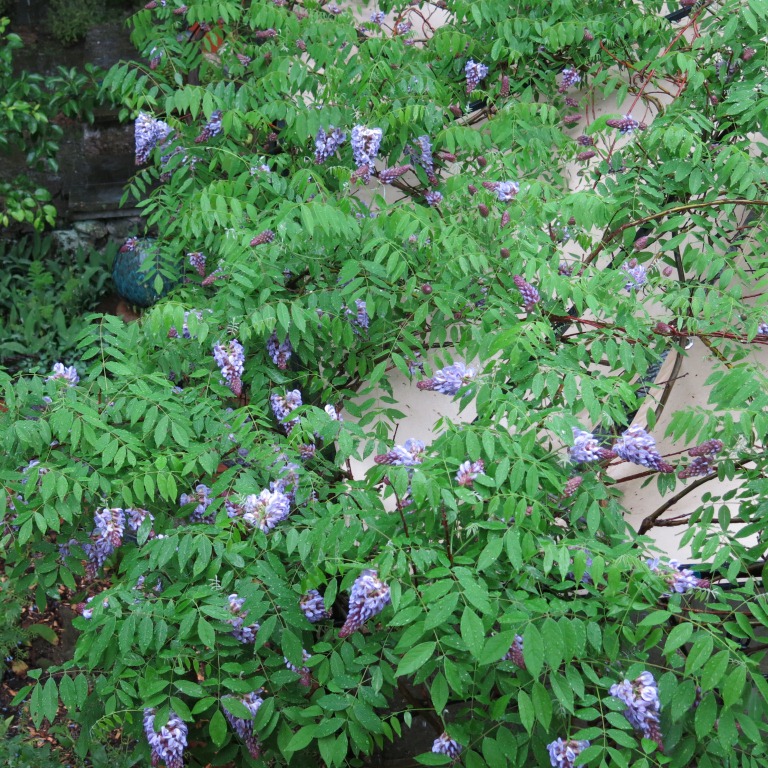
But that doesn’t mean it precludes indulging in dreams. If I didn’t envision a riot of spring color, I wouldn’t be torturing my body by planting hundreds of bulbs each fall. If you hanker for plants that thrive in a different climate and/or are invasive, reasonable alternatives are usually available and will satisfy your vision. Native honeysuckle instead of the Japanese variety, Rose of Sharon can be pruned to grow single or multi-trunked shrubs and are lovely substitutes for crape myrtles. (Select a sterile type so you are not burdened with digging up seedlings all the time.) Russian sage or nepeta are excellent stand-ins for lavender.

If you adore roses but cannot grow them or would like their ‘look’ throughout the growing season, I recommend ranunculus, peonies, camellias, double begonias and dahlias. Native wisteria is better behaved than the Asian types. A myriad choices of native grasses are excellent alternatives to exotic ones. There really is a way to make garden dreams come true. Within reason. You’re on your own if you insist on making your north-east garden into a tropical paradise.

Having said all this, I still dream big. Lush, impossibly wonderful dream gardens. From those wild fantasies come ideas more realizable, creative and applicable in my true, earth-bound garden. Several features that have become hallmarks in my garden came from dreaming. While I’ve learned to temper my reveries with budget constraints, physical and/or time limitations to make my real garden, I give free rein to my imagination. After all, it was Albert Einstein who said – Imagination is more important than knowledge. Knowledge is limited to all we now know and understand, while imagination encircles the world, and all there ever will be to know and understand.
And look what he managed to contribute.

See below for some real features that came from my imaginary garden:

img_2454

img_9382

img_9437

img_9152

img_0483

(c) 2016 Shobha Vanchiswar

[do_widget “Blog Subscriptions (Jetpack)”]