September Affair

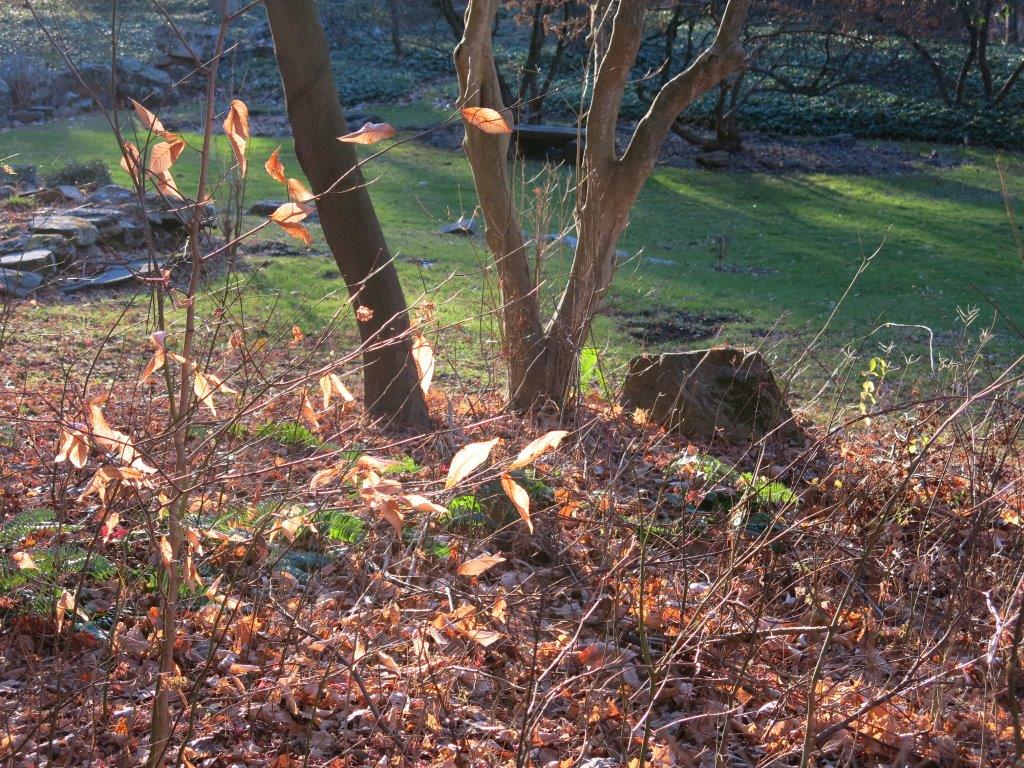
It is the second week of September and doesn’t feel like it one bit. For starters, it is HOT! Sizzling, heat wave hot. And oh so dry that even the trees are gasping. Along the highways, the greenery looks so brown and parched you’d think they’d been deliberately torched. In my own garden, I’m torn between watering my plants copiously and letting nature take her course. What survives should be my guide for future plantings. But then, what about the plants I’ve paid for dearly and lovingly cherished? I’m constantly tussling with my conscience about doing the right thing. A good, thorough drenching rain would go a long way in serving my cause.

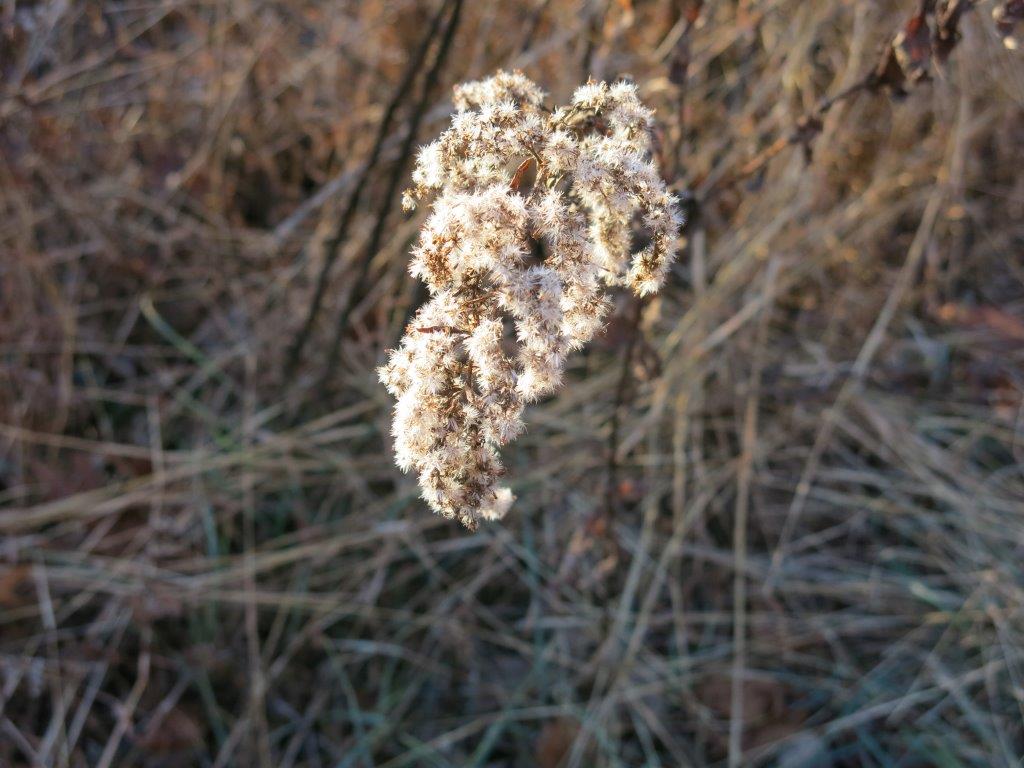
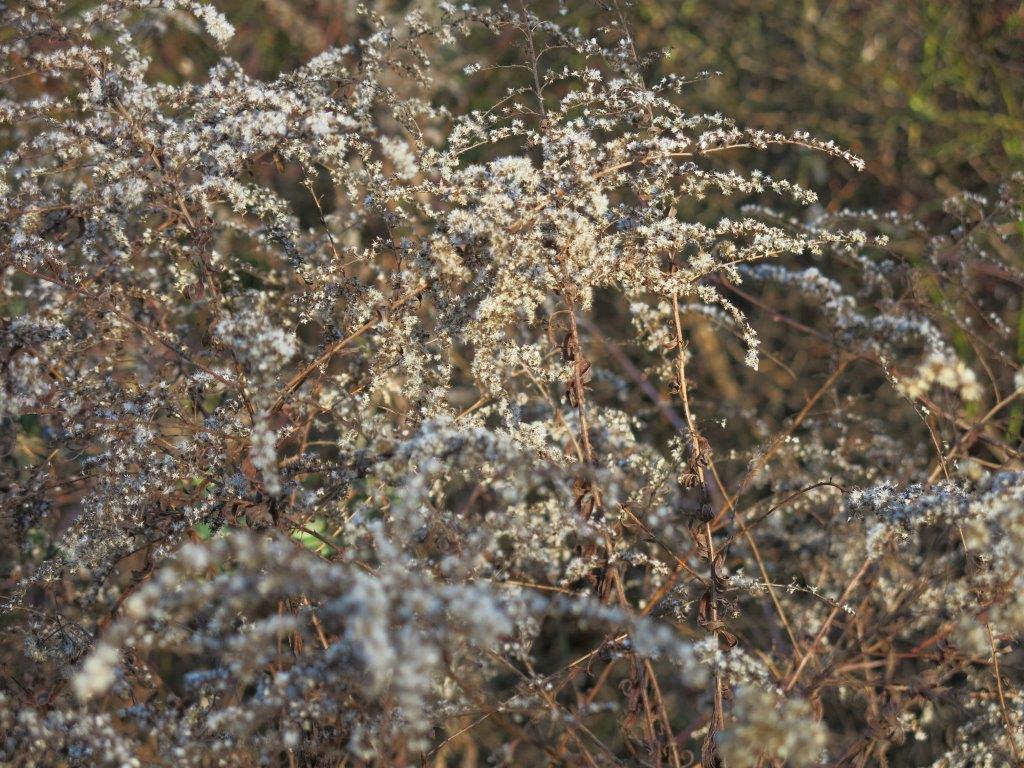
I note that the fall plants like asters and monkhood are slow to bloom this year which is not a bad thing as the hydrangea, phlox, cone flowers and Joe Pyes are still going strong. But I hope then that we do not get cheated out of a colorful autumn with an early winter.

By now, I’m usually getting the tender perennials into the freshly scrubbed greenhouse, cutting back spent plants and generally cleaning up. However, it feels too early this year and I’m kind of at a loose end. No doubt the mad rush to complete the chores will occur in due course.

As I await my shipment of bulbs for fall planting, complete my list of perennials to purchase, set up a plan to replace the gazebo that supports the wisteria and prepare to harvest fruit, I’m determined to enjoy these days of transition as both summer and fall vie for attention.

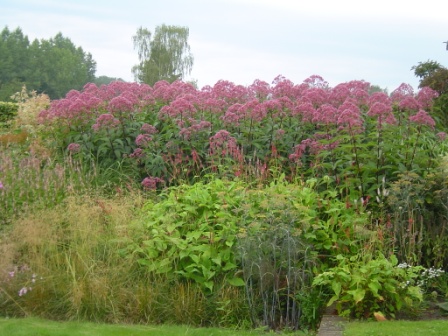
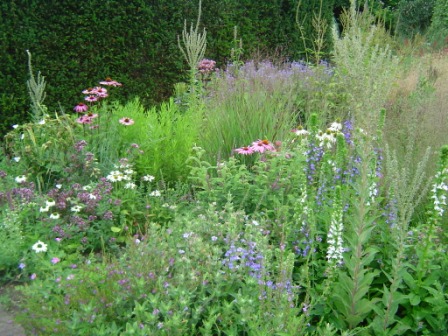
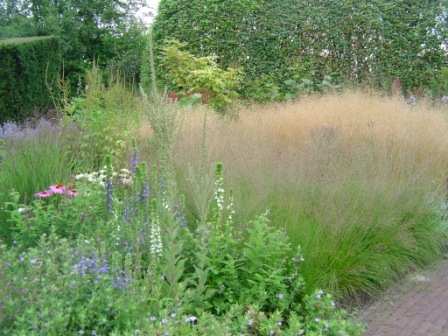
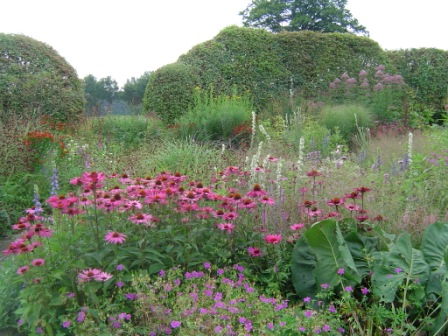
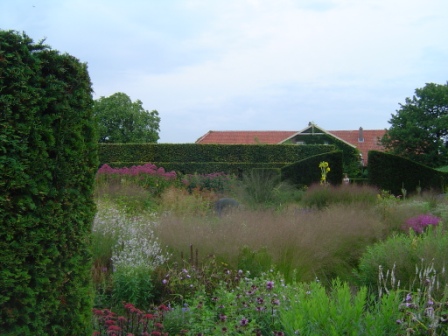
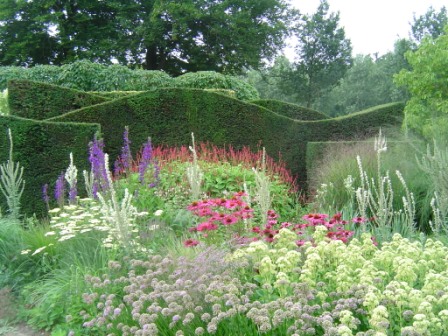
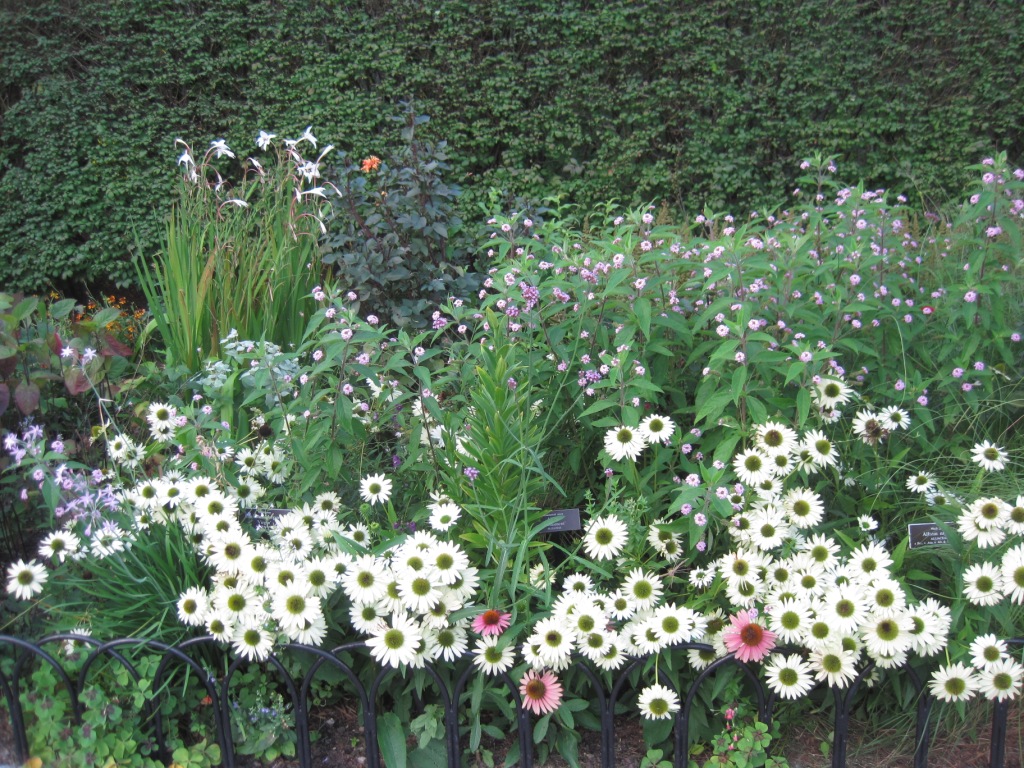
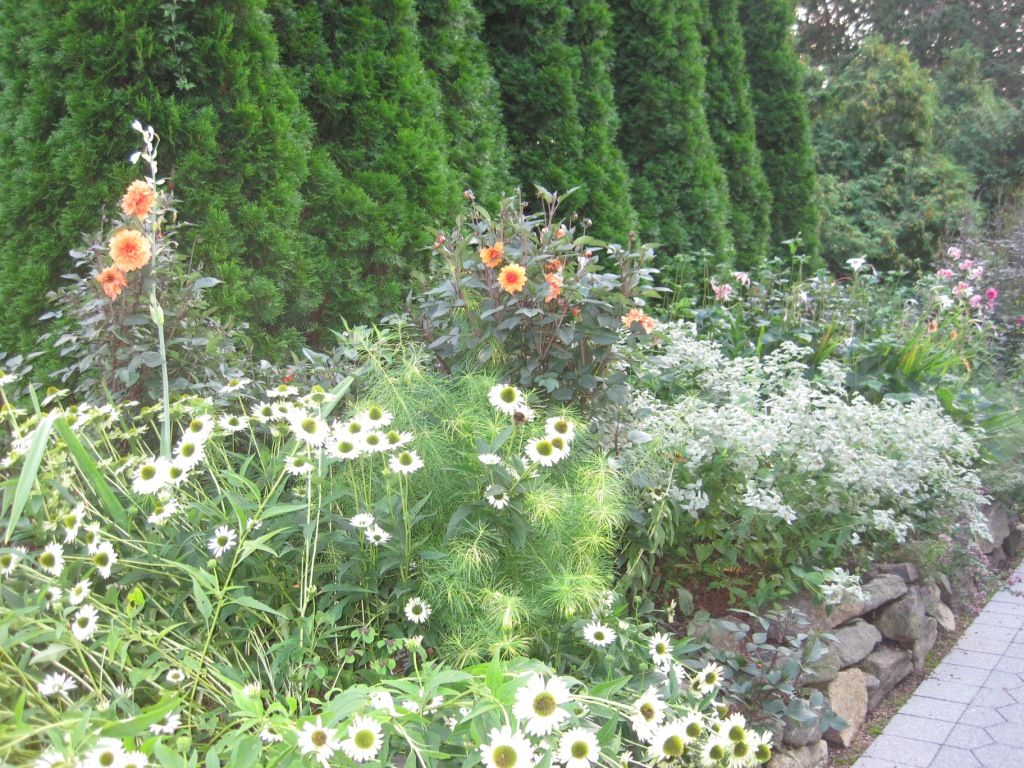
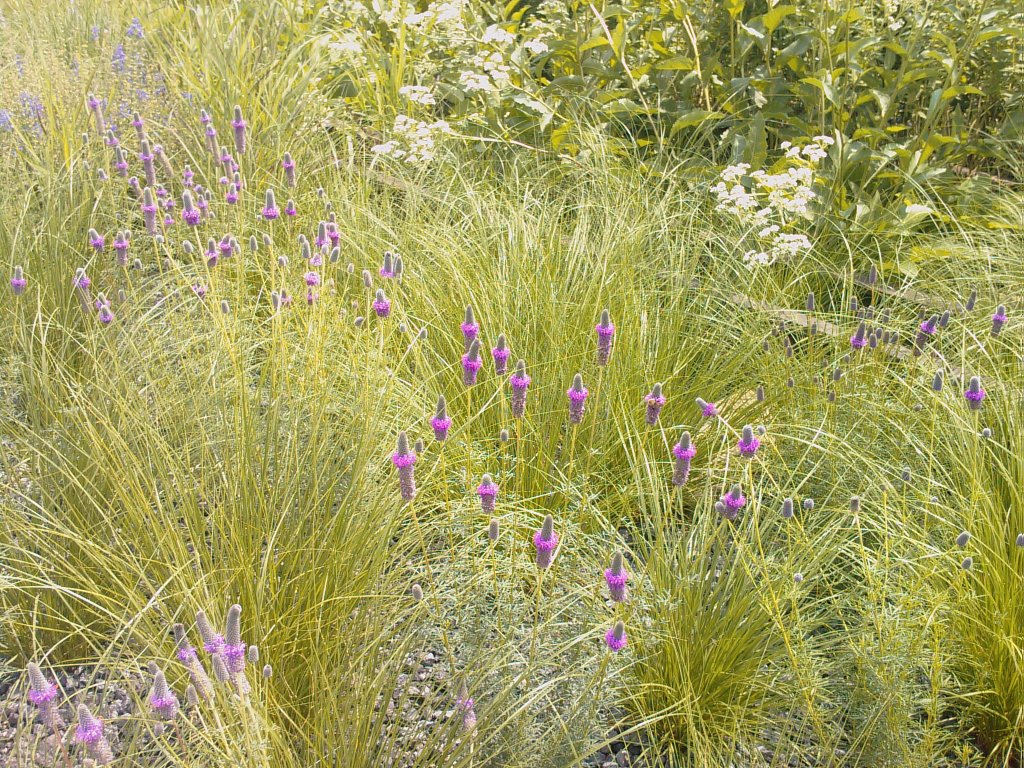
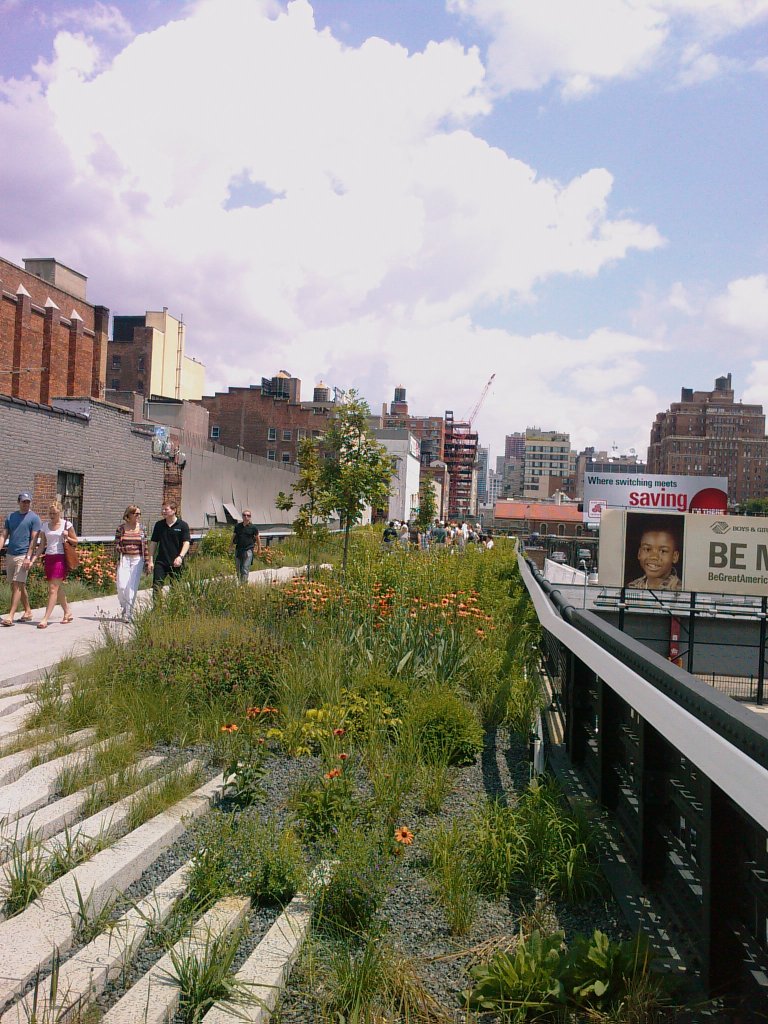
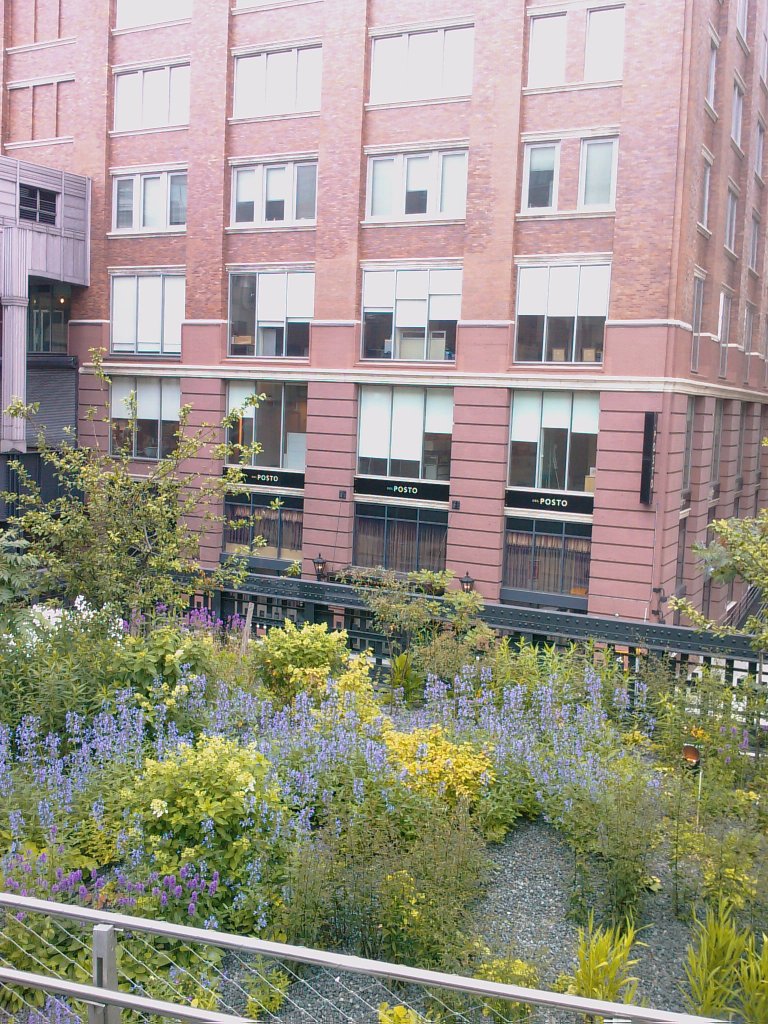
Come, enjoy the beauty of September:

IMG_7111

IMG_7023

IMG_7022

IMG_7051

IMG_7056

IMG_7115

(c) 2015 Shobha Vanchiswar

[do_widget “Blog Subscriptions (Jetpack)”]


Retreating From The Heat

No real gardening is happening this week. It is way too hot to spend any length of time outdoors. So I’m focusing on gardening indirectly – reading, watching films and generally pondering. Here is a sampling:

I’ve been doing a lot of travel this season and airports are becoming a rather familiar sight. And I’m rather unhappy about our New York hubs. There are hardly any sort of planned landscaping around the airports let alone nice pots of plants indoors. Given the glut of data supporting the positive effects of plants on our physical and mental healths, it would stand to reason that airports install gardens outside and within. After all, they are the very places where tensions run high, tempers flare, nervous tics develop, blood pressures soar, anxiety and panic set in and general fatigue prevails. Instead, it seems nobody told our airport powers-that-be about the enormous benefits that plants provide.

However, in Singapore, the gardens in the different terminals and the landscaping in the surrounding areas of the airport are so lovely that they are now world famous. This airport has truly taken its gardens seriously – there are vertical gardens, butterfly gardens, orchid gardens all over the place. In July, I found myself at Changi airport with a layover from midnight to 4:00 am and the only salvation I had were those gardens.

Then this past Sunday, I had to be in Amsterdam’s Schiphol airport at 6:00 am. Having partied at a wedding bash the night before, I was seriously sleep deprived and a tad grumpy. But, on emerging from the taxi at the airport, my eyes saw sunflowers all along the sidewalk. Great, big, happy pots of them. How could one not smile at the sight? Put me in a better frame of mind right away. You see?

*********

I saw a movie that I think many of you would enjoy. “A Little Chaos” is one of those mostly unheard of films with an impressive cast. Kate Winslett, Alan Rickman and Stanley Tucci to name three. It is a fictional story about a woman garden designer working with Le Notre at Versailles. While the story is more about the development of their relationship than the garden, the movie manages to combine period setting, life at that time, a glimpse of Versailles in the making to give the audience the slightly lofty feeling of watching something intellectual instead of just another romance.

On a hot day, sit back in a cool, comfortable room and watch this movie. A nice escape from the summer doldrums.

**********

“Gardening is one of the rewards of middle age, when one is ready for an impersonal passion, a passion that demands patience, acute awareness of a world outside oneself, and the power to keep on growing through all the times of drought, through the cold snows, toward those moments of pure joy when all failures are forgotten and the plum tree flowers.”

-May Sarton, Plant Dreaming Deep

I came across this passage and immediately took umbrage with middle age and impersonal. For one who has been gardening long before middle age and taken my gardening work, its successes and failures very personally, this certainly did not sit well. But the rest of the quote definitely nails what gardening is all about.

After more neutral minded pondering, I concede that most gardeners are not the twenty – somethings. We are in general a slightly more mature tribe. But then again, most young adults do not have the luxury of space, time or finances to garden. Age has a few perks I suppose. But the energy of youth certainly eludes.

Children might learn the joy of growing plants but as they reach independence, the immediacy of life and its quotidian demands take over. Gardening is set aside till one ‘settles down’. Only very few continue gardening in one way or another. For myself, all through college I kept plants in my room. I struck a deal with the campus gardeners – they’d look after my plants whenever I went home and I’d help with watering a specific garden the rest of the year. And in the following years, when I lived in apartments, I convinced landlords to let me cultivate a small patch outside. You can well understand my response to the part about gardening as reward for the middle-aged. I sure took that personally!
Let me know your take on this topic.

Note: Dr. Oliver Sacks passed away on August 30. He was a big hero of mine and I’d only recently written about my last meeting with him in June. I will forever cherish that time. When I’d mentioned to him that I was going to Singapore, he immediately mentioned the vertical gardens and orchids there! Please join me in honoring Dr Sacks by staying curious about everything in this world, treating all people with compassion and understanding and staying fully engaged in life.

Something to see! For the entire month of September, some of my watercolors and photographs will be on exhibit in three windows of Sotheby’s real estate office in Chappaqua ( corner of lower Greeley Ave and King Street, across from Starbucks). I hope you will stop by and take a look. I would love your feedback!
 Please, I need your help in spreading the word! Thanks very much.

Vertical garden at Changi, Singapore

Vertical garden at Changi, Singapore

Orchids in Singapore airport

Orchids in Singapore airport

Sunflowers at Schiphol, Amsterdam

Sunflowers at Schiphol, Amsterdam

IMG_7320

(c) 2015 Shobha Vanchiswar

[do_widget “Blog Subscriptions (Jetpack)”]

This Certain Change

Have you noticed? The apples have begun to blush while the fireflies are still courting. The lettuce have bolted but the asters are heavy in bud. The bees are crazy busy yet, the Monarch butterflies are regrouping to migrate. Even as we still warm our toes in the sun, the light in the afternoon hangs lower. That’s right, summer is slowly slipping away and autumn is tiptoeing in cautiously. Another week and the kids in my town are back in school – is there a surer sign that the seasons are changing places?

So for this week, enjoy the last days of August. Set aside time to simply be. Let the dew on the grass bathe the soles of your feet. Rest your eyes and listen to the song of the cardinals. Watch the lengthening shadows from the embrace of the hammock. Savor every last drop of summer.

This Certain Change

August is leaving

Summer lingers

Yet, I sense that

Fall has crept in

Settled down

in the usual places

Only, I don’t notice

Summer is still getting

her way.

I take a deep breath

inhaling a top note of autumn

Earth still stubbornly

giving up little

She’s holding on tightly

to summers warmth

So her heart

can keep beating

when winter roars.

– Shobha

IMG_3993

IMG_4074

IMG_4107

IMG_4186

IMG_9396

(c) 2015 Shobha Vanchiswar

[do_widget “Blog Subscriptions (Jetpack)”]

Harmonizing With Summer

What sounds come to mind when you think of summer? The thrum of bees on sorties in the midday sun. The vibrato of hummingbird wings as they hover over the stand of Bergamot in bloom. The periodic crescendo of cicadas punctuating the sultry, hot hours. The early morning choir of avian throats stirring the world awake. The staccato beat of the woodpecker keeping time on the dying sugar maple. The sunset chorus of frogs by the pond. The frenetic percussion of a summer thundershower ending the heat wave. The high pitched laughter of sun-kissed children cooling off in the neighborhood pool. These are the sounds of my idyllic summer.

Sadly, it has become almost impossible to truly enjoy these seasonal melodies. Like the rustling of candies being unwrapped or the ringing of the unsilenced phone ruining the experience of going to the philharmonic or movie, our solace in our gardens is being spoiled by mowers and leaf blowers in use at any given hour of day. They drown out the natural sounds or worse, scare away the musicians all together.

The Law of Mo-Blo rules our lives all through the warm months. If you’re sitting down to an al fresco meal or settling in for a read and/or nap in the hammock, rest assured a neighbor will begin priming the mower or leaf blower. It never fails. The noise from these machines has permanently become the background sound of the season. The hallmark of summer in suburbia.

But, it needn’t be a status quo. We can do something about it. We must make the effort for the sake of our health, our hearing, the environment and our sanity.

The verdict is in. Particulate matter is produced at dangerous levels by leaf blowers, hedge trimmers and brush cutters. Pregnant women and young children must be kept away from their harm. Recent studies at the University of Pittsburgh have implicated these particulates in increasing the risk of childhood autism by as much as 50%.
The high decibel noise generated by yard equipment can damage our hearing. The people operating the machines are exposed to this noise even more so. The U.S. Surgeon General warns that “Excessive noise exposure during pregnancy can influence embryonic development”.
That the machines consume a great deal of gas and the resulting pollution of the air hardly needs reiteration.

Additionally, leaf blowing erodes soil, destroys the habitats of wildlife, stirs up pesticides, dust and fungal/bacterial spores (watch out asthmatics), reduces the water retention capacity of soil and in high temperature, causes ground level ozone formation.

I don’t need to elaborate on the repercussions of being distracted or unsettled in our work and other creative pursuits by the impact of loud sounds. And I certainly don’t need to discuss the ruined ambiance at outdoor events. I expect very little argument against the need to curtail the use of the harmful machines.

So lets get pro-active. For starters, every town should have ordinances limiting the hours of lawn equipments use. Personally, I’d like a ban on any such noise after 6:00 pm on weekdays and absolutely no weekend use altogether. This might be seen as inconvenient at first but, trust me we can get used to it. The tranquillity that will ensue will be worth the adjustment. Across the country, there are some towns that have such laws but they are too few and far between. A concerted program is in order. Every citizen ought to lobby for it.

Until such legislation is instated, neighbors could form their own pacts to be considerate and thoughtful. Come to a consensus for the betterment of all.

At a personal level, follow the three Rs – Reduce, Recycle, Reuse. Reduce the lawn area by creating more/larger flower beds, planting more trees, letting a meadow grow. Mow with the blade at a height of about four inches. Let lawn clippings stay on the lawn as they will quickly settle down to nourish the soil and keep it from drying too fast.
Rake leaves off lawns and dispose them in the compost. You can skip a trip to the gym on those days! Let leaves remain in beds as they make for a good mulch – the soil will be enriched and kept moist and weed free. Plants will require less watering too.

If you must, use electric instead of the gas powered machines. This is the lesser of the two evils. Seriously consider getting a manual powered reel lawn mower. The new models are light to use and very efficient. And so quiet! Some sweat equity and fresh air will do us all good.
If you employ a lawn service, discuss with them the need for environmentally sound measures. There are now companies that offer ‘green’ management of yards. They might charge more but are worth the expense. What you think you’re saving in money by hiring the much too common mow-blow- and go crews actually comes at great cost to all of our well being. And this includes our pets, our environment and the entire planet.

We must each play our part responsibly so we can forever dance in harmony to the pure sounds of summer.

My front lawn is quite tiny. The grass is kept at a height of 4 inches. While it looks pristine, it is not all purely grass. Many other greens such as clover are mingled in.

My front lawn is quite tiny. The grass is kept at a height of 4 inches.
While it looks pristine, it is not all purely grass. Many other greens such as clover are mingled in.

The meadow in May. It gets mowed perhaps two times in the whole year - towards the very end of summer. With a push-reel mower.

The meadow in May. It gets mowed perhaps two times in the whole year – towards the very end of summer. With a push-reel mower.

IMG_6616

Whole leaf mulch at the Singapore Botanical Gardens

Whole leaf mulch at the Singapore Botanical Gardens

(c) 2015 Shobha Vanchiswar

[do_widget “Blog Subscriptions (Jetpack)”]

How To Get The Popular Vote

I’m going to help you shine at the next soirée you attend. Not with make-up or fashion tips – you’re on your own on those counts. I’m going to share with you the sort of stuff that will make everybody wonder about your high level of curiosity and intellect. Or, they might just think you’re kinda awesomely weird. Either way, your presence will be noted and remembered. So, lets get started.
I’m always on the look out for simple yet brilliant problem solving information. Out of the box thinking excites me. You’ll see what I mean:
First up is the use of moles in archaeological digs. That’s right, the much reviled creature is being put to proper work! A museum in northern Denmark is using the velvety creatures to gather information at a site where it is thought the remains of a fort from the Middle Ages are hidden below. The contents of the mole hills left behind by the animals are analyzed so the underground locations of the buildings can be determined. Bits of pottery and such are brought up in the mix of soil. The more the content of these, the closer they are to the buildings. How about that?!!
“Moleology”can be as effective as more technical research methods. The big bonus is that it doesn’t destroy anything at the historical mounds in order to get a lot of important information.
Understandably, the Danish culture agency initially thought the application by Viborg Museum was a joke. But after realizing the idea was legitimate they approved it. Ha.
We now come to my second nugget of brilliance. Dandelions, another object of disdain in many lawn loving circles, might be the future producers of rubber. To ensure the steady supply of natural rubber for tires, manufacturers are hoping to harness flower power in a big way.
Although rubber can be manufactured in a lab, tires require a large portion of natural rubber as it is more superior in flexibility and hardiness. Natural rubber is made from the milky latex of the rubber tree Hevea brasiliensis. However, this comes at a high ecological cost. Not the least is that the rubber trees in Asia are vulnerable to the same fungal diseases that decimated those in Brazil.
So there has been a need to come up with alternatives. Enter the humble dandelion. Scientists are working to improve the Central Asian strain of this weed that can supply latex sap on a large enough scale. Imagine! One day, there could be dandelion rubber farms!
My own fondness for these cheerful plants is vindicated.
Finally, there is good news from Europe in the fight against the bee-killing Asian hornets. Asian hornets ( not the European hornets) are a menace to bee hives and are spreading across Europe. They now face a natural enemy that lures them to destruction – a carnivorous North American plant, French experts say. Our own pitcher plant from Massachusetts is trapping the alien hornets but not the native wasps. Pheromone specific! Hot damn.
Each Sarracenia plant has up to 15 pitchers, and can attract as many as 50 hornets. But a typical hornet’s nest houses 4,000 insects – so the plants by themselves cannot deal with the problem. Clearly, much more research is required. A super-pitcher plant in the future? In any case, once again, Americans might have to save Europe. It is deja-vu all over again.
You see? You now have some priceless ice-breakers for your next party. Have fun.

Dandelions in my meadow. How splendid they look with the ajuga, daffodils and forget-me-nots.

Dandelions in my meadow. How splendid they look with the ajuga, daffodils and forget-me-nots.

Asters are a huge honey-bee magnets.

Asters are huge honey-bee magnets.

Pollination in progress

Pollination in progress

Bumble bees at work in the meadow

Bumble bees at work in the meadow

Ladybug on pest patrol.

Ladybug on pest patrol.

(c) 2015 Shobha Vanchiswar

[do_widget “Blog Subscriptions (Jetpack)”]

Color Me True

Remember the colors you liked as a young child? Bright, joyous colors that shouted out their exuberance! We dressed with abandon, matching purple socks with a magenta skirt that sported yellow polka dots. It made us feel so happy. I recall a favorite dress that screamed chartreuse and pink. And you know what? I still love that combination. Particularly in the garden. Think Euphorbia polychroma and Triumph tulips like Barcelona – acid yellow/green with fuchsia! Stunning right?

Yet, as we grow up, we permit all sorts of rules to be imposed on our sensibilities. We give in to norms and tastes that do not necessarily reflect our own. Afraid to be different and call attention to ourselves, we join the herd. Which is a shame. We need more unique voices in our midst. I’m not suggesting anarchy or that we be inconsiderate but rather, I’m calling for us all to be true to ourselves. Lets not hide behind uniformity or be bullied by arbitrary taste-makers. Instead, we can each be a distinct, exceptional piece in the social quilt of life.

If breaking out and expressing yourself in all areas of your life is a daunting thought, then start with your garden. Maybe just a single flower bed. Forget rules about how many of each type of plant, coordinating colors etc., Just go for what your heart desires. As you tend this patch, you yourself will work out the details and specifics that best appeal aesthetically. Soon, you’ll feel confident about spreading your preferences to the rest of your garden. From there, move on to your home’s interior, your clothes, jewelery, choice of reading material…. take my word, you’ll feel good.

In my recent travels, I’ve come across many gardens but the the most memorable ones were invariably those that had their own spin. Clashing colors that put a big smile on your face. Unfettered by any visible scheme, these gardens celebrated the season. They created an atmosphere of unadulterated fun. And isn’t that exactly what summer is for?

I’d love to hear about your color tastes from childhood and if you still love those hues. If yes, how do you incorporate them in your adult life?

Note: For those of you in my neck of the woods, you have the opportunity to visit a wonderful garden this Saturday August 8. Mike Bakwin’s garden is open from 10 am to 4 pm. Mike is a good friend of mine and I can personally attest to the beauty of his garden. You might even see me there! For details click here.

IMG_6991

IMG_6993

IMG_6995

IMG_7000

(c) 2015 Shobha Vanchiswar

[do_widget “Blog Subscriptions (Jetpack)”]


Life Hacking In The Garden

Every now and then, one comes upon little nuggets of wisdom that make life better. Like using plain dental floss to slice cheesecake. Puts paid to messy knives and sloppy servings. Or making lemonade/ coffee ice cubes to add to your lemonade or ice-coffee. As the cubes melt, they will not dilute the drink.

Here are some handy hints for the gardener:

Sprinkle baking soda around your tomato plants to get a sweeter yield.

Plant courgettes beneath French or runner bean tepees to save space and give shade later on.

Feed roses with Epsom salt. The same compound dissolved in a tub of cool water is also good to soak your tired feet in after a day in the garden.

Day old tulip blooms can be kept in the refrigerator for as long as a few weeks. Bring them out and place in room temperature water to wake up and open in time for your special event. Keep this in mind next spring.

On that note about chilling flowers, if you have a floral arrangement sitting pretty in your home and you are going away for the weekend, stick said flowers in the refrigerator. When you get back home, your flowers will be waiting to beautify your home once more. I usually stick vase and all in the ‘fridge.

Losing your boxwoods to blight? Ilex crenata is a reliable substitute for boxwood. It is can be just as easily clipped and shaped. Grows in a variety of soils and situations.

This last one is my favorite – I mention it often. Yet, how many of you remember?
Pour boiling hot water on all those pesky, hard-to-get-at-weeds that grow between flag stones and brick work. Do this on a day when rain is not imminent. Easy as pie. No more torn nails or unsuccessfully struggling to pull out the weeds along with roots.

Simple, sound advice easily heeded. Leaves plenty of time to enjoy the season.

August 069

IMG_1694

IMG_0815

IMG_0820

Brick walkway kept weed free with the use of boiling water.

Brick walkway kept weed free with the use of boiling water.

Epsom salt fed roses

Epsom salt fed roses

IMG_5988

IMG_5989

(c) 2015 Shobha Vanchiswar

[do_widget “Blog Subscriptions (Jetpack)”]

Post-Vacation Depression

No matter how good a vacation I’ve had, I’m generally quite happy to be back in my corner of the world. There is truly nothing like the familiarity and comforts of home. Taking that first shower, settling into my own bed, making my coffee exactly the way I like it are reminders that I’m where I most love to be. Simple pleasures for which I’m enormously grateful. If I never went away I’d never know to appreciate how good I have it.

As much as I’m bursting to explore the garden, I usually take my time. Sometimes, I’ll delay it by as much as a day. Having first taken care of unpacking, laundry, awaiting mail, restocking the refrigerator and generally addressing matters to ensure domestic bliss, I turn my attention to the outdoors. With a degree of trepidation. While the house pretty much remains in the condition in which I left it, the garden appears to assume an alternative lifestyle. A devil may care, no holds barred attitude. If you’ve ever lived with a teenager then you know what I mean. So my hesitation to step into the garden is understandable.

Before this particular trip, I worked extra hard to get all the garden chores done. Weeding, mulching, trimming and tidying up were done with due diligence. Really. I took my leave feeling quite smug about how in-shape the place looked. How wild could it get in two weeks?

The answer is : plenty wild. All the rain that lavishly fed the garden must’ve been loaded with cloud borne super-fertilizer. Everything is out of control. The plants look like they’ve doubled in size. And the weeds! They have invaded, multiplied and conquered. I cannot recall them ever being this prolific. What on earth is going on? And I’d worked so hard to get the garden in order before going away! To absolutely no avail.

With so much to do and faced with an ongoing heat wave, I’m feeling rather disheartened. It is going to take many, many sweat drenched hours to restore some order and frankly, I’m not at all looking forward to it. I’m dreading the guaranteed bug bites and heat induced fatigue. And fully resent giving up a fair chunk of my lolling/reading time. How dare the garden mock my earlier efforts to groom it? Its enough to send me back inside and to the unfailing comfort of a pint ( or two) of ice-cream.

BUT, I refuse to throw in the trowel. I cannot let myself succumb. The garden has taught me well – to persist and never let anybody or anything stop me from going after my dreams. And I dream of a beautiful, life-affirming garden that nurtures and nourishes all who choose to be in it. So there.

Note:
The saving grace of this new jungle are the hydrangea and echinacea that are blooming with abandon. There is so much of the former that I’ve harvested arm loads to fill huge pitchers – they now adorn every room in the house. Such bounty, such bliss.

IMG_2752

IMG_2756

IMG_2757

IMG_3993

IMG_4150

IMG_4314

IMG_9427

(c) 2015 Shobha Vanchiswar

[do_widget “Blog Subscriptions (Jetpack)”]

This Unjealous Heart

I’m currently about as far removed from my garden as I could possibly be. In almost equatorial conditions, I’m feasting my eyes on plants that I couldn’t even remotely consider growing. Last week I was in Singapore and this week I’m basking in Phuket, Thailand. Yes, somebody has to live the tough life.

Everywhere I look I see the kind of specimens I only get to see in the conservatory at the New York Botanical Gardens. Things are lush and luscious here. It is also incredible hot and humid so don’t start envying me too much.

What I’m particularly delighted with is seeing plants growing as nature intended. Orchids emerging from the ground or from niches in trees and rocks rather than pots. The same with Birds of Paradise and Lobster Claw plants. The flamboyant flowers of the Tropics that we only get to see at the florist are thriving happily – they are as common as our asters and coneflowers. Frangipani trees festooned with flowers perfume the nights. The heat heightens the fragrances of all the plants.

The ultimate pleasure of such an experience, in my mind, is the wholehearted joy I can take in it without even a drop of envy. It is kind of like going to the museum and viewing masterpieces – I can be inspired and enraptured but I do not covet. The same is true here. As I cannot dream of growing these beauties back in my zone 6 garden in New York, I am not disheartened in any way.

This is so freeing. Unlike visits to gardens back home where one is prone to compare and contrast them to one’s own, there is no such pressure here. I feel neither inadequate nor greedy. I can simply observe and enjoy. Now there’s a state of mind I ought to seriously cultivate.

On that note, I leave you with some glorious images of flowers and a few rather impressive trees. This time next week, I’ll be back in my own garden. Yanking away at weeds no doubt.

IMG_6543

IMG_6568

IMG_6550

IMG_6556

IMG_6617

IMG_6539

IMG_6597

(c) 2015 Shobha Vanchiswar

[do_widget “Blog Subscriptions (Jetpack)”]

Summer Nights

Summer nights are sensory experiences. Evoking our primal conncection to the natural world. Taking us back to a time when we lived by what was happening around us. Perhaps it is why we still feel the magic of summer nights – when we reestablish our place in the larger scheme of things.

Like me, I hope you too are taking every opportunity to savor these ephemeral, nocturnal pleasures in the garden.

Summer Nights

Wrapped in the thick air
heavy with heat
laden with moist
Watching fireflies
mimic the stars
against black velvet
Serenaded boldly
by tree frogs
and crickets
Fanned from on high
wings of bats
on purposeful sorties
While night moths
answer service calls
of moonflowers
and gardenias
Spicy notes of phlox
rise with the night
perfumed with clove,
oil of bergamot
essence of rose
Lulled into
well being
content to remain
greet the dew
of a new day.

Shobha Vanchiswar


Brugamansia flowers awaiting moths in the dark of the night.


Summer phlox

Summer phlox


White flowers illuminating the dusk in my friend Ron's garden.

White flowers illuminating the dusk in my friend Ron’s garden.

(c) 2015 Shobha Vanchiswar

[do_widget “Blog Subscriptions (Jetpack)”]