Conquering The Darkness

Every year, when we turn back the clock, I go into a funk. Reduced hours of light affect me and cosequently, affect all who must live with me. Given that these dark days extend to months, I feel more than a little sorry for those who are treated to my cranky, disagreeable moods. Even I cannot stand myself at times. So I’ve learned to prepare for what is ahead. After all, if what cannot be avoided must be endured, I can at the very least make the experience pleasantly bearable. One day at a time.

Ideally, one would benefit from a winter-long sojourn to warm, sunny locales. But that, alas, is not my lot. I make do with what is at hand and what is possible. Mind you, I’m well aware that winter can have a very severe, debilitating effect on certain people. Medical intervention is necessary. Seasonal Affective Disorder is nothing to trivialize. For my purpose however, the actions I mention here suit me well.

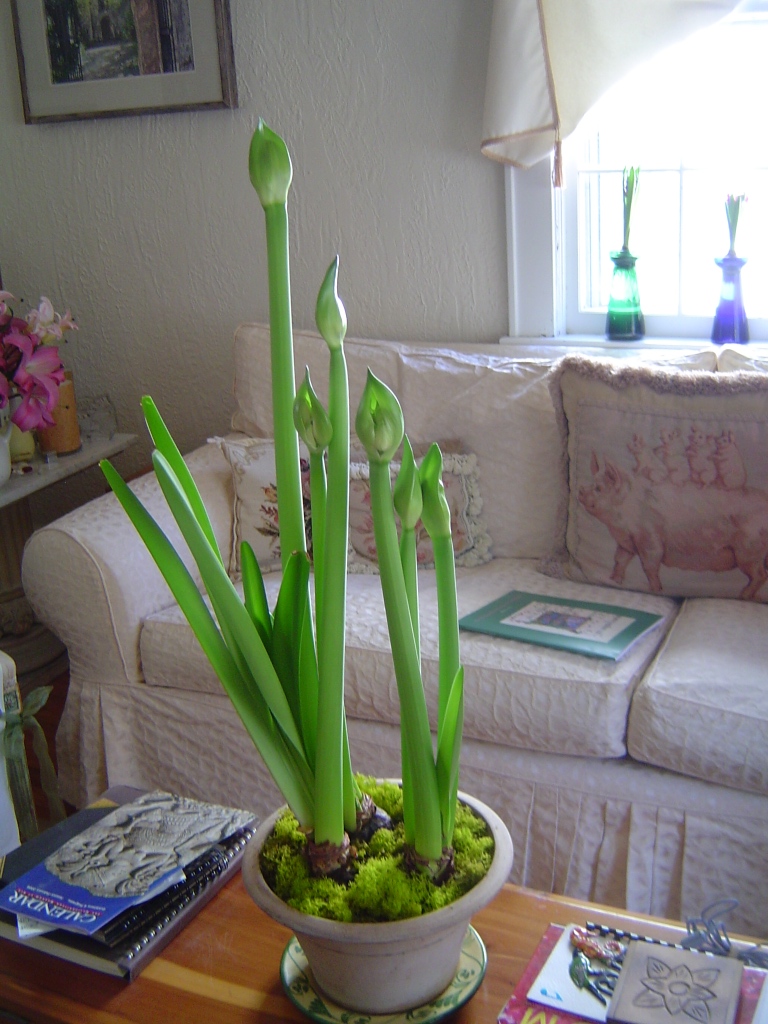
As we move indoors for the next five months or so, I get started on my ‘Keep Myself Sane’ plan. Not surprisingly, I bring the garden indoors. I’m not just talking house plants. Two weeks ago, I started paperwhites in a big way. Almost every room has been graced with them. At this time, they are blooming charmingly and giving me a sense of the same joy that I experience in spring. Gradually, amaryllis will begin to bloom and later in January, the bulbs that had been occupying some prime real estate in the refrigerator will be forced. Thus, all winter long I will be surrounded by spring flowering bulbs.

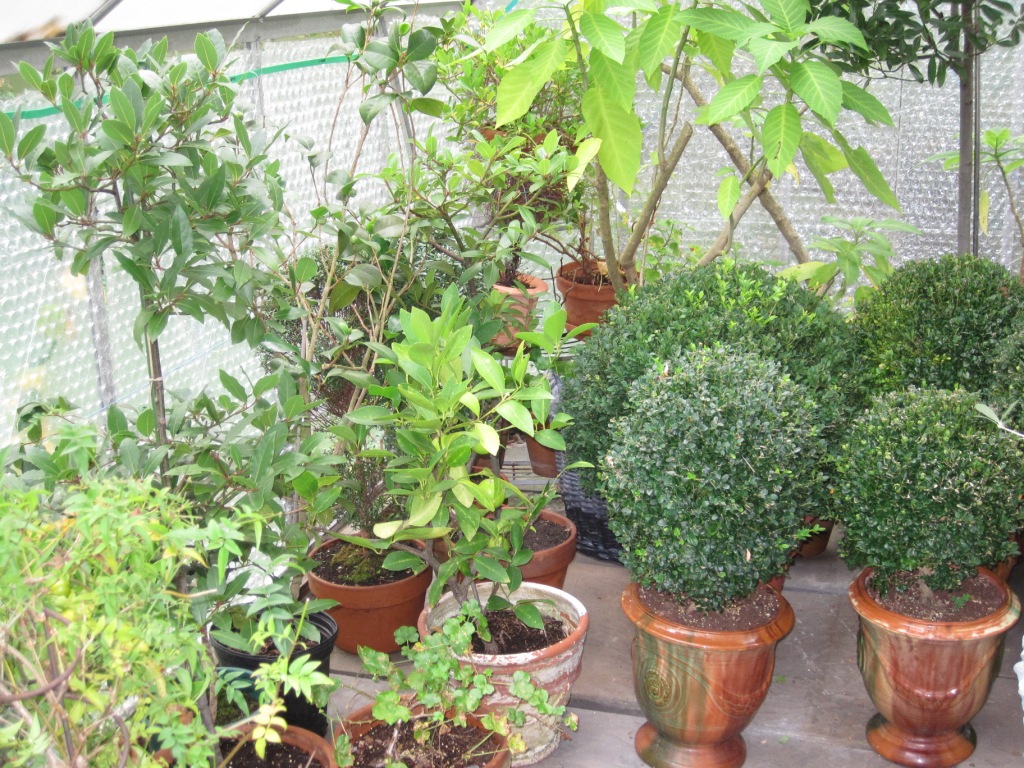
In addition, I have assorted Wardian cases simulating mini-gardens to keep me company. A well appointed one of these never fails to put me in a good mood. ( Stay tuned for an article on terrariums and Wardian cases in the near future!). I’m also fortunate to have a modest-sized greenhouse and so, I escape to these forms of gardening quite willingly.It is a bit of cheating because there is none of the typical hardwork. Instead, with very little effort, all the joys of a garden are provided – greenery, flowers, fragrance. Gardners get unhappy if there is no where to garden.

Next, I address that tricky bit of creating more light. Replacing certain light bulbs with brighter ones makes a big difference. Particularly in spaces used for work, creative pursuits and, cooking. I also stock up on candles galore. A room lit with lots of candles instantly gives the impression that a celebration is underway. Get the fireplace(s) going and I’m all set. With cozy in mind, I have deliciously warm, elegant throws at every spot one might settle in for a good read, chat or nap.

Continuing in my attempt to stave off the seasonal blues, I approach the next sense that must be satisfied. Okay, fooled. And that, is the influence on the nose. Fragrant candles that gently evoke visions of the beach or meadows are a boon. Likewise, citrus fruits scent the air nicely and transport me to sun-kissed orange groves. When the jasmine in the greenhouse starts blooming, it gets moved to the bedroom to hopefully guide me into dreams of nights in India where the air hangs heavy with such perfume.

In general, I’m concious about minimizing the carbon-foorprint of the foods I buy. But sometimes, my well-being takes priority and I permit myself to indulge in a crisp guava, a juicy mango, sweet papaya, fresh pineapple or, pretty cactus pear ( the last makes for a delicious sorbet or sauce) just so I can make-believe I’m in some tropical paradise.

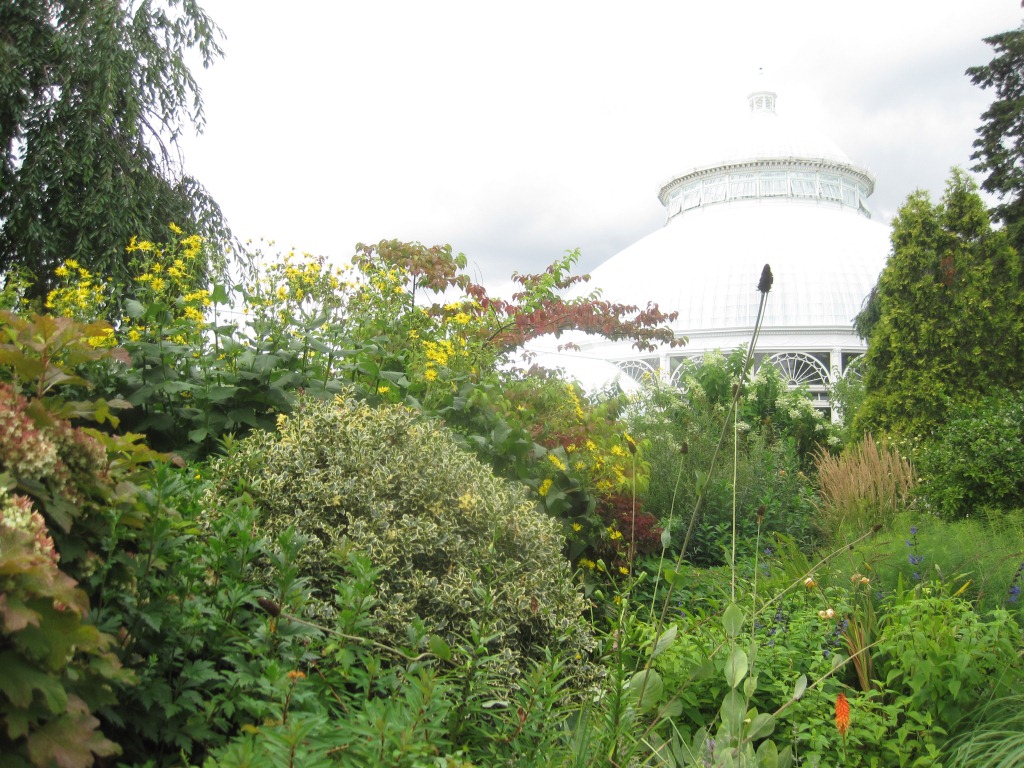
This is not to say I don’t absolutely enjoy the hearty winter stews and other cold weather tasties. But occasionally, there is the desire to transport myself to sunny, warmer climes. Time and finances permitting, I try to fit in a brief escape to exactly such a place. Even a few days can do wonders to one who is miserable in the short, dark days of these parts. In a pinch, take a trip to a local nursery and bask amidst the plants in their greenhouses. Even better, visit the conservatories in botanical gardens. The lush, tropical plants, the warm, humid air and suddenly you are in a whole different world.

The benefits of time spent outdoors are of course not to be undermined. A brisk walk has often been just the ticket to get me energized both physically and mentally. I do so adore the beautiful, glittery winter landscapes. However, all too often I find myself lapsing into a distinct state of laziness. To get up from the comfy couch, put on layers and layers of clothes, don those winter boots, step into biting cold air …. can be rather unappealing right? But oh! The awfulness of wallowing in a condition of depressed spirits and uncreative mind is much, much worse. And so a regular walk becomes a habit.

Finally, seed and plant catalogs that begin to fill mail boxes from the fall onwards are set aside for perusal in the deep of winter. Just when one begins to despair that the freezing weather will never end, the catalogs provide hope. They are the fodder that feeds the heart with dreams of future gardens. To envision all sorts of horticultural possibilities is wildly exciting and endlessly pursued. The pulse quickens, the imagination soars, eyes shine and designs are drawn, orders are placed as the soul is awoken to look ahead with optimism. With the gradual lengthening of days, the promise of spring is made good.

The sun will once again triumph and banish the long night. The demons will be silenced, fears will be overcome as the dark spaces are made visible. Light shall settle on earth’s shoulders and spring will be reborn. I believe with all my heart.

Lead Kindly Light, Amidst The Encircling Gloom …. – John Henry Newman 1833.

Paperwhites
Paperwhites


Inside the greenhouse

Inside the greenhouse


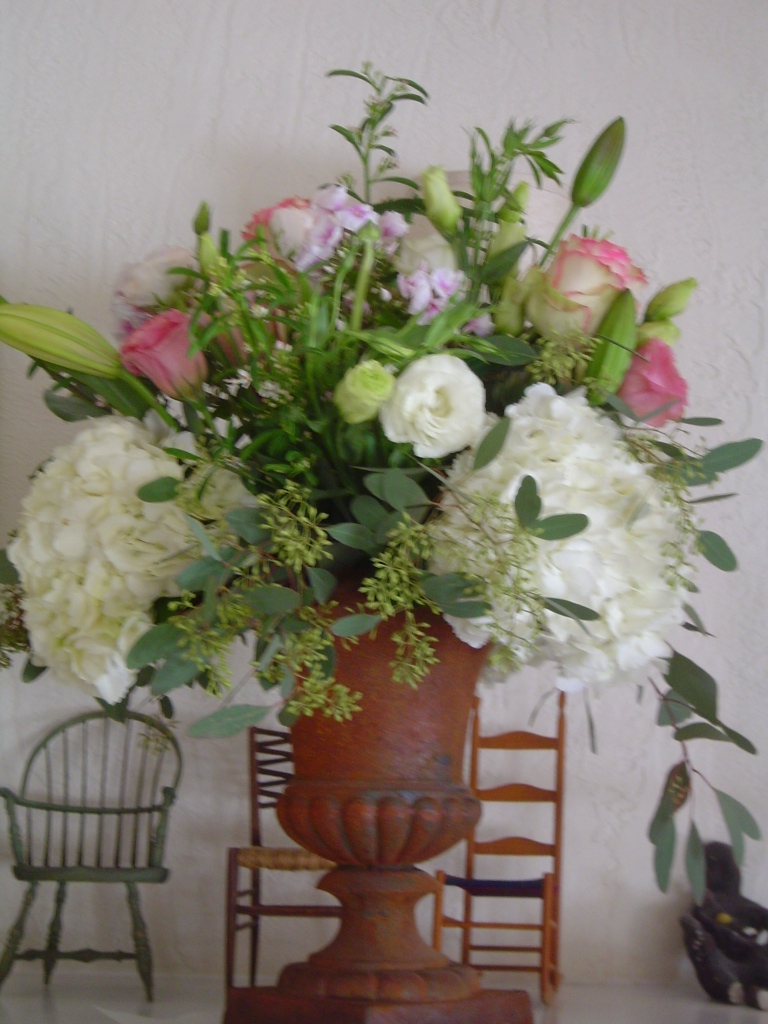
Fresh flowers bring cheer
Fresh flowers bring cheer


Amaryllis in bud
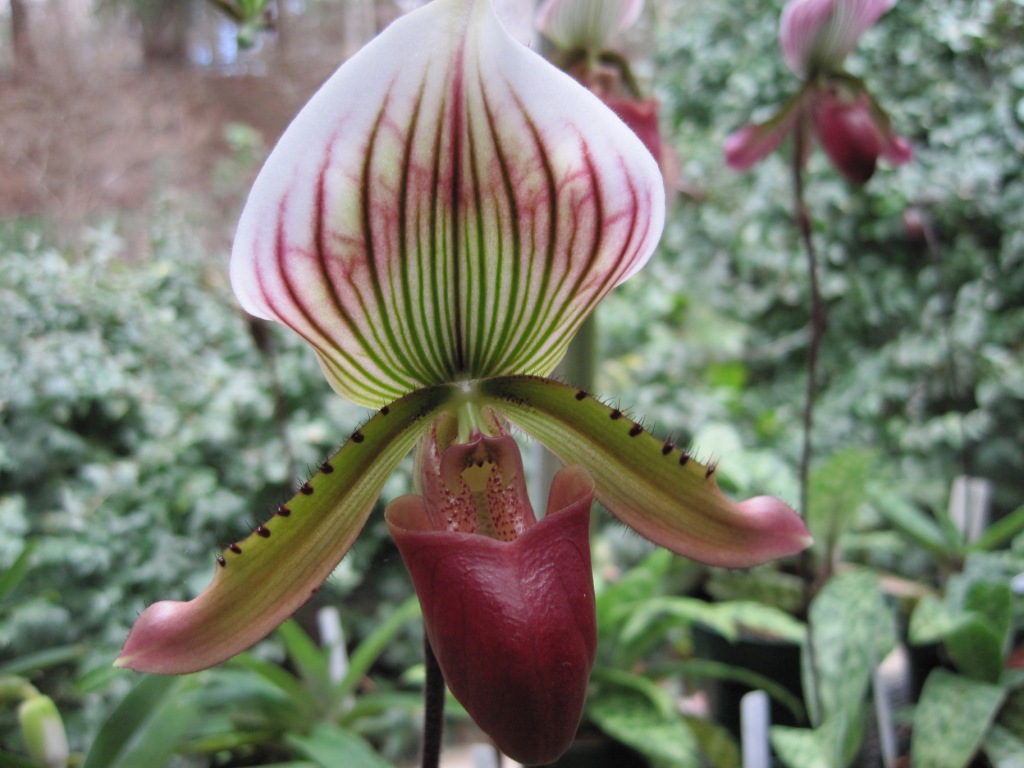
Amaryllis in bud


Orchids bloom in a friend's greenhouse

Orchids bloom in a friend’s greenhouse
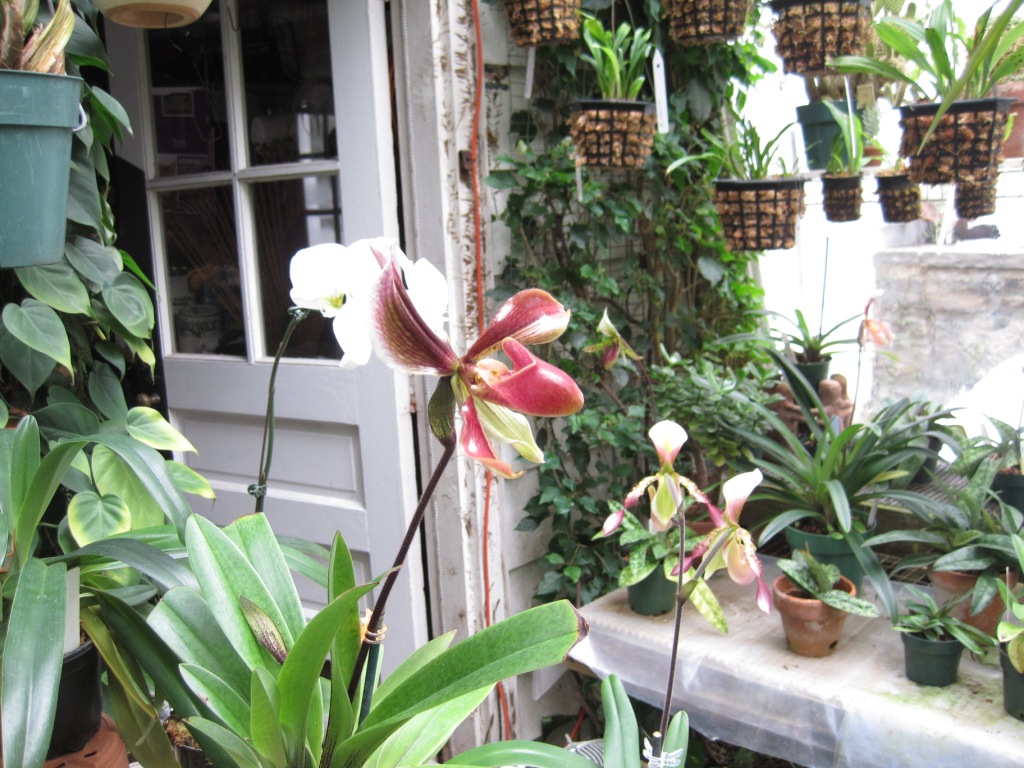

Orchid
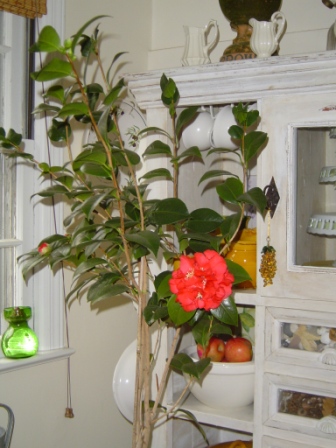
Camillia - another winter bloomer

Camillia – another winter bloomer


The herb garden in winter
The herb garden in winter
Is The Customer Always Right?

Some weeks ago, Bloomingdales announced that they were taking a hard line on the return of their clothing. Because some folk tend to wear the clothes and then return for a refund, the store has decided to attach a device to the garments that would preclude that possibility. Any returned merchandise must have the device intact and attached. The measure should curb an $ 8.8 billion fraud bill! This is a sad commentary on the moral standards of a section of our society.

To make matters worse, the wrong doing is not restricted to clothing. Plant nurseries are confronted with a similar dilemma. People return plants for a variety of reasons. The plants are kept for some days and then brought back because “they are not looking good”/ “ I changed my mind”/ “my spouse does not like these”/ “ I found a color I liked better at another place” and so on. How the plants were cared for in the interim is uncertain. Were they watered, given sun/shade, kept healthy, are factors not determined. Flowering plants have on occasion, been used for an outdoor event and then returned because “it didn’t work out”. This last one is exactly the same as the Bloomingdales problem. To use plants to “stage” a property for a showing and then return them is not unheard of.

People come a year after purchasing a plant wanting their money back because the item did not survive the winter. No mention of the possibility that perhaps they themselves could have done something wrong. Wrong plant for the site. Wrong conditions. And some times sheer bad luck from a nasty winter which knocked off plants all over the region.

There is of course, the possibility that the plant purchased might have been sick or diseased. But for the most part, that would have been made visible quite early. On the chance that this was not the case, the nursery would have eventually been notified by other buyers or the growers themselves when the problem surfaced. In which case, refunds would be appropriate. However, this is not the usual situation. Most times, people want to blame the nursery for all horticultural failures.

Some nurseries offer a limited warranty. It probably helps in customer relations. But what is the responsibility of the buyer? Do we not have to act in good faith? How do we dare demand good service, excellent quality and fair prices if we don’t do our part in adhering to the honor system?

Plants are living creatures and by that very nature, there are simply too many variables in play. Reputable nurseries do their best to offer the best. The customer then must do his/her best as well. Do the research, choose wisely, plant correctly, care for the plants diligently. Don’t abuse the system. If the plant was mislabeled or the flowers turn out to be a far cry from the desired color, then by all means ask for a replacement but lets not make others pay for one’s own mistakes or failings.

I know of no nursery tycoon. This is not the business that generates wealth. Nurserymen take on this work because they love it. Typically, nurseries also provide knowledgeable staff from whom one can learn a great deal. When a customer demands their money back and succeeds, it is mostly because the nursery has little choice. They cannot prove where the fault lies and so they swallow the cost. Returned plants are hardly ever in a state of robust health – hence the resale of such items is low.
The Bloomingdales black tag cannot be used here. Instead, everybody will have to pay the price for the bad behavior of a small population.The cumulative effect of such a practice is far reaching.It hurts the growers, the nurseries, the customers. Prices will go up, selections will be smaller and less varied, and in the long term, there will be fewer people dedicated to the promotion of quality, interesting plants.

On my part, I’m fully aware of how often I have made mistakes by making wrong purchases or stubbornly planting in inappropriate places or delaying the planting for too long. Worse, I’m guilty of neglecting to give the required care. I take full ownership and there is no blame to pass on. On the occasion, when an order of bulbs bloomed to exhibit the color or type that had not been selected, the supplier has graciously given a refund or credit. The same for plants that were incorrectly advertised. In general though, the fault is mine. I do recall that once, although a batch of tulips was the wrong color, it actually looked spectacular. When visitors congratulated me for my keen selection, I took full credit.

Recently, at my local nursery, I heard a neighbor demand a refund for a shrub that had died. It had cost about $ 20.00, was purchased a year ago which included a harsh winter and a summer with little rain, been moved three times in the garden and had some construction work done very close to it. Really? Is this what we have come to? I’m still cringing.

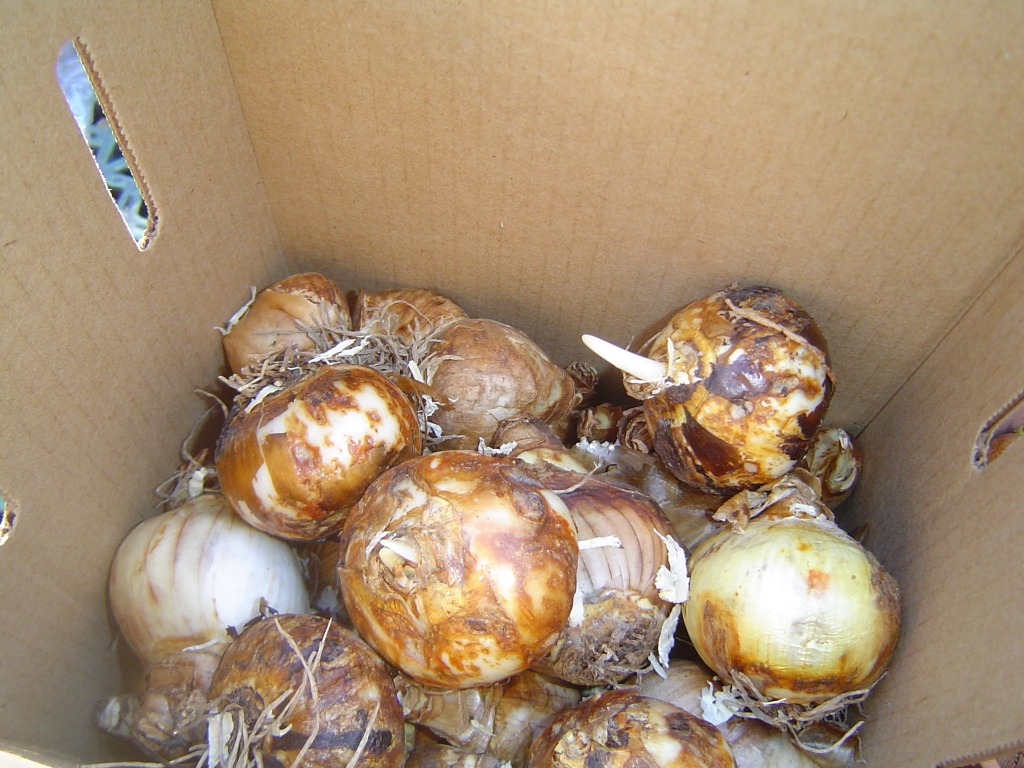
A batch of freshly delivered bulbs

A batch of freshly delivered bulbs


New purchases await

New purchases await


At the nursery

At the nursery


(c) 2013 Shobha Vanchiswar

Beyond The Season

When Does Fall …

When does fall
feel like fall?
When does one stop
to enjoy the ball?

Swirling confetti
Brilliant fireworks
Who pauses to see
the season’s perks?

Rushing to clean up
erasing the summer
Readying for winter
planning next year

What would happen
if we could just stay
amidst the leaf piles
in endless play?

The arrival of the holidays invariably catches me somewhat unprepared and taken aback. There is so much going on in the autumn that the thought of decorating, getting presents, planning meals and so on gets overwhelming. So the fall back ( no pun intended) is to keep it low key. That would be fine except, too often, I still fail to meet my own expectations. It is not as though I’m setting the bar too high – my plans are simple but even simple needs forethought. This year, I aim to do better.

Whilst going about the required chores in the fall garden, I’m preparing for the holidays as well.
In collecting seeds from plants, I make packets of them to give as gifts. The seeds go into pretty envelopes that are clearly labeled with all the relevant information. Additionally, I’ll attach a photo of the plant and mention good companion plants. Vegetable seeds will be accompanied with a favorite recipe.

With boxwood blight looming large, one must start considering planting alternatives. So when I purchase shrub honeysuckle or euonymus to experiment in my garden, I pick up some extras to give to a friend who is worried about her boxwoods. Lavender and catmint are other options – I’ll root cuttings from my garden and extras from those that thrive will also be presented to fellow gardeners.

Pruning is a chore that turns up some good staking material. A bundle of sturdy, natural stakes will always be much appreciated by any gardener.

The harvest of fruits, vegetables and herbs results in jams, jellies, sauces, chutneys, pickles, cordials and liqueurs. Who wouldn’t want to receive some of these? Additionally, herein are very handy staples for a soirée. Combine with crudités, artisanal cheeses, dried fruits, nuts, crackers and bread and voila! A cocktail party is in progress.

Redoing or reworking a part of the garden at this time is something to give myself and/or the spouse. Be it relaying the stones on the terrace, replanting a bed or repainting all the lawn furniture, getting it done now will give some immediate peace of mind and when spring arrives, I’ll be all set to enjoy the ‘gift’.

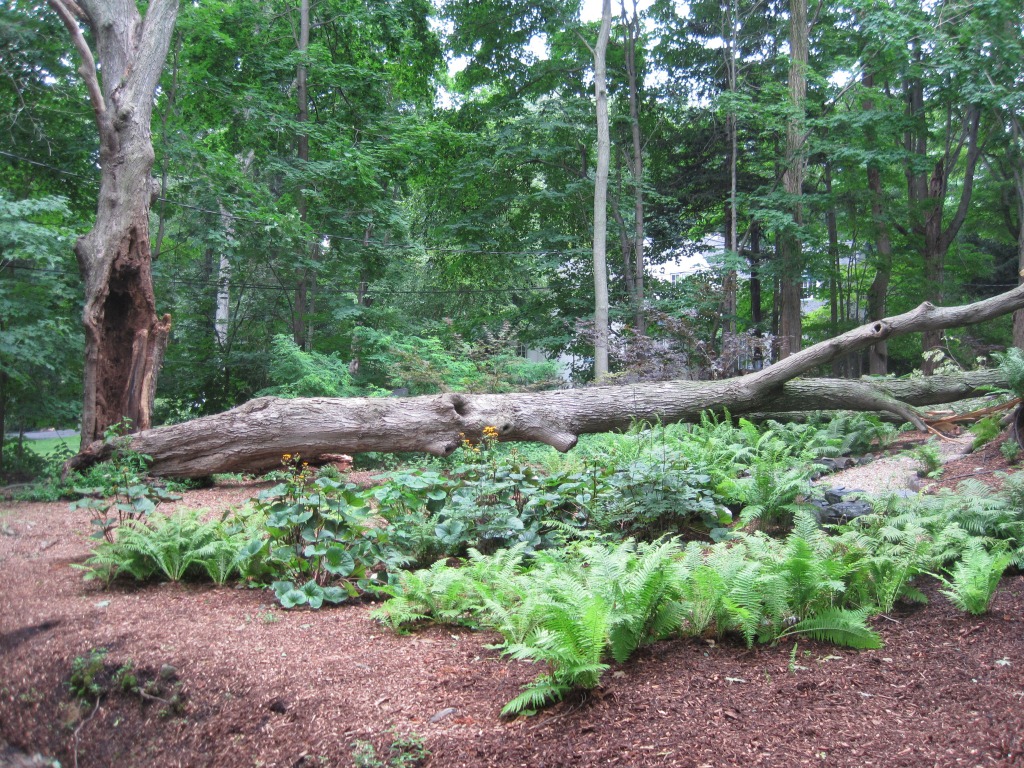
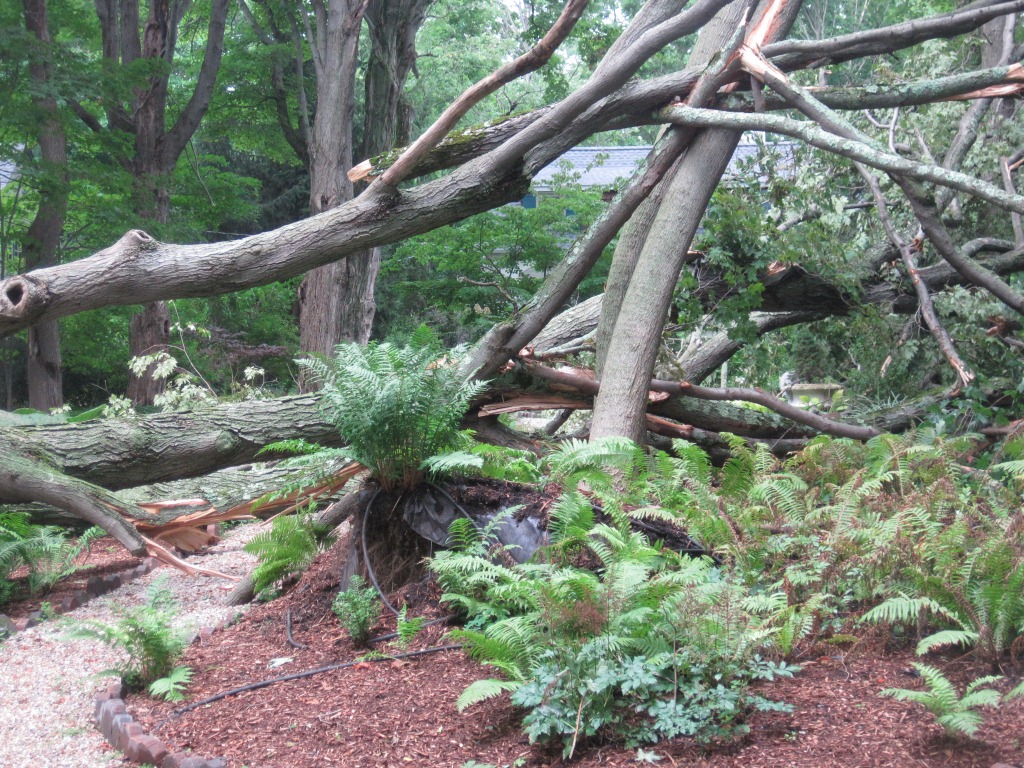
In that same vein, it is prudent to get the trees on the property checked out by an expert. Deal with the dead or diseased limbs/trees. Likewise, take care of trees that are at risk or pose a threat in case of storms. This single factor could save the huge expense and heartache of addressing possible damage. Its a gift one gives to oneself and loved ones. Except of course, some loved ones won’t know to value it!

During the process of clean up, I collect fallen nests, feathers, colorful leaves, berries on branches, pine cones and acorns, seed pods, vines, flowers such as hydrangea that keep their form when dry, evergreens and other interesting natural material. These are all that I will need to decorate the house for Thanksgiving and even Christmas. Simple and natural. And compostable!

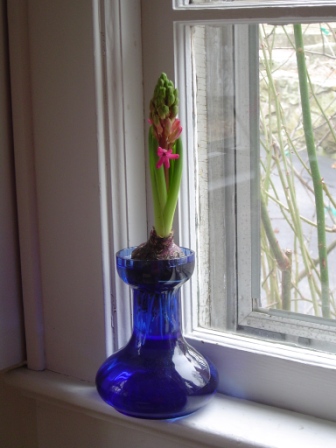
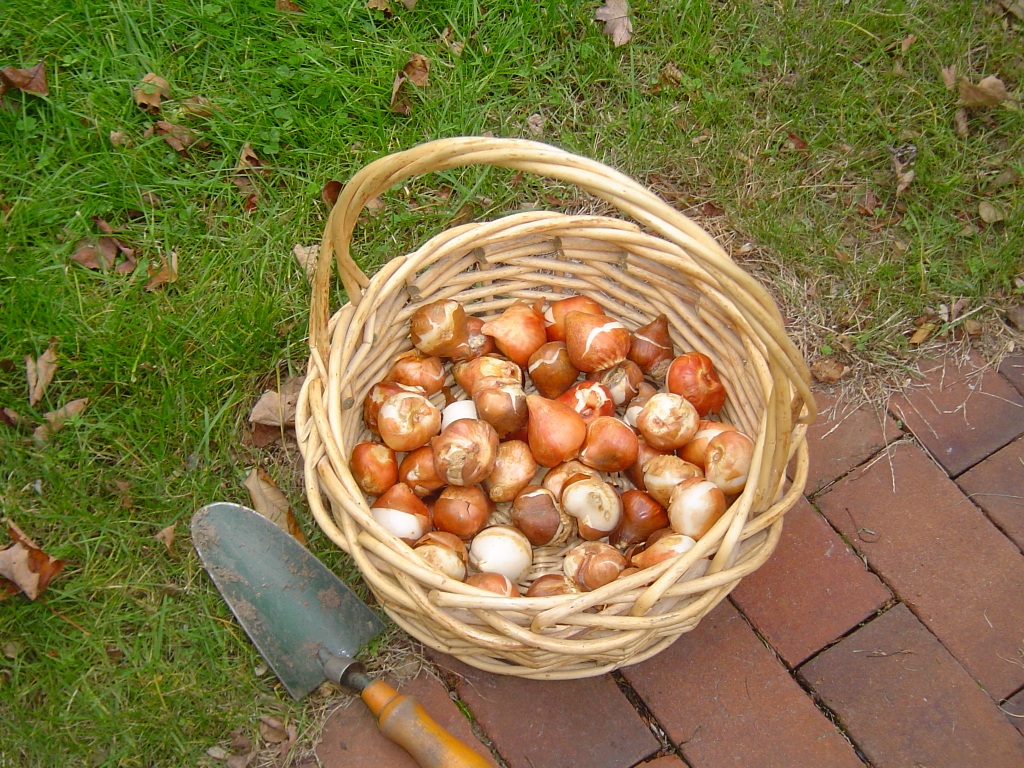
Hundreds of bulbs will soon be planted in the garden. Some of them go into the refrigerator to be forced in the dead of winter. A forced hyacinth or crocus will be certain to banish the winter blues from the hearts of a few cherished friends.

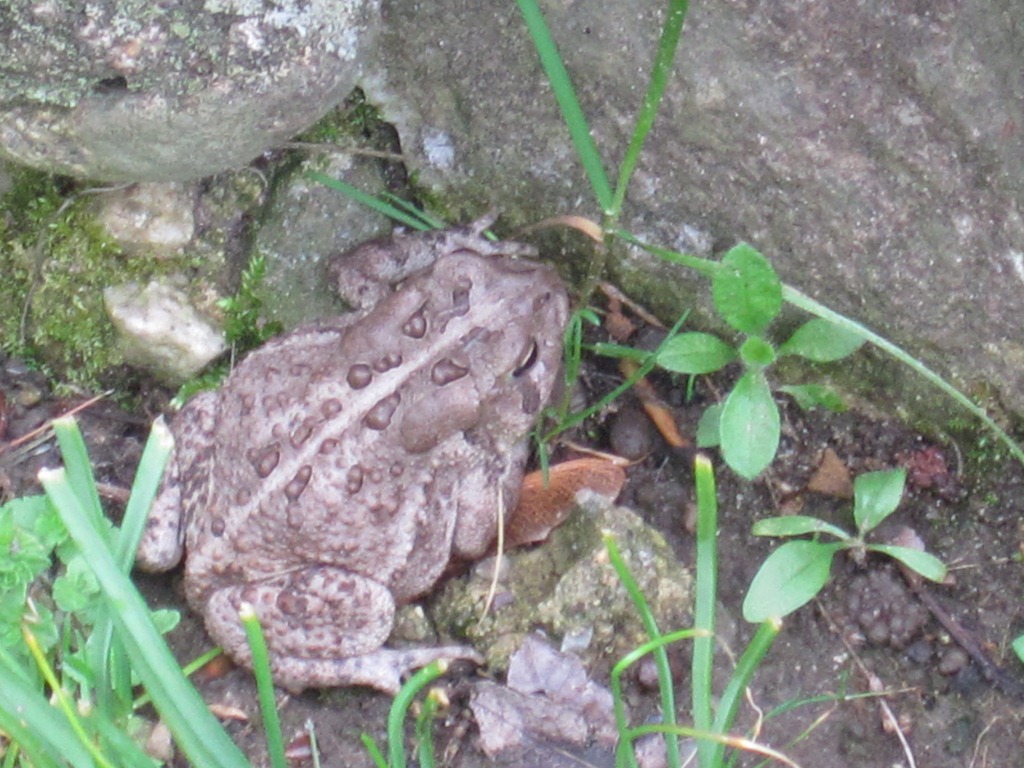
Finally, a gift to Nature. A general clean up and tidying is good but I leave as is an area not easily observed. Messy and overgrown. This will provide a habitat for wildlife. shelter during winter storms as well as a breeding spot in spring. Birds, toads and numerous insects that are useful will be very grateful.

There you have it. I’m already calmer. Are you?

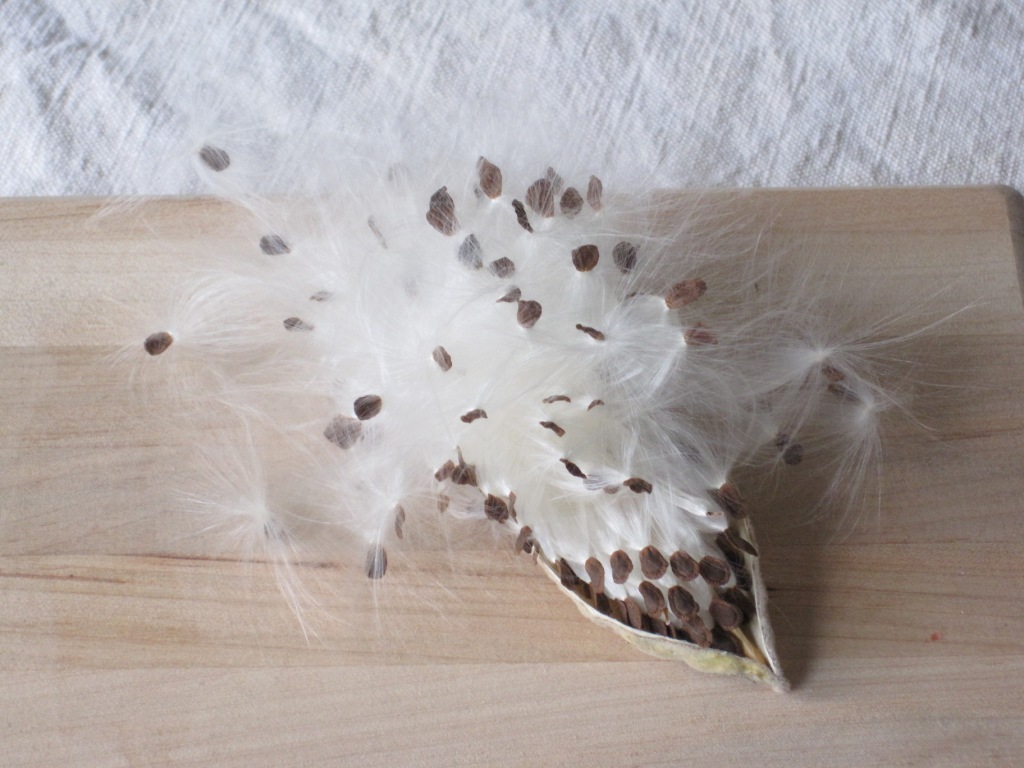
Milkweed seedpod

Milkweed seedpod


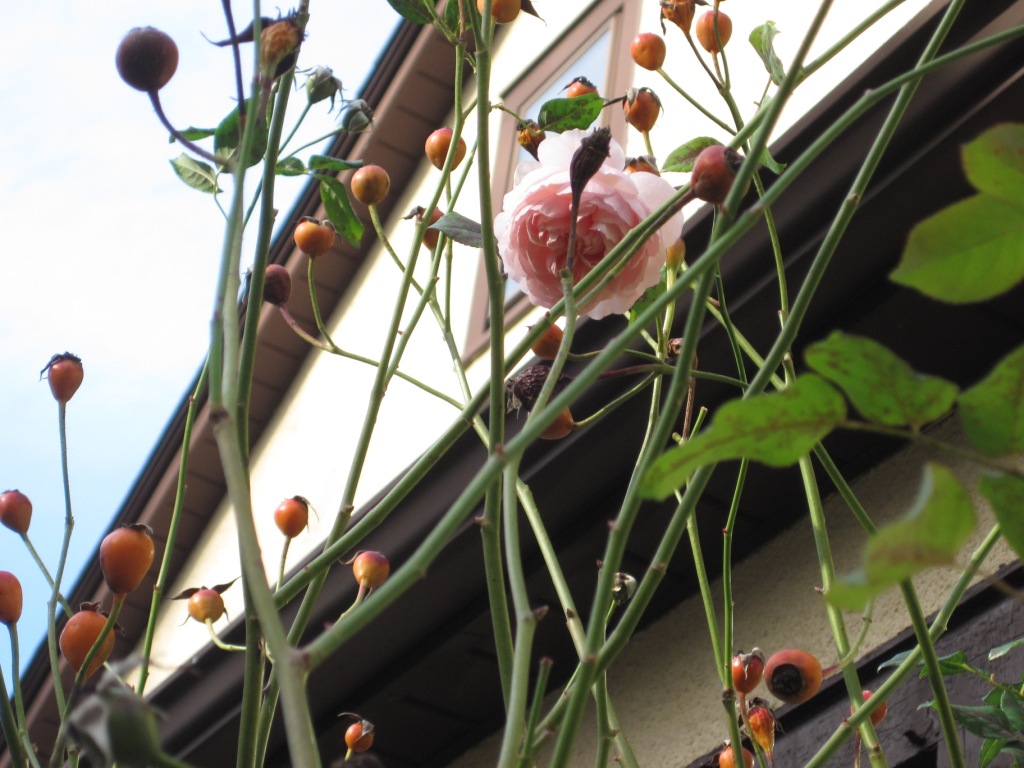
Rose hips to bring indoors

Rose hips to bring indoors


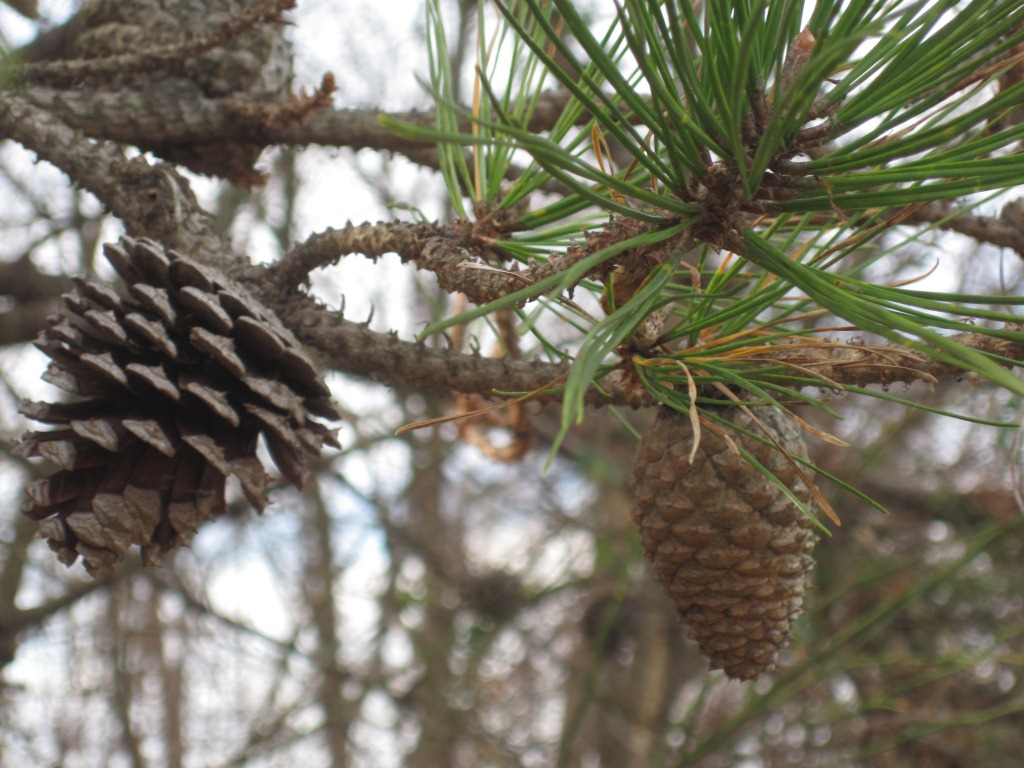
Pine cones for decorating

Pine cones for decorating


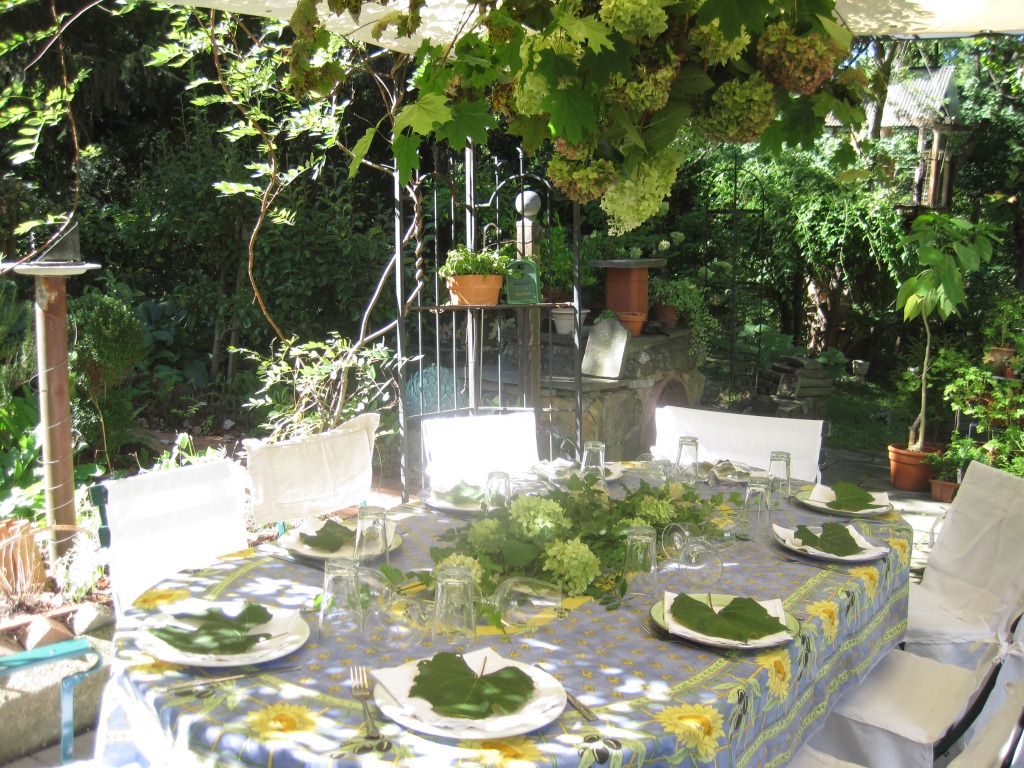
Grapevine prunings and dried hydrangea adorn an autumn table

Grapevine prunings and dried hydrangea adorn an autumn table


Someone who needs protection in winter
Someone who needs protection in winter
 

After a storm

After a storm


More storm damage

More storm damage


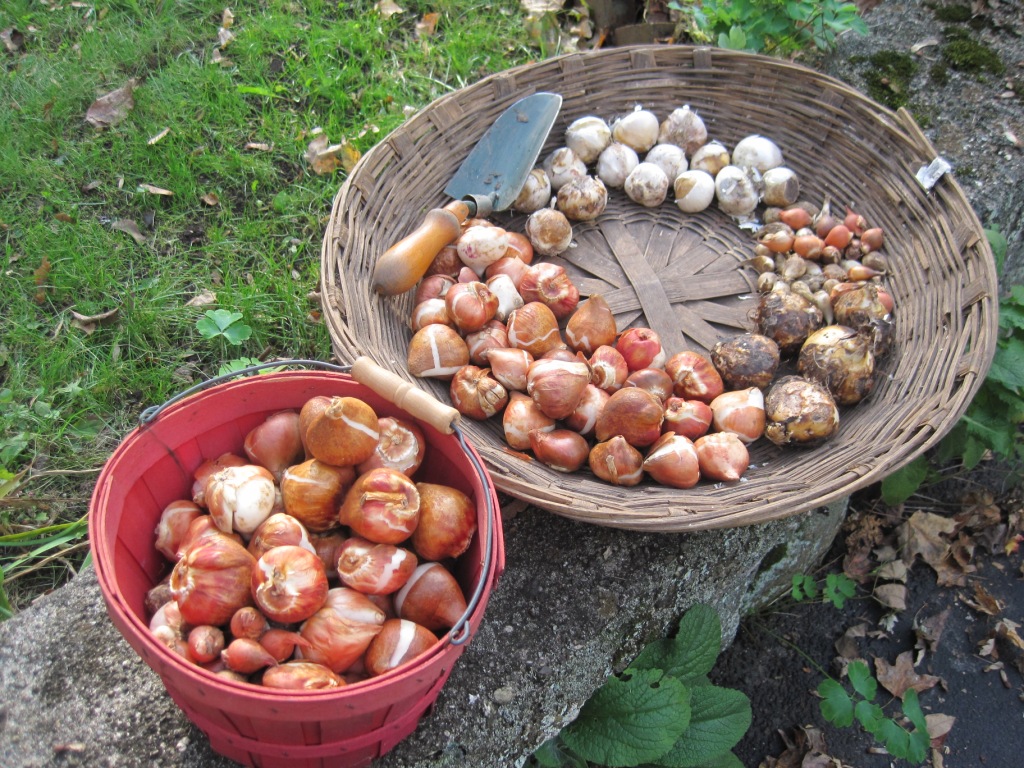
Some of the bulbs to plant

Some of the bulbs to plant


Forced hyacinth

Forced hyacinth


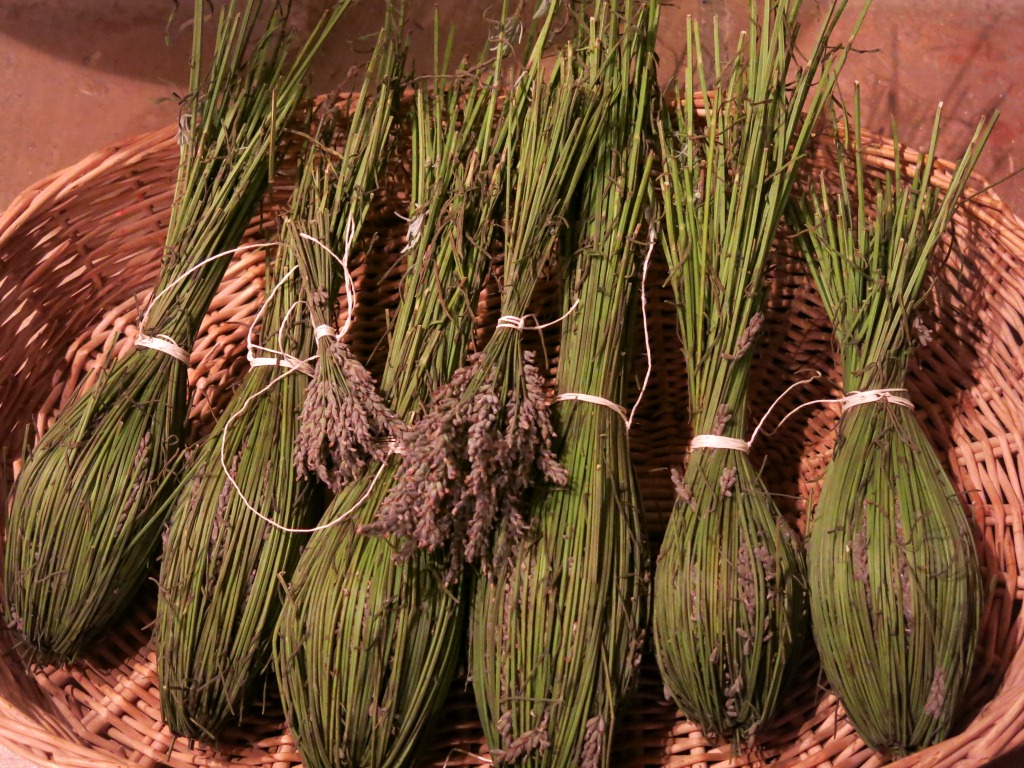
Lavender 'wand' to scent rooms and closets

Lavender ‘wands’ to scent rooms and closets

(c) 2013 Shobha Vanchiswar

This Annual Dusk

This Annual Dusk

Amidst cold flames
licking crisp, blue skies
Tawny hues flickering
amongst the bronze
I stand separate
observing and alone.

Mesmerized by the bees
They urgently siphon
every last drop
from the cellars of asters
I remain rooted.

I should follow
their example, get busy
but I cannot
my spirit is unwilling
All around
bustle the squirrels
and retreating birds
All are busy but not I.

With the fading
of the garden
goes my desire
to seize the moment
To pick up summer’s debris
make ready for approaching winter
invest soundly in next spring
This season that serves
all others.

As weary as I am
of dog days
I’m loathe to let them go
I cannot prepare
for frosty nights
I shrink from the cold fingers
that wait to grasp
this piece of my heart
and keep it suspended
in time.

I wrote those lines exactly two years ago. It is so hard to ignore the shortening days. I know I’m not alone in feeling this way. However, I’ve begun practicing what I call “seasonal mindfulness”. With or without my consent, the turning of seasons is inevitable. So, I told myself to take my cues from my favorite teacher – my garden. It performs exactly as it ought no matter what comes its way. Resilient, adaptable, stoic and practical, nature makes each change a celebration. Every happening is an opportunity for new growth.

As I settle on a bench, I’m acutely aware of the russet hued leaves swirling around till coming to a rest at my feet. Squirrels ignore me as they charge past preparing for leaner times. No doubt I will find some of their treasures when I get around to emptying the large pots later in the month. The sedums are covered in bees these days. So focused are they that some forget to return to their hives on time; they spend the cool nights motionless on the flowers till the morning sun warms them up. Overhead, I watch flights of birds journeying their way south. Those are the wise ones who know to leave before it gets too late. None of these busy souls are lamenting the passing of summer. They are simply in the moment. I see that if I want to be mindfully present, I need to show up.

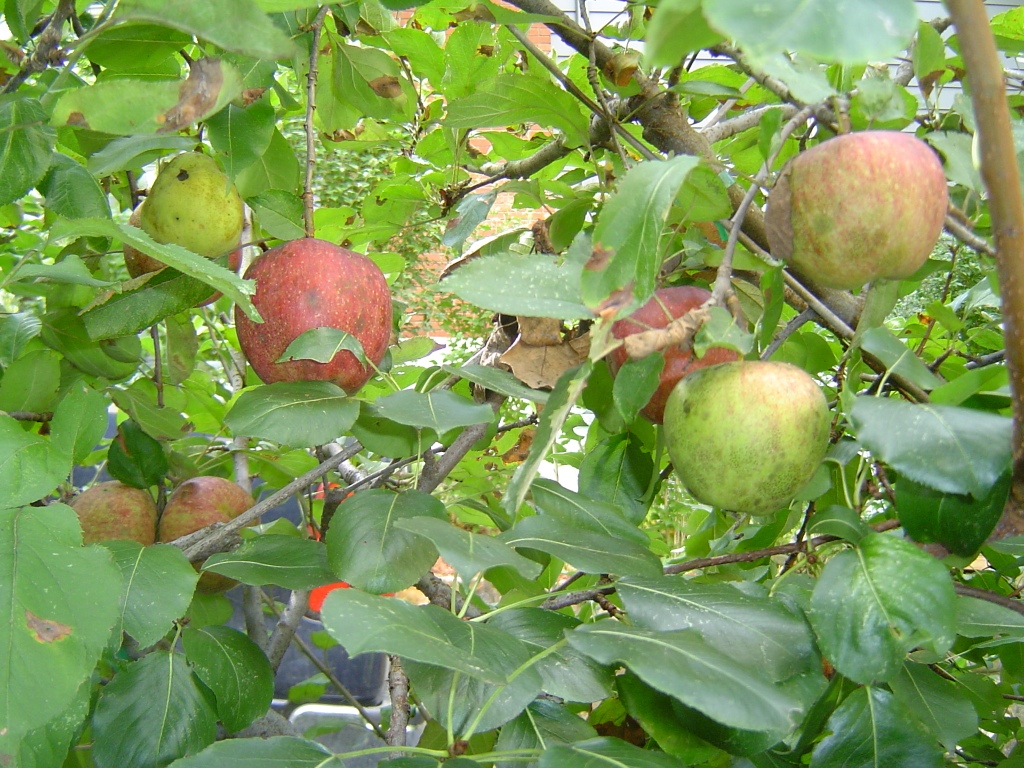
Life all around me has accepted the change. I follow suit. I inhale deeply – the air is edged lightly with crispy, cold crystals. I’m ready to join the autumnal do si do with my fellow creatures of the garden. I acknowledge the end of summer as I cut back plants, clean out beds and rake fallen leaves. As I work, I review the garden – did I accomplish what I wanted to do, was I true to my principals, could I do something differently? I get ready for winter ahead with the picking of apples from the espaliered trees yet to shed their foliage, drying bunches of herbs for stomach warming stews, canning the last of the tomatoes, freezing batches of basil pesto. The canicular days to come will be filled with memories of summer. As I plant the bulbs all over the garden, I’m brimming with hope – spring will return, light will linger longer and color will once again suffuse the somber, winter weary landscape.
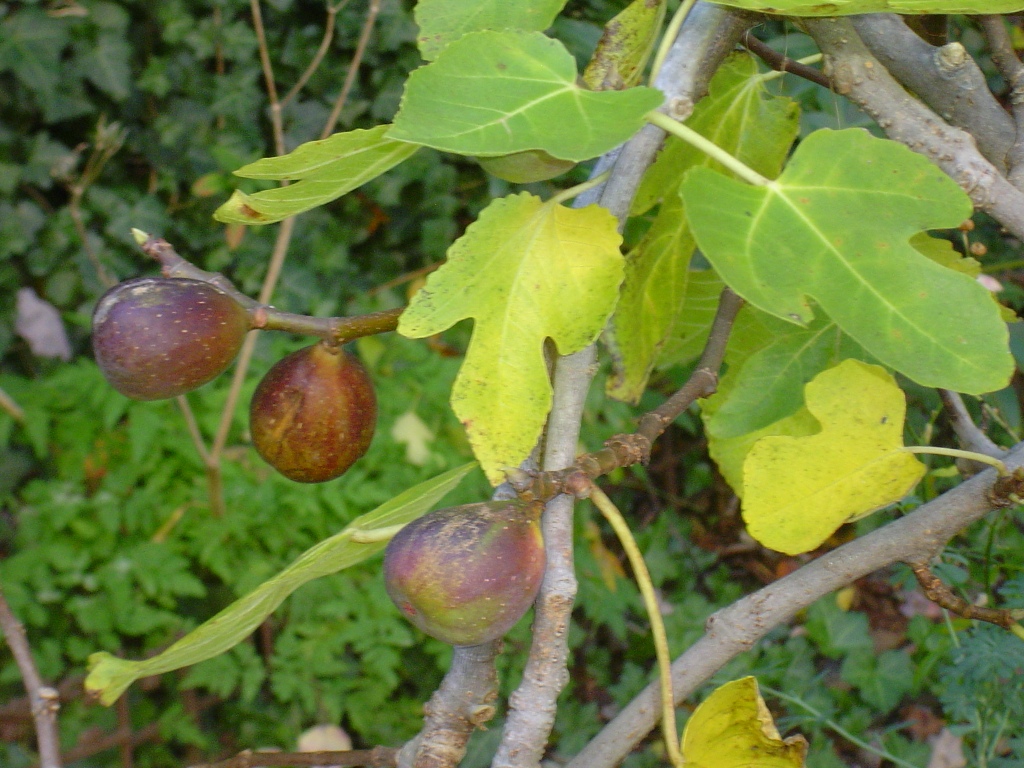
I enjoy making a ceremony of welcoming autumn. My chores in the garden are rituals. They bring my mind to the present. As I savor the last of the figs and move the trees into sheltered space, I marvel at the warm, vivid colors of the leaves. The ornamental grasses rustle and wave seed heads that shimmer in the late afternoon light. I’m struck anew by the beauty of the season. There is a sacred silence within my heart.

In living in rhythm with nature, I honor the gift I’m proffered – the continuing chance to re-do, to improve, to grow. Myself as well as the garden.

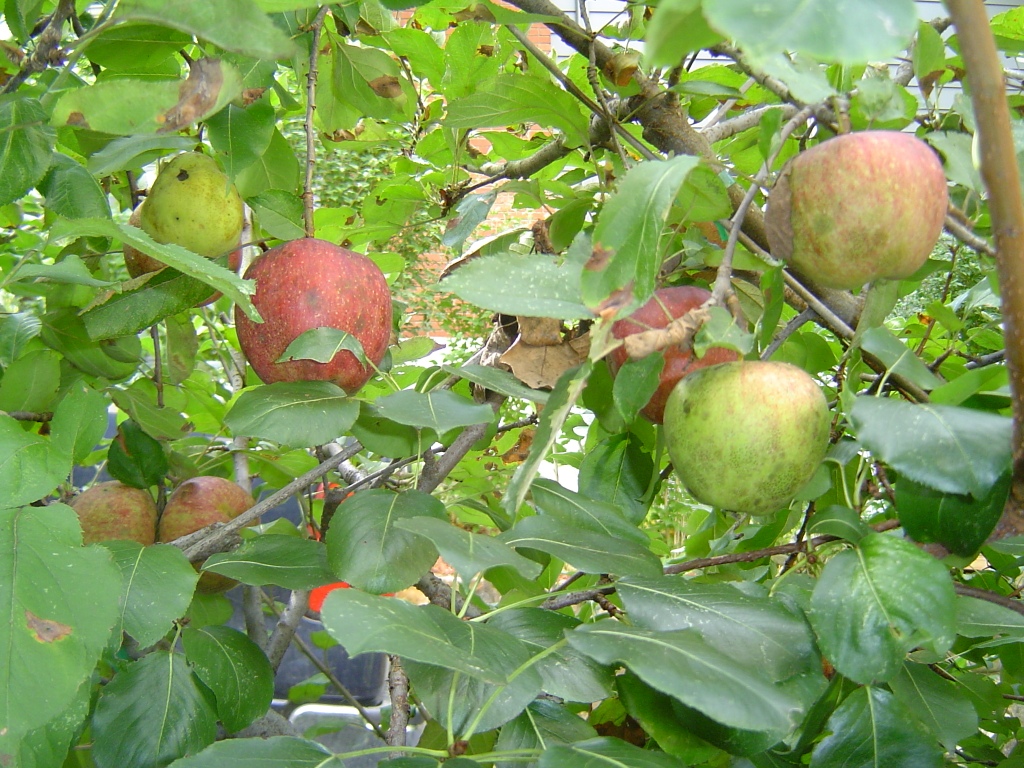
Apples awaiting

Apples awaiting


Bulbs awaiting

Bulbs awaiting


Figs awaiting!

Figs awaiting!


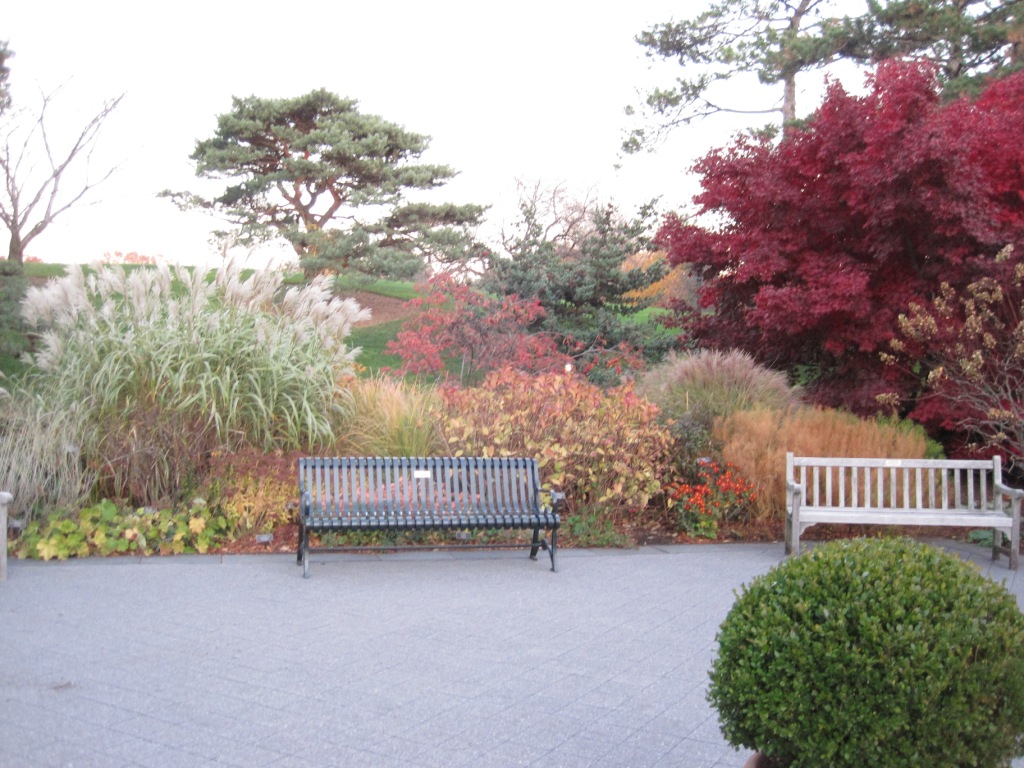
Glorious autumnal colors. At NYBG.

Glorious autumnal colors. At NYBG.

Forever Summer

I’m clinging fiercely to summer. Vacation is over, school is well underway, the work load is mounting, tree tops are glowing yellow-orange and the early mornings bear a distinct chill. Still, I’m celebrating summer. Not the sticky heat of the season or it’s bug filled evenings. Its the attitude we adopt every summer that I’m keeping close to my heart.

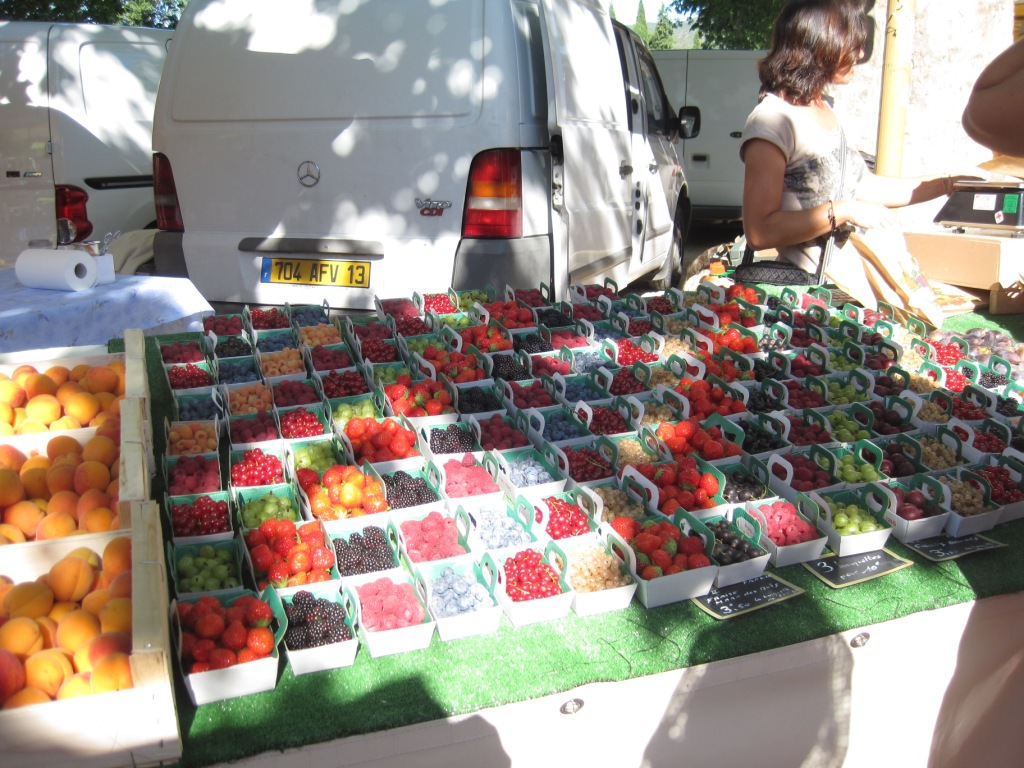
The farmer’s markets burgeon with the bounty of summer. Tomatoes, basil, peaches, eggplants, squash, corn and figs jostle for space with the new apples and pears that announce the change of season. As days gradually get shorter and sweaters are resurrected, our minds start looking ahead to Halloween, Thanksgiving and further on. The pace picks up. Summer quickly becomes a distant memory. While my favorite seasons are spring and fall ( in that order ), it is the summer mentality that I wish we would hold on to for ever.

How is it that one automatically relaxes and lightens up in this time of school breaks, fireflies and fireworks? How is it we are so willing to put up with humidity, bad hair days, mosquito bites, sun burn, jelly fish and, monster weeds? Could it be the extra hours of sunshine, the higher temperatures, the fresh produce, bare feet and open beaches? We smile more, complain less and savor the days of this light filled trimester with an eagerness rivaled only by children on Christmas morning. Wish we could be this way forever. But alas, all good things must come to an end. Must they?

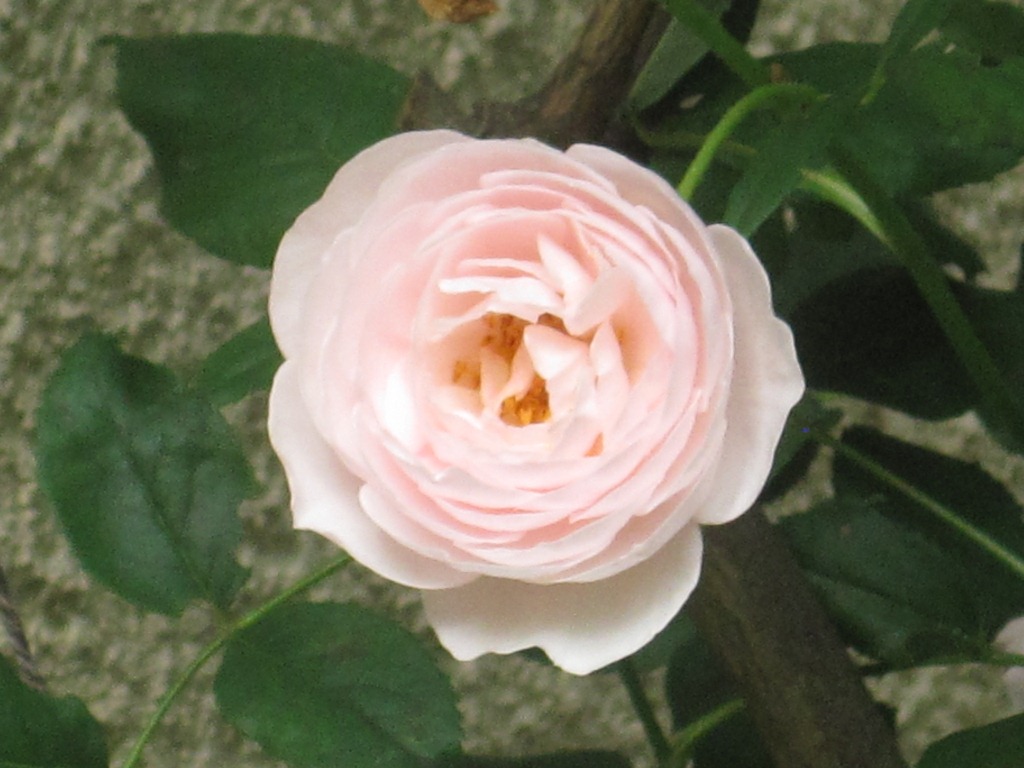
I seek my answer in the garden. Here lies the nexus of seasons. While the hydrangea are in full bloom, the asters are beginning to open. As the tomatoes ripen, the grapes are ready for harvest. The apples turn rosy while the pelargoniums show no sign of fading. Seed pods rattle and ornamental grasses swish. Birds get ready for long flights as squirrels prepare to settle down. Roses still blush when bees come calling. Things do not stop in the garden. Life continues in all its rich ways. As one season comes to a close, another starts. It is all good. Appreciating what is happening right now only to welcome what comes next is what the garden is instructing me to do. The cycle of seasons is eternal so there is no need for tearful adieus to summer. After all, would I pause to appreciate a fresh fig if I could pluck one off the tree all through the year?

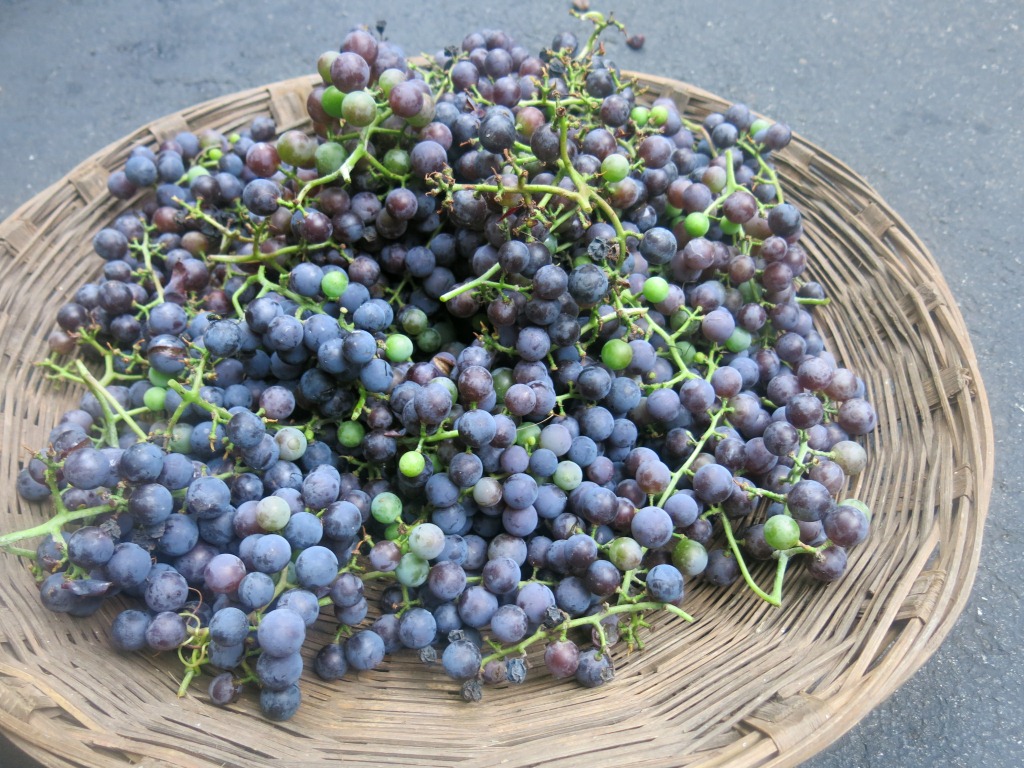
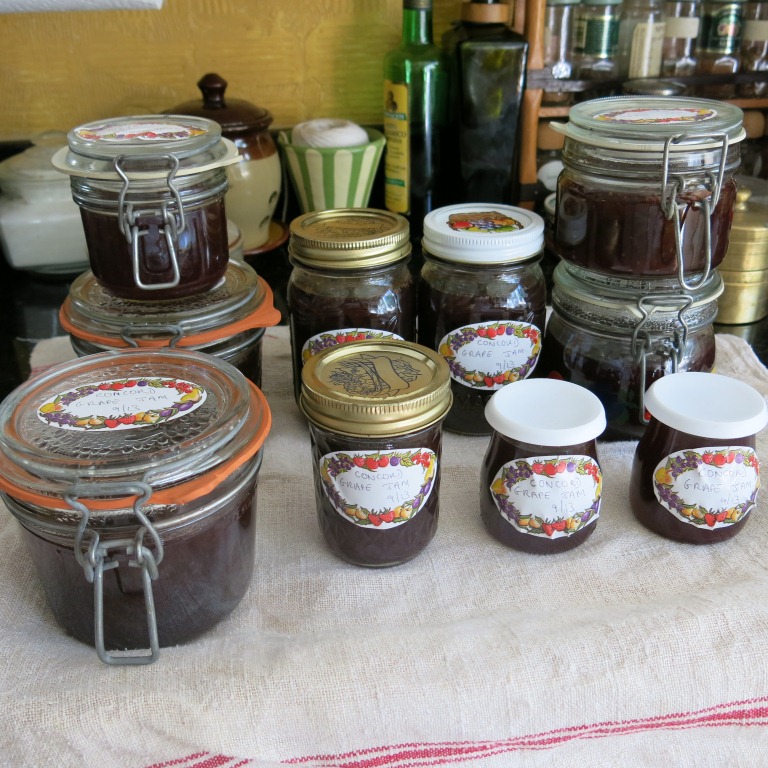
Instead, I gather basil so there is pesto to flavor the meals that will warm us after a brisk snow fight. The concord grapes are transformed into jam for the many sandwiches that will be consumed through the school year. Arm loads of hydrangea are dried for arrangements at the Thanksgiving table. Seeds are collected for next years crops of chillies, sweet Williams, tomatoes, nasturtiums and peas. One grows pumpkins in summer but they are ready only in autumn. Bulbs are planted in autumn so we have a display in spring but first, a necessary winter must be passed . One season continues into another.

It is simply about embracing fully what each moment has to offer. Take one’s fill of it. The effects will linger and perfume the times still to come.

While I cannot avoid my work related obligations, the daily slew of emails marked high priority, garden chores that are time sensitive or the pressures of an ever lengthening to-do list, I can approach them with the temperament of summer. I will factor in the down time we usually allow ourselves for that one season into all of the others. Be more laid back, less compelled to enforce self-imposed rules and deadlines. There is always time to enjoy every last drop of morning coffee, to push back from my desk and catch up with my daughter’s doings, to watch the moon rise, to have a proper conversation with my husband, to listen to my heart and acknowledge the miracle that is life. Every day.
Summer lives forever. Vive l’été.

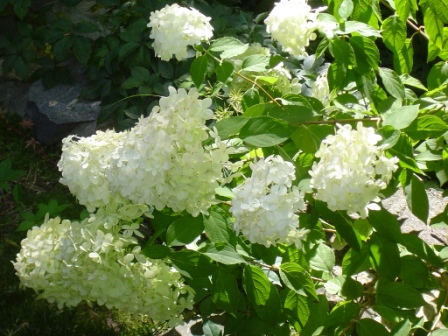
Hydrangea

Hydrangea


Asters

Asters


Apples for the picking

Apples for the picking


Baptisia seed pods

Baptisia seed pods


Summer bounty at the market

Summer bounty at the market


Heritage rose

Heritage rose


Concord grape harvest

Concord grape harvest


Grape jam galore!

Grape jam galore!


(c) 2013 Shobha Vanchiswar

Through The Eyes Of Children

(Get yourself a cup of tea and settle in to read this longish post!)
School has started and with that, our lives are once again in sync with their schedules and activities. Play dates, music lessons, athletic practice and games, doctor and/or orthodontist appointments, tutoring, SATs, college visits, and so many other activities seem to leave very little free time for everybody. I don’t mean time spent watching TV or playing video games but that space in a day that provides real thinking, inspired creating to happen. When imagination can soar and the mind and body are engaged in pure, unadulterated fun. Do you remember those times? What happened? Somewhere, somehow, we sacrificed our unique, creative selves to conform to trends and succumb to everyday pressures. To make matters worse, we’ve, albeit unintentionally, impoverished our children in the imagination and play department.
Are you surprised by what I’ve just said? How can this be you ask – when you have provided your offspring a super-sized backyard swing-set, a trunk full of costumes, computer and video games, a whole room of toys, shelves of books and entire collections of movies. In addition, there are the gymnastic/ballet/karate/music/sports activities. How on earth could the young ones be deprived?
Think back. To your own childhood. What were the most fun times? I’m betting they had nothing to do with most of the aforementioned items. With the exception of books, everything else is either structured and/or telling one how to do something. They do not provide for that delicious sense of imagination and creative thinking. Instead of ready-made costumes, creating one from unlikely sources is more fun ( aluminum foil over cardboard swords, capes from mom’s old scarves, parchment paper fairy wings). Staging a play with original script, costumes and sets can involve days of creative activity as opposed to a couple of hours watching a video. Having the freedom to imagine alone and with others leads to all sorts of brilliant projects and memories. One acquires skill sets that will be handy forever.
When my daughter was very young, she would put up puppet shows using her stuffed animals as the various characters. Influenced by the classical music she has always loved, her shows were ambitious productions such as Bizet’s Carmen. She’d make out tickets and programs, provide ‘costumes’ to bears, dogs and such and in makeshift settings, we’d watch Pooh bear perform as Don Jose to Carmen elephant as a recording of the entire opera played in the background. It was hilarious but we didn’t dare laugh outright. In the puppeteer’s mind, they were as good as the Met Opera cast. The tough part was sitting through the full length production. Dinner was delayed till intermission, dishes and other chores awaited the finale. I’m so grateful that we taped these priceless performances.
Then there were those play dates when she and her friend(s) would enjoy her amazing third generation doll house. I’d overhear the ‘Darwins’ ( my daughter had decided very early on that Charles Darwin lived in said house) engaged in Sunday activities. The bewildered play date was informed that only Mrs. Darwin and children went to church “because Mr. Darwin was not sure about God and stuff”. I took such pleasure in hearing the adaptation of book to play!
The point I’m making is that children come completely equipped with imagination and skills to play and create on their own. All we need to do is give them that elusive luxury – unstructured time. Lots of it.
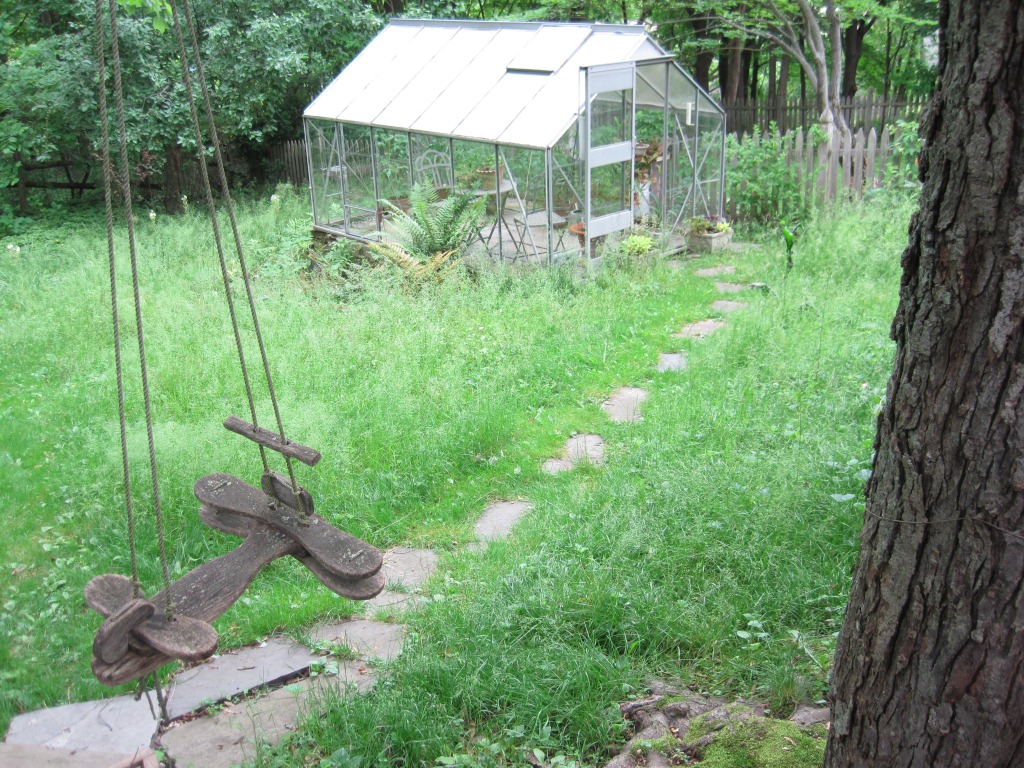
So now we come to providing for them in the garden. I’m just going to come out and say it – a play-set has absolutely no business in your yard. I’m not being judgmental. Just hear me out before you take umbrage. In my opinion, parks and playgrounds are meant for regular slides, swings etc., In one’s own garden, a simple swing from a tree is plenty. The one that hangs from our old red maple was frequently employed for certain dare-devil launches that made it a favorite amongst children. They’d watch the ‘demonstration’ by the young owner and then with some trepidation try it out for themselves. Before long, I’d have to start yelling to them to be a bit more careful.

The airplane swing suspended from the red maple

The airplane swing suspended from the red maple


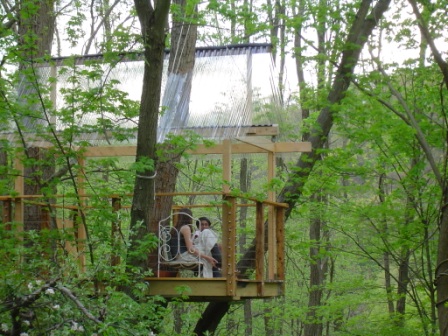
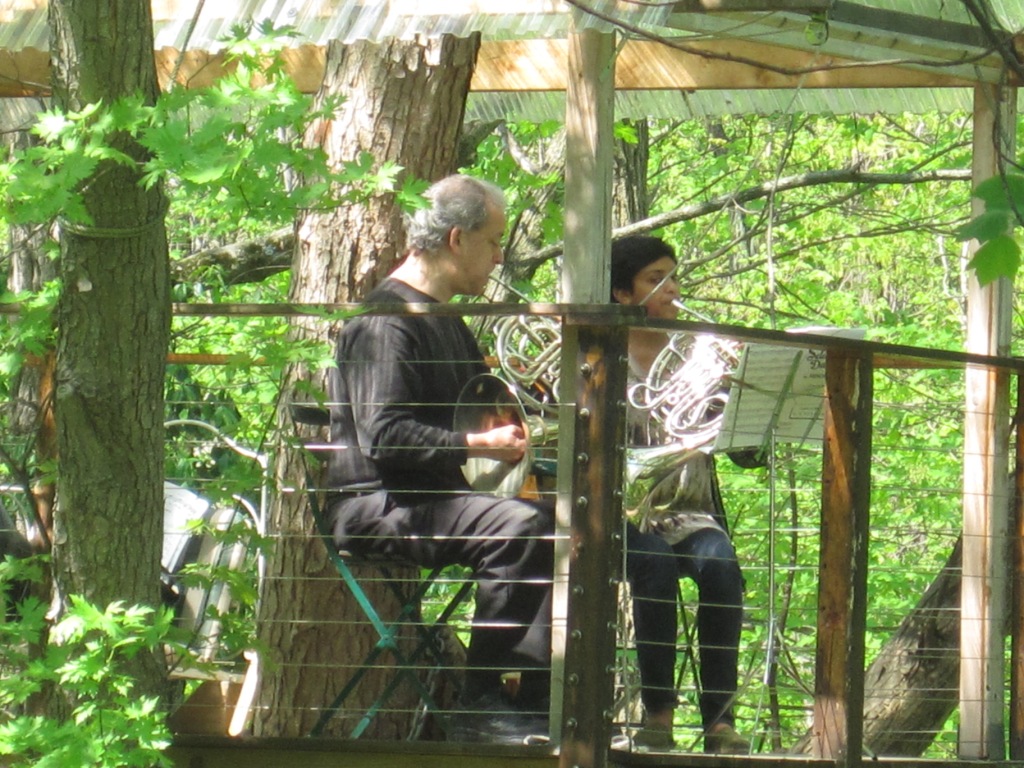
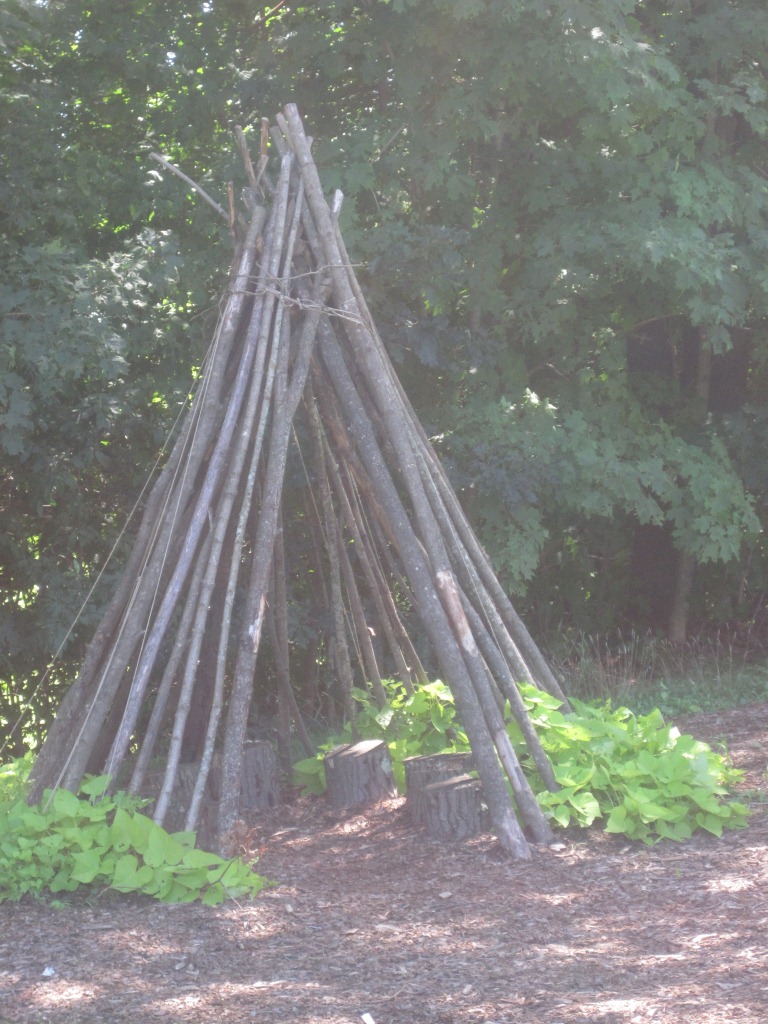
A small tree is terrific for climbing. My husband recalls practically living in the guava tree at his childhood home. He and a friend devoured the fruits and shared adventures aplenty in that hideaway. A real tree house is the best getaway place of all – to read, write secret letters, conspire with friends, loll about, dream, surreptitiously observe the goings on below, escape adult scrutiny. Crawling under shrubs to hide or explore can lead to exciting discoveries of toads, caterpillars and nests. Fairy houses from twigs, leaves and bark await occupation, acorn tea cups set on tiny ‘stumps’ stand ready for a party. Alone or with a friend, there is so much to see, do and conjure in a garden. Later, a trip to the local playground will be a different sort of play with exciting possibilities of making new friends or watching the ‘big’ kids master the monkey bars.
Tree house conversations

Tree house conversations


Tree house aerie

Tree house aerie


Tree house concert

Tree house concert


Friends of mine had the Towers Of Death for their two boys. The boys played there endlessly for several years till they suddenly came to the realization that the Towers were no longer high or even remotely scary. In actuality, tree stumps of various heights randomly connected by planks of wood were all that spurred this death defying activity. But what lofty adventures were had in this space!

By providing children with a few, simple elements in the garden is more than enough to fire up their imaginations. They are experts at it. The adults actually spoil the whole thing. These days we can and are guilty of being over-cautious and obsessed with all sorts of potential dangers.

Yet, that absolutely ugly contraption that appears like a giant zit on the face of an otherwise lovely garden, is happily welcomed. I’m talking about the trampoline. The single major cause of countless playground related visits to the emergency rooms all across the country. If one must have such an eyesore to satisfy the precious heirs, then it behooves the extra effort to sink it flush with the ground. If I sound uncharacteristically harsh, so be it. I feel rather strongly about it.
As I prepare to get off my soap box, I’ll sum up with a suggestion – lets create gardens that work for all generations. All elements of play should be harmonious with the surroundings. This is a space that offers itself unstintingly to the curious, the creative, the engaged, the restless, the mindful, the observant and most significantly, the universal inner child.
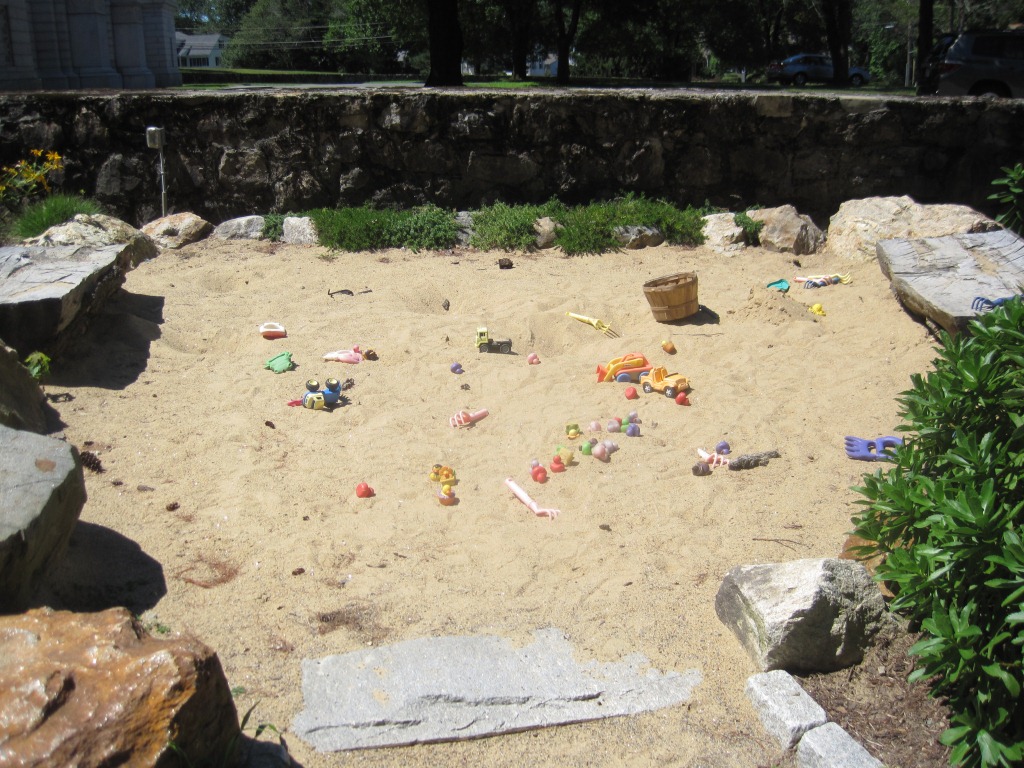
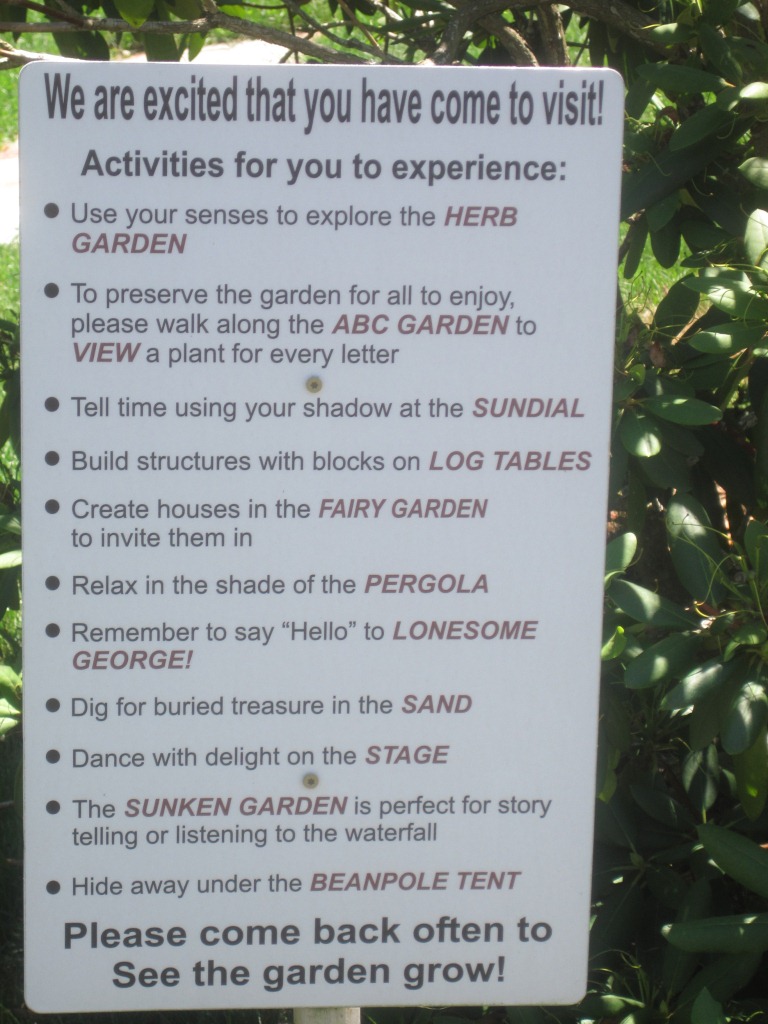
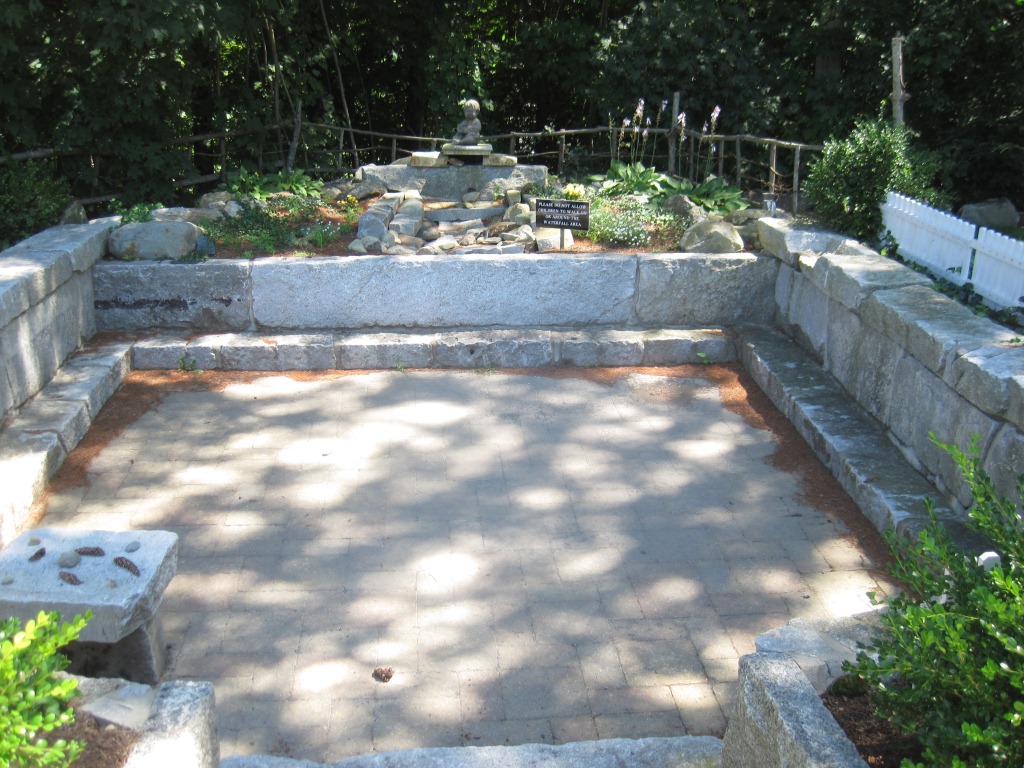
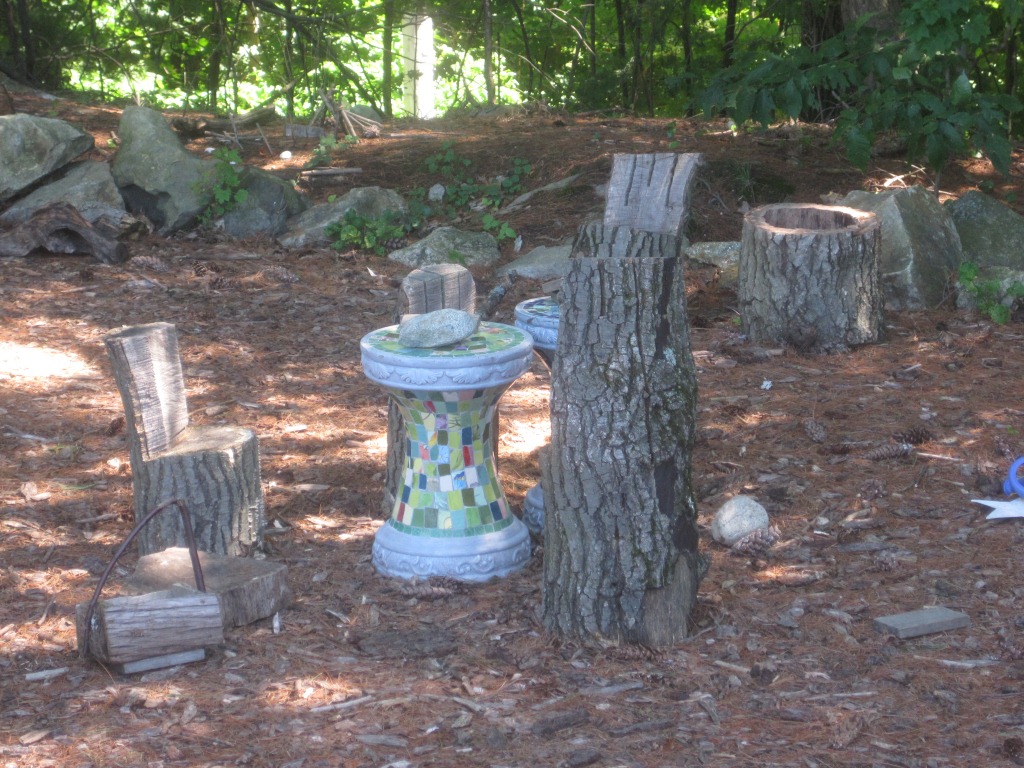
I’m sharing below some photos I took of a truly charming public garden for children that I visited in Andover MA last month. It combines the elements of instruction and delight quite well. Importantly, it does not talk down to the children. That should be something for us all to keep in mind as we manage our own spaces and lives.

The Children's Garden at West Parish, Andover, MA

The Children’s Garden at West Parish, Andover, MA


Children's garden 2
Children's garden 3
Children's garden 4
Children's garden 5
Children's garden 6
Children's garden 7

Inspiration Comes In Generosity

Everybody seeks inspiration. It is what keeps us going, recharged and with new resolve. As a gardener, nothing spurs me on as visiting other gardens. Private or public, well known or not, large or small, other people’s gardens serve me big time. There is without question something to teach me, excite me or thrill me. In equal measure, the interest and enthusiasm of a visitor, will please the garden owner no end. Everybody wins.
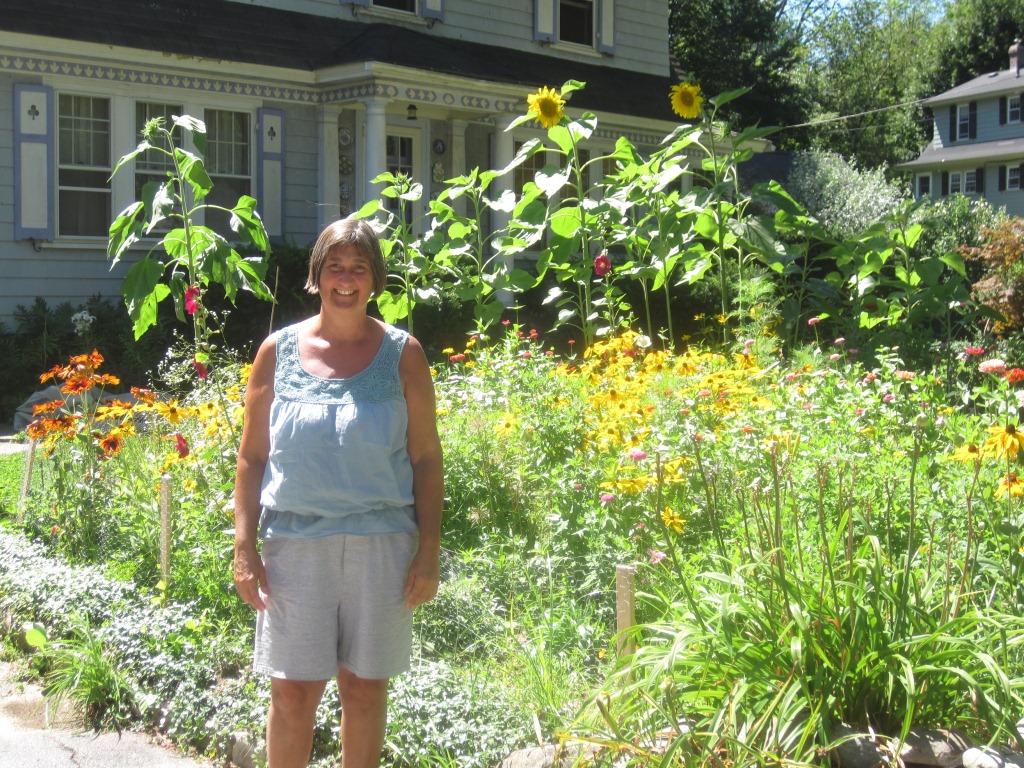
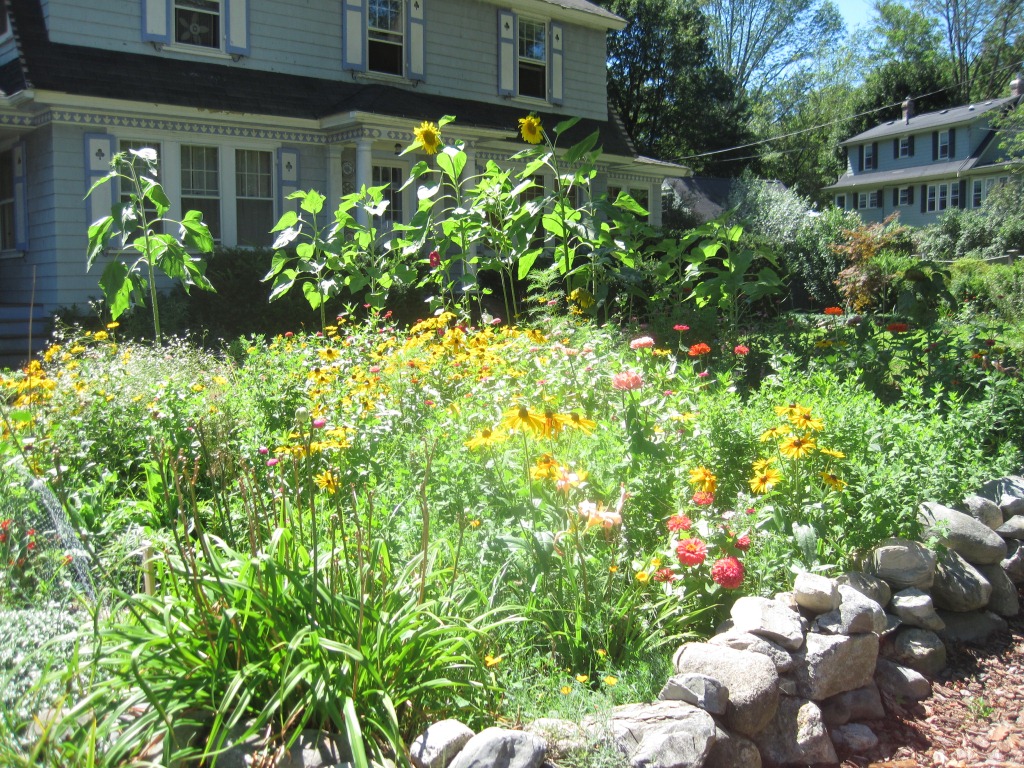
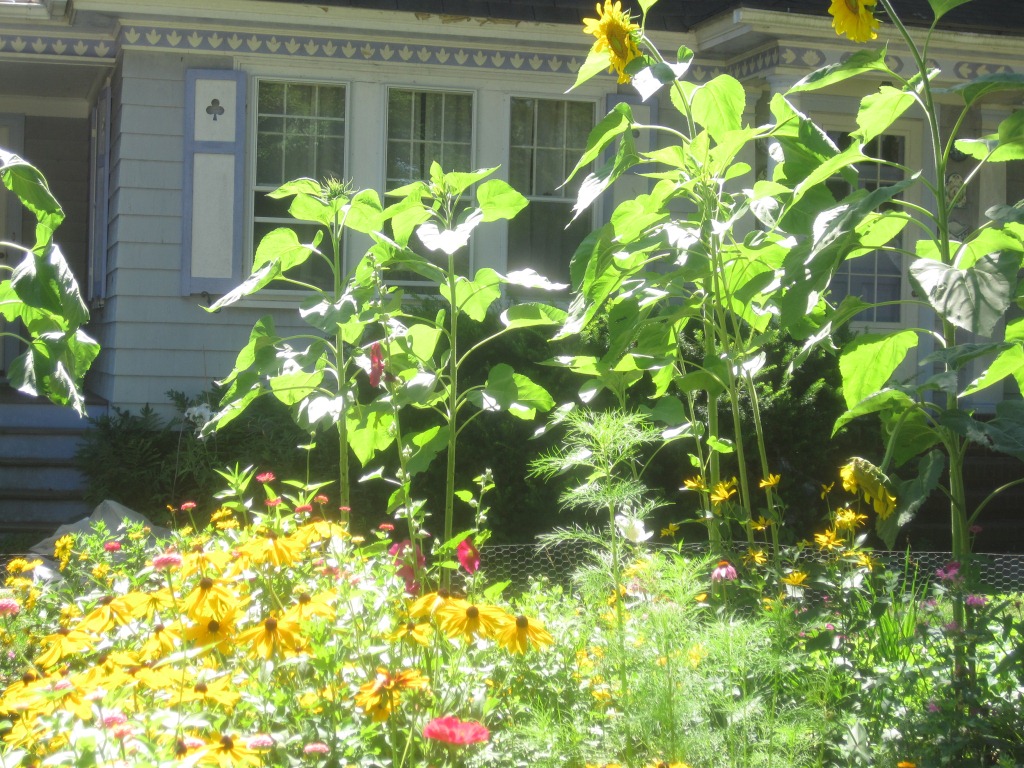
It was just so on a recent trip to Andover, Massachusetts. I was there to visit with friends and work on designing a garden. The perfect weather made it very easy to succumb to distractions of the outdoor variety. Before long, I had temporarily shelved work so I could see this ‘fun’ garden in the neighborhood. And there it was – a riot of summer energy beckoning all who passed by. I could not stop smiling when I saw this front garden right by the street.
Giant sunflowers towered over purple coneflowers, zinnias, bee balm, phlox, hollyhocks, daisies, rudbeckias and other seasonal flowers. It was a squarish bed of raucous color and exuberance. Not particularly designed with any deliberate mix of shrubs and flowering plants or taking into consideration a deliberate combination of foliage, shapes and textures, this was very much a cottage garden. It was indeed pure fun. Clearly, the gardener had created it for the singular pleasure of passers-by. Such a generous, happy gesture.
As I paused to look from the car, the gardener herself returned home. It was only right that I get out, introduce myself and tell her how much I was enjoying her “public” garden. Typically, she was very pleased to hear this and went on to tell me more about her efforts and thoughts. She applies organic practices, keeps bees, grows her own vegetables and clearly loves doing it all. I got to see the rest of the garden, received a mix of sweet William seeds harvested right then, caught a glimpse of her passionate nature, appreciated her knowledge and experience and felt once again grateful to belong to this ever expanding circle of fellow gardeners. What an unexpectedly rich garden visit this turned out to be.
I hope Maria continues to offer such charm and beauty to her neighbors. I hope even more that some if not all will follow suit.
Enjoy the images of Maria Cusuman’s garden. Be inspired.

Maria's garden
Maria's garden 2
Maria's garden 3

Maria

Maria

(c) 2013 Shobha Vanchiswar

Consolation Prize

A couple of weeks ago, I went to the Wild Medicine: Healing Plants Around the World, Featuring The Italian Renaissance Garden exhibit at the New York Botanical Gardens. It was a beautiful day which, around these parts has become an increasingly rare occurrence. So it was but natural that I’d want to meander my way around the well known perennial gardens.
Everything looked healthy and robust. No leaves hung in various states of attack by pests. No plant lay prostrate gasping their last due to thirst and sheer negligence. No weeds poked maddeningly through the resplendent plants. All was as it should be. Just as I envision my own garden in the torrid month of August. However, as I wandered casually around these lush beds, my mind kept receiving images of my garden in its actual condition. Some evil gremlin was transmitting shots of my plants looking limp, disheveled and hungry, facing an advancing infantry of weeds in brilliant Roman formations, with squadrons of Japanese beetles standing by to strike amidst shock and awe. It was disconcerting at the very least.
Why can’t my garden look this healthy at this time of year? I kept asking myself this question as though I was expecting the answer to show up like graffiti on the large, slug free leaves of the happy hostas. So lost was I in my dissatisfied thoughts that I almost tripped over a water hose snaking all over the paths and being directed by an NYBG employee. And there was my answer!
First and foremost, unlike the NYBG, I do not have a cadre of helpers working round the clock on my garden. I work on many other things in addition to the garden. Which naturally means neither garden nor the other things ever turn out perfect. My help is sporadic and that too from semi-reluctant family members. Then, I’ve long made the choice ( took the high road so to speak) to not coddle my garden with watering. I only water plants in pots while those in the ground are expected to search out ground water and make it on their own. This eliminates fuss-pot plants. Only the truly hardy survive. As far as possible, collected rain water is used for the pots. Water used on the vertical garden is recirculated so excess does not go to waste. So there. After all, anybody can just keep pouring vast quantities of water but is that good practice in today’s water endangered/challenged world? Aha!
Feeling a bit better about matters at home, I spent the rest of my visit duly consoled and able to fully appreciate the sheer mastery of design in creating these beautiful gardens. The brilliant selection of plants, the play of color, shapes and continued seasonal interest. I bowed my head. I was in the presence of greatness.
When I returned home, I gave thanks to my garden for putting up with my rather hands-off style of gardening. Like children who turn out okay despite negligent parents, my garden is doing just fine.
Feel free to drool over these photos taken at the NYBG:

NYBG
NYBG
NYBG
NYBG
NYBG
NYBG

The NYBG waterlily and lotus ponds are lovely at this time of year.

The NYBG waterlily and lotus
ponds are lovely at this time of year.


P.S. The Wild Medicine exhibit is on till September 8. Get to it if you can! For details :www.nybg.org

(c) 2013 Shobha Vanchiswar

Nature’s Classroom

Of the various things that I do, gardening is the most satisfying and forgiving. By that I mean, when I paint or write, I’m forever questioning the quality of what I’ve just accomplished. It can always be improved. Or different. The work is right there staring at me asking for better. When I exercise or take a walk, I wonder if I’ve exerted enough. Invariably my conscience feels guilty and my body bears testimony to my sloth. I cook or bake and it ends up falling short of the perfect version begging for a re-do. But not the garden. It accepts whatever I do without reproach. I’m allowed to work sporadically or in bursts of zeal and energy. My mistakes are quietly endured and my successes are amply rewarded. It is my muse. No wonder I love to spend time in the garden.
I try to paint outdoors whenever the weather permits. The pleasure of creating to the accompaniment of bird songs, the steady thrum of bees and the gentle rustle of leaves as a breeze blows through is nothing short of sublime. Add to this the fragrance of flowers and herbs and you’re envisioning a work space that beats a corner office every time.
With Wi-Fi, I can do my writing, communications, reading and designing work in the garden. I admit that sometimes, I’m distracted by the beauty of what is in bloom, the visits of butterflies or the antics of the birds. But, I’ve learned to factor those moments in my schedule. And I’m all the richer for it.
For instance, cardinals thrill me. The sight of one instantly puts me in a good frame of mind. I think of them as good luck charms. Out of academic curiosity, I’ve been in search of their nests for years. They’ve always been honored guests in my garden but where they nested eluded me. Then a couple of years ago, whilst puttering in the garden, I spied cardinal activity in the ‘Heritage’ rose bush. In the fall, I went to inspect said bush and came upon the most loosely woven, delicate nest of thin peels of grapevine bark. I use grapevine prunings around the peony supports so, they had been very accessible to the cardinals as this rose bush sits right next to the peonies.
I don’t usually remove nests but there was simply no way this nest was going to survive the winter. So I brought it indoors to gaze and admire at leisure. Nothing other than the peelings were used. The cardinal is a minimalist! Such exquisite, sculptural work deserved due recognition. Since then, I’ve applied the same approach to my art – distilling things to the bare essentials. Thank you dear feathered friends.
More recently, looking up from writing, I watched a cardinal pair flit to and from the tangled canopy of Paul’s Himalayan Musk rose that scrambles up and drapes over an ancient apple tree. I sneaked under this ‘bower’ to look closer. Sure enough, there sits another filigree-like nest made solely of just one type of twig. I wish I could get a look at the eggs but a formidable dome of highly thorny stems thwart any such attempts. What a brilliant location. Perhaps once again in the autumn, I’ll try to get a more intimate look at the nest – from atop a ladder.
I wonder if cardinals have a preference for roses. It looks that way in my garden. More likely, they seek places that are not particularly friendly to inquisitive critters and certain humans. I could Google and learn all sorts of things from the proper authorities. But where is the romance in that? It is infinitely more rewarding to let the garden teach in its gentle, hands-on way. Much wisdom and wonder comes from merely hanging out in the garden.
Just this past Sunday, as I looked up from the newspaper, my eyes rested on the tall Angelica in the corner of the herb garden. For reasons I cannot explain, I decided to inspect it. Looking plump and content, rested a handsome Swallowtail caterpillar. It’s bright green color blended beautifully with the leaves of the plant. How marvelous is the human eye that is able to discern between the different shapes and hues of the same color. Similarly, we are able to spot weeds amidst similar looking plants. I was hoping the caterpillar would remain on the Angelica and form a chrysalis. It lolled on the herb two days in a row but when I looked today, I did not see any sign of it at all. Just some well molested leaves hanging off the main stem. No matter, I’ll patiently await the butterfly.
The learning never ends.

Cardinal nest of grapevine bark

Cardinal nest of grapevine bark


Paul's Himalayan musk rose bower over old apple tree

Paul’s Himalayan musk rose bower over old apple tree


Cardinal nest in the rose bower

Cardinal nest in the rose bower


Swallowtail caterpillar

Swallowtail caterpillar


(c) 2013 Shobha Vanchiswar

Where Have All The Hollyhocks Gone?

I’ve never stopped loving hollyhocks. With foxgloves and sunflowers, they are the mainstay of a happy ‘comfort’ garden. My comfort garden. Yet, look around: there are no hollyhocks anywhere in my slice of paradise. I cannot understand why. Did I get too cool for them? Was I rejecting my past? Have I forgotten my way? No, no and, no. Nothing so deep or intriguing. It just came to be so.
But look at gardens everywhere. So very few have these jolly flowers anymore. Unlike the much maligned gladiolus, they did not ever fall out of favor. In fact, ever so often, new and improved hollyhocks have been introduced. In stylish new colors. Longer lasting. Taller or shorter varieties. And still, they are not observed in abundance. I’m perplexed.
Curiously, almost all of us recall hollyhocks from our childhood. There are invariably nostalgic associations with this flower. I do believe that like comfort foods, there are comfort plants. Certain flowers, trees or even seed pods give us that same sense of solace as the foods do.
Just like the foods ( think mashed potatoes, mac ‘n’ cheese, rice with butter, hot cocoa), comfort plants hark back to our childhoods. To simpler, innocent, carefree times. One connects the flowers with cherished people like a favorite grandparent, an aunt who never talked down to you, a loving parent. Chances are they grew those plants in their gardens.
Thankfully, unlike the consoling foods which are often no longer considered healthy in large quantities, comfort plants can be grown in abundance. So why aren’t we doing just that? As trends come and go, we are led to consider other plants. Tastes change and we choose flowers that reflect who we are at that point. Depending on the style of the garden, specific selections are made. Similar to clothing, there are the dictates of fashion that guide us in the garden. One outgrows so many things so why not flowers?
I used to have hollyhocks in my garden till I fine-tuned it. It began to have a style, a real design, a philosophy of sorts. Not that hollyhocks ever contradicted any of these. They simply got left behind.
The same happened to cleomes which I’ve also rediscovered with joy akin to a child who has come upon a favorite stuffed animal from babyhood sitting in a corner of the attic.
I’ve come to the conclusion, that no matter what sort of garden one has, some if not all of one’s comfort plants should be included. If they cannot be integrated in the main design style of the garden, then perhaps a small section can be commandeered somewhere to offer a daily reminder of those treasured memories. For myself, I’m going to replant cleomes, hollyhocks, nasturtiums and giant sunflowers. The foxgloves and lilacs are already present. Sophisticated and chic they may not be but then, neither am I.

White hollyhocks
Pink hollyhocks

Summer exuberance

Summer exuberance


Cleomes

Cleomes


My watercolors of the flowers:
Cleome

Cleome


Nasturtium

Nasturtium


Sunflower

Sunflower


Hollyhock

Hollyhock


(c) 2013 Shobha Vanchiswar