Weathering The Storm

I’m writing a day ahead of when I usually do because I’m traveling tomorrow. Presently, while other parts of the country are already hit by bad weather, we in the Northeast are bracing ourselves for a Nor’easter. It’s funny how the knowledge of impending storms alerts our flight or fight responses. At once we gauge how prepared we are to face the ‘enemy’.

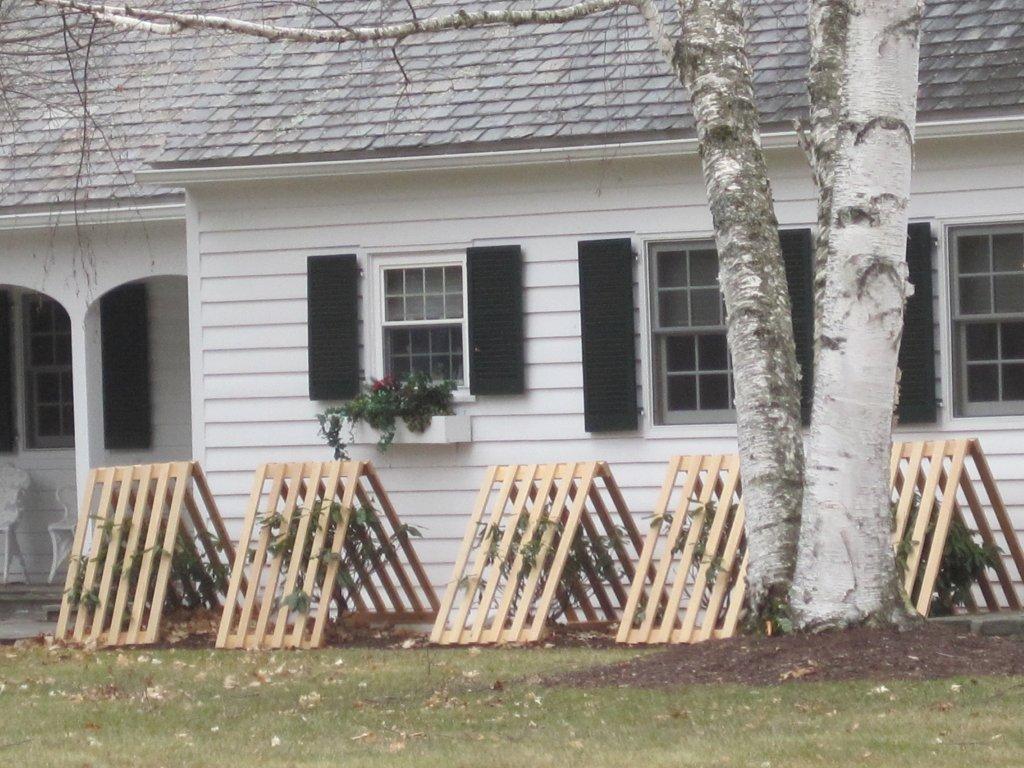
The wind has picked up, the skies are overcast and the temperatures have dropped. The birds are nowhere to be seen – they have all sought safe havens. Right away I check if everything outdoors is tethered/secured/put away. Still, I know the winds can tear through trees breaking off limbs and even uprooting them all together. Which in turn, can create further damage. This is of course beyond my control so, I hope for the best. Presumably, the pruning and cutting-back done in the fall will have paid off.

The greenhouse has been fired up and the plants are watered. Short of a truly unpredictably devastating storm, it should be fine.

Indoors, flashlights and candles are on the ready for potential power outages. There is food in the larder and wood in the fireplace. Books and boardgames picked out. Have I missed anything?

News of an impending storm should be less of a call to action and more of an opportunity to up my energy and resolve to do what is right, assess my performance so to speak – to take stock of myself, my home and all that I hold dear. Do I have what’s needed? Are things in good shape? Am I doing all I can to protect and preserve? An ongoing checklist is one way I keep myself organized and accountable. I definitely don’t want to be caught sleeping on the job.

And that’s what it comes down to – preparation. It’s easy to sit back when all is fine but having a plan, keeping necessaries in store and information available in case of conditions worsening is vital. Otherwise, it’ll feel really bad when we’re hit.

When the signs of an approaching storm are all there, it does not pay to sit back. Instead, confront with knowledge and readiness. In place of panic, may calm, resilient , wise minds prevail.

Because, in the end, this too will pass.

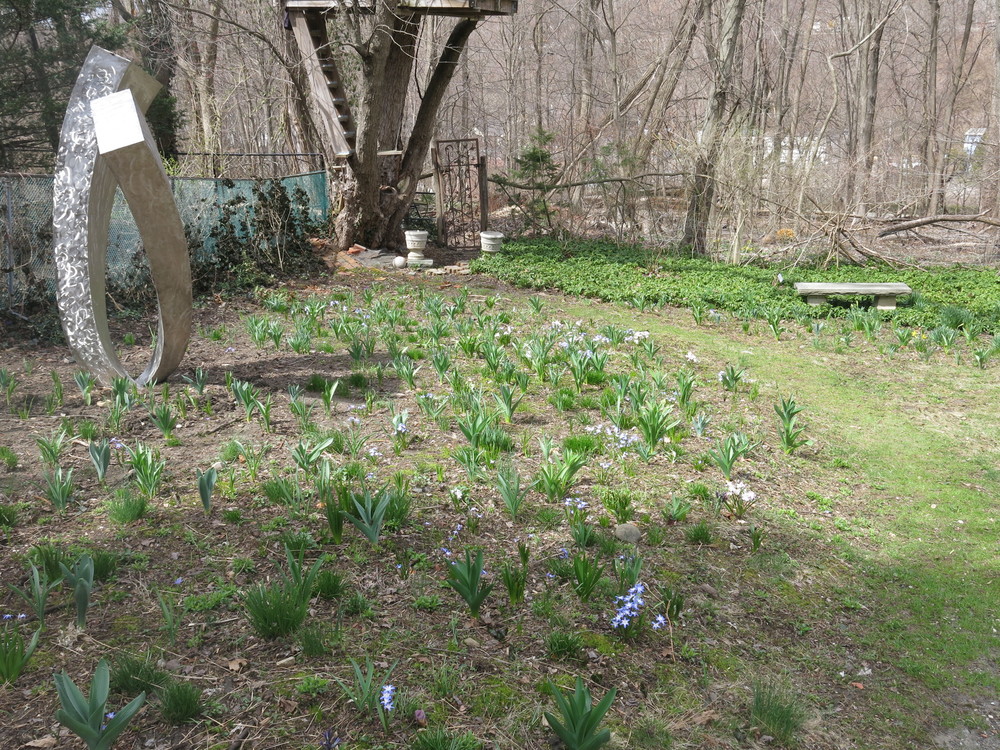
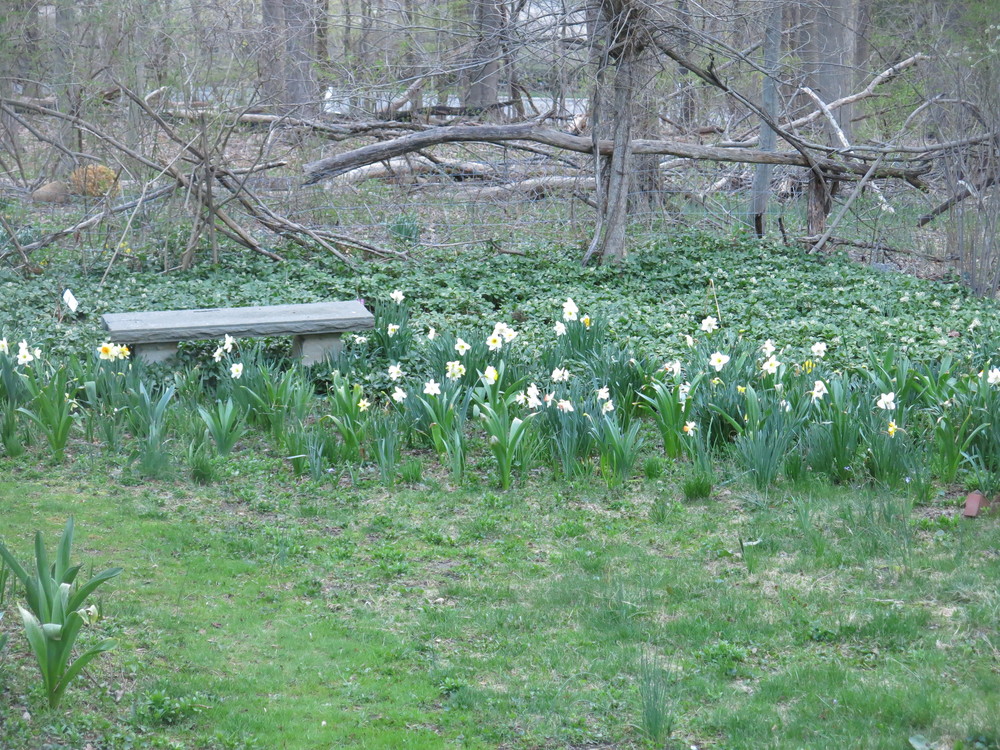
My friend Julie's garden after a storm.  Changed her woodland garden some.

My friend Julie’s garden after a storm. Changed her woodland garden some.

The greenhouse

The greenhouse

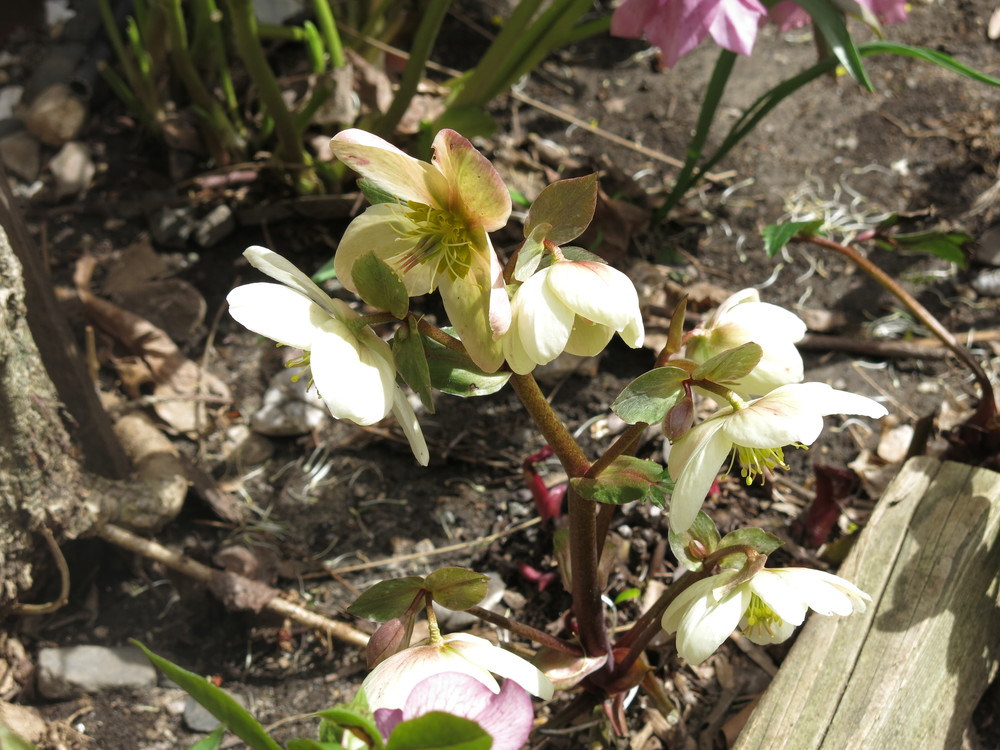
In the greenhouse

In the greenhouse

Camellia in bud in the greenhouse

Camellia in bud in the greenhouse

In my friend and orchid guru Bill Smiles' greenhouse

In my friend and orchid guru Bill Smiles’ greenhouse

Inside the house

Inside the house

IMG_5003

IMG_5009

(c) 2016 Shobha Vanchiswar

[do_widget “Blog Subscriptions (Jetpack)”]


Doing Right The Old-Fashioned Way

So, here we are in the third week of January. A strange January at many levels but I’ll stick to the weather. Every day of seasonal weather, has been counter-pointed with a not so seasonal day. What is one to make of this irregularity with regard to the garden? Beats me!

While we, as a world community come to grips with climate change and pressure our leaders to implement policies to deal with it, I am doing my level best to do my part in my own little piece of earth. I have no control of the weather itself but I do have the power to make informed, intelligent choices.

From the start, when we bought our house a good 24 years ago, I made a conscious decision to go organic. At that time, it was not so simple or even popular to be organic. It made me seem like a throwback to the ‘60s. A hippie-flower child wanna be. Nurseries did not carry many organic pest-control products, compost was barely understood. This being the years before the Internet or Google, I had to do my research the ‘old-fashioned’ way. That took a fair amount of time but I actually ended up learning more than a search permits today. When specific information can be conjured up instantly, there is no opportunity for detours into related and not so related topics.

I mail ordered my composter and when I excitedly announced its arrival, I was met with responses that ranged from puzzled to amused smiles and told I was so ‘quaint’, a ‘modern hippie’ or ‘trés new age-y’. Re-purposing an oak wine barrel to a water butt elicited similar reactions. Ditto for the manual, push-reel mower that I had such a hard time finding. When I began introducing native plants in the garden, I was told more than once that I was growing ‘very common’ plants. Some pronounced them ‘weeds’.

I sourced neem oil, seaweed and fish emulsion, lady bugs, Bacillus thuringiensis, nitrogen fixing microbes and made other products like comfrey ‘tea’ (best fertilizer!) at home. Those were the good old days!

Today, almost everything is available at my local nursery and what isn’t can be ordered super-easily on-line. Instead of the calender reminding me when to do what and physically making the effort to monitor temperatures and precipitation, I have apps and digital gadgets that have simplified everything. While these have freed me up for other matters and provide a certain peace of mind, they also push me away from my garden to a certain extent. I do not have to actually be in the garden quite as much. I realized this a couple of years ago and missed my 100% hands on approach. So now, although I enjoy the benefits of modern technology, I consciously putter around the garden no matter what. My physical, mental and spiritual well-being depends on it.

I still have the same composter and rain barrel. The mower was upgraded to a lighter, better manual model – there is now a choice! All the organic products are readily available. Towns offer free compost and mulch to their residents. Nurseries now proudly carry numerous native plants and some even have a whole section devoted to them. In fact, in current parlance, organic, native and ecologically sound practices are trending. Our forefathers would no doubt be highly amused by our ‘modern and progressive’ ways.

Meanwhile, I’m determined to plug away ethically, with integrity and, put up with whatever the weather blows my way. There is absolutely no excuse for anybody to do otherwise.

Note: Enjoy my watercolor renderings of a few of the natives that grow in my garden. Do they look common or weedy to you?!

Watercolor-037

Watercolor-024

Watercolor-017

Watercolor-033

Watercolor-002

Watercolor-032

Watercolor-036

(c) 2016 Shobha Vanchiswar

[do_widget “Blog Subscriptions (Jetpack)”]

A New Year, A New Day

A brand new year. A clean slate. I look forward to it just as I used to approach a new notebook in grade school. The crisp, blank pages. The smell of new paper. Full of opportunities. Another chance to do better. I was for sure going to write more carefully and thoughtfully. Fewer mistakes, neater writing, top notch work. I could almost see my resolve come true.

On the cover, I’d write my name slowly and deliberately. I was owning this book which was potentially going to be my best effort yet. As I opened to that first page on the right side, I invariably felt a tiny shiver of excitement. The untouched right side of the book always felt better than the left. I usually started well. And then came my first writing error to spoil it all. No amount of careful erasing or scratching out could make it perfect again. Now I was free to go back to my old, careless ways. They felt more comfortable and familiar. Besides, who cared? What difference did it make? I’d console myself that it was no big deal and not worth all that extra effort. It was back to business as usual. Until the next new notebook.

Over the decades, I’ve learned to simply resolve to do better. Not only at the start of a new year but more particularly, as I begin each new day. Every day is a fresh chance to reach my highest potential and be fully engaged in life. This approach allows me to accept and forgive myself for mistakes and at the same time provides me with continued opportunities to improve myself. Scarlett O’Hara was right. Tomorrow is another day.

In the garden, I shall put in this practice of everyday mindfulness with greater determination. It is all too easy to get caught up in the busy-ness of life and neglect to observe key goings on in the garden. On looking back through last year, all the things I failed to notice or do are blatantly apparent and yet, at that time, in the throes of whatever seemingly more pressing activity, I was oblivious to them. Sometimes, the oversight is understandable but often it is not. I want to change that. My garden is my muse after all.

To that end, I’m going to do three things related to the garden. A daily tour of the garden where I take in all the happenings. What is in bloom, how the plants look, the insects and birds going about their business and, what needs attention besides the alternate days of weeding and deadheading.

Then, that very day, I will address whatever can be taken care of. It could be a plant needing staking or trimming, applying an organic control at the first sign of disease or pest or, scheduling a task that requires more time or the help of a professional.

Finally, to spend time simply enjoying the garden and being grateful for what it bring to my life. It might mean painting quick watercolor sketches, taking photographs, writing a poem, observing insect or avian activity, studying the beauty of a peony or breathing in deeply the clove scented perfume of the phlox. To see, hear and feel the garden is to truly know the garden.

Both garden and gardener have everything to gain and nothing to lose with this plan.

May 2017 be all that you wish it to be.

I offer you a painting, a short poem and a photograph:

A watercolor of Hollyhock

A watercolor of Hollyhock


 Somewhere

Somewhere it is already spring
Someplace the hyacinth has stretched awake
Somehow my soul is sure.

Today's rain on yesterday's ornamental cabbage

Today’s rain on yesterday’s ornamental cabbage

(c) 2016 Shobha Vanchiswar

[do_widget “Blog Subscriptions (Jetpack)”]

Reflections In The Garden

In less than three weeks, a new year will be here. Our annual opportunity to do-over, makeover, grow, stretch and overcome. For myself, I welcome this time to reflect as it serves as the perfect foil to the commercial madness that comes with the holiday season. Instead of getting carried away with the media-hype, time spent thinking about what really matters keeps my focus on what is truly important to me. This not only serves to prepare me for the new year with resolve and purpose, it also guides me to give holiday gifts from my heart.

I begin with giving myself a report card of sorts. The different areas/roles/projects in my life are the subjects or courses and I evaluate how I’ve performed in each one of them. Since these ‘grades’ are not for public knowledge, I allow myself to be brutally honest. There’d be no point in this exercise if I glossed over my misdemeanors. Holding the mirror to myself is not easy. All the flaws show up prominently. Knowing how far I fell short of my full potential and how many opportunities I missed can be quite demoralizing. But I’ve learned to not judge, berate or make excuses. I stay on track to acknowledge, accept and determine improvement or change. One must move forward. But how does one get started? In the garden of course.

I don’t know about you, but how I garden is a direct reflection on where I am in my head/day/life. Whatever is happening in my life translates to my actions in the garden. No doubt I can also identify similar traits in my poetry and paintings but those are not as clear to track and interpret because I don’t necessarily write or paint immediately after I’m affected by an event. But the garden needs consistent effort and attention and therefore, my enthusiasm or neglect is apparent and has long term effects. For instance, if I was overly absorbed in a particular project and failed to maintain a balance in the other areas of my responsibilities, then, the garden reveals that in beds overrun with weeds and struggling plants or, my lack of oversight resulted in shriveled plants that ought to have been watered during a particularly dry spell. You see?

My goal is to try to stay balanced. Indeed every now and then there will be events that stir up the waters and toss me for a loop but if I’m adequately prepared, I should be able to get back in balance as soon as possible.

Let me elaborate:

Following the rather dry winter with erratic temperature fluctuations, all but the oak-leaved hydrangea took a beating. That native plants are the most hardy is not news but too often, one forgets that point. So, this fall, I replaced all the non-native hydrangea with a variety of oak-leaved ones. The exiled plants were donated to friends and did not end up on the compost heap.

My personal resolve – stay true to self. That’s how one does best.

In the spring, I planted a slew of native plant plugs in the meadow. The plants would attract the insects and birds. My plan was to have three-seasons of entertainment with native flora and fauna. I could envision this thriving paradise clearly. Well, I got distracted by a couple of other projects and completely failed to take note of the lack of rain. So I did not water the new plugs and when I looked for the plants in summer, hardly any were visible. I feel terrible about this. I not only wasted time and money but, I truly neglected my duty to the plants.

I now have a new order of plants that will be introduced in the meadow next spring and I will be sure to take care of them properly.

My personal resolve – don’t take on too much and always determine that every task or project can be fully attended to.

I had resisted removing a dead apple tree because it was supporting a rose and the whole canopy was a center of avian activity. And I’d planned to provide it with more permanent support. But, before anything could be done, strong winds pushed the tree down. Thankfully, the tree fell in the direction that did no damage to anything.

The rose has been relocated and the space that opened up where the tree used to be is actually going to be a good thing for plants already in place and the newly installed sculpture is owning that area very nicely.

My personal resolve – sometimes, good intentions can block one from seeing the reality. And, change can be good. Also, don’t wait too long to take action.

For the last few years, my irises had not bothered to show up. So this summer, I’d wondered if I ought to get new irises. For reasons I do not recall, I did not order them along with my other bulbs for fall planting. Wouldn’t you know! In October, out of season and character, as if to tell me something, one of the irises shot up and bloomed regally. So, I’m giving these old rhizomes another year. Let’s just wait and see.

My personal resolve – be patient. Don’t give up in haste. Everything needs to be given a fair chance ( or chances). Matters do not have to follow my agenda or schedule; sometimes, a laid back attitude is best.

And so, with my garden guiding me, I make preparations to go forth into 2017 with optimism, confidence and humility.

Don’t forget! The Holiday Art Sale is still on at the ASL! Lots of really good art to be had! Just for one more week.

Hope the images below put a smile on your face:

img_5005

img_4904

img_8701

img_8742

img_8555

img_8844

img_8780

(c) 2016 Shobha Vanchiswar

[do_widget “Blog Subscriptions (Jetpack)”]

In The Spirit

“What day is it?” asked Pooh. “It’s today,” squeaked Piglet. “My favorite day,” said Pooh. – A.A. Milne

Thanksgiving has passed and has served us well. With so much conflict and concern about what is happening at home and globally, it gently brought our focus back to what matters most. Kindness, caring, celebrating life and togetherness, family and friends. Back to basics really. If we each should do our part in doing no harm, I am convinced the state of the world would instantly improve.

It has become so easy to get caught up with the social-media driven world. Between the Fear Of Missing Out (FOMO) and believing everything one reads without examination or thought, we have succumbed to thinking superficially and speaking in sound bites. Materialism often gains the upper-hand even as we struggle to simplify and live meaningfully.

Enter the power of nature. While we, as a society, embrace our on-line, e-world, we need to get out in the garden even more. By tending a garden, we are reminded to maintain our integrity and honest passion for the natural world. Gardeners remain at all times connected to the rhythms of nature and as a result, have a strong resistance to those not-always-helpful lures of the digital age.

In keeping with the spirit of the holiday season, we want to give attention to gifts of experience versus stuff. Memberships to museums and botanical gardens and/or conservancies, tickets to plays, concerts and other performances, trips to our National Parks and historical sites, or, making good on promises of breaking bread together. There is something for every budget and often, it can be the priceless gift of time – to take walks together, attend a community event, serve at a soup kitchen, share a meal at home, play board games, build something and, even plant a garden. Good for all ages and all personalities.

To get into the right spirit, I have the perfect activity. The Holiday Train Show at the New York Botanical Garden. Whether you are child or adult, it will delight and inspire. The buildings and other structures made entirely of natural materials are positively awe inspiring. The level of creativity and skill is mighty impressive. Not to be outdone, the plantings around the buildings are just as thoughtful and brilliant. Most of all, it is pure fun.

I have been going to this show from the very first year. It never fails to cheer me. I get into the holiday mood by going to the members preview which is held the Friday before Thanksgiving. Perfect timing.

Get a group of the young and young at heart together and go!

Note: Another fabulous event to attend! The Annual Holiday Art and Book Sale starts Dec 6 at the New York Art Students League. Yes, my work is represented! Please do go – support artists and art. Good place to start or add to an art collection.

Enjoy the photos from my visit to this year’s NYBG Train Show:

img_0558

img_0559

img_0562

img_0563

img_0568

img_0569

img_0570

(c) 2016 Shobha Vanchiswar

[do_widget “Blog Subscriptions (Jetpack)”]

Better Home-makers And Gardeners

The garden was put to bed last weekend. There is enormous comfort and satisfaction in bringing things to a close in a timely, attentive manner.

All tender perennials are safely ensconced in the greenhouse or let to go dormant in the basement.

The hundreds of bulbs got planted carefully and one at a time amidst the herbaceous perennials and previously established bulbs.

New native perennials were added so more beneficial insects and birds will inhabit the garden next growing season.

Plants were cut back and tidied. Dead wood was removed from shrubs and climbers. Roses and wisteria were pruned and secured. Creating breathing room and getting rid of anything that might encourage disease is so important.

A light application of compost and additional mulch of tree bark on the perennial beds should get them through the winter and in good shape to re-emerge nicely in spring.

The vast amounts of fallen leaves have been raked, gathered and added to the compost heap in the woods. Contrary to the advice of some ‘green’ experts, I do not let the leaves remain on my small lawn or in the meadow as they tend to kill the grass, smother other plants and possibly encourage snow mold which is a type of fungal disease. If I had a leaf chopper, then I’d use the chopped up matter to mulch and feed the plants.

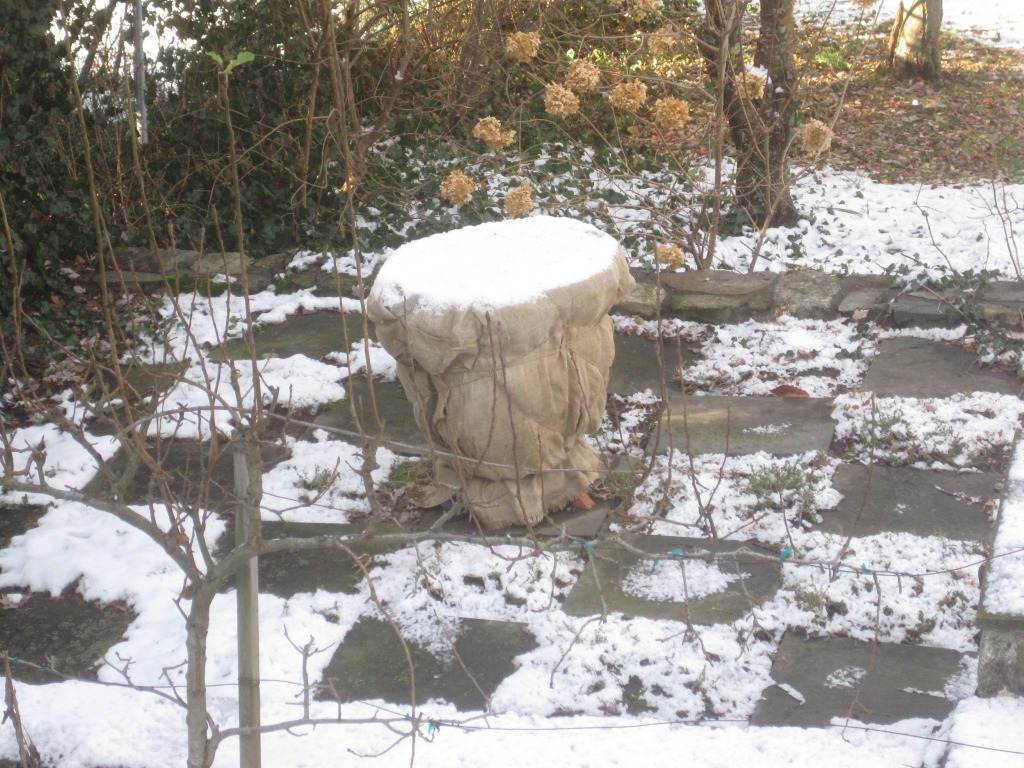
All pots have been emptied and cleaned and put away. The very large ones stay outside well wrapped in plastic and burlap.

Likewise, outdoor furniture has been cleaned and put away.

Water hoses lie empty and coiled till required once again when the hot weather returns. The rain barrel too is given a hibernation pass.

Soon, I will get garden tools like secateurs and push mower professionally cleaned, sharpened and/or serviced. They will be eager and ready to serve as soon as the need arises.

Sundries like garden gloves, stakes, markers, hats and, supplies such as organic sprays like seaweed/fish emulsion, dormant oil will be replaced or replenished.

Fulfilling the seasonal responsibilities got me thinking about how hard we gardeners work to dream, plan, make better gardens. Although we aspire to create those better gardens, we should really be putting more effort in becoming better gardeners. The way I see it, to accomplish that takes a resolve similar to one we undertake to be better parents.

Consider how we prepare our home for our children. Clean, hygienic, tidy and welcoming.

There is room to grow and thrive. We provide the best, healthiest food our wallets can offer. Due diligence and protection is necessary so our young do not come to harm and yet have opportunities to be happy, healthy, independent and strong. When a child is unwell or in distress, we respond with alacrity and minister to their needs. With unconditional love, patience and undivided attention, we listen to what our children are saying and/or doing so we can take the appropriate measures to give them the best, most wholesome life possible. We encourage diversity, tolerance and mutual respect so our young can become vital, productive members of society.

All of those points hold true in the garden. And while I’m cognizant of them and try to apply the same parental guidelines, I know I can always do and be better. The kicker is this – it is much easier and far less guilt-inducing to be a good gardener than it is to be a good parent. After all, one’s failure in the garden can always be blamed on the weather.

Some seasonal images:

img_0498

img_0501

img_0503

img_0530

Getting ready to plant bulbs

Getting ready to plant bulbs

The vertical garden

The vertical garden

(c) 2016 Shobha Vanchiswar

[do_widget “Blog Subscriptions (Jetpack)”]

Choosing My Candidates

I cannot pretend that this day is like any normal Tuesday. It is Election Day 2016! And this year, it cannot have arrived too soon. Yes, I know, I don’t need to explain further.

In seeking to escape the election insanity, I’ve predictably hung around the garden more than usual. Despite the demands of seasonal chores, I’ve spent time pondering over my own opinions, biases and beliefs. What conclusion I’ve arrived at explains much about how I generally operate. It appears that the criteria by which I select plants to include in my garden is pretty much how I vote in the elections. Let me explain what I look for.

Form and function. A plant must look appealing. That does not necessarily mean that it’s flowers be gorgeous. In fact, the blooms might be insignificant but other parts have attractive properties such as foliage shapes and color. From lamb’s ears to sanguisorbas to maple trees, I covet them for the beauty of their leaves. Similarly, the stems of the plant might be striking. Like the dogwood shrub ‘Red Twig’ in winter. Or the deep burgundy stems of penstemon ‘Husker Red’. The general shape, how it holds itself and what it brings to the overall appearance of a garden bears consideration. If it has stunning flowers to boot, well then, that is even better. Along with the form, function is equally relevant. Either the plant provides food for humans or supports the local fauna. If not food, perhaps the plants brings perfume to the garden and home. In other words, I need more than superficial traits.

Maintenance. No picky, fussy plants. I have neither the time, tolerance or interest in high maintenance applicants.

Cohesiveness. Plants in a bed must work together. While certain plants take center stage and others have supporting roles, all together they should grow well and let each one thrive. No bullies or thugs allowed. Ever.

Reciprocity or living up to expectations. When I select a plant, I am accepting my responsibility to give it the attention and care it requires. In other words, I’m prepared to do my duty. In return, I expect the plant to do its job well. To respond appropriately to the conditions provided and thrive. When we each understand and accept our roles, it benefits not only each of us but the entire garden. This covenant is sacred.
The corollary to this is that should either one of us fail to fulfill our promise, then the relationship is terminated. This arrangement is implicit.

Authenticity. A plant selected for it’s unique or specific qualities must run true to them. Or else, eviction notice is given. Veracity and trust are the cornerstones of a relationship.

Sense of humor. I know you’re wondering how a plant could possibly have that trait. When a plant does not take itself too seriously, it gets on well with its neighbors. When a rose permits a promiscuous clematis to use it for support, a beautiful friendship develops. When columbines playfully self-seed, they bring a certain relaxed quality to the garden and I appreciate that jokey reminder to ease up some. Nobody appreciates control freaks.

So there you have it. See how these specifications can serve well in the polling booth? Now, go forth and vote!

The images below have nothing to do with the elections. I just love their seasonality:

img_0418

img_0420img_0429

img_0443

img_0479

img_0476

img_0483

img_0485

img_0487

(c) 2016 Shobha Vanchiswar

[do_widget “Blog Subscriptions (Jetpack)”]

Double Vision

I have two gardens. The one in my mind’s eye is perfect and exactly how I wish it. The other is here on earth, around my house, fodder for pests and vulnerable to the vagaries of weather. Striving to get the real garden reach the ideal of the one I dream about is an eternal quest. The saving grace is that most gardeners share my struggle. No matter where we garden and what size of land we command, the yearning is the same.

Starting in the fall when planting for the next growing season is going full throttle, we are motivated by the vision where all our plans succeed. Through the winter months we plot and plan for the perfect garden. It’s what gets us through the dreary, cold days. The real problem arises if we dwell too much in fantasy land and get carried away. Practicality, patience and common sense must moderate those ambitions. Sometimes, in the eagerness to achieve beauty and form, it is easy to forget about function and balance.

A garden can look beautiful but in truth, it should also provide. It must delight, inspire, feed, comfort, educate and most importantly, do no harm to the environment. This sounds like a tall order but in simply following that last dictum, the rest will happen easily. There is nothing more fundamental to us than to create an attractive, productive, safe haven.

By choosing the right plants for the right location, selecting mostly natives that in turn will attract and support native fauna, employing organic practices, judicious use of precious resources like water and energy consuming tools and in giving diligent care, any spot of land can shine. Truly.

But that doesn’t mean it precludes indulging in dreams. If I didn’t envision a riot of spring color, I wouldn’t be torturing my body by planting hundreds of bulbs each fall. If you hanker for plants that thrive in a different climate and/or are invasive, reasonable alternatives are usually available and will satisfy your vision. Native honeysuckle instead of the Japanese variety, Rose of Sharon can be pruned to grow single or multi-trunked shrubs and are lovely substitutes for crape myrtles. (Select a sterile type so you are not burdened with digging up seedlings all the time.) Russian sage or nepeta are excellent stand-ins for lavender.

If you adore roses but cannot grow them or would like their ‘look’ throughout the growing season, I recommend ranunculus, peonies, camellias, double begonias and dahlias. Native wisteria is better behaved than the Asian types. A myriad choices of native grasses are excellent alternatives to exotic ones. There really is a way to make garden dreams come true. Within reason. You’re on your own if you insist on making your north-east garden into a tropical paradise.

Having said all this, I still dream big. Lush, impossibly wonderful dream gardens. From those wild fantasies come ideas more realizable, creative and applicable in my true, earth-bound garden. Several features that have become hallmarks in my garden came from dreaming. While I’ve learned to temper my reveries with budget constraints, physical and/or time limitations to make my real garden, I give free rein to my imagination. After all, it was Albert Einstein who said – Imagination is more important than knowledge. Knowledge is limited to all we now know and understand, while imagination encircles the world, and all there ever will be to know and understand.
And look what he managed to contribute.

See below for some real features that came from my imaginary garden:

img_2454

img_9382

img_9437

img_9152

img_0483

(c) 2016 Shobha Vanchiswar

[do_widget “Blog Subscriptions (Jetpack)”]

A Spring State Of Mind

Hallelujah, we’re back to more seasonal weather this week. The leaves are putting up a beautiful autumnal show, garden clean up is underway and, because gardeners are always optimistic and looking ahead, planting for spring has begun.

In my garden, all the tender perennials are tucked safely in the greenhouse which is filled to bursting. The meadow has got its annual mowing just in time for bulb planting. In the herb garden, apart from the still thriving Swiss chard, boxwoods and hellebores, the plants have been cut back. All that remains to be done here is the application of a good layer of compost mulch. The peonies along the side path have also been cut back. I have three new peonies waiting to be planted in the mix. In the front perennial beds, I’m letting the plants be for another couple of weeks. They look quite seasonal with the fading asters, the bright yellow foliage of amsonia, waving ornamental grasses and assorted seed heads.

All this work is leading up to the rather exhausting project of bulb planting. While the previously mentioned tasks signal the end of the growing season and the coming of winter, bulb planting demonstrates the certainty that spring will come again. Despite the guaranteed aches and pains that follow this annual activity, one cannot help feeling cheered by visions of happy bulbs sparkling and ushering in the spring. It is exactly such dreams that keep me going.

My order of about 700 bulbs arrived recently. The Eremurus I ordered require planting as soon as possible. The rest of the bulbs will be attended to in due course. While I absolutely crave the fox-tail lilies in my garden, my previous two attempts to grow them have been utter failures. Apparently, my garden does not meet their standards. This time will be my third and final try. I’m keeping fingers crossed tightly. I admit to a sense of desperation.

As promised last week, here are my tips for planting bulbs:

First and foremost, I order my bulbs by late June/early July. It allows me to go through the catalogs at a pleasurable pace and ensures that I get the specific bulbs I want in the quantity I want.
If you have not ordered any, local nurseries still have bulbs available. Hurry on there and get your share. No garden should be left out of a spring showing of bulbs.
Resolve to get your act together for next year’s bulb order.

When to plant : the rule of thumb is planting should happen after the soil temperature has dropped to about 55 degrees. In Europe, there is a timeline for different bulbs – snowdrops in early October, daffodils in late October, tulips in November, alliums in December etc but thankfully, here in the North-East, the various spring blooming bulbs can be done all at the same time once the temperature of the soil is suitable.

Select bulbs so that there is a sequence in the flowering. Starting with early bulbs like scillas and snowdrops to alliums and lilies into the summer.

Choose your bulbs wisely. No tulips in deer country but alliums and daffodils will do great. Similarly, don’t order small bulbs like scillas and snowdrops for areas thick with evergreen groundcover as the diminutive beauties will struggle to emerge through and gain visibility.

Plant the bulbs at the correct depths. Generally, that means three times the height of the bulb. When in doubt go deep. Except in the case of peonies and iris rhizomes – they need shallow planting or you will be rewarded with lush foliage but no flowers.

To achieve a cohesive yet dramatic look, order a larger quantity of of a few types of bulbs rather than a meager amount of a variety of them.

Invest in the right planting implements. It’ll make the work easier. Really.

The planting instructions that the bulbs arrive with are mere guidelines. I find it much more effective to plant my bulbs a bit closer than advised and in a mixed/scattered manner. In this way, I achieve a more natural, organic look.

To encourage reblooming and naturalization, after the blooms are done, let the leaves be. Do not braid them, tie them or remove them till they are completely yellow and done. Those leaves must be left to work hard to replenish the bulbs so they are fed and ready for the next time around.

When it comes to tulips, I consider them as annuals since most do not return the following year. However, I let the leaves die back and do not remove the bulbs. Every now and then, the tulips do make a comeback and gladden my heart no end. Restores my faith.

Enjoy my watercolor renditions of some favorite bulbs:

Hyacinth

Hyacinth

Tulip

Tulip

Daffodil

Daffodil

Scilla

Scilla

Crocus

Crocus

Iris reticulata

Iris reticulata

Lily

Lily

Iris

Iris

(c) 2016 Shobha Vanchiswar

[do_widget “Blog Subscriptions (Jetpack)”]


Thinking Spring In Fall

Thinking spring? Heck, this week sure feels like spring! And as if to defy the actual season underway, I have an iris in bloom. This plant has not bloomed in about three years. Seems as though it is staging its own version of a spring awakening. As puzzling as it might be, I’m thrilled to see the pale lilac hued flowers. Perhaps its cousins planted alongside that had inexplicably gone AWOL as well, will also make a comeback next year. I’ve missed these beauties and was only recently wondering if I ought to give up and order their replacements. I guess I’ll hold off that shopping spree.

The standard of three intertwined hibiscus is still flowering sweetly so instead of taking it into the greenhouse, I’ve brought it down to the terrace where I can enjoy it as I go about my chores.
The Heritage and Bonica rose bushes have a few flowers in bloom. At any other time they look their best when loaded in flowers but at this time of year, the minimal look feels all the more precious.
In the potager, the Swiss chard are going strong as are the collards. They will honor our meals until the temperatures plummet and does them in. I’m hoping this does not happen till December.
The vertical garden is continuing to look quite stunning. If only it was located such that I could place a seating area near it so one could admire it at length.

My rather large shipment of bulbs is due to arrive this week. Given the mild weather, I guess I’ll have to wait at least a couple of weeks before the planting marathon commences. The soil temperature is still way too warm. It needs to be 55 degrees and below for the bulbs to know not to start sprouting. Already my mind’s eye can envision the glorious blooms to come and my heart longs for that season.

With the asters and golden rods shining bright, the ornamental kale and cabbages prettying up the pots and the display of gourds and pumpkins serenading fall, the pansies, lone iris, vertical garden etc., are representing a whole other season. My garden is displaying a most wonderful split personality. I’m revelling in its humanness.

(Next week, I’ll go over the “rules” of planting bulbs.)

 I am participating in the Beaux Art show in  in White Plains, NY this week. Hope you can stop by!

White Plains:

16 Annual Art Exhibit
of the
Woman’s Club of White Plains
305 Ridgeway
White Plains, NY 10605

Wednesday October 19 2-5 p.m. Exhibit Viewing
Thursday October 20 2-5 p.m. Exhibit Viewing
7 p.m.-Artists’ Reception (open to the public)

img_0415

img_0444

img_0471

img_0472

img_0488

img_0483

Swiss chard

Swiss chard

Dahlia

Dahlia

img_0448

img_0490

(c) 2016 Shobha Vanchiswar

[do_widget “Blog Subscriptions (Jetpack)”]