Of Mice And Me

This past Sunday, I made the first trip of the year to my favorite nursery. The sights and smells of the plants, the benign conversations with horticultural experts/plant lovers did something magical to my mood. I was enervated, optimistic and boy, did I have energy to take on the many tasks on my to-do list. Yes, thats what being amidst all things plant related does for me. This state of elevated spirits beats the ‘induced’ kind any day. It leads to creativity and productivity, spreads good will, no hangover follows and best of all, one remembers everything.

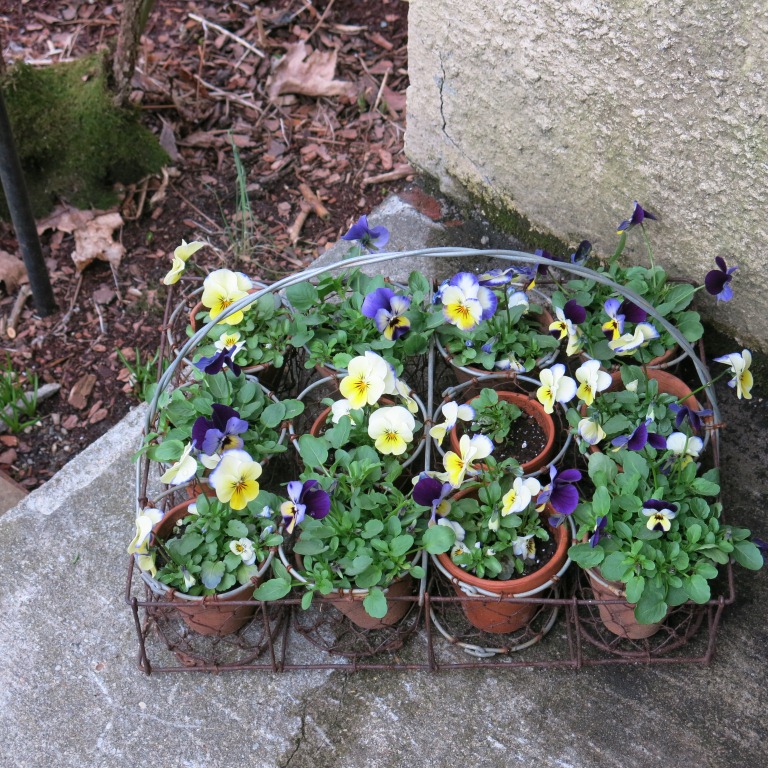
And joyfully thus, my gardening season is underway. For instant gratification, I picked up flats of primroses and pansies that will go into assorted urns, pots and window boxes. Now, mind you, as exciting as it is, there are challenges. My garden Open Day is fast approaching ( May 10) and given the severity and length of this past winter, time is short for getting the garden ready and spectacular. But that is not the most serious problem.

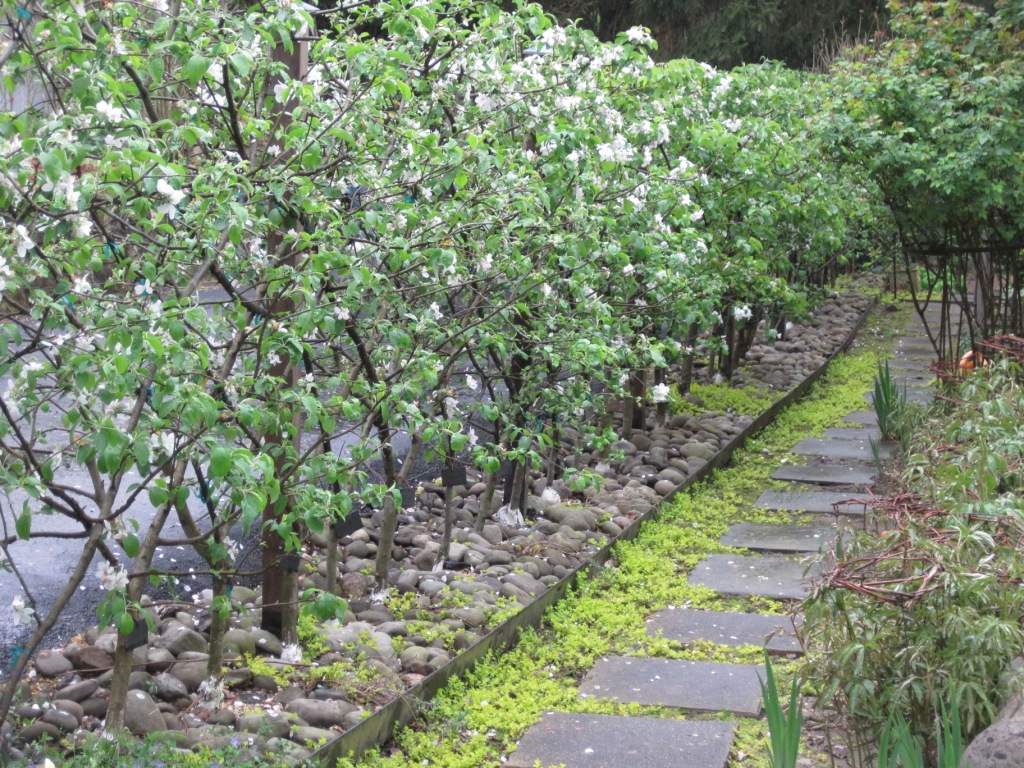
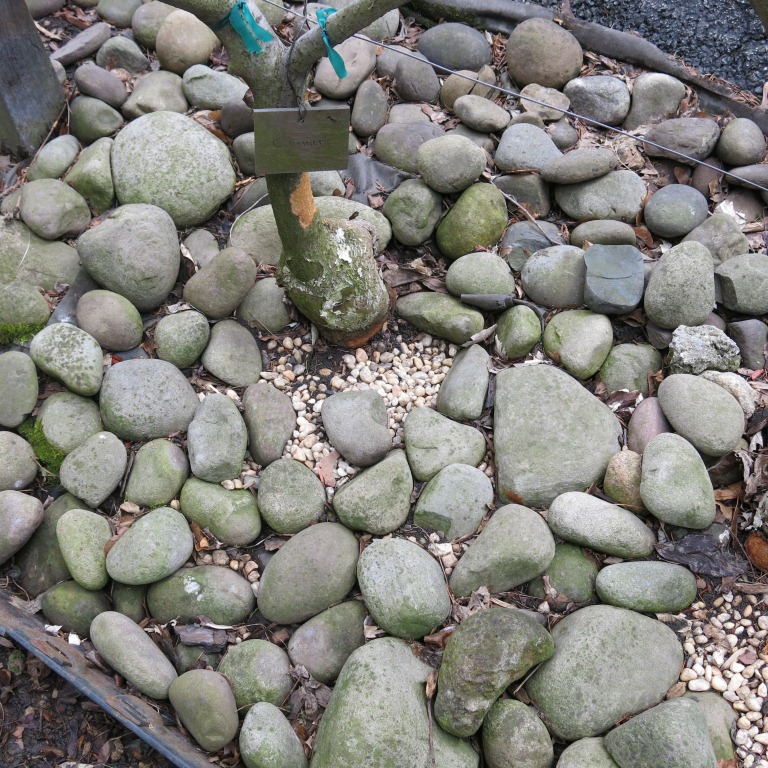
Of grave concern is the fact that orchard mice have attacked several of the apple trees in the espalier fence. How much damage has been wrought is yet to be determined. I can only hope that for the most part, the trees can heal themselves nicely. To replace any tree will not be easy. To remove a tree from within such an espalier arrangement and replant with a healthy tree of appropriate maturity requires some effort. There might well be more than one damaged tree. Oy vay.

When I first noticed the tell tale signs of orchard mice activity, I was immediately inclined to panic. I had this strong urge to pour poison and decimate the rodents. But thankfully, that feeling lasted just a minute. Okay, five minutes. I breathed deep and let myself relax. Strangely, my next thought was to consider how hard the winter must have been for the mice. The apple trees had not been touched all these years so, they must have been under a fair amount of stress to turn to my precious trees. I even envisioned that some of them were fiercely protective mothers doing whatever they had to for the wellbeing of their young ones. Sigh. How could I remain outraged?

Looking at it from another creature’s point of view helped adjust my own perspective. As much of an effort and expense it might be to remedy the problem, the fact is, the situation can still be fixed. Its not the end of the world. Am I happy then? No, my time, energy and pocketbook are not limitless but I’m not unhappy or upset either. I have forgiven the mice, accepted the problem and will now try to correct it the best I can. I will be discussing the matter with an expert so I can find out more about how to deal with it properly. Any insight gained shall of course be shared with all. If anybody has had a similar experience, I’d love to hear about it.

This is once again a reminder that we humans are not in charge. Nature is. And I must defer to her.

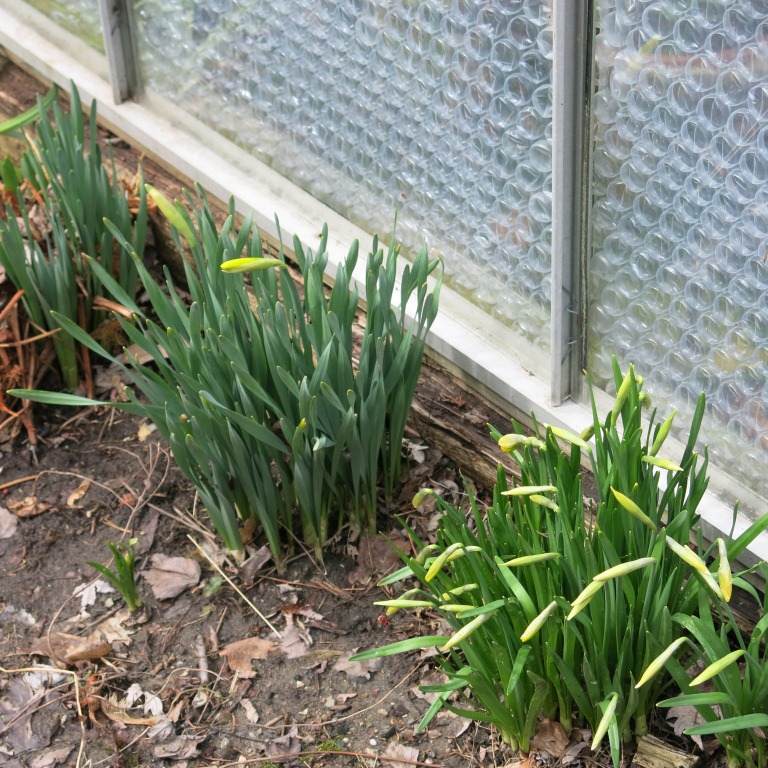
So, with the espalier problem on one hand, I look around the garden to counter-balance the status. The bulbs are piercing through the earth. Snowdrops and hellebores are blooming. The boxwoods look a bit winter weary but otherwise seem to have fared okay. And most excitingly, the Amelanchier I said I was going to plant, was purchased and ensconced in its rightful home yesterday. It is A. canadensis ‘Glennform’ – a shrubby type that is full of buds. I cannot wait to see it in bloom. It will lead the eye nicely across the meadow when viewed from the terrace. Once it was in the ground, I welcomed it to my garden, wished it well and promised that I would do right by it. I renewed my covenant with Nature.

Many, many chores remain and the garden is yet to reveal fully what plants could not take the winter. This is particularly true of the vertical garden. It is a vulnerable area and we are still learning what works and is needed. Ferns are slow in emerging so it’ll be cutting it very close to May 10 to determine anything. The suspense is killing!

As I dive into the season and begin my work, I’m just so excited and grateful to have my own piece of paradise. At the same time, I’m apprehensive about how to make it shine for the visitors in May. I know the ones who are gardeners themselves will understand about those aspects that simply cannot be helped and are due to the vagaries of the weather. But, I also want to please those who do not garden and rightfully come expecting to be delighted and impressed. Their opinions matter as much and I enjoy their comments equally. I’ll just have to work very hard and do my best won’t I? In the end however, whilst looking beautiful, a good garden must also teach. I hope all the visitors leave my garden suitably impressed and a little bit more knowledgeable and enriched.

Too often we forget that to have a garden to tend is to be truly blessed. We never really own it. We are but the caretakers and must share it with grace. Let the gardening begin!
Have I mentioned that my garden is open this May 1 from 10:00 am to 4:00 pm?! Do come, I really would like to meet everybody and share with you this piece of my heart.www.gardenconservancy.org/opendays

Orchard mice damage

Orchard mice damage


More damage by mice
Another photo of mice damage
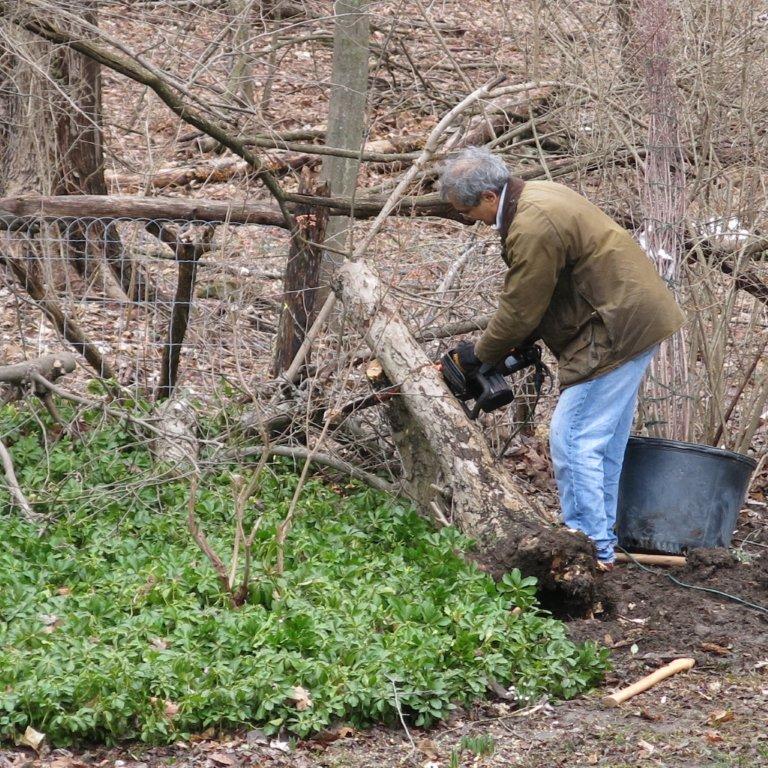
Removing the old, apple tree.

Removing the old, apple tree.


The new resident.  A. canadensis 'Glenform'

The new resident.
A. canadensis ‘Glenform’


Hellebores in bloom

Hellebores in bloom


(c) 2014 Shobha Vanchiswar
[do_widget “Blog Subscriptions (Jetpack)”]

A Different Kind Of Community Garden

Romano cauliflower

Romano cauliflower


With spring officially starting this week, my mind is singularly focused on the garden. I’m anxious, okay, downright worried about what havoc this particularly brutal winter has wrought. With my garden’s Open Day approaching on May 10, I’m feeling the pressure. Thats less than two months away! There is still a fair amount of snow over places I need to get to inorder to prune the roses, plant a tree, spray the espalier (dormant oil and fish emulsion) and so much else. Take a deep breath! I tell myself. And I do. To panic is pointless and I know not to fight nature. I’ll just stick to getting organized and approach the task of getting the garden in shape systematically and with mindful presence. Aaah! Already that feels better.

With gardening foremost in mind, I’ve taken to observing the various community gardens in the city (NYC). Over the years, more and more of them have been created. I’m in the city a great deal and as I walk around, the diversity and uniqueness of these gardens is apparent even when nothing is growing at the moment. The layout of the gardens, the types of paths, the ‘décor’ with statuary and other whimsies and even the shapes of the beds say a great deal about the gardeners and the neighborhoods. I just love it all. This year, I plan to stop by as many of the gardens during the growing season. With any luck, I’ll get to meet and learn from some of the gardeners.

Back in suburbia, community gardens are less common. With most folk residing in houses with adjoining property and lack of land for communal use, their proliferation is naturally restricted. However, the practice is catching on as more people are becoming keen to grow their own produce and towns and certain private organizations are permitting the use of their land for very little or no fees.
Having heard from many about lack of time, not having enough suitable space for a proper potager on their own property, reluctance to be gardening ‘far off’ from home, I’ve been toying with the idea of an alternative sort of community garden.

What if within a neighborhood, each home grows just one sort of vegetable or fruit that then can be shared with the others? Depending on the conditions available – semi-shade, full sun, protected or open areas, arbor space, I would guess that a fair amount of produce can be grown. With attention and time to just one type of plant, the gardener can easily include their cultivation in busy schedules. Case in point – in my own garden, I don’t have the type of light and space to grow a wide range of veggies. So, I concentrate on leafy greens – assorted lettuces, arugula, Swiss chard, mustard and plenty of herbs which do very well. Tomatoes, cruciferous vegetables, eggplants, gourds etc are simply not worth the struggle. Not to mention, a waste of time and energy. Its like cultivating the $40 tomato. But somebody else’s garden might happily support a crop of squash or tomatoes. You get the idea? Once a week, all produce can be brought in to a central location and distributed equally. A block party of sorts! Every year, each gardener tries a different yet suitable vegetable to maintain soil strength. With everybody receiving a fair share, the neighborhood gets to eat better but even more importantly, it grows a better community. Each home is vitally connected to the others. Instead of Facebook time we now have face-to-face time.

Of course, like any project, this requires some leadership but that can be taken on a rotation basis. What practices (organic of course!) are acceptable, the selection of vegetables that suit all, how much to grow, vacation schedules, are some of the points to be duly considered ahead of time and by consensus. Those unable to garden due to disabilities, age, or lack of garden space can help in the harvesting, sorting, communications etc., The success of such an endeavor is incumbent on close cooperation of all members but it is so very doable. As in life, keeping a sense of humor is essential. As much as it is a serious business to grow crops, this should be fun. After all, if we cannot come together to grow and share our food, how on earth can we expect peace talks to succeed in different parts of the world? Imagine the valuable lessons children will gain from this experience. I see this undertaking as one that promotes health and well-being at many different levels.

A neighborhood that “comes to table” together,thrives together.

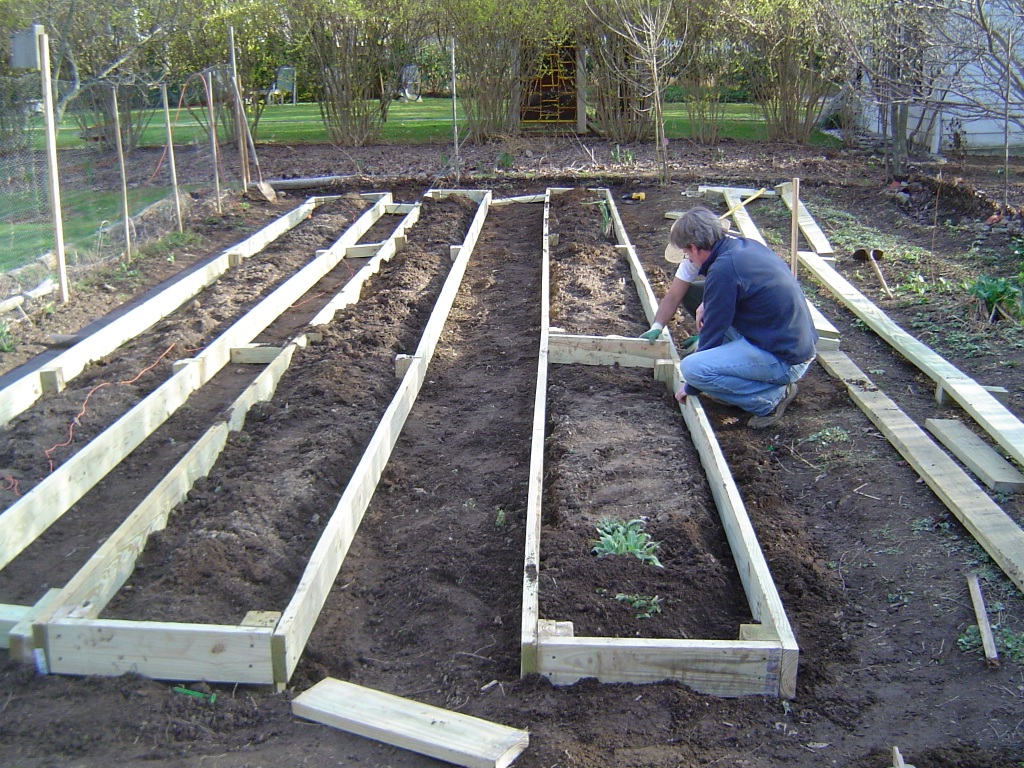
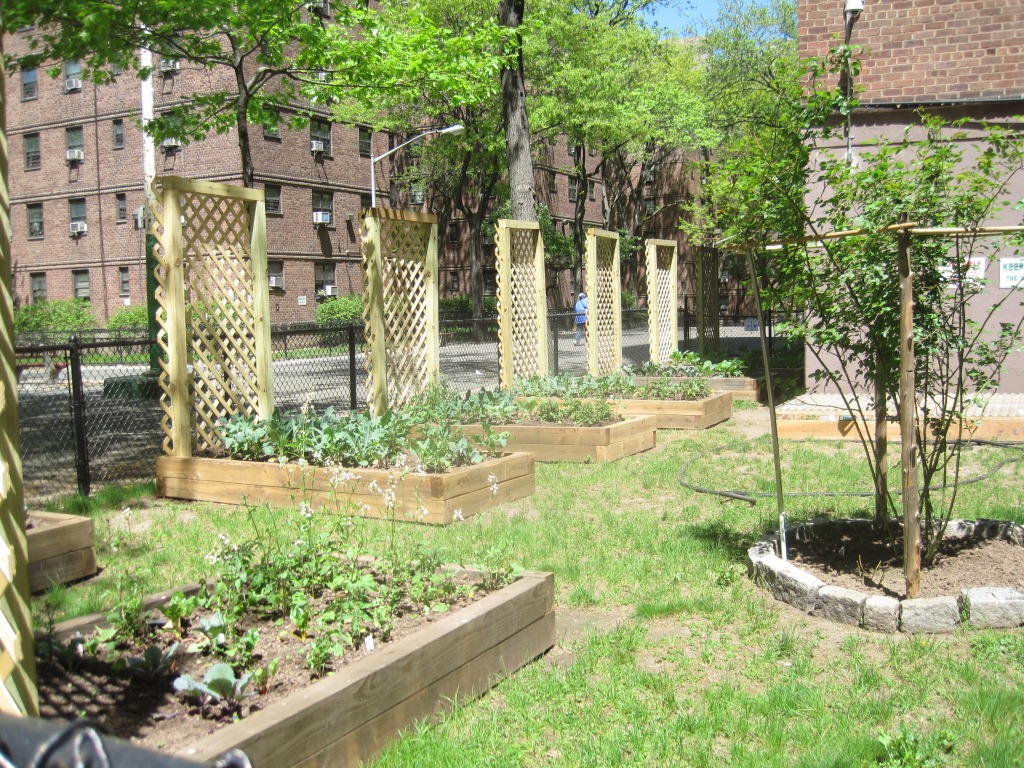
Building a community garden

Building a community garden


Ready for picking

Ready for picking


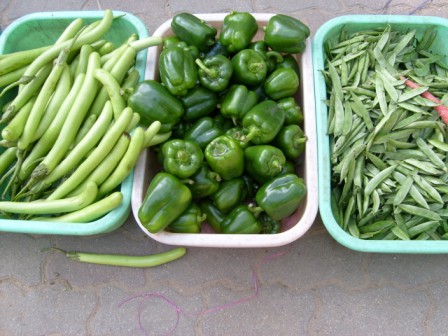
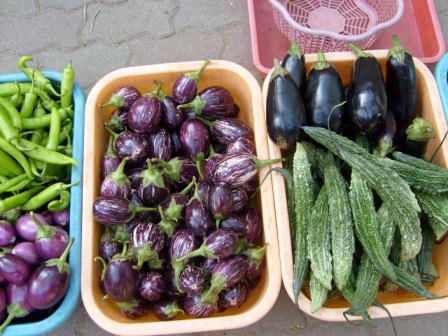
Vegetables to share

Vegetables to share


More veggies
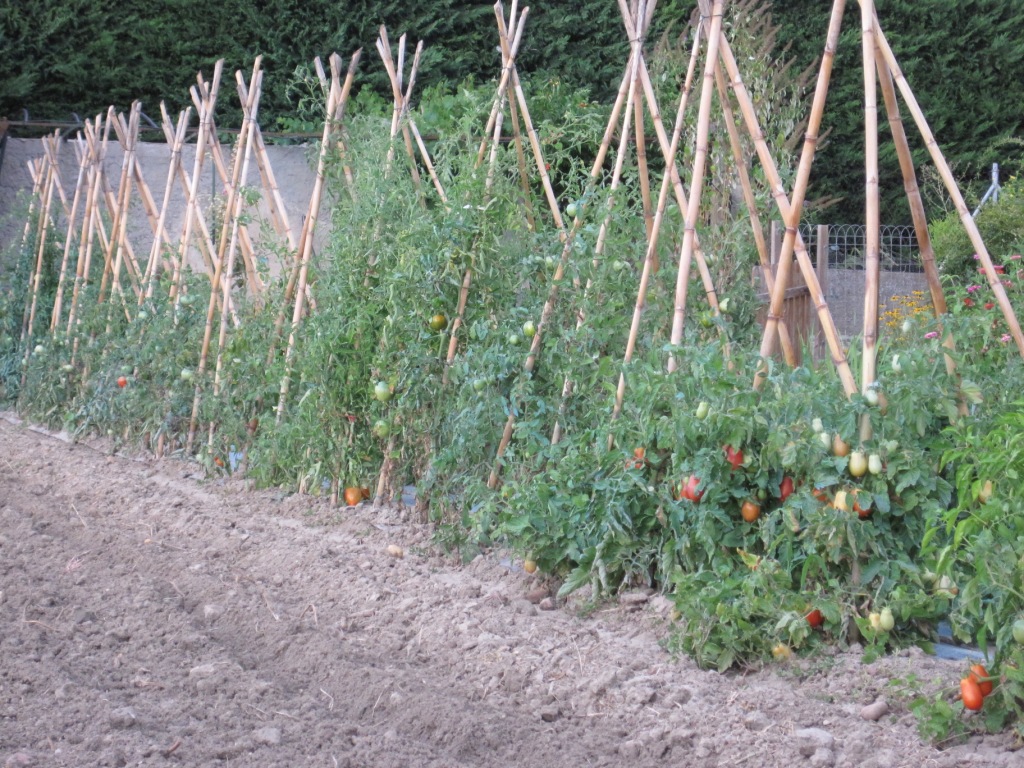
Row of tomatoes

Row of tomatoes


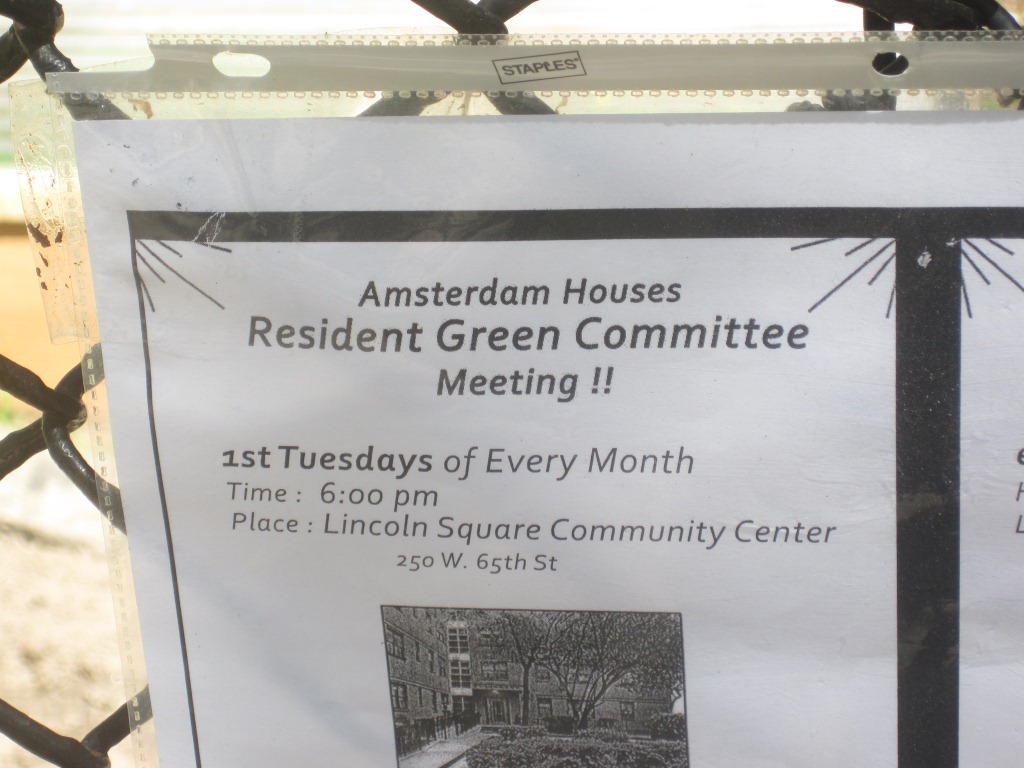
NYC community gardenSignage of community garden
(c) 2014 Shobha Vanchiswar
Mark your calender – Open Day at my garden is Saturday May 10, 10:00 am – 4:00 pm.
[do_widget “Blog Subscriptions (Jetpack)”]

Naturally Good

What does ‘natural’ really mean? Women go natural and that could indicate they go sans make-up or more often, give the illusion of having no make-up on. It could also indicate one who does not shave her underarms or legs. Florists work hard to make arrangements appear natural and less contrived. We are told to be our natural selves but it is implicit that we conform to socially accepted guidelines. Foods ranging from raw nuts to processed, sweetened cereals are labeled natural and wholesome. Natural athletes and musicians work hard to prove and maintain their prowess. Natural looking gardens have been carefully planted to look that way. So, what exactly do we mean by natural?

Natural is that which has not been touched or manipulated. Left in its original form, intact with inherent properties. In reality, we have conflicting ideas about the word. This is because, it is assumed that healthy or good is synonymous with natural. Lets remember that tobacco is a natural plant product. Natural is also not the same as organic. Cotton is a heavily sprayed crop. Hence, while cotton is a natural fabric, only organically grown cotton is actually healthy. A natural food can contain genetically modified elements, sprayed with chemicals and supplemented with other questionable components.

In the garden, most of us have been misled to think that we are being environmentally correct when we use sacks or boxes of ‘natural’ products to fertilize, control pests, encourage blooms and suppress weeds. Not so. But don’t blame yourself – the marketing skills of the manufacturers are at play here. Using vocabulary that is misleading or ambiguous, they have convinced multitudes to purchase and liberally use their products. It is time however for us to take personal responsibility and to do our own research and thinking. By this, I don’t mean we hit the reference section in the library and pore over scientific papers. No, it is much, much simpler than that.

Think minimal. Less processed or manufactured. The operative word is ‘organic’. Case in point, ordinary, banal compost. Converted from garden waste such as grass and leaf clippings, vegetable and fruit peelings and leftovers from the kitchen, this wonder product is the best mulch, fertilizer and weed suppressant ever. Look what the sun, rain and indigenous microbes can do! Does it get any more natural than that?

We have already embraced organic foods, cosmetics and cleaning products. It is time to do the same in our gardens. Can we all just make this upcoming season in the garden the start of a sincere commitment to go completely organic in the garden? Yes, it is doable and yes, you can.

Resolve to start composting. Until you can begin using your own compost, obtain it from your local recycling center. Ditto for mulch. Leave grass clippings to integrate back into the soil. Collect rain water to decrease the amount of water used from the tap. Add more native plants and work up to having them outnumber the non-natives. Reduce lawn size and consider using push mowers.

If all this sounds drastic, it isn’t. These practices are time-tested and true. Even better, they are particularly kind to the pocketbook. At the most, a bit more sweat equity is required but then, that could mean giving up that expensive gym membership. Exercising in nature is much more satisfying! Heck, if you have no neighbors to shock, you could even go au naturel. I won’t tell. Or look.

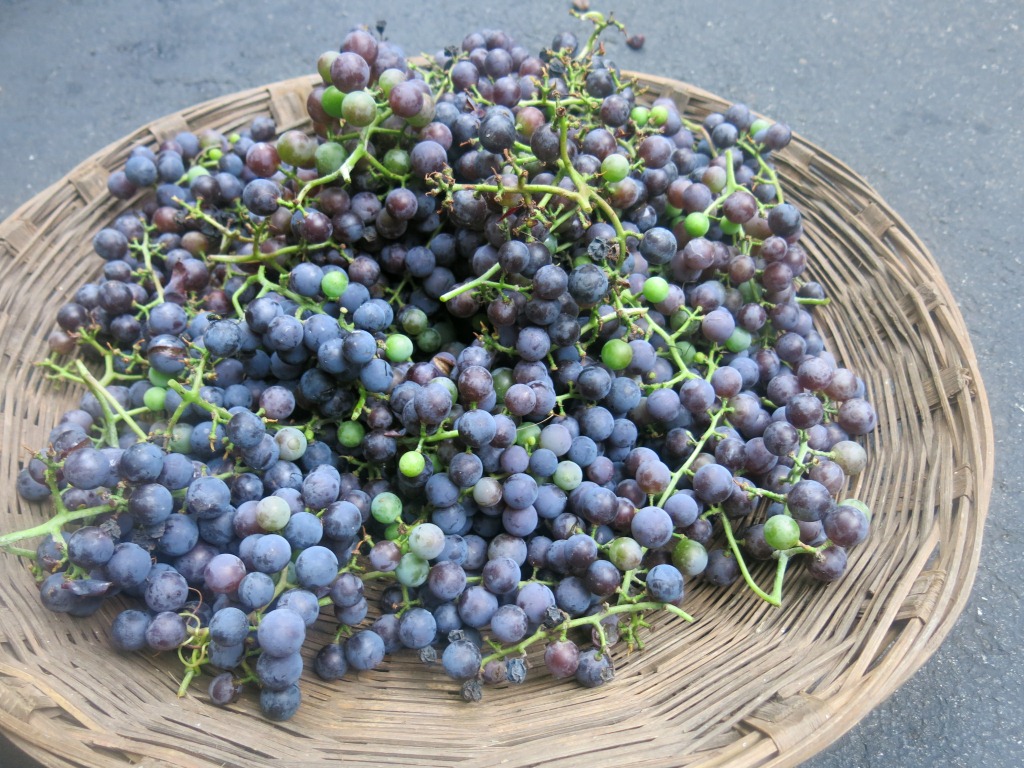
Concord grape harvest. Go ahead, eat it straight from the vine - its organic!

Concord grape harvest.
Go ahead, eat it straight from the vine – its organic!


Ditto the apples and pears.

Ditto the apples and pears.


The lettuce bed enriched with compost.

The lettuce bed enriched with compost.


The meadow. Mowed just once a year except for the path that runs through it. Never fertilized or sprayed.

The meadow. Mowed just once a year except for the path that runs through it. Never fertilized or sprayed.


Organic angelica to feast upon for this swallowtail caterpiller.

Organic angelica to feast upon for this swallowtail caterpiller.


New Dawn roses

New Dawn roses


(c) 2014 Shobha Vanchiswar
[do_widget “Blog Subscriptions (Jetpack)”]

Wising Up On Wisteria

Is there any sight more stunning than wisteria in bloom? The pendulous racemes in shades of purple or a pearly white never fail to take the viewers breath away. For the rest of the growing season, the composite leaves provide dense, green backdrops for other, less dramatic but more colorful blooms. Even in winter, the wisteria adds keen interest to the barren landscape, The twists and turns of the denuded gray-brown vine bark are pure calligraphy. Its no wonder then that this hardy plant has been a long time resident of gardens everywhere.

Yet, as in all living beings, perfection is a myth. This beautiful vine can be something of a garden bully. Its vigorous growth has been known to push out other plants and has been positively invasive somewhat frequently. As a result, many gardeners have banished it from their properties. Which is a crying shame.

However, I come bearing some heartening news. Go native! Yes, there is an American variety of wisteria – Wisteria frutescens. While its Asian cousins are the ones we know well, the native wisteria has been sadly overlooked. With the clamor for bigger and better, the ‘foreigners’ won out. I think it is time to bring this surprisingly modest, American stalwart to the forefront.

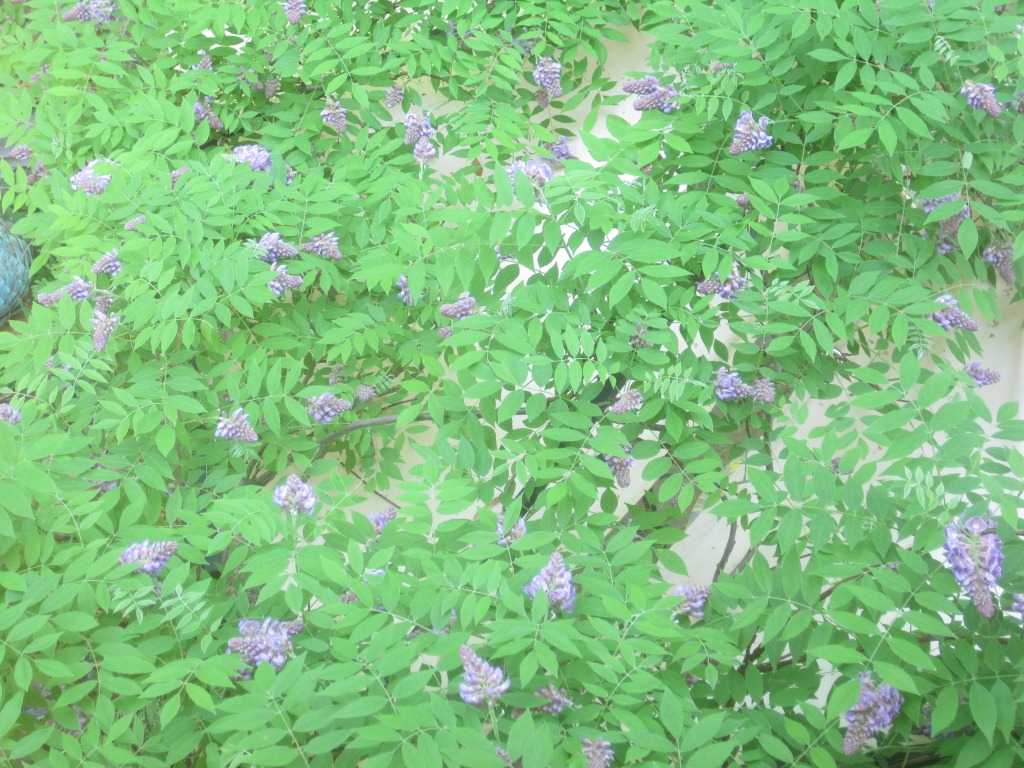
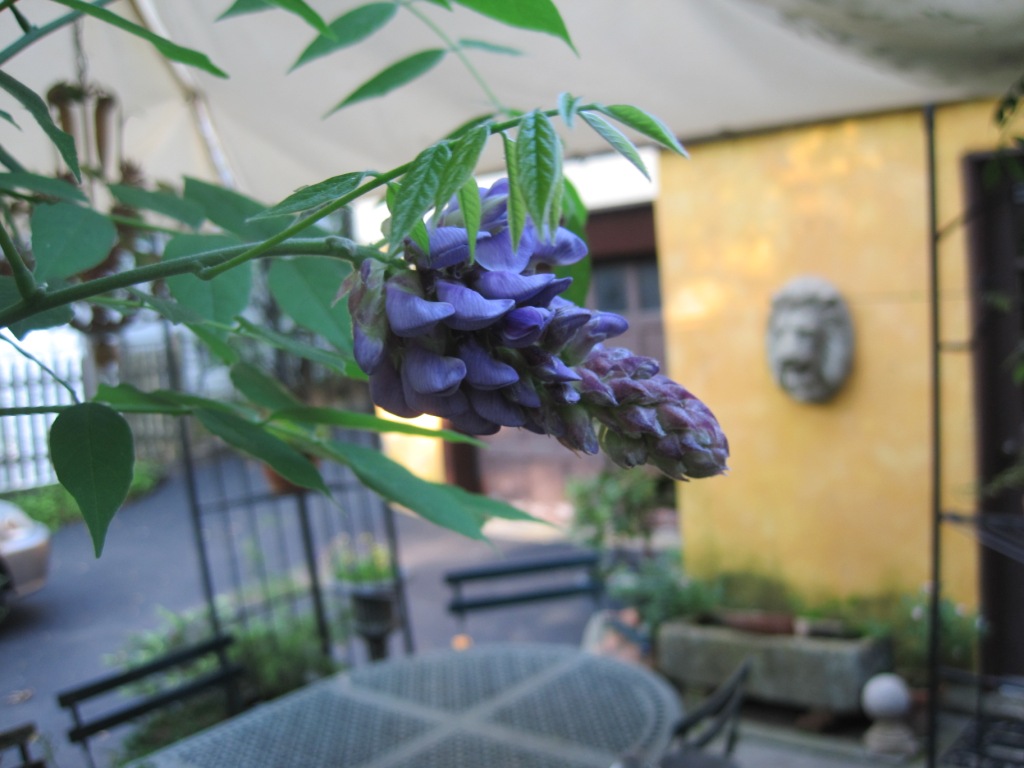
For the most part, Wisteria frutescens is much like its Asian counterparts. The general appearance is the same and it winds around its supports in a clockwise manner. It is however, not invasive, the pre-bloom seed pods are smooth not furry, and, it is not given to overly exuberant, jungle-like growth. So far so good? Its the racemes that don’t compete quite so well. Atypical to the American stereotype, they are only about half the length of the Chinese or Japanese wisteria. Yes, it is not bigger! But, that does not mean it is not better. Given all the other attributes, in my opinion, this is the wisteria to plant in our gardens. And wait, let me sweeten the deal – it blooms twice. Once in late spring ( well after the Asian varieties) and again in summer when it is in full leaf. I love that.

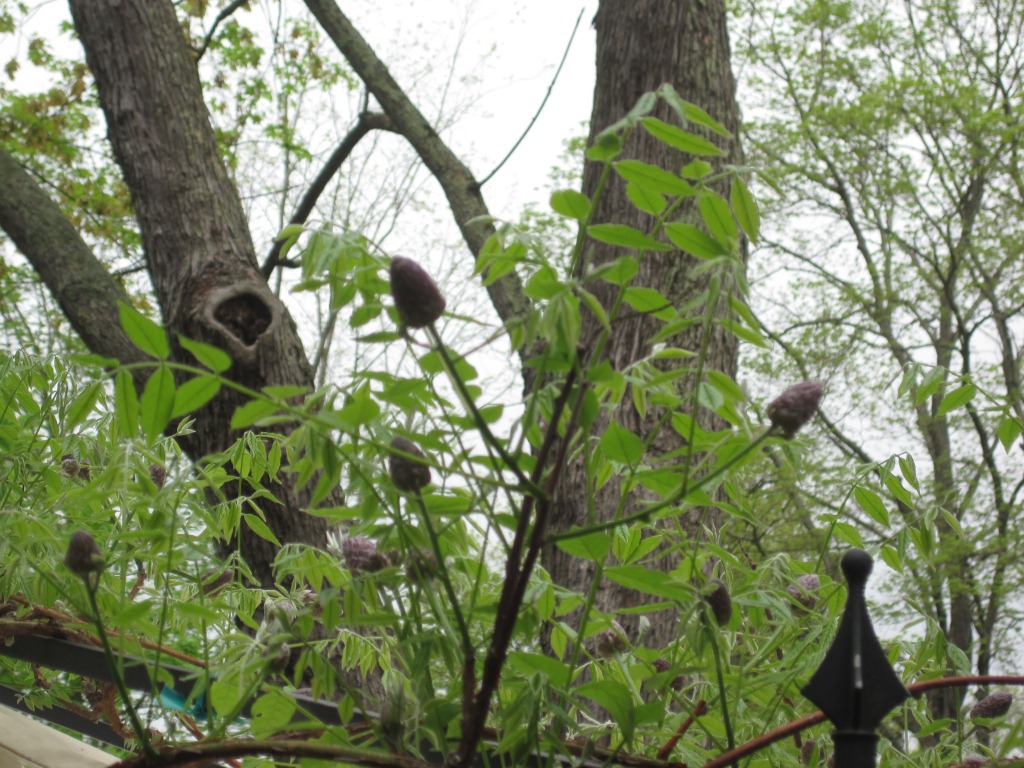
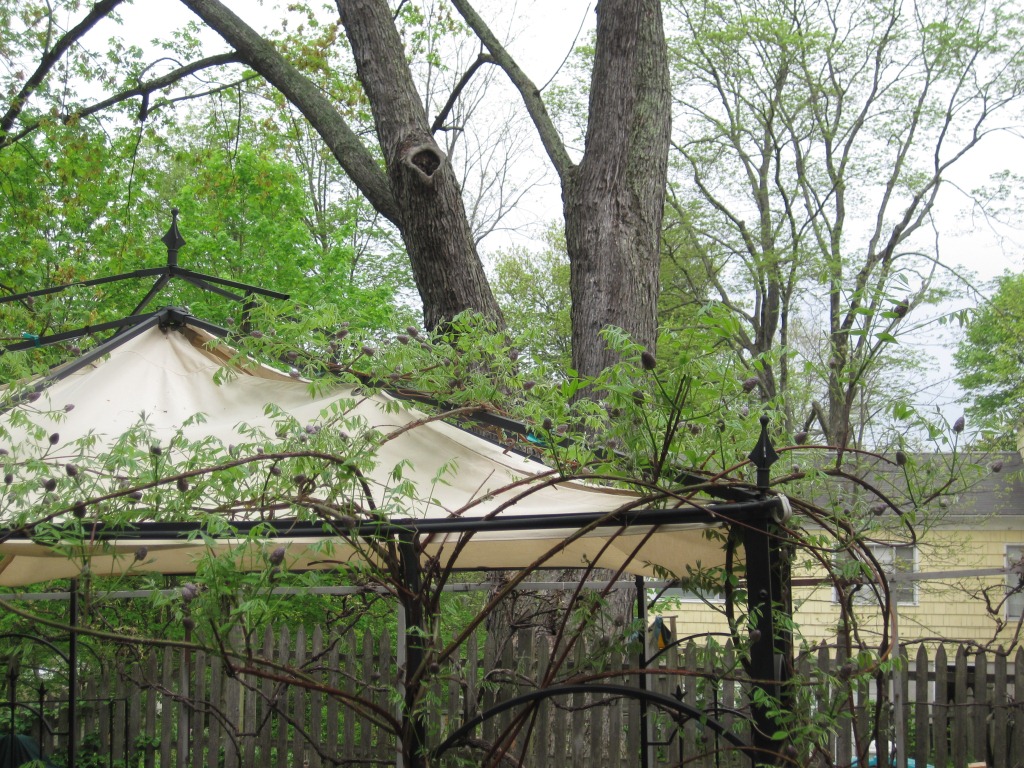
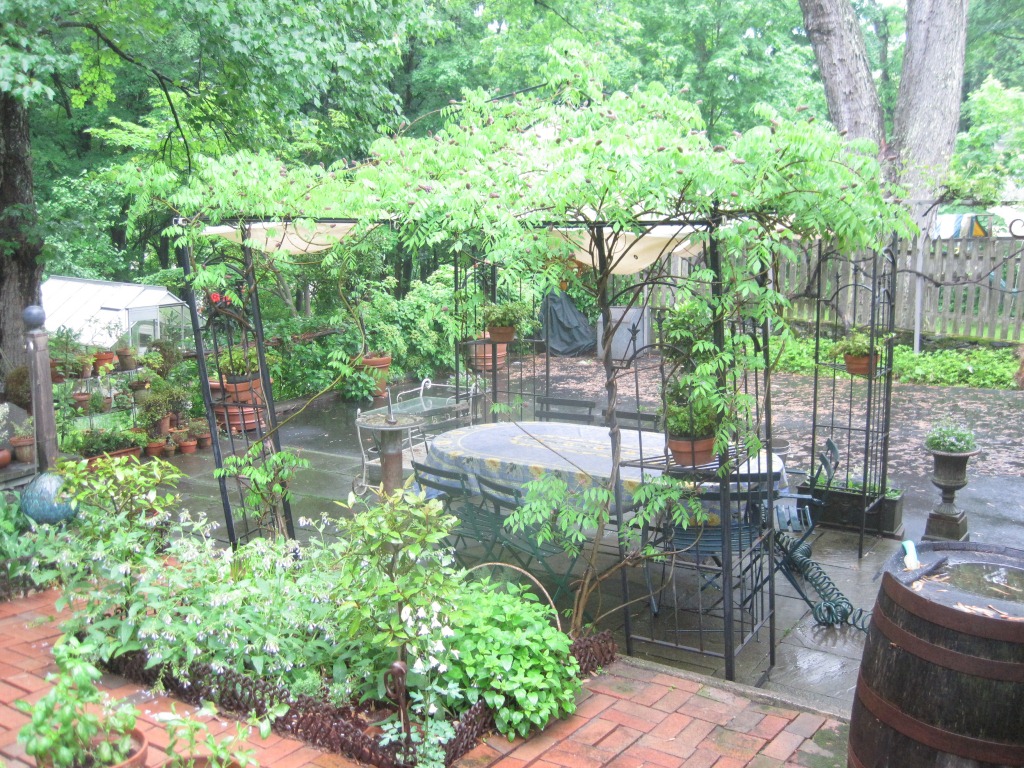
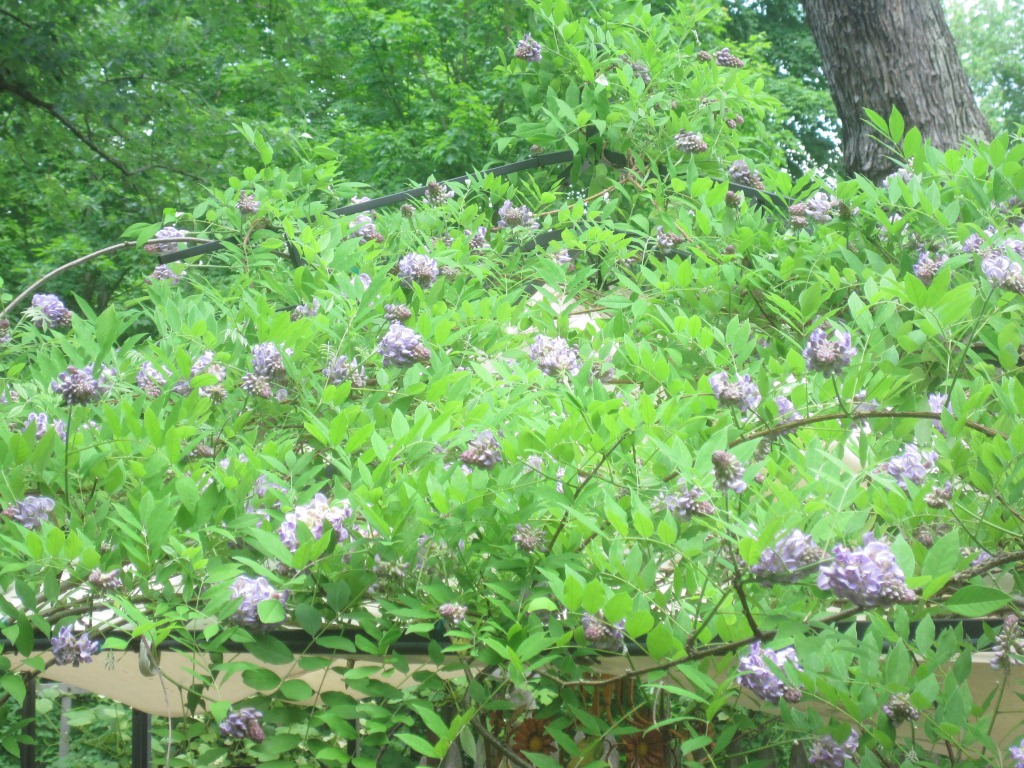
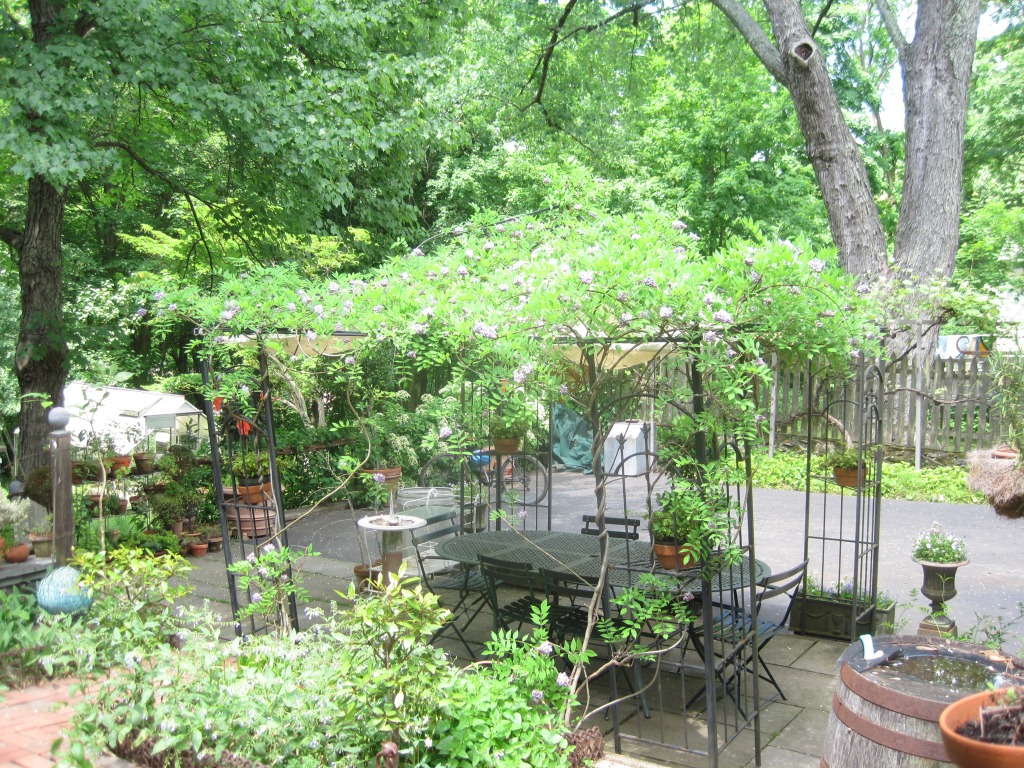
A few years ago, I planted a pair of W. frutescens so they could scramble up the metal gazebo and form a natural canopy. They have faithfully bloomed from year one and are now quite fetchingly sprawled over the gazebo. At this point, I’m not sure if the gazebo is supporting the vine. Looks like its the other way around.
I prefer the late blooming nature of W. frutescens. In early spring there are plenty of bulbs and other early blooming perennials in flower. But, later in the season, just as the big drama is easing up, it is very nice to have this wisteria add extra oomph to the garden.
The Asian variety that I have elsewhere in the garden is cantankerous, far too vigorous and has not bloomed since the first year. I have had horticultural experts look at it and nobody can figure out why it does not reward me with fabulous flowers. Needless to say, its days with me are numbered.
If you have a non-native wisteria and you are well-satisfied with it, keep it!

Wisteria is genuinely one of my favorite vines. It offers something all through the year. A true four season winner. The twisting, rope like vines are strikingly sculptural in winter. In leaf, the wisteria is the answer to a stunning canopy. But of course, the wisteria flowers are the show stoppers. In our climate, wisteria require full sun, strong support and space for good air circulation. Keep protected in windy areas. Young plants need to be well fertilized and watered. Once established, they do not need to be pampered. There are some straightforward pruning techniques that enable good flowering.

How to prune wisteria to make it bloom (keep in mind my own failure with the one delinquent):

In February, select a few strong side shoots to train horizontally and cut all remaining shoots back to two buds from old wood. Repeat this process to extend the spread of wisteria. New side shoots will grow from the horizontal stems and these side shoots should in turn be cut back to two buds in February.
After flowering, side shoots will start growing out and can be cut back close to main stem. Do this two to three times in summer. If you fail to do this, then your work in February will be intimidating! Occasionally, this practice stimulates a second flowering.
Sometimes, failure to flower can be due to the flower buds succumbing to the intense cold. This would then indicate a need for some protection in the future.

Go forth and plant W. frutescens in your garden this year. Just make sure you provide it the sturdy support it needs.
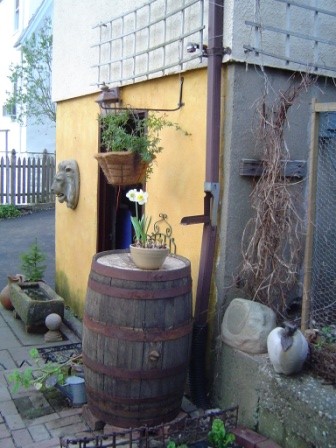
Enjoy the photos of my W. frutescens:
IMG_6309
W. frutescens
IMG_6306
IMG_8968
IMG_8987
IMG_9032
IMG_9029
IMG_3807
Note: I have added a new page ‘The Vertical Garden’. Do check it out.
(c) 2014 Shobha Vanchiswar
[do_widget “Blog Subscriptions (Jetpack)”]

The Deliberate Garden

At this time of looking towards spring and planning our gardens, we must examine precisely how we want to garden. I’ve often mentioned that just as we make our homes reflect our personalities and philosophies, the gardens we create ought to do the same. The very act of gardening is a matter of exercising control over nature. Even the most natural looking garden has been contrived to look just so. It follows then to be conscious of the kind of control we use. What exactly do we want our gardens to say about ourselves? Are our ethics and ideals expressed? Is the garden an honest statement of who we are? Does the design of the garden and its plantings clearly demonstrate ones appreciation and respect for the environment?

These questions are relevant. The environment, left just as is, informs and instructs no matter what. Designing our surroundings with deliberation and purpose puts out the message that has meaning to us and enriches all who come into this space. Instead of leaving things to chance, here is the rare opportunity to get your say in a larger, more substantial way. If each of us gardened to state our values, the world would be in much better shape. Every one has the power to make a lasting impact on the environment. Lets make sure we make it a positive one.

With that in mind, here is my run down of what to take into account when gardening with presence and purpose.
Core values and abiding philosophies in protecting the environment – organic practices, native plantings outnumbering the non-native, shelters for wild life, compost bins, small lawn size and large areas of plantings.
User friendly and approachable – paths comfortable to walk on, places to sit, to play. Herbs and vegetables within easy reach so the cook does not have to make a trek to get the produce. Access to different areas should not require special effort or feel dangerous.
Easily connecting to nature by offering seasonal views, inviting birds, bees and other creatures.
A sense of humor – add elements of fun with sculpture, paths that create mystery, water features a cool tree house, plants that arouse curiosity, add color or look odd. The idea is to not take oneself too seriously.
Add interest – mix flowers and vegetables. Make a vertical wall garden. Convert a lawn into a meadow or a labyrinth. Create an orchard of espaliered fruit trees. Start a collection of specific plants.
Beauty and harmony – include trees, shrubs and flowering plants that are known for their stunning forms, shapes, variegated foliage and/or colors. Blend colors that please and complement. Strike the right balance so the garden is neither over nor under planted. Good hardscaping is very important but the plants should be the stars.
Flexibility – as you evolve, allow for the garden to evolve. When trees reach maturity and create more shade, change the plantings in its shadow accordingly. If health precludes certain chores, simplify those needs in the garden. Life is not static.

How a garden created with thought, passion and intelligence affects the world cannot be quantified. It is not tangible. Yet, it colors our thoughts, influences our habits, guides our choices and determines our wellbeing.
The deliberate garden reminds us that it is an honor and privilege to be alive.

Rain barrel to conserve water

Rain barrel to conserve water


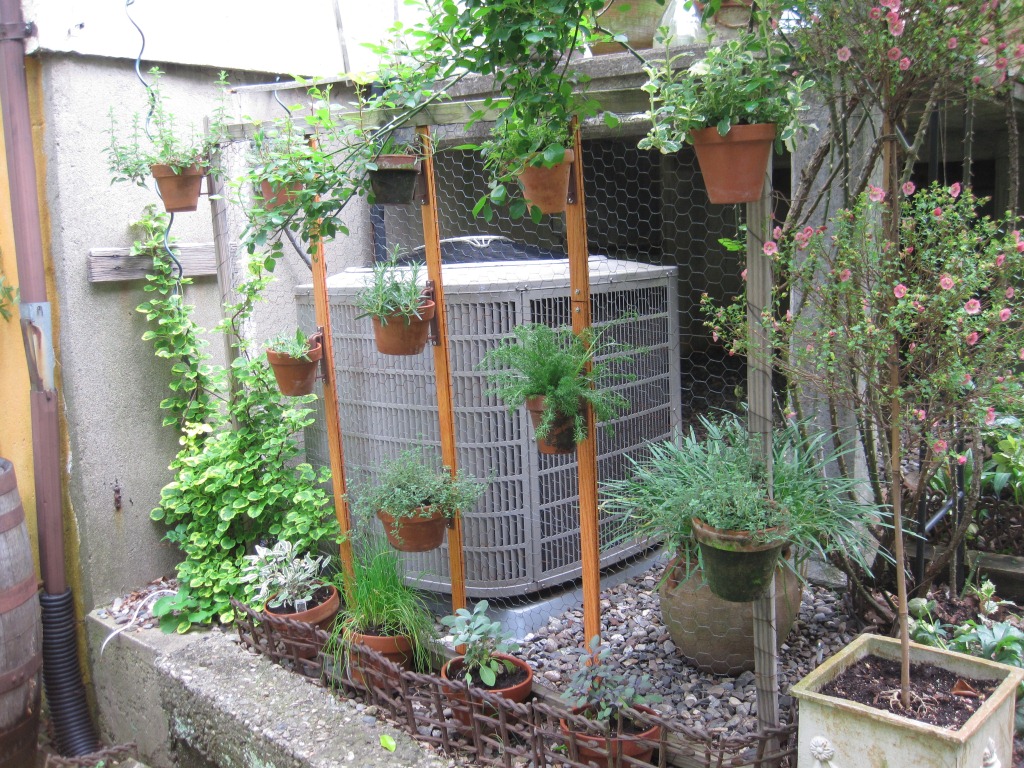
Herbs on a 'fence' to conceal airconditioning as well staying handy  for the chef.

Herbs on a ‘fence’ to conceal airconditioning as well as staying handy for the chef.


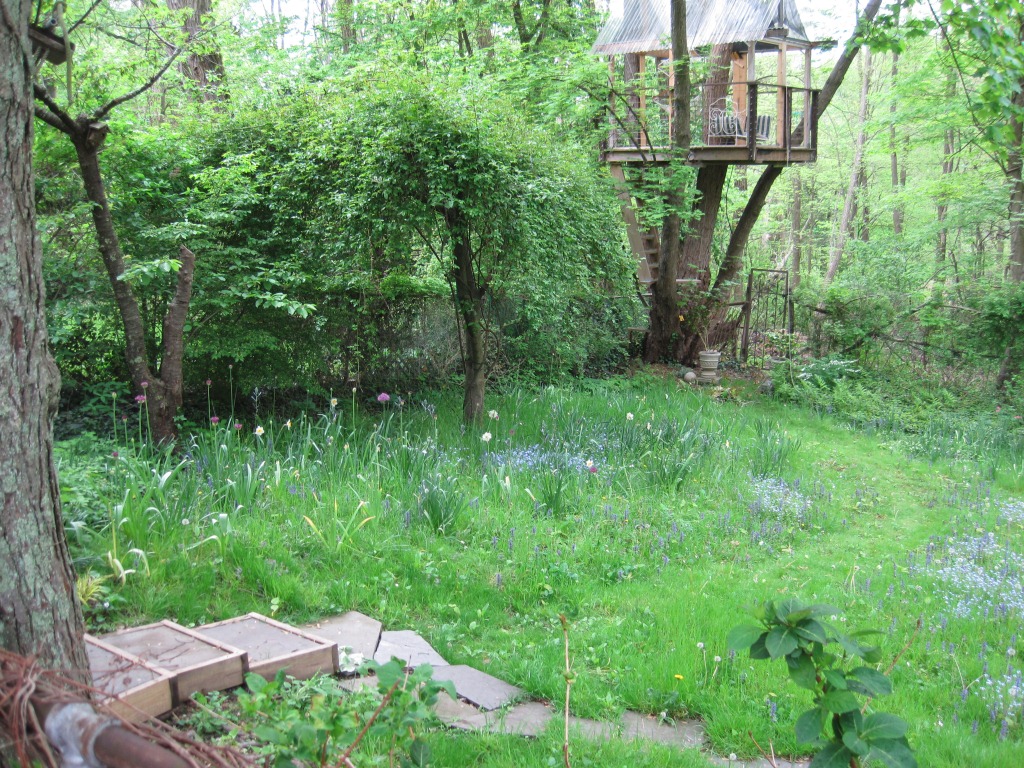
Tree house in the meadow

Tree house in the meadow


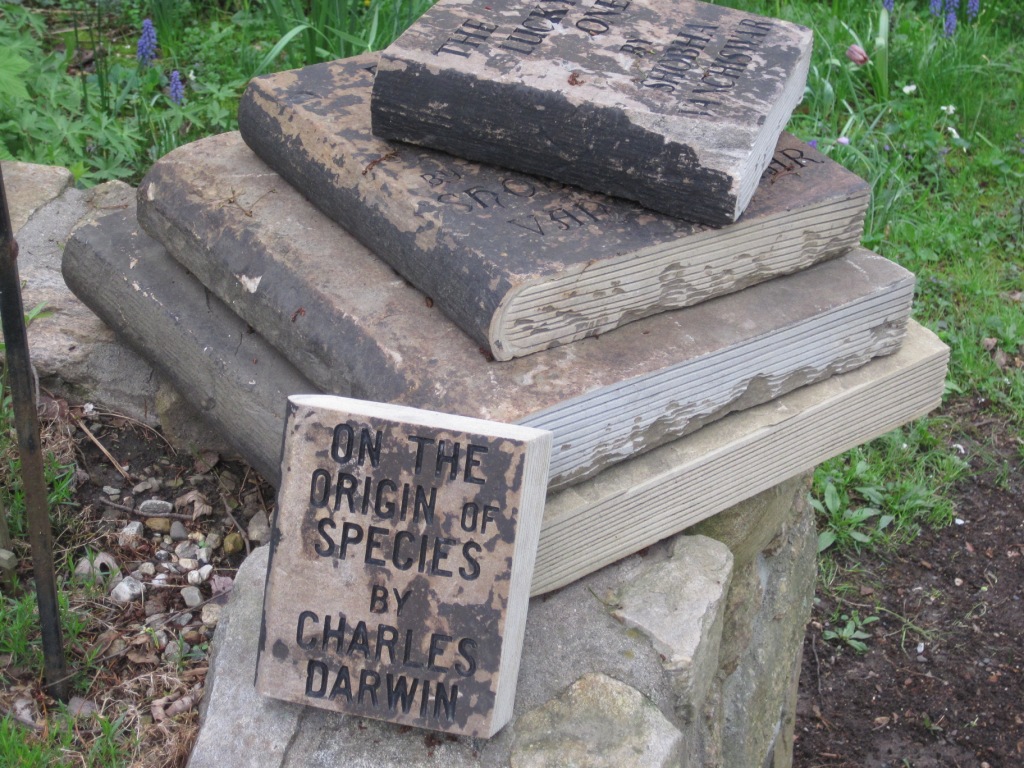
Stone books

Stone books


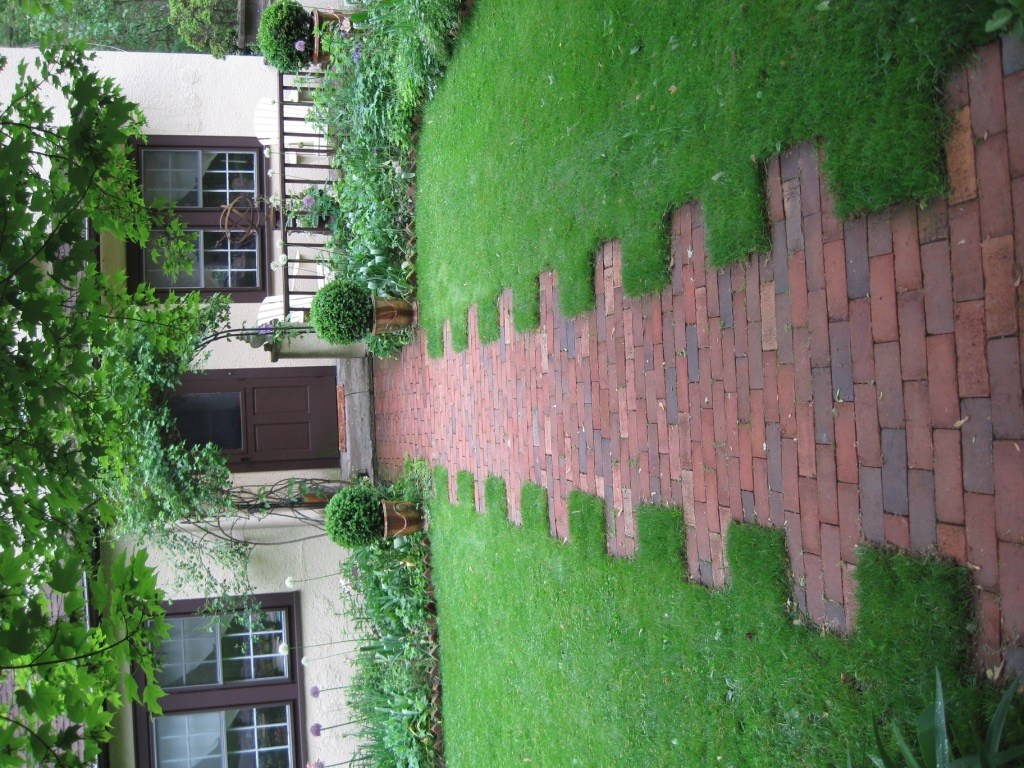
Walkway

Walkway


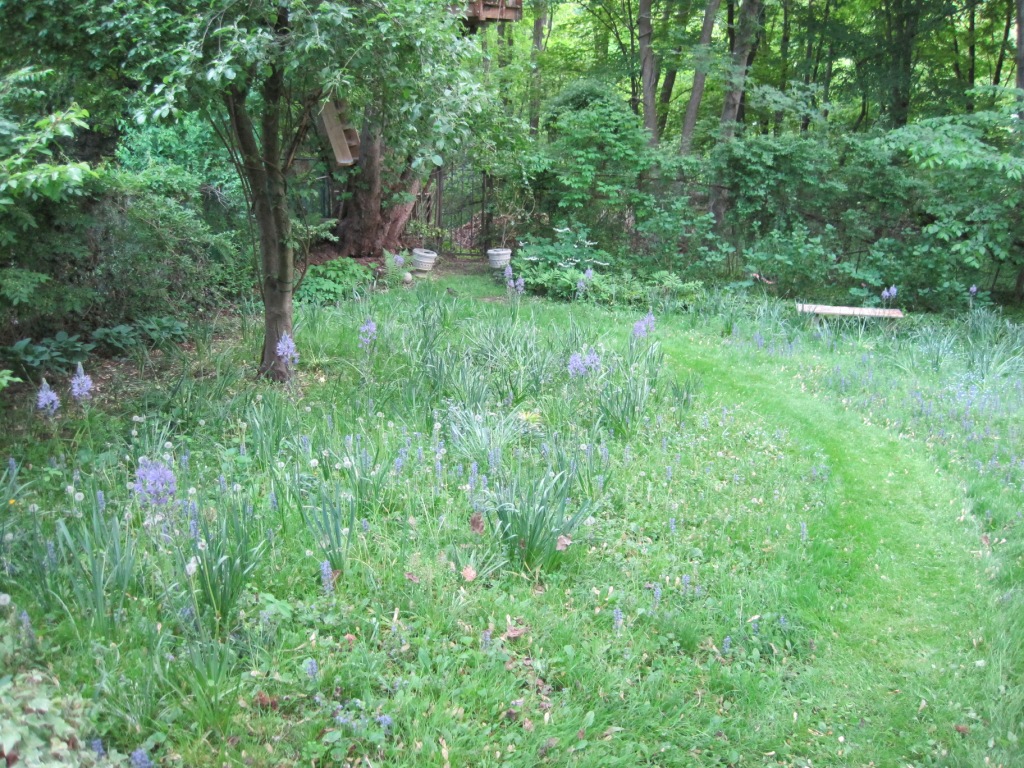
Meadow with spring bulbs in bloom

Meadow with spring bulbs in bloom


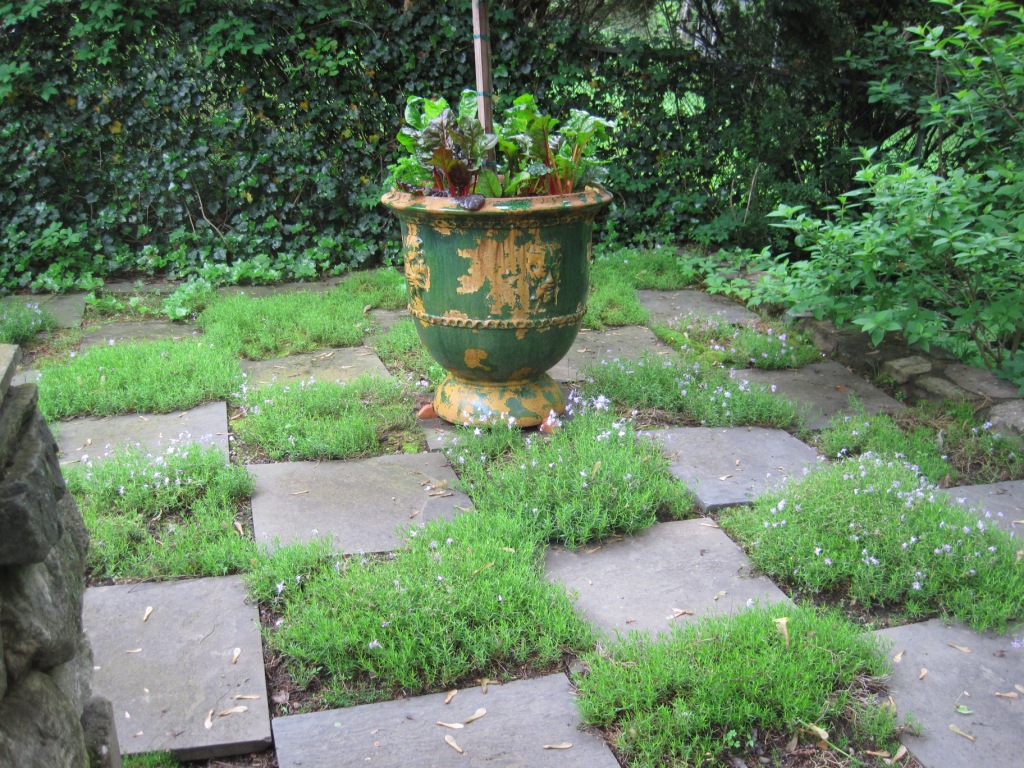
Checkerboard garden

Checkerboard garden


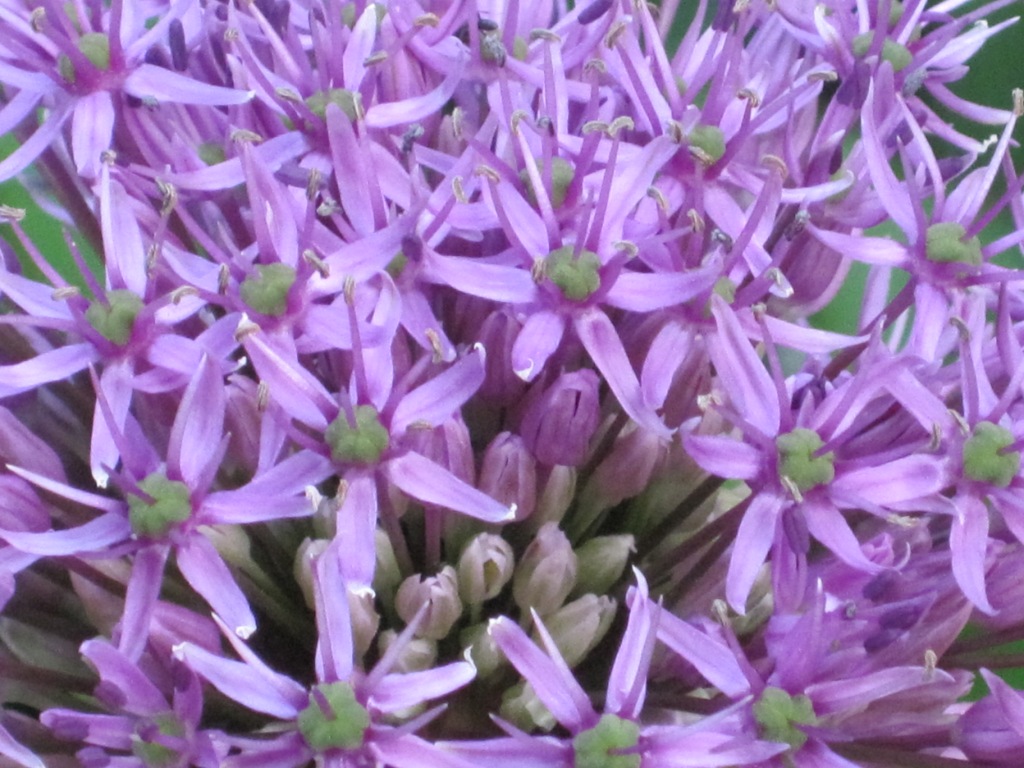
Close-up of allium

Close-up of allium


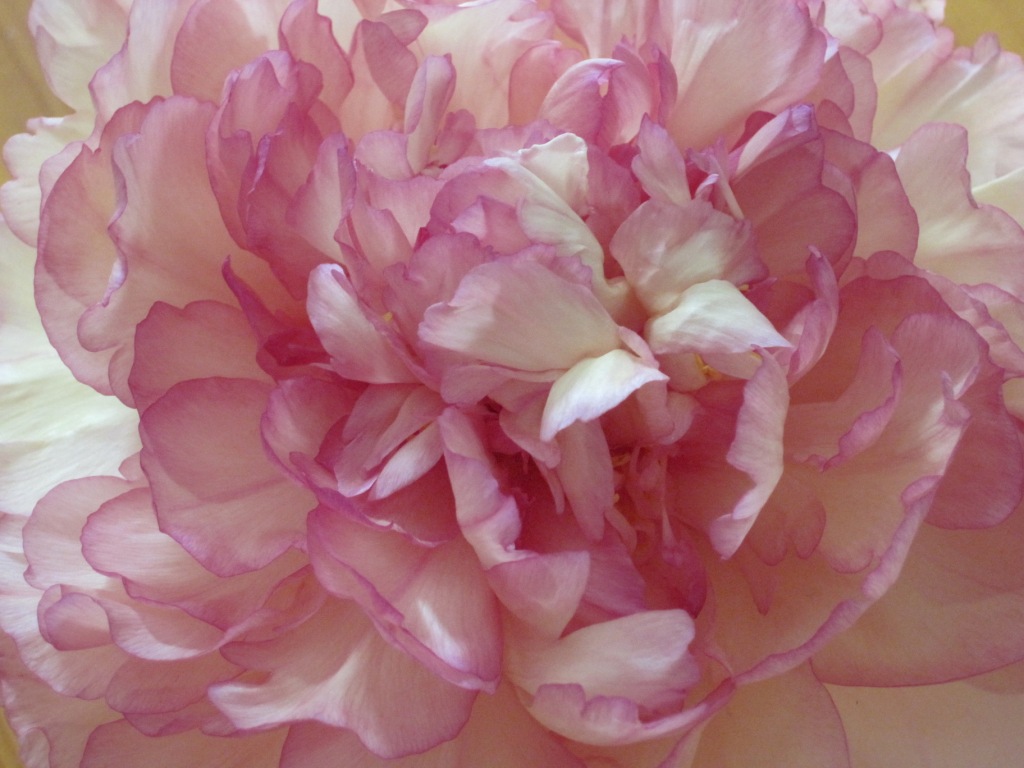
Close-up of tree peony

Close-up of tree peony

(c) 2014 Shobha Vanchiswar

In The Beginning …

With the landscape entirely blanketed in white, one can only stare so much at it before the risk of getting snow-blind becomes a distinct possibility. The way it looks right now, it might be eons before the snow melts away and we catch our first glimpse of lovely, sodden, rich brown soil. I can almost smell that earthy aroma – an uplifting fragrance from an improbable mix of humus and nascent leaves. Aaah – the heart remembers.

I turn away to rest my eyes and open my mind to contemplate the creating of a garden. Its a task thats been given to me by a reader who, in making lifestyle changes is ready to become a gardener. I’m particularly taken with this because I cannot recall ever making a conscious decision to become a gardener. It is something I’ve always done. In one form or other. Just like I cannot say when I began speaking each of the languages I’m fluent in. I suspect this is true for most of us. Over the years, we have acquired skills and knowledge along with bad habits and some firmly held superstitions. Suddenly, this looks like an excellent opportunity for everybody to review their gardening philosophies, methods and even their gardens. Whether one is an old hand or a novice at working the soil, it never hurts to periodically examine our intent and how we go about pursuing it.

Why does one garden at all? These days, the only reason ( the one that I believe that matters the most) to make a garden oneself is because there is a compelling desire to do so. Following a trend, protecting the pocket-book, trying to prove something are never adequate reasons – like anything else, if the heart is not in it then it will not be sustained or successful. Gardening is the happy nexus of science and art and is bloody hard work. Physical work that gets one sweaty and stained. It can thoroughly consume your time and bank balance if you let it. Non-gardeners will summarily dismiss the gravitas and value in gardening. The weather will play havoc with your efforts whenever it can. So, are you still interested?

Having established that garden we must, how we garden changes over time. Our needs, tastes, physical abilities and financial status changes over time and pretty much determine the evolution of the garden. The important factor here is – Know Thy Self. Know your tastes and preferences, understand your budget as gardening can be very costly if you don’t pay attention, be realistic about how much time you actually have to pursue it, acknowledge your limitations – gardens must be created according to what and how much one can do and finally, be very certain that this is what you really want to do. Half-hearted attempts will yield gardens with no style or spirit.

The best advice I can give is to keep it simple. To be creative requires dreaming big but ruthless editing. Creative ideas need room to grow and breathe.
Be practical and realistic. Plan and prepare thoroughly for maintenance well into the future. Think it through. Visit as many gardens as you can – for this, we are very fortunate to have the garden Conservancy’s Open Days Program to take advantage of. Plan your visits – https://www.gardenconservancy.org/opendays. Talk to the gardeners, take notes and photographs. As much as you will be inspired, you will also learn what you do not like or should not do. In the end, have fun and take pride – in the doing, the learning and the end results.
Snowscape
Snowscape
Snowscape

IMG_0466
IMG_0493
(c)2014 Shobha Vanchiswar

Returning To The Fold

I have the opportunity to plant a tree this spring and it has me hugely excited. I’m going native. It will replace an old apple tree that is rotten to the core!

For the longest while I’ve been eager to plant a Shadblow tree. Aren’t you just charmed by the name? So much more endearing than its official nomenclature – Amelanchier. Shadblow has a certain homeyness to it – I wonder if the colloquial word came about because the falling flower petals resemble the shad as they navigate the waters during their spawning runs. Also known as Juneberry, serviceberry, chuckleberry or shadbush, this is, in my opinion, an ideal small tree that is remarkably underused in our gardens. I suppose as more exotic trees became available, the shadblow was pushed aside. Too familiar and commonplace. Well, it is time to bring this lovely American back into our midst.

Amelanchier is a four season tree. It is deciduous and depending on the variety, can grow to about twenty-four feet in height. There are several that are shorter. There are species of Amelanchier that grow all over the North American continent. No matter where you live there is a variety of this tree for you.

White, mildly scented flowers in loose racemes are produced in early spring. In June and July, the tree bears sweet, edible, dark purple-red fruit known as pomes. In the fall, the leaves turn colors in the full spectrum of autumnal shades. Red, yellow, orange and gold, the shadblow makes a stunning sight. And finally, in winter, the fastigate tree morphs into a sculptural presence. To think, this arboreal gem was always there and gardeners were looking further afield.

Easy to maintain, naturally suited to our climes, this is a no-brainer kind of selection. If I haven’t made an apostate of you as yet, this very tree was also highly recommended by the likes of no less than horticultural giant Marco Polo Stufano. The fact that when I asked him, he unhesitatingly came up with exactly the same tree as I did, made me feel as though I had not only been told that I was brilliant but that I’d been personally blessed by the Pope of Horticulture. Now are you a convert?
AMELANCHIER---trees-for-the-garden-medium_new
Amelanchier-Autumn-Brilliance-from-landscapedia-300x210
1364233338-49567700
Amelacnhier_ballerina_fruit
Illustration of Amelanchier
Photo credit: ‘Free images of Amelanchier’from Google Search
(c) 2014 Shobha Vanchiswar

The Healing Gardener

Last week, I expounded on Healing gardens. The discussion moves a natural step further – the responsibility that we have towards our gardens.

Although man has been gardening from time immemorial, often, it has been done to the detriment of the land. With the focus being on benefiting humans, the impact on the environment has been rather easily neglected. To create gardens abundant with the exotic and rare, lush lawns, orchards heavy with fruit and potagers putting forth vegetables from distant shores, a high price was payed.

Meanwhile, large tracts of land have been given over to urban development. Gradually, our forests and prairies have shrunk. Combine the loss of natural vegetation, introduction of alien species, use of chemical pesticides and fertilizers, indiscriminate use of water, liberal employment of gas driven machines and there we have our badly, wounded earth. Our bid for the impossibly perfect has only succeeded in exposing our own failures.

Dealing with the likes of powdery mildew that has decimated the impatiens, boxwood blight, Asian long horned beetle and so many others, one can be of the opinion that we have just alien pests to contend. But, in truth, our careless habits have also increased the populations of our own native pests. You see, when we reduce native plants, we also reduce the native ‘good’ bugs which keep the natural pests in check.

I will not go into more detail about all the negative actions and impacts. It is all known. As guardians of our land, we must move ahead with a resolve to make amends. It is not too late – this much we must believe. Otherwise, what is the point?

While we seek to be healed by gardens, we must first heal our gardens. Only then can we be better served. After all, what goes around comes around.

It is my fervent hope that we will each honor our covenant to nurture our gardens and green spaces to good, robust health. Here are a few guidelines:

Plant more native species. Banish all invasive alien specimens.
Adopt only sound, organic practices.
Use water judiciously. Collect and use rain water.
Support the presence of birds, butterflies, bees, bats, toads and other helpful critters. Grow plants that attract them. Provide ‘homes’ and water sources.
Compost all kitchen and garden waste. Use the compost instead of buying mulch or fertilizer.
Weed, prune, cut back and keep the garden nicely maintained.
Spend time daily in the garden. Absorb the good energy while giving it yours.

The growing season is yet to start in the garden but the time is ripe to get ourselves ready to do it right.

P.S.Save the date!:My garden will be open through the Garden Conservancy’s Open Days Program on May 10, 2014. Mark your calenders and do make plans to visit!

My 'meadow' - replaces replaces a lawn and supports lots of bees, butterflies and toads.

My ‘meadow’ – replaces replaces a lawn and supports lots of bees, butterflies and toads.


Organically maintained espalier heavy with fruit.

Organically maintained espalier heavy with fruit.


The salad bar

The salad bar


Hungry mouths in the espalier

Hungry mouths in the espalier


A frequent visitor

A frequent visitor


A surprise visitor in the meadow

A surprise visitor in the meadow


(c) 2014 Shobha Vanchiswar

A World Unto Its Own

There is something about small scale replicas that fascinate the human mind. Perhaps it is the accessibility of compact things or the fact that one can easily take care of them or that they connote a simplicity in an otherwise complicated world. Doll houses, miniature train/car sets, tree houses, furniture, cookware, even miniature dogs are sought after and enjoyed by all ages. I’ve seen plenty of men have insane fun with train sets purported for their sons and lets face it, women get positively carried away with furnishing their little girls’ doll houses ( I speak from personal experience). I do believe it is also a matter of control – we can manage these things. While so much else overwhelms, Lilliputian items give us a sense of being in control.

Hence, it is no wonder that tiny gardens are so delightful. Easy to care for, can be observed in detail and, look elegant. Enter the realm of terrariums. I’ve always found them charming. A few years ago, perusing through Tovah Martin’s book on the subject revived my interest and had me purchase several Wardian cases. Understandably, planting up such ‘containers’ is not permanent. But then, what garden is? I’ve planted up my cases in ferns, in orchids, still life arrangements of found objects, whatever caught my imagination. But most recently, they lay empty and I wanted to try something different. The timing was perfect. My friend Pam had just started her terrarium business aptly named Terraria and it made complete sense that I ought to have her furnish my Wardian cases. It is not difficult to make your own terrariums but a fresh eye is always a good thing. An expert knows about suitable plants and conditions. Most importantly, they have access to the right sources.

Pam Wright is a talented gardener and her skills at making terrariums are impressive. Not given to doing anything in half measure, she is very knowledgeable about all the plants she uses, the care required and applies a seriously aesthetic eye on her creations. I’ve been fortunate to know Pam for years and feel very confident in promoting her. I recognize quality and authenticity. I don’t mean to gush and shall not say more. The photographs below will serve as testimonials. However, I do want to share a story. The smallest of the mini-Wardian cases I had given to Pam had the glass missing on one side. Very cleverly, Pam placed a small single Venus Fly Trap in it. It not only looks just perfect but the open side can, with any luck, permit entry to bugs that will be much appreciated by the carnivorous plant! To contact Pam – pam_wright@yahoo.com or call her at (914)260-9799.

Terrariums are diminutive horticultural worlds. Best of all, unlike gardening outdoors, you get to control things like light, humidity and temperature. What plants you select will dictate those factors and you create a whole new microcosm. Unless one is all for collecting rare or unusual plants, it is not a big investment and experimenting is rather fun. Making terrariums permits one to be child as well as creator. Yes, there is indeed a bit of ‘playing God’. But not in an arrogant way! The key word here is “play”. If anything, it is a reminder to not take oneself too seriously. Just give in to your botanical imagination and see where it’ll take you.

During the dark, cold, bleak winter months when we crave lush, green surroundings, having a terrarium or two to gaze upon can be positively therapeutic. As you go about trying to come up with interesting, beautiful gifts for family and friends this holiday season, do consider giving a terrarium. Get one for yourself as well. They make very good company – beautiful, interesting, low maintenance and very quiet.

Get motivated with these images: All by Pam Wright
Terrarium 1
Terrarium 2
Terrarium 3

My newly planted Wardian case

My newly planted Wardian case


The Wardian case with the top on

The Wardian case with the top on

I have more information on making your own terrariums and I plan to put them into a how-to page on this site. Stay tuned!
(c) 2013 Shobha Vanchiswar

Report card

We are judged on almost everything we do in life. Think about it. You bake something and a verdict is passed. You paint, write, sing, sculpt, build, invent, teach, sell or parent and there is a panel that is on the ready to make a pronouncement. Our culture enjoys a certain comfort in deeming things pass/fail, right/wrong, beautiful/ugly, amateur/professional, successful/unsuccessful, crude/sophisticated. This makes being true to oneself rather difficult.

We are afraid to call ourselves an artist if we have not shown in an exhibit or a writer if a book has never been published. You might be an engineer with the correct schooling and degrees but you can be a sculptor as well. Even if what you sculpt is done at night and your art is seen only inside your home. But how hesitant we are to declare it in public! Too timid to question the system that denies one one’s many faceted, undeniably special persona.

Who are these social pundits and what exactly are their qualifications to be so judgmental? A certain degree of parameters make sense. For instance, rules of the road are very relevant. The same goes for how we conduct ourselves in society. They serve as guidelines, standard markers that make civilization thrive. One learns how to reach higher and do better. Peaceful, cooperative societies must have general rules and acceptable limits. This works fine but all too often, we are left somewhat paralyzed by fear of censure in our day to day lives. Because of this, we follow the pack and surrender our individuality. Look around. Our dress, our literature and cinema, our music, the architecture and appearance of residential streets, cars, hairstyles, even our food choices are all dictated by trends set mostly by those who in truth, know no better than anybody else.

We listen to the words of celebrities as though they are the modern day Oracle or are the select few in custody of the Rosetta Stone of Everything. If a person is indeed an expert or legitimate authority, then, they are obligated to teach, help the rest of us. Not deride, mock or judge. Most of us never pause to question if any of this feels right or is suitable at all. To follow our own ideas and thoughts is to be bold and courageous. If you are not breaking the law or harming anybody, then take a big, deep breath and be bold and courageous. Be you.

The easiest place to express yourself is the garden. Society regards the garden like an afterthought. Unless your front garden is a complete jungle or radically different, no one will notice or care. It is as though to spend time gardening means we are not pursuing more important, pressing causes. And if you don’t garden, well who will chide you because after all “who has the time?”.

On the one hand, it is universally accepted that it is vital to have access to nature and we tend to buy as large a property as possible. But on the other, not enough is done to acknowledge and appreciate those who create and care for such green spaces. We can use this attitude to advantage!

Typically, I see it as a means to create whatever garden I like. True, going berserk and making a thirty foot waterfall on a standard suburban plot would be asking for complaints from neighbors and zoning/architectural review boards. But in general, a great deal of leeway exists. Go with your heart and abilities. Convert the whole garden into a vegetable plot. Make it a paradise of peonies. Fill it with all your favorite plants. Gaudy colors, all white beds, minimalist modern, serious native plant collections – go for it. As long as you adhere to what your geographical zone will allow to grow and you do no harm. The latter tenet means not harming people, animals or the environment. Honor the earth. Plain and simple.

So what if none of the neighbors grow vegetables in the front of the house. If that is the most suitable location for a potager, then by all means make the most productive, most beautiful vegetable garden there. Long for a riot of roses? Make it happen! Personally, I’d much rather see a joyous melange of flowers favored by the owner’s unique style than yet another ho-hum, run of the mill suburban property. After all, where is the individual personality of the owner to be found?

The thing is, in gardening, there is no pass or fail. Everything is a learning experience. Your garden is one big open air classroom. Nature is the teacher – she gives no tests, no grades and does not single you out for punishment. Your own talents and interests are nurtured. You join this school at any age, work at your own pace, drop out if you need to, return after a hiatus. Mistakes are permitted! You get rewarded for just showing up. All along, you discover your strengths, overcome difficulties and get empowered for what lies outside the garden walls. You learn to be yourself. No pressure other than what you put on yourself. As it should be. Before long, you will step out of the boundaries of the garden and venture into other realms to make your own personal mark.

If you are hesitant to express your style or state your opinion lest you are chided, get yourself to the garden. Learn, grow strong. You endeavor to garden, so you are a Gardener. The garden gives out no report cards.

Enjoy these images of unique spaces. Be empowered!
DSC03778
DSC03793
IMG_5141
DSC05100 IMG_4671IMG_4672
IMG_9372
(c) 2013 Shobha Vanchiswar