Plants That Live In Glass Houses …

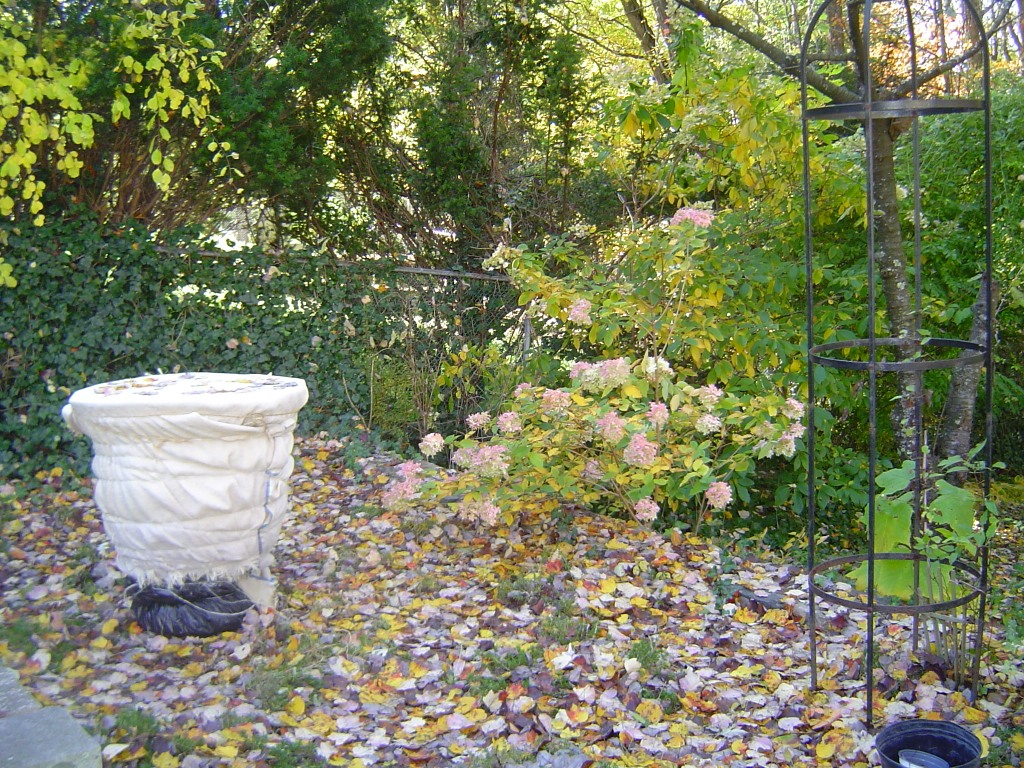
The Great Migration has begun. It started this past Sunday. On what felt like a distinctly mild day in summer, preparations for the imminent cold began. Moving plants into the greenhouse. Its a good prompt for the season. Unlike general chores on the to-do list, this effort is clear in its prerequisites and requisites. It is finite, at which point there is something to show for it.

Don’t let the fact that I’m talking about something most folk do not possess, stop you from paying attention. I think the fundamentals of this effort benefit one and all.

In the interest of plant health and hygiene it is imperative that all residents be cleaned and inspected before entry. This forces me to examine the plants carefully and note what needs repotting, additional organic treatment for simple ailments and, dealing with possible/potential pest infestations. In doing so, I’m taking care of matters that are easily overlooked.

There is only just so much space in a greenhouse. Crowding is achieved rather quickly. Again, this is unhealthy. So, decisions are made about what deserves the prime real estate. With a little thought to the general garden design, hardy plants like boxwood can be situated into the ground. I have two this year that do not look so happy. They’ve been in pots for years and it is is possible that they will recover much better in the ground. I will consider where to plant them and that will make space for more needy candidates seeking shelter.

Plants that are neither hardy nor doing well are tossed. The cost in terms of space and attention is too high for such losers. Its taken me some years to get ruthless.

Those that are selected are given the once over for the space they will require. Good time to cut off dead wood and prune back in general. Height is a major consideration as the highest point in the green house is a mere six feet. Lopping off vertical as well as side growth makes me pretend I’m a big time hairdresser. The end result should look suitably attractive. I wonder if there is a market in the plant world for the ‘Fawcett” or the ‘Anniston’ or the ‘Dorothy Hamill’ or the more likely ‘Einstein’. The more compact size is also advantageous as the energy demand on the plant is reduced. There is less for the roots to feed under less than ideal conditions.

Since I’m pruning anyway, this becomes the time for me to root cuttings of scented geranium, rosemary and bay. And while I’m at it, I may as well propagate some hydrangea. Come spring, there will be several young plants to add to the garden and/or give away. Big dividends for effortless yet, useful work.

In the course of filling the greenhouse, I find myself giving the whole garden the same degree of attention. By starting early enough (but not too early), there is time to do so. Reviewing, editing, deleting, adding, replacing, critiquing are all valuable tasks that are often neglected once the busy-ness of the season takes over. It allows for planning more efficiently and satisfyingly for the next season. I’m made significantly aware of the needs and possibilities. It permits a deeper engagement with the evolution of the garden.

My greenhouse is 12 x 8 sq. feet. By most standards, it is very small. For me, it is a necessary luxury. Heating it for the winter is not cheap. It must be kept clean and well ventilated. Weekly and sometimes bi-weekly watering is required. With plants growing in close proximity, it is crucial to stay vigilant for disease and pests. These ground rules notwithstanding, this glass house is very dear to me. Treasured botanical friends are kept safe here. Several have been in my company for many years. Spring can be jump started because seeds are germinated and nurtured in this warm space while still anticipating the snow melt. Amidst this green sanctuary, I can escape the winter blahs for a while. A soul-lifting, sanity preserving experience. When the jasmine or Brugamansia bloom, they are brought into the house to perfume the nights. Similarly, the primroses in pots display their crayon colors well before their counterparts in the ground outside. Set on a table in the living room, they bring smiles to winter weary countenances. You can see how well this hothouse serves me.

Note: The same approach holds for plants being brought into the house.

Getting ready to root cuttings

Getting ready to root cuttings


Dipping cutting in rooting hormone

Dipping cutting in rooting hormone


Only a bit of the end needs to be covered in the powder

Only a bit of the end needs to be covered in the powder


All ready! Now we wait.

All ready! Now we wait.


Bill Smiles' greenhouse. Mostly orchids because he is the orchid man!

Bill Smiles’ greenhouse. Mostly orchids because he is the orchid man!


Filling up my greenhouse

Filling up my greenhouse


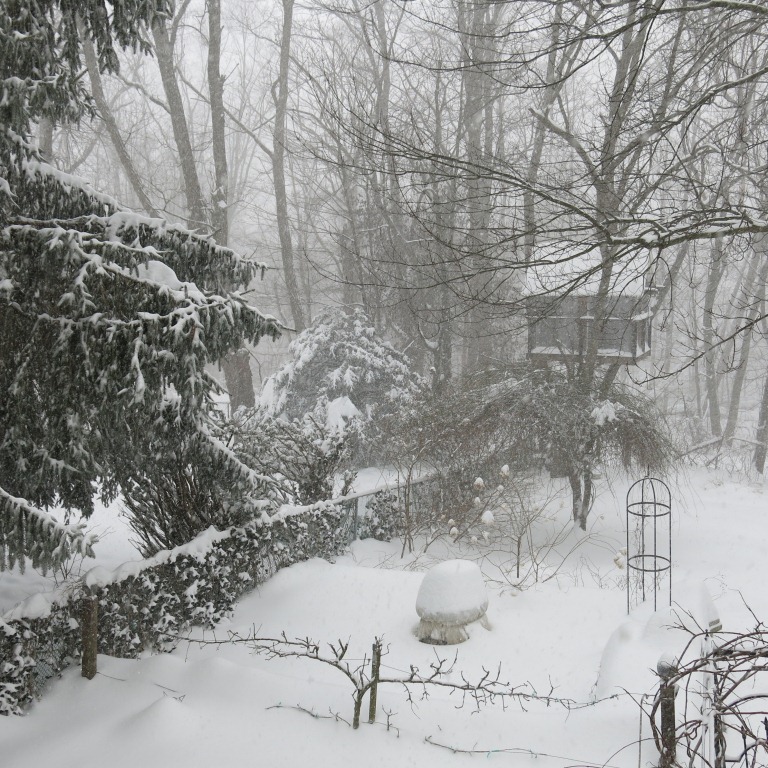
The residents should be well protected when it looks like this!

The residents should be well protected when it looks like this!


(c)2014 Shobha Vanchiswar
[do_widget “Blog Subscriptions (Jetpack)”]

Fall – The Other Busy Season

Thats right, fall is officially here. Observe the hues of titian and saffron tingeing the trees. By the time all the trees are in full autumnal regalia, the gardener had better be well into the season’s chores. Lets get busy!

Make a list or look up Things To Do and see what tasks must be tackled in September/October. Schedule what needs doing by you, helpful family/friends, hired services. Getting organized cannot be overemphasized.

While you do that, here are some things that I thought you might want to know or be reminded of:

Instead of being annoyed at how early stores are displaying Halloween paraphernalia, consider it a reminder to collect material from the garden to make natural fall arrangements for indoor displays. Think wreaths and table-top centerpieces of pine cones, acorns, pretty fallen leaves, seedpods, dried roses, hydrangea etc., Look for fallen twigs that resemble skeletal hands, thorny rose or bramble stems to wind around monsters and ghosts hanging out in your porch. You have the luxury of time to get creative. Wait a few weeks and you will be scrambling.

It is well worth the effort to dry hydrangeas. Cut the flowers early in the day. Keep the stems long and remove the leaves. Place the flowers in in vases with an inch or two of water. Keep in a cool, dry space and away from direct sunlight. The flowers will dry in about a week. The water would’ve evaporated and the colors of the hydrangeas will be softly faded. They are ready for any arrangements you have in mind.

More news to encourage more green walls. Studies have shown that vertical gardens improve a building’s energy efficiency by 270 percent. At the University of Sheffield, research has found that plants have a considerable capacity for cooling buildings. Walls screened with cherry laurel were found to be 10 degree Centigrade cooler than bare walls. Stachys byzantina ( Lamb’s Ears) proved very effective, partly because its silver leaves help to reflect light away from the wall.
Start thinking about how you too can create a vertical garden. Expand your garden while cutting down on energy bills. Check out my Vertical Garden page to learn more but remember, you can keep it simple by making it a garden only for the warm months.

As we face more unusual weather by way of unprecedented storms and subsequent damage, planting trees strategically can and should be part of long-term measures to deal with flooding. The practice is a cost effective effort that can complement man-made structures for flood prevention and handling. Trees not only work against erosion but help to slow the rate at which rain reaches the ground. So, the falling water is ‘managed’ better. In our gardens, adding trees and shrubs will make a difference. But, lets put pressure on local governments to do the same. This is the season to plant!

You still need to keep weeding. As one final effort to tackle the weeds peering through stone and brick work, pour boiling water over them. Make sure the leaves wilt and collapse completely. This will put paid to any seeds that would’ve been on stand-by to burst forth first thing next spring.

Collect seeds from choice flowers vegetables. Keep in mind seeds from hybrids will not produce plants true to their parents. Save only heirlooms and open-pollinated types. Seeds should be mature and dry on the plants before you collect them. Label and store in a cool, dry and dark place.

Just some food for thought and action. The weather here this week is perfect for getting garden chores done. Lets get on with them!

Do please check out Shop to see my botanical note cards. I’ll be adding more soon.

Hydrangea adorn a table set for an autumnal repast.

Hydrangea adorn a table set for an autumnal repast.


Hydrangea in September

Hydrangea in September


My Vertical Garden

My Vertical Garden


Baptisia seedpods. For seed collecting and/or decorations

Baptisia seedpods. For seed collecting and/or decorations


Autumnal view

Autumnal view


(c)2014 Shobha Vanchiswar
[do_widget “Blog Subscriptions (Jetpack)”]

Bloomin’ Onions And Sweet Quamash!

It is already beginning to feel like fall. While the cooler temperatures seem a tad premature, the gardener is already in the season to come. The asters in my garden are popping and the bees seem very happy as they congregate all over the flowers. This year, I remembered to pinch back the asters in July. Their height right now is much more pleasing and less likely to flop over.

The dusky pink flower heads of sedum ‘Autumn Joy’ appear to echo the eupatoriums that blazed all summer long. Although this was not deliberately planned, I like the continuity of color and shape. It has taught me to think along those lines with other plant choices for the various seasons.

The hydrangea are going strong as are the Russian sage and Solidago. In the potager, we continue to harvest herbs, swiss chard and kale. Apples, pears and figs are rounding off meals very satisfactorily. So in the midst of all this bounty, its easy to disregard the signs of autumn. But, we know better don’t we?!

I’m already anticipating the upcoming chores and sourcing plants to add to the boundary of the meadow. Under consideration is a change of plantings in the checkerboard garden but cost might put a damper on that plan. This past weekend, we cleaned and installed each pane of glass in the greenhouse that now stands on a new foundation. My hands have numerous minute cuts from handling all that glass. War wounds to be proud of. When frost threatens, and it will, the tender perennials shall be safely ensconced in the greenhouse.

All the big tasks of cutting back, cleaning up and putting away are best done before the Big Bulb Planting. I’m eagerly anticipating the arrival of my greed driven order of bulbs in early to mid-October.
If you haven’t placed an order or hadn’t really thought about bulbs, consider yourself duly admonished. Imagine that I have looked at you with a mix of shock and derision. And along with, I have verbally expressed matching sentiments. Now, get yourself to a local nursery or go on-line and shop for bulbs.

I personally cannot envision a spring without bulbs. They influence a garden with so much expression and aplomb that it is inconceivable to go without. Given that more is better when planting bulbs, I’m aware that the price of bulbs can scare some timid minds and the faint of heart. Which is exactly why it helps to order in advance from bulb houses. Their prices are best. By the time one purchases at a nursery, the cost has gone up, choices are limited to what is most popular and it feels really prohibitive to buy in quantity. Like a Christmas account, it also helps to put a little bit away each month. I kid you not – I’m that serious about planting bulbs.

However, I do understand that for whatever reasons, one must limit oneself. If you must narrow your selections, go for alliums and camassias. There is plenty going on in early spring. Simply seeing new growth after a long, hard winter is joyous. But later in the season, it is particular nice to see more deliberate drama. Enter the alliums. There is enough of a selection of these members of the onion family to really put in the ‘wow’ factor to any flower bed. Tall, mid-height, short. Big, impressive, ball or dome shaped umbels to smaller, twee ones. Tightly clustered or loose and airy. In hues of pink, blue, mauve, white and the occasional yellow. Alliums are just stunning. Like exploding fireworks.

Camassias are not quite as dramatic but their poker shapes in shades of blue and creamy white punctuate the flower beds rather stylishly. They naturalize easily too.

Both, alliums and camassias are deer resistant. They work well together, enhance indoor flower arrangements and they are at home in formal gardens as well as more naturalistic planting schemes. I have them in my front perennial beds and also in the meadow. In each, they lend a most desirable and yet different impact.

If I haven’t succeeded in convincing your skeptical mind, just go on-line and browse the websites of bulb houses. The luscious images of all the different bulbs will. Fair warning – you will weaken and want far more than you could possibly imagine.
I’ve been shopping at John Scheepers and their wholesale sister Van Engelen for well over a decade. www.johnscheepers.com and www.vanengelen.com. By all means check out other sellers as well. There are indeed several reliable vendors. Prices are all comparable. It is a matter of bulb quality and size and, customer service.

Good news! I’ve responded to the request made by several of you and set up ‘shop’ to sell my botanical note cards. Please check out the page marked Shop. I’ll be adding more collections by and by. Would appreciate your feedback.

Camassia, alliums and tulips

Camassia, alliums and tulips


Allium 'Purple Sensation'

Allium ‘Purple Sensation’


Camassias and alliums

Camassias and alliums


Camassia and myosotis 'blue' up the meadow

Camassia and myosotis ‘blue’ up the meadow


Late May - in the meadow

Late May – in the meadow


IMG_2331
Nectaroscordum - a type of allium

Nectaroscordum – a type of allium


White camassia

White camassia


(c)2014 Shobha Vanchiswar
[do_widget “Blog Subscriptions (Jetpack)”]

Still In Love!

Almost two years ago, I fell in love with Untermyer Gardens. See Love At First Sight for an account of that visit. I’d been intending to go back but somehow, busy schedules and events got in the way until this past Saturday. To say I was excited about returning to Untermyer would be a gross understatement. Still, a part of me bore some trepidation. Would I be just as enchanted?

This year, the gardens have received some mega-watt press coverage – well deserved due recognition. I am privileged to call head horticulturist, gardener extraordinaire and just downright nice guy Timothy Tilghman a dear friend. So I tend to follow closely all commentaries made about his work.

By arriving a couple of hours before sunset, the light, in my opinion, was just right for viewing and photographing. Predicted rain storms were nowhere in sight. The temperatures had dropped so it was no longer unbearably hot as it had been earlier in the day. All in all, perfect conditions for wandering in the gardens. Timothy awaited our small group with an eagerness only one who genuinely loves his job can muster at the end of a long work day.

As is customary, one begins with the pièce de résistance – the walled garden. Approaching the tall doorway, one immediately spies the main axis of the Indo-Persian design of the garden. And your breath catches. The canal of flowing water glimmers with the fractured reflections of the colors of a brilliant sunset. But these hues are not from the sky. They are from the riot of marigolds growing exuberantly on either side of the canal’s length. Imagine, marigolds! That lowly, gas-station staple was given center stage in this important space. Interspersed by Japanese holly and off set to the sides with rectangles of green lawn, the marigolds shone bright. Positively sophisticated. The juxtaposition of the ordinary flowers within the formality of the design was a stroke of artistic genius. Timothy and Marco Polo Stufano (of Wave Hill Gardens fame and my hero plantsman) had come up with the idea of marigolds – inexpensive, hardworking, effective and true to the required Indian provenance.

Marigolds are widely used in India – one sees them in abundance. Edging garden borders, filling up pots, fat garlands adorning temples, wedding halls, new cars, new houses and, anywhere a celebration is taking place. Growing up, I never paid much attention to the marigold. It was so ubiquitous. The fragrance of the plant is imprinted in my olfactory memory. In my garden in the northeastern US, it has never crossed my mind to plant marigolds. Too out of place and definitely not the right colors.

Now, here they were. Thousands of flowers used in a different way all together. Similarly colored cannas in pots continued the theme. Arrangements of other potted tropicals distinctive in their foliage added to the whole composition. The perennial borders along the perimeter of the gardens contrast beautifully with the annual display. Here one ( okay, me) picks up many ideas for plants to add to one’s own garden. Not as flamboyant but just as expressive, the plants strike a very nice chord.

I could’ve spent all my time in this garden alone. I was feeling my roots! But Timothy had much to show us. Future plans and projects were discussed and pointed out as we hiked the property, exploring ruins of past gardens, lingering in the Temple Of Love and envisioning the waterfalls flowing once again, imagining the thousands of daffodils on the ‘hill’. Pausing now and then to gaze at the Hudson river and the Palisades across. I was even more convinced of the importance of bringing all of the Untermyer gardens to life. Not simply restored but renewed. In keeping with history but also giving it voice to make more history. Timothy and his small team are more than up to the monumental task, its the funding that eludes. Sigh.

We remained till the sun set. Watching it, I was struck by our visit, just as I’d been two years ago – it had been magical. I felt a deep sense of gratitude to Timothy for giving the world this marigold summer. How utterly enriched we are.

As you look at the images below, I hope you will make it a point to visit Untermyer Gardens, Yonkers, NY. Free to the public! If you see Timothy, tell him I sent you. I can’t wait to see what annuals he will choose next year.

The Walled Garden

The Walled Garden


View from the entrance

View from the entrance


Untermyer 3
Untermyer 4
Untermyer 5
View towards entrance from amphitheater

View towards entrance from amphitheater


A sample of the many mosaics

A sample of the many mosaics


Untermyer 8
Untermyer 9
Untermyer 10
Untermyer 11
Out of the Walled-Garden!

Out of the Walled-Garden!


Untermyer 13
Looking back up.

Looking back up.


The Temple Of Love

The Temple Of Love


(c)2014 Shobha Vanchiswar

[do_widget “Blog Subscriptions (Jetpack)”]

No Summer Whine Served Here

We are in the last week of August and although the official end of summer is still a few weeks away, these days before school reopens seems like the last call of the season. Sigh. One feels the tug of reality and the obligation to get back to serious, grown-up life. The most carefree months of the year are over.

The days are getting shorter and the early morning air carries with it a sharp, cool edge. Nature is in the process of a wardrobe change for her next gig. She gives herself time to move from one to another. Time to decompress and time to get ready. I take my cue from her and go into transition mode. I’m using this week to get myself centered. Its been a good summer. Not because the garden looked spectacular but because I paid attention and learned from it. I let go of trying to be in control and allowed matters to evolve as they may. I spent more time being present in the garden and enjoying its beauteous bounty than I did tending to the myriad chores. With or without my efforts, the garden went about growing, blooming, fruiting. So things were far from impeccable but who noticed? There was enough to delight the senses and distract any critical mind.

This year, I am satisfied with my own engagement with the season. I managed to strike a good balance between working in the garden and playing in it. And I collected abundant good memories along the way. So, now that autumn is right around the corner, I’m getting set to transit. While the weeding is addressed and plans are being drawn up in preparation for fall tasks, I’m still getting immense pleasure in the way the white hydrangeas glow at dusk. As I bite into a freshly picked fig and my fingers get sticky from its sweet syrup, I block off days in October for bulb planting. My bare feet caress the mosses carpeting the ground shaded by the tree house even as I make a list of plants to introduce in the meadow before the cold sets in.

The fruit will be harvested, the last of the vegetables consumed, newly made jams and sauces canned. But for now, I’ll recall the highlights of my summer and relive the moments of wonder and laughter. Thats plenty. More than one dares to ask for oneself. And then, I’ll be ready to move into fall. Will you?
Here are some glimpses of my summer – away from the garden:

Eryngium outside a restaurant in Vermont

Eryngium outside a restaurant in Vermont


Hints of autumn - end of July in Vermont

Hints of autumn – end of July in Vermont


Birding in Ooty, India

Red-whiskered Bulbul – Birding in Ooty, India


Trumpet vine on a wall - Nilgris, India

Trumpet vine on a wall – Nilgris, India


Brugamansia growing wild - Nilgris in India. This was taken at night. Oh the fragrance!

Brugamansia growing wild – Nilgris in India. This was taken at night. Oh the fragrance!


A clearer but not as romantic shot with the flash turned on

A clearer but not as romantic shot with the flash turned on


Terraced farming - Nilgris, India

Terraced farming – Nilgris, India


Tea plantation - Conoor, India

Tea plantation – Conoor, India


Langur monkey - Modhumalai preserve, India.

Langur monkey – Modhumalai preserve, India.


Mama with baby. Modhumalai, India

Mama with baby. Modhumalai, India


Peacock

Peacock


Lantana growing wild in the forest - Modhumalai.

Lantana growing wild in the forest – Modhumalai.


(c)2014 Shobha Vanchiswar
[do_widget “Blog Subscriptions (Jetpack)”]
Shaping Up

Its August, its summer, its time to ease up and chill. In my book, that means doing less in the garden. I cover only the bare minimum of required tasks. The fact that I go off on vacation this month does not help matters. As a result, my garden looks distinctly blah at this time. Shabby, shoddy and sad are how I’d describe certain areas.

It occurs to me that I really ought to follow my own advice and prepare in advance for precisely such eventualities. Grumbling around, I find I’m not alone. So, I’ve given the matter some thought and come next August, I’m determined that we present the world with much improved gardens

First and foremost, there is the watering. My policy of watering only the pots and not the beds works effectively for most of the garden. Except the two perennial beds in front. The very beds that are the first to be seen by anybody who approaches the house. The beds look very attractive all spring, and reasonably okay in early summer. But, by mid-summer, when temperatures have soared and rain is erratic, they start to look ragged and unruly. Its taken me a while to admit to myself that I’ve been much too rigid in my no-watering rule. I’ve been expecting too much from these hard working plants. They do indeed grow without extra watering but they simply cannot look lush and bloom prolifically which is what is needed in a flower bed. Mind you, the plants placed here for summer display are mostly native choices. Which is why they can survive okay. However, to thrive, even natives must be provided better conditions. While it does not matter how they do in the wild, within a contrived space like a garden, it does. Hence, my decision to water these beds more regularly. As much as possible, I’ll use rain water from the barrel and when that supply runs low, I’ll use the hose. I shy away from automation because I feel it disconnects me from the plants and leaves me unaware of their needs and progress.

Deadheading and weeding regularly will of course go a long way. Mulching well will reduce the time required for the latter considerably.

The remaining tasks need to be done in advance of summer:

Herbaceous plants need dividing every few years to keep healthy. Otherwise, they stop blooming well.
To do this, the plant is dug up and divided by prising roots apart. New growth from the edges are replanted and the tired, center of the clump is discarded. Fall is a good time to divide plants. Feed with compost. Water well till established.

Borders with many, established plants require staking to stop them from drooping or flopping. Placing the stakes as plants begin to emerge makes the task easier. Natural materials like twigs and bamboo blend into the background very nicely. This practice gives the beds a neat and cared for appearance.

Hedges, certain edging plants like boxwood, topiaries, rambling roses and other climbers need taming. Prune, trim, pin back or tie back as needed. Again, this tidies up the look of the garden.

Voila! The garden looks infinitely better.

I’m sharing images of gardens that look vastly better than mine at this time of year:
IMG_6794
IMG_6797
IMG_6846
IMG_6852
IMG_9229
IMG_9248
#summerplans#shapingup
(c)2014 Shobha Vanchiswar

[do_widget “Blog Subscriptions (Jetpack)”]
Mid-point

The seventh of August roughly marks the mid-point of summer. The season is half over and how has your garden fared? This period can be extrapolated to the year. Mid-points are a good time to take stock. Enough time has passed to give a decent assessment on any project and enough time remains to catch up, do over or start to do. Its a good place to pause and take stock.

Unlike end of season or year end reviews, when its too late to change or rectify, a mid-point review gives one a chance to remedy or recharge. Like a benediction if you will – its a moment to invoke some guidance and wisdom to bless a project’s progress.

I had promised myself this year that I’d cut myself some slack and not get upset about neglected weeding and other chores. I’ve done well thus far. Mostly because taking it easy comes very naturally to me. However, despite the weeds having grown happily, matters have been just fine with my lessened vigilance. It was time well spent connecting with friends over lemonade and salads of freshly picked greens. The tall stack of beckoning books got a bit shorter while my literary appetite was increasingly satisfied. Creative output was given a freedom that only a relaxation of rules and agendas could achieve. I learned to identify the call of barred owls and taught someone how to compost. I spent hours in pursuit of photographing hummingbirds and harvested enough basil to make several batches of pesto which now rest in the freezer till called upon to perk up winter feasts. Loaves of delicious zucchini bread were made and given to friends or frozen for posterity while scoops of ice-cream were indulged daily. Night skies were gazed at and unfamiliar constellations identified right in step with discovering that a splash of lime juice in a 1:3 mix of St. Germain elderflower liqueur and club soda with lots of ice makes for a rather addictive summer drink.

Yet, advances were made in the garden – the foundation of the greenhouse was rebuilt, I designed a chandelier to be suspended from a tree and am now putting it together, plans to improve the meadow and checkerboard garden were drawn up, the watering system for the vertical garden was made more efficient, replacements for the lost apple trees in the espalier fence have been ordered, likewise, the bulbs for fall planting, ideas to make the perennial beds more attractive are under consideration and every now and then, the weeds have been given attention.

What about failures or lapses? I’ve realized that the front perennial beds do not look great in summer because of my reluctance to water any plants in the ground. Going on the conviction that they must be able to cope without help has not always been the best. When the weather has proven extreme, they do indeed need some kindness in the form of water. I have been negligent in keeping the walkway free of weeds and as a result, it looks shabby. For the rest of the season, this must be taken care of every couple of weeks. In the potager, several salad greens have bolted because they have not been harvested in timely fashion. That is wasteful. In future, I must either pick the leaves often or not plant as manygreens. Lastly, several plants need to be repositioned to make room for new introductions – this is not quite a lapse on my part but has come about due to an idea I have for the checkerboard garden. The to-do list keeps growing in any season.

Overall, I think the mid-point review has been useful and I’m not at all dis[leased. I’m just not sure if this is due to reasonable diligence or general low standards.
How have you come through?

January

January


February

February


March

March


April

April


May

May


June

June


July

July


#Mid-point #summerreview
(c)2014 Shobha Vanchiswar
[do_widget “Blog Subscriptions (Jetpack)”]
Part II – On The Pesky Matter of Illegal Aliens.

Its been tough getting around to the weeds this time of year. The moment I step outside, I feel the heat heavy with moisture as though anointing and wrapping me up to send me into a state of torpor. Mostly, it succeeds. Its so much easier to simply give up and find solace in a cool drink and hot book. But the gardener in me is stubborn and cannot succumb to such temptation. At least not all the time. Snatching time in the transiently shady areas I do a bit at a time. This works somewhat as by the time the sun has made its quotidian circuit, a goodly portion of the garden has been weeded. It leaves me feeling smug and accomplished. Until I make the mistake of visiting gardens tended by obsessively compulsive friends. My own efforts look distinctly shabby.

To top it all, I’ve spied an army of Japanese beetles in the front perennial beds. War has been declared. Armed with a tub of soap solution, the enemy is picked off and tossed into it. I accept that each day is a battle to be won.

Back to the weeds. The reason weeds are so much more resilient and hardy is that the seeds of many species can survive for an incredibly long time (think decades) in the soil. When conditions are favorable, the seeds sprout. In addition, each weed plant produces hundreds of seeds. You do the math.
I did promise to impart some choice nuggets of wisdom and I realize that might well be a matter of opinion. So here goes.

The tip I give out most often and one that is universally liked is the simplest method for getting rid of weeds that show up in areas with flagstones, bricks or gravel. Its hard to tackle weeds in the spaces between. All too often, the chemical control is used. Instead, on a day when rain is not forecast, pour boiling hot water on the weeds. It will do the trick. Thats it. I’ve been doing this quite effectively for years. Frequently, the water from boiling eggs or vegetables is taken outside right away and dumped on the brick walkway just to take care of any weed contemplating a visit.

This next one is a preventative measure – Within a flower or vegetable bed, once the plants have been planted, cover the soil with a good four inches of newspaper. Conceal the newsprint with a layer of dark wood bark mulch. Please refrain from the red mulch as it not only looks like the landscaping in some industrial/commercial properties but it’ll draw the eye to itself rather than the plantings.
The newspaper will suppress weeds, retain moisture and eventually breakdown and integrate into the soil. Compost can also be used for the same purpose. I use newspaper in flower beds and compost in vegetable beds, lawn and other open spaces. The idea of recycling/re-purposing something is both boon and bonus.

In hot weather, weeding is best done in the cooler hours of the morning. This practice gives me enormous satisfaction as it keeps me motivated for the rest of the day. Weeding every other day keeps one on top of the problem and as a result the time required each day is considerably shortened. This is perhaps the strongest and most effective form of weed control. I cannot emphasize it enough. Research shows that being consistent and diligent with weeding, will, over time, reduce the number of viable seeds in the soil. So, fewer weeds and more time to enjoy the hammock and stack of books.

Finally, if you can’t get rid of them, eat them! Okay, maybe not all weeds are edible but many are. Combine young, blanched dandelion leaves, the smallest and most tender sorrel leaves in equal proportion. Dress lightly with lemon, olive oil, sea salt and pepper. Add roast chicken and you have a simple yet lovely meal. To blanch dandelions – upturn a flower pot over a whole dandelion plant in the ground. Without sunlight the leaves grow paler, longer and sweeter. In a bit over a week, the whole head of the plant will bear such leaves. Pick, wash and dry thoroughly.
Another way to eat this plant is to take two blanched heads, washed and dried. Put in warm bowl. The bowl is warmed so fat does not congeal. Fry up thin strips of bacon till crisp. Add bacon and fat to dandelions. The warmth of the bowl and heat of the fat will wilt the leaves. Quickly deglaze pan with a tablespoon of red wine vinegar and tip the hot liquid over the salad. Serve right away with good crusty bread.
A friend of mine used to make wine from young dandelion leaves. It was not half bad.

In Greece, a variety of early spring leaves like chard, sorrel, parsley, mallow, dandelion, nettle tops, poppy tops and rocket are thoroughly cleaned and then boiled in salted water for five minutes. All the water is drained and squeezed out from the wilted greens. Dress with lemon juice, olive oil, salt and pepper. Serve.

A common weed like purslane adds a nice, sour green note to a salad and cuts the bitterness imparted by arugula (rocket) or dandelion.

Through the ages, in many cultures all over the world, a number of what we, today, might call weeds were commonly used for food and/or medicine. They still are. Case in point is the Plantain weed or Plantago Major. Unless you use awful chemicals, and I have faith that you don’t, you have it growing in your garden somewhere. It is native to Europe and parts of Asia, but introduced to North America when the settlers came. The leaves are actually edible and somewhat similar to spinach, though slightly more bitter. They can be used in salads or other culinary uses. Medicinally, the leaves can be made into a tea or tincture, and this is said to help with indigestion, heartburn and ulcers when taking internally. Externally, Plantain has been used for insect and snake bites, and as a remedy for rashes and cuts which we use as a natural antibiotic ointment on cuts and bruises. The natural antibacterial and anti-inflammatory properties of plantain leaf make it great for healing wounds, and for itching or pain associated with skin problems. A tea made from Plantain leaf can be sprayed on mosquito bites to ease the itch.

Thus, you see, its all in our perception. What we choose to include, what we’d rather not encourage and how we view them all is relative. So lets not sweat over the small stuff, theres a summer to be enjoyed.

Disclaimer: Please do not go on my word alone and ingest any weed I’ve mentioned. Personal immunities, allergies and tastes are subjective. Just as foraging for mushrooms in the wild assumes a certain risk, the same goes for plants not routinely cultivated. Do your research and really understand the plants and their properties before nibbling.
As I do not have photos of weeds, I thought you might instead enjoy some photos I took this past week.

This frog looked rather alert -  ready for the unsuspecting fly.

This frog looked rather alert – ready for the unsuspecting fly.


The pattern of the Echinacea 'cone' fascinates me.

The pattern of the Echinacea ‘cone’ fascinates me.


Fern in vertical garden. Such a cooling sight.

Fern in vertical garden. Such a cooling sight.


And what is July without fireworks?!

And what is July without fireworks?!


(c)2014 Shobha Vanchiswar
[do_widget “Blog Subscriptions (Jetpack)”]

Blurred Lines

There is much chatter in the gardening community. Words like native, natural, informal, climate change, environment, jungle, ecology, organic are bandied about loudly. Even forcefully. As in all situations with many voices and opinions, it results in confusion. The voice that gets recognized and whose opinion might prevail is not necessarily the wisest. Politics ( yes, even in the garden world), public profile and personality all play strong roles in swaying the vote on what is responsible or modern gardening. Gardening is often a victim to trends and fashions which can do more damage than good. The gardener must stay alert so she does not fall prey to them. So, how does she sort out all the information and do the right thing for garden and self? How does she express herself without feeling overwhelmed or for that matter, without being judged in a negative light?

According to the Merriam- Webster dictionary, a garden is a plot of ground where herbs, fruits, flowers, or vegetables are cultivated. The Oxford English dictionary goes one step further in clarification – “A piece of ground, often near a house, used for growing flowers, fruit, or vegetables.” Are we clear on this? Straightforward and simple I should think.

With that said, lets just get comfortable with making a garden to suit our needs – be it for the sake of beauty or food or a combination thereof. This will run the gamut of extremely ornamental gardens that are tasteful and elegant and most often high maintenance to the untidy, charming cottage garden where the rules are very relaxed. The idea is to make a space that closely reflects the gardener’s personality and preferences. To do that in conjunction with values that support and nurture the environment is not difficult. Think organic practices and planting more native trees, shrubs and other plants than non-native representatives. Avoid anything that is invasive or fussy. Composting, using water judiciously, reducing the lawn area are additional factors to include in being a responsible, environmentally conscious gardener. All of this sounds familiar and doable right? Nothing new. I, myself have expounded often on this subject.

Now comes the confusing part. For the purpose of keeping it simple, I see it as two dominant factors to consider. One is the current buzz-phrase of bringing the jungle to suburbia. Several have written about their ‘successful’ experiment and how happy they are with it. I wish them well and if that is what floats their boat, so be it. But I’m not clear as to why exactly that is touted as a more intellectual or informed approach to what one does with their suburban land. Should I hang my head in shame or feel ignorant with my own efforts at creating an attractive, more orderly, organic garden that is quite un-jungle in design and that still supports plenty of birds, bees, butterflies, toads, bats, wasps, snakes, rabbits, occasional deer, surplus of squirrels, nocturnal prowlers like skunks, raccoons and sneaky rodents? Is a garden that looks like a garden suddenly not cool?

If a jungle is desired, wouldn’t it be simpler for the individual to move to the jungle? Exactly what type of jungle is being created? A true recreation of one that can be found in nature and that has arrived on its own to a state of balance? Where canopy, understorey and forest floor are in harmony as are the creatures that inhabit such a place? Or is this a melange of plants whose fruit offer sustenance planted together in a manner that resembles a jungle but would in nature not be found in such proximity to each other? And what of the diverse insects and small animals that reside in jungles – are we all to accept the very critters that forced humans to create their villages so we could live feeling safer not to mention live healthier lives?

For the record, Merriam-Webster defines jungle as -a : an impenetrable thicket or tangled mass of tropical vegetation
b :  a tract overgrown with thickets or masses of vegetation

I don’t pretend to be an expert by any measure but I do know that I represent a large body of intelligent, responsible gardeners who go about cultivating their land to create beauty and produce. I definitely do not desire a jungle around my house. I like a sense of order and even my ‘meadow’ is an area of controlled chaos. The creation of said meadow has got rid of a wasteful lawn, is mowed but once a year, permits the growth of anything that wishes to be here and yet, what meadow in America is naturally full of daffodils, crocuses, alliums, scillas, frittalarias and other bulbs and the whole contained within a boundary of assorted shrubs? You see what I mean? I did it my way.

The other point that has come up is that of planting only natives. As I’ve said before, being scrupulous about this means we rid ourselves of old favorites like lilacs, Asian wisteria, peonies, many roses, hydrangea, most bulbs, innumerable fruit and ornamental trees and, countless more. My take is to plant more natives and include only non-invasive non-natives. Native plants help preserve natural diversity. A few years ago, when I asked about planting perennials in my garden, professor of entomology and wildlife ecology Dr. Douglas Tallamy told me that in planting natives, the emphasis should be on the bigger plants like trees and shrubs because these are the plants that support the native fauna and hence keep a natural equilibrium going. I recommend his book Bringing Nature Home.

Here comes the rub. With the changing climate, some natives are no longer growing where they used to and others from elsewhere ( non-natives) have been observed to be sources of nectar for native pollinators and seed dispersers. This is big. How does one reconcile ones principals of gardening with natives to the climactic changes going on?

There is no simple or immediate answer to this conundrum. For the moment, we must keep doing what is correct for the environment and our conscience. Just be prepared that a shift in what we plant is in the cards.

Keeping that in mind, go ahead and create a garden, enjoy the process as well as the space, take time to get in touch with your inner naturalist and finally, stay informed on developments in the fields of horticulture and environmental sciences. Fads and trends be damned. Follow your heart and the little voice that tells you right from wrong. Lets not kid ourselves and blur the lines between garden and jungle. Humans left the jungle for good reason.

The meadow with camassias in bloom

The meadow with camassias in bloom


Daffodils in meadow

Daffodils in meadow


The orderly herb garden and potager

The orderly herb garden and potager


Part of the resident wildlife

Part of the resident wildlife


Checkerboard garden

Checkerboard garden


Walkway in pristine lawn? Not at all - its merely a green backdrop for that walkway - full of what many would shudder to have in their lawns!

Walkway in pristine lawn? Not at all – its merely a green backdrop for that walkway – full of what many would shudder to have in their lawns!


(c) Shobha Vanchiswar
[do_widget “Blog Subscriptions (Jetpack)”]

Hickory Dickory Dock

(The clock ticks, the mice play, the gardener copes …)

Its been a very productive week in the garden. The weather took away any excuse to stay on the couch. With gardening juices flowing freely in my veins, I went at the list of chores enthusiastically. Come July, that same energy will be mighty scarce. At this point, the clock is ticking as Open Day approaches and I use it as impetus to get everything done. If you don’t have a public opening as an excuse, just set a date and send out invites to a garden party. Then see how you charge around accomplishing all the necessary to-do items on that long list. Amazingly effective.

The major task was the clean up. However diligently the garden was cutback, tidied and organized in autumn, winter manages to big mess of it. As though it had a rollicking old party where everybody proceeded to go crazy. Removing the winter debris and detritus must be how the cleaning crew feel after Mardi Gras in New Orleans. Its a good thing that once this work is done, it shows. Unlike weeding which nobody notices until you neglect to do it, clean up is hard to miss.

The ‘meadow’ in particular responds well to a good scrubbing. Twigs are picked up as in a game of pickup-sticks, leaves are carefully raked, blown and gathered so as not to disturb or damage the hundreds of emerging bulbs. The early, small bulbs such as snowdrops and crocus are already in bloom and dotting the meadow. They positively sparkle after the clean up. Relieved of the smothering effect of the fallen leaves, its as though they are breathing freely at last.

Something I finally took to task this year was the ivy. Many years ago, I had planted English ivy along one side of the back garden with the intent of quickly covering up the neighbor’s chain-link fence. This worked in some parts but over time, the ivy has been making inroads in the meadow and checkerboard garden. The plant is invasive and knowing what I know now but didn’t all those years ago, I’d never plant it again. The creeper has been ruthlessly removed from any part for which it was never intended. For the time being, it is left on the fence and will be strictly monitored so it is not permitted to stray. I do intend to replace it entirely in the not too distant future.

The front lawn has been cleared of thatch build up, reseeded and given a good layer of compost to mulch and fertilize. Already I can see that the new grass has begun to sprout.

Other assorted jobs like pruning the roses, straightening the fence posts in front, redoing the rustic fence at the far back, tidying flower beds, preparing and planting up the vegetable plot with cool weather greens have also been completed. For instant gratification, urns and window-boxes are bursting with daffodils, pansies and primroses purchased from the nursery. Makes me so happy.

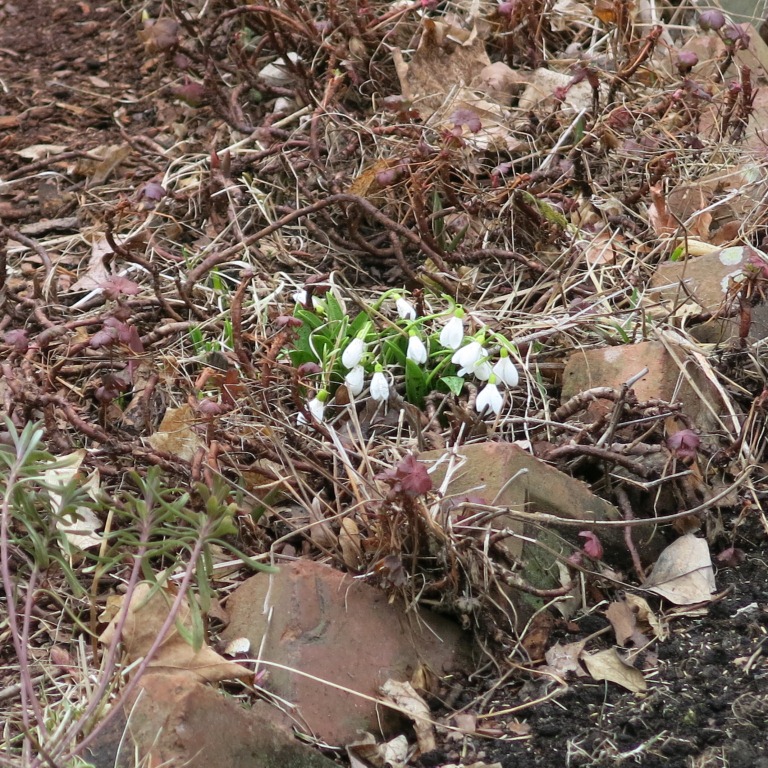
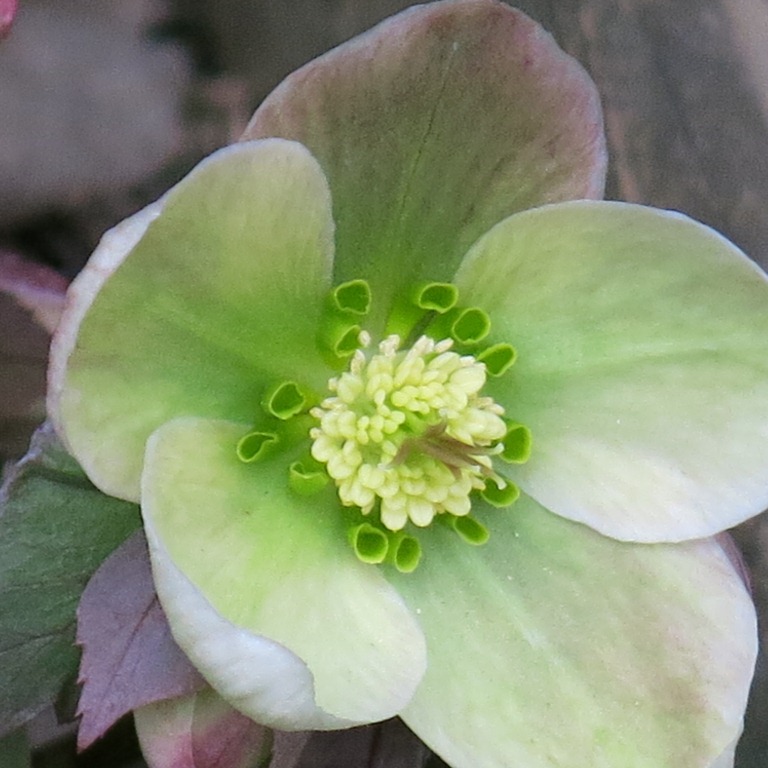
Much still needs doing but at least a good start has been made. I’m loving waking up everyday to see what else is in bloom. The iris reticulata are shyly joining the hellebores, crocus and snowdrops. I see the tight scilla buds waiting in the wings. The daffodils up close to the greenhouse will open any day now. One by one the plants awaken. Soon, there will be a profusion of flowers and I’ll be in my element. This is what I live for.

Update on the mice attack on the espalier: some of the Creeping Jenny planted along the side path, had gone rogue and crept on to the ground beneath the espalier. I was well aware that there should be nothing planted beneath the fruit trees but the chartreuse creeper looked so darn charming scampering over the river-rocks that I’d let it be. Well, no more. All undergrowth has been removed. Plantings in such places, translates to havens for moles and voles.

Only once the hot weather arrives will we know which trees have been decimated by the mice. Due to reserve nutrients, they will look fine and even flower in spring. I have yet to do a little digging around to see if the mice have been nibbling at the roots. I’m still screwing up the courage to do this investigation. It is heartbreaking to see any tree suffer. For now, the espalier will be fed a root fertilizer and as a further effort to direct all energy to healing, I intend to remove all fruit buds after the flowering. This year, the espalier will be in an infirmary of sorts. Trees that are at major risk will be ‘nursed’ with a bridge-graft – something I’m only just learning about. It is apparently very effective in saving fruit trees but not at all fun or easy to do. I see this crisis as I try to see all things in life. They arrive because there is something I must learn from them.
I’m learning, I’m learning.

Reminder: My garden is open on May 10 from 10 am – 4 pm. Rocky Hills from 2 pm – 4 pm. www.gardenconservancy.org/opendays

Creeping Jenny on sidepath and beneath espalier

Creeping Jenny on sidepath and beneath espalier


So charming right? Well, all that pretty on the rocks had to go.

So charming right? Well, all that pretty on the rocks had to go.


All clear of undergrowth.

All clear of undergrowth.


Primroses with daffodils in pots
Crocus
Pansies
Early, small bulbs in the meadow.

Early, small bulbs in the meadow.


Daffodils by the greenhouse.

Daffodils by the greenhouse.


(c) 2014 Shobha Vanchiswar

[do_widget “Blog Subscriptions (Jetpack)”]