Melting Into Spring

I hope I’m not being too premature in saying the the Great Meltdown has begun. In the past week, as temperatures have risen, the height of the accumulated snow has dropped. That is good news indeed. As long as this pattern is kept at a steady pace, the ground will thaw in time for mid-April planting.
Now that day light lingers past the early evening and we officially ring in spring this Saturday, like the rising sap, my gardening spirits are on the ascent. What a wonderful feeling!

The light seems brighter and clearer and there is a distinct freshness to the air. Soon the earthy aroma of an awakening world will call us into action. I notice that the magnolia down the street is wearing velvety plump buds in abundance. The birds sound like children being let out from school for the summer – giddily cacophonic. When I took a walk this morning, I had to laugh out loud at the mad chatter. Are they catching up on their winter doings, making plans for nest building, baby raising, food sourcing? I’d so love to know what exactly the excitement is all about. I feel a bit left out.

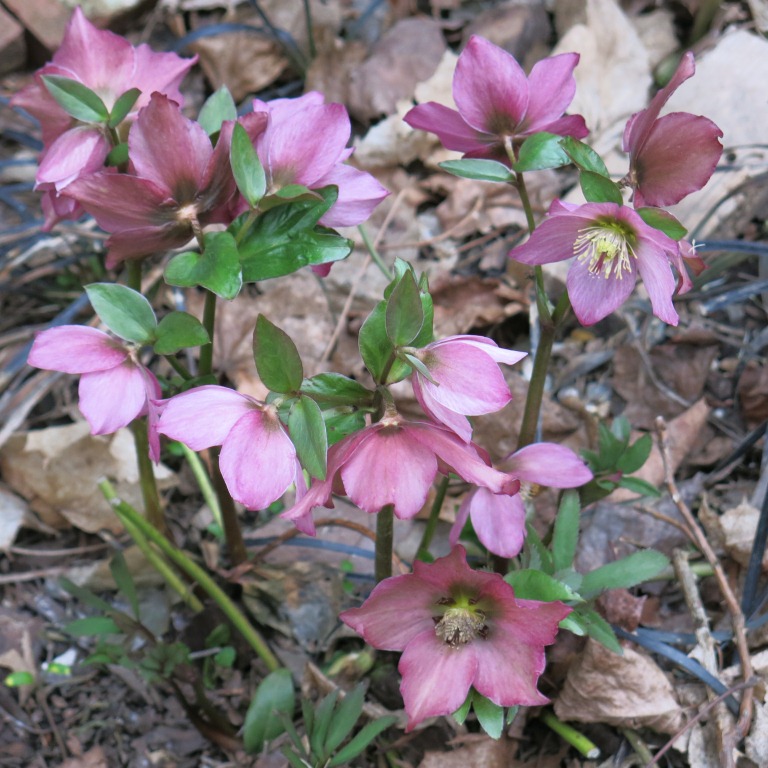
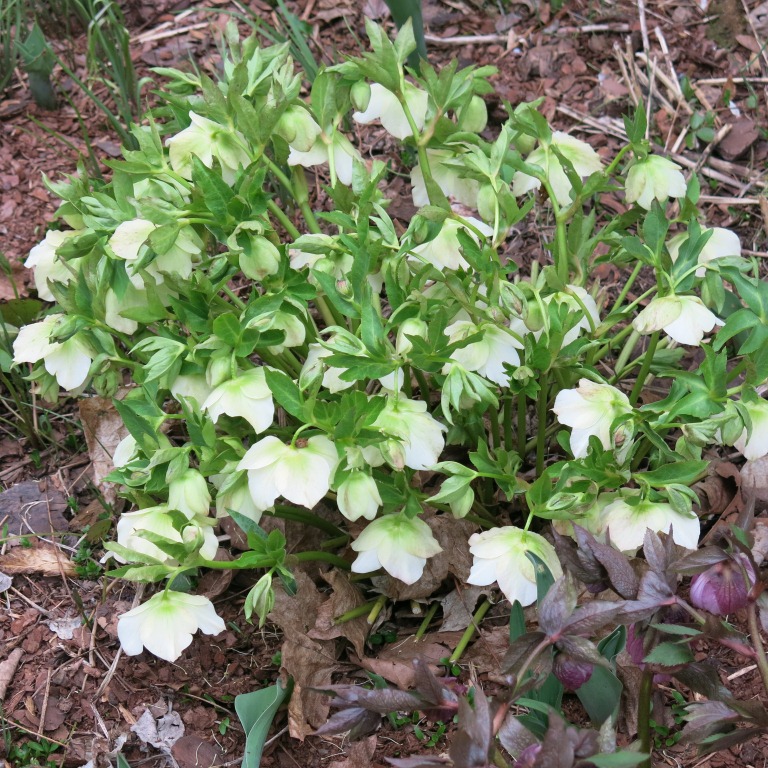
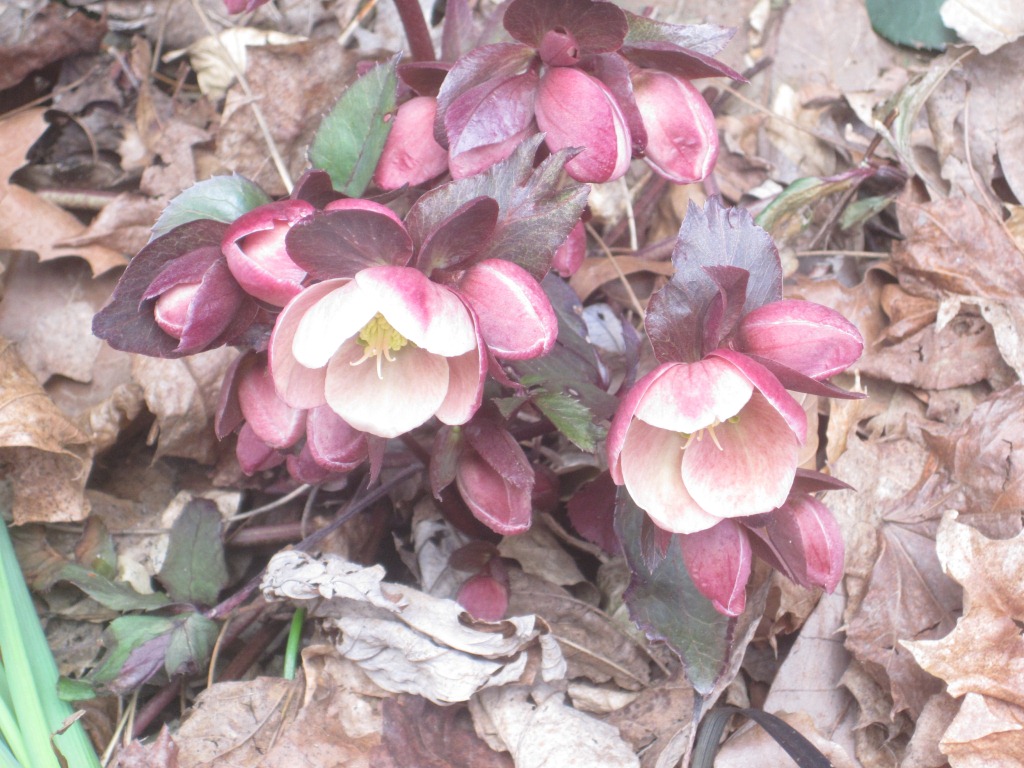
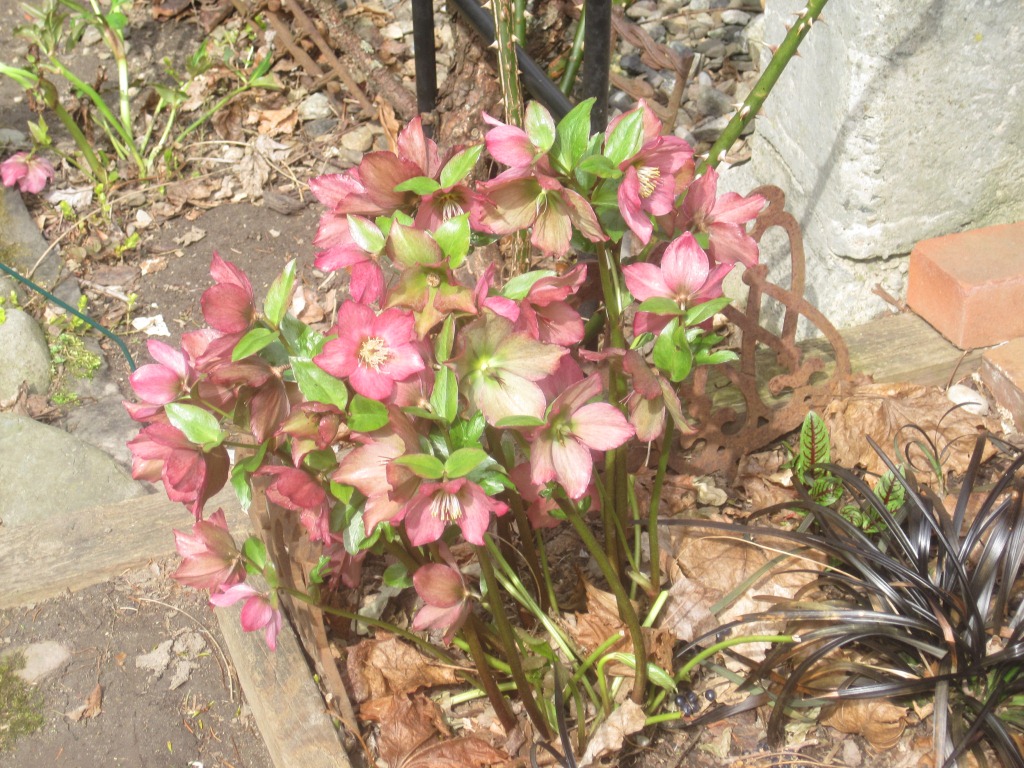
A trip to the local nursery is in order this week. Shipments of pansies have begun arriving and I’m eager to pot some up to get the season started. They will be the warm-up act for the early bulbs waiting under the departing snow. For certain the hellebores are also sporting shy buds that will be coaxed into blooming as soon as the sun smiles on them. I imagine I can feel the impatience of the crocus and snowdrops trying to push through the still unyielding ground.

If the December holidays are a time for peace and joy, then this period of rebirth is one of hope and aspirations. As gardeners, we get to start over. Past transgressions and failures are forgiven if not forgotten. We can try again. All is possible.

Although no big projects are in the offing, there is plenty on my to-do list. As eager as I am to get started, I’m savoring these days of promise. When all wishes are realized and no failures are on the horizon. One envisions perfect weather and other conditions. A state of high-mindedness and magnanimity is in place. One feels kind and generous. I’d like to bottle this sense of unbridled optimism. It would fetch me the fortune I require for the champagne dreams I have for my corner of paradise. And for so much more. Sigh.

For the moment, I revel in this bliss. It is enough. We are blessed to be gardeners.

Happy Spring One And All! Lets do our very best this year.

Under The Snow

Under the pile of quilted snow
the snowdrops stir
Restless green ready
to meet the golden light
of a newly hatched world.

Shobha

Crocus pushing through

Crocus pushing through


Tulips spearing past the snow

Tulips spearing past the snow


Forcing magnolia

Forcing magnolia


Hellebores coaxed awake

Hellebores coaxed awake


Snowdrops

Snowdrops


(c)2015 Shobha Vanchiswar
[do_widget “Blog Subscriptions (Jetpack)”]
View Finder

IMG_3000It has been a challenging winter. Even though spring is a mere two weeks away, it will be a while before the deep snow has melted and fresh earth will emerge in sight. At this point, staring at the white expanse has become tiresome – is there anything living underneath? I’ve certainly been doing my share of staring.

Given our severe winters, the landscape is prone to being inundated by snow. While one may read about resisting cutting back plants such as ornamental grasses and other perennials in the autumn and keeping them to adorn the winter scenery as well as provide food for the birds, the reality is that they will be buried quite early by snow. Nothing will be visible enough to serve any purpose. Come spring, there will be the unpleasant chore of clearing the sodden mess.

Instead, I’ve found that the hardscaping and trees play a prominent part in relieving the monotonous white of winter. Different elements can be incorporated to give depth, interest and visual texture in the garden. Now is the right time to consider what we can add – treat the snow like a blank canvas!

In general, these elements are important through all the seasons but I’m going to focus on some points just for this snow burdened season. So we can feel that much more excited about the scenery.

Boundaries can be well used to make a winter-scape alive with pattern and shapes. Depending on the height and material used, snow will reveal new designs and direct our eyes to look at the familiar in a new way. Ironwork seems obvious – the curls and swirls will work nicely against the snow. But even humble wooden fences can rise to the occasion. Hedges take on unique organic shapes that imitate mounds and bluffs under thick coverings of snow. Undulating forms present artful chiaroscuro.If you can, consider your boundaries – while they are meant to contain and limit, they can have other expansive uses.

If one is fortunate to have a pond or stream on the property, then the feature guarantees an escape from monotony. Reflections on the water, visiting wildlife, icy sculptures formed by the wind on the water and the sounds of water freezing and thawing all contribute to making such an ecosystem a world unto its own. To enjoy them in winter, make sure they are visible from the house and somewhat accessible to walk to even if one needs to wear snowshoes. A stroll to the water can be a part of a mindful, meditative practice. A quick getaway from the busyness of our days.

There are many choices of trees and shrubs that provide year round interest. Their shapes, the colors and patterns of bark, deciduous or evergreen, are all factors to take into account. When planting in spring or fall, factor in how you’d like to enjoy the view in winter and situate them accordingly. It will upgrade your cold season vista.

Gates and railings also enhance the snow-scape. From ornate designs traced by the snow to more modern shapes, these seemingly dismissive elements can add just the right flourish.

Sunlight, whilst not particularly in ones power to regulate, casts stunning shadows and designs on the snow. A humdrum expanse can be transformed to stunning by sunshine. Take this into your plans when installing any of the elements mentioned above. The contrast of dark shapes and shadows against the pristine white is pure drama.

Finally, something as simple as a bird-feeder or two will bring to life any garden. The avian activity will entertain as much as they will add beauty whilst serving the birds much needed sustenance. Boring will be a forgotten word.

We cannot predict if this winter is a sign for future winters to come but, at least we can be creative about how we cope no matter what. With grace, beauty and forethought.
IMG_7865
IMG_7863
IMG_2392
IMG_2393
IMG_2395
IMG_0234
IMG_0398
IMG_0447
IMG_8274
IMG_1389
(c) 2015 Shobha Vanchiswar
[do_widget “Blog Subscriptions (Jetpack)”]
Spring Dreams

It is SO cold in the northeast! A banner winter. Today, the streets are sparsely populated because who in their right mind would venture out without very good reason? Even the birds are laying low. Somewhere safe and cozy I hope. As the wind blows the snow into a mad frenzy, my housebound self is working to keep calm with visions of spring.

The hyacinth bulbs cooling in the refrigerator since early November, have been brought out. Sitting pretty in their jewel-hued glass forcing vases, they’re a sight to please anybody. Each day I glimpse a teensy bit more of the sap green, arrow-like tips emerging. Does my heart a world of good.
Meanwhile, the assorted amaryllis are still going strong. They are so well worth the investment I made last fall. Since late December, I’ve been enjoying their blooms and they are not even close to being done yet. Apart from keeping me in good spirits, their exuberance often serves as muse to my art.
It isn’t only the flowers that bring so much joy. The very anticipation of them as I observe daily the emerging buds and leaves is absolutely life affirming. So full of promise and beauty. I sincerely hope you too are celebrating your days with such living treasures.

Feeling buoyed by the springlike atmosphere indoors, my thoughts naturally drift to the possibilities outside. Nothing big is planned as other non-horticultural happenings take priority this year. The modestly sized garden is already intensively planted but as we all know, there is always room for a few more. So, I’ve ordered a blueberry bush that seems perfect for my plot. It is the variety BrazelBerries Blueberry Glaze. Only 2-3 feet tall with glossy, dark green leaves and pink flowers in the spring, it already appeals to me. The bush can be clipped like boxwood so one foresees uses for it in more formal locations. The berries are supposed to have an intense flavor – I can almost taste them over Sunday pancakes and yogurt parfaits in the summer. I’m looking forward to getting to know this future resident in my garden.

I’m now contemplating ordering a pink lilac that reblooms. This too is compact in size. Only 4-5 feet tall. Its pink, heavily scented flowers bloom in May and then intermittently till fall. I’m pretty sure I can squeeze this gem in somewhere bordering the meadow. Pink Perfume belongs to the Boomerang family of reblooming lilacs.

Creeping phlox (P. subulata) to replace the aging, straggly ones in the checkerboard garden have already been ordered from my local nursery. As are the replacement ferns and heuchera for the vertical garden. Vegetable and flower seed packets are looking attractive in their tray on the dining table as they await my attention in mid-March. They remind me that no matter what, life goes on and spring is on its way.

What are your dreams for the garden? I’d love to hear about them. Please share any suggestions, ideas or thoughts!

Hyacinths
IMG_3011
IMG_4845
IMG_3478
IMG_3479
(c) 2015 Shobha Vanchiswar
[do_widget “Blog Subscriptions (Jetpack)”]
Winter Weary

Are we all in agreement that this winter has tested our patience, endurance and good will? Snow, ice, high winds, freakishly low temperatures – you name it, we got it. Cabin fever has set in. Expressly manifested with bouts of grumpiness.

I’ve heard from many that they’re going stir crazy as even winter walks are hampered by dangerous terrains of ice and bitterly cold temperatures. So what’s a person to do? Take heart.

For one thing, we are past the half-way point of the season. Doesn’t sound encouraging enough? Observe how the days are lengthening – the sun is setting later every day. The light at the end of the long winter tunnel is distinctly visible. We are headed towards it!

At the beginning of winter didn’t you have a list of sorts of all the things you hoped to do in the ‘quiet’ months? I did. Well? How has it been going? Not as well I’d hoped. I started off okay but then I allowed a certain apathy to set in and did not accomplish as much. With just about six weeks to go till we officially transit to spring, I am determined shake off the lethargy.

A week ago, I placed my plant order at my local nursery. This is only necessary if one needs a large number of a particular plant or something very special. Otherwise, just keep a list going and purchase as soon as the nurseries are ready with their season’s inventory. But get that list done! Right away.

Seed orders can be placed now. Peruse the catalogs and websites. Decide what you’d like to try out this year, plan on repeat favorites too. While you’re at it, get all the supplies you need for seed starting. Growth medium, seed trays, Gro-lights etc., Have tools sharpened. Replace lost or broken ones. Draw up plans and designs for new beds and gardens. Take note of all the steps needed to make them a reality. In other words get yourself as ready as you can. Once the thaw occurs, you will be prepared to move into the garden at once.

How about the reading you thought you’d get done by the fireside? It’s not too late. I’ve started making inroads into the stack of tomes I’d set aside as well as the few scientific papers I thought would be interesting. Nothing like emerging from the depths of winter feeling a bit smarter. Consider all the impressive pearls of wisdom one could drop at summer soirées.

You did say you were going to eat healthy this year right? Maybe grow some of your own veggies? What are you waiting for? Work out plans for a potager – start simple. Maybe just salad greens, Swiss chard and herbs. Research and try out recipes. Focus on a few for each season so you are eating in rhythm with nature. Use the snowbound days to get into this habit. There are plenty of delicious, healthy, easy recipes available on the Internet.

Looking ahead to events and deadlines for projects, this is an excellent period to tackle all the small details that often get overlooked in the rush that occurs nearer those dates. Vacation plans and reservations, graduation/anniversary celebrations, upcoming lecture and exhibit commitments ( think slides to choose to present, making archival prints to offer at the exhibit, contact list for publicity, new business cards), subscription and membership renewals to organizations that enrich our lives, schedule meetings and appointments for ongoing projects, potential projects, physicals and other routine check ups, research big purchases to be made in the near future such as cars, appliances and homes, get a head start on taxes. See? There is plenty to keep one fully occupied! And super-organized at the end. Don’t forget to thank me at that time.

So as the snow continues to come down soft and furious, I’m deeply grateful for this span of weeks to do the things I complain I never have the time to do right. Watch out spring, here I come!

NYC spokesperson

NYC spokesperson


IMG_8344
IMG_8092
IMG_0234
IMG_0399
(c)2015 Shobha Vanchiswar
[do_widget “Blog Subscriptions (Jetpack)”]
Ridin’ The Storm Out

Storms make the oak grow deeper roots – George Herbert

With a two day snow storm underway, my thoughts have rested mostly on the outdoors. Did I protect the vulnerable plants properly? Were the roses pruned so no limbs are in danger of breaking or tearing in the high winds swirling around? Are the hydrangeas going to be brave and not succumb like they did last winter and petulantly produced no flowers in the summer? Will the espalier be safe from the rodents this time around? I am fervently invoking every higher power in the universe to please, please safeguard my precious garden.

Storms are inevitable in any season. Hurricanes bringing lashing rains, blizzards delivering record snow, gale force winds, damaging sleet and hailstones are all events one experiences at one time or other. However, these past few years have brought more violent disturbances of the atmosphere than before. Extreme temperatures have not helped either. I do believe it is time we accepted that this erratic weather pattern is going to become the norm. Better we seriously buckle down to taking the right actions to protect our gardens before more loss and damage is incurred.

So, lets start a check list:
Design the garden with storms in mind – obviously, this is best done when you are starting from scratch. But, for most of us, it means that from now on, we must purchase plants that are hardy and have characteristics that make it more capable of coming through storms. Deep roots, tolerant of very low temperatures, species that are likely to shed leaves quickly in high winds so the branches are less likely to break from the weight of wet leaves. Flood tolerance might be a requirement if your land is prone to them. Red maples, cypresses and others can withstand a variety of water conditions. If one lives along the coast, salt tolerances from surges might be a necessity. Ascertain the mature size of trees and shrubs so there is no danger of problems with buildings, power lines and fences in the future. That native species do best cannot be overemphasized. Seriously.

Stay on top of maintenance – once the most suitable plants are in place, taking proper care of them is of the highest priority. This is a year round task. Encourage healthy root systems. Stake wherever required, prune diligently, fertilize and water as needed, weed, clean up, cut back and, as much as possible have good air circulation between the plants. Remember, over-watering or over-fertilizing will lead to weak, shallow roots. Make sure that you have a practical plan to protect items like furniture, barbecues, pots, statuary and such when anticipating bad weather.

Check the garden every season to be sure trees and shrubs are trimmed and shaped so they not only look their best but are safe in storms. Thinning the foliage will permit winds to go through the branches as opposed to pushing against the growth and possibly uprooting them. This selective pruning is a practice best initiated when the plants are young.

When getting any hardscaping work done, do not cut away at tree roots as this can destabilize the tree when a storm hits. You are better off removing the tree. Position it elsewhere if that is possible. On the subject of hardscaping, keep all structures in good repair. Loose stones, cracked walls, rotting wood spell disasters waiting to happen.

Keep the garden free of leaf and twig piles that can choke storm drains or become harmful missiles when winds pick up.

When a storm is imminent – the list of chores is of course dependent on the season.
Mow the lawn before the storm. It’ll be easier to clear debris after.
Harvest all ripe fruit and vegetables. It might at times be prudent to pick off the unripe fruits if there is danger of them becoming weapons for rowdy winds to hurl around. Cut flowers in bloom to enjoy indoors. Seed pods are also worth picking off for two reasons. One, they can be dried and saved for new plants and two, will not be scattered by the wind where they might sow themselves at random and become a nuisance.
Secure or bring in all pots. Likewise, keep all outdoor furniture from harm.
Stake all vulnerable plants.
Use sheets of plastic or fleece to shelter plants and statuary from cold snaps and sudden frost.
Keep snow shovels, deicers (preferably the least toxic variety), grit or sand, flashlights, batteries, candles, radio and, water handy.

After the storm – do not be hasty in trying to set everything right in the garden. Immediately after violent weather, the plants will most certainly look tortured (ever ridden in a convertible with hair loose and top down?). Give the garden a little time to recover some composure. You will often find that the damage was not as bad as first perceived.
The most immediate task is to clear debris from the lawn and beds.
Check for damages. This is the time to note what was neglected, what was inadequate and what simply failed. Plan repairs, remedies, replacements and, removals as needed.
If a tree was toppled and you think it might be uprighted and saved, keep the exposed roots moist and protected till the chore can be accomplished. Very probably some sort of additional help by way of expert action and tools will be needed.
Remove damaged limbs and branches. Give the plant time to gain back its health.
Fallen trees – if the tree has no chance of recovering, clear it away. If they have fallen in the woods or someplace away from scrutiny, they can be left as is to support a population of new vegetation and critters and eventually it will decompose into the soil thereby enriching it. Otherwise, have the tree cut up and moved away so that whatever was damaged in the fall can be taken care of.
Branches hanging from power lines must be left to the power companies to deal with.
It is worth your time and money to get the advice of an arborist whenever there are trees in question.
Decide what plants did well and what did not. Rethink your planting selections.
Any hardscaping damage should be similarly addressed. Timely action is the solution.

Now sit back and relax. The ride might get bumpy but you’ve done your bit.
Here are images from previous storms:
IMG_1388
IMG_1404
IMG_7185
IMG_7182
IMG_0398
IMG_0446
(c)2915 Shobha Vanchiswar
[do_widget “Blog Subscriptions (Jetpack)”]
Dancing With Goats

Expressions such as In the arms of goats and Getting my goat have been rather unkind to the frisky, curious , diminutive ruminant. In this month, when Capricorn symbolized by a goat rules, I thought I’d make some amends.

It has been an increasing problem to get rid of fast-growing invasive plants that are seen thriving all along our highways and byways. Any gardener who has dealt with freeing the garden of poison ivy or bittersweet will know exactly how hard that is. Typically, chemicals and/or machinery have been employed. But in either case, there are associated concerns. Chemicals poison the soil and are not good at preventing seeds from sprouting. Machinery disturb the soil too much and that results in erosion.

Enter the Eco-Goats. They are a group of goats that are available for hire one week at a time from May to November to chomp and destroy the offending plants up and down the northeast United States. It is a simple, time-tested biological solution to a more recent biological problem. The animals are more effective than chemicals or other methods because, between their strong, grinding teeth and their multi-chambered stomachs, seeds cannot survive. So once the area is cleared by the goats, no seeds remain to grow back. I do believe the extra bonus is the goat manure – the soil gets enriched while the goats feast!

Machinery brought in to clear the invasives are often too large and in any case cannot be used in steep, wooded areas. Goats can. Tall goats can access plants more than eight feet high. A trip of 35 goats can demolish half an acre of thick vegetation in about four days. Which apparently, is about the amount of time it takes the creatures to get bored with eating the same food.

There are now several well-established goat grazing companies around the country. They have been employed to take on phragmites and kudzu swamped spaces and doing quite well. More and more invasive species are being identified as fodder for the goats. In many cases, insects and other bio-controls have failed to be effective. Super-goats to the rescue! An environmentally sound solution to keep the environment sound.

Now tell me, does this not put a smile on your face?

Having cleared an area in your garden, I have a plant suggestion for you to invite into it. Goat’s Beard! Aruncus dioicus is an American native and an excellent choice to back a border in semi-shade or in a woodland garden. Its large, feathery plumes of white flowers draw butterflies and other pollinators. In fact, it is a host plant to the Dusky Azure butterfly. It blooms in May-June. Growing to a height of 3-6 feet, it spreads slowly rhizomatously to create attractive patches of itself. Goat’s Beard grows well from planting zone 3 all the way to zone 8. Hardy and innocuous.

A rather fitting tribute to the lowly, lively goat I think.

goat

At a farm in Illinois. The goats are kept as pets.

At a farm in Illinois. These goats are kept as pets.


Goat's Beard

Goat’s Beard


Goat's Beard 2
(c)2015 Shobha Vanchiswar

[do_widget “Blog Subscriptions (Jetpack)”]
Sowing Dreams

We might be in the depths of winter but the gardening season has begun. It begins with dreams. Beautiful, perfect, improbable garden dreams. I cannot think of a better beginning.

As the seed and plant catalogs arrive, my heart beats faster. Excitement is high. The images in them are mouthwatering and every greedy instinct I possess kicks into high gear. I covet every plant. While I already know where and what is needed in my already burgeoning garden, I’m happy to fantasize impossible-to-grow-here specimens. For a few fleeting moments every so many hours, I envision a myriad combination of plants. In my day dreams I have assorted dogwoods, redwoods, elms and even coconut palms in my quarter acre piece of Paradise in the currently frigid northeast. Not all at the same time – even in my dreams I cannot be that wild. I imagine all sorts of shrubs and perennials and I’ve developed a a fun pastime where I mentally design beds of plants that will look stunning together but in reality cannot co-exist. Adonis lilies mingling with agapanthus in the perennial bed anyone? How about an allée of plumeria trees under-planted with peonies? I have a mental plan for a perfume garden surrounded by a low hedge of rosemary, an entryway arch supporting creeping, night-blooming jasmine and inside, there will be a pergola covered with wisteria. Paths of thyme will take me past lilacs and roses encircled by phlox, lilies and gardenias.

It is so much fun to go into these reveries. Abandoning all the natural restrictions, to create gardens in the air is positively therapeutic. It is the first step to creativity. But there is another big benefit. In the process of dreaming, one learns about oneself. The colors, patterns and shapes one prefers. Whether fragrance is important. The season that is most enjoyed and why. It can be eye-opening.

Emerging from it all can be the design for your actual garden. Taken by the idea of lavender borders but cannot grow the plant where you live? Perhaps Blue Wonder or Walker’s Low catmint will fit the bill. The look will be similar. Russian sage might work too. Another approach is to use your dream list and then substitute invasive non-natives with native alternatives. For example, get rid of Japanese honeysuckle and plant instead the American variety. For fragrance, add Clematis viorna. If you like the strong vertical style of Miscanthus species for fall/winter interest, go for our native split-beard bluestem or switchgrass or little bluestem or Indiangrass instead. Similarly, rather than the Burning Bush euonymus, plant oak-leaf hydrangea for fall color. All sorts of matters can get sorted out this way. The least of which will be your growing knowledge of innumerable plants.

I carry the newly arrived catalogs with me. Then I dive into mini-reveries every time I must wait and kill some time. Keeps me calm, feeling productive and makes time fly. So, go ahead, let your imagination run riot. Come spring, you’ll be well on your way to creating the garden of your dreams.
Flower seed packets:
Packets of flower seeds Vegetable seed packets:
Vegetale seed packets

I'm enjoying this bright beauty right now.

I’m enjoying this bright beauty right now.


Dream big and stay warm!

Dream big and stay warm!


(c)2015 Shobha Vanchiswar

[do_widget “Blog Subscriptions (Jetpack)”]
“What A Wonderful World”

“I see fields of green
Red roses too … “
– Louis Armstrong

Every muscle in my body aches. Even in a state of rest, supine in bed, I feel the pain. There is no inclination whatsoever to rise and meet the day. A slight move elicits a big wince. I’m willing to forgo coffee and brushing my teeth – its simply too much effort to get up. I’m well past being embarrassed by my admission. No, I’m not unwell. I’ve been planting bulbs. Hundreds of them. One by one because they go between already established plants and other older bulbs. Every autumn I endure this ordeal. Every year I question my sanity. And every spring I am so ridiculously ecstatic to see the explosion of bulbs lighting up the garden.

There are still more bulbs to plant but for those, I’m recruiting the help of my family. They have been given no choice. Threats, guilt trips and bribery work well. I highly recommend those measures. I’m too sore to be nice. Rest assured I’ll return to nice after the body has forgotten its present trauma.

The other fall garden chores are also well underway. Cutting back and clean up, leaf raking, pruning, lawn reseeding, getting pots of tender perennials and tropicals into the greenhouse, planting new perennials and shrubs, pruning, cleaning and putting away outdoor furniture, the list goes on. Its exhaustive and exhausting. Then why do we gardeners punish ourselves repeatedly?

Because we must. It makes us happy. Keeps us in balance. It helps us make sense of this complicated, amazing world. Creating a beautiful, productive garden is our calling. As a result, other people appreciate us for our equanimity.

In post-bulb planting repose, I’ve had time to contemplate this horticultural preoccupation. Connecting so directly with nature as one does when gardening has rewards that cannot be matched by almost any other activity. Humans need green spaces. Our survival depends on it. Its not just for our food but our general well being. Since time immemorial, cultures everywhere have promoted the benefits of working or being in nature. At some level we have understood this need. There is no argument against the compulsion we have to seek our rest and recreation outdoors. It simply is.

Bad moods are banished after a turn in the garden or a walk in the park. Learning from personal experience, I’ve often dealt with the resident teenager’s age-appropriate histrionics by slyly getting her to do garden chores like weeding and watering. Her initial complaints, loud as they are, mean nothing to me. The child that returns indoors is invariably a transformed one.

I recently had to go out of town and was put up in a ‘resort’ of sorts. This place was vast – two thousand rooms, a large conference center, a full spa facility, seventeen restaurants, multiple shops, even a ‘riverboat cruise’ in a man-made ‘river’ that covered 4.5 acres. It had gardens, waterfalls and fountains. And all of this enormous complex was completely roofed over! There were well concealed vents that blew air to simulate a breeze. I found this place terribly disorienting. I was supposed to feel like I was outside but was instead in a bizarre world indoors. Most significantly, the painstakingly created gardens lacked vitality. After all, where were the sounds and activities of the birds, bees and butterflies? Where was that distinctly earthy aroma assuring me that worms and microbes were busy at work? These gardens of living, mostly tropical plants might as well have been fake. My mind and my heart could not, would not accept this make-believe world. There was no fooling them. It was a very unsettling experience. Like a newly caged bird, I got anxious and couldn’t wait to break free.

Lately, researchers have studied the benefits of green spaces. The anecdotal has moved to the scientific. More credible that way. Several studies have concluded what gardeners already knew – there is no doubt that spending some time in nature everyday considerably improves our health – mentally, physically and emotionally.

One study found that living with green spaces has a long-lasting positive influence on people’s mental well-being. Compared to the short term boost from pay rises and promotions, the positive effect from being in nature has a sustained, long term impact. Levels of anxiety and depression were reduced. The findings appear in the journal of Environmental Science and Technology. What is seen is that even after three years, mental health is still better which is unlike many of the other things that we think will make us happy.

So coming back to my current status of muscles in agony and reluctance to move, I admit that my spirits are high, my mood is upbeat and I’m already planning future projects in the garden. I’m also harboring the fantasy that the aforementioned body parts will shed fat, get toned and move like they used to twenty years ago. Thats the other thing – gardeners are huge dreamers.

Enjoy the images of New York City getting into the Halloween spirit:
NYC Halloween 1
NYC Halloween 2
NYC Halloween 3
NYC Halloween 4
NYC Halloween 5
NYC Halloween 6
NYC Halloween 7
NYC Halloween 8
(c)2014 Shobha Vanchiswar
[do_widget “Blog Subscriptions (Jetpack)”]
To Hire Or Not To Hire – Part II

How often have you wished you had a cook, chauffeur or a general dogsbody to help you with the tasks of the day to day? An assistant to keep up with the paperwork. Someone to pick up the dry cleaning, getting the dog bathed or stocking up the refrigerator would be nice. Admit it, it has crossed your mind numerous times right?

The same happens in the garden. Busy schedules and/ or aging bodies could do with a little help. Keeping up with the seasonal demands in the garden whilst keeping abreast with duty calls elsewhere can be quite challenging . Recruiting the assistance of a gardener might be in order.

In suburbia, the sight of a team of men spilling out of a pick-up truck, unloading tractor mowers and powerful leaf blowers is as common as pigeons flocking in Central Park. The ‘mow, blow and go’ outfits fulfill very adequately the basic requirements of suburban living – a pristine property mostly displaying a swathe of green lawn. But a garden is more than lawn isn’t it? It has trees and shrubs, beds of flowers, vegetable plots and areas to sit and enjoy the beauty of nature. It is home to birds, butterflies, toads and other critters. A garden is a complex, diverse world, the upkeep of which involves watering, weeding, planting, fertilizing, pruning, cutting back, propping up, training, digging up, repositioning, composting, raking and a few other chores. All the while keeping it beautiful, productive and functional.

The English, who have a longstanding garden tradition, routinely employ a ‘jobbing’ gardener. This is an individual who has garden skills and can be relied on to take care of specified jobs. He/she can be hired for a few hours everyday or a couple of days every week. You tell them the job that needs doing and they do it. In the United States, such a person is not so commonly employed. People with the means tend to employ full time gardeners or the aforementioned weekly service. In my opinion, for someone who is an active gardener but needs extra hands, a jobbing gardener is a godsend. The peace of mind in knowing a task will get done correctly is invaluable. One stays involved with the garden but has the satisfaction that nothing will be neglected because attentions had to directed elsewhere.

Before you employ a gardener, consider what needs doing. These can run the gamut of chores you cannot do, don’t want to do or don’t have time to do. Depending on garden needs and available budget, a decision must be made to hire an experienced gardener or a novice. The former can pretty much do all or any of the work a garden needs without supervision while the latter will require some oversight. Your call.

Next, decide how often you need garden help. Seasonal or regular year-round or single project. Obviously, the expense of hiring depends on the level of experience the person has. How and when payments are to be made should be clear from the start.

Word of mouth is the most frequent way that gardeners get hired. Personal recommendations are best.
Self-employed individuals or a company depends again on what is required and how much you can spend. It is imperative to have trust in the person. Developing a good working relationship goes a long way in making a beautiful garden. Just like life.

More images of the season. All taken at Innisfree, Millbrook, NY this past Sunday. Hope you’re taking the time to enjoy the autumn wherever you are.
Innisfree 1
Innisfree 2
Innisfree 3
Innisfree 4
Innisfree 5
Innisfree 6
Innisfree 7
Innisfree 8
(c)2014 Shobha Vanchiswar
[do_widget “Blog Subscriptions (Jetpack)”]

To Hire Or Not To Hire

Part I
With autumn being the other planting season, it presents a good opportunity to scrutinize the garden. Review the garden’s layout, begin on a new design, expand the garden, consider adding or subtracting plants or simply decide to revamp the whole. Perhaps the existing garden has become too much to maintain or lost its former appeal. Life changes might demand changes in the garden. Beginning a new garden or trying something different can be a tad overwhelming. One can use some advice and help. It might be time to work with a designer and/or employ a gardener. But how does one choose the right one or know what to look for?

Lets first consider the possibility of working with a designer.
Going on the adage that two heads are better than one, a good designer will share ideas that you may not have thought of or even known of. No matter if you are a garden veteran or a hesitant beginner, there is value in receiving an expert’s advice. Design plans must be both practical and tasteful; suited to the client’s preferences, budget, style of house, lay of the land and regional climate. A good designer will steer you towards what is appropriate and point out what is not possible or plainly not right. A complete overhaul of the garden or a redoing of a section that has become irksome will benefit from some professional input. A designer’s horticultural knowledge and aesthetic sensibility should not be underestimated. Needless to say, both client and designer must be comfortable with each other.

Before you begin with a designer, take a hard, honest look at your garden. Own up to what is wrong and appreciate what you like. Evaluate what the garden means to you. Very importantly, determine your budget. Be realistic about it. This will later help the designer prioritize the things you’d like to get done in the garden. It works to your advantage to be upfront about finances.

Designers are used to hearing – “I don’t want to spend too much money but, I’d like …”. A litany of garden wants will then follow. For whatever reason, the uncertainty of plants thriving or simply not being aware that making a garden is akin to furnishing a house, people are loathe to allow a suitable if not generous budget. A designer is not out to squander money but knowing what you can honestly afford will make the difference between nice and amazing, pretty and inspired. They know where to cut corners and where to invest. Bear in mind, any additional requests will increase the original cost. Size and complexity will affect costs. Small but sophisticated can be more expensive than large and lawn-dominated. Big garden projects can be done in stages to suit budgets. In return, the designer should be clear about their fees and other expenses. Trust goes both ways.

In order to best serve you, a designer needs to really understand you and your needs. This will happen with briefs or questionnaires requested from you as well as face to face meetings. Your style, needs, use of garden, time in garden etc are all relevant to coming up with the right designs. If your goal is to out do the neighbors or welcome more butterflies, express that as well. In the end, your garden must be a reflection of you and not the designer.

Being frank about expectations is crucial. Its vital to establish what you want and how much you will do yourself. The three typical service options are –
1. Design only which entails a drawn plan, details of plants and structures i.e. soft and hardscaping information.
2. Design and implement which means the designer will her/himself install the agreed upon plans.
3. Design and overseeing. This last one means the client will hire the required labor (or contractor if necessary) and the designer will keep an eye on progress and make sure plans are followed correctly.
Whatever service you choose must be made clear from the start.

From redoing a single flower bed to creating interesting paths to remaking the whole garden, hiring a designer can be a real asset. Ask yourself how much it means to you to have a beautiful, enjoyable garden.

Next week, in Part II, I’ll discuss the ifs and hows of hiring a gardener. “Mow, blow and go” is not your only choice!

Enjoy these images of Fall:
Autumn window-box
Still life with apples
From the window
Woods
Autumn in the garden
(c)2014 Shobha Vanchiswar
[do_widget “Blog Subscriptions (Jetpack)”]