A Spring State Of Mind

Hallelujah, we’re back to more seasonal weather this week. The leaves are putting up a beautiful autumnal show, garden clean up is underway and, because gardeners are always optimistic and looking ahead, planting for spring has begun.

In my garden, all the tender perennials are tucked safely in the greenhouse which is filled to bursting. The meadow has got its annual mowing just in time for bulb planting. In the herb garden, apart from the still thriving Swiss chard, boxwoods and hellebores, the plants have been cut back. All that remains to be done here is the application of a good layer of compost mulch. The peonies along the side path have also been cut back. I have three new peonies waiting to be planted in the mix. In the front perennial beds, I’m letting the plants be for another couple of weeks. They look quite seasonal with the fading asters, the bright yellow foliage of amsonia, waving ornamental grasses and assorted seed heads.

All this work is leading up to the rather exhausting project of bulb planting. While the previously mentioned tasks signal the end of the growing season and the coming of winter, bulb planting demonstrates the certainty that spring will come again. Despite the guaranteed aches and pains that follow this annual activity, one cannot help feeling cheered by visions of happy bulbs sparkling and ushering in the spring. It is exactly such dreams that keep me going.

My order of about 700 bulbs arrived recently. The Eremurus I ordered require planting as soon as possible. The rest of the bulbs will be attended to in due course. While I absolutely crave the fox-tail lilies in my garden, my previous two attempts to grow them have been utter failures. Apparently, my garden does not meet their standards. This time will be my third and final try. I’m keeping fingers crossed tightly. I admit to a sense of desperation.

As promised last week, here are my tips for planting bulbs:

First and foremost, I order my bulbs by late June/early July. It allows me to go through the catalogs at a pleasurable pace and ensures that I get the specific bulbs I want in the quantity I want.
If you have not ordered any, local nurseries still have bulbs available. Hurry on there and get your share. No garden should be left out of a spring showing of bulbs.
Resolve to get your act together for next year’s bulb order.

When to plant : the rule of thumb is planting should happen after the soil temperature has dropped to about 55 degrees. In Europe, there is a timeline for different bulbs – snowdrops in early October, daffodils in late October, tulips in November, alliums in December etc but thankfully, here in the North-East, the various spring blooming bulbs can be done all at the same time once the temperature of the soil is suitable.

Select bulbs so that there is a sequence in the flowering. Starting with early bulbs like scillas and snowdrops to alliums and lilies into the summer.

Choose your bulbs wisely. No tulips in deer country but alliums and daffodils will do great. Similarly, don’t order small bulbs like scillas and snowdrops for areas thick with evergreen groundcover as the diminutive beauties will struggle to emerge through and gain visibility.

Plant the bulbs at the correct depths. Generally, that means three times the height of the bulb. When in doubt go deep. Except in the case of peonies and iris rhizomes – they need shallow planting or you will be rewarded with lush foliage but no flowers.

To achieve a cohesive yet dramatic look, order a larger quantity of of a few types of bulbs rather than a meager amount of a variety of them.

Invest in the right planting implements. It’ll make the work easier. Really.

The planting instructions that the bulbs arrive with are mere guidelines. I find it much more effective to plant my bulbs a bit closer than advised and in a mixed/scattered manner. In this way, I achieve a more natural, organic look.

To encourage reblooming and naturalization, after the blooms are done, let the leaves be. Do not braid them, tie them or remove them till they are completely yellow and done. Those leaves must be left to work hard to replenish the bulbs so they are fed and ready for the next time around.

When it comes to tulips, I consider them as annuals since most do not return the following year. However, I let the leaves die back and do not remove the bulbs. Every now and then, the tulips do make a comeback and gladden my heart no end. Restores my faith.

Enjoy my watercolor renditions of some favorite bulbs:

Hyacinth

Hyacinth

Tulip

Tulip

Daffodil

Daffodil

Scilla

Scilla

Crocus

Crocus

Iris reticulata

Iris reticulata

Lily

Lily

Iris

Iris

(c) 2016 Shobha Vanchiswar

[do_widget “Blog Subscriptions (Jetpack)”]


Thinking Spring In Fall

Thinking spring? Heck, this week sure feels like spring! And as if to defy the actual season underway, I have an iris in bloom. This plant has not bloomed in about three years. Seems as though it is staging its own version of a spring awakening. As puzzling as it might be, I’m thrilled to see the pale lilac hued flowers. Perhaps its cousins planted alongside that had inexplicably gone AWOL as well, will also make a comeback next year. I’ve missed these beauties and was only recently wondering if I ought to give up and order their replacements. I guess I’ll hold off that shopping spree.

The standard of three intertwined hibiscus is still flowering sweetly so instead of taking it into the greenhouse, I’ve brought it down to the terrace where I can enjoy it as I go about my chores.
The Heritage and Bonica rose bushes have a few flowers in bloom. At any other time they look their best when loaded in flowers but at this time of year, the minimal look feels all the more precious.
In the potager, the Swiss chard are going strong as are the collards. They will honor our meals until the temperatures plummet and does them in. I’m hoping this does not happen till December.
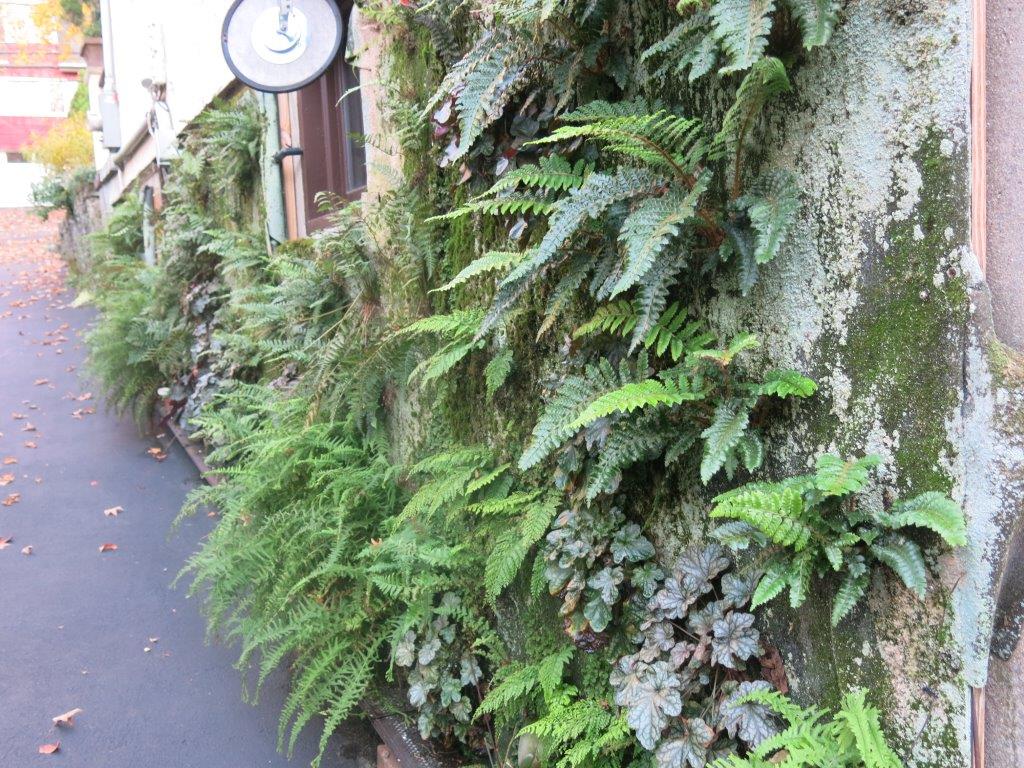
The vertical garden is continuing to look quite stunning. If only it was located such that I could place a seating area near it so one could admire it at length.

My rather large shipment of bulbs is due to arrive this week. Given the mild weather, I guess I’ll have to wait at least a couple of weeks before the planting marathon commences. The soil temperature is still way too warm. It needs to be 55 degrees and below for the bulbs to know not to start sprouting. Already my mind’s eye can envision the glorious blooms to come and my heart longs for that season.

With the asters and golden rods shining bright, the ornamental kale and cabbages prettying up the pots and the display of gourds and pumpkins serenading fall, the pansies, lone iris, vertical garden etc., are representing a whole other season. My garden is displaying a most wonderful split personality. I’m revelling in its humanness.

(Next week, I’ll go over the “rules” of planting bulbs.)

 I am participating in the Beaux Art show in  in White Plains, NY this week. Hope you can stop by!

White Plains:

16 Annual Art Exhibit
of the
Woman’s Club of White Plains
305 Ridgeway
White Plains, NY 10605

Wednesday October 19 2-5 p.m. Exhibit Viewing
Thursday October 20 2-5 p.m. Exhibit Viewing
7 p.m.-Artists’ Reception (open to the public)

img_0415

img_0444

img_0471

img_0472

img_0488

img_0483

Swiss chard

Swiss chard

Dahlia

Dahlia

img_0448

img_0490

(c) 2016 Shobha Vanchiswar

[do_widget “Blog Subscriptions (Jetpack)”]

Asters

Aster

Happy, hardy
freely clustered
Summer stars
scattered below
Butterflies gather
for astral encounters
From Peleides’ showers
till fall’s last glow.

Shobha Vanchiswar

If you have not as yet embraced asters then get going already! Robust, reliable natives that make fall shine. Low maintenance too. If I can remember, I cut back the plants by a third in July so the plants get bushy rather than leggy. Butterflies and bees of all kinds are drawn to them in droves. Every American garden ought to have asters.

The Aster is rightfully assigned as the flower for September. But oh! How it lights up October!

Note: I am participating in the Beaux shows in Dobbs Ferry, NY this week and  in White Plains, NY next week. Hope you can stop by!

Dobbs Ferry:

Dobbs Ferry Women’s Club House, 54 Clifton Place, Irvington, NY, United States

Public Viewing~Oct 14th / Reception & Awards ~Oct 16: 2PM-4PM

White Plains:

16 Annual Art Exhibit
of the
Woman’s Club of White Plains
305 Ridgeway
White Plains, NY 10605

Wednesday October 19 2-5 p.m. Exhibit Viewing
Thursday October 20 2-5 p.m. Exhibit Viewing
7 p.m.-Artists’ Reception (open to the public)

img_0475img_7573

img_7574

img_0818

Watercolor - Aster

Watercolor – Aster

(c) 2016 Shobha Vanchiswar

[do_widget “Blog Subscriptions (Jetpack)”]


Finding A Balance

Ah! The pleasures of autumn! What a difference a week can make. Since this past Saturday, it feels distinctly like fall. Crisp. That word defines the essence of the season. The air is crisp and cool. Crisp apples. Crunchy, crisp leaves underfoot. Even the light has a crisp clarity. I love it all.

Now that the greenhouse is winter-ready, the plants are slowly being moved in. Trimming, picking off dead limbs, washing plant and pot is time consuming. But there is a certain comfort in the ritual as it helps the mind adjust to the inevitability of impending winter. Preparing the plants for that season also prepares me. Inside the house, I’m getting out the shawls and throws, setting up the fireplace with kindling, logs and matches, placing fresh candles, pulling out cool weather recipes, putting away summer linens and stocking up on ingredients for mulled drinks and thick, smooth cocoas. Summer’s bounty is being stored as pesto in the freezer, large canning jars of thick, roasted tomato sauce and pickled cucumbers in the pantry, loaves of zucchini bread also filling the freezer, dried herbs refreshing the spice rack and surplus fruits twinkling in jam pots.

As I trim the plants, I indulge in memories of the recent summer. These are what keep me going when the winter gets unbearably long and severe. And when I’m full of such appreciation, the chores at hand don’t seem so tedious. Sometimes, life is all about tricking the mind. A shift in attitude can make all the difference between whining and celebrating.

I’m also adding plants in the garden – this is a great time to get mature plants into the ground. They’ll settle in nicely and be ready to start growing when spring comes around. I’m expecting my rather large order of bulbs in mid-October and so, I’d like to get all the other chores done before the bulb-planting marathon.

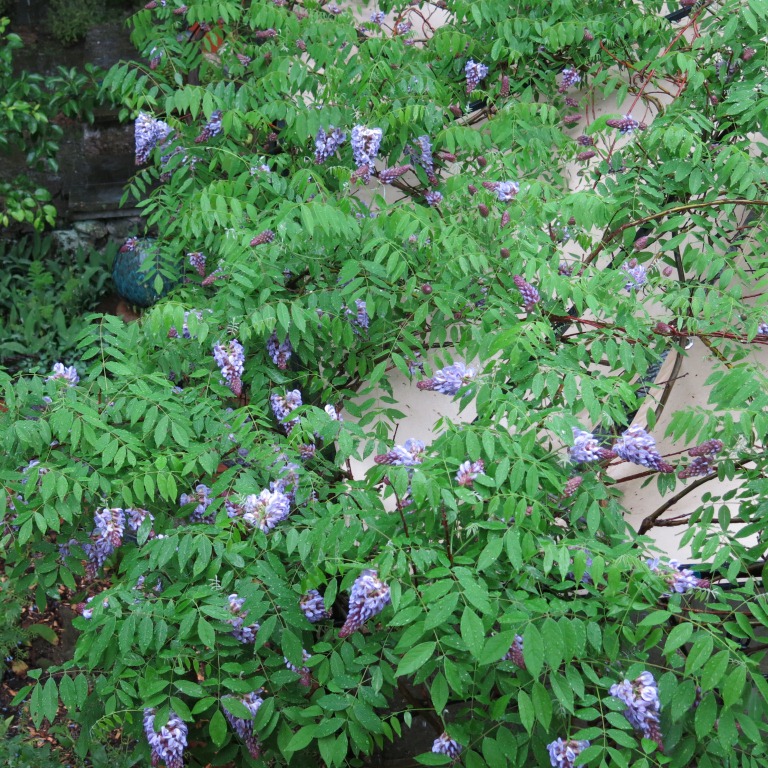
When the weather feels so perfect with just the right combination of sun and temperature, it is hard to get work done. It seems a shame to keep plugging away instead of hanging out with family and friends on the terrace. So, I’m determined to keep a balance. All garden work must cease by Sunday noon so we can sit back under the pergola with the sunlight filtering through the yellowing leaves of the wisteria, get the outdoor oven fired up and while away the rest of the day with gourmet pizza, drink and conversation. What a civilized way to get ready for the work week ahead don’t you think?

Here are a few images of things I’ve enjoyed this past summer:

How many tiger swallowtails can you count?!

How many tiger swallowtails can you count?!

The titan-arum

The titan-arum

img_1802

IMG_9707

Love this façade in down-town NYC

Love this façade in down-town NYC

Edible window-boxes. Beautiful too.

Edible window-boxes. Beautiful too.

Roasted tomatoes.

Roasted tomatoes.

One of several memorable farm to table meals

One of several memorable farm to table meals

(c) 2016 Shobha Vanchiswar

[do_widget “Blog Subscriptions (Jetpack)”]


Falling Into Place

Having been away a whole month, I confronted the garden with trepidation. I did have someone checking on things but as we all know, nobody can tend to one’s garden as oneself. What I see is that the garden does not look as awful as I feared but neither does it look as good as I’d like. So it’s been a matter of getting down to basic tasks like weeding, staking, cutting back and general tidying.

Those fundamental chores alone have got the place looking more attractive. But with autumn officially starting in two days, I’m also addressing seasonal work. The summer plantings in pots and window-boxes while still looking kinda okay were on the wane so they’ve been swapped out with fall plants. The fresh appearance has quite transformed the atmosphere – instead of seeming like it is desperately clinging to summer, it feels more ready for autumnal pleasures. My own reluctance to let go of summer has shifted to welcoming fall.

In the potager, cool weather greens such as Swiss chard were replanted. The collards, kale and arugula are still going strong so we can expect delicious, fresh garden produce well into late November/early December. Assuming of course we don’t get unexpected storms or blizzards. These days, who knows!

Just ahead of the much needed rain yesterday, the ‘lawn’ in front was raked, aerated and reseeded. This ought to have the grass up and growing before I need to tread on it to get the fall bulbs planted in the perennial beds in late October/early November.

It is too late to stake some of the plants and there are some bald areas in the perennial beds. Not the best sight for this street facing part of the garden but it can’t be helped. The drought like conditions and string of heat waves have slammed down some plants. I have no idea if they have it in them to return next year. I need to examine which plants still look good and plant more of them instead. I fear the climate shift is here to stay.

In readiness for cool weather, the greenhouse has been washed and cleaned. Starting next weekend, the tender perennials will be pruned, washed and moved into their winter quarters. While it might still feel like summer, the arrival of a severe frost in early October is not unheard of.

And so it will go as the weeks lead up to bulb planting and getting winter-ready. Lots to do. But, the quiet days of winter await. And once again, while we rest our bodies, our minds will be plotting the next growing season.

[ I apologize in advance for the photos being on their side to those of you who read my article on your phone or on Facebook. It happens when I take the photos on my phone instead of my usual camera and I cannot seem to fix the problem. Any advice?]

Note: This coming Sunday September 25, at the Concert Across America to End Gun Violence event at the FCC in Chappaqua NY. I will be reading one of my topical poems.It is at 4:00 pm and admission is free. Please come.

img_2228img_2227

img_2226img_2222

img_2217img_2235

(c) 2016 Shobha Vanchiswar

[do_widget “Blog Subscriptions (Jetpack)”]

Remembering August

Being fully present in the moment is something I consciously try to do at all times. And being present in the garden, in nature, results in such a sense of well being and connectedness to the world around us that I cannot imagine a day without time spent simply immersing oneself in it. Personally, being in nature, observing what is going on, appreciating the nuances and transitions, centers me in a way not unlike the way prayer or meditation works. It gives me the focus and energy to get on with my day and projects. At the risk of sounding clichéd, it makes me a better person.

Yet, the month of August, bathed in sunshine and wreathed in sunflowers can be a challenge to sit still and take it all in. Summer vacations, preparing for the start of school, grabbing time to make the most of the season often leaves one in a whirl of albeit fun activities but with no opportunities to stop and quite literally smell the roses. We pine for this month all winter long and then, when it is here, we are too caught up in the trappings of what we think we ought to do instead of simply letting ourselves quietly soak in the many delights only August can provide.

Now that the month is coming to an end, I’m determined to hold on to the memories of it. They’ll warm my heart on those days of winter when it feels like summer will never will come. I want to remember the mornings spent watching a young pigeon practicing to fly. From way on top of a white pine, it took brief sorties testing its wings and no doubt, testing its courage. With each attempt it went a wee bit further before returning to its perch to catch its breath and perhaps determine how to do better. Practice, practice, practice.

I want to remember the colors of August. Vivid yellow sunflower faces tracking the sun, plump tomatoes ranging from vermilion to Alizarin red, juicy peaches echoing the hues of the sun that ripened them, melons with flesh so sweet and so coral pink, figs in plummy purple bursting with goodness, skies awash in blues matched only by seas skirting inviting beaches, sap green basil leaves perfuming the very hands that pick them.

I want to remember the sounds of this special month. From the early morning atonal chorus of the birds to the ascending pitch of the cicadas in the sultry hours of the afternoon to, the clicks and the hums of the crickets and bees and finally to the soft whispers of moths and bats as they swoop and circle as dusk darkens the day.

I want to remember the warmth of the month when the skin can feel so hot that a plunge into a pool comes as a shock, the illuminated winks of fireflies keeping me company as I sit with that glass of rosé that goes perfectly with every summer meal, the clove-like fragrance of phlox glowing in moonlight, the soles of bare feet cooled by morning dew as they make their way to pick flowers for the table.

So many joyous memories! Please let me not miss a single one.

Enjoy some images of my August below!

Note: You can read about my latest visit with the children at Mukta Jeevan here.

Sunflower field in Provence

Sunflower field in Provence

Tomatoes ripening

Tomatoes ripening

Summer phlox

Summer phlox

August bounty at the farmer's market

August bounty at the farmer’s market

Zucchini blossoms galore.

Zucchini blossoms galore.

Zucchini blossom fritters stuffed with fresh goat cheese. Delicious!

Zucchini blossom fritters stuffed with fresh goat cheese. Delicious!

Figs, glorious figs!

Figs, glorious figs!

Red hot peppers

Red hot peppers

Trumpet vine

Trumpet vine

Spent sunflowers still charming enough to adorn this doorway

Spent sunflowers still charming enough to adorn this doorway

Blue, blue skies.

Blue, blue skies.

(c) 2016 Shobha Vanchiswar

[do_widget “Blog Subscriptions (Jetpack)”]


Bringing Summer To Her Senses

It is already week 3 of August. Summer is a hasting. Have you been making the most of it? Before another day goes by, lets promise ourselves to take in all the pleasures the season offers. High heat and humidity notwithstanding, there is much to savor and it’d be such a shame to miss out. After all, these are the memories one clings to during the seemingly endless cold days of winter.

For now, let’s think less about the chores both in the garden and out. Instead, give yourself the gift of being fully present in the garden. Soak in the the sights, sounds and smells. Absorb every exquisite detail, every last drop. Breathe deeply and inhale the season. Let all the warmth and colors course through your veins and nourish your soul. You will emerge a better version of yourself – I promise.

Enough said. Enjoy the images below. Be inspired.

Follow me on Instagram @seedsofdesignllc

IMG_9818

IMG_9725

IMG_9740

IMG_6995

IMG_7021

IMG_7025

IMG_7062

IMG_7109

IMG_7090

IMG_7149

IMG_3165

IMG_3508

IMG_3548

IMG_3961

(c) 2016 Shobha Vanchiswar

[do_widget “Blog Subscriptions (Jetpack)”]


Music In The Meadow Part II

The ongoing heat wave and drought like conditions that we are experiencing in my corner of the country, is a wake up call to how we use our land. Other parts of the country and indeed, the world, are also being confronted with devastatingly atypical weather. Unprecedented, destructive flooding/drought/heat – take your pick, it is happening. Gardeners must adapt to changing climates and lead the way in sound environmental practices.

That being so, creating native plant meadows is a timely subject to explore and implement.

While my own meadow project has been underway, the trend to create meadows has gained attention and dare I say it, popularity. When I first started my meadow over two decades ago, it was viewed as odd, messy and ‘hippy-like’. My compost bin and rain barrel were also tossed into that category. I even recall my attempts being described as quaint and old-fashioned. So, please pardon me if I feel vindicated now that meadows, composting and, catching rain water have not only become accepted but are official stamps of the environmental conscious. I think I’ve earned my smug face don’t you?!

In creating meadows, we are in essence, restoring a resilient landscape to support bio-diversity and creating a balance in nature. This equilibrium resists invasives, creates a healthy matrix and withstands fluctuations in the climate admirably. Native plants co-evolve with native insects and animals. Like a world class orchestra, such a meadow performs in complete harmony giving us the most uplifting, life affirming concert.

Here are the proven benefits of a native meadow –

There are fewer ticks. Out here, Lyme disease is a real and serious concern. As a result, homeowners feel justified in contractual agreements with landscaping firms to have their property routinely sprayed with chemicals to control the ticks. What they are not taking into account is that even the “organic” applications are not tick specific. All of the insect population is affected. One loses the good guys with every application. Thinking beyond the insects, the chemicals, organic and otherwise, ultimately get washed into the water table. Pets and children who play in the garden, roll on the lawn, nibble on plants are all coming in contact with any and all insecticides, pesticides and fertilizers. Shouldn’t that alone be a serious concern?
When the environment is in balance, the ticks are eaten by other insects, birds and animals. And that is how their population is well controlled.

Once established, that is as soon as the young plants are settled in, a meadow needs no further watering. Think about that.

At no point is there need of fertilizers. Not even compost. And the soil is never turned over nor is new soil introduced. The land is kept as it is. Imagine all the time, energy and dollars saved.

The meadow is cut down just once a year. Mowing becomes a non-issue. Now, traditionally, a meadow is burned annually in early spring. One needs a permit from the town and fire department because burning must be done correctly. However, if you live like I do, cheek to jowl with the neighbors, that is not an option. I do an annual mow down in the fall.
But, if you happen to live on a large enough property with neighbors at a proper distance, burning is much preferred and more effective. Weeds will be significantly reduced and even those that regrow, will be shaded out by the native grasses.
Here is an interesting fact – native plants burn well and burn gently. Those big conflagrations one envisions when we think of burning a meadow or field are created when non-native plants burn.
The dangerous forest fires that rage every year in some parts of the country are primarily in areas abundant with non-native trees and shrubs.

A thriving meadow is utterly beautiful. At every season it offers a different view. And oh the insect and bird life! Watching the wildlife is fascinating and often mesmerizing. It’s better than watching the Discovery channel!

Meadows are naturally productive and nutritious. All creatures benefit from them.

So, are you motivated to give up a part of your garden/property to a meadow? If so, start with small acreage. Learn the process.
Know your plants. Identify the natives, weedy non-natives.
Become familiar with water (rain, ground water flow) and reproductive patters, seed dispersal methods, animal habits.
Whenever one plant, native or non, appears to take over, that is a sign of imbalance.

We introduced the wrong plants, that means we can also remove them. If each of us commits to doing our part, we can restore the environmental balance. The parks, reserves and public gardens alone cannot carry the weight of safe-guarding this glorious land of ours. The responsibility rests on each of us.
We can and must do better than we have thus far.

Enjoy the photos I took recently of the meadow at Linda Horn’s in Spencertown, NY:

The native monarda is a huge draw for all sorts of pollinators

The native monarda is a huge draw for all sorts of pollinators

IMG_9814

IMG_9804

IMG_9805

IMG_9802

IMG_1782

IMG_1783

IMG_1788

(c) 2016 Shobha Vanchiswar

[do_widget “Blog Subscriptions (Jetpack)”]

Music In The Meadow. Part I

The meadow has been on my radar this year. And judging from the requests I’ve received, it seems so have many of you. Primarily, you have asked to know the full story of my meadow and what ever else I can share on that topic. Here goes!

Ever since I decided to do away with the lawn in the back garden about twenty years ago, I’ve pretty much let whatever grows remain as is. Except of course for scourges like garlic mustard. At the time, this was almost unheard of. I myself had never seen such a thing in a small, suburban garden. There was no handy literature on the subject available and it was way before Google. But I was very eager to try making a meadow ( of sorts). So I applied a dash of common sense and dab of creativity.

“ Like The Bumble-bee, What I Do Not Know Will Let Me Fly” Shobha Vanchiswar
Yes, I have often charged ahead based on that thought. Feel free to adopt it. It works.

The very idea of a meadow is romantic right? One pictures a spread of assorted wildflowers dancing in the breeze, butterflies flitting around, birds singing in chorus, the sun shining, a blue sky dotted with fluffy, blue clouds. All inviting one to run through it carefree and laughing. This is actually not far from the truth. A healthy, robust meadow is a habitat in balance. The diverse plants and animal/insect life make for a self-sustaining environment. So much more attractive than a lawn! How could I resist trying to create such a place in my corner?

Like I mentioned, I stopped mowing the lawn and simply let it go ‘natural’.It took a few years for the lawn to give itself over to new settlers. Much slower than I’d expected but I had to see what really would grow. Turns out lots of green things. Not familiar at that time with the many native, wild plants, I had no idea what was what. But I did know that for the most part, wild plants are generally not given to big, showy blooms. If one compares a wild monarda to a cultivated variety, you will see what I mean. So apart from the happy splash of dandelion yellow and ajuga blue in spring, my meadow appeared mostly green. I wanted a little more oomph.

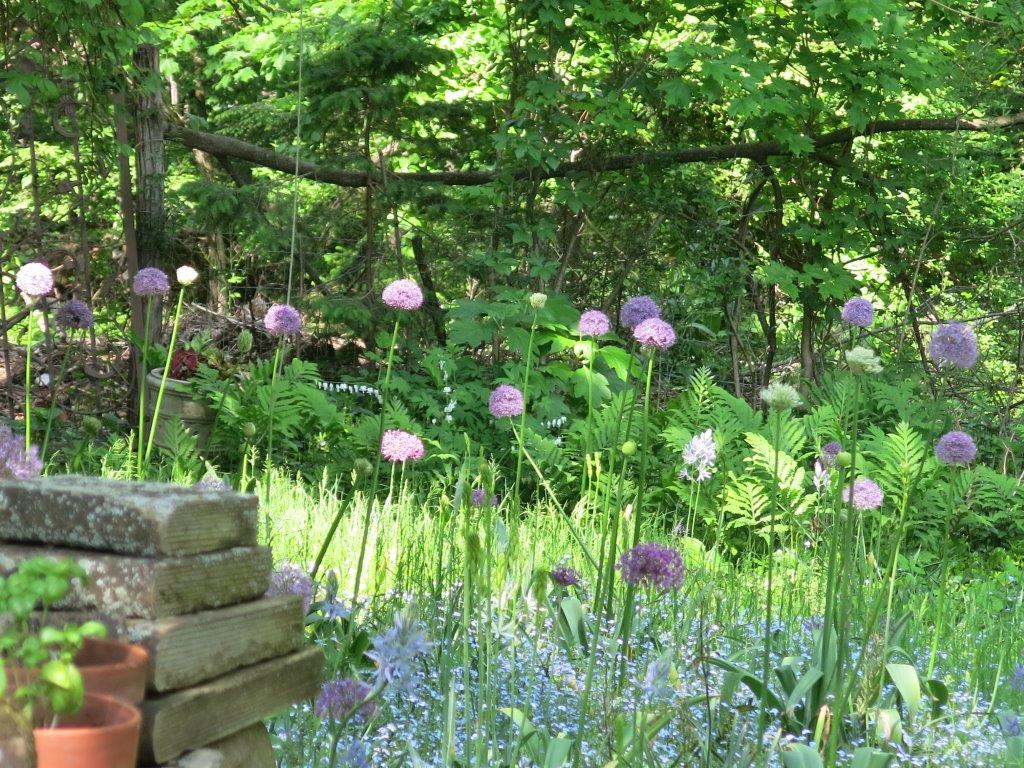
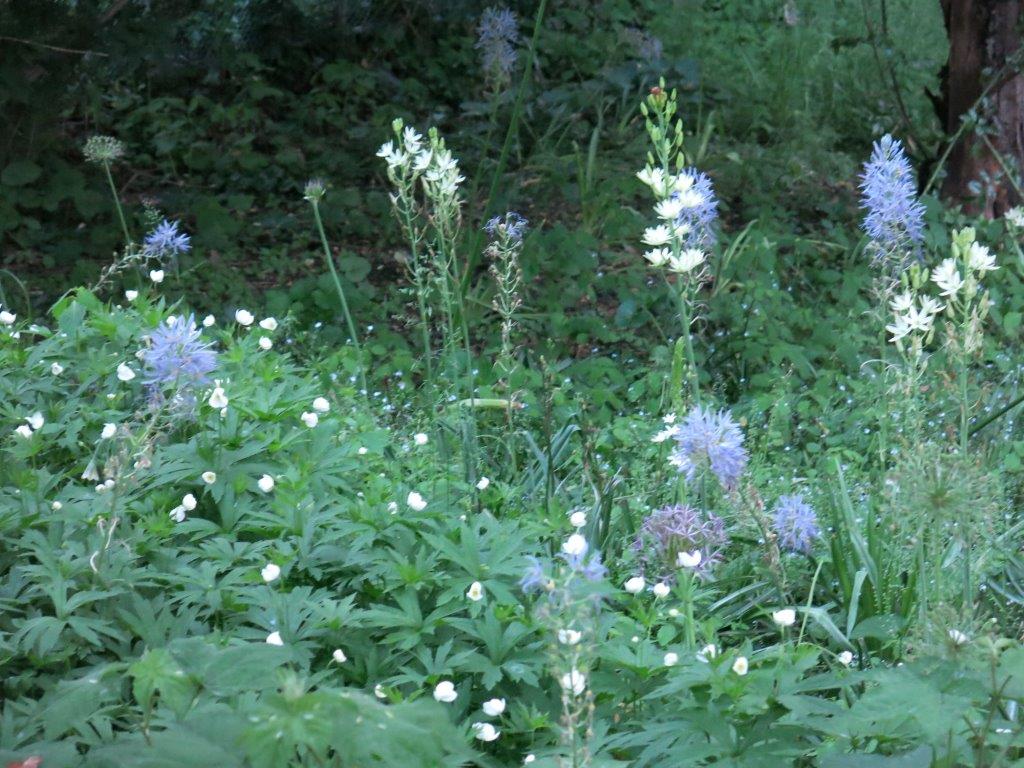
For spring color, not wanting to inadvertantly introduce herbacious plants that could upset the natural balance, I hit upon the idea of putting in bulbs. Not given to being invasive or harming the environment but instead bringing in beauty and cheer, they are a perfect choice. I started by planting hundreds of daffodils and over the years, I have added a whole host of minor bulbs such a crocus, wood hyacinths, leucojum, scilla, iris reticulata, anemones, ornithogalum (not so minor), small frittilaria along with a slew of alliums and camassia. The ajuga, mysotis and dandelions joined in quite naturally. All of spring, this part of the garden reigns supreme.

But for the rest of the growing season until the whole area gets mowed down, it looks kinda ‘meh’. And until recent years, I was gone for a good chunk of the summer so I didn’t particularly care. Out of sight, out of mind and all that. About four years ago, I started feeling a mix of guilt and responsibility to do right by the environment as well as my garden’s appearance. While the ‘meadow’ such as it is, is not harming anything and actually supports a variety of creatures, my state of inertia was losing ground.

In my mind (okay, also my heart), a meadow is like a symphony. The myriad flora and fauna make up a full orchestra. Every meadow-member has a part to play. Nature is the artistic director and conductor. She is also the composer. The gardener is the manager. The four seasons are like the movements in a piece of music. The tempo, rhythm, mood, melody, instrument voices, expressions can all be compared to how life in the meadow plays out. The slower, quieter winter movement, the fresh, eager, excited spring movement, the loud, exuberant movement of summer, and finally, the poignant, somewhat melancholic autumnal one. Yes, kind of like Vivaldi’s Four Seasons.

So you can understand my restless mind – I needed to improve my own meadow so it could play a strong, empowering symphony. It had not been allowed to perform at its fullest potential thus far. Many important sections of this orchestra were missing and so, the current concert was lackluster.
With this in mind, I began researching (three cheers for the Internet), talking to those more experienced with native plants, visiting native plant gardens like those at the NY Botanical Garden, Teatown Lake and Reservation, private properties, attending talks by the likes of William Bryant Logan and Edwina von Gaal. On road trips, I braked for meadows and investigated them. Behind the ‘researching’ hides my propensity to procrastinate. It buys time before screwing up courage and launching into big projects. I took my time.

Meadows are generally seen as large open spaces blessed with sunshine. My meadow is assigned a small space in semi-shade. The word meadow is a slight stretch. But it is too open to call it woodland. So meadow it is.

Native plants that could accept being in a suburban, somewhat obscure orchestra were sought out. They might seem unambitious but their skills and ‘sounds’ are no less commendable. I had to give them a fair audition.

Given that there were already many bulbs in place, there was no question of risking losing them by digging up the ground to plant mature native plants. Bulbs are expensive and so are mature plants. I had to source native plant plugs. Being small, plugs are easier to plant and in using them, the bulbs stood to go unscathed. Perfect solution right? Well, native plugs are not so easy to find. Then, last fall, a friend with a penchant for gardens and an interest in native wildflowers shared a source he had recently obtained. That single piece of information was received with the same enthusiasm as some of my friends demonstrate for sample sales at haute couture fashion houses

Finally, this year, I introduced a number of different plants to the meadow. Given the time pressure of my annual Garden Open Day in early May, getting these new additions in was something of a scramble. But it got done. And then I turned my attention to all the other demands of the season.

Native plants are hardier and tougher than non-natives – that gave me permission to not worry about the meadow. In the frenzy of getting the garden ready for Open Day, I failed to consider that it had not rained sufficiently and young plants need some extra TLC. By the time it occurred to me, we had already had a few super-hot days in addition to the lack of rain. And given that the meadow was now thick with growth, telling the young, new plants apart from the old, was near impossible. It was a sea of green. So I’m not really sure whether some if not all of the plugs have made it or if some decided to go dormant or if all bit the dust. I have since done some intermittent watering but it feels like closing the barn door after the animals have escaped.

Still, I’m optimistic. I suspect at least some of the plants would have pulled through. Patience is called for – I must give the meadow another full year before determining anything.

Meanwhile, I’ve been investigating meadow establishment further. Stay tuned for part II next week!

Early days. May 2005

Early days. May 2005

May 20006

May 20006

June 2006

June 2006

May 2007

May 2007

June 2007

June 2007

May 2009

May 2009

May 2010

May 2010

May 2012

May 2012

Up close May 2012

Up close
May 2012

June 2012

June 2012

May 2016

May 2016

Late May 2016

Late May 2016

(c) 2016 Shobha Vanchiswar

[do_widget “Blog Subscriptions (Jetpack)”]

Life Goes On

The early hours of summer mornings often find me puttering in the garden. I wish I could say that I’m out there staying on top of the weeding and what-nots. While I take note of the weeds and to-dos, I don’t necessarily feel moved to get busy. These moments in the garden have become my ‘centering time’. I observe what’s doing and what’s not doing. I watch the birds going about their business – the early birds really do get the worms. Listening to their different songs compels me to seek out where the singers are. Parents warning their babies to stay still in the nest because the squirrels are near by. The crows chasing a hawk away from their neighborhood. The cardinal calling its mate to a veritable feast of berries. Baby nuthatches squawking nervously as they test their wings. Much is happening in the many storeys of the garden.

I see that the columbines have finished scattering their seeds. The pods no longer rattle in the wind. The foxgloves are almost ready to do the same. Maybe in another week or two. The perennial geraniums are blooming and setting seed simultaneously. The amsonia and baptisia seed pods are still green. They will take it slow all the way to early fall. At that time, the purple-black baptisia pea-like pods are ready to be collected for posterity. The color contrasts very nicely with the ochre hued slender amsonia beans.

As seeds are being set and dried, they symbolize the springs to come. So full of promise and continuity. But as reminders to the season at hand, the mallows, echinacea and cleomes are madly livening up their corner in shades of pretty pinks. The elegant, white candelabras of cimicifuga are rising gently to cast a soft glow at dusk. The acanthus however commands everyones attention. The large, glossy, deeply cut spiny leaves and the spikes of white flowers tinted with reddish purple are so impressive. The phlox near by are yet to bloom. When they do, their fragrance will perfume the air from sunset to sunrise.

Way back at the bottom of the garden just beyond the ‘meadow’, the lone oak-leaf hydrangea is holding fort. Its white flowers are the only color against the all green in this area. The other mop-head hydrangea suffered this past winter. The old growth bearing buds for this year were destroyed. As a result there are no blooms this year. Thankfully, the plants themselves did not succumb. New growth has emerged from the base so perhaps next year I will enjoy their blue flowers. But here is an example of how the native (oak-leaf) plant does better than the non-native.

The Concord grapes look smugly expectant. The pale- green clusters, shaded by leaves grow big every day. If the birds don’t get to them first, I’ll be making delicious jam in late September. The preserve will brighten winter breakfasts and remind us that the cold weather will indeed gave way to spring.

Right here, right now the garden demonstrates that birth, growth, reproduction, death are all happening at the same time. No matter what happens, life goes on.

I get back to the house centered and ready to make my own contribution to the world.

Echinacea

Echinacea

Clematis

Clematis

White Echinacea

White Echinacea

Amsonia with bean pods

Amsonia with bean pods

Baptisia peapods

Baptisia peapods

Cimicifuga with spent foxglove.

Cimicifuga with spent foxglove.

Mallow

Mallow

Cleome

Cleome

Concord grapes

Concord grapes

Columbine

Columbine

(c) 2016 Shobha Vanchiswar

[do_widget “Blog Subscriptions (Jetpack)”]