Out With The Old! Really?

As the first article of the new year, I feel it should be profound and pithy. Sort of set the right tone for the year. But that just puts unnecessary pressure. So, I’m not going to try. It is what it is.

Looking ahead to the upcoming months, I’m going over a growing list of projects I’d like to either start or move forward to finish. Still, I’m drawn to reading up on old practices and traditions. They are what links the past to the present to the future.

Here we are in 2015 with technology and inventions that we couldn’t have imagined a few years ago. And yet, at the same time, I keep hearing ancient advice and solutions to a great deal of life’s conundrums. Yoga, meditation, acupuncture, herbal remedies, ancient grains such as amaranth and quinoa, Ayurvedic medicine …

I’m not talking old wives tales or misguided thinking ( human/animal sacrifice anyone?) but it is rather impressive that many of the old advice holds up to modern examinations. Often, there is now science to back them up. Clearly, we don’t have to keep reinventing the wheel nor do we need to reject the old ways. We just need to refresh or tweak some practices and bring them forward to current lifestyles. Just consider how hip it is to meditate or do yoga. Better workout clothes and celebrity endorsements have been most effective. But lets not forget the mounting evidence supporting them. We’ve rediscovered the benefits of the likes of quinoa, garlic, turmeric, coconut oil and so many others – all of which have been consumed through the ages in various parts of the world. Those ancient cultures couldn’t have explained how the foods helped but they figured out that they did. We now know the why and the how. I remember learning early on in my days as a microbiology major that turmeric has bactericidal properties. Being all too familiar with Indian cuisine, it suddenly made so much sense that this spice was an ingredient in so many recipes. There are numerous such examples from different countries and cultures.

So it is in the garden as well. An ancient, universal practice in itself. I enjoy finding old books on gardening – they have taught me more than one would expect. Often, valuable practices have succumbed to trends and modern inventions. Along the way, we lost track of these important nuggets of knowledge. A shame.

These past few weeks I’ve been exploring old garden wisdom. The experience has been comforting. Like getting comfortable with a grandparent and listening to stories of the ‘good old days’. I thought I’d share some ‘discoveries’ with you. Some are functional, several are fun and others are plain funny. You decide.

In The Garden:
Bury garlic cloves at the foot of rose bushes. It is supposed to enhance color and scent of the roses while keeping away greenflies.
Sow with the moon. During the waxing phase, sow for plants that should emerge out of the ground and grow towards the sky. This would mean all flowers and vegetables like lettuces and beans. During the waning phase, sow the plants whose root system needs to grow strong – like potatoes, radishes, cabbages, tomatoes, cucumbers, gherkins and all fruits. I know this is practiced even today by many gardeners. I have only mentioned synodic planting here. There is also sidereal and biodynamic planting. I find it all interesting but not particularly practical for myself.
Do not plant cucumber and melon seeds next to each other. The melons will lose their sweetness and taste bland.
Companion planting is an age-old practice. In my experience some work and some do not. Here is one new to me – asparagus plants will protect tomatoes from disease when they are grown nearby. This is because have a substance called asparagine.
When the blade of a garden tool gets rusty, rub the whole surface with the cut side of an onion sprinkled with sugar. The sweet onion juice will remove the rust and prevent it from forming again. I think I’m going to try this out.
Add a cup or two of oil to a bucket of sand. Stick in hand trowels and rakes when not in use. It will keep the tools sharp, rust free and clean. I have been doing this for years. It works. Note: I pour used motor oil in the sand.

Out Of The garden:
When buying melons, the smell must not be sickly as this indicates that it is overripe.
To preserve lemons, keep them immersed in fresh water. Change water regularly. Makes the fruits juicier.
When cooking cauliflower, add a piece of stale bread to the water and this will combat the classic odoriferous aroma. I tried this and it does not work.
Artichoke stalks are edible. Just peel and cook them with the artichokes. Season and eat.
Unlike onions, garlic sprouts should not be eaten as they are hard to digest. Remove and toss them.
A drop of wax at the end of apple and pear stalks will help the fruit last longer.
Walnuts will stay fresh longer if put in jars filled with sand.
To make dried walnuts taste like fresh ones, soak them in fresh milk for a few hours. Hmmm, would that be skim, 1%, 2% or whole milk?
For minor skin irritations or dermatitis, boil lily petals or bulbs in milk, puree and apply.
Powder of dried sage makes a good deodorant for use in shoes. Particularly sneakers. Personally, I’d just put a bouquet of sage leaves. The thought of fine powder all over the floor when the shoes are put on or taken off …
Quince pips contain mucilage ( a kind of gum). Soak the pips in water for a few days. A translucent jelly will appear. This jelly can be applied to the face for cleaning and softening.

There are so many more such antiquated/archaic/time-honored observances. I’m certain you know of some good ones yourself. Please do not hesitate to share. At the very least, it makes for good conversation. At best, we become a part of the link to our ancestors. It is all good.

Happy New Year to all!
In keeping with the old-fashioned ways, I’m not adding photos. Only watercolor imagery!
Garlic
Garlic
Carrots
Carrots
Echinacea
Echinacea
Lily
Lily
Nasturtium
Nasturtium
(c)2015 Shobha Vanchiswar
[do_widget “Blog Subscriptions (Jetpack)”]

The Lore, Love And Lure Of Spices

Holiday baking is underway all over the country and beyond. The air in most homes is redolent with cinnamon, ginger, cloves, anise, nutmeg, cardamom, pepper, saffron, vanilla and other aromatic ingredients. We couldn’t imagine all the goodies of the season without these spices. Yet, does one ever pause to marvel at the ease with which we obtain them? Carrying list in hand, we get to the supermarket, locate the baking aisle and select the spices from the shelves. Familiar slim bottles holding powders in various shades of brown. We never think about spices unless a recipe calls for them.

Like so much else, we have become accustomed to taking the availability of spices for granted. As common as salt right? We no longer marvel at the way spices shaped world history. Yet, from the beginning of civilization, spices have been heavily sought. Be it for their fragrance and flavor or their power to preserve both food and body, spices have been in use forever. Egyptian tombs dating from 3000 BC have been found to contain spices. Wars have been fought , countries taken over, trade deals made, Gods appeased and eternal life assured because of these innocuous looking materials.

Each type of spice was once worth its weight in gold. Or emeralds and diamonds. It is true. Spices commanded an unsurpassed value. And here we are, sauntering into the grocery store to casually pick up a jar of cinnamon or mace. Nothing to it.

Growing up in India, we were taught in school about the lure of spices and tea that led to widespread colonization of South-East Asia. Columbus was looking for a faster route to get to India and her riches when he came upon America. Yet, we were not taught to fully appreciate the plants that yielded the sought after spices. It is possible that everybody assumed the knowledge because Indian cuisine is perhaps the one that uses the most variety and quantity of herbs and spices. Kind of like not being surprised that others coveted what we’d already used and enjoyed for centuries. In retrospect, I wish we had studied the spice plants as part of botany class, learned their cultivation and trade in commerce, mathematics and geography, their impact on humanity in history, and their properties and applications in biology and chemistry. That is a complete education in itself. It would not only have been interesting and relevant but, might have served brilliantly to show how every subject in school is connected.

Why spices were so expensive is not simply a matter of where the plants grow. Growing, harvesting and processing them is no simple achievement. A great deal of effort is required to yield a small amount of the spice. Often, the work can be risky or dangerous.

While we each make and/or partake of foods with spice this holiday season, I thought I’d pick one spice and tell you very quickly how it gets to us. Use this reading moment as a time to breathe deep and appreciate what we rarely give our attention. In a season fraught with traditions and history, lets take a walk to a faraway place, witness age-old practices and, properly meet the hitherto insufficiently appreciated clove.

Lets make the journey to Zanzibar. Mysterious, exotic Zanzibar. Heavily scented Zanzibar of the Spice Islands off the coast of east Africa. Evoking tales of the Arabian Nights and ancient legends told by Persian traders using Zanzibar as a base for voyages between the Middle East, India, and Africa. Zanzibar was once the world’s largest producer of cloves.

Cloves are the dried aromatic flower buds of a tree in the family Myrtacea Syzygium aromaticum. The trees were introduced from Indonesia in the turn of the 19th century. They are harvested September through November which coincides with the short rainy season. Harvesting is hard work as it must be done by hand. The bunches of cloves are found deep in the foliage and are difficult to reach. On lower branches, they can be grabbed and pulled off but higher branches demand that the picker climb the tree which can grow to 50 feet. In the rain, imagine how perilous this can be. Every member of a family must help in the harvest.

The picked bunches are carried in gunny sacks from farm to village where leaves and buds are separated and dried in the sun. Again, by hand. The leaves are dried and pressed for perfume and oil. Clove oil is still used to treat toothaches.

The buds themselves are taken to one of three collection stations and sifted by hand to clean the harvest. Dirt, twigs and other particles are removed. This procedure is painstaking and necessary for yielding a product of high quality.

The sifted and cleaned cloves are weighed and only then the farmer is paid. Heaviness, dryness and aroma are inspected and packaged accordingly. Strong aromas and whole, intact cloves fetch higher prices.

From here, they are transported and go on to be sold locally or exported for use in cooking, medicine or cosmetics.

That is a long, strenuous journey don’t you think? Can you imagine eating foods without any of the spices?! No cinnamon babka, no gingerbread cookies, no chutneys, no steak au poivre, no mulled cider, no anything delicious!

Coming back to our holiday baking, it gives a renewed appreciation for the spices doesn’t it? I for one am resolved to send a silent thanks each time I reach for a spice. Once again, plants have shaped our civilization. They remind us to be grateful and mindful. Spices improve not only our foods but, our hearts and minds as well.

Happy indulging one and all! May the holidays be seasoned perfectly with joy and laughter.

Some years ago, I visited coffee,tea and spice plantations in southern India. While I cannot locate photos of that visit, I unearthed a few watercolors I made. So, thats what I’m including here. I’m sure if you are interested to see more, you will discover a plethora of images on the Internet!

Coffee and tea

Coffee and tea


Pepper and cardamom

Pepper and cardamom


IMG_4790
(c)2014 Shobha Vanchiswar
[do_widget “Blog Subscriptions (Jetpack)”]

Kiss Of Judas

The garden, a beautiful, productive piece of nature. A place to relax and recreate. An escape from the cares of the world. Paradise on earth. Enter at your own risk. What?

Yes, the garden is a dangerous place. There are more chances of getting hurt and/or sick right here than at a child’s trampoline party. More duplicity exists in the garden than in a single episode of House Of Cards. Hard to believe right?

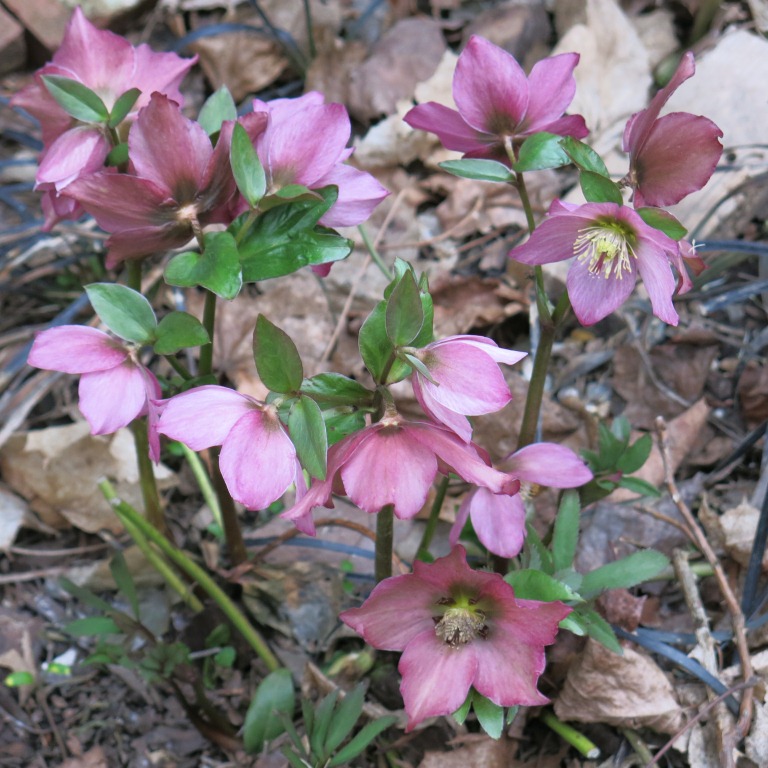
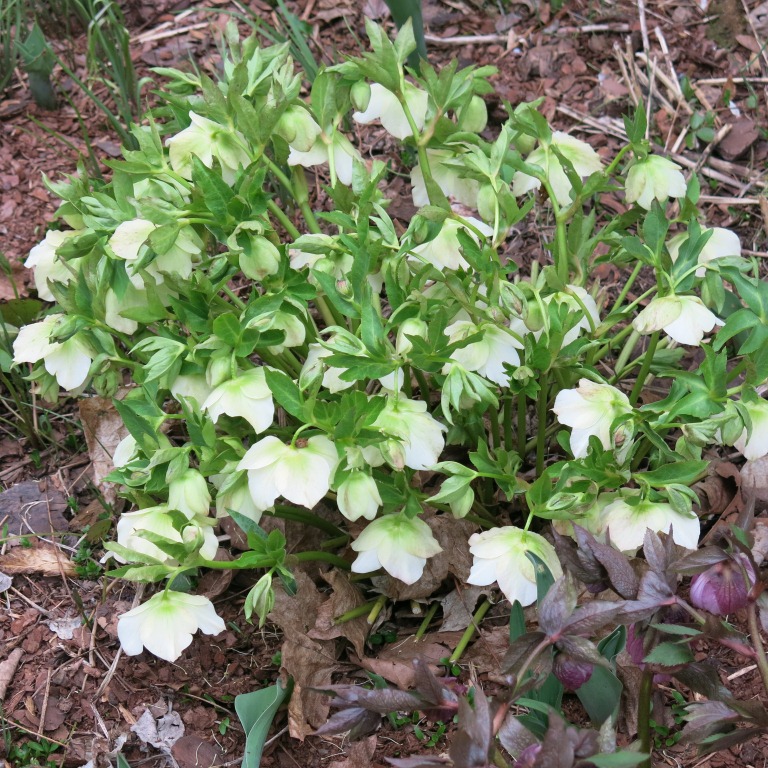
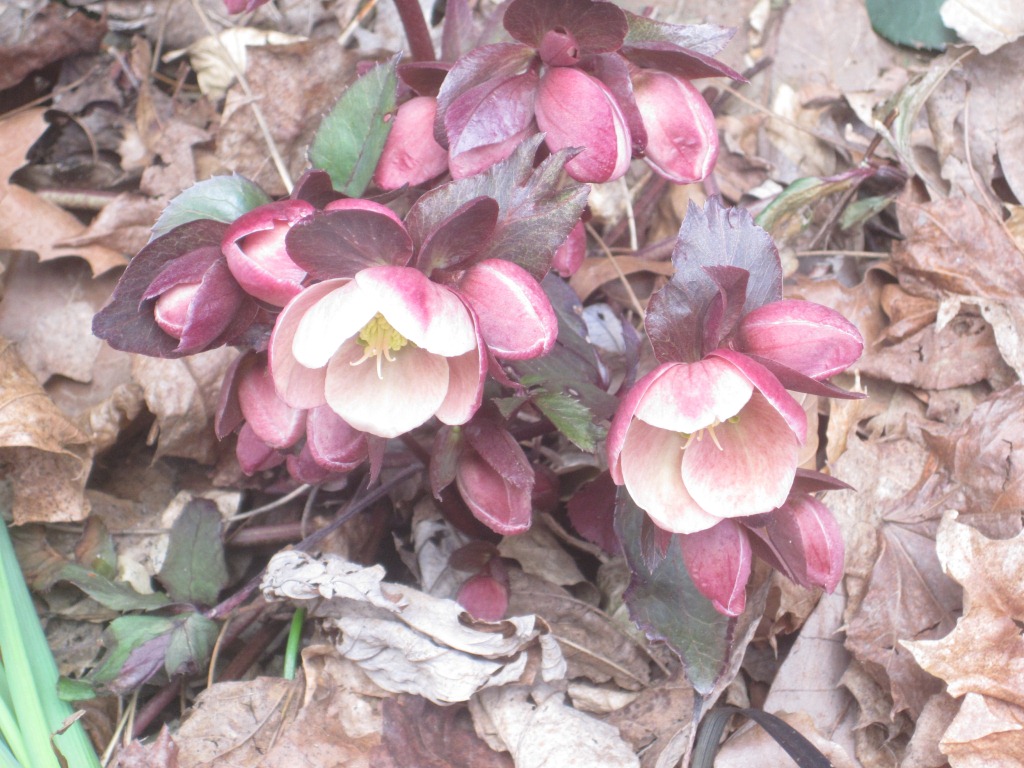
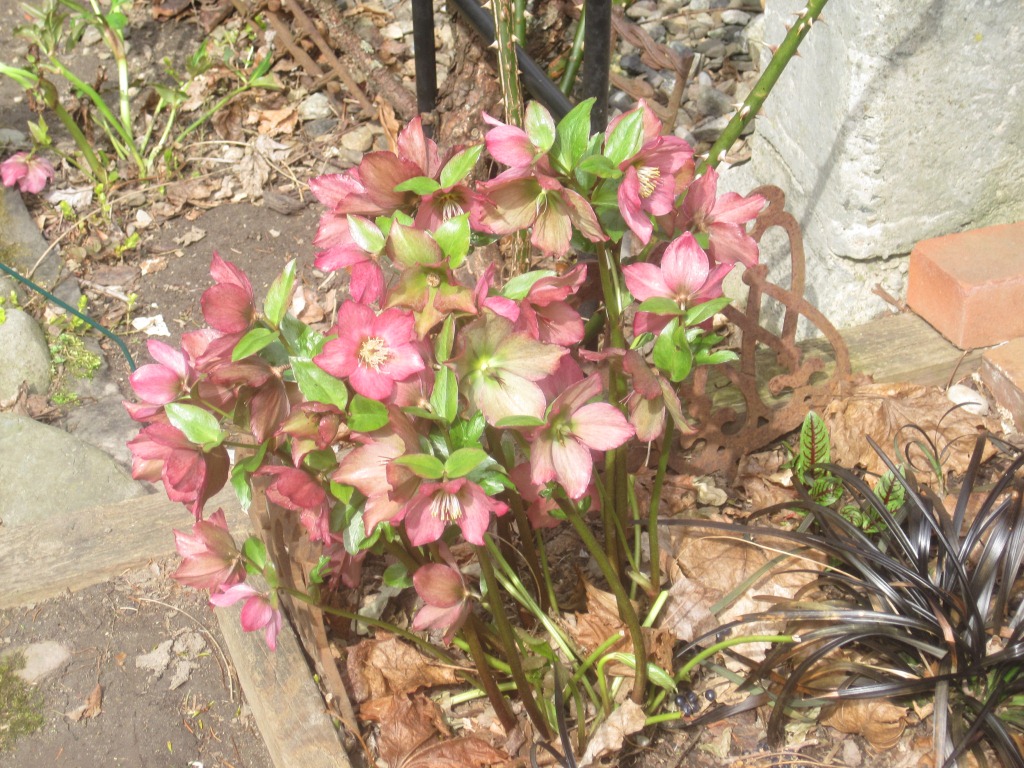
There is the obvious of course – insects that bite or sting, snakes that terrify, rodents that reside in places you’d rather not know about, neighbors who consistently annoy and stress you out as they lurk about the fence alongside your terrace, plants with parts that pierce, burrs that cling and, limbs that stick out just so they meet your forehead with a whack every single time you hurry by. Not to mention the likes of poison ivy and that stunning but sinister monkshood. The list of plants with all or some parts that are poisonous is extensive and for the most part, we live with them quite harmoniously. Think hellebores, lily-of-the-valley, pennyroyal, foxgloves, rhubarb, hydrangea, rhododendron, wisteria, narcissus, chrysanthemums, …

Then there are the perils in the hardscaping. Paths that turn slippery when it rains, narrow steps that are less than stable, wooden railings that can fall apart from rot, stones and hoses that can trip, you get the idea.

But, there are the sly, seemingly innocuous threats in the blur of green and bounteous beauty. Lets start with seasonal allergies that we’re all too familiar with. Grass and tree pollen are ubiquitous elements in every garden. The allergy might kick in at any age and then every now and then it might amp its intensity or simply not bother to show up at all. I myself became victim to spring allergies only in recent years. It took me a while to figure out that this was what was causing my misery. I felt relieved to identify it and at the same time, I was absurdly upset. It felt as though my best friends had turned on me. I thought they liked me!

Years ago, each time I came in from weeding in the garden, I’d discover itchy rashes on my forearms. The saps of many plants cause skin conditions that can prove quite distressing. But I couldn’t think what was affecting me in the course of pulling young don’t-want-’ems of assorted parentage. Then it occurred to me – the self-seeded euphorbias were the culprits. As I went about digging them out, some of the broken plants rubbed on my arms and caused the skin reaction. Often, saps, in combination with sunlight, will react with human skin aggressively. In my experience, this is true for figs, poppies and peonies amongst others. I’ve since learned to do much in the early or late hours of the day.

Likewise, handling hyacinth bulbs causes my hands to itch unless I wash them with soap and cool water soon after. Pricks from rose thorns are universally painful but in some like myself, it leads to long lasting wounds that hurt for days. I think the intensity is kind of disproportionate to the size of weapon. And terribly unfair. After all, I lavish so much kind attention on the offenders. I have no doubt that several undetermined, apparently common plants are responsible for my other discomforting reactions like hives and mild headaches.

Its hard to determine what will be toxic to a person until learned the hard way. By growing it. The irony is that we assume the plants we grow are harmless. The notion that any of them can hurt us is unthinkable. Yet, there are plenty of plants that adversely affect plenty of people. Quite literally, one gardener’s favorite plant is another man’s poison.

The next time you develop a mysterious itch, welt, rash, blister, swelling or, feel a tingling or pain, look to your botanical companions. There could well be a Judas in your midst.

Enjoy the gallery of rogues:

Hellebore

Hellebore


Daffodil

Daffodil


Peony

Peony


Wisteria

Wisteria


Cannot remember the name of this tropical plant. Observe thos thorns on the leaves!

Cannot remember the name of this tropical plant. Observe thos thorns on the leaves!


Rose

Rose


Monkshood

Monkshood


(c)2014 Shobha Vanchiswar
[do_widget “Blog Subscriptions (Jetpack)”]

“What A Wonderful World”

“I see fields of green
Red roses too … “
– Louis Armstrong

Every muscle in my body aches. Even in a state of rest, supine in bed, I feel the pain. There is no inclination whatsoever to rise and meet the day. A slight move elicits a big wince. I’m willing to forgo coffee and brushing my teeth – its simply too much effort to get up. I’m well past being embarrassed by my admission. No, I’m not unwell. I’ve been planting bulbs. Hundreds of them. One by one because they go between already established plants and other older bulbs. Every autumn I endure this ordeal. Every year I question my sanity. And every spring I am so ridiculously ecstatic to see the explosion of bulbs lighting up the garden.

There are still more bulbs to plant but for those, I’m recruiting the help of my family. They have been given no choice. Threats, guilt trips and bribery work well. I highly recommend those measures. I’m too sore to be nice. Rest assured I’ll return to nice after the body has forgotten its present trauma.

The other fall garden chores are also well underway. Cutting back and clean up, leaf raking, pruning, lawn reseeding, getting pots of tender perennials and tropicals into the greenhouse, planting new perennials and shrubs, pruning, cleaning and putting away outdoor furniture, the list goes on. Its exhaustive and exhausting. Then why do we gardeners punish ourselves repeatedly?

Because we must. It makes us happy. Keeps us in balance. It helps us make sense of this complicated, amazing world. Creating a beautiful, productive garden is our calling. As a result, other people appreciate us for our equanimity.

In post-bulb planting repose, I’ve had time to contemplate this horticultural preoccupation. Connecting so directly with nature as one does when gardening has rewards that cannot be matched by almost any other activity. Humans need green spaces. Our survival depends on it. Its not just for our food but our general well being. Since time immemorial, cultures everywhere have promoted the benefits of working or being in nature. At some level we have understood this need. There is no argument against the compulsion we have to seek our rest and recreation outdoors. It simply is.

Bad moods are banished after a turn in the garden or a walk in the park. Learning from personal experience, I’ve often dealt with the resident teenager’s age-appropriate histrionics by slyly getting her to do garden chores like weeding and watering. Her initial complaints, loud as they are, mean nothing to me. The child that returns indoors is invariably a transformed one.

I recently had to go out of town and was put up in a ‘resort’ of sorts. This place was vast – two thousand rooms, a large conference center, a full spa facility, seventeen restaurants, multiple shops, even a ‘riverboat cruise’ in a man-made ‘river’ that covered 4.5 acres. It had gardens, waterfalls and fountains. And all of this enormous complex was completely roofed over! There were well concealed vents that blew air to simulate a breeze. I found this place terribly disorienting. I was supposed to feel like I was outside but was instead in a bizarre world indoors. Most significantly, the painstakingly created gardens lacked vitality. After all, where were the sounds and activities of the birds, bees and butterflies? Where was that distinctly earthy aroma assuring me that worms and microbes were busy at work? These gardens of living, mostly tropical plants might as well have been fake. My mind and my heart could not, would not accept this make-believe world. There was no fooling them. It was a very unsettling experience. Like a newly caged bird, I got anxious and couldn’t wait to break free.

Lately, researchers have studied the benefits of green spaces. The anecdotal has moved to the scientific. More credible that way. Several studies have concluded what gardeners already knew – there is no doubt that spending some time in nature everyday considerably improves our health – mentally, physically and emotionally.

One study found that living with green spaces has a long-lasting positive influence on people’s mental well-being. Compared to the short term boost from pay rises and promotions, the positive effect from being in nature has a sustained, long term impact. Levels of anxiety and depression were reduced. The findings appear in the journal of Environmental Science and Technology. What is seen is that even after three years, mental health is still better which is unlike many of the other things that we think will make us happy.

So coming back to my current status of muscles in agony and reluctance to move, I admit that my spirits are high, my mood is upbeat and I’m already planning future projects in the garden. I’m also harboring the fantasy that the aforementioned body parts will shed fat, get toned and move like they used to twenty years ago. Thats the other thing – gardeners are huge dreamers.

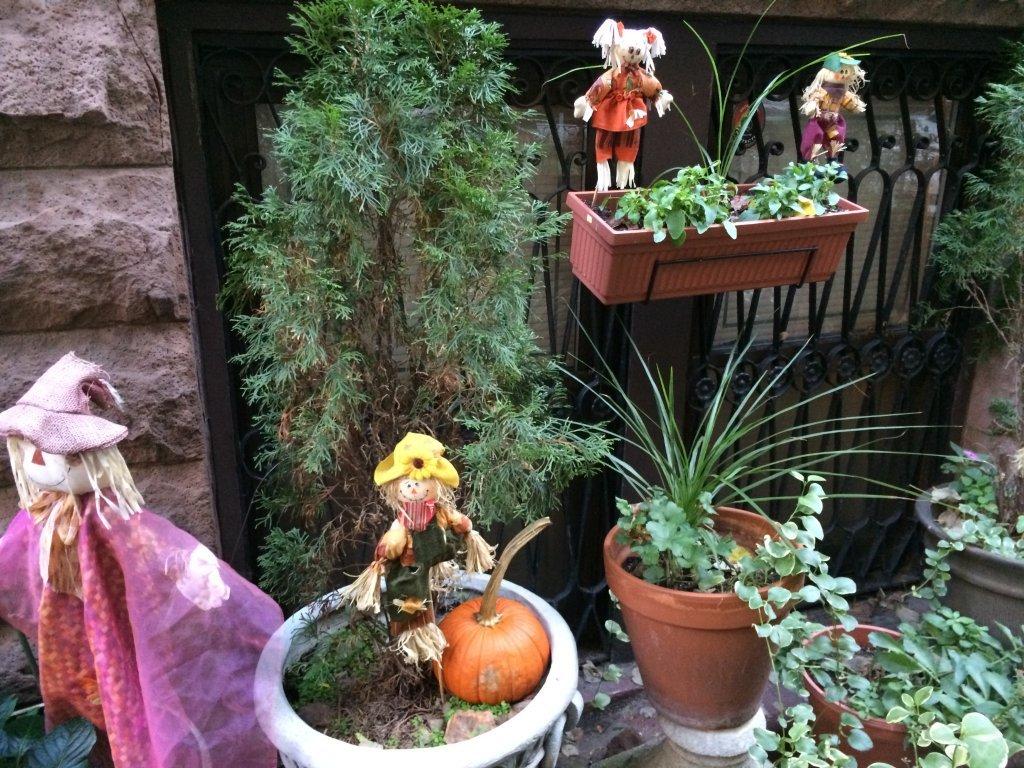
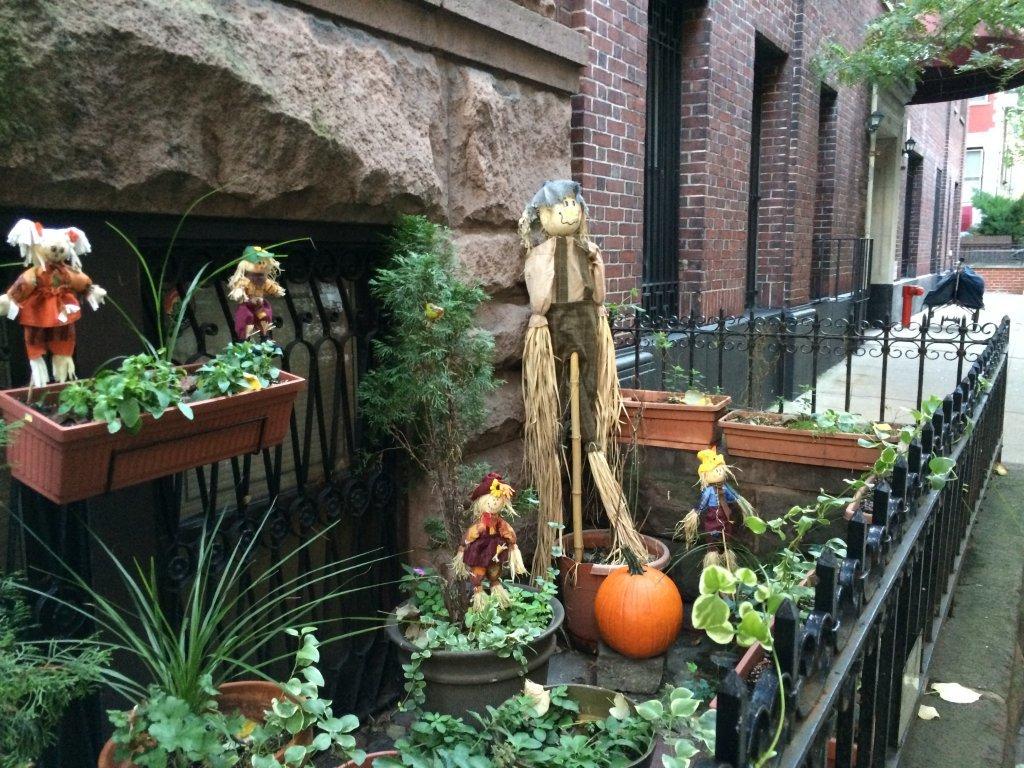
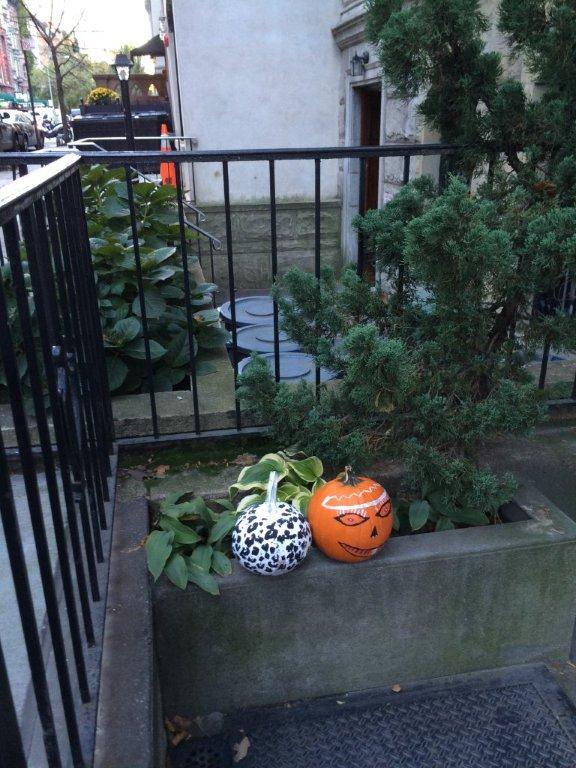
Enjoy the images of New York City getting into the Halloween spirit:
NYC Halloween 1
NYC Halloween 2
NYC Halloween 3
NYC Halloween 4
NYC Halloween 5
NYC Halloween 6
NYC Halloween 7
NYC Halloween 8
(c)2014 Shobha Vanchiswar
[do_widget “Blog Subscriptions (Jetpack)”]

To Hire Or Not To Hire – Part II

How often have you wished you had a cook, chauffeur or a general dogsbody to help you with the tasks of the day to day? An assistant to keep up with the paperwork. Someone to pick up the dry cleaning, getting the dog bathed or stocking up the refrigerator would be nice. Admit it, it has crossed your mind numerous times right?

The same happens in the garden. Busy schedules and/ or aging bodies could do with a little help. Keeping up with the seasonal demands in the garden whilst keeping abreast with duty calls elsewhere can be quite challenging . Recruiting the assistance of a gardener might be in order.

In suburbia, the sight of a team of men spilling out of a pick-up truck, unloading tractor mowers and powerful leaf blowers is as common as pigeons flocking in Central Park. The ‘mow, blow and go’ outfits fulfill very adequately the basic requirements of suburban living – a pristine property mostly displaying a swathe of green lawn. But a garden is more than lawn isn’t it? It has trees and shrubs, beds of flowers, vegetable plots and areas to sit and enjoy the beauty of nature. It is home to birds, butterflies, toads and other critters. A garden is a complex, diverse world, the upkeep of which involves watering, weeding, planting, fertilizing, pruning, cutting back, propping up, training, digging up, repositioning, composting, raking and a few other chores. All the while keeping it beautiful, productive and functional.

The English, who have a longstanding garden tradition, routinely employ a ‘jobbing’ gardener. This is an individual who has garden skills and can be relied on to take care of specified jobs. He/she can be hired for a few hours everyday or a couple of days every week. You tell them the job that needs doing and they do it. In the United States, such a person is not so commonly employed. People with the means tend to employ full time gardeners or the aforementioned weekly service. In my opinion, for someone who is an active gardener but needs extra hands, a jobbing gardener is a godsend. The peace of mind in knowing a task will get done correctly is invaluable. One stays involved with the garden but has the satisfaction that nothing will be neglected because attentions had to directed elsewhere.

Before you employ a gardener, consider what needs doing. These can run the gamut of chores you cannot do, don’t want to do or don’t have time to do. Depending on garden needs and available budget, a decision must be made to hire an experienced gardener or a novice. The former can pretty much do all or any of the work a garden needs without supervision while the latter will require some oversight. Your call.

Next, decide how often you need garden help. Seasonal or regular year-round or single project. Obviously, the expense of hiring depends on the level of experience the person has. How and when payments are to be made should be clear from the start.

Word of mouth is the most frequent way that gardeners get hired. Personal recommendations are best.
Self-employed individuals or a company depends again on what is required and how much you can spend. It is imperative to have trust in the person. Developing a good working relationship goes a long way in making a beautiful garden. Just like life.

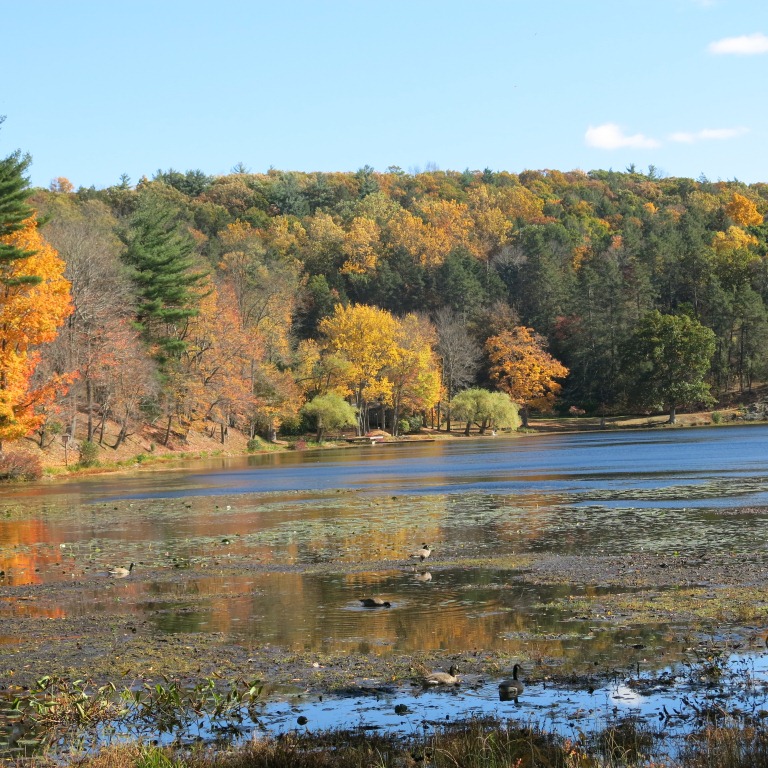
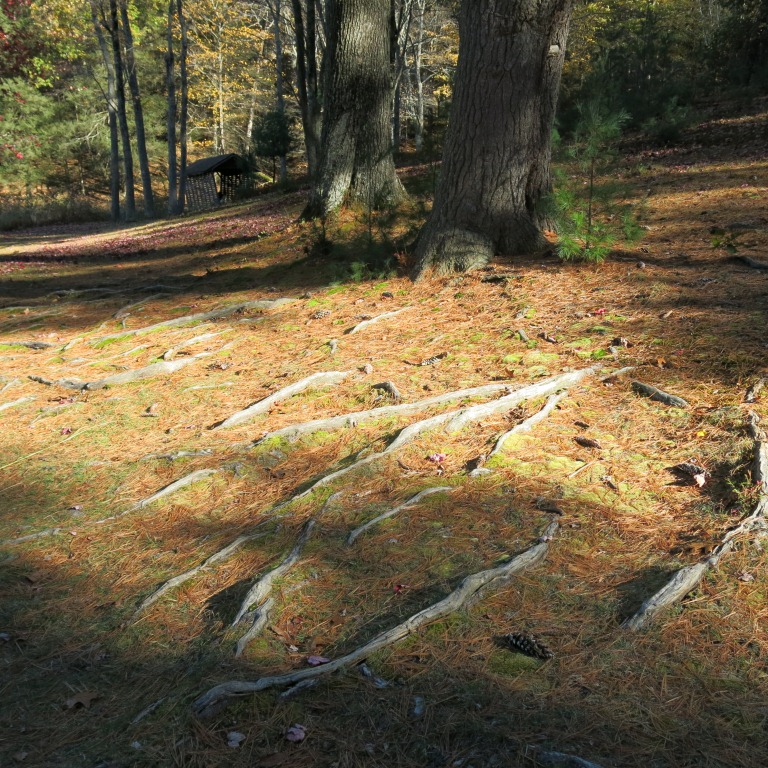
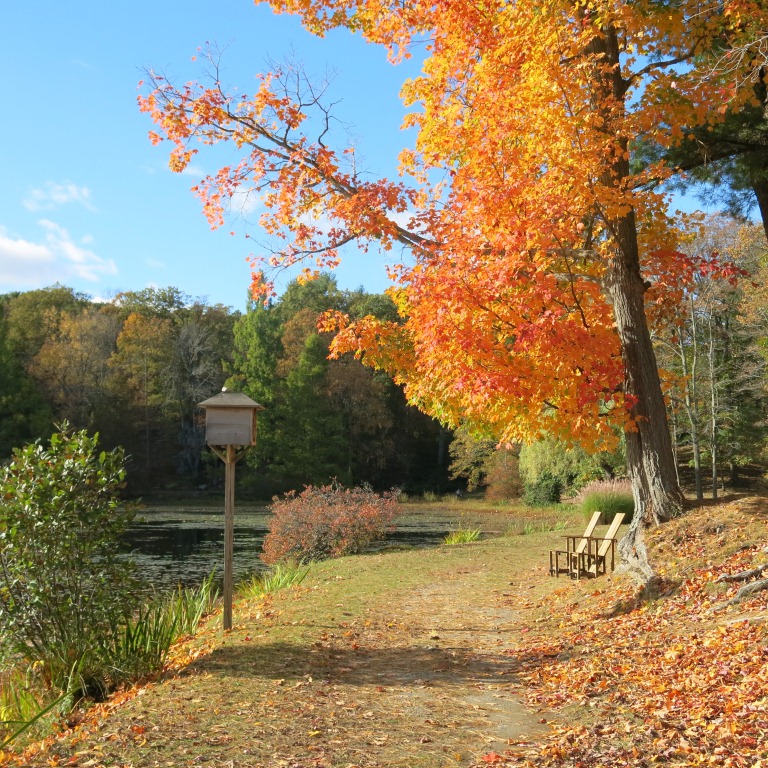
More images of the season. All taken at Innisfree, Millbrook, NY this past Sunday. Hope you’re taking the time to enjoy the autumn wherever you are.
Innisfree 1
Innisfree 2
Innisfree 3
Innisfree 4
Innisfree 5
Innisfree 6
Innisfree 7
Innisfree 8
(c)2014 Shobha Vanchiswar
[do_widget “Blog Subscriptions (Jetpack)”]

Plants That Live In Glass Houses …

The Great Migration has begun. It started this past Sunday. On what felt like a distinctly mild day in summer, preparations for the imminent cold began. Moving plants into the greenhouse. Its a good prompt for the season. Unlike general chores on the to-do list, this effort is clear in its prerequisites and requisites. It is finite, at which point there is something to show for it.

Don’t let the fact that I’m talking about something most folk do not possess, stop you from paying attention. I think the fundamentals of this effort benefit one and all.

In the interest of plant health and hygiene it is imperative that all residents be cleaned and inspected before entry. This forces me to examine the plants carefully and note what needs repotting, additional organic treatment for simple ailments and, dealing with possible/potential pest infestations. In doing so, I’m taking care of matters that are easily overlooked.

There is only just so much space in a greenhouse. Crowding is achieved rather quickly. Again, this is unhealthy. So, decisions are made about what deserves the prime real estate. With a little thought to the general garden design, hardy plants like boxwood can be situated into the ground. I have two this year that do not look so happy. They’ve been in pots for years and it is is possible that they will recover much better in the ground. I will consider where to plant them and that will make space for more needy candidates seeking shelter.

Plants that are neither hardy nor doing well are tossed. The cost in terms of space and attention is too high for such losers. Its taken me some years to get ruthless.

Those that are selected are given the once over for the space they will require. Good time to cut off dead wood and prune back in general. Height is a major consideration as the highest point in the green house is a mere six feet. Lopping off vertical as well as side growth makes me pretend I’m a big time hairdresser. The end result should look suitably attractive. I wonder if there is a market in the plant world for the ‘Fawcett” or the ‘Anniston’ or the ‘Dorothy Hamill’ or the more likely ‘Einstein’. The more compact size is also advantageous as the energy demand on the plant is reduced. There is less for the roots to feed under less than ideal conditions.

Since I’m pruning anyway, this becomes the time for me to root cuttings of scented geranium, rosemary and bay. And while I’m at it, I may as well propagate some hydrangea. Come spring, there will be several young plants to add to the garden and/or give away. Big dividends for effortless yet, useful work.

In the course of filling the greenhouse, I find myself giving the whole garden the same degree of attention. By starting early enough (but not too early), there is time to do so. Reviewing, editing, deleting, adding, replacing, critiquing are all valuable tasks that are often neglected once the busy-ness of the season takes over. It allows for planning more efficiently and satisfyingly for the next season. I’m made significantly aware of the needs and possibilities. It permits a deeper engagement with the evolution of the garden.

My greenhouse is 12 x 8 sq. feet. By most standards, it is very small. For me, it is a necessary luxury. Heating it for the winter is not cheap. It must be kept clean and well ventilated. Weekly and sometimes bi-weekly watering is required. With plants growing in close proximity, it is crucial to stay vigilant for disease and pests. These ground rules notwithstanding, this glass house is very dear to me. Treasured botanical friends are kept safe here. Several have been in my company for many years. Spring can be jump started because seeds are germinated and nurtured in this warm space while still anticipating the snow melt. Amidst this green sanctuary, I can escape the winter blahs for a while. A soul-lifting, sanity preserving experience. When the jasmine or Brugamansia bloom, they are brought into the house to perfume the nights. Similarly, the primroses in pots display their crayon colors well before their counterparts in the ground outside. Set on a table in the living room, they bring smiles to winter weary countenances. You can see how well this hothouse serves me.

Note: The same approach holds for plants being brought into the house.

Getting ready to root cuttings

Getting ready to root cuttings


Dipping cutting in rooting hormone

Dipping cutting in rooting hormone


Only a bit of the end needs to be covered in the powder

Only a bit of the end needs to be covered in the powder


All ready! Now we wait.

All ready! Now we wait.


Bill Smiles' greenhouse. Mostly orchids because he is the orchid man!

Bill Smiles’ greenhouse. Mostly orchids because he is the orchid man!


Filling up my greenhouse

Filling up my greenhouse


The residents should be well protected when it looks like this!

The residents should be well protected when it looks like this!


(c)2014 Shobha Vanchiswar
[do_widget “Blog Subscriptions (Jetpack)”]

Bloomin’ Onions And Sweet Quamash!

It is already beginning to feel like fall. While the cooler temperatures seem a tad premature, the gardener is already in the season to come. The asters in my garden are popping and the bees seem very happy as they congregate all over the flowers. This year, I remembered to pinch back the asters in July. Their height right now is much more pleasing and less likely to flop over.

The dusky pink flower heads of sedum ‘Autumn Joy’ appear to echo the eupatoriums that blazed all summer long. Although this was not deliberately planned, I like the continuity of color and shape. It has taught me to think along those lines with other plant choices for the various seasons.

The hydrangea are going strong as are the Russian sage and Solidago. In the potager, we continue to harvest herbs, swiss chard and kale. Apples, pears and figs are rounding off meals very satisfactorily. So in the midst of all this bounty, its easy to disregard the signs of autumn. But, we know better don’t we?!

I’m already anticipating the upcoming chores and sourcing plants to add to the boundary of the meadow. Under consideration is a change of plantings in the checkerboard garden but cost might put a damper on that plan. This past weekend, we cleaned and installed each pane of glass in the greenhouse that now stands on a new foundation. My hands have numerous minute cuts from handling all that glass. War wounds to be proud of. When frost threatens, and it will, the tender perennials shall be safely ensconced in the greenhouse.

All the big tasks of cutting back, cleaning up and putting away are best done before the Big Bulb Planting. I’m eagerly anticipating the arrival of my greed driven order of bulbs in early to mid-October.
If you haven’t placed an order or hadn’t really thought about bulbs, consider yourself duly admonished. Imagine that I have looked at you with a mix of shock and derision. And along with, I have verbally expressed matching sentiments. Now, get yourself to a local nursery or go on-line and shop for bulbs.

I personally cannot envision a spring without bulbs. They influence a garden with so much expression and aplomb that it is inconceivable to go without. Given that more is better when planting bulbs, I’m aware that the price of bulbs can scare some timid minds and the faint of heart. Which is exactly why it helps to order in advance from bulb houses. Their prices are best. By the time one purchases at a nursery, the cost has gone up, choices are limited to what is most popular and it feels really prohibitive to buy in quantity. Like a Christmas account, it also helps to put a little bit away each month. I kid you not – I’m that serious about planting bulbs.

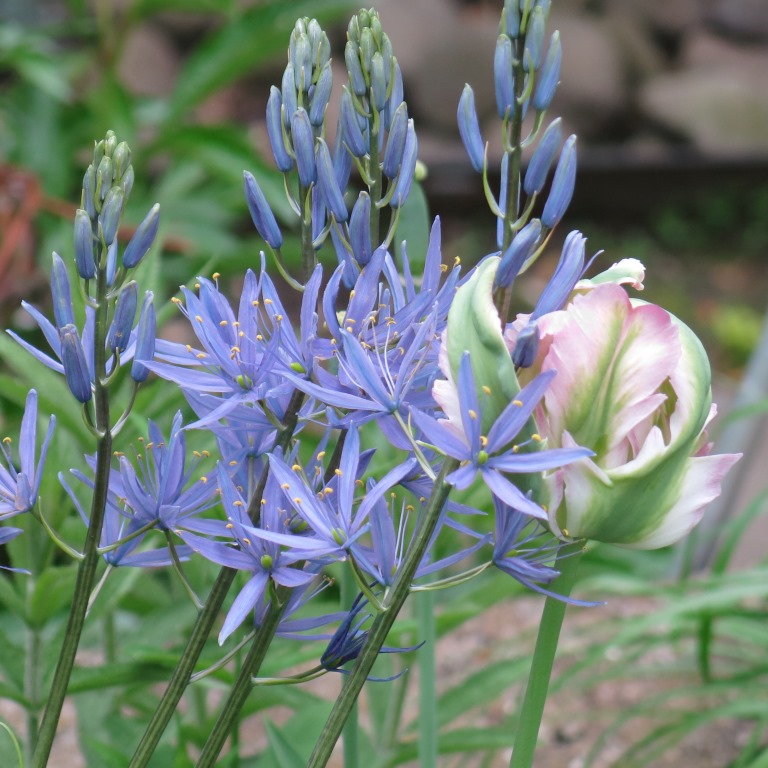
However, I do understand that for whatever reasons, one must limit oneself. If you must narrow your selections, go for alliums and camassias. There is plenty going on in early spring. Simply seeing new growth after a long, hard winter is joyous. But later in the season, it is particular nice to see more deliberate drama. Enter the alliums. There is enough of a selection of these members of the onion family to really put in the ‘wow’ factor to any flower bed. Tall, mid-height, short. Big, impressive, ball or dome shaped umbels to smaller, twee ones. Tightly clustered or loose and airy. In hues of pink, blue, mauve, white and the occasional yellow. Alliums are just stunning. Like exploding fireworks.

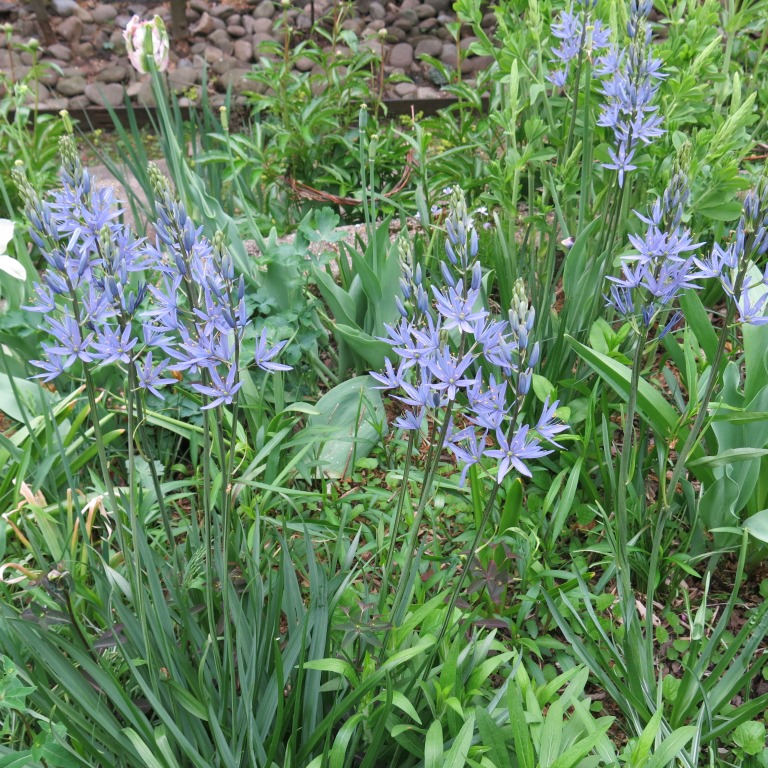
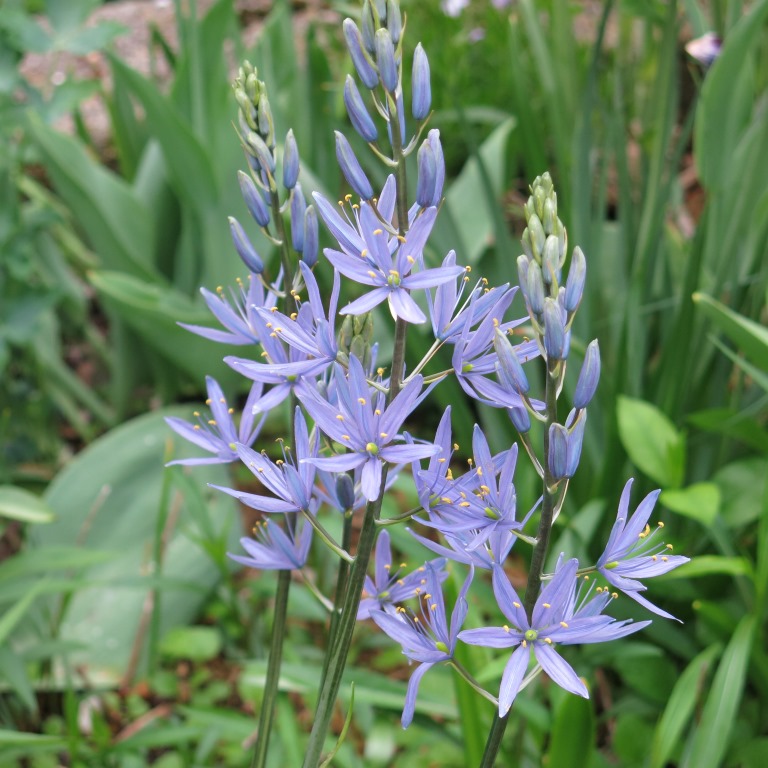
Camassias are not quite as dramatic but their poker shapes in shades of blue and creamy white punctuate the flower beds rather stylishly. They naturalize easily too.

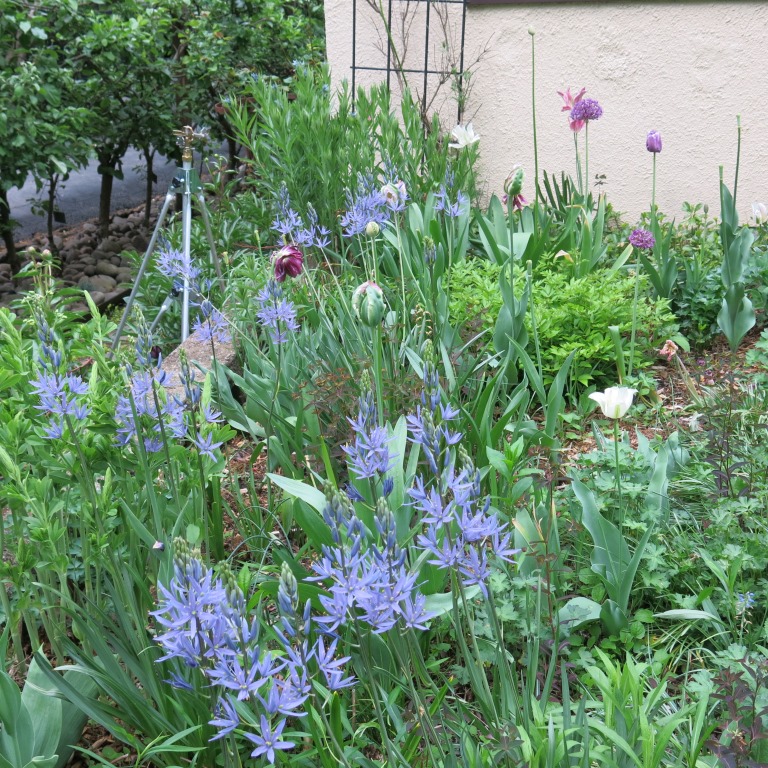
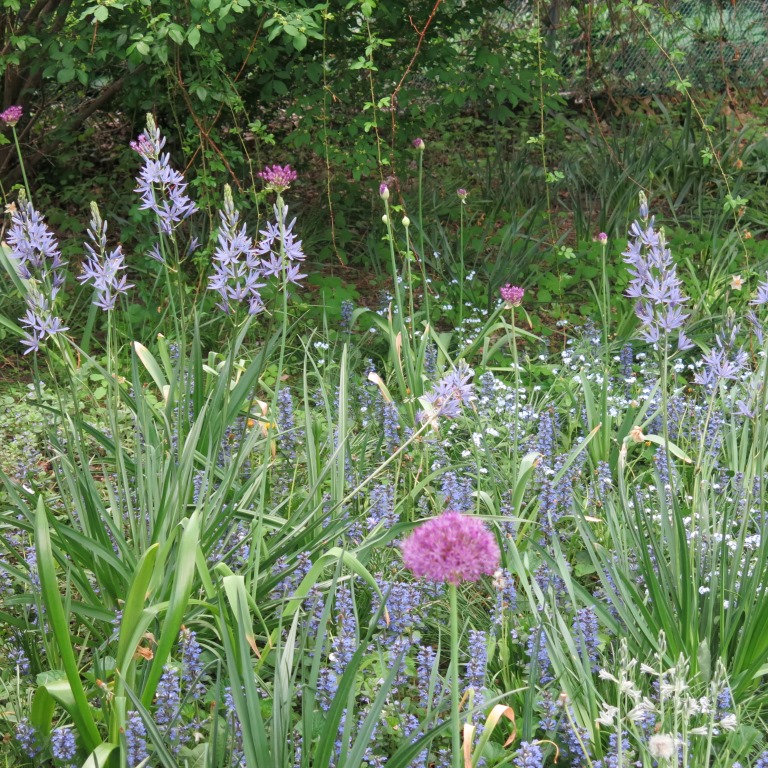
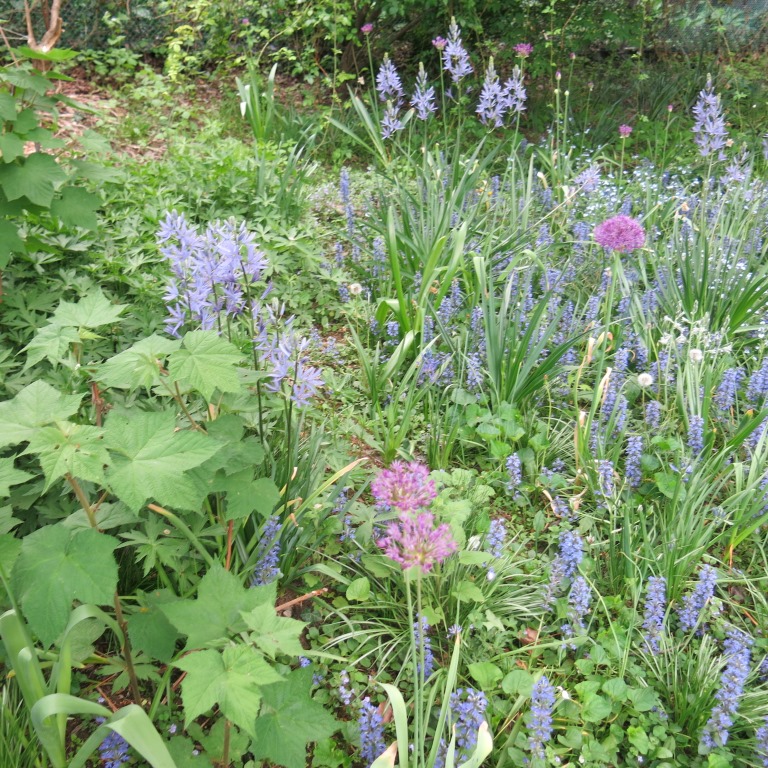
Both, alliums and camassias are deer resistant. They work well together, enhance indoor flower arrangements and they are at home in formal gardens as well as more naturalistic planting schemes. I have them in my front perennial beds and also in the meadow. In each, they lend a most desirable and yet different impact.

If I haven’t succeeded in convincing your skeptical mind, just go on-line and browse the websites of bulb houses. The luscious images of all the different bulbs will. Fair warning – you will weaken and want far more than you could possibly imagine.
I’ve been shopping at John Scheepers and their wholesale sister Van Engelen for well over a decade. www.johnscheepers.com and www.vanengelen.com. By all means check out other sellers as well. There are indeed several reliable vendors. Prices are all comparable. It is a matter of bulb quality and size and, customer service.

Good news! I’ve responded to the request made by several of you and set up ‘shop’ to sell my botanical note cards. Please check out the page marked Shop. I’ll be adding more collections by and by. Would appreciate your feedback.

Camassia, alliums and tulips

Camassia, alliums and tulips


Allium 'Purple Sensation'

Allium ‘Purple Sensation’


Camassias and alliums

Camassias and alliums


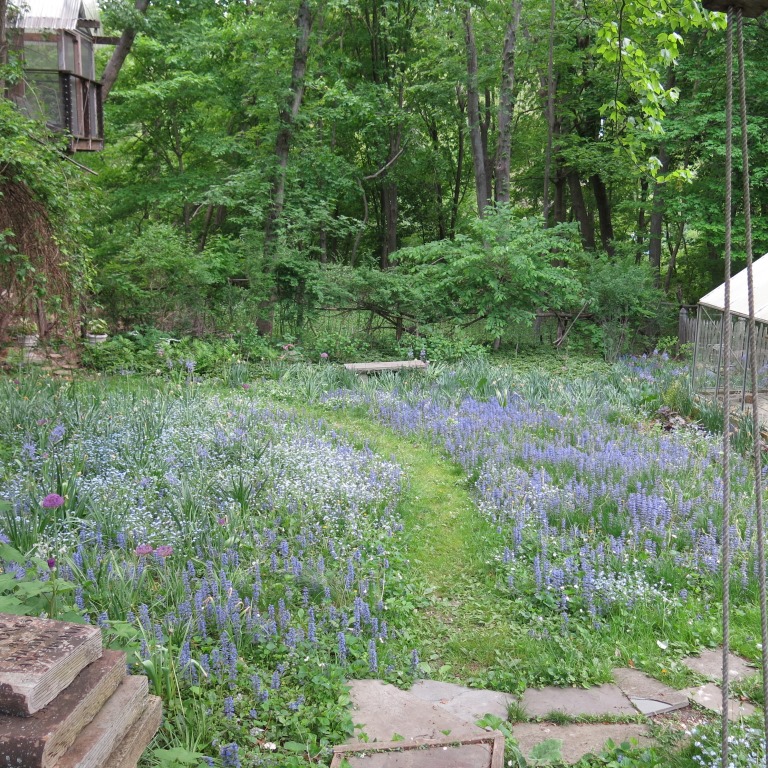
Camassia and myosotis 'blue' up the meadow

Camassia and myosotis ‘blue’ up the meadow


Late May - in the meadow

Late May – in the meadow


IMG_2331
Nectaroscordum - a type of allium

Nectaroscordum – a type of allium


White camassia

White camassia


(c)2014 Shobha Vanchiswar
[do_widget “Blog Subscriptions (Jetpack)”]

Summer School

I adore discovering new and surprising information on perfectly ordinary subjects. Since the fabric of life is mostly woven with the routine and the mundane, learning something fresh on a regular basis is what keeps it interesting and exciting. I particularly enjoy facts that remind me that I am part of a much bigger, mysterious, absolutely astounding universe. No doubt you feel the same. Right?

Nature provides an endless source of knowledge and anybody who spends time in it cannot fail to acquire some wisdom. There is gain in every encounter with nature. As part of my Mid-point review (scroll down to see the article from two weeks ago) and my ongoing quest to learn something new everyday, I came up with what I learned since the start of summer. Personal observations, further investigations/research and input from others has kept things around here quite interesting.

I observed that hummingbirds do not like to share. Unlike many birds that feed together at a feeder filled with seeds, these tiny avians prefer to dine solo. A feeder with sugar solution invites them to stop by quite effectively but just watch – while there is plenty of room and libation for all, the bird who is there first will aggressively try to shoo off any other bird also wanting a drink. They spend more time sparring than sipping.

Spiders really do make their webs only in fair weather. IF they continue working during rain, it will be a short storm. You have a better way to predict the weather?

I’ve always known the perfume of flowers is stronger as temperatures rise but now I’ve learned that the fragrance is stronger just before a storm when the air pressure is low. I’ll use that as a reminder to cut flowers to bring indoors before the storm smashes them down.

There is a growing body of scientific evidence establishing a link between urban green spaces and a positive impact on human well-being. Unlike the short lived happiness of pay rises, promotions, purchases or that slice of cheesecake, the positive effect of time spent in nature is sustained for long periods. Reason to get outside and enjoy the green as much as possible. Its no wonder one can come in hot, weary and sore from working in the garden and still feel really invigorated.

Amongst many types of birds, the way to a female’s heart is through her stomach. A male bird will ply his object of affection with juicy morsels of worms and bugs. Charming!

The eggshells of wild birds may act like “sunblock”, scientists in the UK have said. A range of birds’ eggs showed adaptations in pigment concentration and thickness to allow the right amount of sun to reach the embryos. No doubt this information will lead to useful applications amongst us sun loving humans.

We are always wondering if there is life on other planets. But if there is, those life forms must be wondering the same right? If ‘people’ on a planet 65 million light years looked at Earth, they’d see dinosaurs not humans. Imagine that. For now, lets do right by our assigned planet. Because eventually, the time will come when the alien ‘people’ from all those 65 million light years of distance, will see us humans. And we’d better look our best.

As a biologist, I’ve known this next fact but when I mentioned it to some others, they were surprised. So I thought I’d share. Fireflies are not flies. They are beetles. Chemical energy is converted to light energy in a ‘cold’ reaction. This is unusual. Most energy conversions use or generate heat. Thus, fireflies are the exceptions that prove the rule. Huge scientific contribution from a very little guy.

Finally, something to ruminate over: Cows do not naturally eat corn – so why is ‘corn-fed’ beef touted to be superior?

Being curious keeps one engaged and connected to the world around us. There is a comforting reassurance in that. We are all part of the grand web – the spiders as well as the flies. Understanding the seemingly ordinary opens the mind, enriches the spirit. We get a sense of who we are and our place in the large scheme. Q.E.D.

Hummingbird at feeder

Hummingbird at feeder


Hummingbird

Hummingbird


Eggs of a dove.

Eggs of a dove.


Empty spider web in the rain.

Empty spider web in the rain.


#SummerSchool
(c)2014 Shobha Vanchiswar

[do_widget “Blog Subscriptions (Jetpack)”]

Shaping Up

Its August, its summer, its time to ease up and chill. In my book, that means doing less in the garden. I cover only the bare minimum of required tasks. The fact that I go off on vacation this month does not help matters. As a result, my garden looks distinctly blah at this time. Shabby, shoddy and sad are how I’d describe certain areas.

It occurs to me that I really ought to follow my own advice and prepare in advance for precisely such eventualities. Grumbling around, I find I’m not alone. So, I’ve given the matter some thought and come next August, I’m determined that we present the world with much improved gardens

First and foremost, there is the watering. My policy of watering only the pots and not the beds works effectively for most of the garden. Except the two perennial beds in front. The very beds that are the first to be seen by anybody who approaches the house. The beds look very attractive all spring, and reasonably okay in early summer. But, by mid-summer, when temperatures have soared and rain is erratic, they start to look ragged and unruly. Its taken me a while to admit to myself that I’ve been much too rigid in my no-watering rule. I’ve been expecting too much from these hard working plants. They do indeed grow without extra watering but they simply cannot look lush and bloom prolifically which is what is needed in a flower bed. Mind you, the plants placed here for summer display are mostly native choices. Which is why they can survive okay. However, to thrive, even natives must be provided better conditions. While it does not matter how they do in the wild, within a contrived space like a garden, it does. Hence, my decision to water these beds more regularly. As much as possible, I’ll use rain water from the barrel and when that supply runs low, I’ll use the hose. I shy away from automation because I feel it disconnects me from the plants and leaves me unaware of their needs and progress.

Deadheading and weeding regularly will of course go a long way. Mulching well will reduce the time required for the latter considerably.

The remaining tasks need to be done in advance of summer:

Herbaceous plants need dividing every few years to keep healthy. Otherwise, they stop blooming well.
To do this, the plant is dug up and divided by prising roots apart. New growth from the edges are replanted and the tired, center of the clump is discarded. Fall is a good time to divide plants. Feed with compost. Water well till established.

Borders with many, established plants require staking to stop them from drooping or flopping. Placing the stakes as plants begin to emerge makes the task easier. Natural materials like twigs and bamboo blend into the background very nicely. This practice gives the beds a neat and cared for appearance.

Hedges, certain edging plants like boxwood, topiaries, rambling roses and other climbers need taming. Prune, trim, pin back or tie back as needed. Again, this tidies up the look of the garden.

Voila! The garden looks infinitely better.

I’m sharing images of gardens that look vastly better than mine at this time of year:
IMG_6794
IMG_6797
IMG_6846
IMG_6852
IMG_9229
IMG_9248
#summerplans#shapingup
(c)2014 Shobha Vanchiswar

[do_widget “Blog Subscriptions (Jetpack)”]

Part II – On The Pesky Matter of Illegal Aliens.

Its been tough getting around to the weeds this time of year. The moment I step outside, I feel the heat heavy with moisture as though anointing and wrapping me up to send me into a state of torpor. Mostly, it succeeds. Its so much easier to simply give up and find solace in a cool drink and hot book. But the gardener in me is stubborn and cannot succumb to such temptation. At least not all the time. Snatching time in the transiently shady areas I do a bit at a time. This works somewhat as by the time the sun has made its quotidian circuit, a goodly portion of the garden has been weeded. It leaves me feeling smug and accomplished. Until I make the mistake of visiting gardens tended by obsessively compulsive friends. My own efforts look distinctly shabby.

To top it all, I’ve spied an army of Japanese beetles in the front perennial beds. War has been declared. Armed with a tub of soap solution, the enemy is picked off and tossed into it. I accept that each day is a battle to be won.

Back to the weeds. The reason weeds are so much more resilient and hardy is that the seeds of many species can survive for an incredibly long time (think decades) in the soil. When conditions are favorable, the seeds sprout. In addition, each weed plant produces hundreds of seeds. You do the math.
I did promise to impart some choice nuggets of wisdom and I realize that might well be a matter of opinion. So here goes.

The tip I give out most often and one that is universally liked is the simplest method for getting rid of weeds that show up in areas with flagstones, bricks or gravel. Its hard to tackle weeds in the spaces between. All too often, the chemical control is used. Instead, on a day when rain is not forecast, pour boiling hot water on the weeds. It will do the trick. Thats it. I’ve been doing this quite effectively for years. Frequently, the water from boiling eggs or vegetables is taken outside right away and dumped on the brick walkway just to take care of any weed contemplating a visit.

This next one is a preventative measure – Within a flower or vegetable bed, once the plants have been planted, cover the soil with a good four inches of newspaper. Conceal the newsprint with a layer of dark wood bark mulch. Please refrain from the red mulch as it not only looks like the landscaping in some industrial/commercial properties but it’ll draw the eye to itself rather than the plantings.
The newspaper will suppress weeds, retain moisture and eventually breakdown and integrate into the soil. Compost can also be used for the same purpose. I use newspaper in flower beds and compost in vegetable beds, lawn and other open spaces. The idea of recycling/re-purposing something is both boon and bonus.

In hot weather, weeding is best done in the cooler hours of the morning. This practice gives me enormous satisfaction as it keeps me motivated for the rest of the day. Weeding every other day keeps one on top of the problem and as a result the time required each day is considerably shortened. This is perhaps the strongest and most effective form of weed control. I cannot emphasize it enough. Research shows that being consistent and diligent with weeding, will, over time, reduce the number of viable seeds in the soil. So, fewer weeds and more time to enjoy the hammock and stack of books.

Finally, if you can’t get rid of them, eat them! Okay, maybe not all weeds are edible but many are. Combine young, blanched dandelion leaves, the smallest and most tender sorrel leaves in equal proportion. Dress lightly with lemon, olive oil, sea salt and pepper. Add roast chicken and you have a simple yet lovely meal. To blanch dandelions – upturn a flower pot over a whole dandelion plant in the ground. Without sunlight the leaves grow paler, longer and sweeter. In a bit over a week, the whole head of the plant will bear such leaves. Pick, wash and dry thoroughly.
Another way to eat this plant is to take two blanched heads, washed and dried. Put in warm bowl. The bowl is warmed so fat does not congeal. Fry up thin strips of bacon till crisp. Add bacon and fat to dandelions. The warmth of the bowl and heat of the fat will wilt the leaves. Quickly deglaze pan with a tablespoon of red wine vinegar and tip the hot liquid over the salad. Serve right away with good crusty bread.
A friend of mine used to make wine from young dandelion leaves. It was not half bad.

In Greece, a variety of early spring leaves like chard, sorrel, parsley, mallow, dandelion, nettle tops, poppy tops and rocket are thoroughly cleaned and then boiled in salted water for five minutes. All the water is drained and squeezed out from the wilted greens. Dress with lemon juice, olive oil, salt and pepper. Serve.

A common weed like purslane adds a nice, sour green note to a salad and cuts the bitterness imparted by arugula (rocket) or dandelion.

Through the ages, in many cultures all over the world, a number of what we, today, might call weeds were commonly used for food and/or medicine. They still are. Case in point is the Plantain weed or Plantago Major. Unless you use awful chemicals, and I have faith that you don’t, you have it growing in your garden somewhere. It is native to Europe and parts of Asia, but introduced to North America when the settlers came. The leaves are actually edible and somewhat similar to spinach, though slightly more bitter. They can be used in salads or other culinary uses. Medicinally, the leaves can be made into a tea or tincture, and this is said to help with indigestion, heartburn and ulcers when taking internally. Externally, Plantain has been used for insect and snake bites, and as a remedy for rashes and cuts which we use as a natural antibiotic ointment on cuts and bruises. The natural antibacterial and anti-inflammatory properties of plantain leaf make it great for healing wounds, and for itching or pain associated with skin problems. A tea made from Plantain leaf can be sprayed on mosquito bites to ease the itch.

Thus, you see, its all in our perception. What we choose to include, what we’d rather not encourage and how we view them all is relative. So lets not sweat over the small stuff, theres a summer to be enjoyed.

Disclaimer: Please do not go on my word alone and ingest any weed I’ve mentioned. Personal immunities, allergies and tastes are subjective. Just as foraging for mushrooms in the wild assumes a certain risk, the same goes for plants not routinely cultivated. Do your research and really understand the plants and their properties before nibbling.
As I do not have photos of weeds, I thought you might instead enjoy some photos I took this past week.

This frog looked rather alert -  ready for the unsuspecting fly.

This frog looked rather alert – ready for the unsuspecting fly.


The pattern of the Echinacea 'cone' fascinates me.

The pattern of the Echinacea ‘cone’ fascinates me.


Fern in vertical garden. Such a cooling sight.

Fern in vertical garden. Such a cooling sight.


And what is July without fireworks?!

And what is July without fireworks?!


(c)2014 Shobha Vanchiswar
[do_widget “Blog Subscriptions (Jetpack)”]