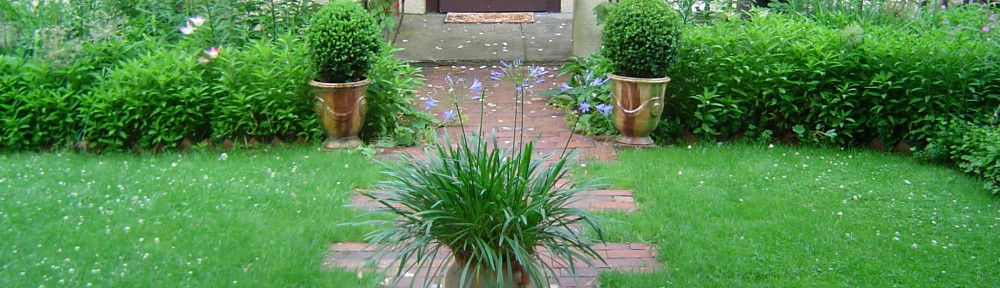
Go With The Flow

“It is not the strongest or the most intelligent who will survive but those who can best manage change.”
― Charles Darwin

Are you at the point where you feel you need to downscale your garden? Things can get overwhelming for so many different reasons. Gardens created when one was young and healthy can be daunting as the now older knees and back only bend or straighten when accompanied by groans or the energy level needs regular topping off with a nap. Personal life changes, work responsibilities, new passions can all prevent a gardener from getting to the garden consistently. You don’t want to stop gardening but you need to do less right? You love to tend to the garden but wish you could scale down the work – I know exactly how that feels. If only the garden could look fabulous without all the work …

Smile, breathe deeply and go slowly – Thich Nhat Hanh.
In other words, do not fret. A garden should not be a cause for anxiety. That would entirely defeat the purpose wouldn’t it? It is very easy to focus on how much there is to do. With a little planning, organizing and rethinking, you can have that beloved garden and still tackle your life. Create a garden that evolves with you.In my case, a garden is imperative so, whatever is going on elsewhere, I know to adapt the garden to that status.This,after all, is my sanctuary – where I come to restore balance in my heart.

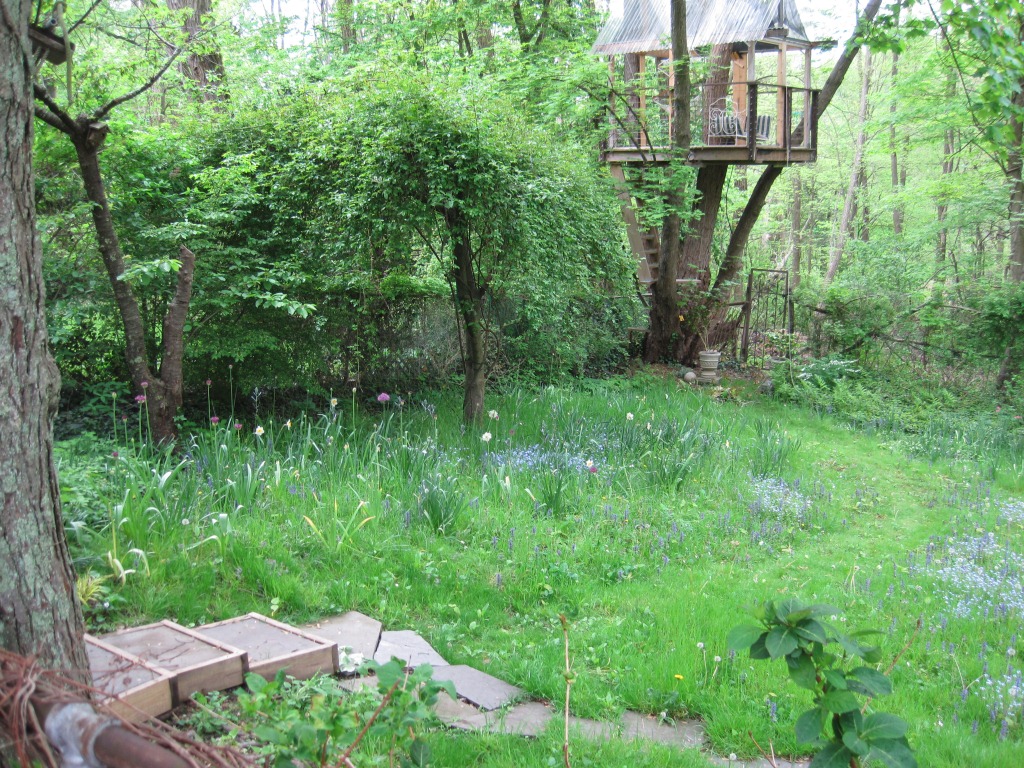
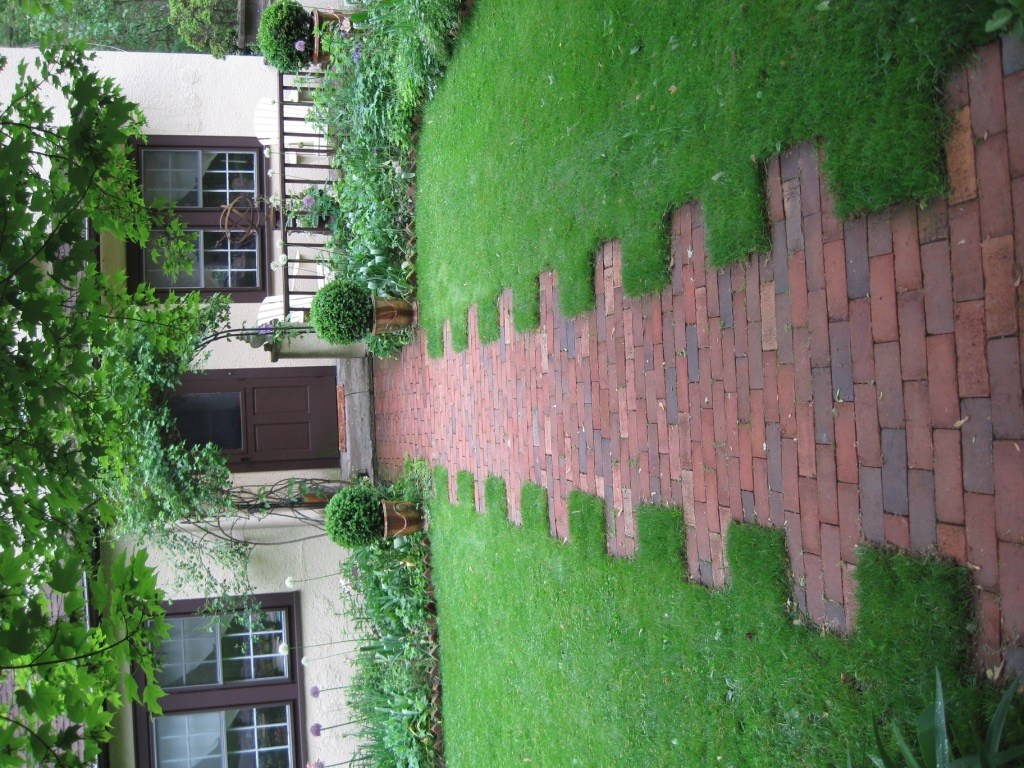
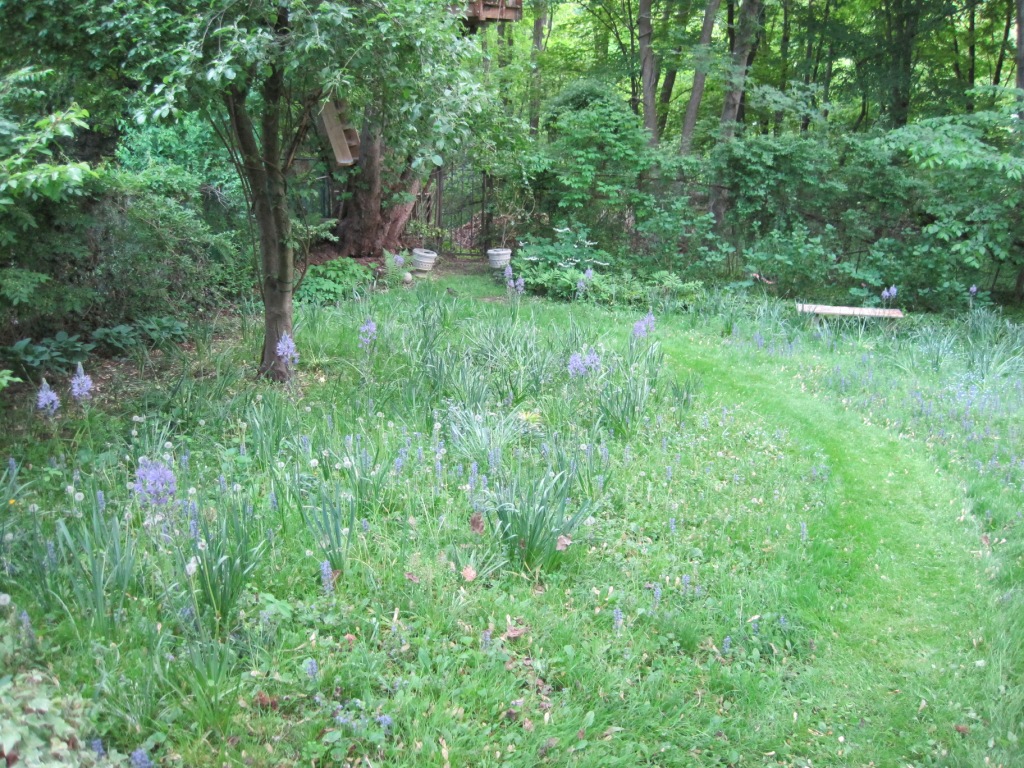
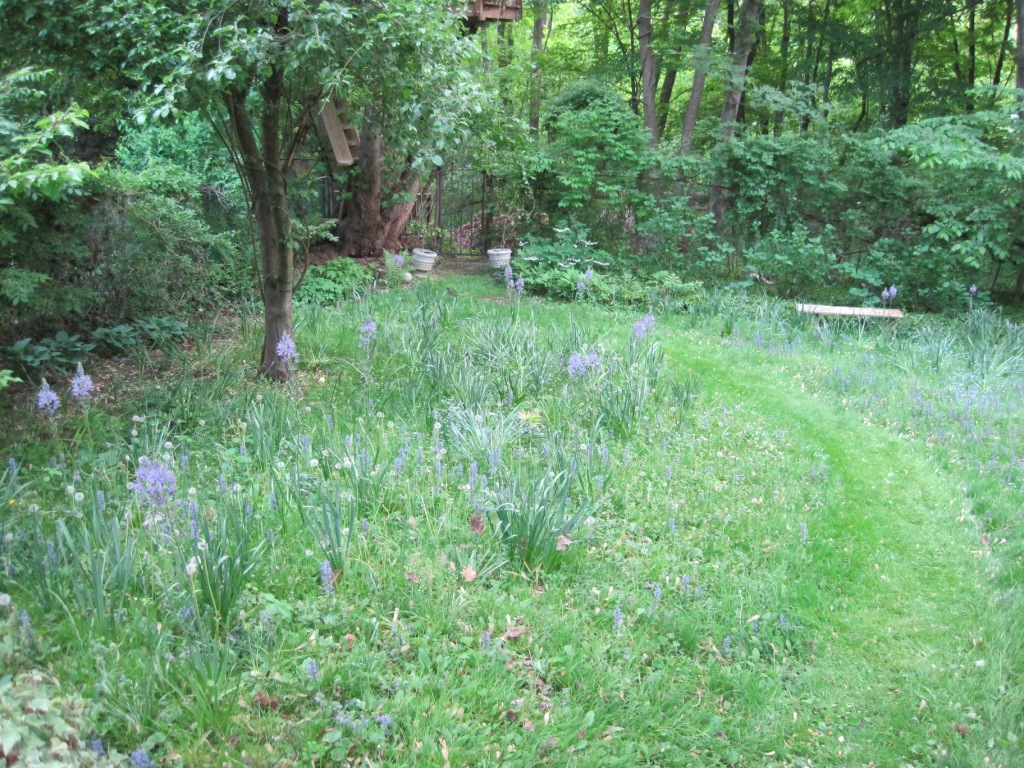
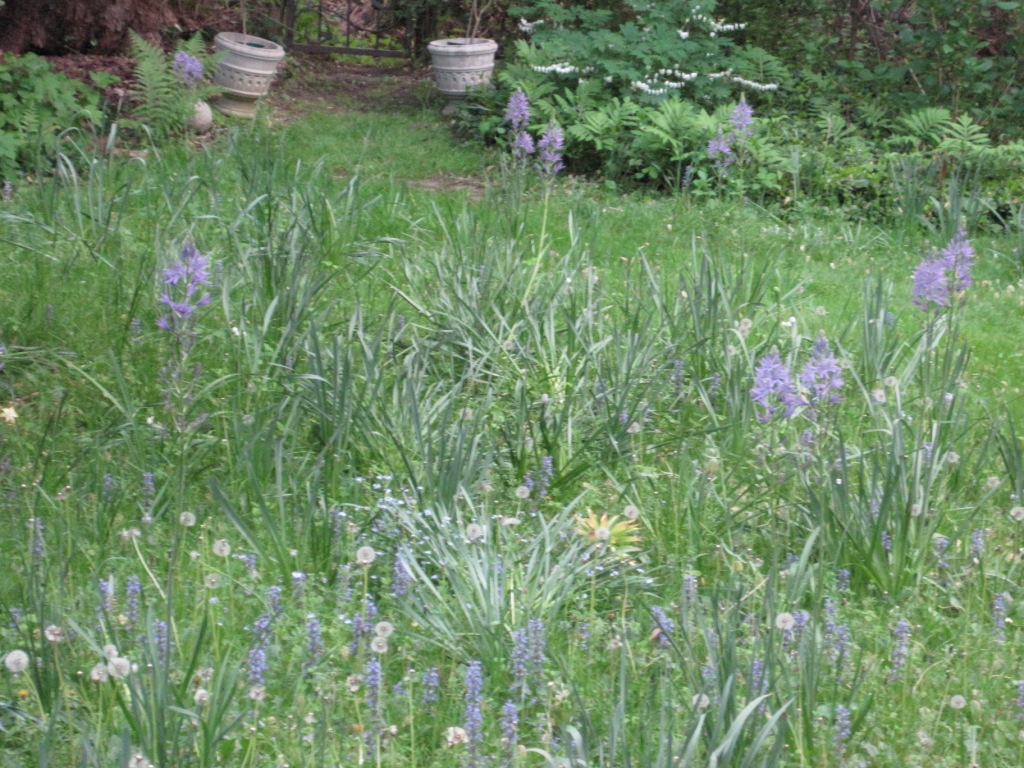
Lets examine those elements that take up too much time/effort and get practical. The first to come to mind is that ubiquitous green expanse – the lawn. That single feature consumes vast amounts of time, energy, products and money solely to look golf course beautiful. Such a waste. I’m not suggesting getting rid of it all together because some lawn is good. Just so long as there is enough to picnic, play a game (croquet not badminton) or for the sheer joy of having grass caress your bare feet. More is not needed. Reduce the lawn area by adding new trees, shrubs, flower beds and hardscaping. I converted the lawn in the back garden into a ‘meadow’. It gets mowed just twice a year. Next, stop desiring a lawn that does not include clover, the occasional dandelion, viola or runaway snowdrop. The plants we see as lawn weeds support very important wildlife. Raise the mower blade to keep the grass at about four inches. What hopes of lawn stripes and pristine grass you give up, will be replaced with more time to do other interesting things.

Shrubs and trees require minimal maintenance. In turn, they provide terrific focal points, create shady resting spots, food and shelter for birds, butterflies, bees and other good bugs, offer privacy and, year-round structure. So, plant more!

Between good mulch and ground covers, weeding becomes a task easily addressed. Spending just fifteen minutes to a half hour on an almost daily basis, will be sufficient to keep the garden looking smart. Plus, those minutes spent pulling weeds is an excellent opportunity to mentally sort out gnawing problems, decompress after a tough day, calm an overwrought mind or plan your next creative endeavor. This easy, repetitive effort is quite meditative. Multi-tasking that actually works!

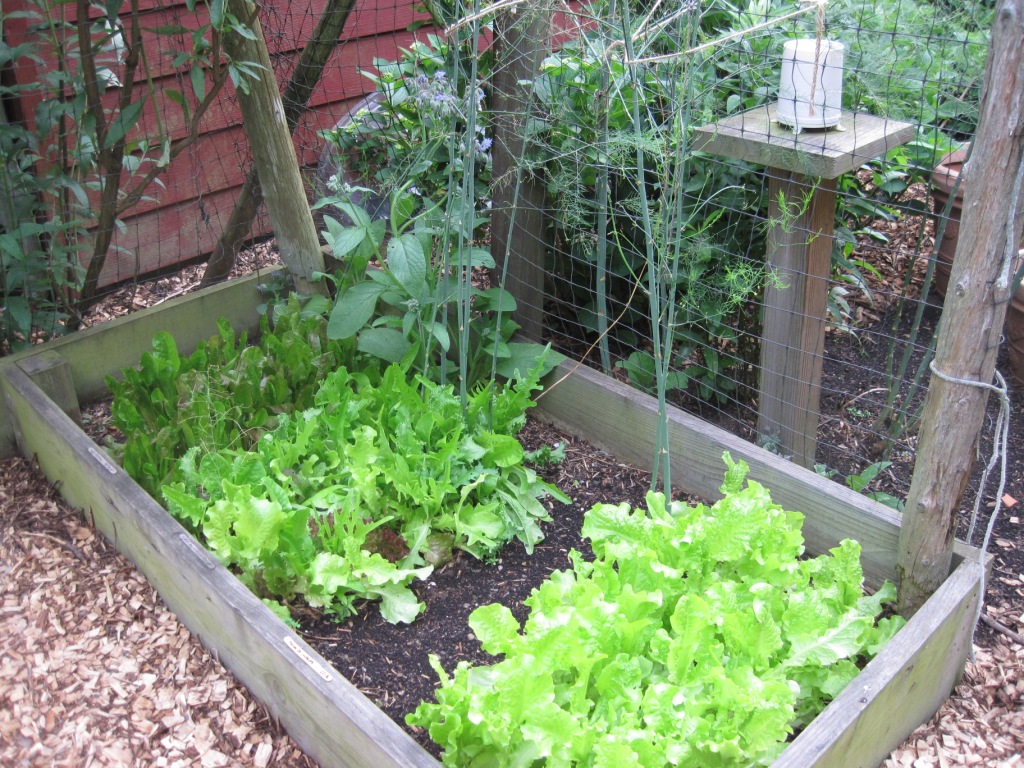
In the flower borders, adopt a policy of ‘right plant in the right place’. Avoid all others however tempting. Raised beds make it convenient for those with back or knee problems. Fussing, frustration and fuming will become a thing of the past.

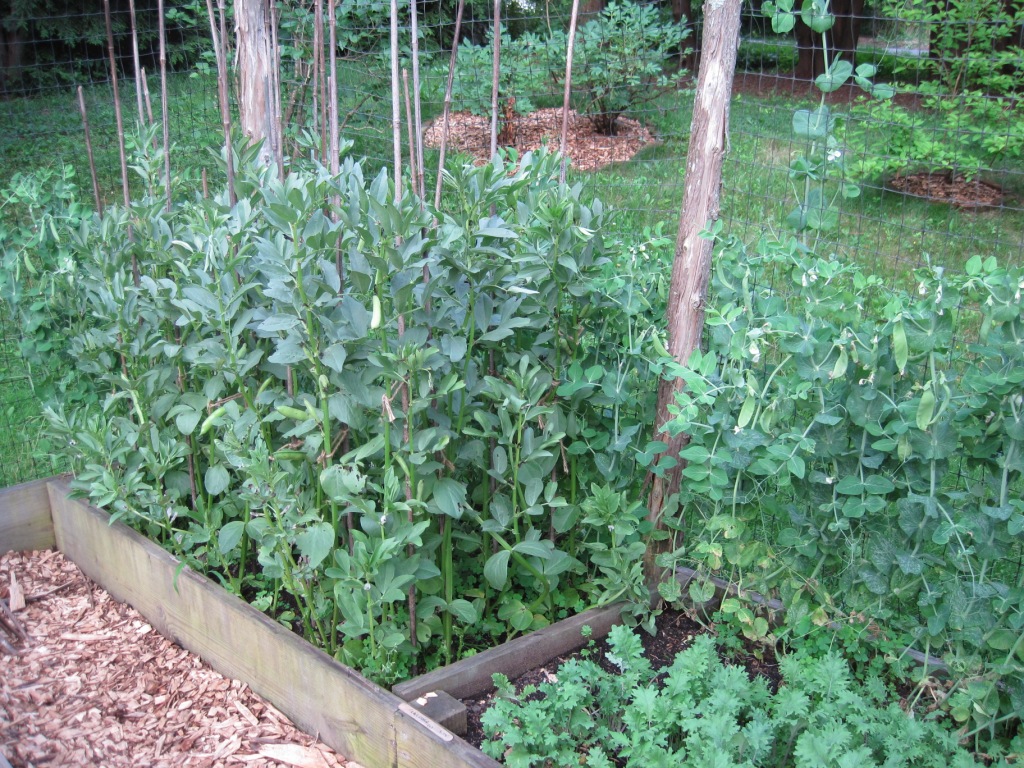
Vegetable gardens require a fair amount of time and work. Grow only what you know you and your family enjoy and can consume. If this too is hard to cope with, give yourself permission to do away with the potager. It is okay. No one important will think less of you. Instead, join a Consumer Supported Association and pick up a weekly share of fresh, organic, local produce. Not only will you continue eating healthy but, your local farm community will be appreciative of your support. Go on-line and find the CSA that serves your area.

Finally, banish old beliefs of slaving in the garden. Promise yourself that you will enjoy it without guilt. Sometimes the grass may be a little long, other times the plants may be in need of deadheading. It is all right. Ignore the random weed and settle in to enjoy your piece of paradise. The pleasure is all yours.

My meadow in May. Camassias abound.

My meadow in May. Camassias abound.


Close up of the meadow

Close up of the meadow


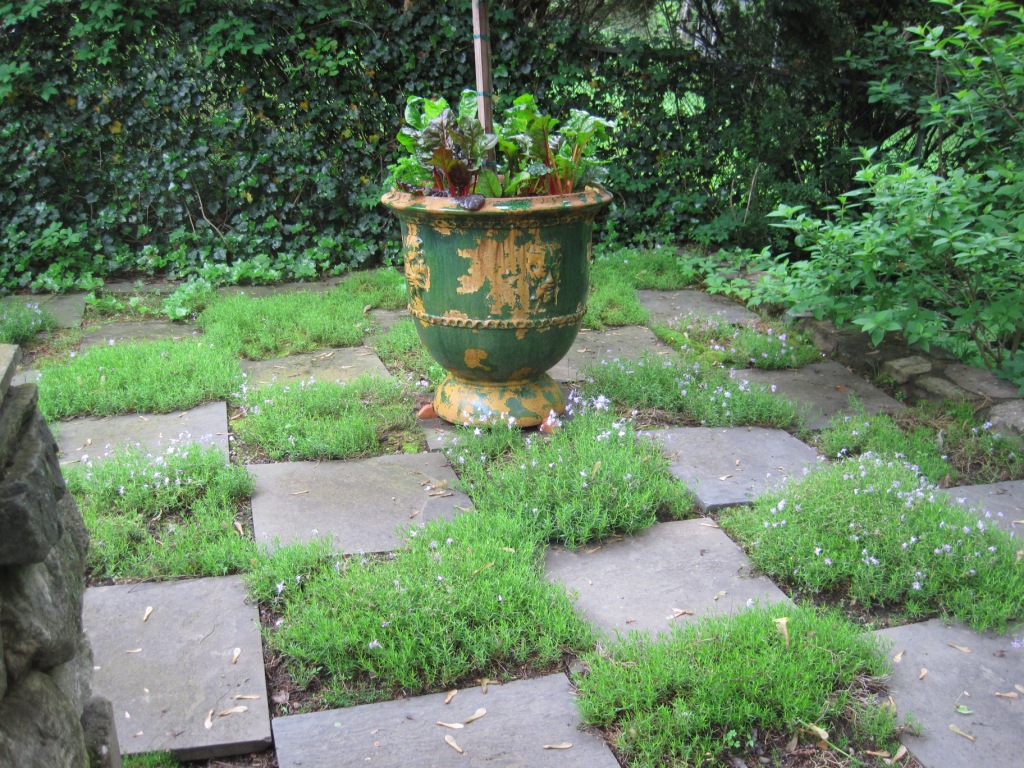
Creeping Jenny covers the ground in the side path. Pretty and functional.

Creeping Jenny covers the ground in the side path. Pretty and functional.


Raised beds in a potager

Raised beds in a potager


Raised bed
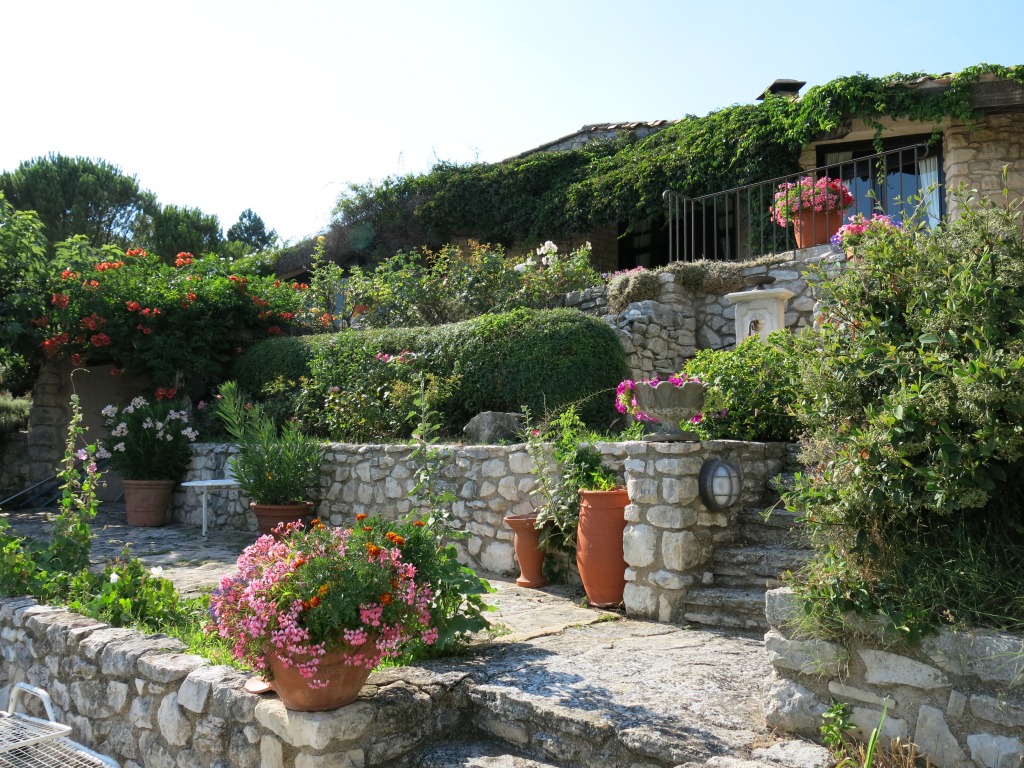
Flower beds at different levels

Flower beds at different levels


(c) 2013 Shobha Vanchiswar

Seeing The Forest For The Trees

Autumn is almost a pre-spring sort of season. A great deal of what we do in the garden at this time of year is in preparation for spring. We clean up to make space for plants. We put in plants aplenty so they will get a head start. Bulbs are dug in in vast quantity with visions of a riotous printemps. There is a certain anticipatory excitement in the air.
This is a very good time to plant trees. Too often, one gets so caught up in planting for ‘color’ that, the focus is on flowering plants and shrubs but seldom are trees the priority. I think it is clear that we are all aware of the environmental and ecological benefits of growing trees and yet, there is hesitation to commit to the task. For all the expenses one incurs in the garden, one could do much worse than going wrong on a tree. Since most of us start with fairly young trees, the cost of the tree and effort to plant it are not enormous. So should you think the choice of tree was a mistake or it fails to thrive, the matter can be easily remedied. However, removing a mature tree can be prohibitive – it behooves one to take the matter of tree planting seriously right from the get go.
We are connected to trees by our breath. The oxygen I need is put out by trees and in turn, the carbon dioxide the tree requires is what I exhale. We are each other’s life force. It is that simple. No further reason is required to show why one ought to plant more trees.
With that in mind, let us consider how to choose the right tree for the right space. First and foremost, decide if you would like a native tree which will support our native fauna or if you are more keen on something exotic and atypical. If you are going for the latter, just try to ensure that there are already several native trees in place or else, you will be creating an environment that plays host to pests with no natural predators around. Fruit trees are a good compromise! It goes without saying that your choice of tree must be hardy in your region.
Height of the tree is perhaps one of the biggest traits to consider if it is not to outgrow the space. Labels do not always give accurate indications. Do your research and speak to experts prior to purchase.
The canopy spread is next. How wide the tree grows will again be a space issue. Consider buildings, other trees, power lines, gutters that could get clogged when leaves drop etc.,. This might not seem a problem when first planted but as the tree grows …. The corollary to this is choose a tree that can spread nicely in an open space. Too small is equally inappropriate.
Walls and buildings should not be too proximal to trees as their root system could cause structural damage. Keep in mind that roots spread as the tree ages.
Shape or form of a tree is the next factor. Upright or fastigate trees do well in smaller spaces but if shade is desired, go for round or v-shaped ones.
Trees can also be trained as pleaches and espaliers which provide visual interest and function as fences or screens. Espaliers are excellent for growing several trees in a restricted area. Trees for such purposes must be selected appropriately. Again, for choice and technique, do your homework.
Further selection is made depending on one wanting an evergreen or deciduous tree. The former provide a constant visual and is effective for maintaining privacy. The latter changes through the seasons and loses it’s leaves in winter when the bare branches lend graphic interest.
Trees vary in growth rate. In your mind’s eye you might see a full grown oak but it’ll be a while before that sapling gets there. Often, fast growers have shallow roots and are vulnerable to being uprooted in fierce storms. As trees grow, other areas of the garden will be affected by the shade they create. If a sun loving flower bed is in the vicinity, a few years from now, it might struggle to thrive.
Do you know your soil type? Some trees will do well only in the right soil. Water drainage, pH, sandy, clay or chalky are things to take into account.
How much light and water a tree requires are important. Choose and position accordingly.
Neighboring properties are also affected by the trees you plant. While your choice might be ideal for you, it could create problems for the neighbor. Be considerate. It is much more important to get along.
Learn about how specific trees are maintained. Pruning, watering and fertilizing vary.
Finally, think about how the tree will look all through the seasons. Include traits such as flowers, interesting bark patterns, foliage and fruit as you make your selection. Reflect on why you want to plant a tree – for the environment, to create shade, as a focal point, to reduce lawn space, prevent soil erosion, for privacy. Understanding your intention will help considerably in making a wise choice.
As I’ve said in the past, tree planting is a very vital part of stewardship for the land. We must do right for and by future generations. You may not be around when the oaks reach great heights but your effort will be much appreciated by your children’s children. Pay it forward.

Note: A visit to a botanical garden is an excellent place to see and learn about trees. Do go!

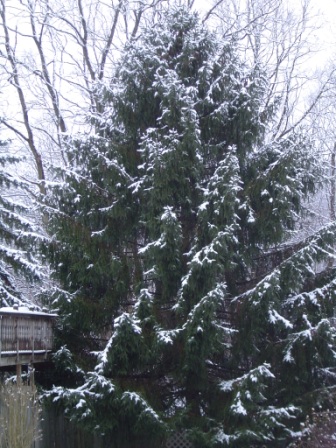
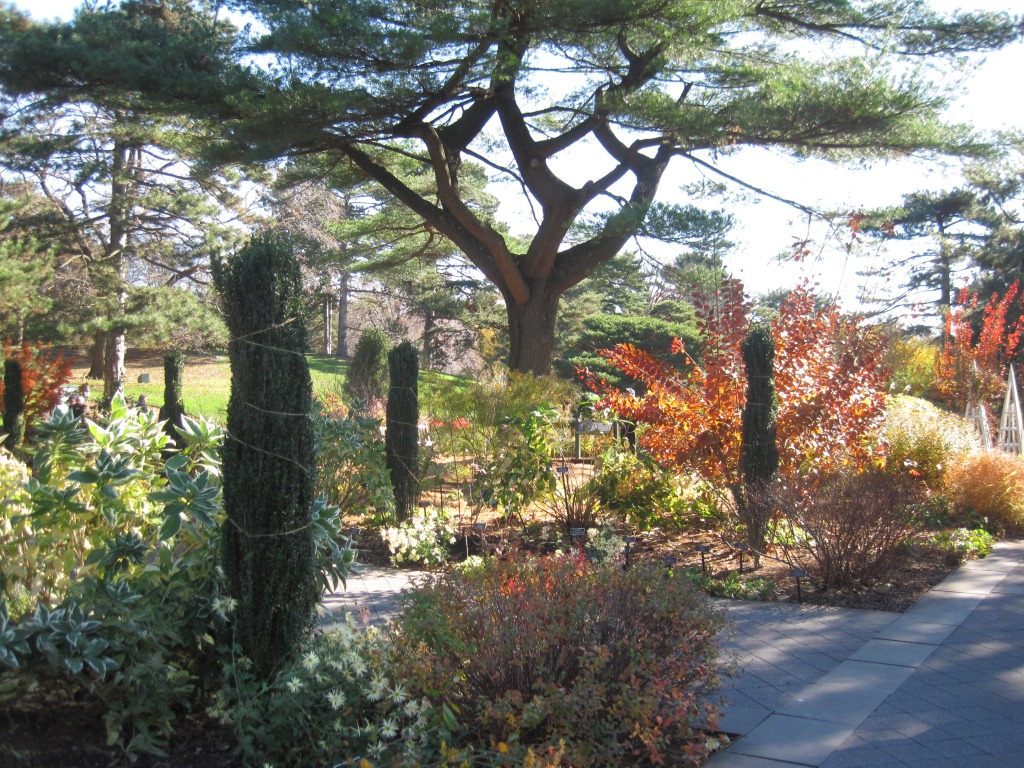
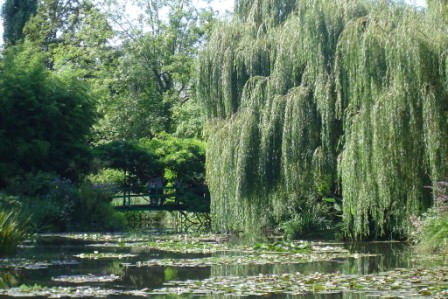
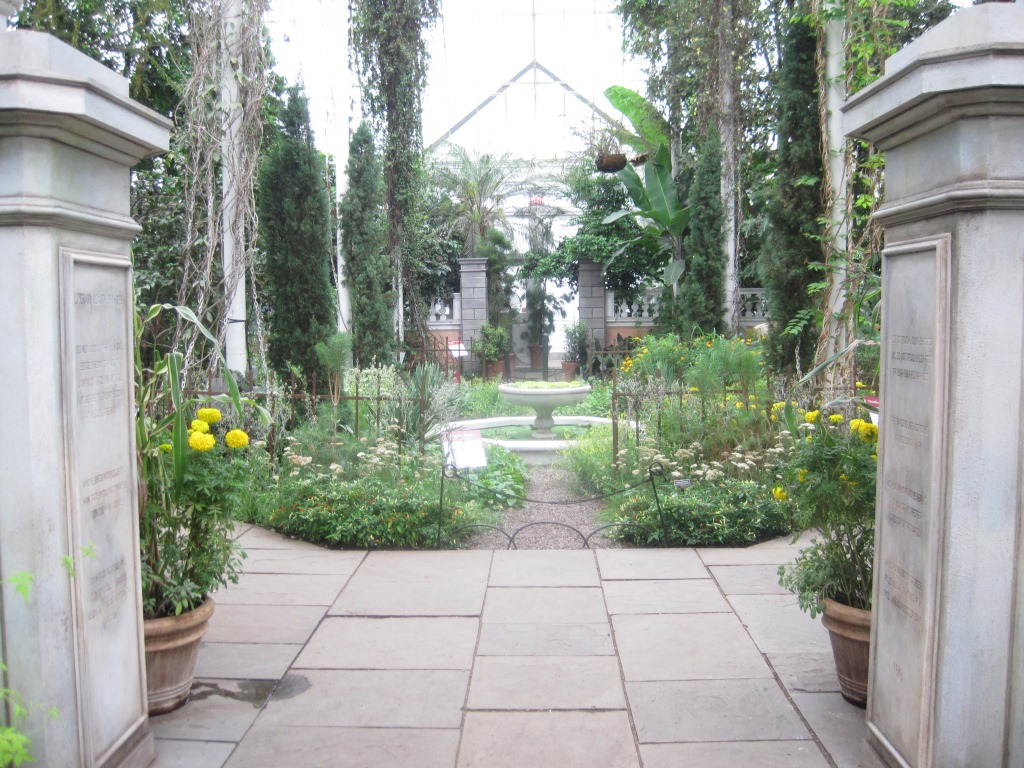
Tree LuluTree NYBG 1
Tree NYBG 2

Young 'Belgium fence' espalier

Young ‘Belgium fence’ espalier


Cedar
Tree NYBG 3
Tree Giverny
(c) 2013 Shobha Vanchiswar
Own It!


In search of my mother’s garden, I found my own.
– Alice Walker.

Some time back, I had the pleasure of visiting a garden so lovely that my first reaction was that I must be at the wrong place. I’d arrived to meet with a client who had said she needed to do over her entire property. In our communiques, she had failed to mention that there already was a mature garden in place. I was puzzled about what was needed. Having arrived a bit early and ahead of the client’s return home, I took a walk around the grounds.

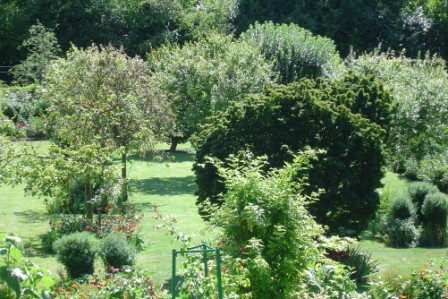
This beautiful garden was lush. Ancient oaks, tall cedars, American poplars and majestic beeches stood around like sentinels. Well manicured lawns dotted with large flower beds filled with all sorts of plants begged for closer examination. Roses abounded. In fact, a quick count said there were 18 types of them. The boxwoods that edged all the beds were meticulously clipped and shaped. This was no simple garden. Much work had gone into its making. It came as no surprise when I learned that the previous owners had created the gardens when they had built the house some forty years ago. I was beginning to understand my clients dilemma.

Nobody wants to destroy an existing good garden. The guilt alone would keep one awake for eons of nights. But, times, tastes and circumstances change. How much is a new owner obligated to maintain what is in place? Neighbors tend to adopt a certain proprietorial attitude and count on the garden remaining as is. “ Hope you will keep the Smith’s garden going! You are very lucky to have a ready made one! This has always been such an asset to the neighborhood!” Is this reasonable? What is the new owner to do?

It is possible that the new owner has the desire, skills, time and means to keep the ‘inherited’ garden as is. But that is hardly ever the case. One does not usually purchase a home to become the caretakers of another person’s passion. One must claim the place for oneself.

Gardens are never static. Their very nature is to change – through the seasons, fluctuations in the weather patterns, the gardener’s ever changing mind and, the inevitable effects of time. Like all living things, gardens age. A garden works best when it reflects the owners tastes. Even when restoration of gardens occur, they are invariably interpretations of the original. Coming back to that question, what should the new owner do?

First and foremost, the owner needs to assess his/her own attitude to gardening. Its importance, one’s interest, taste, needs and means. Even if the existing garden is exactly what is wanted, is he/she going to be able to maintain it? Happily, there is no immediate rush. As with any new property, it is wise to wait the year to see the garden through all the seasons. This wait period gives a very clear idea on what it takes to keep it up. Make note of what one does and does not like. Take plenty of photos because the memory will fail. I guarantee.

With such a list in hand, add other factors such as budget, time, sustainability, alternatives to those plants that must go – you get the idea. Unless, you are a seasoned gardener, it helps to get the advice of either a professional or a veteran gardener.

Old gardens often have exotic plants. As long as they are thriving, it seems logical to keep them. However, a little research will enlighten you if they are high on upkeep, prone to disease etc. Also, a garden today should, in good conscience, have a reasonable quantity and variety of native plants. This is the only way to bring up the numbers of our native pollinators and pest controllers. It behooves every gardener to maintain the right equation of natives and non-natives in the garden. This is particularly true of large shrubs and trees. With this in mind, the flower beds can be redone. Large lawns can be shrunk with the addition of trees and shrubs.

Gardens should be in keeping with current knowledge and practices. This involves the aforementioned native plantings, application of organic materials to promote growth as well as control pests, consumption of less water, reduction in the use of fuel powered tools and, catering to the personal needs and style of those who will enjoy this space. Time is always at a premium. It then is logical to eliminate elements that demand too much time and energy. Fussy plants, in my opinion should be got rid off altogether. A garden must always suit the lifestyle of the owner.

So, what did my client do? The handsome trees remained as did features like pergolas, benches and pond but the flower beds and lawns were disposed off. All the banished plants were disbursed amongst the neighbors so they could have a piece of the previous garden. Being a chef/caterer, the owner put in a huge vegetable garden – one that would supply all her needs for fresh herbs and produce. Soft fruit shrubs were added. The plots also boast plenty of flowers so they can be used to adorn the tables at events. It is a practical garden but still very beautiful.

I recall the much publicized outrage when England’s Christopher Lloyd ripped up the roses from his already renowned gardens at Great Dixter. He went on to replace them with the vivid oranges, reds and yellows of plants more tropical in nature. He was simply claiming his ancestral home for himself. It had to be a reflection of his personality. This new style went on to become much admired and today, it continues to evolve under the care of Fergus Garret who was Lloyd’s head gardener.

The process of taking ownership of the garden and putting your personal stamp on it, is merely creating an horticultural palimpsest. While the original is effaced, traces of it will remain. And that, is perfectly okay.
Enjoy some seasonal photos:


(c) 2013 Shobha Vanchiswar
Rules Of Engagement In The Garden

The first botanical garden was created in 1545 Padua, Italy. Inscribed on pillars at the entrance to the garden are rules for those who visit. I believe they are very pertinent even today. Here are the rules:

I Do Not Knock At This Main Gate Before The Day Of Mark The Evangelist ( April 25) And Then Not Before The 22nd Hour.
II Anyone Entering Through The Main Gate, Should Not Wander From The Main Avenue.
III Do Not Break Stems, Pick Flowers, Collect Fruit Or Seed, Or Pull Roots In The Garden.
IV Do Not Touch Young Shoots and Do Not Tread Underfoot Or Leap Over Flower Beds.
V The Gardens Are Not To Be Afflicted With Harm.
VI Nothing Must Be Done Against The Will Of The Prefect ( director of garden).
VII Any Contravention Of These Rules Will Be Punished With Fines, Imprisonment, Or Exile.

To these I’d like to add:

VII When Visiting The Garden, Feel Free To Praise It Lavishly. Preferably Within Earshot Of The Gardener.
IX Bring Along A Notebook To Write Down All Of The Brilliant Ideas and Designs The Garden And Gardener Provide.
X Mind Your Children But Do Not Threaten Them With The Ire Of The “Wicked” Gardener.
XI Do Not Mention Other Gardens In Comparison To This One Unless You Intend Using Names Like Versailles, Sissinghurst or Shangri La.
XII Every Visitor Is Obligated To Tell A Minimum Of Ten Others About The Marvels Observed In This Garden. Failure To Do So Will Result In Punishments Already Stated ( See Rule VII).
I think that covers just about everything relevant. I must now go in search of a suitable pillar preferably of ancient origin and, a well sharpened chisel.
Below are photos from the Wild Medicine Exhibit at the New York Botanical Gardens:
Wild Medicine/Padua 1
Wild Medicine/ Padua 2
Wild Medicine/ Padua 3
(c) 2013 Shobha Vanchiswar
Consolation Prize

A couple of weeks ago, I went to the Wild Medicine: Healing Plants Around the World, Featuring The Italian Renaissance Garden exhibit at the New York Botanical Gardens. It was a beautiful day which, around these parts has become an increasingly rare occurrence. So it was but natural that I’d want to meander my way around the well known perennial gardens.
Everything looked healthy and robust. No leaves hung in various states of attack by pests. No plant lay prostrate gasping their last due to thirst and sheer negligence. No weeds poked maddeningly through the resplendent plants. All was as it should be. Just as I envision my own garden in the torrid month of August. However, as I wandered casually around these lush beds, my mind kept receiving images of my garden in its actual condition. Some evil gremlin was transmitting shots of my plants looking limp, disheveled and hungry, facing an advancing infantry of weeds in brilliant Roman formations, with squadrons of Japanese beetles standing by to strike amidst shock and awe. It was disconcerting at the very least.
Why can’t my garden look this healthy at this time of year? I kept asking myself this question as though I was expecting the answer to show up like graffiti on the large, slug free leaves of the happy hostas. So lost was I in my dissatisfied thoughts that I almost tripped over a water hose snaking all over the paths and being directed by an NYBG employee. And there was my answer!
First and foremost, unlike the NYBG, I do not have a cadre of helpers working round the clock on my garden. I work on many other things in addition to the garden. Which naturally means neither garden nor the other things ever turn out perfect. My help is sporadic and that too from semi-reluctant family members. Then, I’ve long made the choice ( took the high road so to speak) to not coddle my garden with watering. I only water plants in pots while those in the ground are expected to search out ground water and make it on their own. This eliminates fuss-pot plants. Only the truly hardy survive. As far as possible, collected rain water is used for the pots. Water used on the vertical garden is recirculated so excess does not go to waste. So there. After all, anybody can just keep pouring vast quantities of water but is that good practice in today’s water endangered/challenged world? Aha!
Feeling a bit better about matters at home, I spent the rest of my visit duly consoled and able to fully appreciate the sheer mastery of design in creating these beautiful gardens. The brilliant selection of plants, the play of color, shapes and continued seasonal interest. I bowed my head. I was in the presence of greatness.
When I returned home, I gave thanks to my garden for putting up with my rather hands-off style of gardening. Like children who turn out okay despite negligent parents, my garden is doing just fine.
Feel free to drool over these photos taken at the NYBG:

NYBG
NYBG
NYBG
NYBG
NYBG
NYBG

The NYBG waterlily and lotus ponds are lovely at this time of year.

The NYBG waterlily and lotus
ponds are lovely at this time of year.


P.S. The Wild Medicine exhibit is on till September 8. Get to it if you can! For details :www.nybg.org

(c) 2013 Shobha Vanchiswar
Call Of The Cicadas

I’m waiting for the cicadas. When they come, it will be an experience to remember. Once in seventeen years is certainly an occasion. From what I understand, there will be quite a crowd. A rather loud crowd. But then, wouldn’t you want to party hard if you were released from underground after all that length of time?

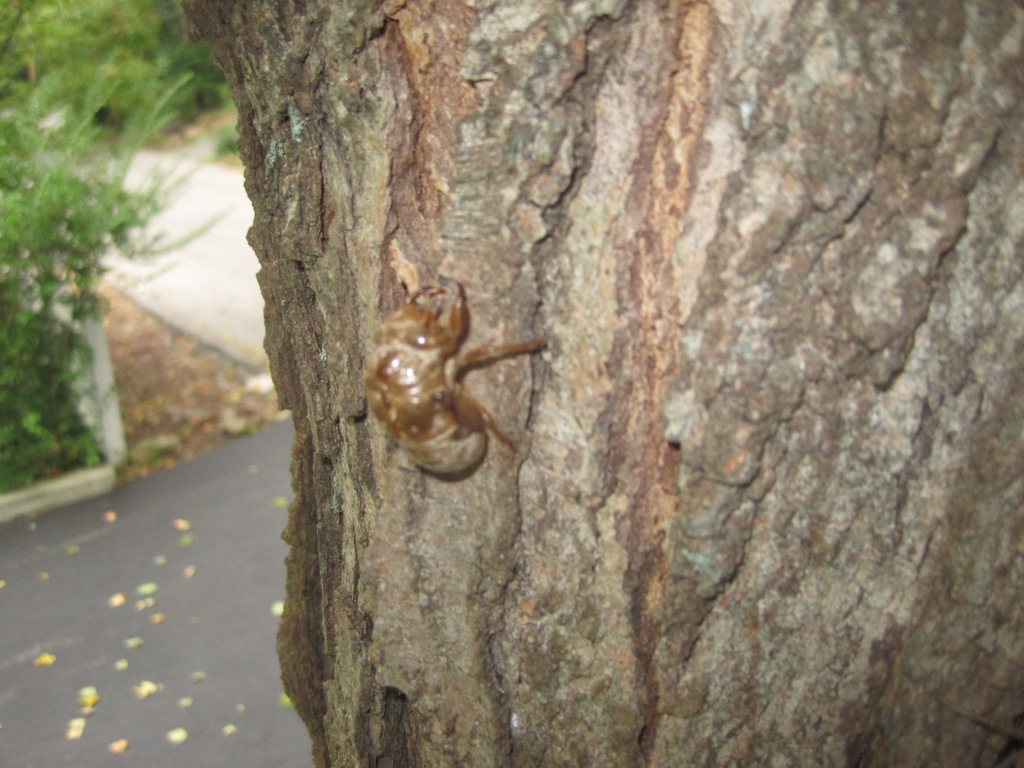
I’ve heard the apprehension and even the horror that some folk have about this cicada invasion. I understand that not everybody is curious or interested. However, I’d like to reassure them that there is nothing to fear. Firstly, cicadas have been thought to be the same as locusts. Not so. True locusts are related to grasshoppers. Cicadas are in a taxonomic class of their own. They are not really harmful or dangerous. They do not bite humans and will not decimate your prize roses or tomatoes. Females lay their eggs by creating little slits in the bark of trees and shrubs but the botanicals themselves are not at risk. They simply acquire a few scars. I believe the media have hyped the situation. You were around seventeen years ago, do you remember it being absolutely horrendous? We wouldn’t react adversely if there was a glut of butterflies. The rather vociferous tree frogs are indulged every summer. So why the anti-cicada stance? Admittedly, cicadas might look threatening but just consider them to be nothing but gentle giants.

I remember how alarmed I was when I noticed nickel sized holes randomly positioned along a side path in my garden. My mind was put at ease by an expert at the New York Botanical Gardens who explained to me about cicadas. That was seventeen years ago. I’ve come a long way since then.

As for the classic cicada noise and the numbers that will be gathering all over, think of it as a huge, cacophonic teenage party. Except, there will be no drinking, no doing drugs nor will anything be broken. There will however be lots of making out – if things go according to plan. But these party creatures will all be adults. So it is entirely above board.

If you are thinking how it will affect your season, take a few deep breaths and shift your attitude. Stop fighting nature particularly when in the big picture, this is so utterly benign. Putting up netting where you will be dining outdoors would allow you to enjoy your meals without being surprised by healthy offerings of raw proteins. In certain parts of the world they are consumed for just that. If need be, a comfortable set of earplugs will cut out the cicada song. At the very worst, you will spend a bit of extra time indoors. But whatever you do, please do not think about using chemicals and such to kill the cicadas. If you do, there will be plenty of other useful critters that will also be eliminated. In addition, the toxin will find its way into the water table. No good will come from taking unnecessary drastic measures. Can we just learn to be more accommodating – the cicadas will not bother you again for another seventeen years.

I suggest we invoke our inner child and spend this cicada season with curiosity and wonder. Take a little time to check out the iridescent colors of their wings. Listen to their sound as you would to new music. Keep an open mind. Before you know it, the cicadas will have gone. Who knows what will be seventeen years from now.

If all this is sounding too cute, consider the following: In Ancient Greece, they represented immortality, In France, cicadas are symbols of good luck. In Japan, they signal reincarnation. In Javanese culture, their song indicates the start of the dry season when non-rice crops can be planted . In China, the periodic moulting of cicadas is seen as the transformation a person must go through to reach enlightenment. And in Mexico, cicadas are known as the ones that sing till they die.

Now, tell me, do you want to mess with your karma and harm such a noble creature?
Live and let live.

Cicada

Cicada


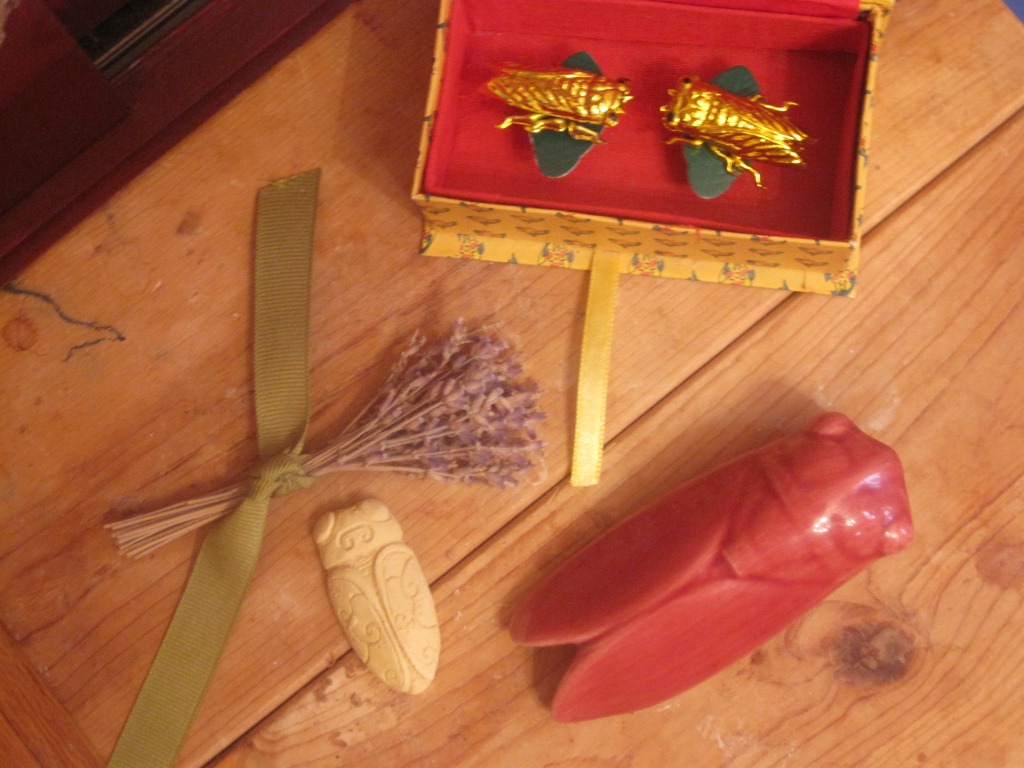
Cicada talismans - I have them all over in my home and garden.

Cicada talismans – I have them all over in my home and garden.


(c) 2013 Shobha Vanchiswar
Put Your Best Game Face On!

Just as your face and most particularly, your smile are what contribute significantly to a first impression, so is it the facade of your house and specifically the front garden that informs the world about who the residents are. When reviewing this part of your property, ask yourself if it conveys the right message. If it is, then that must be enormously satisfying I’m sure. If not, how can it be improved? A little tweaking or a complete face-lift? Of course, if you couldn’t care less about the front garden, then stop reading! Because I’m going to discuss exactly that. But wait just a second! Are you saying you don’t even bother to keep this area neat, tidy and presentable? You do, right? Then, ha! You care. Read on.

Man or woman, everybody pays attention to how their face looks (and we also pay close attention to other people’s faces). Some more than others. It all depends on how much time and effort one is willing to expend. Putting it another way, it depends on how important it is to you. Chances are you will be similarly disposed to how you address your front garden. And that is A-okay. The main thing is to have your face or front garden reflect the best you. Just as those of us who cannot stand to wear too much make up and feel uncomfortable if we do, a fussy, high maintenance garden ( yes, such a thing exists) will look incongruous. So lets consider the front of your property.

Get outside onto the street, face the house and take a hard look at what you see. Assess it honestly. Chances are there is room for improvement. Note down everything you think can be done. Make the list in order of priority or urgency. Think simple. The ugly hedge might not require replacing – a proper trimming could be all that needs doing. On the other hand, a sickly tree ought to be removed before it topples over and causes damage. It is a good idea to look at the front area at different times of day and keep in mind the different seasons.

Perhaps over the years, as surrounding trees and shrubs grew, what was once a sunny area is now shady and the plants are no longer thriving. Time to replace the plantings with those more suitable. Similarly, if trees were lost due to age or storms, a shady area is now more exposed to the sun. While it might feel a bit daunting to rethink a whole area, these are actually the ‘perks’ of a gardening life. Something to challenge us, shake uu out of our humdrum ways. If you really are at a loss on how to go about making big changes, ask fellow gardeners or even get a garden designer’s advice.

Assuming the exterior of your house is in good shape, lets start on the area that leads one up to it.
Literally. How does the walkway to the house look? Does it need repair, repaving or replacing? You are going for attractive but sensible. Paved pebbled or gravel paths are not kind to feet ( especially when in high heels) and the former can get slippery when wet or iced over. Too narrow or too wide might need some correction. Likewise, look at other hardscaping such as walls. They should be in good repair and preferably softened with greenery. Remember, you are going for an appearance that appeals to others but must primarily make you very pleased to see your home every single time.

Look at matters of practical maintenance. Is the front garden easy enough to keep routinely tidy? Watering should be convenient. All parts of the area should be accessible for cleaning, weeding, pruning etc., Otherwise, it’ll be prone to neglect.

Check the boundaries. In a formal set up, these delineations are attractive elements themselves. Hedges are kept very neat and clipped. In less formal gardens, the boundaries can be blurred with some creative planting. Stone walls are lovely but need the hardness reduced with plants that either front them or scramble on them. Likewise, other types of fences must serve the dual purposes of marking off the property as well as participating in the general garden design.In any case, some thought needs to be put in.

Lighting is an item that is often overlooked. If your walkway is long, a single light by the front door is inadequate. Think of additional sources of light for the dark hours but keep them discrete. Also, if there is a beautiful specimen tree or special sculpture, you might want to highlight it with a bit of muted illumination. Be sure none of the lights shine into neighboring homes.

If you have the means, redesign your space so parked cars are not the most visible items seen when viewing your home from the front.

Don’t overlook what is known as ‘front door impact’. Plants that are striking such as topiaries or standards. Large pots with interesting, exuberant plants. Something that says one has arrived at a special place and can anticipate more of the same beyond the front door.

Finally, we approach the most fun part of the garden – the plantings. If all there exists is an expanse of lawn and some foundation plantings, you can do much better than that! Unless huge lawns are required for regular rounds of croquet, they ought to be reduced and made more interesting by creating additional flower beds or planting attractive small or mid-size trees. Beef up the foundation plantings with plants that provide color, cheer and visual interest through the seasons. Have fun with your choices and select what you personally enjoy. The garden should say something about you remember?

If you wish, extend the garden right up to the house with creative combinations of plants in hanging pots or window boxes. Add drama at the gate or entrance to the walkway with a collection of pots ( larger the better). Think outside the box and change ho-hum to oh! My!

In my case, I want my front garden to say open, friendly, optimistic, creative, interesting and thoughtful people live here. Rather ambitious you say? That’s where the optimism helps.What do you want your front garden to say?

Note: You have the opportunity to see if I’ve succeeded in my mission by coming to my garden on Open Garden Day this Saturday May 25. Click on ‘Happenings’ page to get details.

Perennial Bed

Perennial Bed


The walkway

The walkway


View from the street

View from the street


Window box - changed seasonally

Window box – changed seasonally


Other perennial bed

Other perennial bed

Forewarned Is Forearmed

As gardeners, we often take it as a personal failure when a plant succumbs to disease or dies in spite of our best efforts. There is always the question of what more could one have done that nags us in those quiet hours of the night. Okay, so they hound the likes of me and other plant obsessed people.

As frequent as it might be sheer negligence or excessive nurturing that kills a plant, there are in actuality more universal, insidious reasons at work. Pests like the long horned borer, fungi that kill Impatiens, the red lily beetle are all devastating and none are the direct result of an individual gardener. Some of these ‘criminals’ are stowaways from foreign lands – ensconced in the wood of crates and other packing material. Still others are brought in surreptitiously by gardeners keen to have an exotic in their garden. Cuttings, seeds, bulbs and entire plants have all been smuggled by those not ever intending to cause any harm. But, much harm has indeed been done.

Often, bugs from elsewhere have no natural predators in their adopted country. Hence, they can be unstoppable till humans come up with a choice poison. The pests can go undetected for several years. Then, when weather conditions support their growth, we suddenly notice a dreadful disease affecting a specific plant specimen. Thus, we see that there are actually two factors at work here. The murderous bug as well as the climate.

It is all too obvious our climate has changed. According to experts, we will be seeing more of the likes of hurricanes Irene and Sandy. The USDA plant hardiness zones have all been ‘upgraded’. So, if you are in Zone 5, you can probably now consider yourself in Zone 6. Pretty incredible right? I personally find it a bit disconcerting that one day my treasured agapanthus that grow in pots and spend the winters cosseted in the greenhouse, will one day, in the not so distant future, be a happily thriving clump in a sunny corner of the garden all year round.

But, coming to the immediate, at the Rocky Hills talk given by the highly respected plant pathologist Margery Daughtery this past Thursday, the audience was confronted with the problems of both boxwood blight ( Calonectria pseudonaviculata) and Impatiens afflicted by powdery mildew ( Plasmopara obducens ). In each of these cases, the epidemic is a result of the climate providing the best conditions for the pests. For the time being, these diseases are here to stay. It is safe to assume that scientists are busy trying to find ways to counteract the problems. But until such time, Daughtery advices that we refrain from planting new boxwoods and impatiens. Something else to know, the ubiquitous pachysandra is in the boxwood family and susceptible to the same blight.

Instead of boxwood, she suggests finding alternatives that could work just as well. Who knew that Lonicera, our native honeysuckle, can be trimmed to give similar shape, structure and function! I’m itching to try this and will do so as soon as I decide on a good location in the garden.

The familiar bedding staple that is Impatiens walleriana, is for the time being, a lost cause. Daughtery’s alternatives are New Guinea impatiens or begonias. Simple enough right?

Nurseries will not be carrying Impatiens until an all clear is announced. Most will also be cautious with selling boxwood. Instead of lamenting the loss, we gardeners must stand in solidarity and do our part. First and foremost, no sneaking in plants or seeds from foreign countries. Maintain good garden hygiene and strict organic practices. This includes composting kitchen and garden waste, mulching thoroughly, watering only as necessary and getting rid of all diseased material in tightly closed garbage bags with the regular trash. We need to fill our gardens with plants appropriate to our climate, preferably native to our country and with due consideration to genetic diversity.

Boxwood blight and the powdery mildew should be seen as the serious signals that they are. We’ve been warned.

Red Lily Beetle

Red Lily Beetle


Healthy boxwood hedge trimmed to shape.

Healthy boxwood hedge trimmed to shape.

(c) 2013 Shobha Vanchiswar
I (Shobha) will be giving a talk on gardening on May 7, 2013. Click here for details.

God Is In The Details

So, you’ve designed your garden. The sizes and positions of flower beds, the separate potager, the terrace for entertaining, plants, shrubs and trees have been sourced, and because I’m the eternal optimist, you’ve finally committed to a compost bin. In general, you’re ready to create your own bit of paradise. But hang on just a minute. Have you taken care of the details? Remember –

It’s the little details that are vital. Little things make big things happen.
John Wooden

A garden can appear to be lovely but in order for it to function well, there are several details to consider. Some are obvious and some quite subtle. You’d be surprised how often both kinds are overlooked. Based on my experience, I’ve come up with a rough list. Here we go –

1. Access to water from the various parts of your property. Even if you have installed drip irrigation, it is a good idea to have multiple sources of water handy. Unless of course, the garden is fairly tiny and a single hose would be adequate to reach everywhere.
2. Are there well marked paths connecting the areas of the garden? These don’t have to be permanent paths of stone or brick. Simple pavers or gravel/wood bark marking the trail would do. Personally, I’m not big on anything that can be painful underfoot. Just remember, weeds will grow and need to be diligently controlled. Pavers should be placed so they are easy to step on without demanding too much of a stretch of the leg.
3. On the subject of paths, It has been said that the ideal width is where two people can comfortably walk side by side. I generally ensure that a wheelbarrow can be pushed along without any trouble. Edging the paths is a matter of taste and style – do you like it a bit wild with plants spilling over or more formal and restrained is up to the gardener.
4. If you are madly in love with swathes of grass ( I’m not judging), and you entertain regularly, bear in mind that shoes with heels are not happy at all walking on such a surface.
5. Now we come to steps. Chose material that is neither too slippery nor too rough. Wood and certain types of stone are best. A friend of mine once called me over to see her new ‘Moroccan’
terrace. I arrived to see gorgeous, handmade Moroccan tiles covering the surface of the terrace and steps. It was too late to tell my friend she’d made a big mistake. Needless to say, this area was treacherous even when slightly wet and entirely unusable all through the winter.
6. There are ideal dimensions when building stairs. The height of the risers should be 7 inches, the depth 11 inches, the width no less than 36 inches and the stair rail between 30 to 34 inches above the step.
7. The garden should be designed to heighten the senses. Plant aromatic herbs and fragrant plants where they can be enjoyed as one passes by. I also like placing plants like roses, jasmine, lilac and wisteria near the house so they can send their fragrance through open windows. Similarly, plants that encourage our tactile nature should find themselves within easy reach of a visitor.
8. Every garden should have several places to rest or just stop to look at a view. Benches, statuary, water features are all critical elements in a well designed garden.
9. If possible, add features like hammocks, chaise longues that invite one to nap, read or day dream. Umbrellas and trees can provide shade.
10. It is best if the vegetable garden is within picking distance from the kitchen and outdoor cooking area. If that is not feasible, at least keep some culinary herbs near by.
11. In your entertaining space, apart from the dining table, keep additional surfaces where guests can put down a drink while they scrutinize your prize worthy roses or eggplants or hydrangea. Otherwise, for days afterwards you will be unearthing glassware from the oddest areas. Balanced in the fork of a shrub, upturned over a branch, nestled in the boxwood, in a flower pot …
12. In planning your garden, consider ‘borrowed’ views to visually expand your garden. Furthermore, try to ensure that the garden looks interesting from all directions. There will be a natural way in which you like your visitors to walk the garden. The reverse walk should be pleasant as well.
13. For yourself, the perennial gardener, keep tools like secateurs and favorite weeder close by. I also keep a collection of vases to plunge freshly cut flowers in them right away. A few not so so precious ones are kept so I can send a friend home with a bunch of peonies and such.
14. Finally, keep your garden as a true reflection of yourself.

This list is by no means complete. It is a good start. And sometimes the end. It’ll do. By all means add other thoughts that seem compelling to you and I have overlooked. Do please let me know?

A path at Rocky Hills

A path at Rocky Hills


Ready for a gathering

Ready for a gathering


Heritage rose up close. It has a lovely lemony fragrance.

Heritage rose up close. It has a lovely lemony fragrance.


A path that links the front and back of the property.

A path that links the front and back of the property.


Artichoke in copper

Artichoke in copper


Walkway made interesting

Walkway made interesting


Wisteria

Wisteria


(c) 2013 Shobha Vanchiswar
Holy Heuchera!

I’m in love with Heuchera. This is not a love that made me swoon and swept me right off my feet but one that has grown from a long friendship. A friendship that came about by sheer happenstance. Isn’t that the way so many good relationships develop? When we aren’t trying too hard or analyzing too much, when we’re more relaxed and open to receive what or who comes our way. And so it was with me and Heuchera.

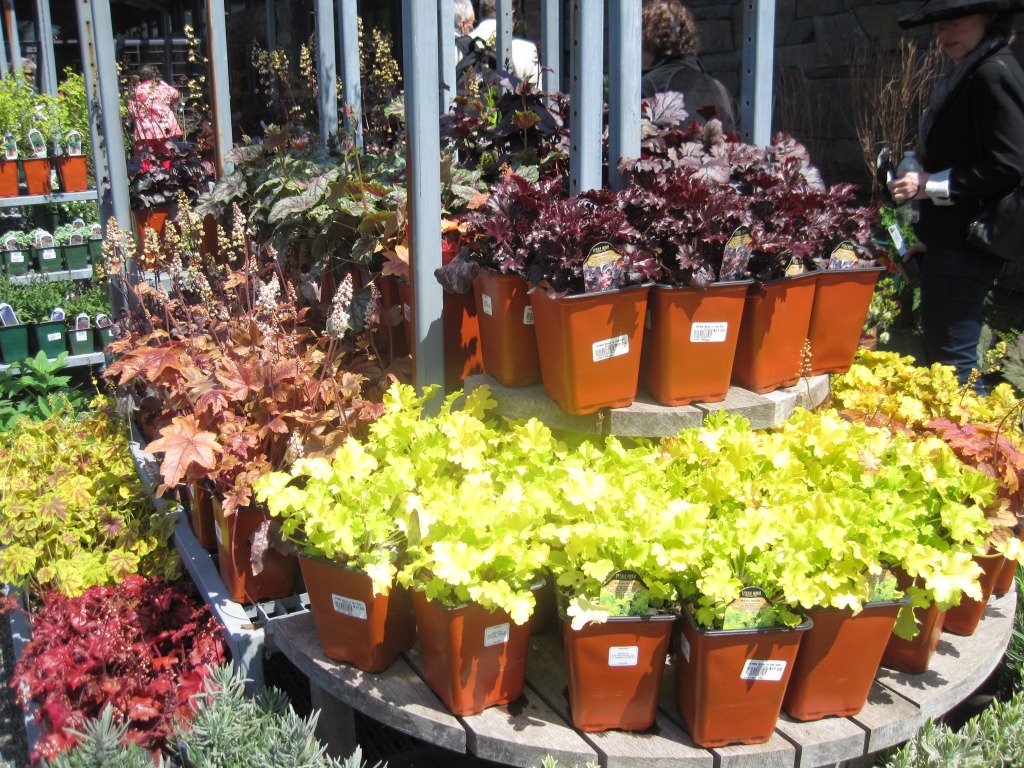
Several years ago, I was trying to add visual oomph to an oft overlooked, shady part of the garden. Amongst the assorted greens, I added the almost acid yellow of Hackonechloa grass and needed a dark color to balance this palette. Shade tolerant, purple or burgundy hued, low to medium height and easy to grow were the characteristics that were required. At the nursery, as I trolled the aisles of happy perennials screaming “pick me!” and trying hard to suppress my impulse to adopt them all, I came across a plant that appeared to fit the bill. That was how I first met Heuchera. Rosettes of obsidian, palmately lobed leaves and quite unpretentiously handsome overall, it was ideal. An appropriate addition to the garden.

Once I realized how dependable this newcomer was, I looked for more to fill in various shady corners of the garden. To my sheer delight, I discovered that Heuchera come in a variety of shades ranging from dark to chartreuse to variegated. A multitude of hybrids between various Heuchera species has been developed. One could make a whole bed of the many Heuchera to create a stunning botanical rendition of a Flemish tapestry. Commonly called coral bells, because of the coral colored flowers on long racemes that rise well above the main body of the plant, Heuchera are not generally selected for their blooms. Its the foliage that make them so interesting and vital. FYI – the flowers also come in white, green and red colors.

That they are hardy, virtually pest free, shade loving and easy to propagate by division only increases their value in the garden. I’ve had Heuchera in pots that stay outside and unprotected all winter and to date, they have survived remarkably well. That is impressive don’t you agree?

But wait, it gets better. Heuchera are true North American originals! They grow in different habitats so there’s something for a garden anywhere in the world. The leaves are edible though I have not been inclined to nibble at them. Natives of the American northwest used to make a digestive tonic from the roots. Again, I’m not recommending that anybody try out a recipe. Though personally, I’m happy to know that they are standbys in case of famine or a sudden inclination towards gluttony.

With a truly extensive array of blossom sizes, shapes, colors, foliage types and geographic range, they are quite valuable in any garden. Besides, who can resist cultivar names like ‘Burgundy frost”, “Raspberry regal”, “Smokey rose”, “Purple petticoats” or, “Chocolate veil”?
I do believe this love affair is for keeps.

A Heuchera trinity

A Heuchera trinity


Greenhouse with Heuchera outside
More!

More!


(c) 2013 Shobha Vanchiswar