Spirituality Through Astrology, Meditation and Yoga!

That proclamation was on a sign I saw alongside a highway this past weekend. It got me thinking about the times we are in. There is a growing need for something to center our hearts and settle our minds. Perhaps a quest for guidance has always prevailed amongst us humans but, in this high-speed digital age we are busier than ever. Swept in the tide of Instagrams, Facebook friends, messages confined to 144 characters, reachable via phone round the clock, we are searching for lifesavers to keep us afloat and present. Its interesting isn’t it that as our lives have increasingly adapted to all the technology, the enrollment in yoga studios has also increased? Massage and meditation are as mainstream as the live streaming we indulge in. With technology changing even as it hastens us forward, we seem to be looking to more enduring, ancient practices to keep us anchored. Time to step back and examine our course you think?

Frankly, I think the garden is the perfect place to find spirituality. And that sign could be tacked on the gate to any such place of horticulture. Patience, kindness, generosity and tolerance are cultivated here. Waiting for plants to grow, creating an environment that welcomes birds, butterflies and bees, sharing, receiving and exchanging seeds, plants and produce, working with weather patterns and pests both large and small, are all instructive. Life lessons that expose us to joy, laughter, loss, birth, regeneration, recycling are taught continuously in the garden. If you are not present, you miss the many miracles that take place in the garden every single day. Being mindful becomes the hallmark of a seasoned gardener.

The varied chores demanded in tending a garden, keep the body active. Bending, lifting, reaching are par for the course. Muscles exercised, joints kept from getting stiff, a day in the garden yields a dose of endorphins that satisfy as much and more than a workout in the gym. There’s a well conditioned body plus a garden to show for it! Of course, neither garden nor health club can guarantee a perfect body or eternal youth but then, thats life isn’t it? There are no guarantees.

If you’ve ever spent time weeding, digging or planting a bed, you know how focused you get. Paying attention forces one to tune out the chatter in the head. By the time the task is done, more than the garden has been transformed. There is certain clearing of the mind and a lifting of the mood. Thats what meditation achieves. Mindfulness creates clarity of thought and purpose.

Gardeners follow the seasons, the quotidian arc of the sun and the gravitational pull of the moon. Weather patterns influence our work as much as it affects our spirit. We apply science, folklore and an occasional dab of superstition. Astrology anyone?!

Tending the land is as ancient a practice as it can get and it is the best therapy by far. I firmly believe that if every human on earth nurtured a garden, we’d be too busy reaping the many rewards of this preoccupation to wage wars, mistreat animals, tolerate rudeness or watch bad television.
Sometimes, I wonder if gardening informs my life or if life informs my gardening.

Check out Happenings to find out about the Rocky Hills talk Oct 18 and the two art shows I’m participating in this month.

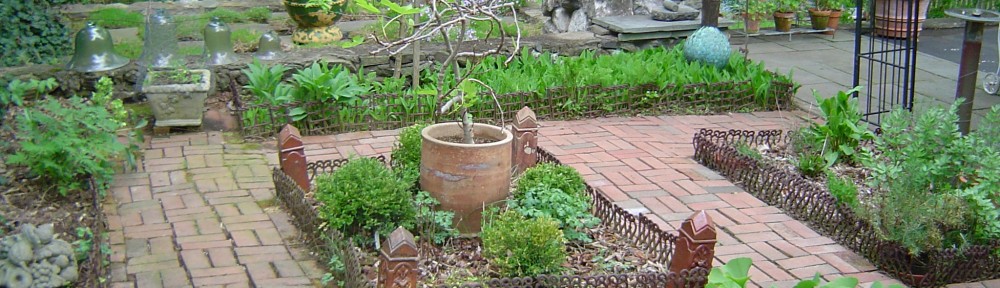
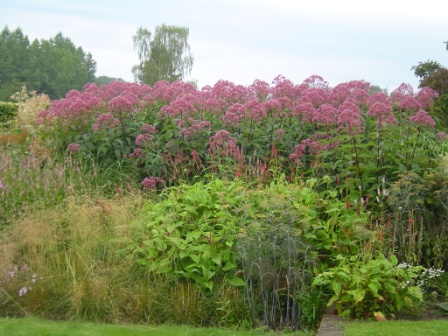
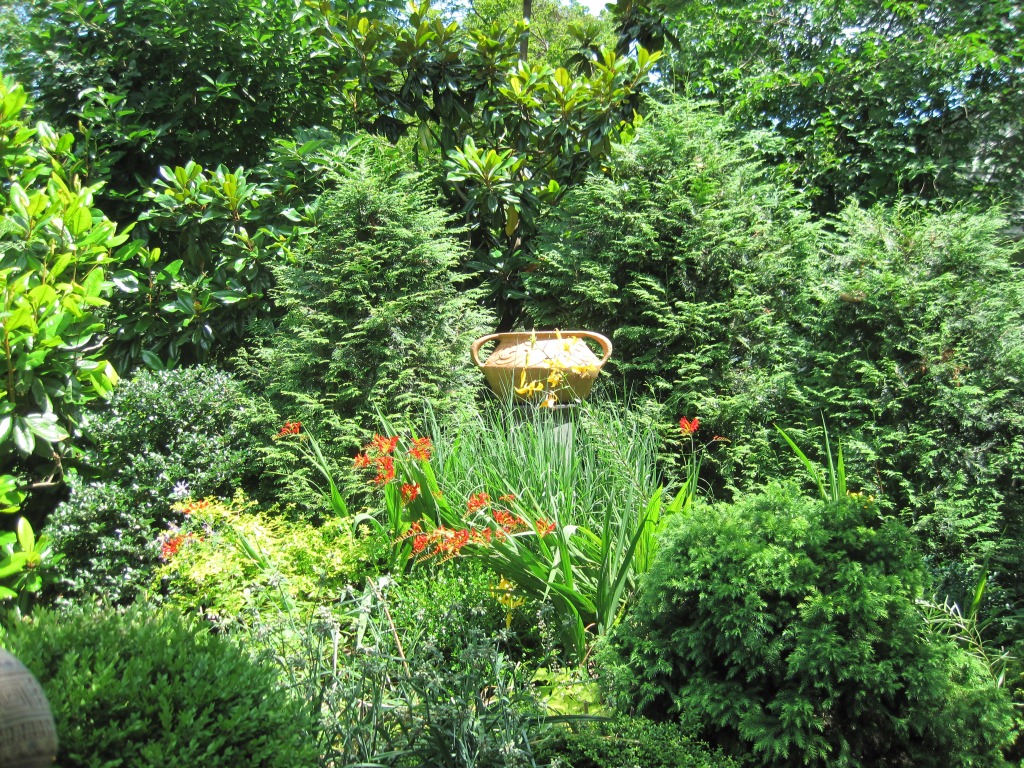
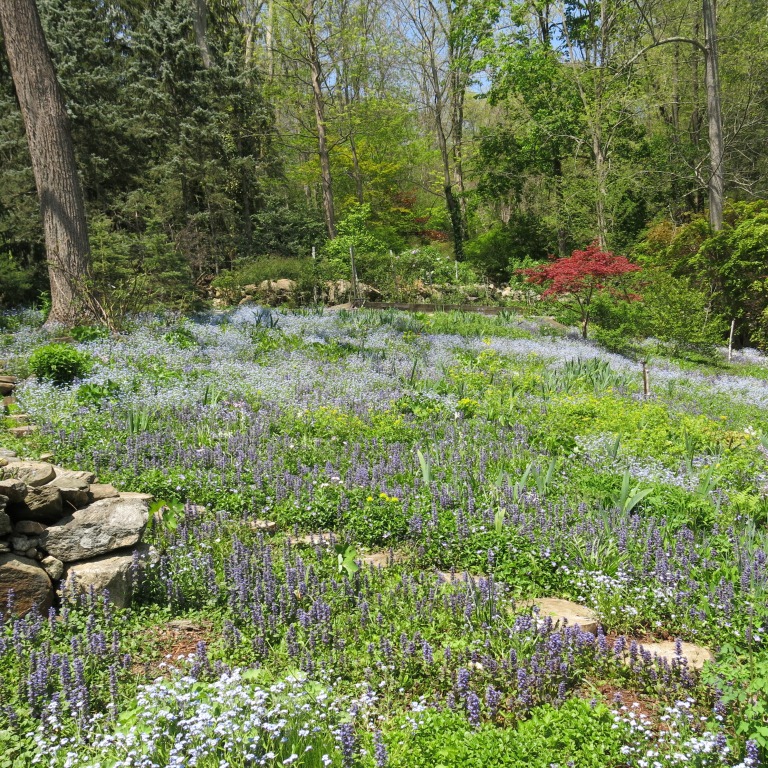
Enjoy the varied gardens below:
Musee de quai Bramley
Hummelo
Marco's garden
Rocky Hills
My garden
(c)2014 Shobha Vanchiswar
[do_widget “Blog Subscriptions (Jetpack)”]

Summer School

I adore discovering new and surprising information on perfectly ordinary subjects. Since the fabric of life is mostly woven with the routine and the mundane, learning something fresh on a regular basis is what keeps it interesting and exciting. I particularly enjoy facts that remind me that I am part of a much bigger, mysterious, absolutely astounding universe. No doubt you feel the same. Right?

Nature provides an endless source of knowledge and anybody who spends time in it cannot fail to acquire some wisdom. There is gain in every encounter with nature. As part of my Mid-point review (scroll down to see the article from two weeks ago) and my ongoing quest to learn something new everyday, I came up with what I learned since the start of summer. Personal observations, further investigations/research and input from others has kept things around here quite interesting.

I observed that hummingbirds do not like to share. Unlike many birds that feed together at a feeder filled with seeds, these tiny avians prefer to dine solo. A feeder with sugar solution invites them to stop by quite effectively but just watch – while there is plenty of room and libation for all, the bird who is there first will aggressively try to shoo off any other bird also wanting a drink. They spend more time sparring than sipping.

Spiders really do make their webs only in fair weather. IF they continue working during rain, it will be a short storm. You have a better way to predict the weather?

I’ve always known the perfume of flowers is stronger as temperatures rise but now I’ve learned that the fragrance is stronger just before a storm when the air pressure is low. I’ll use that as a reminder to cut flowers to bring indoors before the storm smashes them down.

There is a growing body of scientific evidence establishing a link between urban green spaces and a positive impact on human well-being. Unlike the short lived happiness of pay rises, promotions, purchases or that slice of cheesecake, the positive effect of time spent in nature is sustained for long periods. Reason to get outside and enjoy the green as much as possible. Its no wonder one can come in hot, weary and sore from working in the garden and still feel really invigorated.

Amongst many types of birds, the way to a female’s heart is through her stomach. A male bird will ply his object of affection with juicy morsels of worms and bugs. Charming!

The eggshells of wild birds may act like “sunblock”, scientists in the UK have said. A range of birds’ eggs showed adaptations in pigment concentration and thickness to allow the right amount of sun to reach the embryos. No doubt this information will lead to useful applications amongst us sun loving humans.

We are always wondering if there is life on other planets. But if there is, those life forms must be wondering the same right? If ‘people’ on a planet 65 million light years looked at Earth, they’d see dinosaurs not humans. Imagine that. For now, lets do right by our assigned planet. Because eventually, the time will come when the alien ‘people’ from all those 65 million light years of distance, will see us humans. And we’d better look our best.

As a biologist, I’ve known this next fact but when I mentioned it to some others, they were surprised. So I thought I’d share. Fireflies are not flies. They are beetles. Chemical energy is converted to light energy in a ‘cold’ reaction. This is unusual. Most energy conversions use or generate heat. Thus, fireflies are the exceptions that prove the rule. Huge scientific contribution from a very little guy.

Finally, something to ruminate over: Cows do not naturally eat corn – so why is ‘corn-fed’ beef touted to be superior?

Being curious keeps one engaged and connected to the world around us. There is a comforting reassurance in that. We are all part of the grand web – the spiders as well as the flies. Understanding the seemingly ordinary opens the mind, enriches the spirit. We get a sense of who we are and our place in the large scheme. Q.E.D.

Hummingbird at feeder

Hummingbird at feeder


Hummingbird

Hummingbird


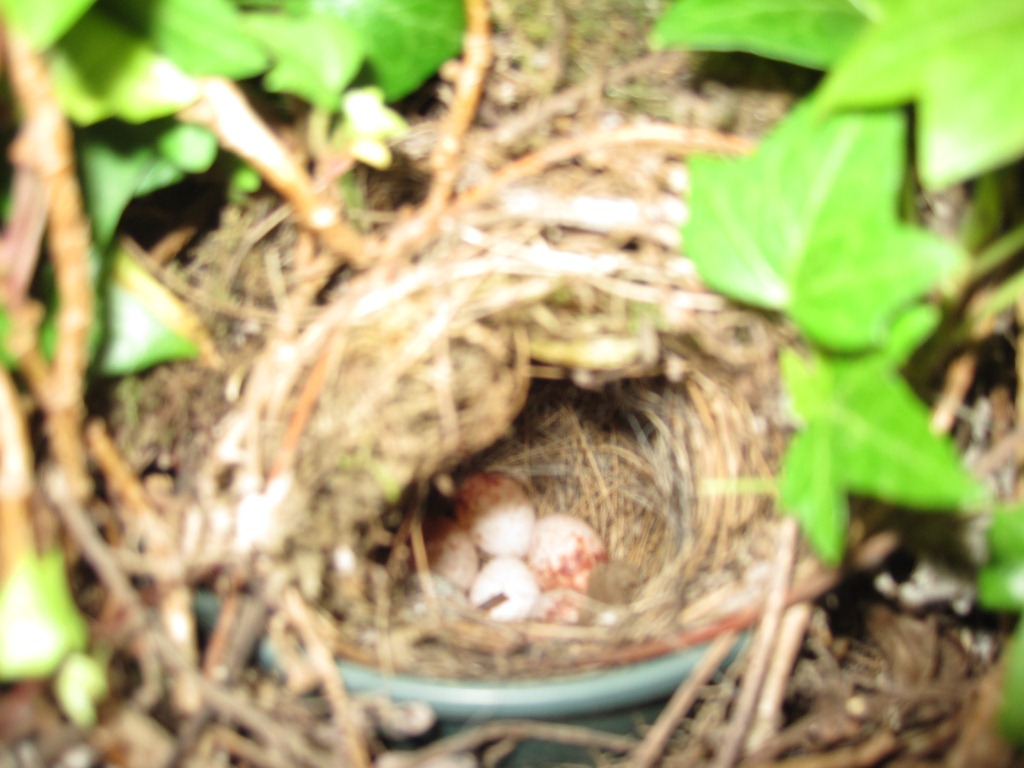
Eggs of a dove.

Eggs of a dove.


Empty spider web in the rain.

Empty spider web in the rain.


#SummerSchool
(c)2014 Shobha Vanchiswar
[do_widget “Blog Subscriptions (Jetpack)”]

Part II – On The Pesky Matter of Illegal Aliens.

Its been tough getting around to the weeds this time of year. The moment I step outside, I feel the heat heavy with moisture as though anointing and wrapping me up to send me into a state of torpor. Mostly, it succeeds. Its so much easier to simply give up and find solace in a cool drink and hot book. But the gardener in me is stubborn and cannot succumb to such temptation. At least not all the time. Snatching time in the transiently shady areas I do a bit at a time. This works somewhat as by the time the sun has made its quotidian circuit, a goodly portion of the garden has been weeded. It leaves me feeling smug and accomplished. Until I make the mistake of visiting gardens tended by obsessively compulsive friends. My own efforts look distinctly shabby.

To top it all, I’ve spied an army of Japanese beetles in the front perennial beds. War has been declared. Armed with a tub of soap solution, the enemy is picked off and tossed into it. I accept that each day is a battle to be won.

Back to the weeds. The reason weeds are so much more resilient and hardy is that the seeds of many species can survive for an incredibly long time (think decades) in the soil. When conditions are favorable, the seeds sprout. In addition, each weed plant produces hundreds of seeds. You do the math.
I did promise to impart some choice nuggets of wisdom and I realize that might well be a matter of opinion. So here goes.

The tip I give out most often and one that is universally liked is the simplest method for getting rid of weeds that show up in areas with flagstones, bricks or gravel. Its hard to tackle weeds in the spaces between. All too often, the chemical control is used. Instead, on a day when rain is not forecast, pour boiling hot water on the weeds. It will do the trick. Thats it. I’ve been doing this quite effectively for years. Frequently, the water from boiling eggs or vegetables is taken outside right away and dumped on the brick walkway just to take care of any weed contemplating a visit.

This next one is a preventative measure – Within a flower or vegetable bed, once the plants have been planted, cover the soil with a good four inches of newspaper. Conceal the newsprint with a layer of dark wood bark mulch. Please refrain from the red mulch as it not only looks like the landscaping in some industrial/commercial properties but it’ll draw the eye to itself rather than the plantings.
The newspaper will suppress weeds, retain moisture and eventually breakdown and integrate into the soil. Compost can also be used for the same purpose. I use newspaper in flower beds and compost in vegetable beds, lawn and other open spaces. The idea of recycling/re-purposing something is both boon and bonus.

In hot weather, weeding is best done in the cooler hours of the morning. This practice gives me enormous satisfaction as it keeps me motivated for the rest of the day. Weeding every other day keeps one on top of the problem and as a result the time required each day is considerably shortened. This is perhaps the strongest and most effective form of weed control. I cannot emphasize it enough. Research shows that being consistent and diligent with weeding, will, over time, reduce the number of viable seeds in the soil. So, fewer weeds and more time to enjoy the hammock and stack of books.

Finally, if you can’t get rid of them, eat them! Okay, maybe not all weeds are edible but many are. Combine young, blanched dandelion leaves, the smallest and most tender sorrel leaves in equal proportion. Dress lightly with lemon, olive oil, sea salt and pepper. Add roast chicken and you have a simple yet lovely meal. To blanch dandelions – upturn a flower pot over a whole dandelion plant in the ground. Without sunlight the leaves grow paler, longer and sweeter. In a bit over a week, the whole head of the plant will bear such leaves. Pick, wash and dry thoroughly.
Another way to eat this plant is to take two blanched heads, washed and dried. Put in warm bowl. The bowl is warmed so fat does not congeal. Fry up thin strips of bacon till crisp. Add bacon and fat to dandelions. The warmth of the bowl and heat of the fat will wilt the leaves. Quickly deglaze pan with a tablespoon of red wine vinegar and tip the hot liquid over the salad. Serve right away with good crusty bread.
A friend of mine used to make wine from young dandelion leaves. It was not half bad.

In Greece, a variety of early spring leaves like chard, sorrel, parsley, mallow, dandelion, nettle tops, poppy tops and rocket are thoroughly cleaned and then boiled in salted water for five minutes. All the water is drained and squeezed out from the wilted greens. Dress with lemon juice, olive oil, salt and pepper. Serve.

A common weed like purslane adds a nice, sour green note to a salad and cuts the bitterness imparted by arugula (rocket) or dandelion.

Through the ages, in many cultures all over the world, a number of what we, today, might call weeds were commonly used for food and/or medicine. They still are. Case in point is the Plantain weed or Plantago Major. Unless you use awful chemicals, and I have faith that you don’t, you have it growing in your garden somewhere. It is native to Europe and parts of Asia, but introduced to North America when the settlers came. The leaves are actually edible and somewhat similar to spinach, though slightly more bitter. They can be used in salads or other culinary uses. Medicinally, the leaves can be made into a tea or tincture, and this is said to help with indigestion, heartburn and ulcers when taking internally. Externally, Plantain has been used for insect and snake bites, and as a remedy for rashes and cuts which we use as a natural antibiotic ointment on cuts and bruises. The natural antibacterial and anti-inflammatory properties of plantain leaf make it great for healing wounds, and for itching or pain associated with skin problems. A tea made from Plantain leaf can be sprayed on mosquito bites to ease the itch.

Thus, you see, its all in our perception. What we choose to include, what we’d rather not encourage and how we view them all is relative. So lets not sweat over the small stuff, theres a summer to be enjoyed.

Disclaimer: Please do not go on my word alone and ingest any weed I’ve mentioned. Personal immunities, allergies and tastes are subjective. Just as foraging for mushrooms in the wild assumes a certain risk, the same goes for plants not routinely cultivated. Do your research and really understand the plants and their properties before nibbling.
As I do not have photos of weeds, I thought you might instead enjoy some photos I took this past week.

This frog looked rather alert -  ready for the unsuspecting fly.

This frog looked rather alert – ready for the unsuspecting fly.


The pattern of the Echinacea 'cone' fascinates me.

The pattern of the Echinacea ‘cone’ fascinates me.


Fern in vertical garden. Such a cooling sight.

Fern in vertical garden. Such a cooling sight.


And what is July without fireworks?!

And what is July without fireworks?!


(c)2014 Shobha Vanchiswar
[do_widget “Blog Subscriptions (Jetpack)”]

To Lulu With Love

My friend Lulu has an amazing garden with a stellar view of the Hudson river. Set on the side of a
steep hill, it was a complete mess of overgrowth when she bought the land fifteen years ago. Six landscape designers shied away from helping her so she did it by herself. She has created a marvel. I’ll share more of her garden in the future but for now, I want to show you her impressive tree peony collection.

When Lulu sends out the call to come and see the tree peonies in the spring, one races to do so. It is a rare, ephemeral treat. True to Chinese tradition, the plants are protected from the heat of the sun by strategically placed umbrellas. The parasol shaded flowers look like Victorian women strolling the park eager to notice and be noticed. The scene is utterly charming. See for yourself.

Ladies and gentlemen, witness the Many Moods Of Lulu’s Tree Peonies:

Lulu

Lulu


The grand staircase

The grand staircase


The ladies and their parasols

The ladies and their parasols


A - 3
A - 4
Bashful

Bashful


Blushing

Blushing


Bold

Bold


Come hither

Come hither


Confident

Confident


Coquettish

Coquettish


Courageous

Courageous


Coy

Coy


Demure

Demure


Flirty

Flirty


Hesitant

Hesitant


Innocent

Innocent


Open

Open


Secretive

Secretive


Shameless

Shameless


Shy

Shy


Spent

Spent


Tired

Tired


Voluptuous

Voluptuous


Youthful

Youthful


Psst – I suspect there is a bit of all of those moods in Lulu herself!

(c) 2014 Shobha Vanchiswar
[do_widget “Blog Subscriptions (Jetpack)”]

Summer Of Bliss

With the solstice this past Saturday, summer is officially open. Happy Summer to all!
Much of the hard work in the garden is done. Its all maintenance now. Weeding and dead heading, judicious mowing and watering, harvesting. We’re in the sweet spot of the growing season. Just enough to do so we feel useful but not too much to feel sorry for ourselves. Getting into a rhythm with the upkeep, allows plenty of time to relax and enjoy the summer. You promised yourself that this year you were going to truly revel in the season didn’t you? I did. And I’m determined to stick with that plan.

My to-do approach: get to the garden early and finish chores in the cool hours of the day. Spread the work so only one task is required per day. Then spend the rest of the day doing whatever the heart desires.
True, other responsibilities like jobs, laundry, bills and the like will show up but with enough forethought, I intend to maximize on the free time.

I want to be sure I enjoy my days with fewer responsibilities – more art, poetry, reading, swimming, gathering with friends, staying barefoot, tracking the stars, eating ice cream, count butterflies by day and fireflies by starlight, laugh loudly, … everyday. Are you with me?

And, when autumn arrives, I want to plunge into it because I’ve had my fill of summer. No regrets.

Update on my Robin family:
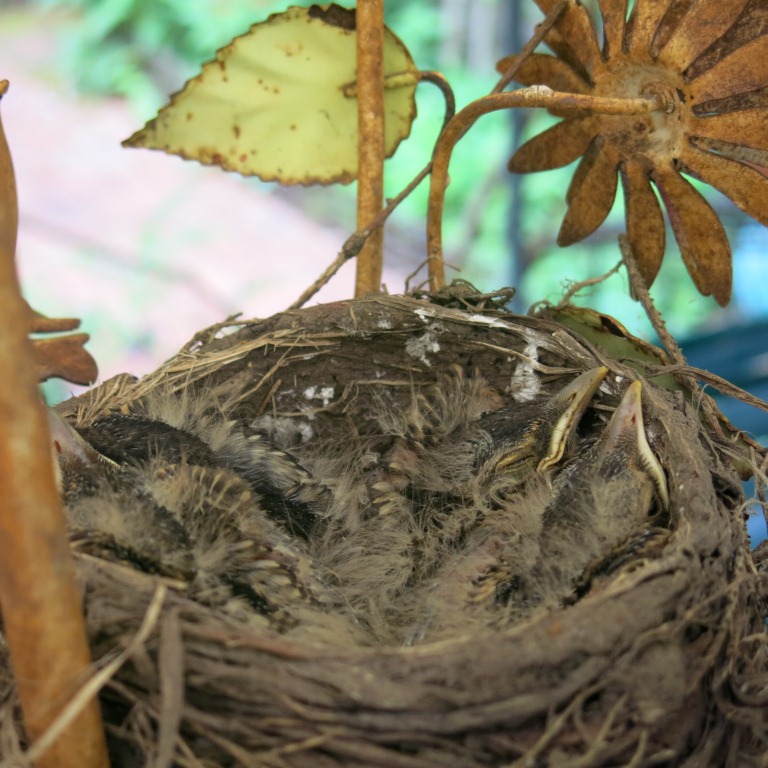
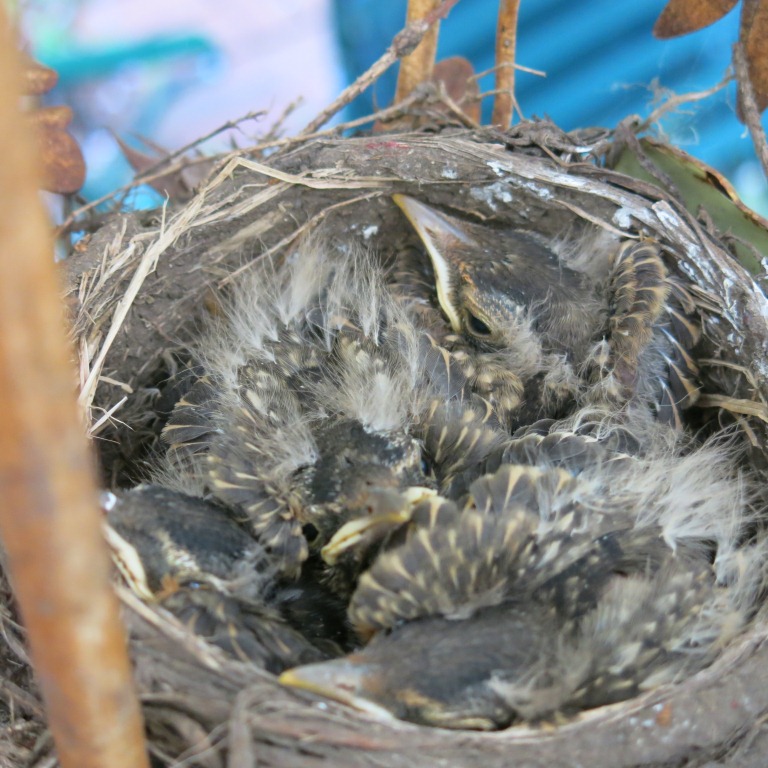
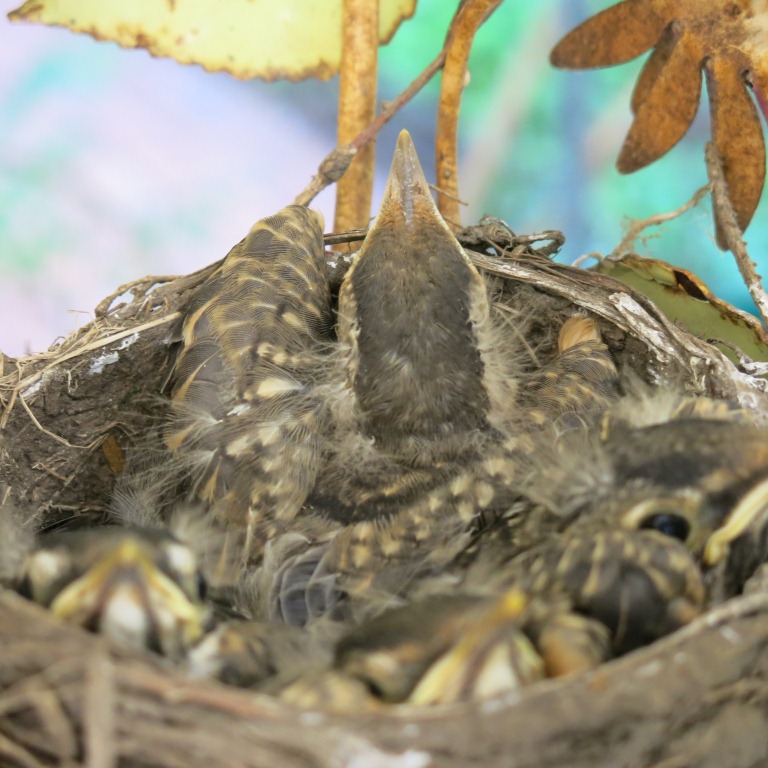
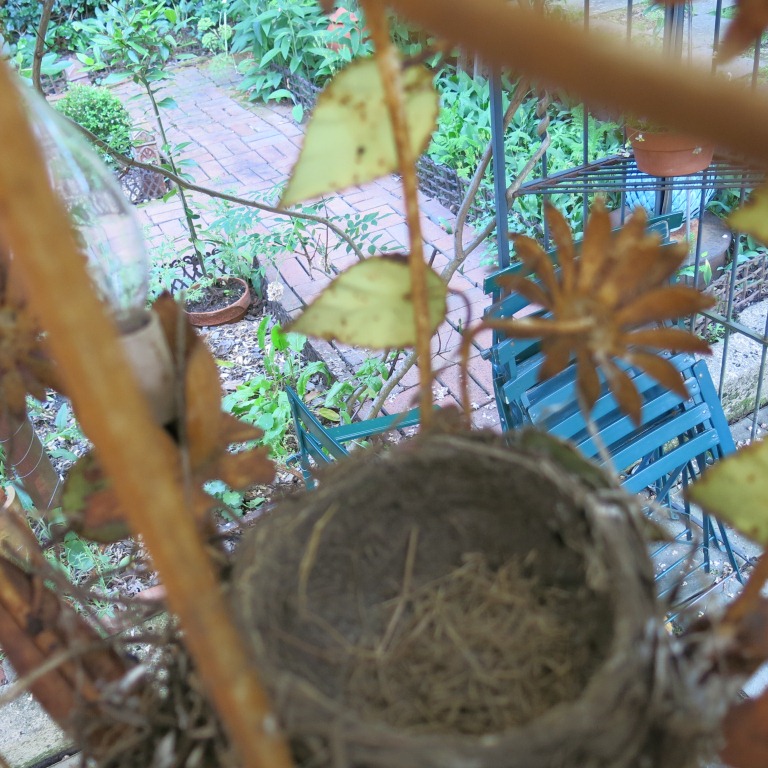
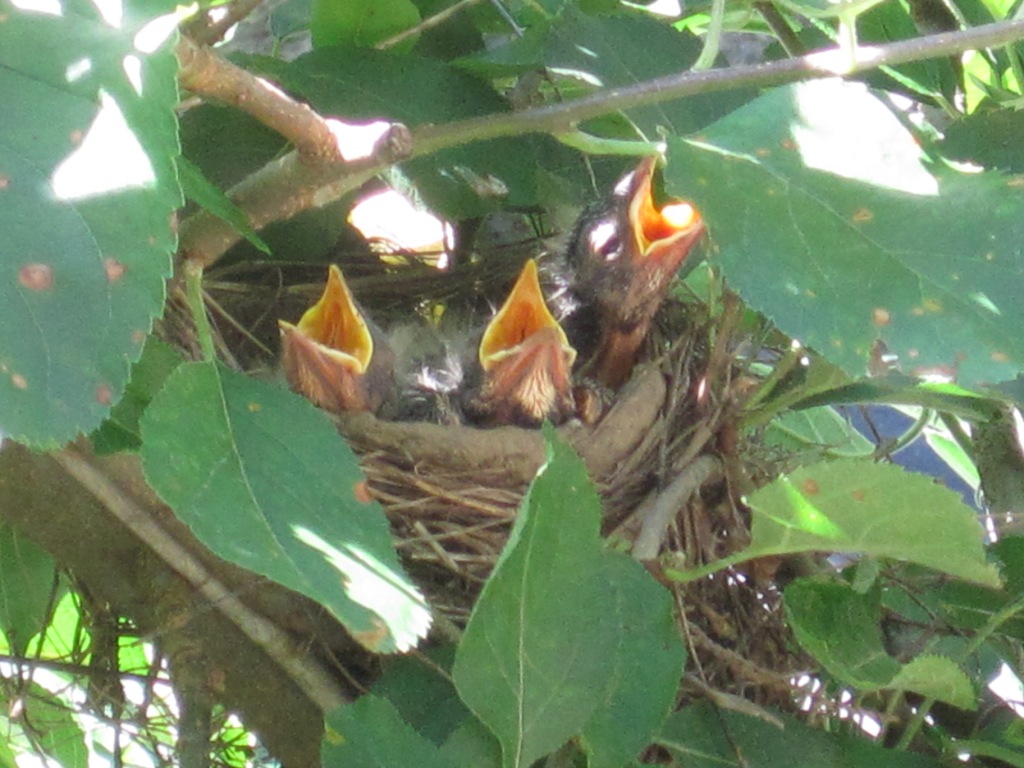
Six weeks after the nest was built, the babies have flown away! I watched, I waited, I waxed eloquent and then, I waved goodbye to this beautiful event that I was privileged to witness. Took lots of picture. Here are a few:

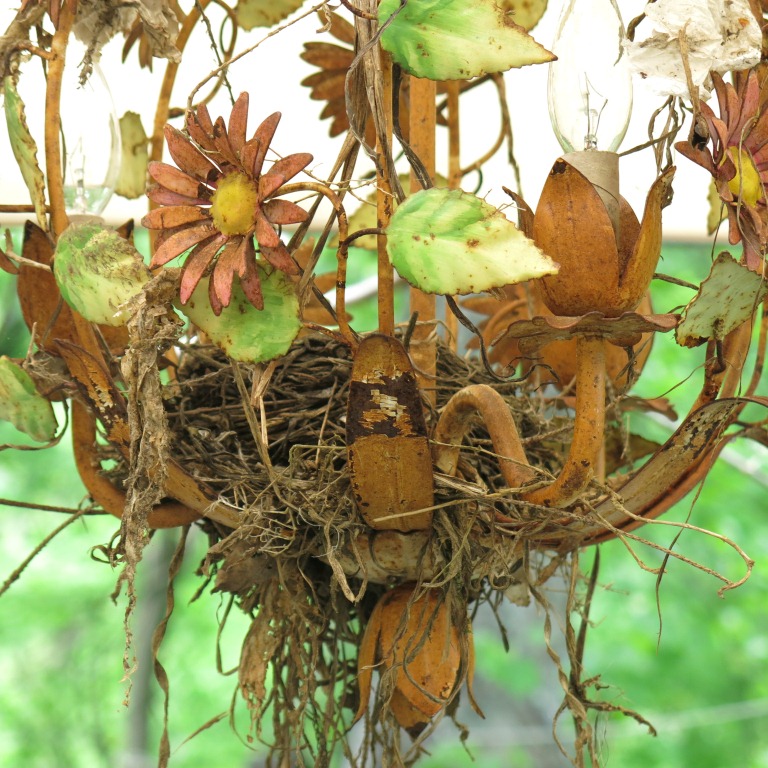
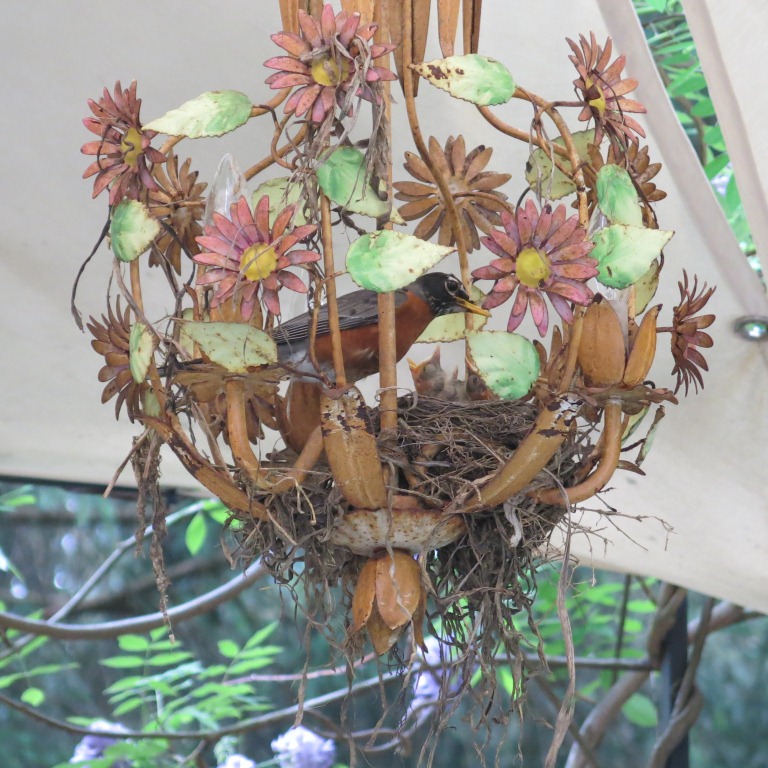
Nest built in terrace chandelier

Nest built in terrace chandelier


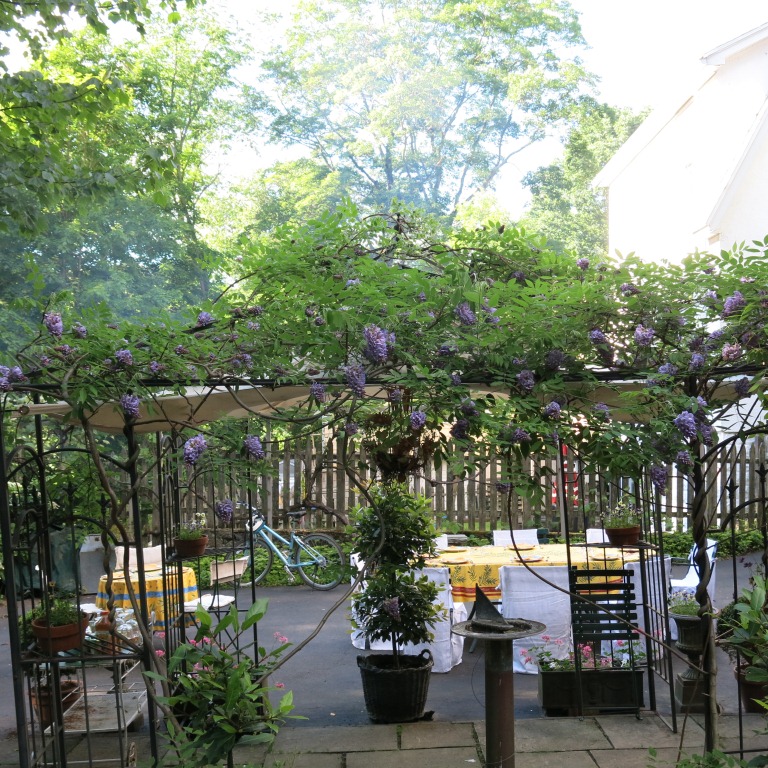
Notice - outdoor dining has been shifted to outside the gazebo so nest is left in peace.

Notice – outdoor dining has been shifted to outside the gazebo so nest is left in peace.


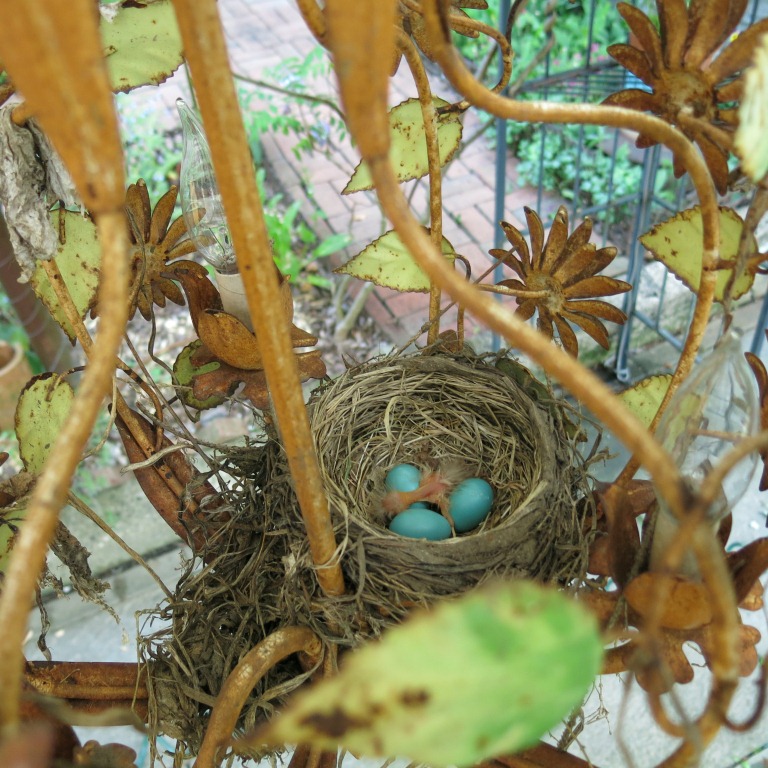
Eggs laid

Eggs laid


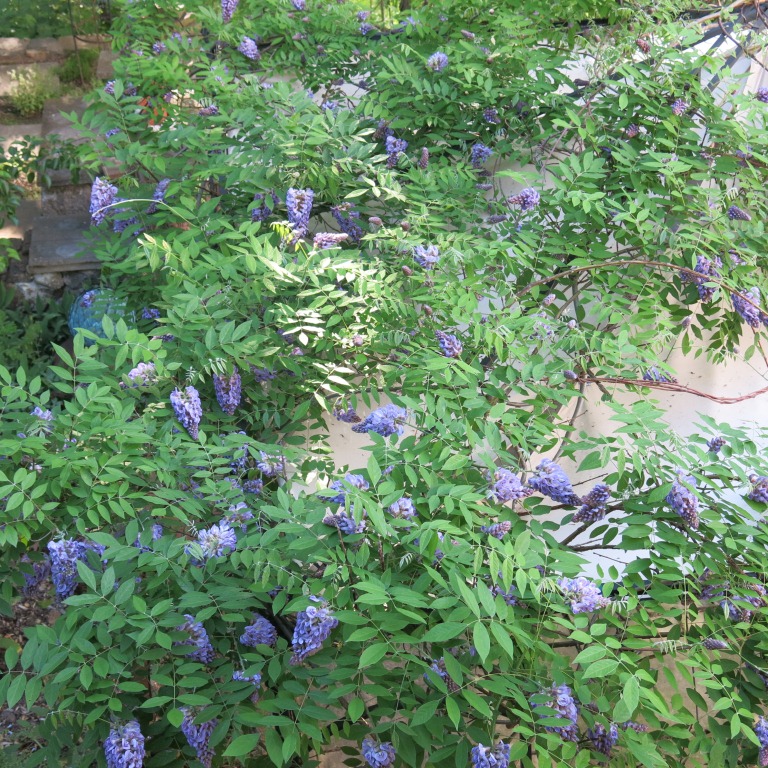
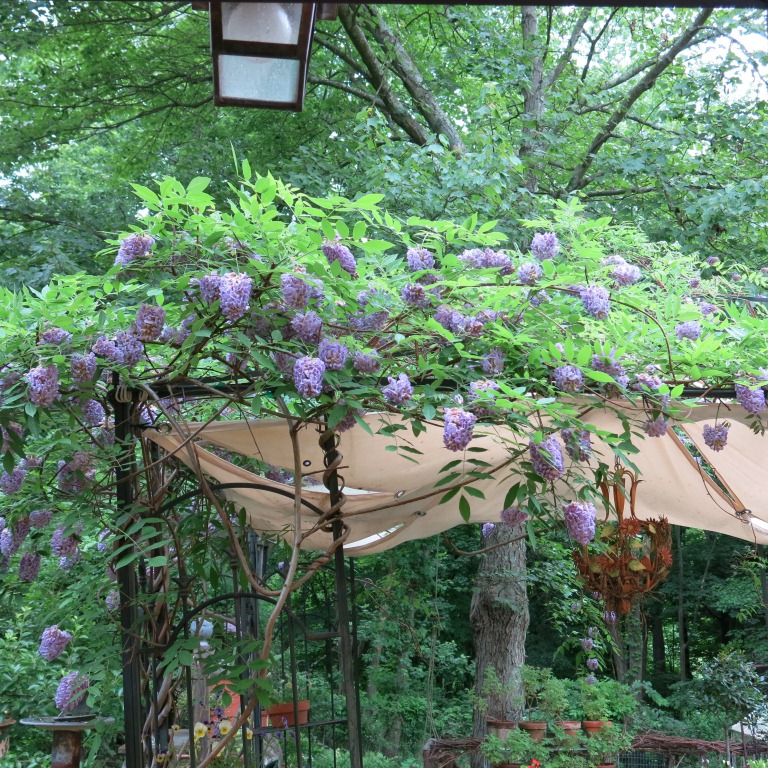
Perfect location and timing - under the wisteria in bloom.

Perfect location and timing – under the wisteria in bloom.


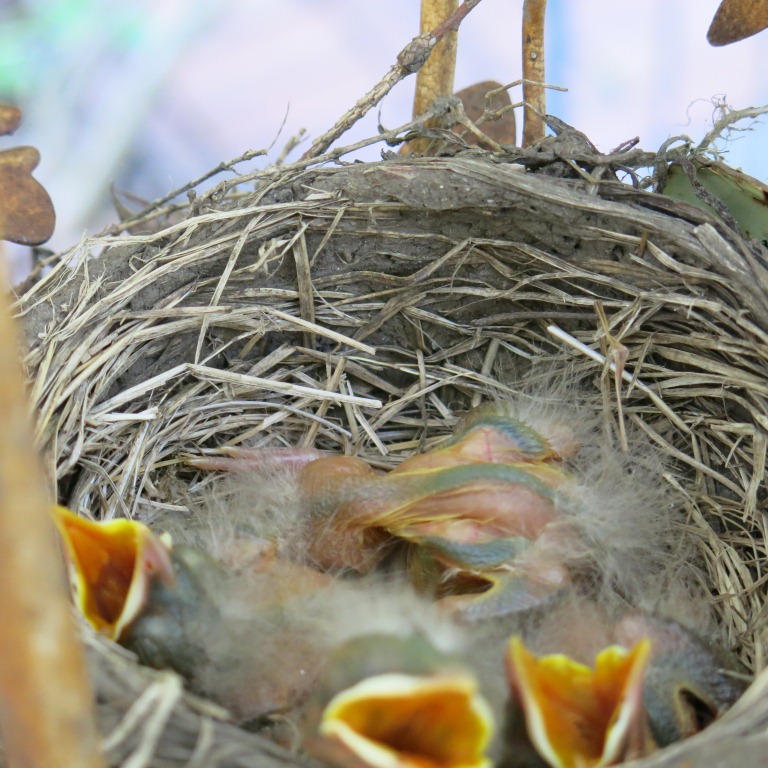
Hungry mouths

Hungry mouths


Feeding time

Feeding time


Growing babies

Growing babies


And growing

And growing


And the wisteria grows as well.

And the wisteria grows as well.


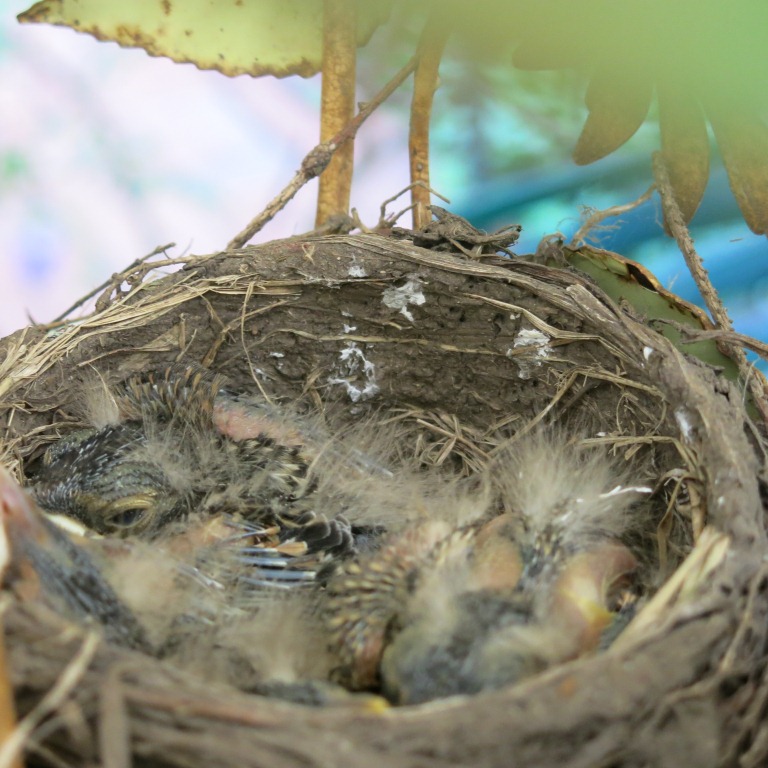
Crowded nest

Crowded nest


And more crowded

And more crowded


Empty nest!

Empty nest!


(c) 2014 Shobha Vanchiswar
[do_widget “Blog Subscriptions (Jetpack)”]

Closing Our Borders

Over the years, I’ve expressed my opinions and thoughts about increasing our usage of native plants, supporting native flora and fauna, being environmentally conscious in the garden and in general applying organic, ecologically responsible methods. I’ve often mentioned the name Douglas Tallamy as the authority on this subject. Having read his book Bringing Nature Home when it came out several years ago, followed his work and on occasion corresponded with him, it was with particular eagerness that I went to hear him speak at the Greenwich, CT Audubon Society a couple of weeks ago.

An unassuming, affable man, Tallamy is a powerhouse of knowledge and understanding of all things in the sphere of entomology and wildlife ecology. I’m summarizing his talk and I hope the information I give will make you sit up and do something.

Ecosystems perform locally. Biodiversity equals ecosystem services. We have degraded 60% of earth’s ecosystem services. Given that 80 – 90% of plants are propagated by animals not wind, we have effectively sterilized our neighborhoods. As Tallamy puts it, we have demonized it! We are living with ‘nature deficit disorder’. Plants literally allow all living things to eat sunlight. So when there are fewer plants, there is less to eat and therefore less support for all animals.

The United States is a human dominated ecosystem. We uphold our lawns as a major status symbol. To date, we boast 72, 500 square miles of suburban lawn. That is eight times the state of New Jersey! And growing. Given that lawns barely sustain any living creature, it stands to reason that we’re seriously impacting our local ecology. Simply thinking our parks and preserves can do the job is ridiculous. They are too small, fragmented and isolated. A contiguous space of diverse plantings is critical to support our birds and butterflies. With that will come all other valuable critters.

To do this, we must not only introduce many plants but we must select more native plants. This is because not all plants support the food web. Natives do. Whilst alien species aggressively replace natives, they support insects very poorly. Five times more insects (think caterpillars) can feed on native species. Native plants and insects share an evolutionary history. Indigenous insects are not adapted to eat alien plants. Take the Monarch butterfly for example – it depends on specific native plants and in a way, this specialization is its curse because with disappearing natural habitats, we are in danger of losing this valued butterfly. With fewer and fewer insects available, think what this will do to our native birds. 96 % of reproducing birds eat insects. Insects provide the high levels of protein and nutrients needed by these birds.

A world without insects is a world without biodiversity. Birds forage close to their nests. Alien plants will not provide them the local supply of the food web. We’ve come to view plants only for their beauty and not their ecological role. But if we understood the number of caterpillars or other insects supported by native trees and shrubs, we’d realize how imperative it is to plant them. We must create corridors connecting natural areas. This can be done easily if each of us filled our gardens with the right plants.

Lawns are biological deserts. They demand a high amount of fertilizers, weed and pest killers to keep our lawns pristine. Add to this the pollution created by gas powered mowers, water table contamination by use of aforementioned assorted chemicals and you have the ideal recipe for a green wasteland. Reduce the area of lawn and begin the transition from alien ornamentals to native ornamentals. Those all too familiar albeit pretty, Bradbury pears or crape myrtles lining our streets and dotting our front lawns do virtually nothing for sustaining the food web. How about replacing them with our own Amelanchiers or Cornus alternifolia? Create meadows, plant more native trees and shrubs, do away with as many ‘miracle’ products. ( To this I say –This is not hard people!)

With native plantings in place, we can set the calender by what is in bloom and what insects and birds are observed. We fill our lives with surprise, anticipation and entertainment. Just think, a mere fifteen minutes spent in nature each day has measurable medical benefits. It is within our power to make those minutes the most amazing ever.

Admittedly, it feels awfully good to have an authority such as Tallamy give credibility to my own all too frequent passionate calls to pay more attention and take more responsibility for protecting our natural environment. Lets just get to it shall we?

Please, please get yourself a copy of the recently updated and expanded Bringing Nature Home by Dr. Douglas Tallamy. I cannot recommend it enough.

This just in! I had alerted Dr. Tallamy on this post of mine and asked him for feedback. Here is his response “Hi Shobha,
Nice job! You were on the money complete. Nothing to add at this end. Thanks for your support.
Doug”

Swallowtail caterpillar

Swallowtail caterpillar


Red Admiral

Red Admiral


Tiger Swallowtail

Tiger Swallowtail


Great Spangled Fritiilary

Great Spangled Fritiilary


White Admiral

White Admiral


(c) 2014 Shobha Vanchiswar

[do_widget “Blog Subscriptions (Jetpack)”]

Go Tell It To The Birds!

]I only went out for a walk and finally concluded to stay out till sundown, for going out, I found, was really going in. ~John Muir (1838–1914)

Have you noticed that there is much going on in the avian world these days? Early morning chatter, frequent worm hunting sorties, nests in all sorts of places, noisy cheeps of constantly hungry babies – its absolutely delightful to watch their antics. An “Ivy-Leaved” education for a naturalist awaits.

Whilst very occupied with non-gardening projects this past week, I’ve been getting my down time at the end of each day by just sitting in the garden and observing the goings on. Even a few minutes at this has been enough to restore and refresh my mind. So I thought I’d encourage you to do the same. We could all use some daily soothing of nerves and spirit. Enjoy the world around you and let it do its magic.


The Nest

The nest from last summer
survived the harsh winter
Couched now amidst
awakening limbs of rose
it sits patiently, purposefully.

In the clear light
of the mid-morning sun
the sparrow alights
to look over this time tested
weather-honed, empty cradle.

Are there signs that say
ready-made housing
immediate occupancy
solid construction
impeccable neighborhood?

It matters not to the sparrow
that the robins lived here before
nor is there avian concern
for blockbusting practices
An empty house waits ready
offering equal opportunity
Sans gates, sans pretension.

I'm hungry!

I’m hungry!


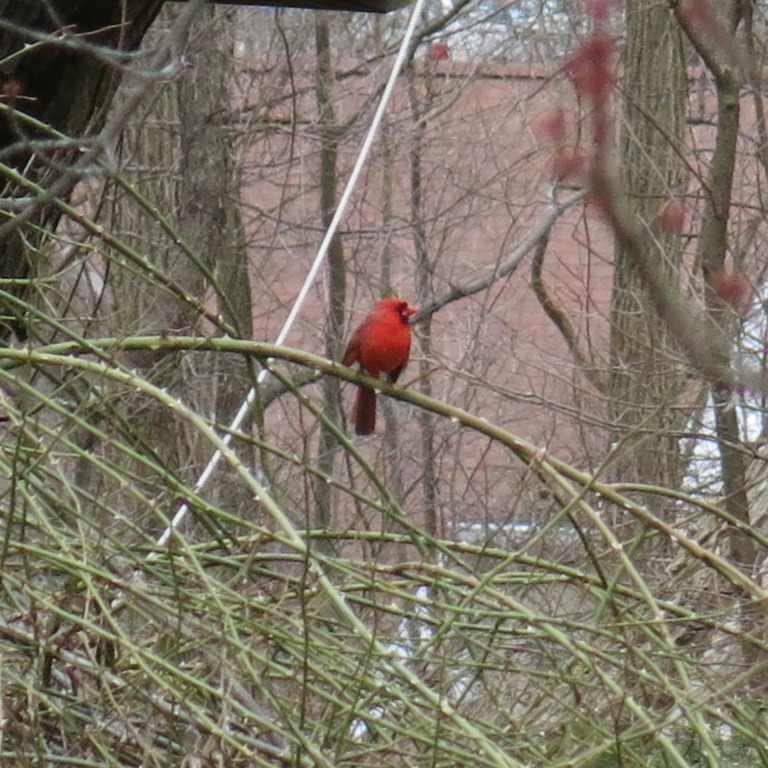
Cardinal

Cardinal checking out the neighborhood at Paul’s Himalayan Musk


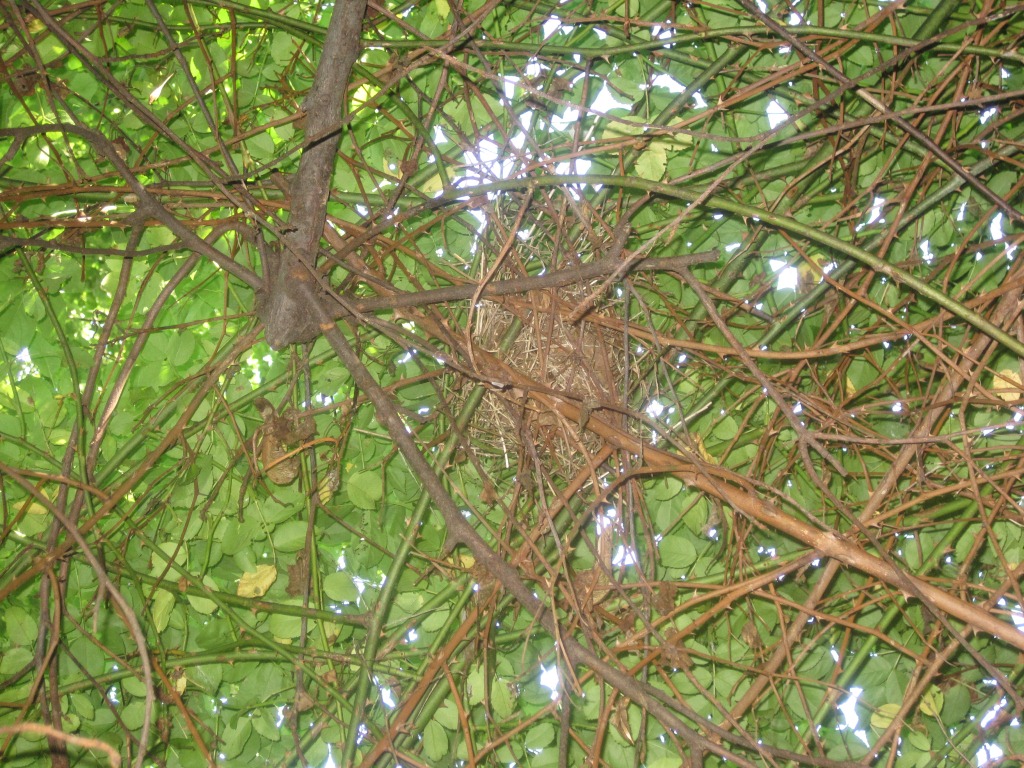
Cardinal nest amidst the limbs of Paul's Himalayan Musk.  I know its not a good picture but its the closest I could get to it without the thorns tearing into my skin.

Cardinal nest amidst the limbs of the rose Paul’s Himalayan Musk.
I know its not a good picture but its the closest I could get to it without the thorns tearing into my skin.


Wren's nest with eggs

Wren’s nest with eggs


(c) 2014 Shobha Vanchiswar
[do_widget “Blog Subscriptions (Jetpack)”]

How Does My Garden Grow?

Thus far its been a confusing spring. Late to start and lingeringly cold with the odd day of unseasonable heat, its been downright disorienting to me. It is not as though I’m averse to the new and unusual but, I do look forward to the reassuring rhythm of the seasons. The unfolding of the seasons is the backdrop to my activities. I like knowing what to expect when. Like lily-of-the-valley in early to mid May, early peonies and roses for Memorial Day, lilacs in bloom for Mothers Day, dogwoods for Fathers Day and so forth.

Not this year. Matters are a bit topsy-turvy. I didn’t mind that the tulips began a little late because they then lingered long enough to hangout with the alliums and camassias. But where were the baptisia and amsonia to bring their blues into the palette? The roses should be making their debut by now; so what happened? Meanwhile, the dogwoods in my neighborhood have long finished blooming. Its disconcerting to say the least. Even more bizarre was the firefly that flitted around inside my house last night. Out of place and time. This has me totally perplexed. As we confront climate change, there is certainly going to be much to adjust, discover and learn anew.

The one tree peony in my garden usually has top heavy flowers in early May. This year, its only just in bloom. Because they are weighty double petaled beauties, they hang down. The best way to gaze at their magnificence is to cut them and bring them indoors. The added bonus is that they have a spicy fragrance that greets me each time I pass them them by. Makes me pause and take notice which is just enough to remind me to breathe, relax my body and then carry on with the daily busy-ness. This plant , which I think is a Paeonia ‘Hakuo-Jisi or a ‘Souvenir de Maxime Cornu’, was a gift from Henriette Suhr of Rocky Hills. So its compelling call to literally “smell the peony” always reminds me of our cherished friendship.

A majority of the hydrangea did not leaf out on their stems as they normally do. Instead, leaves have emerged from the base of the shrub while the limbs have remained looking like dry sticks. I think the severe, long winter affected the stems but the roots were still strong. The new growth should come up nicely and all is not lost. I’ve cut back all the old, leafless stems. It’ll be interesting to see if these hydrangea bloom this year. I have sadly lost a few other shrubs that did not do as well as the hydrangea. If they will be replaced by the same type or something completely different is yet to be determined. I think a graceful period of mourning is in order.

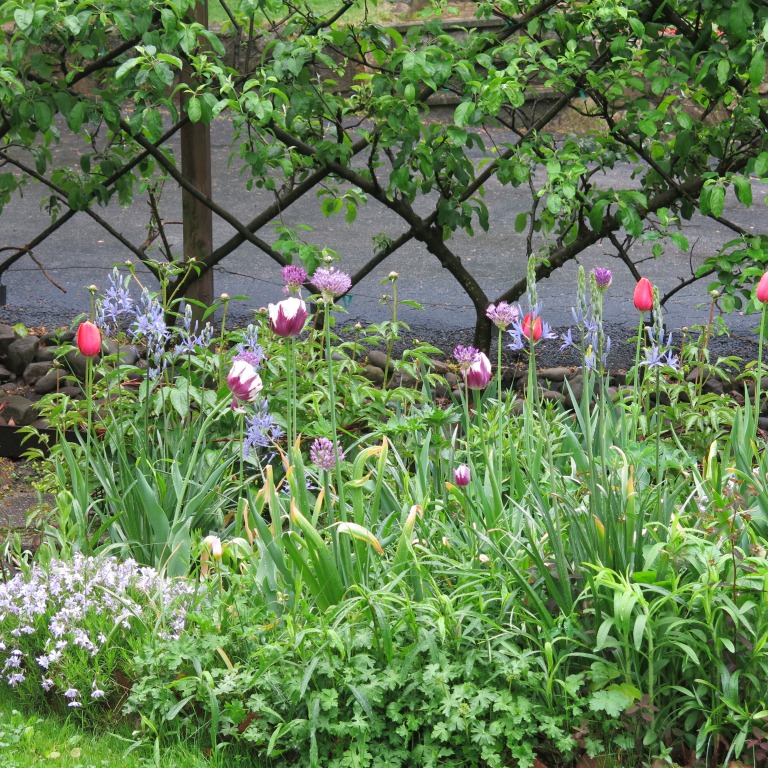
The good news is that, for the most part, the plants are all coming up well. However slowly. The amsonia and baptisia are just beginning to display their moody blues. The roses have lots of buds so I’m guessing they will open in another week or so. The early peonies have begun their frothy show. And the clematis! They look particularly fetching this year. The alliums have lasted longer than usual in both the perennial beds as well as the meadow so, I cannot complain. There are even a couple of tulips still going strong – as though reluctant to leave the party.

The American wisteria is bud heavy and as always, I’m giddy with anticipation. I’m keeping my fingers crossed that the weather does not heat up too soon. This would do in the buds and there’ll be a very sorry performance. No ticket reimbursement for this one.

I’m once again enjoying the pleasure of picking salad greens from the potager and serving up a delicious melange of lettuces, baby spinach, arugula and mustard greens with a sprinkling of chopped fennel and parsley. With toasted nuts, sliced strawberries, shavings of Parmesan and a balsamic dressing, its the perfect lunch to celebrate the season. Add a glass of crisp white and its a special event.

In the end, despite the not so normal pattern of growth in the garden, I’m learning to simply enjoy what unfolds. To be present for whatever reveals itself and learn to appreciate the new combinations of color that are really quite lovely. There is change afoot for sure. Perhaps its natures way of reminding me that She is the ultimate artist, gardener and teacher. I stand humbled.

Tulips with alliums

Tulips with alliums


Camassias in the mix

Camassias in the mix


Sea of blue in meadow

Sea of blue in meadow


Clematis

Clematis


Peony - Festiva maxima. Unfolding itself.

Peony – Festiva maxima.
Unfolding itself.


Clematis #2

Clematis #2


Buds in waiting. American wiisteria.

Buds in waiting. American wiisteria.


The frothy splendor of my tree peony.

The frothy splendor of my tree peony.


Amsonia awakening

Amsonia awakening


Baptisia just beginning to bloom

Baptisia just beginning to bloom


(c) 2014 Shobha Vanchiswar

[do_widget “Blog Subscriptions (Jetpack)”]

To Be Or Not To Be

It occurs to me that humans are quite possibly the only species that make deliberate decisions regarding the existence of other species. I’m not referring to self-survival associated decisions. Its the ones we make to suit our life styles I’m thinking about. We build houses to give ourselves good views and displace or dispose off whatever else lived there before. Land reclamation is casually achieved with no thought to effects on marine life close to shore or shoreline. “If a habitat does not suit, then its presence is moot.” We Homo sapiens do not easily compromise to coexist with other species. Control freaks – that what we are.

And so it came to be in my corner. I’d mentioned in a recent post that a bird was trying to settle into the chandelier above the dining table on the terrace. I was leaning towards letting it do so but other voices relevant in my life were leaning the other way. After all, with the weather warming up, dining outdoors is de rigueur. We wait all through the cold months dreaming of the many hours spent lingering at said terrace. Meals, poker games, painting, reading, rounds of Scrabble, writing and actual face to face conversations, this area is well used. A nest in the chandelier would preclude such happenings for the entire duration of its occupancy. Thus, it was decided that since the nest was not actually built, it would be okay to discourage all attempts to do so. Each evening, as I finished up in the garden, I’d remove the mess of twigs that lay strewn on the table as well as the ragged bits of paper that clung to the tole leafs of the chandelier. Judging from the sheer untidiness and obvious lack of architectural experience, I’d say this was the avian equivalence to a teenage pregnancy. It seemed like bird and I were playing a silly game. She tossed around stuff and I cleaned up. Each of us teasing/tormenting the other. I figured eventually she’d get tired and find another location well out of my reach and sight.

Then, it rained hard for two days straight. With no possibility of gardening, I happily went about my indoor chores. Come the first dry day after the deluge, and there it was – a sturdy nest solidly ensconced in the chandelier. I graciously conceded to the bird. Her determination and persistence to acquire this rather choice site for her future babies demanded and received my deep admiration. As far as I was concerned, Nature had spoken. It was no longer my place to deem where the bird was to build the nest.

The nest looked clearly to be that of a robin. Kind of blocky and functional. Not particularly tidy – fibers and twigs still hanging or sticking out. Robins build that way. I was right. Soon, as I passed by doing my garden tasks, I’d see a robin hover around making disapproving sounds and keeping a keen eye on me. After what had happened between us in the early days, I didn’t blame her.

With a very strong table right beneath, I now had a perfect way to peer into the nest. So clamber atop the table I did. I still fell short by a few inches. With a too-good-to-be-true viewing opportunity such as this, I was frustrated but not put off. I contorted my hands whilst holding the camera and tried to take a photograph of the interior. Since I couldn’t see what my camera was pointed at, I made numerous attempts till my arms and shoulders hurt. Finally, just when I was ready to concede once again, I got the shot I sought. All the while, I was aware of the distressed mama bird making annoyed and anxious sounds. She stayed near by and I half expected her to fly at my face and poke my eyes out. I kept thinking safety glasses were in order.

I’m terribly thrilled to have that photo of four exquisitely perfect, brilliant Robin’s blue eggs but I also have a deep sense of shame and guilt for having traumatized the bird. I had behaved like paparazzi.
Standing a respectful distance from the nest, I asked for forgiveness. From now till the time the eggs hatch, the babies grow and fly away, there will be no dining under the nest. We will move the table to a spot away from it if we want to eat outside. It’ll perforce be in semi-darkness as if to echo the state of human intelligence. C’est la vie.

Along similar lines, a second event occurred this week. My neighbor had a silver maple tree taken down. This tree was huge. At least eighty feet tall and from what a tree expert once told me, it was perhaps close to a hundred years old. Understandably, it was a real presence in our lives. Its branches hung over our back terrace and gave quiet shade in the heat of summer. In the fall, it was the last to shed its leaves and we did not mind our share of them. Small price to pay for its majestic beauty.

Concerned about rot and limbs falling in storms, the owners had the tree removed last week. It took the highly skilled tree guys all day to take it down. Thats how big this tree was. I was already sad when informed the tree was to go but the intensity of my sorrow upon hearing the start of the buzz-saw, surprised me. I hadn’t realized just how much trees mean to me. And this elderly specimen towering over us all had earned its stripes. With the loud, steady thrum in the background, I thought about life, death, loss, love, friendship and so many other things. I offered up my deep gratitude to the tree. I apologized for what was happening to it. I wished it well and hoped it understood why this was happening. Mostly, I asked pardon for all the atrocities committed by my species. The necessary, the excusable, not so excusable as well as the unforgivable.

Être ou pas être?

Today, May 27 is Rachel Carsons birthday. Celebrate by being kind to this amazing, fragile Earth of ours.

How gorgeous are these eggs?

How gorgeous are these eggs?


Messy nest of the Robin family.

Messy nest of the Robin family.


The big silver maple seen behind the gazebo (under which live the Robins)

The big silver maple seen behind the gazebo (under which live the Robins)


Sans the majestic one. I wish I'd known to take more specific pictures of the tree.

Sans the majestic one. I wish I’d known to take more specific pictures of the tree.


Tree cutting in progress

Tree cutting in progress


No trace of the tree remains

No trace of the tree remains


(c) 2014 Shobha Vanchiswar
[do_widget “Blog Subscriptions (Jetpack)”]

Blurred Lines

There is much chatter in the gardening community. Words like native, natural, informal, climate change, environment, jungle, ecology, organic are bandied about loudly. Even forcefully. As in all situations with many voices and opinions, it results in confusion. The voice that gets recognized and whose opinion might prevail is not necessarily the wisest. Politics ( yes, even in the garden world), public profile and personality all play strong roles in swaying the vote on what is responsible or modern gardening. Gardening is often a victim to trends and fashions which can do more damage than good. The gardener must stay alert so she does not fall prey to them. So, how does she sort out all the information and do the right thing for garden and self? How does she express herself without feeling overwhelmed or for that matter, without being judged in a negative light?

According to the Merriam- Webster dictionary, a garden is a plot of ground where herbs, fruits, flowers, or vegetables are cultivated. The Oxford English dictionary goes one step further in clarification – “A piece of ground, often near a house, used for growing flowers, fruit, or vegetables.” Are we clear on this? Straightforward and simple I should think.

With that said, lets just get comfortable with making a garden to suit our needs – be it for the sake of beauty or food or a combination thereof. This will run the gamut of extremely ornamental gardens that are tasteful and elegant and most often high maintenance to the untidy, charming cottage garden where the rules are very relaxed. The idea is to make a space that closely reflects the gardener’s personality and preferences. To do that in conjunction with values that support and nurture the environment is not difficult. Think organic practices and planting more native trees, shrubs and other plants than non-native representatives. Avoid anything that is invasive or fussy. Composting, using water judiciously, reducing the lawn area are additional factors to include in being a responsible, environmentally conscious gardener. All of this sounds familiar and doable right? Nothing new. I, myself have expounded often on this subject.

Now comes the confusing part. For the purpose of keeping it simple, I see it as two dominant factors to consider. One is the current buzz-phrase of bringing the jungle to suburbia. Several have written about their ‘successful’ experiment and how happy they are with it. I wish them well and if that is what floats their boat, so be it. But I’m not clear as to why exactly that is touted as a more intellectual or informed approach to what one does with their suburban land. Should I hang my head in shame or feel ignorant with my own efforts at creating an attractive, more orderly, organic garden that is quite un-jungle in design and that still supports plenty of birds, bees, butterflies, toads, bats, wasps, snakes, rabbits, occasional deer, surplus of squirrels, nocturnal prowlers like skunks, raccoons and sneaky rodents? Is a garden that looks like a garden suddenly not cool?

If a jungle is desired, wouldn’t it be simpler for the individual to move to the jungle? Exactly what type of jungle is being created? A true recreation of one that can be found in nature and that has arrived on its own to a state of balance? Where canopy, understorey and forest floor are in harmony as are the creatures that inhabit such a place? Or is this a melange of plants whose fruit offer sustenance planted together in a manner that resembles a jungle but would in nature not be found in such proximity to each other? And what of the diverse insects and small animals that reside in jungles – are we all to accept the very critters that forced humans to create their villages so we could live feeling safer not to mention live healthier lives?

For the record, Merriam-Webster defines jungle as -a : an impenetrable thicket or tangled mass of tropical vegetation
b :  a tract overgrown with thickets or masses of vegetation

I don’t pretend to be an expert by any measure but I do know that I represent a large body of intelligent, responsible gardeners who go about cultivating their land to create beauty and produce. I definitely do not desire a jungle around my house. I like a sense of order and even my ‘meadow’ is an area of controlled chaos. The creation of said meadow has got rid of a wasteful lawn, is mowed but once a year, permits the growth of anything that wishes to be here and yet, what meadow in America is naturally full of daffodils, crocuses, alliums, scillas, frittalarias and other bulbs and the whole contained within a boundary of assorted shrubs? You see what I mean? I did it my way.

The other point that has come up is that of planting only natives. As I’ve said before, being scrupulous about this means we rid ourselves of old favorites like lilacs, Asian wisteria, peonies, many roses, hydrangea, most bulbs, innumerable fruit and ornamental trees and, countless more. My take is to plant more natives and include only non-invasive non-natives. Native plants help preserve natural diversity. A few years ago, when I asked about planting perennials in my garden, professor of entomology and wildlife ecology Dr. Douglas Tallamy told me that in planting natives, the emphasis should be on the bigger plants like trees and shrubs because these are the plants that support the native fauna and hence keep a natural equilibrium going. I recommend his book Bringing Nature Home.

Here comes the rub. With the changing climate, some natives are no longer growing where they used to and others from elsewhere ( non-natives) have been observed to be sources of nectar for native pollinators and seed dispersers. This is big. How does one reconcile ones principals of gardening with natives to the climactic changes going on?

There is no simple or immediate answer to this conundrum. For the moment, we must keep doing what is correct for the environment and our conscience. Just be prepared that a shift in what we plant is in the cards.

Keeping that in mind, go ahead and create a garden, enjoy the process as well as the space, take time to get in touch with your inner naturalist and finally, stay informed on developments in the fields of horticulture and environmental sciences. Fads and trends be damned. Follow your heart and the little voice that tells you right from wrong. Lets not kid ourselves and blur the lines between garden and jungle. Humans left the jungle for good reason.

The meadow with camassias in bloom

The meadow with camassias in bloom


Daffodils in meadow

Daffodils in meadow


The orderly herb garden and potager

The orderly herb garden and potager


Part of the resident wildlife

Part of the resident wildlife


Checkerboard garden

Checkerboard garden


Walkway in pristine lawn? Not at all - its merely a green backdrop for that walkway - full of what many would shudder to have in their lawns!

Walkway in pristine lawn? Not at all – its merely a green backdrop for that walkway – full of what many would shudder to have in their lawns!


(c) Shobha Vanchiswar
[do_widget “Blog Subscriptions (Jetpack)”]