Is Grateful Dead?

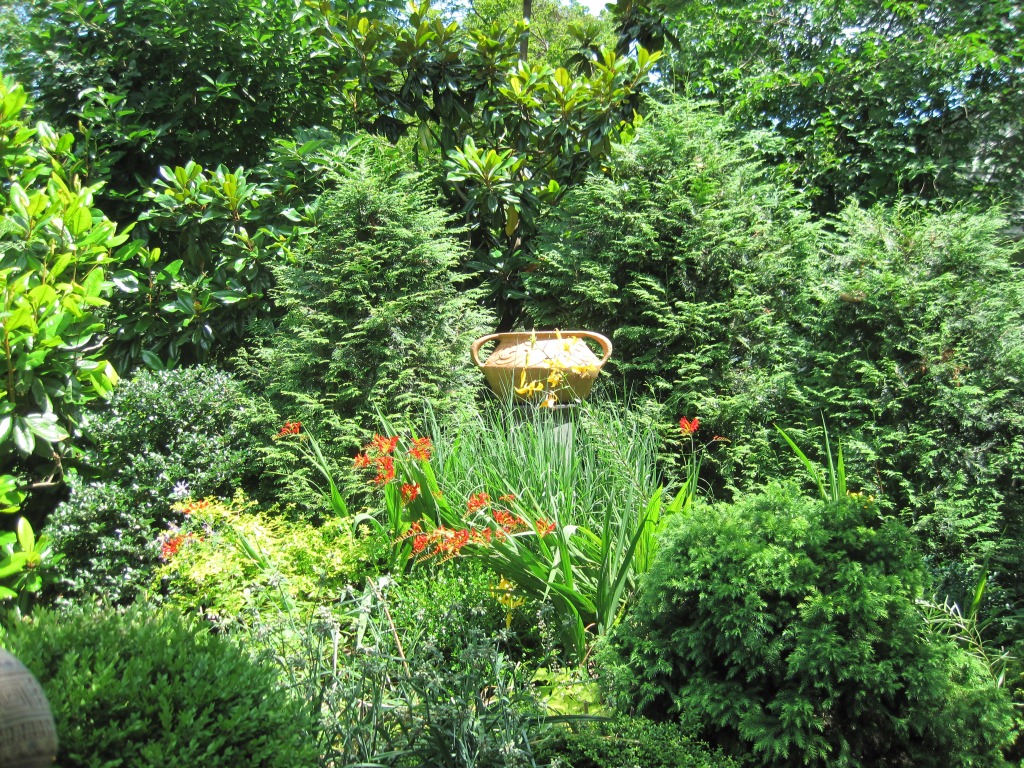
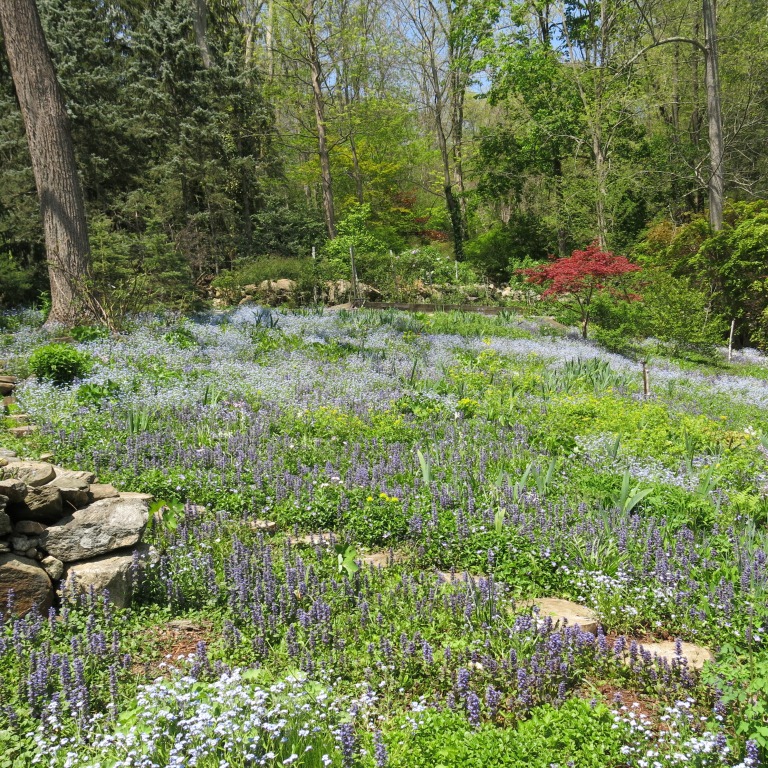
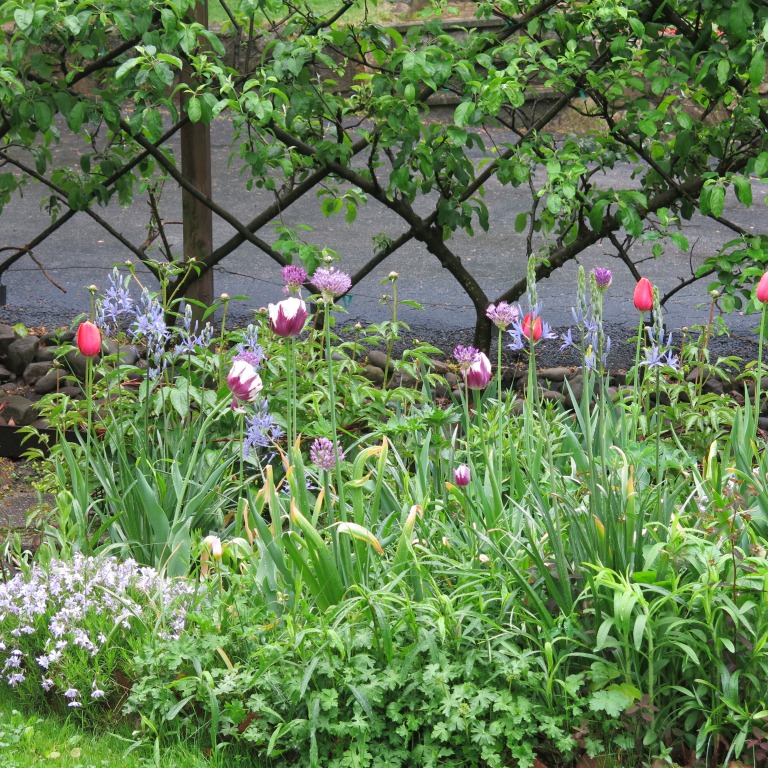
The garden has been put to bed. The final rounding up of leaves, mulching of beds and last of the bulbs were planted this past Sunday. It happened a bit later than usual due to the shockingly cold weather we recently experienced. There is a certain satisfaction that comes from completing the seasons chores before repairing indoors for the winter. One feels like one has delivered on being a responsible grown-up.

With my favorite holiday approaching fast, thoughts of gratitude filled my mind as I went about the tasks in the garden. Having this patch of earth to cultivate and call my own is in itself a prized gift. To tend land is so basic to humans and yet not always appreciated enough by those of us who primarily
garden more for pleasure than necessity. By having a garden, I feel I have been specially chosen and given custody of it for posterity.

The rewards of gardening are innumerable and I often wax eloquent on the subject. For maintaining physical, mental and emotional health, putting hands to earth cannot be beat. This has always been understood through the ages but research has established the sustained benefits of connecting with nature. Gives our puttering around the garden solid credibility.

As I take care of the myriad to-dos, I recall the many high points I’ve enjoyed through the growing seasons. The flowers, the vegetables, the birds and the babies they hatched here, the butterflies that never failed to thrill, the inspirations for my writings and my art, the visitors on Open Day so generous with their praise and, countless moments that awed and humbled. The garden hosted so many gatherings with loved ones: it provided place and reason for much laughter and fellowship. It also provided solace when I needed it and a sanctuary for quiet and contemplation. I am overcome with gratitude for my piece of paradise.

Looking back at the year I see how much I’ve been given in the garden and beyond. Even in the difficult moments, there were always the ‘helpers’. By allowing myself a retrospective of sorts, I am empowered by the received bounty and come the New Year, I can look ahead to being and doing better. In the big picture, all the minor grievances fade into oblivion. I firmly believe gratitude begets hope and optimism. The mainstays of all human endeavors. The work of one who attends to the land is the very embodiment of hope and optimism.

Those of us privileged to have a house with property often take it for grated or acquire it as a symbol of some level of success and affluence. In the context of the population at large, we fail to consider how few of us are given this precious gift. Being thankful should be the first and last thoughts in our minds every single day. But on Thanksgiving day, we should be rejoicing in this and all the people in our lives full on. Nothing else should matter. Surely we owe ourselves at least one day of the year to be completely present and give thanks mindfully and deliberately. Consciously counting ones blessings is perhaps the single most powerful factor in how well we live our lives.

So, when we are bombarded and barraged by retailers and media to toss away the opportunity to spend valuable time with family and friends and instead spend the time shopping, we ought to take serious umbrage. No person or organization should be permitted to invade our lives and disrupt the most fundamental essence of our humanity – to share our selves and break bread together. That is priceless and sacred.

From the depth of my heart I wish each of you a Thanksgiving rich in blessings and grace.
Here are some of the things for which I’m grateful:
IMG_1608

Weeding help!

Weeding help!


Beauty

Beauty


IMG_2133
IMG_2562
IMG_2435
IMG_3102
IMG_3906
IMG_3969
IMG_4258
(c)2014 Shobha Vanchiswar
[do_widget “Blog Subscriptions (Jetpack)”]

The Ultimate Harvest

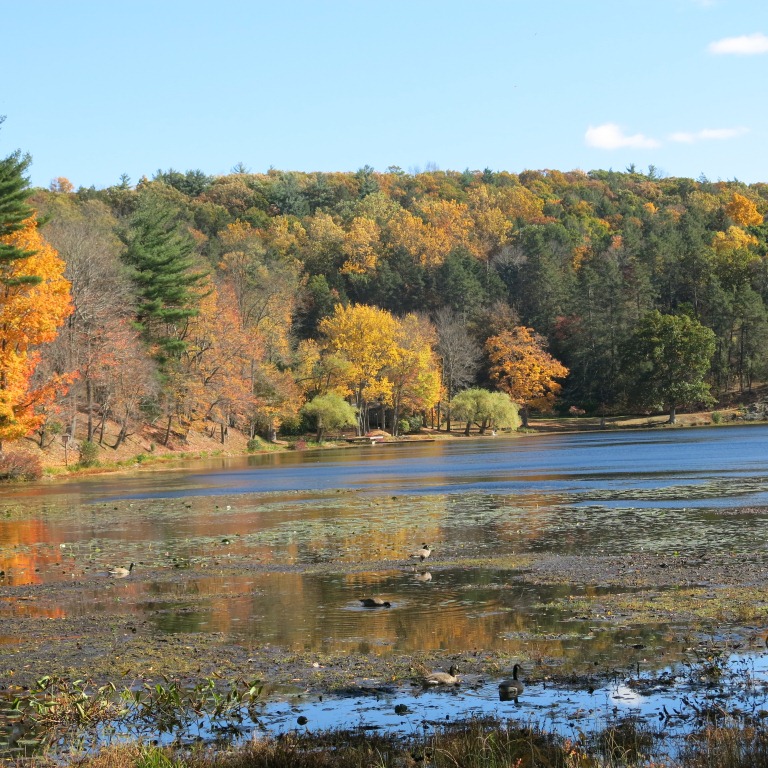
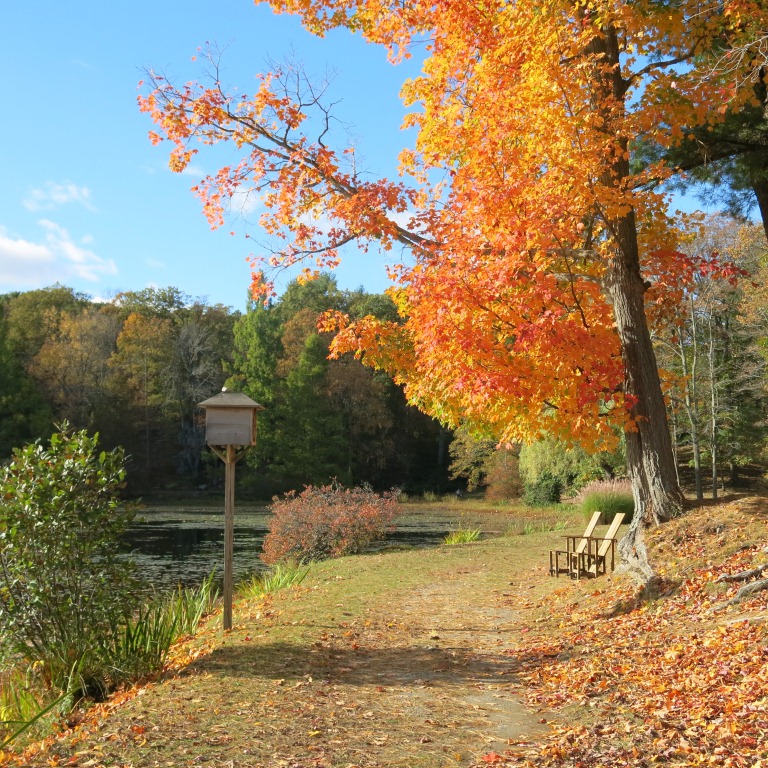
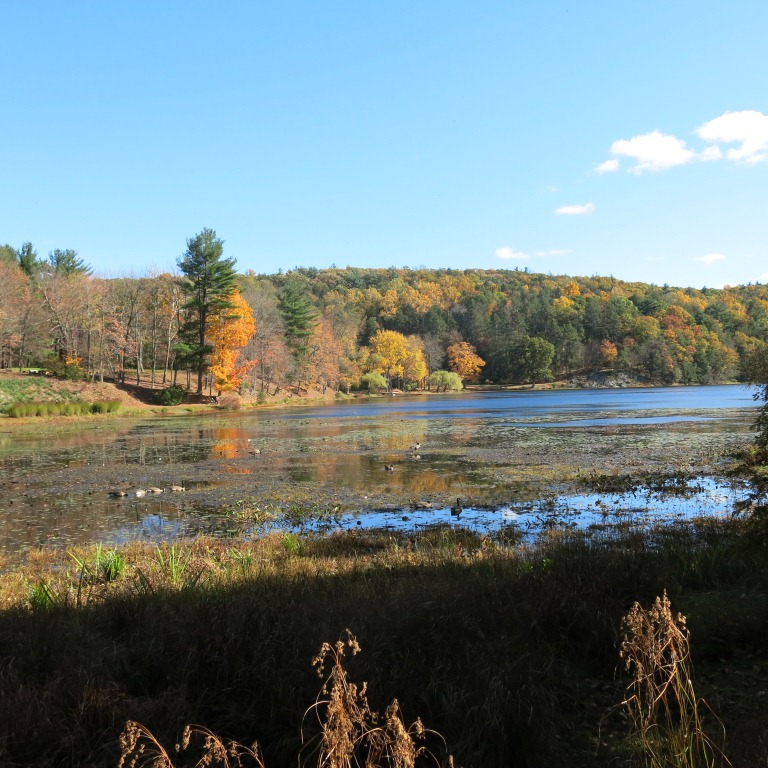
I am so overcome with the beauty around where I live. Autumn is just past its peak but the colors are still vivid and rich. The almost uniform green of summer has faded away and the more fiery hues shine brilliant. In the afternoon hours, the yellow leaves still clinging to trees act like gel filters permitting the sunlight to pass through and emerge pure and radiant. In counterpoint, the trunks and branches form a dark, abstract network holding up this vast, delicate lumière.

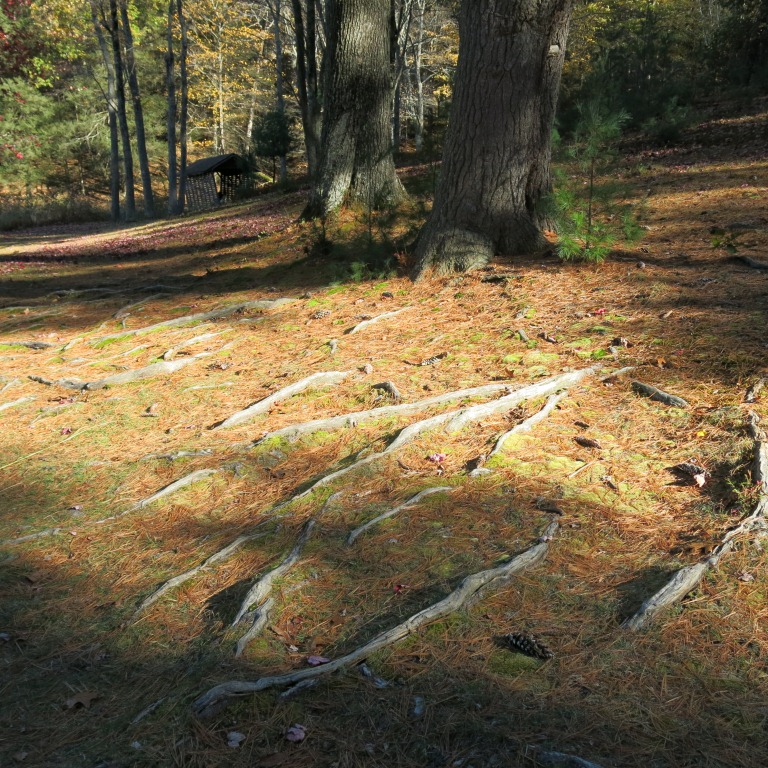
The fallen leaves scattered along roads and paths illuminate my walks. They create beautiful patterned carpets that give me as much cause to keep my head lowered as look up at the seemingly reflected blaze above. I am awash in light. There is a sacredness in this. We are each chosen to be anointed with the luminescence. As though our openness to receive it will determine how well we will shine our own way through the dark hours of winter.

In this season of harvest and stocking up for leaner times, it is reassuring to store, can, freeze, dehydrate, pickle and ferment. Wood is chopped and stacked. Fuel for inner and outer warmth. But that is not enough to keep the soul content. It is sustained by beauty and light. When the nights stretch far and the days barely get past gray, the soul reaches into the larder of memories infused with that energy only the truly aesthetic can contain. Like sunrises and sunsets, the emerging butterfly, a cobweb strung with raindrops twinkling in the sun, nascent growth revealed by the melting snow, the vibrancy and utter exuberance of the fall foliage. Harnessing the power of natural wonders nourishes the psyche. Its the difference between surviving and thriving. So I must linger in the light of the leaves and fill myself to the brim. To carry this gift within me is the challenge I must take up in order to pass the bleak periods with grace and dignity. The ultimate harvest.
Sunrise
DSC01116
DSC01135
DSC05064
DSC05557
IMG_4552
IMG_4721
IMG_3102
IMG_4425
IMG_4447
(c)2014 Shobha Vanchiswar

[do_widget “Blog Subscriptions (Jetpack)”]

“What A Wonderful World”

“I see fields of green
Red roses too … “
– Louis Armstrong

Every muscle in my body aches. Even in a state of rest, supine in bed, I feel the pain. There is no inclination whatsoever to rise and meet the day. A slight move elicits a big wince. I’m willing to forgo coffee and brushing my teeth – its simply too much effort to get up. I’m well past being embarrassed by my admission. No, I’m not unwell. I’ve been planting bulbs. Hundreds of them. One by one because they go between already established plants and other older bulbs. Every autumn I endure this ordeal. Every year I question my sanity. And every spring I am so ridiculously ecstatic to see the explosion of bulbs lighting up the garden.

There are still more bulbs to plant but for those, I’m recruiting the help of my family. They have been given no choice. Threats, guilt trips and bribery work well. I highly recommend those measures. I’m too sore to be nice. Rest assured I’ll return to nice after the body has forgotten its present trauma.

The other fall garden chores are also well underway. Cutting back and clean up, leaf raking, pruning, lawn reseeding, getting pots of tender perennials and tropicals into the greenhouse, planting new perennials and shrubs, pruning, cleaning and putting away outdoor furniture, the list goes on. Its exhaustive and exhausting. Then why do we gardeners punish ourselves repeatedly?

Because we must. It makes us happy. Keeps us in balance. It helps us make sense of this complicated, amazing world. Creating a beautiful, productive garden is our calling. As a result, other people appreciate us for our equanimity.

In post-bulb planting repose, I’ve had time to contemplate this horticultural preoccupation. Connecting so directly with nature as one does when gardening has rewards that cannot be matched by almost any other activity. Humans need green spaces. Our survival depends on it. Its not just for our food but our general well being. Since time immemorial, cultures everywhere have promoted the benefits of working or being in nature. At some level we have understood this need. There is no argument against the compulsion we have to seek our rest and recreation outdoors. It simply is.

Bad moods are banished after a turn in the garden or a walk in the park. Learning from personal experience, I’ve often dealt with the resident teenager’s age-appropriate histrionics by slyly getting her to do garden chores like weeding and watering. Her initial complaints, loud as they are, mean nothing to me. The child that returns indoors is invariably a transformed one.

I recently had to go out of town and was put up in a ‘resort’ of sorts. This place was vast – two thousand rooms, a large conference center, a full spa facility, seventeen restaurants, multiple shops, even a ‘riverboat cruise’ in a man-made ‘river’ that covered 4.5 acres. It had gardens, waterfalls and fountains. And all of this enormous complex was completely roofed over! There were well concealed vents that blew air to simulate a breeze. I found this place terribly disorienting. I was supposed to feel like I was outside but was instead in a bizarre world indoors. Most significantly, the painstakingly created gardens lacked vitality. After all, where were the sounds and activities of the birds, bees and butterflies? Where was that distinctly earthy aroma assuring me that worms and microbes were busy at work? These gardens of living, mostly tropical plants might as well have been fake. My mind and my heart could not, would not accept this make-believe world. There was no fooling them. It was a very unsettling experience. Like a newly caged bird, I got anxious and couldn’t wait to break free.

Lately, researchers have studied the benefits of green spaces. The anecdotal has moved to the scientific. More credible that way. Several studies have concluded what gardeners already knew – there is no doubt that spending some time in nature everyday considerably improves our health – mentally, physically and emotionally.

One study found that living with green spaces has a long-lasting positive influence on people’s mental well-being. Compared to the short term boost from pay rises and promotions, the positive effect from being in nature has a sustained, long term impact. Levels of anxiety and depression were reduced. The findings appear in the journal of Environmental Science and Technology. What is seen is that even after three years, mental health is still better which is unlike many of the other things that we think will make us happy.

So coming back to my current status of muscles in agony and reluctance to move, I admit that my spirits are high, my mood is upbeat and I’m already planning future projects in the garden. I’m also harboring the fantasy that the aforementioned body parts will shed fat, get toned and move like they used to twenty years ago. Thats the other thing – gardeners are huge dreamers.

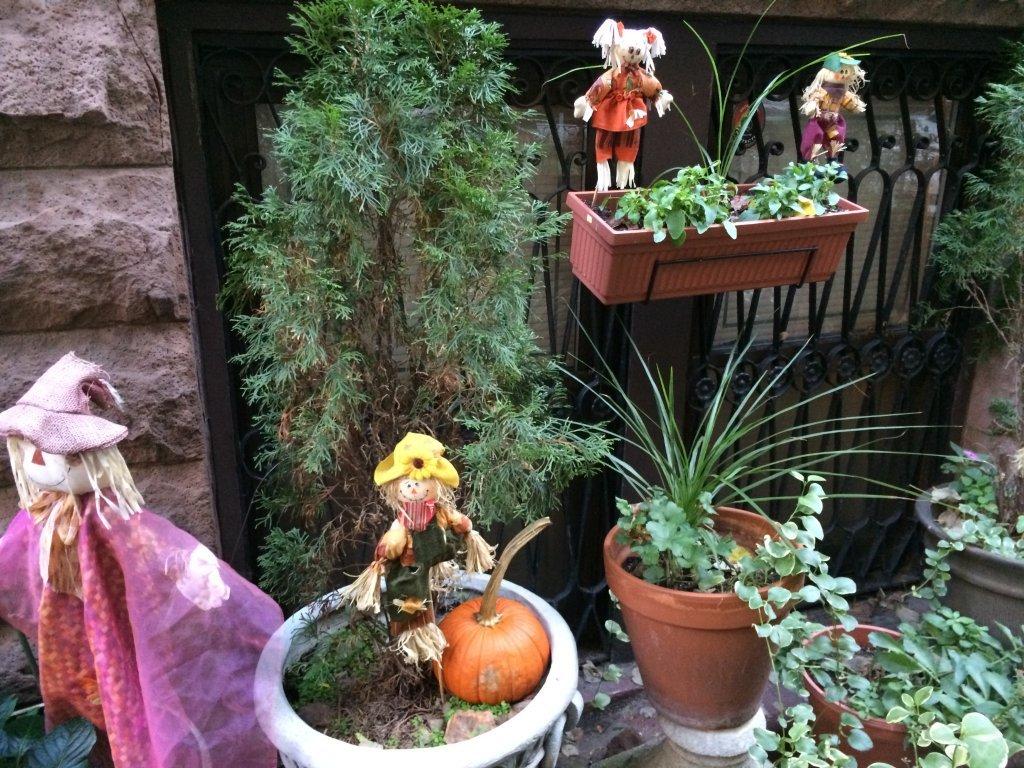
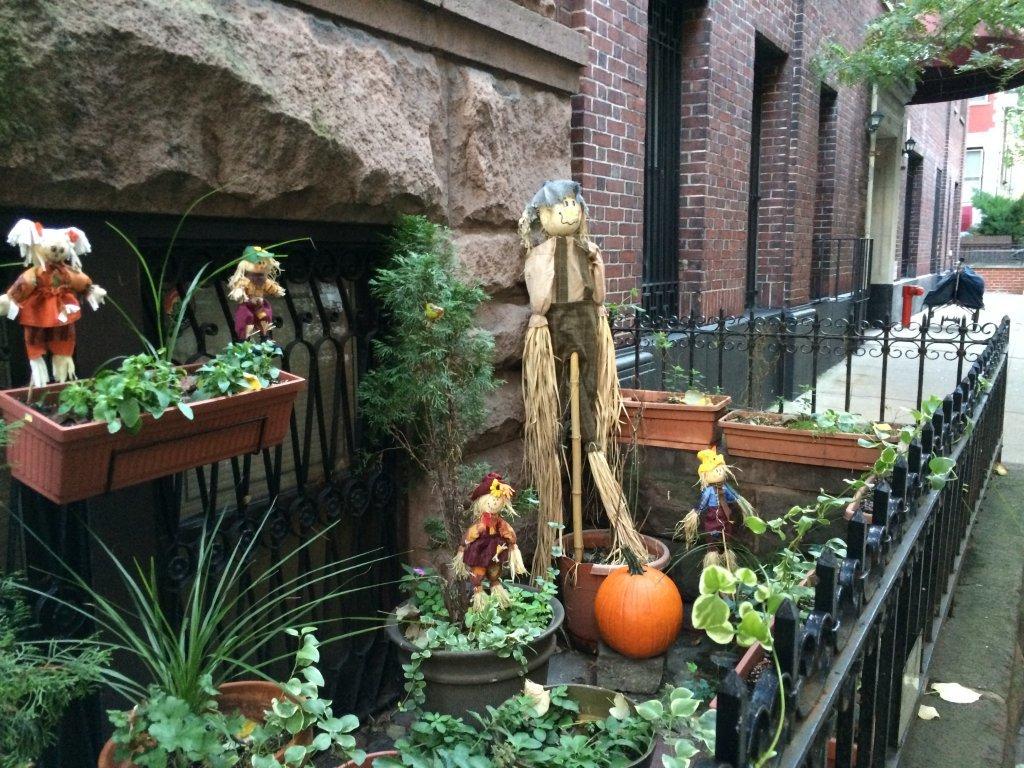
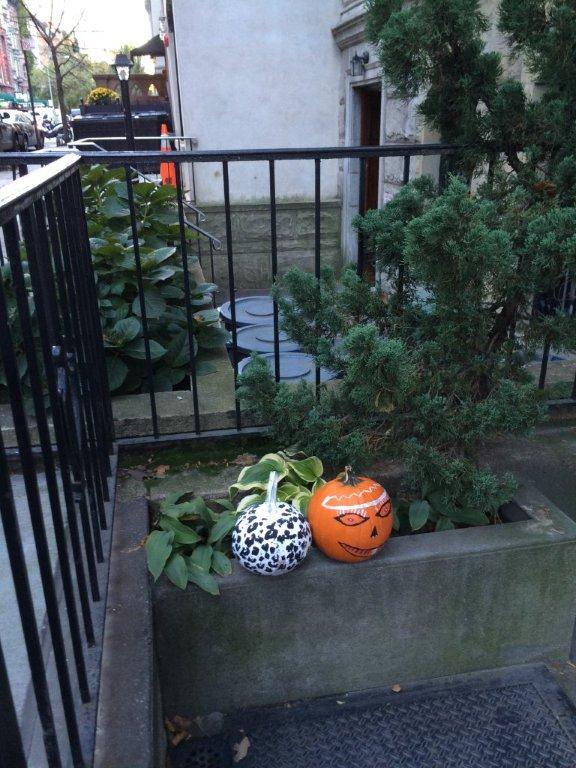
Enjoy the images of New York City getting into the Halloween spirit:
NYC Halloween 1
NYC Halloween 2
NYC Halloween 3
NYC Halloween 4
NYC Halloween 5
NYC Halloween 6
NYC Halloween 7
NYC Halloween 8
(c)2014 Shobha Vanchiswar
[do_widget “Blog Subscriptions (Jetpack)”]
To Hire Or Not To Hire – Part II

How often have you wished you had a cook, chauffeur or a general dogsbody to help you with the tasks of the day to day? An assistant to keep up with the paperwork. Someone to pick up the dry cleaning, getting the dog bathed or stocking up the refrigerator would be nice. Admit it, it has crossed your mind numerous times right?

The same happens in the garden. Busy schedules and/ or aging bodies could do with a little help. Keeping up with the seasonal demands in the garden whilst keeping abreast with duty calls elsewhere can be quite challenging . Recruiting the assistance of a gardener might be in order.

In suburbia, the sight of a team of men spilling out of a pick-up truck, unloading tractor mowers and powerful leaf blowers is as common as pigeons flocking in Central Park. The ‘mow, blow and go’ outfits fulfill very adequately the basic requirements of suburban living – a pristine property mostly displaying a swathe of green lawn. But a garden is more than lawn isn’t it? It has trees and shrubs, beds of flowers, vegetable plots and areas to sit and enjoy the beauty of nature. It is home to birds, butterflies, toads and other critters. A garden is a complex, diverse world, the upkeep of which involves watering, weeding, planting, fertilizing, pruning, cutting back, propping up, training, digging up, repositioning, composting, raking and a few other chores. All the while keeping it beautiful, productive and functional.

The English, who have a longstanding garden tradition, routinely employ a ‘jobbing’ gardener. This is an individual who has garden skills and can be relied on to take care of specified jobs. He/she can be hired for a few hours everyday or a couple of days every week. You tell them the job that needs doing and they do it. In the United States, such a person is not so commonly employed. People with the means tend to employ full time gardeners or the aforementioned weekly service. In my opinion, for someone who is an active gardener but needs extra hands, a jobbing gardener is a godsend. The peace of mind in knowing a task will get done correctly is invaluable. One stays involved with the garden but has the satisfaction that nothing will be neglected because attentions had to directed elsewhere.

Before you employ a gardener, consider what needs doing. These can run the gamut of chores you cannot do, don’t want to do or don’t have time to do. Depending on garden needs and available budget, a decision must be made to hire an experienced gardener or a novice. The former can pretty much do all or any of the work a garden needs without supervision while the latter will require some oversight. Your call.

Next, decide how often you need garden help. Seasonal or regular year-round or single project. Obviously, the expense of hiring depends on the level of experience the person has. How and when payments are to be made should be clear from the start.

Word of mouth is the most frequent way that gardeners get hired. Personal recommendations are best.
Self-employed individuals or a company depends again on what is required and how much you can spend. It is imperative to have trust in the person. Developing a good working relationship goes a long way in making a beautiful garden. Just like life.

More images of the season. All taken at Innisfree, Millbrook, NY this past Sunday. Hope you’re taking the time to enjoy the autumn wherever you are.
Innisfree 1
Innisfree 2
Innisfree 3
Innisfree 4
Innisfree 5
Innisfree 6
Innisfree 7
Innisfree 8
(c)2014 Shobha Vanchiswar
[do_widget “Blog Subscriptions (Jetpack)”]
Spirituality Through Astrology, Meditation and Yoga!

That proclamation was on a sign I saw alongside a highway this past weekend. It got me thinking about the times we are in. There is a growing need for something to center our hearts and settle our minds. Perhaps a quest for guidance has always prevailed amongst us humans but, in this high-speed digital age we are busier than ever. Swept in the tide of Instagrams, Facebook friends, messages confined to 144 characters, reachable via phone round the clock, we are searching for lifesavers to keep us afloat and present. Its interesting isn’t it that as our lives have increasingly adapted to all the technology, the enrollment in yoga studios has also increased? Massage and meditation are as mainstream as the live streaming we indulge in. With technology changing even as it hastens us forward, we seem to be looking to more enduring, ancient practices to keep us anchored. Time to step back and examine our course you think?

Frankly, I think the garden is the perfect place to find spirituality. And that sign could be tacked on the gate to any such place of horticulture. Patience, kindness, generosity and tolerance are cultivated here. Waiting for plants to grow, creating an environment that welcomes birds, butterflies and bees, sharing, receiving and exchanging seeds, plants and produce, working with weather patterns and pests both large and small, are all instructive. Life lessons that expose us to joy, laughter, loss, birth, regeneration, recycling are taught continuously in the garden. If you are not present, you miss the many miracles that take place in the garden every single day. Being mindful becomes the hallmark of a seasoned gardener.

The varied chores demanded in tending a garden, keep the body active. Bending, lifting, reaching are par for the course. Muscles exercised, joints kept from getting stiff, a day in the garden yields a dose of endorphins that satisfy as much and more than a workout in the gym. There’s a well conditioned body plus a garden to show for it! Of course, neither garden nor health club can guarantee a perfect body or eternal youth but then, thats life isn’t it? There are no guarantees.

If you’ve ever spent time weeding, digging or planting a bed, you know how focused you get. Paying attention forces one to tune out the chatter in the head. By the time the task is done, more than the garden has been transformed. There is certain clearing of the mind and a lifting of the mood. Thats what meditation achieves. Mindfulness creates clarity of thought and purpose.

Gardeners follow the seasons, the quotidian arc of the sun and the gravitational pull of the moon. Weather patterns influence our work as much as it affects our spirit. We apply science, folklore and an occasional dab of superstition. Astrology anyone?!

Tending the land is as ancient a practice as it can get and it is the best therapy by far. I firmly believe that if every human on earth nurtured a garden, we’d be too busy reaping the many rewards of this preoccupation to wage wars, mistreat animals, tolerate rudeness or watch bad television.
Sometimes, I wonder if gardening informs my life or if life informs my gardening.

Check out Happenings to find out about the Rocky Hills talk Oct 18 and the two art shows I’m participating in this month.

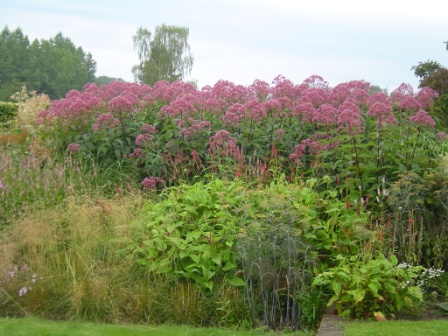
Enjoy the varied gardens below:
Musee de quai Bramley
Hummelo
Marco's garden
Rocky Hills
My garden
(c)2014 Shobha Vanchiswar
[do_widget “Blog Subscriptions (Jetpack)”]
Summer School

I adore discovering new and surprising information on perfectly ordinary subjects. Since the fabric of life is mostly woven with the routine and the mundane, learning something fresh on a regular basis is what keeps it interesting and exciting. I particularly enjoy facts that remind me that I am part of a much bigger, mysterious, absolutely astounding universe. No doubt you feel the same. Right?

Nature provides an endless source of knowledge and anybody who spends time in it cannot fail to acquire some wisdom. There is gain in every encounter with nature. As part of my Mid-point review (scroll down to see the article from two weeks ago) and my ongoing quest to learn something new everyday, I came up with what I learned since the start of summer. Personal observations, further investigations/research and input from others has kept things around here quite interesting.

I observed that hummingbirds do not like to share. Unlike many birds that feed together at a feeder filled with seeds, these tiny avians prefer to dine solo. A feeder with sugar solution invites them to stop by quite effectively but just watch – while there is plenty of room and libation for all, the bird who is there first will aggressively try to shoo off any other bird also wanting a drink. They spend more time sparring than sipping.

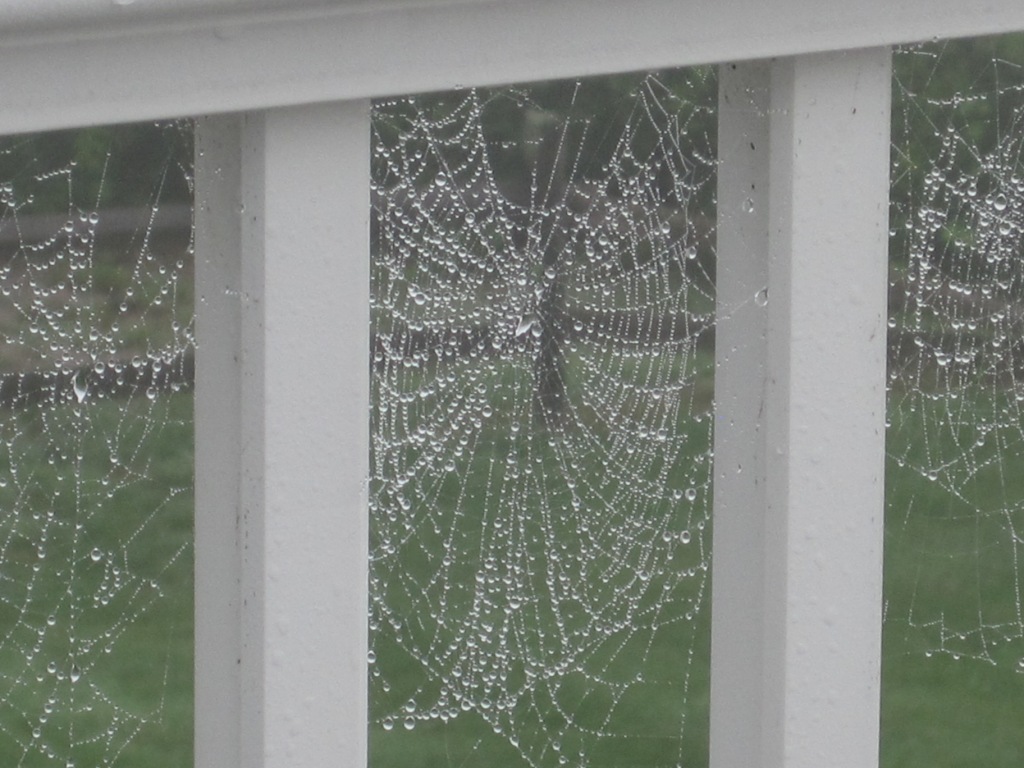
Spiders really do make their webs only in fair weather. IF they continue working during rain, it will be a short storm. You have a better way to predict the weather?

I’ve always known the perfume of flowers is stronger as temperatures rise but now I’ve learned that the fragrance is stronger just before a storm when the air pressure is low. I’ll use that as a reminder to cut flowers to bring indoors before the storm smashes them down.

There is a growing body of scientific evidence establishing a link between urban green spaces and a positive impact on human well-being. Unlike the short lived happiness of pay rises, promotions, purchases or that slice of cheesecake, the positive effect of time spent in nature is sustained for long periods. Reason to get outside and enjoy the green as much as possible. Its no wonder one can come in hot, weary and sore from working in the garden and still feel really invigorated.

Amongst many types of birds, the way to a female’s heart is through her stomach. A male bird will ply his object of affection with juicy morsels of worms and bugs. Charming!

The eggshells of wild birds may act like “sunblock”, scientists in the UK have said. A range of birds’ eggs showed adaptations in pigment concentration and thickness to allow the right amount of sun to reach the embryos. No doubt this information will lead to useful applications amongst us sun loving humans.

We are always wondering if there is life on other planets. But if there is, those life forms must be wondering the same right? If ‘people’ on a planet 65 million light years looked at Earth, they’d see dinosaurs not humans. Imagine that. For now, lets do right by our assigned planet. Because eventually, the time will come when the alien ‘people’ from all those 65 million light years of distance, will see us humans. And we’d better look our best.

As a biologist, I’ve known this next fact but when I mentioned it to some others, they were surprised. So I thought I’d share. Fireflies are not flies. They are beetles. Chemical energy is converted to light energy in a ‘cold’ reaction. This is unusual. Most energy conversions use or generate heat. Thus, fireflies are the exceptions that prove the rule. Huge scientific contribution from a very little guy.

Finally, something to ruminate over: Cows do not naturally eat corn – so why is ‘corn-fed’ beef touted to be superior?

Being curious keeps one engaged and connected to the world around us. There is a comforting reassurance in that. We are all part of the grand web – the spiders as well as the flies. Understanding the seemingly ordinary opens the mind, enriches the spirit. We get a sense of who we are and our place in the large scheme. Q.E.D.

Hummingbird at feeder

Hummingbird at feeder


Hummingbird

Hummingbird


Eggs of a dove.

Eggs of a dove.


Empty spider web in the rain.

Empty spider web in the rain.


#SummerSchool
(c)2014 Shobha Vanchiswar
[do_widget “Blog Subscriptions (Jetpack)”]

Part II – On The Pesky Matter of Illegal Aliens.

Its been tough getting around to the weeds this time of year. The moment I step outside, I feel the heat heavy with moisture as though anointing and wrapping me up to send me into a state of torpor. Mostly, it succeeds. Its so much easier to simply give up and find solace in a cool drink and hot book. But the gardener in me is stubborn and cannot succumb to such temptation. At least not all the time. Snatching time in the transiently shady areas I do a bit at a time. This works somewhat as by the time the sun has made its quotidian circuit, a goodly portion of the garden has been weeded. It leaves me feeling smug and accomplished. Until I make the mistake of visiting gardens tended by obsessively compulsive friends. My own efforts look distinctly shabby.

To top it all, I’ve spied an army of Japanese beetles in the front perennial beds. War has been declared. Armed with a tub of soap solution, the enemy is picked off and tossed into it. I accept that each day is a battle to be won.

Back to the weeds. The reason weeds are so much more resilient and hardy is that the seeds of many species can survive for an incredibly long time (think decades) in the soil. When conditions are favorable, the seeds sprout. In addition, each weed plant produces hundreds of seeds. You do the math.
I did promise to impart some choice nuggets of wisdom and I realize that might well be a matter of opinion. So here goes.

The tip I give out most often and one that is universally liked is the simplest method for getting rid of weeds that show up in areas with flagstones, bricks or gravel. Its hard to tackle weeds in the spaces between. All too often, the chemical control is used. Instead, on a day when rain is not forecast, pour boiling hot water on the weeds. It will do the trick. Thats it. I’ve been doing this quite effectively for years. Frequently, the water from boiling eggs or vegetables is taken outside right away and dumped on the brick walkway just to take care of any weed contemplating a visit.

This next one is a preventative measure – Within a flower or vegetable bed, once the plants have been planted, cover the soil with a good four inches of newspaper. Conceal the newsprint with a layer of dark wood bark mulch. Please refrain from the red mulch as it not only looks like the landscaping in some industrial/commercial properties but it’ll draw the eye to itself rather than the plantings.
The newspaper will suppress weeds, retain moisture and eventually breakdown and integrate into the soil. Compost can also be used for the same purpose. I use newspaper in flower beds and compost in vegetable beds, lawn and other open spaces. The idea of recycling/re-purposing something is both boon and bonus.

In hot weather, weeding is best done in the cooler hours of the morning. This practice gives me enormous satisfaction as it keeps me motivated for the rest of the day. Weeding every other day keeps one on top of the problem and as a result the time required each day is considerably shortened. This is perhaps the strongest and most effective form of weed control. I cannot emphasize it enough. Research shows that being consistent and diligent with weeding, will, over time, reduce the number of viable seeds in the soil. So, fewer weeds and more time to enjoy the hammock and stack of books.

Finally, if you can’t get rid of them, eat them! Okay, maybe not all weeds are edible but many are. Combine young, blanched dandelion leaves, the smallest and most tender sorrel leaves in equal proportion. Dress lightly with lemon, olive oil, sea salt and pepper. Add roast chicken and you have a simple yet lovely meal. To blanch dandelions – upturn a flower pot over a whole dandelion plant in the ground. Without sunlight the leaves grow paler, longer and sweeter. In a bit over a week, the whole head of the plant will bear such leaves. Pick, wash and dry thoroughly.
Another way to eat this plant is to take two blanched heads, washed and dried. Put in warm bowl. The bowl is warmed so fat does not congeal. Fry up thin strips of bacon till crisp. Add bacon and fat to dandelions. The warmth of the bowl and heat of the fat will wilt the leaves. Quickly deglaze pan with a tablespoon of red wine vinegar and tip the hot liquid over the salad. Serve right away with good crusty bread.
A friend of mine used to make wine from young dandelion leaves. It was not half bad.

In Greece, a variety of early spring leaves like chard, sorrel, parsley, mallow, dandelion, nettle tops, poppy tops and rocket are thoroughly cleaned and then boiled in salted water for five minutes. All the water is drained and squeezed out from the wilted greens. Dress with lemon juice, olive oil, salt and pepper. Serve.

A common weed like purslane adds a nice, sour green note to a salad and cuts the bitterness imparted by arugula (rocket) or dandelion.

Through the ages, in many cultures all over the world, a number of what we, today, might call weeds were commonly used for food and/or medicine. They still are. Case in point is the Plantain weed or Plantago Major. Unless you use awful chemicals, and I have faith that you don’t, you have it growing in your garden somewhere. It is native to Europe and parts of Asia, but introduced to North America when the settlers came. The leaves are actually edible and somewhat similar to spinach, though slightly more bitter. They can be used in salads or other culinary uses. Medicinally, the leaves can be made into a tea or tincture, and this is said to help with indigestion, heartburn and ulcers when taking internally. Externally, Plantain has been used for insect and snake bites, and as a remedy for rashes and cuts which we use as a natural antibiotic ointment on cuts and bruises. The natural antibacterial and anti-inflammatory properties of plantain leaf make it great for healing wounds, and for itching or pain associated with skin problems. A tea made from Plantain leaf can be sprayed on mosquito bites to ease the itch.

Thus, you see, its all in our perception. What we choose to include, what we’d rather not encourage and how we view them all is relative. So lets not sweat over the small stuff, theres a summer to be enjoyed.

Disclaimer: Please do not go on my word alone and ingest any weed I’ve mentioned. Personal immunities, allergies and tastes are subjective. Just as foraging for mushrooms in the wild assumes a certain risk, the same goes for plants not routinely cultivated. Do your research and really understand the plants and their properties before nibbling.
As I do not have photos of weeds, I thought you might instead enjoy some photos I took this past week.

This frog looked rather alert -  ready for the unsuspecting fly.

This frog looked rather alert – ready for the unsuspecting fly.


The pattern of the Echinacea 'cone' fascinates me.

The pattern of the Echinacea ‘cone’ fascinates me.


Fern in vertical garden. Such a cooling sight.

Fern in vertical garden. Such a cooling sight.


And what is July without fireworks?!

And what is July without fireworks?!


(c)2014 Shobha Vanchiswar
[do_widget “Blog Subscriptions (Jetpack)”]
To Lulu With Love

My friend Lulu has an amazing garden with a stellar view of the Hudson river. Set on the side of a
steep hill, it was a complete mess of overgrowth when she bought the land fifteen years ago. Six landscape designers shied away from helping her so she did it by herself. She has created a marvel. I’ll share more of her garden in the future but for now, I want to show you her impressive tree peony collection.

When Lulu sends out the call to come and see the tree peonies in the spring, one races to do so. It is a rare, ephemeral treat. True to Chinese tradition, the plants are protected from the heat of the sun by strategically placed umbrellas. The parasol shaded flowers look like Victorian women strolling the park eager to notice and be noticed. The scene is utterly charming. See for yourself.

Ladies and gentlemen, witness the Many Moods Of Lulu’s Tree Peonies:

Lulu

Lulu


The grand staircase

The grand staircase


The ladies and their parasols

The ladies and their parasols


A - 3
A - 4
Bashful

Bashful


Blushing

Blushing


Bold

Bold


Come hither

Come hither


Confident

Confident


Coquettish

Coquettish


Courageous

Courageous


Coy

Coy


Demure

Demure


Flirty

Flirty


Hesitant

Hesitant


Innocent

Innocent


Open

Open


Secretive

Secretive


Shameless

Shameless


Shy

Shy


Spent

Spent


Tired

Tired


Voluptuous

Voluptuous


Youthful

Youthful


Psst – I suspect there is a bit of all of those moods in Lulu herself!

(c) 2014 Shobha Vanchiswar
[do_widget “Blog Subscriptions (Jetpack)”]
Summer Of Bliss

With the solstice this past Saturday, summer is officially open. Happy Summer to all!
Much of the hard work in the garden is done. Its all maintenance now. Weeding and dead heading, judicious mowing and watering, harvesting. We’re in the sweet spot of the growing season. Just enough to do so we feel useful but not too much to feel sorry for ourselves. Getting into a rhythm with the upkeep, allows plenty of time to relax and enjoy the summer. You promised yourself that this year you were going to truly revel in the season didn’t you? I did. And I’m determined to stick with that plan.

My to-do approach: get to the garden early and finish chores in the cool hours of the day. Spread the work so only one task is required per day. Then spend the rest of the day doing whatever the heart desires.
True, other responsibilities like jobs, laundry, bills and the like will show up but with enough forethought, I intend to maximize on the free time.

I want to be sure I enjoy my days with fewer responsibilities – more art, poetry, reading, swimming, gathering with friends, staying barefoot, tracking the stars, eating ice cream, count butterflies by day and fireflies by starlight, laugh loudly, … everyday. Are you with me?

And, when autumn arrives, I want to plunge into it because I’ve had my fill of summer. No regrets.

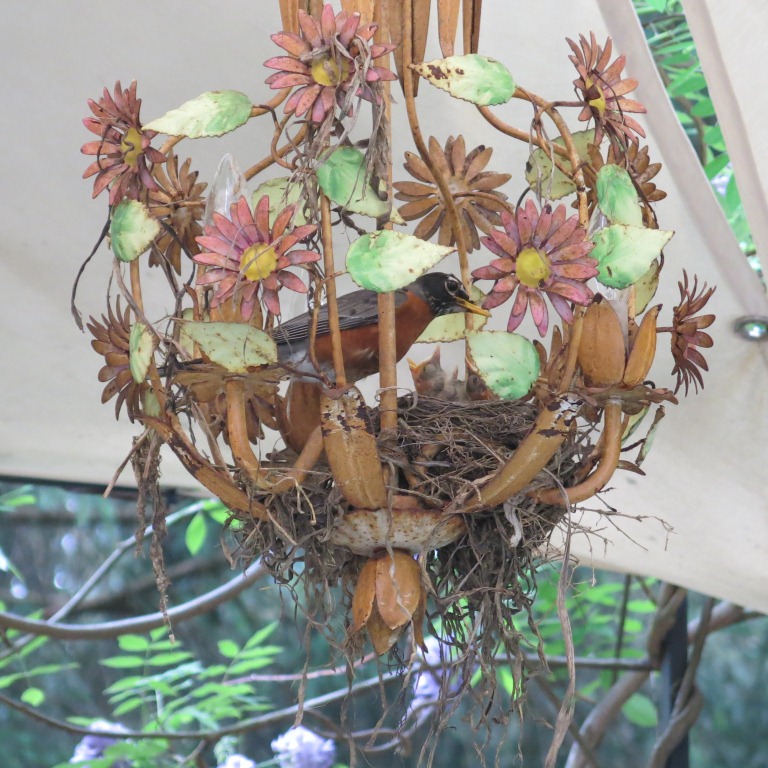
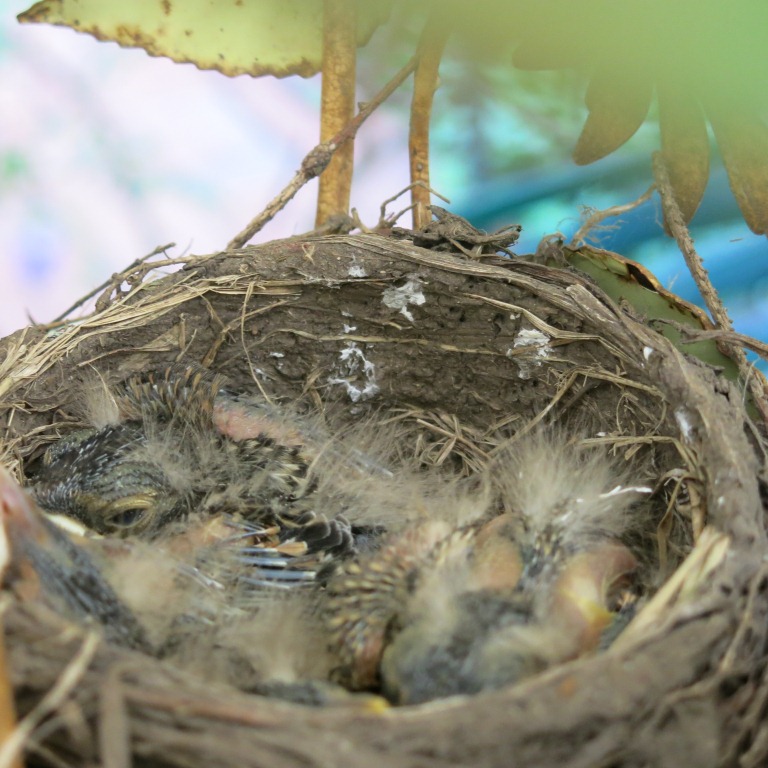
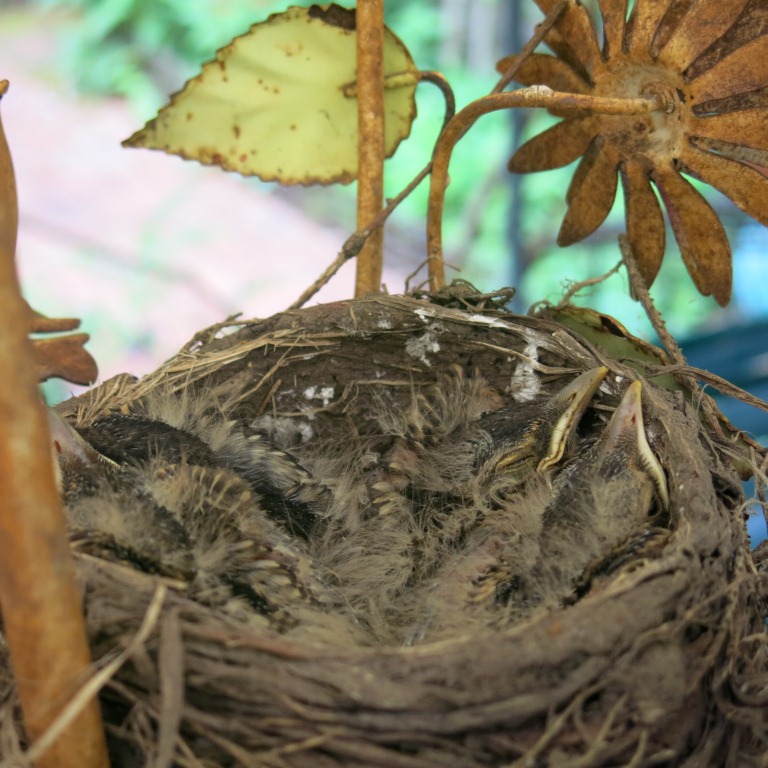
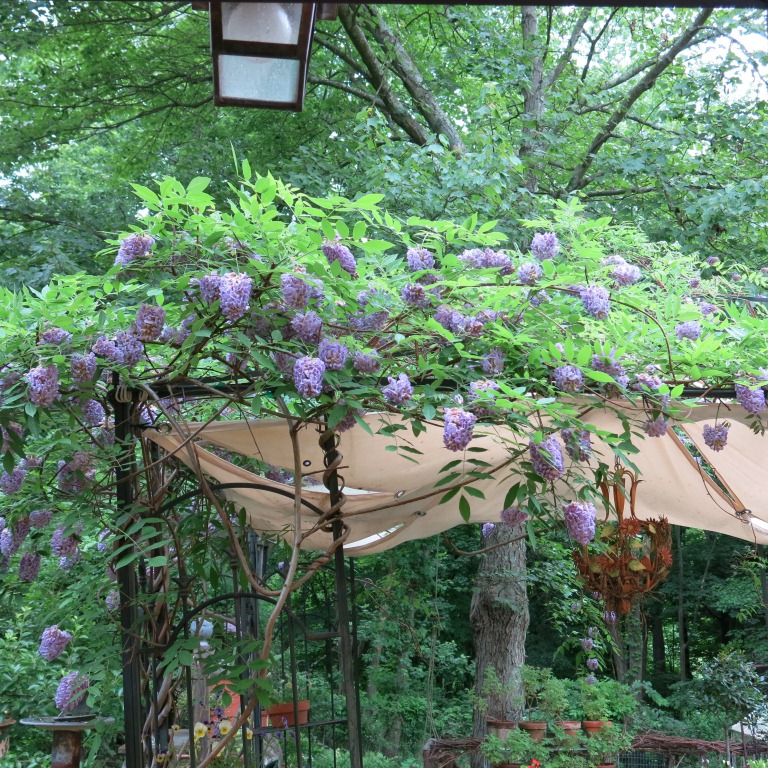
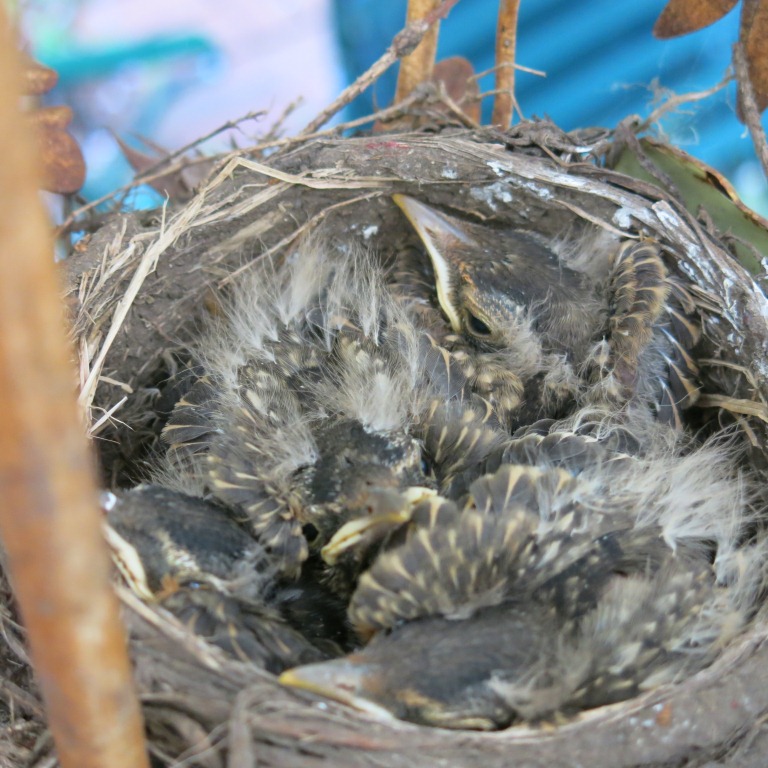
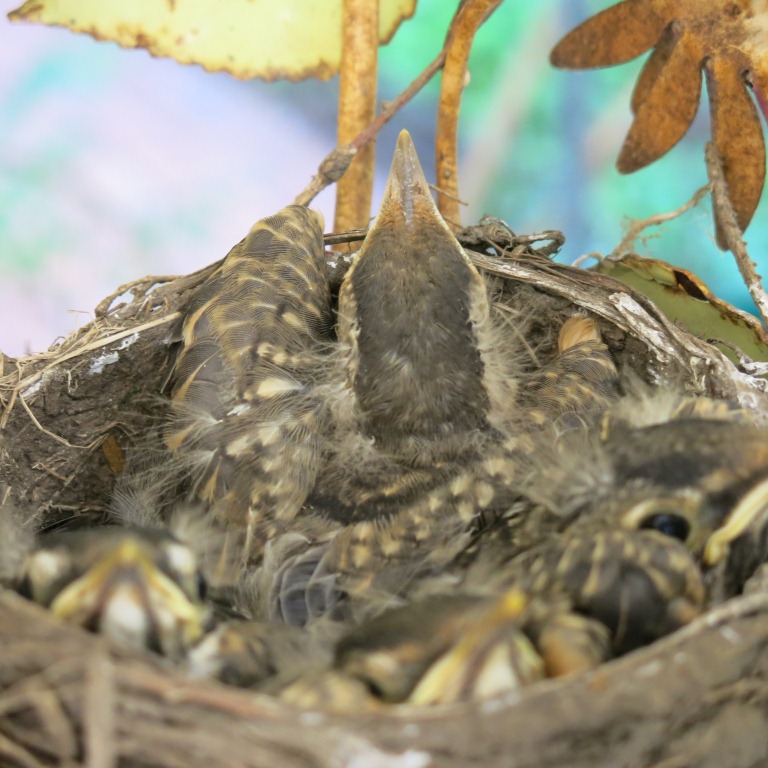
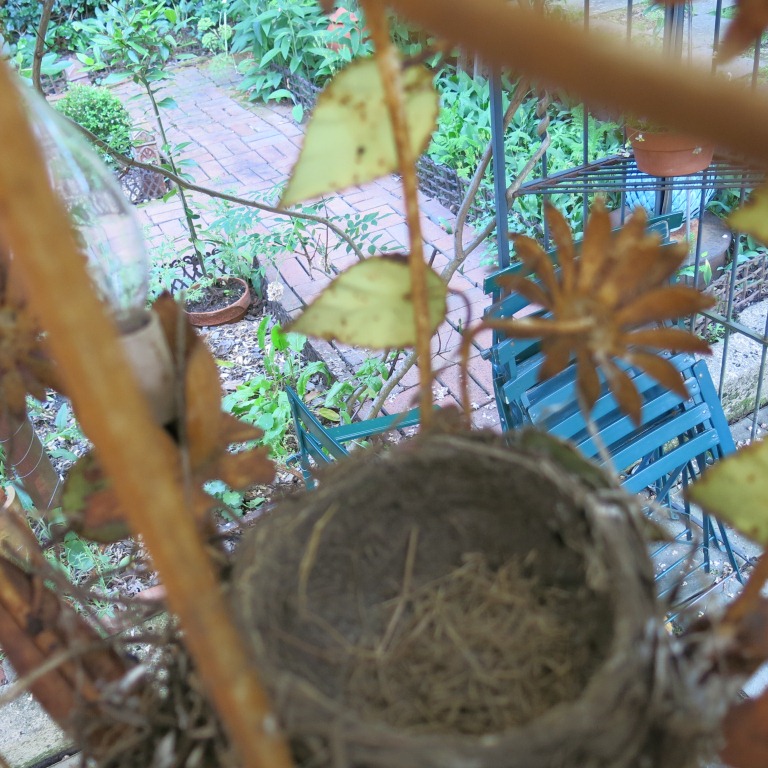
Update on my Robin family:
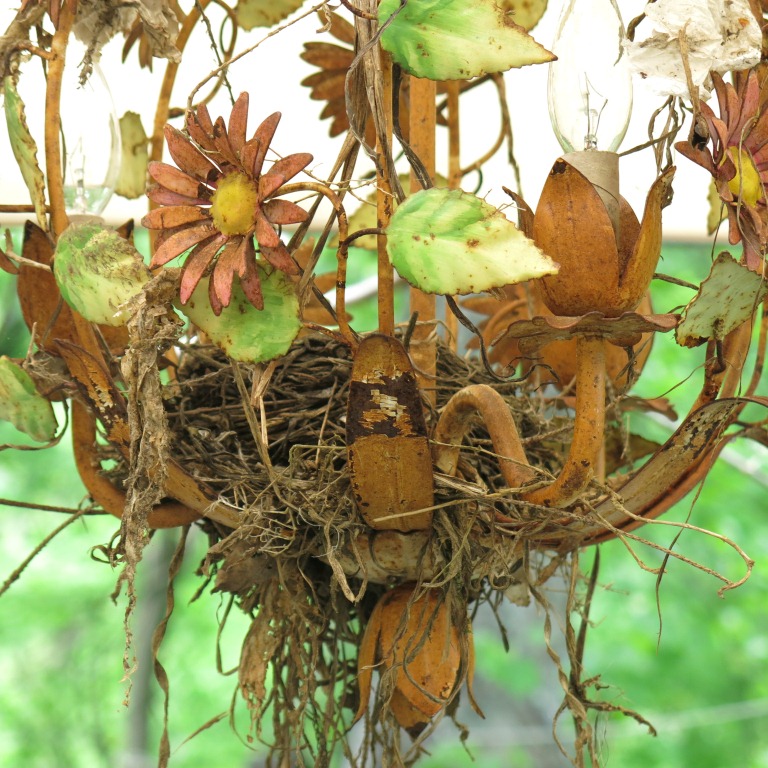
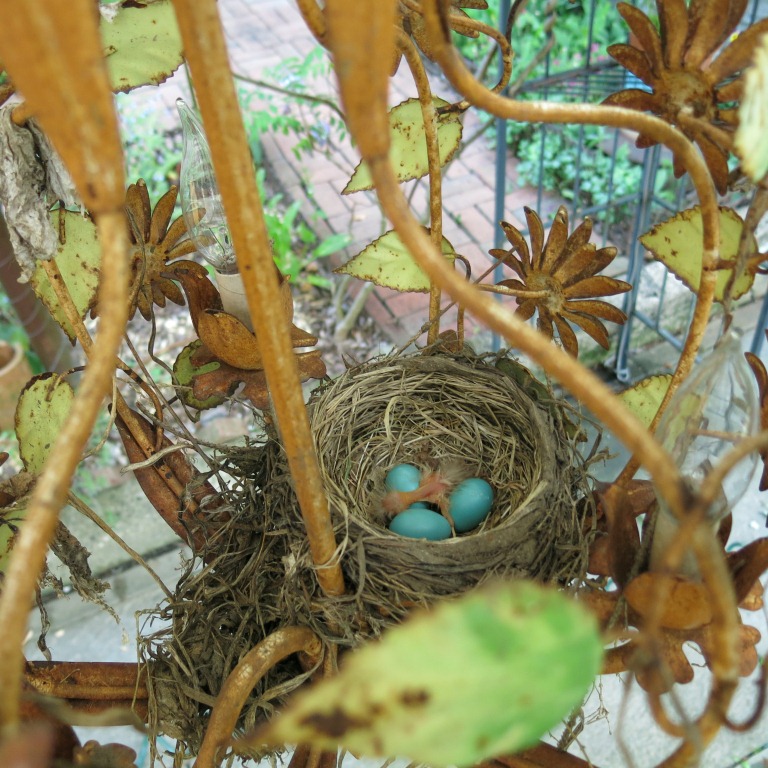
Six weeks after the nest was built, the babies have flown away! I watched, I waited, I waxed eloquent and then, I waved goodbye to this beautiful event that I was privileged to witness. Took lots of picture. Here are a few:

Nest built in terrace chandelier

Nest built in terrace chandelier


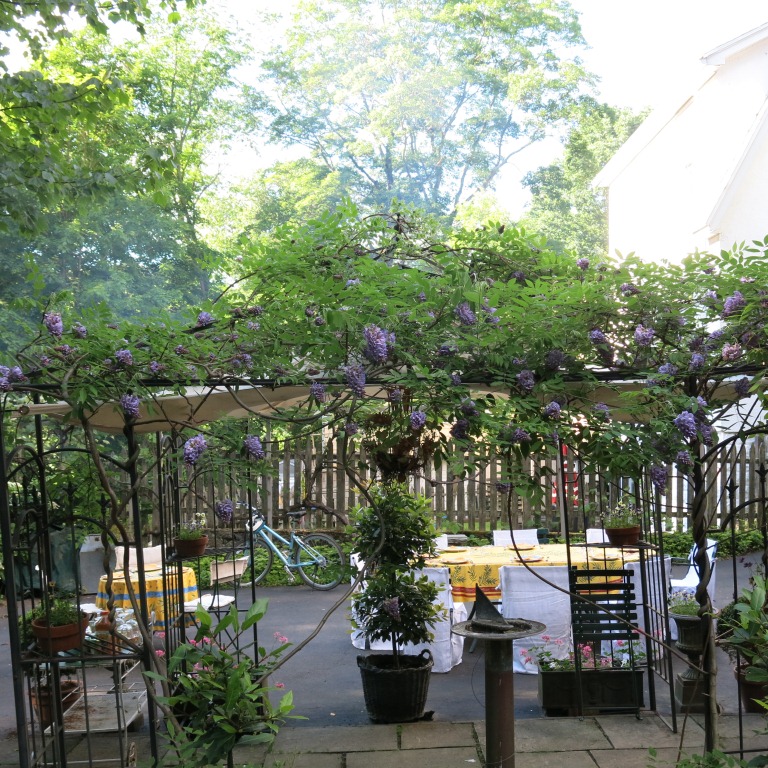
Notice - outdoor dining has been shifted to outside the gazebo so nest is left in peace.

Notice – outdoor dining has been shifted to outside the gazebo so nest is left in peace.


Eggs laid

Eggs laid


Perfect location and timing - under the wisteria in bloom.

Perfect location and timing – under the wisteria in bloom.


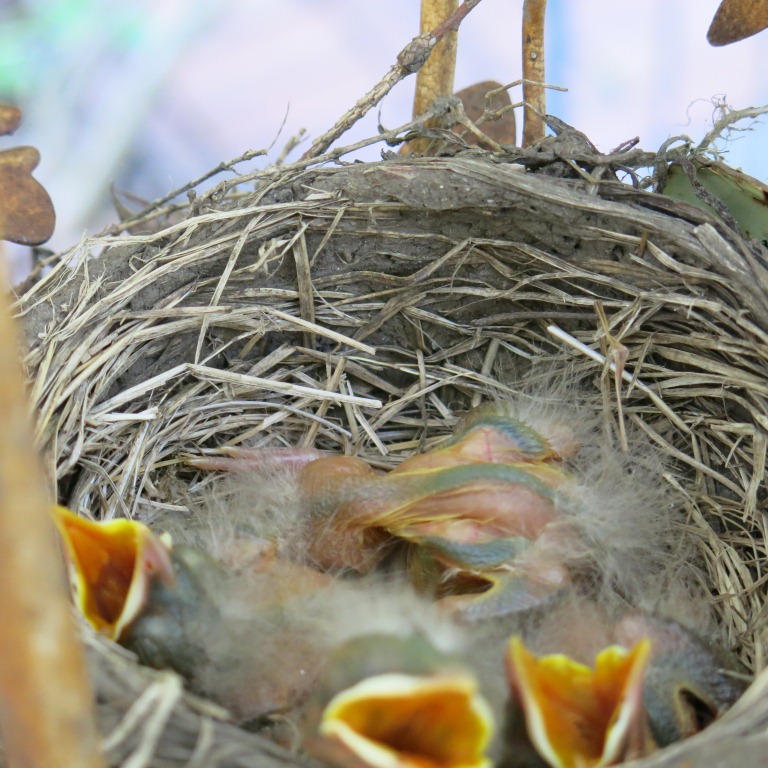
Hungry mouths

Hungry mouths


Feeding time

Feeding time


Growing babies

Growing babies


And growing

And growing


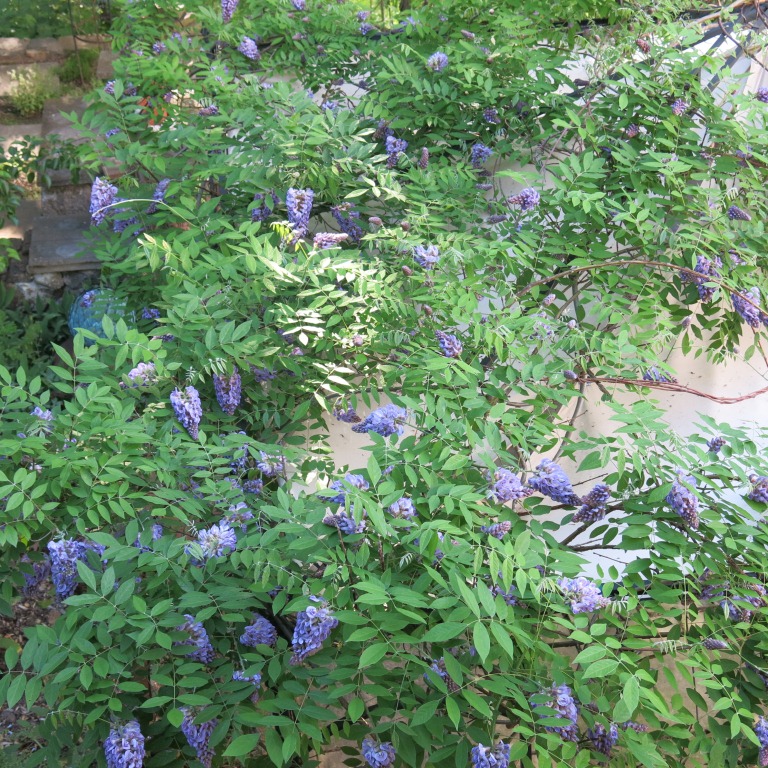
And the wisteria grows as well.

And the wisteria grows as well.


Crowded nest

Crowded nest


And more crowded

And more crowded


Empty nest!

Empty nest!


(c) 2014 Shobha Vanchiswar
[do_widget “Blog Subscriptions (Jetpack)”]
Closing Our Borders

Over the years, I’ve expressed my opinions and thoughts about increasing our usage of native plants, supporting native flora and fauna, being environmentally conscious in the garden and in general applying organic, ecologically responsible methods. I’ve often mentioned the name Douglas Tallamy as the authority on this subject. Having read his book Bringing Nature Home when it came out several years ago, followed his work and on occasion corresponded with him, it was with particular eagerness that I went to hear him speak at the Greenwich, CT Audubon Society a couple of weeks ago.

An unassuming, affable man, Tallamy is a powerhouse of knowledge and understanding of all things in the sphere of entomology and wildlife ecology. I’m summarizing his talk and I hope the information I give will make you sit up and do something.

Ecosystems perform locally. Biodiversity equals ecosystem services. We have degraded 60% of earth’s ecosystem services. Given that 80 – 90% of plants are propagated by animals not wind, we have effectively sterilized our neighborhoods. As Tallamy puts it, we have demonized it! We are living with ‘nature deficit disorder’. Plants literally allow all living things to eat sunlight. So when there are fewer plants, there is less to eat and therefore less support for all animals.

The United States is a human dominated ecosystem. We uphold our lawns as a major status symbol. To date, we boast 72, 500 square miles of suburban lawn. That is eight times the state of New Jersey! And growing. Given that lawns barely sustain any living creature, it stands to reason that we’re seriously impacting our local ecology. Simply thinking our parks and preserves can do the job is ridiculous. They are too small, fragmented and isolated. A contiguous space of diverse plantings is critical to support our birds and butterflies. With that will come all other valuable critters.

To do this, we must not only introduce many plants but we must select more native plants. This is because not all plants support the food web. Natives do. Whilst alien species aggressively replace natives, they support insects very poorly. Five times more insects (think caterpillars) can feed on native species. Native plants and insects share an evolutionary history. Indigenous insects are not adapted to eat alien plants. Take the Monarch butterfly for example – it depends on specific native plants and in a way, this specialization is its curse because with disappearing natural habitats, we are in danger of losing this valued butterfly. With fewer and fewer insects available, think what this will do to our native birds. 96 % of reproducing birds eat insects. Insects provide the high levels of protein and nutrients needed by these birds.

A world without insects is a world without biodiversity. Birds forage close to their nests. Alien plants will not provide them the local supply of the food web. We’ve come to view plants only for their beauty and not their ecological role. But if we understood the number of caterpillars or other insects supported by native trees and shrubs, we’d realize how imperative it is to plant them. We must create corridors connecting natural areas. This can be done easily if each of us filled our gardens with the right plants.

Lawns are biological deserts. They demand a high amount of fertilizers, weed and pest killers to keep our lawns pristine. Add to this the pollution created by gas powered mowers, water table contamination by use of aforementioned assorted chemicals and you have the ideal recipe for a green wasteland. Reduce the area of lawn and begin the transition from alien ornamentals to native ornamentals. Those all too familiar albeit pretty, Bradbury pears or crape myrtles lining our streets and dotting our front lawns do virtually nothing for sustaining the food web. How about replacing them with our own Amelanchiers or Cornus alternifolia? Create meadows, plant more native trees and shrubs, do away with as many ‘miracle’ products. ( To this I say –This is not hard people!)

With native plantings in place, we can set the calender by what is in bloom and what insects and birds are observed. We fill our lives with surprise, anticipation and entertainment. Just think, a mere fifteen minutes spent in nature each day has measurable medical benefits. It is within our power to make those minutes the most amazing ever.

Admittedly, it feels awfully good to have an authority such as Tallamy give credibility to my own all too frequent passionate calls to pay more attention and take more responsibility for protecting our natural environment. Lets just get to it shall we?

Please, please get yourself a copy of the recently updated and expanded Bringing Nature Home by Dr. Douglas Tallamy. I cannot recommend it enough.

This just in! I had alerted Dr. Tallamy on this post of mine and asked him for feedback. Here is his response “Hi Shobha,
Nice job! You were on the money complete. Nothing to add at this end. Thanks for your support.
Doug”

Swallowtail caterpillar

Swallowtail caterpillar


Red Admiral

Red Admiral


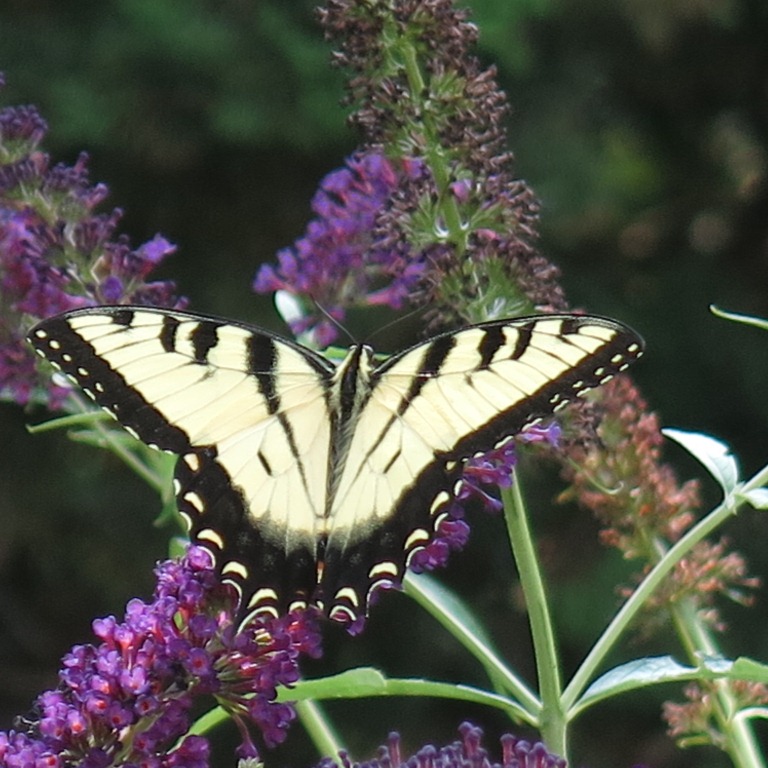
Tiger Swallowtail

Tiger Swallowtail


Great Spangled Fritiilary

Great Spangled Fritiilary


White Admiral

White Admiral


(c) 2014 Shobha Vanchiswar

[do_widget “Blog Subscriptions (Jetpack)”]