Live Long And Prosper

Leonard ‘Spock’ Nimoy died last week. I was a huge Star Trek fan – of the original series. This was entirely due to Mr. Spock. No, I didn’t have a crush on him. He was way above that. Spock was more like a hero to me. His intellect completely impressed my teenage self. He set the bar high. His logical thinking and calm approach to crisis solving were just as instructive as were his lack of social skills and inability to feel emotion. I understood that one needed to strike a balance to be truly human.

His very last tweet read:
“A life is like a garden. Perfect moments can be had, but not preserved, except in memory.”
He signed off with “LLAP” – a reference to his character’s famous catchphrase, “Live long and prosper”. Don’t you just love that oh so accurate garden reference?!
Mr. Spock was the coolest nerd ever. And Leonard Nimoy was a pretty cool all round human. RIP.

While contemplating the part good science fiction plays in bringing science to the mass as well as inspiring outside-the-box scientific research, I came across three separate efforts to boldly go where no man has gone before. Gives one plenty of food for thought.

For small spaces especially in urban areas but really anywhere one lives it is now possible to have a lush, productive garden. A self-contained eco-system will help grow fresh, organic, healthy food inside the house. It has fish making fertilizer for the plants and plants filtering the water clean for the fish. To top it all, the system improves the air quality. Two graduates from MIT came up with this concept and design and are now marketing for ‘early adopters’ in the Boston area. Check out: https://grovelabs.io/
Given the thrashing that region has taken this winter, having this indoor potager might be just what the Bostonians need in a hurry!

And then there is the case of the Beefalo – a hybrid when bisons were crossbred with cattle. This was an attempt to come up with a hardy, commercial animal but is now the result of a failed hybridizing program. But, they did actually succeed in a bizarre sort of way. Some of these creatures got loose and have created a serious environmental problem in the Grand Canyon.

The animal is super thirsty and consumes about 10 gallons of water each time it lumbers over to a watering hole. This can deplete the water supply rather fast. To make it worse, they pollute the watering holes by defecating right there. Their impressive weight compacts the soil which of course makes it hard for plants to grow. What does grow, the beefalo eats up voraciously. They also take leisurely dust baths. All of which leaves the ground quite utterly bare. They have indeed proved to be hardy.
Meanwhile, other animals indigenous to the area are being pushed out. Insects and rare plants are affected along with the habitat. The ecosystem is thrown out of balance.

I have many opinions on hybridizing programs but I will restrain myself and not make this article my soap box. But if anybody reading this works in such a field of research, please go very, very carefully. Thus far, how have the beefalo, liger, pizzly bear and Africanized bees benefited the earth?

Finally, in a vault inside a mountain on the Arctic archipelago Svalbard, the first consignment of forest tree species seeds have been accepted. This is the Svalbard ‘doomsday’ vault created for protecting global food crop seeds. The tree seeds were those of the Norway spruce and Scots pine both very important economically, ecologically and socially. Researchers hope the tree seed samples will help monitor long-term genetic changes in natural forests.

The vault is designed to withstand all natural and human disasters. The purpose of the depository, owned by the Norwegian government and maintained by the Global Crop Diversity Trust (GCDT) and the Nordic Genetic Resources Center, is to store duplicates of all seed samples from crop collections around the world.
So while we grapple with the influences and damages caused by climate change, forest management, fragmentation of populations, new pests and diseases, preserving these tree seeds along with numerous other seeds of life supporting plants will give us a fighting chance to ensure that future generations can be sustained on this beautiful earth of ours.
This bit of knowledge gives me some peace of mind. As all sorts of research proceeds in the far corners of the world for diverse reasons, lets hope we keep in mind that the world itself is a vast sacred garden. Let it live long and prosper. Please.
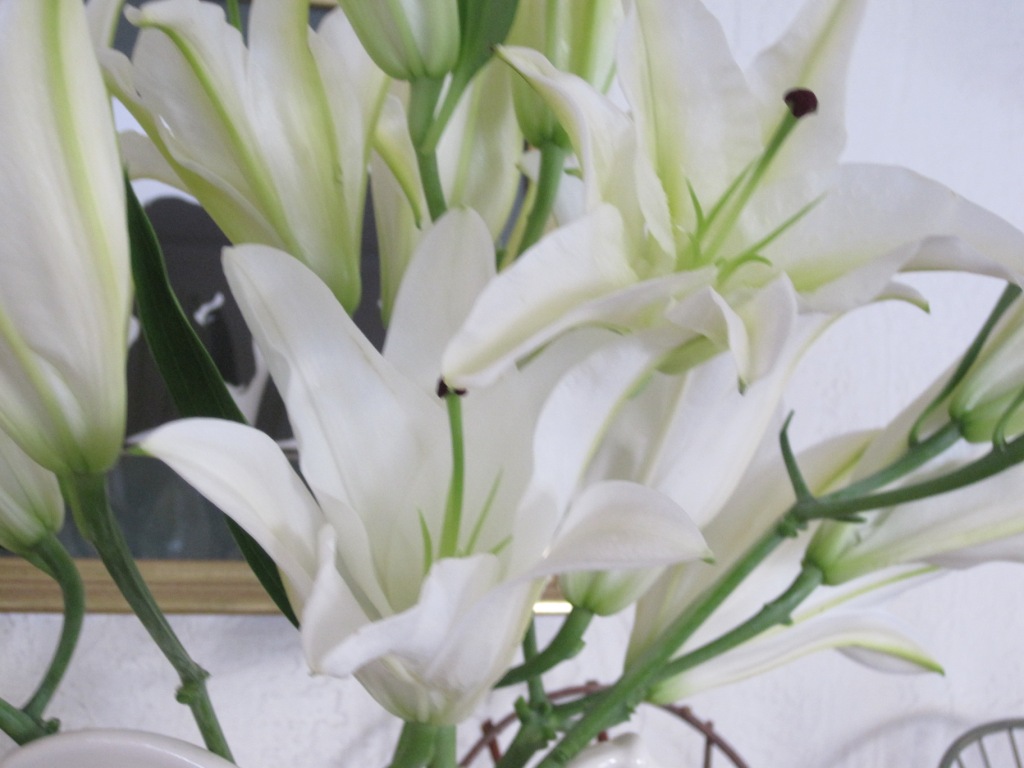
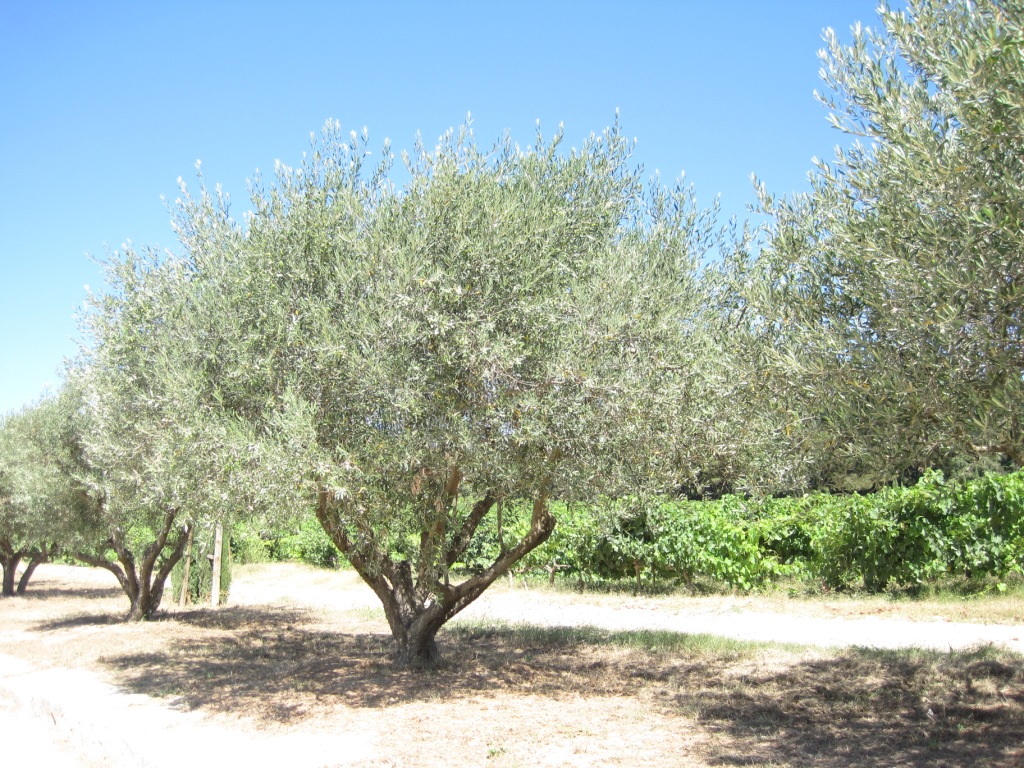
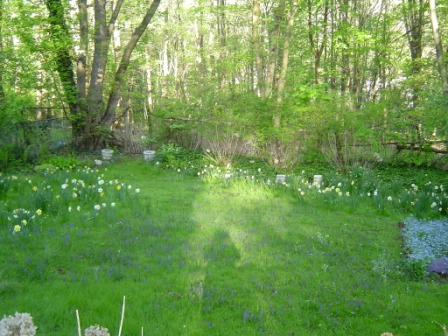
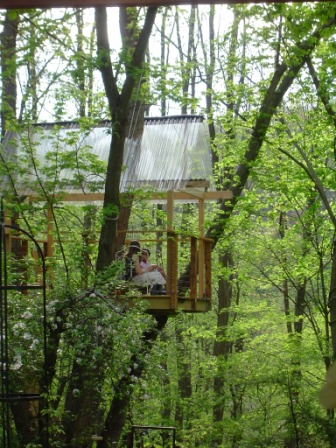
Here are some images of the eco-system in my corner of the planet:IMG_6807
IMG_6905
IMG_6943
IMG_6649
IMG_9316
IMG_4051
IMG_4124
(c)2015 Shobha Vanchiswar
[do_widget “Blog Subscriptions (Jetpack)”]

Noting Le Notre

In a bid to distract oneself from the northeast’s own version of 50 shades of gray, I went with a friend to the New York Botanical Gardens for a lecture. If you are fortunate to have a botanical garden near by, take full advantage. In the frozen, bleak depths of winter, it will offer respite with lectures on gardens and gardening, exhibits and displays in conservatories and a shop to provide retail therapy. These escapes will preserve your sanity and uplift your mood. You have my word.

This particular lecture was given by Alexandre De Vogue on Vaux le Viscomte: From Le Notre to Today. To be honest, I went without caring what the talk would be about. I desperately needed to see pretty garden pictures, hear about them and feel the good vibes from fellow attendees – all garden lovers. I craved this comfort zone.

The lecture was quite interesting. I’ve yet to visit Vaux le Viscomte and it has been on my list for a while. To get a first hand recount from a member of the family that undertook its restoration made it decidedly better. There are several good books on this famous garden so I won’t bother waxing eloquent about it. I do however highly recommend that you discover this garden for yourself.

As the garden that formally launched the classical French garden style, it was necessary to learn something about its designer Andre Le Notre. Yes, he of Versailles fame.

Learning that this illustrious man was not only schooled in horticulture but, also in painting and perspective, sculpture as well as architecture was not surprising. His gardens are testaments to his knowledge and artistry. It turns out the gentleman also had an exceptional memory, a strong sense of proportion and space, was a visionary able to juggle with space, volume and distance. His personal reading encompassed subjects such as geography and mathematics. Even more impressive right?
Sitting in the presence of todays horticultural giants such as Marco Polo Stufano and feeling a bit beaten by the protracted, tundra-like winter it got me feeling as though my own aspirations for my garden were a lost cause. A why bother kind of consciousness crept in.

Then, it got me thinking why the heck not? As Monsieur De Vogue talked about the restoration and then about the current challenges, I realized that he had the same garden problems as the rest of us. Only much larger and more costly. He is battling blight and other diseases with his boxwoods, finding replacements for his sick elms and trying to make environmentally sound decisions just like us. And he too has financial worries.

All of a sudden, the playground was even. We were really all alike. A bunch of passionate gardeners doing our best to create beauty and purpose in assorted places. To each garden we bring our knowledge and experience and put our unique stamp on it. We too apply history, art, science, mathematics, geography, architecture and so much else learned from living our lives. Some are given special places to express their creativity and some more humble plots. Some get paid for their expertise and others do not. Ultimately, it does not matter where or why we garden. We just do because we must. Our hearts dictate to us that working the soil is how we love to live.

In a moment of enlightenment, I realized that Le Notre was just like us! I strongly suspect he’d be the first to agree.

————
Having said all of the above, I feel compelled to share a few nuggets of wisdom from the great gardener himself:
The eye creates perspective, walking makes it alive.
Create a garden so one must go in to fully experience it.
Be wary of your own beliefs. Things are not always what they seem. Be flexible.
Let the sky enter into your composition. Use water to mirror the sky. Think ponds, rills and canals.
Open the garden towards the landscape beyond. Expand the view and illusion.

——————
FYI – At Vaux le Vicomte:
Ilex crenata is being considered as replacement for boxwood.
Hornbeams and linden trees will take the place of elms.

Wanted to share the four different amaryllis I’m currently enjoying:
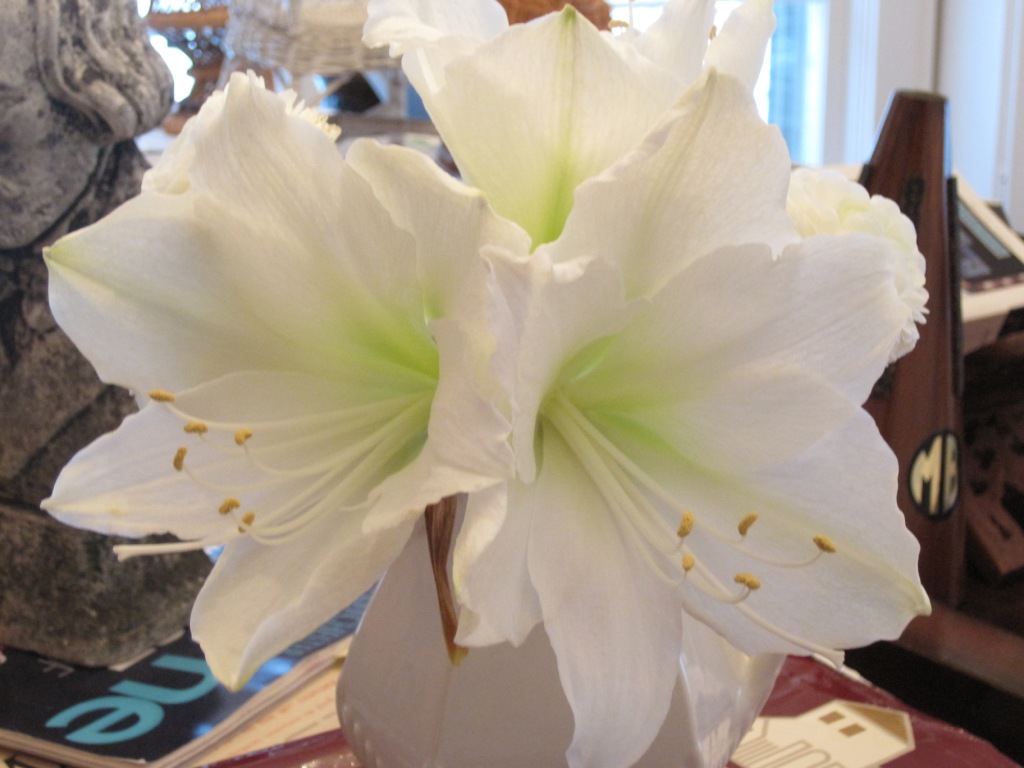
White amaryllis
Pink amaryllis
Salmon and white double amaryllis
Orange amaryllis

The Valentine's 'card' I made this year. The white canvas of snow was irresistable.

The Valentine’s ‘card’ I made this year. The white canvas of snow was irresistable.


IMG_4954
(c)2015 Shobha Vanchiswar
[do_widget “Blog Subscriptions (Jetpack)”]

Is It Time Yet?

I recently read an article on Horologium Florae or Flower Clocks. It is a concept that began with Carl Linnaeus – to design a clock in the ground with plants whose flowers open at specific times of day. By observing which flower was open or closed, one could ostensibly tell what hour was at hand.

It is a charming concept. In theory, it should work beautifully. Pumpkin blossoms open at 6 am, rose mallow between 9 and 11 am, goat’s beard close its flowers at noon, evening primrose shine after sunset and close at noon of the following day. You get the picture. In reality, it has never been truly accomplished. That’s not to say attempts haven’t been made – too many variabilities have prevented any success. On cloudy days, the evening primrose might stay open all day.

Latitude, temperature, sunny/cloudy days, rain, changing length of day/night, light intensity, humidity, preferred pollinators all play important roles in determining exactly when or if a flower opens or closes. For example, a flower that opens at night, does so to attract pollinators like the sphinx moth. However, when conditions change, it either stays open too long into the next day so, day pollinators get to the flowers thus making the flower too depleted for its natural pollinator. Or, the flowers may not open at all so once again, the moth cannot play its designated role.

Growing up, I recall coming across a few attempts at flower clocks in public gardens. Already familiar with traits of common plants, I’d observe how poorly the flowers told time. I remember thinking that if I went by such a clock, I’d become the Mad Hatter and rush about saying I’m late, I’m late. The friend who had sent the article that started me thinking about this subject said that from now on, she was not going to apologize for being late. Instead, she’d say she was on flower time. To which I responded that people would think she’d been smoking the flowers.

Personally, I prefer the idea of becoming so familiar with one’s immediate outdoors that a general sense of time can be kept quite accurately and organically. Birdsong is one way to understand time of day.
It is common for different species to do their dawn singing at different times. The dawn chorus can start as early as 2am! And it progresses sequentially by type of bird. The romantic in me would like to determine parts of my day by listening for favored birds like cardinals, chickadees and blackcaps.
As a child, we lived quite close to the local zoo. Early each morning just before sunrise, the white peacocks would fly out to settle in the tall mango trees in my neighborhood. The birds would remain there all day and leave at sunset. They would spend their time gossiping loudly. The sound was not particularly pleasing but it amused me no end to imagine visitors coming away never having seen the white peacocks, the pride of the zoo.

In the summer, when the sun burnishes the lower half of the Heritage rose on the path outside my studio, I know it is about 6 pm. Time to cease all work and settle down to appreciate the garden. Preferably with a cool drink in hand.

In the early weeks of spring, the tulips close by 4 pm. Tea time. The roses waft their fragrance most strongly just after the sun reaches its zenith. Time to go back into the house, open the windows to draw in the perfume and cool off. The clove-like scent of summer phlox at dusk call one to linger in the garden for a little while longer. Time to just be.

Gardeners are more likely to tell the course of time by the progress of a season; as when a fruit is ripe. Or certain flowers are in bloom. As soon as summer starts losing heat, my Concord grapes will be ready for harvest. The lilacs burst open all of a sudden just in time for Mothers Day. A week after the cherry blossoms drop off, the pear trees put on their show. Closely followed by the apples. When the ornamental grasses in the front of the house glow gold in the evening light, there is just about an hour left of daylight to finish all outdoor chores.

I have a dream that one day, I will be so in tune with nature that I will know the hour by the subtle movements of the leaves, by specific bird calls, by the order in which different flowers are visited daily by the bees, by the degree of warmth of the grass beneath my bare feet. I want to know time by the tilt of the sunflower heads, the moment the first dew drops form on the leaves of the lady’s mantle, when the squirrels emerge from their nests in the dawn, when the robins call it a day.

When Einstein said – The only reason for time is so that everything doesn’t happen at once, I do believe he was in a garden.

The images below are for you to contemplate your own horologium florae.

IMG_1016
IMG_1021
IMG_3638
IMG_3736
IMG_3755
IMG_3789
IMG_3812
IMG_0842
In case you are interested in reading the article that started me off on this article, – click here
(c)2015 Shobha Vanchiswar
[do_widget “Blog Subscriptions (Jetpack)”]

Ridin’ The Storm Out

Storms make the oak grow deeper roots – George Herbert

With a two day snow storm underway, my thoughts have rested mostly on the outdoors. Did I protect the vulnerable plants properly? Were the roses pruned so no limbs are in danger of breaking or tearing in the high winds swirling around? Are the hydrangeas going to be brave and not succumb like they did last winter and petulantly produced no flowers in the summer? Will the espalier be safe from the rodents this time around? I am fervently invoking every higher power in the universe to please, please safeguard my precious garden.

Storms are inevitable in any season. Hurricanes bringing lashing rains, blizzards delivering record snow, gale force winds, damaging sleet and hailstones are all events one experiences at one time or other. However, these past few years have brought more violent disturbances of the atmosphere than before. Extreme temperatures have not helped either. I do believe it is time we accepted that this erratic weather pattern is going to become the norm. Better we seriously buckle down to taking the right actions to protect our gardens before more loss and damage is incurred.

So, lets start a check list:
Design the garden with storms in mind – obviously, this is best done when you are starting from scratch. But, for most of us, it means that from now on, we must purchase plants that are hardy and have characteristics that make it more capable of coming through storms. Deep roots, tolerant of very low temperatures, species that are likely to shed leaves quickly in high winds so the branches are less likely to break from the weight of wet leaves. Flood tolerance might be a requirement if your land is prone to them. Red maples, cypresses and others can withstand a variety of water conditions. If one lives along the coast, salt tolerances from surges might be a necessity. Ascertain the mature size of trees and shrubs so there is no danger of problems with buildings, power lines and fences in the future. That native species do best cannot be overemphasized. Seriously.

Stay on top of maintenance – once the most suitable plants are in place, taking proper care of them is of the highest priority. This is a year round task. Encourage healthy root systems. Stake wherever required, prune diligently, fertilize and water as needed, weed, clean up, cut back and, as much as possible have good air circulation between the plants. Remember, over-watering or over-fertilizing will lead to weak, shallow roots. Make sure that you have a practical plan to protect items like furniture, barbecues, pots, statuary and such when anticipating bad weather.

Check the garden every season to be sure trees and shrubs are trimmed and shaped so they not only look their best but are safe in storms. Thinning the foliage will permit winds to go through the branches as opposed to pushing against the growth and possibly uprooting them. This selective pruning is a practice best initiated when the plants are young.

When getting any hardscaping work done, do not cut away at tree roots as this can destabilize the tree when a storm hits. You are better off removing the tree. Position it elsewhere if that is possible. On the subject of hardscaping, keep all structures in good repair. Loose stones, cracked walls, rotting wood spell disasters waiting to happen.

Keep the garden free of leaf and twig piles that can choke storm drains or become harmful missiles when winds pick up.

When a storm is imminent – the list of chores is of course dependent on the season.
Mow the lawn before the storm. It’ll be easier to clear debris after.
Harvest all ripe fruit and vegetables. It might at times be prudent to pick off the unripe fruits if there is danger of them becoming weapons for rowdy winds to hurl around. Cut flowers in bloom to enjoy indoors. Seed pods are also worth picking off for two reasons. One, they can be dried and saved for new plants and two, will not be scattered by the wind where they might sow themselves at random and become a nuisance.
Secure or bring in all pots. Likewise, keep all outdoor furniture from harm.
Stake all vulnerable plants.
Use sheets of plastic or fleece to shelter plants and statuary from cold snaps and sudden frost.
Keep snow shovels, deicers (preferably the least toxic variety), grit or sand, flashlights, batteries, candles, radio and, water handy.

After the storm – do not be hasty in trying to set everything right in the garden. Immediately after violent weather, the plants will most certainly look tortured (ever ridden in a convertible with hair loose and top down?). Give the garden a little time to recover some composure. You will often find that the damage was not as bad as first perceived.
The most immediate task is to clear debris from the lawn and beds.
Check for damages. This is the time to note what was neglected, what was inadequate and what simply failed. Plan repairs, remedies, replacements and, removals as needed.
If a tree was toppled and you think it might be uprighted and saved, keep the exposed roots moist and protected till the chore can be accomplished. Very probably some sort of additional help by way of expert action and tools will be needed.
Remove damaged limbs and branches. Give the plant time to gain back its health.
Fallen trees – if the tree has no chance of recovering, clear it away. If they have fallen in the woods or someplace away from scrutiny, they can be left as is to support a population of new vegetation and critters and eventually it will decompose into the soil thereby enriching it. Otherwise, have the tree cut up and moved away so that whatever was damaged in the fall can be taken care of.
Branches hanging from power lines must be left to the power companies to deal with.
It is worth your time and money to get the advice of an arborist whenever there are trees in question.
Decide what plants did well and what did not. Rethink your planting selections.
Any hardscaping damage should be similarly addressed. Timely action is the solution.

Now sit back and relax. The ride might get bumpy but you’ve done your bit.
Here are images from previous storms:
IMG_1388
IMG_1404
IMG_7185
IMG_7182
IMG_0398
IMG_0446
(c)2915 Shobha Vanchiswar
[do_widget “Blog Subscriptions (Jetpack)”]

Dancing With Goats

Expressions such as In the arms of goats and Getting my goat have been rather unkind to the frisky, curious , diminutive ruminant. In this month, when Capricorn symbolized by a goat rules, I thought I’d make some amends.

It has been an increasing problem to get rid of fast-growing invasive plants that are seen thriving all along our highways and byways. Any gardener who has dealt with freeing the garden of poison ivy or bittersweet will know exactly how hard that is. Typically, chemicals and/or machinery have been employed. But in either case, there are associated concerns. Chemicals poison the soil and are not good at preventing seeds from sprouting. Machinery disturb the soil too much and that results in erosion.

Enter the Eco-Goats. They are a group of goats that are available for hire one week at a time from May to November to chomp and destroy the offending plants up and down the northeast United States. It is a simple, time-tested biological solution to a more recent biological problem. The animals are more effective than chemicals or other methods because, between their strong, grinding teeth and their multi-chambered stomachs, seeds cannot survive. So once the area is cleared by the goats, no seeds remain to grow back. I do believe the extra bonus is the goat manure – the soil gets enriched while the goats feast!

Machinery brought in to clear the invasives are often too large and in any case cannot be used in steep, wooded areas. Goats can. Tall goats can access plants more than eight feet high. A trip of 35 goats can demolish half an acre of thick vegetation in about four days. Which apparently, is about the amount of time it takes the creatures to get bored with eating the same food.

There are now several well-established goat grazing companies around the country. They have been employed to take on phragmites and kudzu swamped spaces and doing quite well. More and more invasive species are being identified as fodder for the goats. In many cases, insects and other bio-controls have failed to be effective. Super-goats to the rescue! An environmentally sound solution to keep the environment sound.

Now tell me, does this not put a smile on your face?

Having cleared an area in your garden, I have a plant suggestion for you to invite into it. Goat’s Beard! Aruncus dioicus is an American native and an excellent choice to back a border in semi-shade or in a woodland garden. Its large, feathery plumes of white flowers draw butterflies and other pollinators. In fact, it is a host plant to the Dusky Azure butterfly. It blooms in May-June. Growing to a height of 3-6 feet, it spreads slowly rhizomatously to create attractive patches of itself. Goat’s Beard grows well from planting zone 3 all the way to zone 8. Hardy and innocuous.

A rather fitting tribute to the lowly, lively goat I think.

goat

At a farm in Illinois. The goats are kept as pets.

At a farm in Illinois. These goats are kept as pets.


Goat's Beard

Goat’s Beard


Goat's Beard 2
(c)2015 Shobha Vanchiswar

[do_widget “Blog Subscriptions (Jetpack)”]

Out With The Old! Really?

As the first article of the new year, I feel it should be profound and pithy. Sort of set the right tone for the year. But that just puts unnecessary pressure. So, I’m not going to try. It is what it is.

Looking ahead to the upcoming months, I’m going over a growing list of projects I’d like to either start or move forward to finish. Still, I’m drawn to reading up on old practices and traditions. They are what links the past to the present to the future.

Here we are in 2015 with technology and inventions that we couldn’t have imagined a few years ago. And yet, at the same time, I keep hearing ancient advice and solutions to a great deal of life’s conundrums. Yoga, meditation, acupuncture, herbal remedies, ancient grains such as amaranth and quinoa, Ayurvedic medicine …

I’m not talking old wives tales or misguided thinking ( human/animal sacrifice anyone?) but it is rather impressive that many of the old advice holds up to modern examinations. Often, there is now science to back them up. Clearly, we don’t have to keep reinventing the wheel nor do we need to reject the old ways. We just need to refresh or tweak some practices and bring them forward to current lifestyles. Just consider how hip it is to meditate or do yoga. Better workout clothes and celebrity endorsements have been most effective. But lets not forget the mounting evidence supporting them. We’ve rediscovered the benefits of the likes of quinoa, garlic, turmeric, coconut oil and so many others – all of which have been consumed through the ages in various parts of the world. Those ancient cultures couldn’t have explained how the foods helped but they figured out that they did. We now know the why and the how. I remember learning early on in my days as a microbiology major that turmeric has bactericidal properties. Being all too familiar with Indian cuisine, it suddenly made so much sense that this spice was an ingredient in so many recipes. There are numerous such examples from different countries and cultures.

So it is in the garden as well. An ancient, universal practice in itself. I enjoy finding old books on gardening – they have taught me more than one would expect. Often, valuable practices have succumbed to trends and modern inventions. Along the way, we lost track of these important nuggets of knowledge. A shame.

These past few weeks I’ve been exploring old garden wisdom. The experience has been comforting. Like getting comfortable with a grandparent and listening to stories of the ‘good old days’. I thought I’d share some ‘discoveries’ with you. Some are functional, several are fun and others are plain funny. You decide.

In The Garden:
Bury garlic cloves at the foot of rose bushes. It is supposed to enhance color and scent of the roses while keeping away greenflies.
Sow with the moon. During the waxing phase, sow for plants that should emerge out of the ground and grow towards the sky. This would mean all flowers and vegetables like lettuces and beans. During the waning phase, sow the plants whose root system needs to grow strong – like potatoes, radishes, cabbages, tomatoes, cucumbers, gherkins and all fruits. I know this is practiced even today by many gardeners. I have only mentioned synodic planting here. There is also sidereal and biodynamic planting. I find it all interesting but not particularly practical for myself.
Do not plant cucumber and melon seeds next to each other. The melons will lose their sweetness and taste bland.
Companion planting is an age-old practice. In my experience some work and some do not. Here is one new to me – asparagus plants will protect tomatoes from disease when they are grown nearby. This is because have a substance called asparagine.
When the blade of a garden tool gets rusty, rub the whole surface with the cut side of an onion sprinkled with sugar. The sweet onion juice will remove the rust and prevent it from forming again. I think I’m going to try this out.
Add a cup or two of oil to a bucket of sand. Stick in hand trowels and rakes when not in use. It will keep the tools sharp, rust free and clean. I have been doing this for years. It works. Note: I pour used motor oil in the sand.

Out Of The garden:
When buying melons, the smell must not be sickly as this indicates that it is overripe.
To preserve lemons, keep them immersed in fresh water. Change water regularly. Makes the fruits juicier.
When cooking cauliflower, add a piece of stale bread to the water and this will combat the classic odoriferous aroma. I tried this and it does not work.
Artichoke stalks are edible. Just peel and cook them with the artichokes. Season and eat.
Unlike onions, garlic sprouts should not be eaten as they are hard to digest. Remove and toss them.
A drop of wax at the end of apple and pear stalks will help the fruit last longer.
Walnuts will stay fresh longer if put in jars filled with sand.
To make dried walnuts taste like fresh ones, soak them in fresh milk for a few hours. Hmmm, would that be skim, 1%, 2% or whole milk?
For minor skin irritations or dermatitis, boil lily petals or bulbs in milk, puree and apply.
Powder of dried sage makes a good deodorant for use in shoes. Particularly sneakers. Personally, I’d just put a bouquet of sage leaves. The thought of fine powder all over the floor when the shoes are put on or taken off …
Quince pips contain mucilage ( a kind of gum). Soak the pips in water for a few days. A translucent jelly will appear. This jelly can be applied to the face for cleaning and softening.

There are so many more such antiquated/archaic/time-honored observances. I’m certain you know of some good ones yourself. Please do not hesitate to share. At the very least, it makes for good conversation. At best, we become a part of the link to our ancestors. It is all good.

Happy New Year to all!
In keeping with the old-fashioned ways, I’m not adding photos. Only watercolor imagery!
Garlic
Garlic
Carrots
Carrots
Echinacea
Echinacea
Lily
Lily
Nasturtium
Nasturtium
(c)2015 Shobha Vanchiswar
[do_widget “Blog Subscriptions (Jetpack)”]

Give Us This Day

This week, the world comes together to bid farewell to 2014 and welcome 2015. Collectively we face the new year with resolve and optimism. It really is the only way to move forward isn’t it? Perhaps this will be the best year yet.

As I review this outgoing year, I am filled with thanks to everyone who made it a good one for me. Be it small or big, their presence made all the difference. For all the events that brought joy, for all the lessons learned, for all the love received I am grateful beyond measure. I hope I reciprocated in equal amounts the kindness, laughter and help that came my way. I honestly tried.

Moving forward into the new year, I will carry within me that deep sense of gratitude. Like everybody else, I have the desire to be and do better. But that is in essence a quotidian goal. Each day is a fresh chance to improve ourselves and the world we live in.

I have just one intent for 2015 – to spend as much time as possible in the garden, in nature. No doubt this will improve my health physically, mentally and spiritually. As my constant muse, I expect the time with nature to greatly inform my creative efforts. When I’m creative, I’m in a good place. That in turn gives me impetus to be there for the people and causes that give meaning and purpose to my life. It really is that simple. And profound.

At the end of each day, I will ask myself if I did my best. And every sunrise will give me a new opportunity to try again. Ultimately, that is the biggest gift of all – to be forgiven for our past transgressions and proffered a crisp, empty day to fill up with our best.

I wish every one of you that gift – to wake up to each day of 2015 with hope, joy and a commitment to doing your best. Let nature be your guide.
May each day bring miracles.
DSC01116
DSC01066
DSC05064
(c)2014 Shobha Vanchiswar

[do_widget “Blog Subscriptions (Jetpack)”]

The Lore, Love And Lure Of Spices

Holiday baking is underway all over the country and beyond. The air in most homes is redolent with cinnamon, ginger, cloves, anise, nutmeg, cardamom, pepper, saffron, vanilla and other aromatic ingredients. We couldn’t imagine all the goodies of the season without these spices. Yet, does one ever pause to marvel at the ease with which we obtain them? Carrying list in hand, we get to the supermarket, locate the baking aisle and select the spices from the shelves. Familiar slim bottles holding powders in various shades of brown. We never think about spices unless a recipe calls for them.

Like so much else, we have become accustomed to taking the availability of spices for granted. As common as salt right? We no longer marvel at the way spices shaped world history. Yet, from the beginning of civilization, spices have been heavily sought. Be it for their fragrance and flavor or their power to preserve both food and body, spices have been in use forever. Egyptian tombs dating from 3000 BC have been found to contain spices. Wars have been fought , countries taken over, trade deals made, Gods appeased and eternal life assured because of these innocuous looking materials.

Each type of spice was once worth its weight in gold. Or emeralds and diamonds. It is true. Spices commanded an unsurpassed value. And here we are, sauntering into the grocery store to casually pick up a jar of cinnamon or mace. Nothing to it.

Growing up in India, we were taught in school about the lure of spices and tea that led to widespread colonization of South-East Asia. Columbus was looking for a faster route to get to India and her riches when he came upon America. Yet, we were not taught to fully appreciate the plants that yielded the sought after spices. It is possible that everybody assumed the knowledge because Indian cuisine is perhaps the one that uses the most variety and quantity of herbs and spices. Kind of like not being surprised that others coveted what we’d already used and enjoyed for centuries. In retrospect, I wish we had studied the spice plants as part of botany class, learned their cultivation and trade in commerce, mathematics and geography, their impact on humanity in history, and their properties and applications in biology and chemistry. That is a complete education in itself. It would not only have been interesting and relevant but, might have served brilliantly to show how every subject in school is connected.

Why spices were so expensive is not simply a matter of where the plants grow. Growing, harvesting and processing them is no simple achievement. A great deal of effort is required to yield a small amount of the spice. Often, the work can be risky or dangerous.

While we each make and/or partake of foods with spice this holiday season, I thought I’d pick one spice and tell you very quickly how it gets to us. Use this reading moment as a time to breathe deep and appreciate what we rarely give our attention. In a season fraught with traditions and history, lets take a walk to a faraway place, witness age-old practices and, properly meet the hitherto insufficiently appreciated clove.

Lets make the journey to Zanzibar. Mysterious, exotic Zanzibar. Heavily scented Zanzibar of the Spice Islands off the coast of east Africa. Evoking tales of the Arabian Nights and ancient legends told by Persian traders using Zanzibar as a base for voyages between the Middle East, India, and Africa. Zanzibar was once the world’s largest producer of cloves.

Cloves are the dried aromatic flower buds of a tree in the family Myrtacea Syzygium aromaticum. The trees were introduced from Indonesia in the turn of the 19th century. They are harvested September through November which coincides with the short rainy season. Harvesting is hard work as it must be done by hand. The bunches of cloves are found deep in the foliage and are difficult to reach. On lower branches, they can be grabbed and pulled off but higher branches demand that the picker climb the tree which can grow to 50 feet. In the rain, imagine how perilous this can be. Every member of a family must help in the harvest.

The picked bunches are carried in gunny sacks from farm to village where leaves and buds are separated and dried in the sun. Again, by hand. The leaves are dried and pressed for perfume and oil. Clove oil is still used to treat toothaches.

The buds themselves are taken to one of three collection stations and sifted by hand to clean the harvest. Dirt, twigs and other particles are removed. This procedure is painstaking and necessary for yielding a product of high quality.

The sifted and cleaned cloves are weighed and only then the farmer is paid. Heaviness, dryness and aroma are inspected and packaged accordingly. Strong aromas and whole, intact cloves fetch higher prices.

From here, they are transported and go on to be sold locally or exported for use in cooking, medicine or cosmetics.

That is a long, strenuous journey don’t you think? Can you imagine eating foods without any of the spices?! No cinnamon babka, no gingerbread cookies, no chutneys, no steak au poivre, no mulled cider, no anything delicious!

Coming back to our holiday baking, it gives a renewed appreciation for the spices doesn’t it? I for one am resolved to send a silent thanks each time I reach for a spice. Once again, plants have shaped our civilization. They remind us to be grateful and mindful. Spices improve not only our foods but, our hearts and minds as well.

Happy indulging one and all! May the holidays be seasoned perfectly with joy and laughter.

Some years ago, I visited coffee,tea and spice plantations in southern India. While I cannot locate photos of that visit, I unearthed a few watercolors I made. So, thats what I’m including here. I’m sure if you are interested to see more, you will discover a plethora of images on the Internet!

Coffee and tea

Coffee and tea


Pepper and cardamom

Pepper and cardamom


IMG_4790
(c)2014 Shobha Vanchiswar
[do_widget “Blog Subscriptions (Jetpack)”]

Cultivating Giving And Gratitude

‘Tis the season for giving. You already knew that. The media informs us of it every second of the day. The businesses have already taken care of all the worries and inconveniences. Short on cash? No problem. There are layaways, store credit with no interest till year 2016 when presumably you will be well off, free shipping, sales and heavy discounts and of course, their everyday low prices. Strapped for time? Personal shoppers, on-line shopping, experts who will tailor your gift list for people you didn’t know you knew or loved, will take care of that problem. Gift wrappers, tree decorators, party planners, caterers, clean up services, even people who will eat and exercise for you are on the ready to serve you. No need to interrupt your uber-busy life.

Personally, the garden reminds me all the time to be grateful, to give freely, to be in the moment. The time, energy and love I lavish on it is directly proportional to the difference I make and how I feel. To begin with, getting my hands dirty, getting on my knees, bending and lifting as I go about tending to the garden, keep me humble. The sore muscles, achy joints, broken nails, scratched skin and seasonal allergies are evidence that nothing worthwhile comes easy. My efforts are rewarded with beauty and bounty. Much to be thankful and awed by. By taking care of the needs of a garden, I am forced to be mindful. My time spent cultivating it is reciprocated in a better understanding of nature, the world at large and my own self. As I better my garden, I find that I have bettered myself. The tutorial here is really about giving more of oneself. Having a lovely garden is the gift I give to family, my world, myself. For nurturing this piece of land, nature returns the favor in the many life lessons and innumerable brushes with grace.

Here is my take on giving. Each act of giving must involve the self in a deep way. When you have money, time, health and general wherewithal, it is easy to give. Write a check, sign up for a couple of hours at the soup kitchen, join a committee to fund raise – heck, head the committee why don’t you, purchase toys for underprivileged kids, train and run a marathon for a cure. You get the idea. All of that is noble, necessary and commendable. But, now, ask more of yourself. Make that check bigger by letting go of your dream for one more pair of designer shoes. After writing that check, ask what else you can do for that cause. Extend your hours at the soup kitchen and forget about the movie you hoped to take in. It’ll be on Netflix soon enough. Even better, you can pick up the DVD for free from the library. It will not hurt to see it a few months late. Take the toys you purchased and personally deliver it to the children. Spend some time with the recipients and get to know them. Skip the blow-out sales at the mall and shop local. Help your community thrive. So you didn’t get all the trendy bargains but, you helped more people than you know. Having fewer but more meaningful presents to give is good. Give by reaching deep within yourself.

The point I’m trying to make is this: give till it hurts a wee bit. Make it matter. Making a personal sacrifice so you can be of the most help is the spirit of true giving. It creates a mindfulness of how and what you give. Accommodating opportunities to volunteer and help despite tight schedules, lack of funds and/or other limitations and obligations is when we are called upon to rise to the occasion and show our true intentions. Please don’t get me wrong. Any gift is worthy. But, in these times of extreme consumerism we are all too caught up in the frenzy of thoughtless giving (and getting). The bigger, the more expensive the better. It is also the easiest. Meanwhile, since most folk do not have deep pockets, this results in feelings of being inadequate and insufficient. Worse, one witnesses the rearing of the ugly heads of discontent and envy. Often, people then don’t give at all. Sadly, it is not about wounded feelings but about bruised egos that gets in the way of giving.

Every little bit helps. So if you can only give $1.00, that is fine but perhaps you can also give the gift of time. The homemade, handmade and heart made are often the most cherished. Creativity and imagination go a long way in increasing the giving possibilities.

As a whole, we need to stop feeling sorry for what we don’t or cannot have or afford. Cease to look outside our lives and instead look within. Compare yourself to no one. Consider your blessings. The body you have is beautiful as is. It permits you to do the things you need to do. Cherish that. It probably could use more exercise, less dessert and better sleep. Well, you can do something about it but right now, give thanks for this perfectly imperfect body. The same goes for everything else in your life.

Between sincere gratitude and pure generosity, we have all the ammunition we need to make a serious difference in bettering our world. Everybody thinks they are too busy and frankly, I’m tired of hearing that refrain. The fact is, if we care enough about anything, we always find time for it. If we want to have or do something badly enough, we always get it done. It’s that simple. But please, I beg you, lets not brag about it, consider ourselves ‘experts’ or expect accolades. You know what you do and that is enough.

Instead, let your garden proclaim your goodness.
IMG_1025
IMG_1020
IMG_1032
IMG_2405
IMG_2415

Don’t forget! It is the season to write notes to friends and family – my botanical cards are available for just that purpose. The 8-card packs are also good for hostess and teacher gifts. Just saying. 15% percent of the sales goes to the Rocky Hills Preservation efforts of the Garden Conservancy.

(c)2014 Shobha Vanchiswar
[do_widget “Blog Subscriptions (Jetpack)”]

Sacred Groves, Mighty Cathedrals

Replete with gratitude and Thanksgiving repast, I sought the outdoors for a little reflective time and to come out of the turkey stupor. The rush of cold air instantaneously removed the cobwebs from my mind. I took a walk in the woods appreciating how wonderful it felt to be in this place at this moment. It felt very right.

As much as I enjoy hiking in more open spaces, it is amidst the trees that I’m made aware of my state of grace. Walking slowly along the tall pillars of this hallowed space, my breath is deep and deliberate. My body relaxes as accumulated tensions slip away. The soft light of the late afternoon streams through the high fenestrations in the naked branches bracing the forest’s vault. It creates gentle shadows that will soon merge into a singular darkness.

At first, I’m only conscious of the quiet but, as I let go of the noise in my head, the hushed sounds of life in the woods let me know that I’m not alone. My presence, if noted, does not appear to cause an interruption. Here, there is room for everybody. All are welcome.

Before I know it, I’m feeling more alive and uplifted. Restored in spirit, I head back to the house. It has only been a mere twenty minutes but I know the positive effects will remain much, much longer.

Trees have this power to influence us in ways beyond our understanding. Cultures all over the world have held them precious, sacred. Beyond the fact that trees are the source of fuel and food, shelter and shade, abodes and boats, they have been venerated. Trees have played a central, valued role in human history. Siddhartha became the Buddha under a Bodhi tree. There is the Tree of Knowledge and the Tree of Life. The Wishing Tree and the World Tree. In religion, mythology and literature one finds trees given exalted positions in the human context. All across the globe there are Sacred Groves, Holy Trees, labyrinths amidst trees and, old forests rich in folk lore. We need trees but they can well do without us.

I recall my visit to the Monarch Grove in Pacific Grove, California about ten years ago. Having read that west of the Rockies, Monarch butterflies spend their winters in this stand of eucalyptus trees, I was determined to visit it. It was August so no Monarchs were going to be there but I still felt compelled to go. We found it with some difficulty and as I approached the grove, it looked like nothing much. However, once I stepped into it, an inexplicable calm came over me. I had no doubt whatsoever that this was sanctified space. The Monarchs had blessed it so. Even in their absence, the holiness of the place was palpable. The eucalyptus stood sentinel. Guardians of everything meaningful; maintaining nature’s delicate balance. It was spellbinding. When I left this fragrant, leafy temple, I took with me the sense of having been in the presence of greatness.

I will share here something I’ve never told anyone – when I’m upset or troubled, I choose a tree and pour out all my thoughts and fears to it. Leaning on it or sitting beneath, I vent. The tree silently absorbs my worries and thus unburdens me so I am free to return to the business of living wholly. I call it my Shrieking Tree. Perhaps it ought to be renamed as the Shrink Tree. Has worked wonders for me.

Many years ago, we took our first trip to Provence, France. Topmost on my husband’s must-do list was to hug an ancient olive tree. Who knows why but this cerebral and pragmatic man felt driven to connect with a tree that had stood witness to so much history. It mattered to him. That’s it really, trees are inextricably linked to our human heritage. After all, we used to be arboreal.

Trees are living landmarks. They represent our past and hold our future. They need to be protected, honored and celebrated. Future generations deserve to inherit these treasured monuments of life.

If you haven’t paid much attention to trees lately, been too busy, stressed to the max and feel like you need more hours to the day, I ask you to pause. Trust me, whatever you are doing can wait a bit. Now go outside into the garden or to the nearest park or woods. Pick a good sized tree. Get close and lean into it. Spread your arms around it. Breathe deep.
Notice how you feel. Let the texture of the bark speak to you. Smell the earthiness. Listen to the sounds. Become aware of the dappled light, the temperature of the air and tree, the colors around. Allow the tree to embrace you back. Close your eyes and permit it to comfort you. Remain there for a few minutes or longer. Then, step back and observe how much better you feel. Hug a tree, hug the world.

Ancient olive trees

Ancient olive trees


The woods that border my garden

The woods that border my garden


The tree house

The tree house


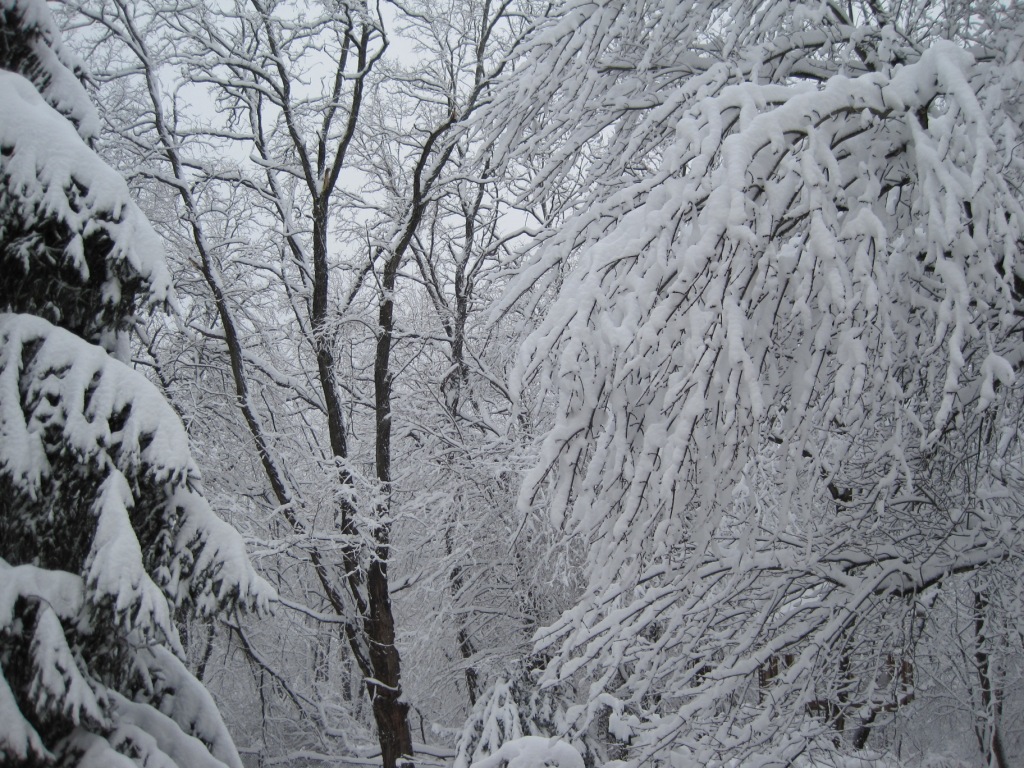
Snow forest

Snow forest


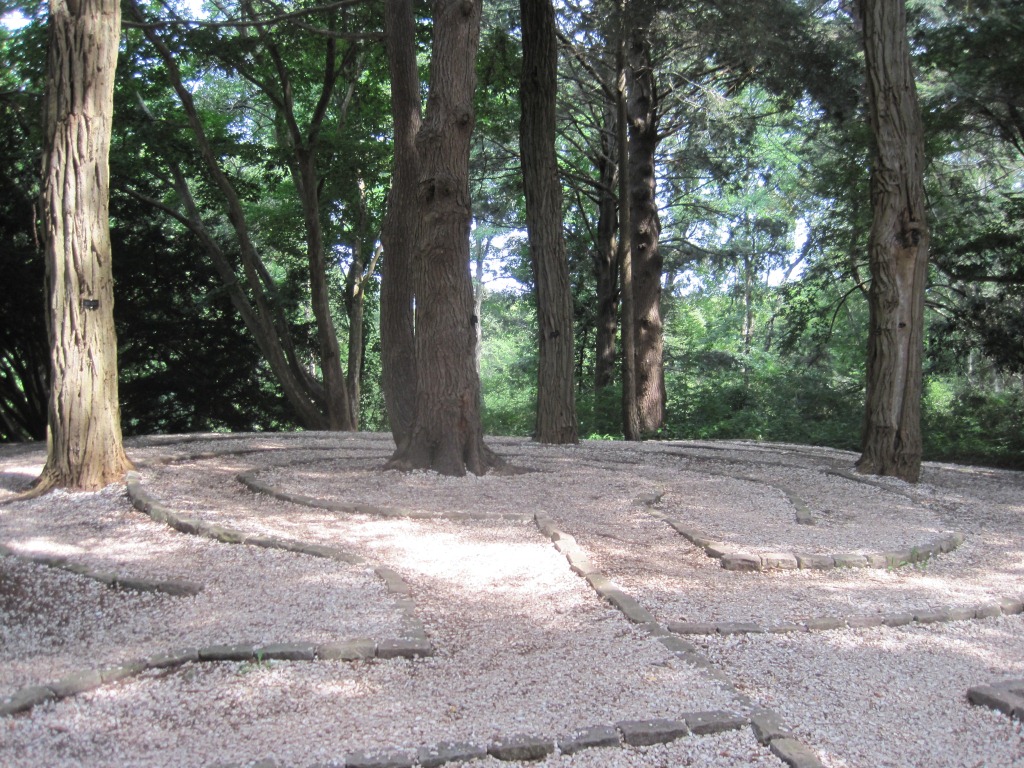
Labyrinth in the woods

Labyrinth in the woods

20140812_050946550_iOS
Note: If you are looking to send secular cards this season, or in need of hostess/teacher gifts, you might want to consider my botanical cards.
(c)2014 Shobha Vanchiswar
[do_widget “Blog Subscriptions (Jetpack)”]