A World Unto Its Own

There is something about small scale replicas that fascinate the human mind. Perhaps it is the accessibility of compact things or the fact that one can easily take care of them or that they connote a simplicity in an otherwise complicated world. Doll houses, miniature train/car sets, tree houses, furniture, cookware, even miniature dogs are sought after and enjoyed by all ages. I’ve seen plenty of men have insane fun with train sets purported for their sons and lets face it, women get positively carried away with furnishing their little girls’ doll houses ( I speak from personal experience). I do believe it is also a matter of control – we can manage these things. While so much else overwhelms, Lilliputian items give us a sense of being in control.

Hence, it is no wonder that tiny gardens are so delightful. Easy to care for, can be observed in detail and, look elegant. Enter the realm of terrariums. I’ve always found them charming. A few years ago, perusing through Tovah Martin’s book on the subject revived my interest and had me purchase several Wardian cases. Understandably, planting up such ‘containers’ is not permanent. But then, what garden is? I’ve planted up my cases in ferns, in orchids, still life arrangements of found objects, whatever caught my imagination. But most recently, they lay empty and I wanted to try something different. The timing was perfect. My friend Pam had just started her terrarium business aptly named Terraria and it made complete sense that I ought to have her furnish my Wardian cases. It is not difficult to make your own terrariums but a fresh eye is always a good thing. An expert knows about suitable plants and conditions. Most importantly, they have access to the right sources.

Pam Wright is a talented gardener and her skills at making terrariums are impressive. Not given to doing anything in half measure, she is very knowledgeable about all the plants she uses, the care required and applies a seriously aesthetic eye on her creations. I’ve been fortunate to know Pam for years and feel very confident in promoting her. I recognize quality and authenticity. I don’t mean to gush and shall not say more. The photographs below will serve as testimonials. However, I do want to share a story. The smallest of the mini-Wardian cases I had given to Pam had the glass missing on one side. Very cleverly, Pam placed a small single Venus Fly Trap in it. It not only looks just perfect but the open side can, with any luck, permit entry to bugs that will be much appreciated by the carnivorous plant! To contact Pam – pam_wright@yahoo.com or call her at (914)260-9799.

Terrariums are diminutive horticultural worlds. Best of all, unlike gardening outdoors, you get to control things like light, humidity and temperature. What plants you select will dictate those factors and you create a whole new microcosm. Unless one is all for collecting rare or unusual plants, it is not a big investment and experimenting is rather fun. Making terrariums permits one to be child as well as creator. Yes, there is indeed a bit of ‘playing God’. But not in an arrogant way! The key word here is “play”. If anything, it is a reminder to not take oneself too seriously. Just give in to your botanical imagination and see where it’ll take you.

During the dark, cold, bleak winter months when we crave lush, green surroundings, having a terrarium or two to gaze upon can be positively therapeutic. As you go about trying to come up with interesting, beautiful gifts for family and friends this holiday season, do consider giving a terrarium. Get one for yourself as well. They make very good company – beautiful, interesting, low maintenance and very quiet.

Get motivated with these images: All by Pam Wright
Terrarium 1
Terrarium 2
Terrarium 3

My newly planted Wardian case

My newly planted Wardian case


The Wardian case with the top on

The Wardian case with the top on

I have more information on making your own terrariums and I plan to put them into a how-to page on this site. Stay tuned!
(c) 2013 Shobha Vanchiswar

Thanksgiving In The Garden

Today
I give thanks
for being just as I am.
Nothing more
Nothing less.

My favorite holiday is less than two days away. I do so enjoy the connectedness we all share for this special event. All across these United States, as one people, preparations are underway. While some travel to the bosom of family and dear friends, others get ready to receive them. Old family recipes resurrected, new variations added on, shopping lists filled at markets, kitchens emanating sounds and aromas of festivities to come. The anticipation and excitement in the air is palpable.

It is about now, before the crowd gathers and cooking is seriously in progress, that I take some time to fully acknowledge the spirit of the holiday. To review the past year and take note of the myriad blessings in my life. I do this in my most sacred of places – the garden. This year, there is a storm coming our way. Much disruption is being forecast and I’m inclined to conclude that in the stress of dealing with the complications, one will be less inclined to think about such metaphysical things like gratitude and convivial familial connections.

As I slowly wend my way around sleeping flower beds and leafless shrubs, I give thanks to my wisest and kindest of all teachers. This space that is my garden. I’m glad for every plant and creature I have encountered through the year. The beautiful and productive as well as the nasty and destructive. For without the latter, I wouldn’t know to appreciate the former. This year has had many challenges for me personally but the garden provided me solace. The chores gave me purpose and distraction while much joy was found in its beauty and bounty. I’m thankful for having this one place where nothing is expected of me and I’m accepted just as I am. Forgiveness and second chances abound here.All through the year, I have been guided to be present in the moment. To face whatever comes with an open mind and heart. To accept what is and not look to what is not. To find meaning and purpose in every situation. I have been given many reasons to feel proud and successful while at the same time, the garden has, on many occasion, gently pushed down my ego and put me in my place. I’m all the better for the hard lessons.

In the end, what truly matters are those everyday moments. The dailiness of life is the true gift. Big happenings, good or bad can derail a person but the normal and the routine offer immeasurable comfort and peace. So, come Thanksgiving Thursday, I’m deeply thankful for the expected and the usual. The sunshine and the rain.The ritualistic meals, the familiar settings, the dearest people and the immense love I have for them all.

I wish each of you a beautiful, peaceful and happy Thanksgiving.
I’m sharing some end of season images of the garden’s bounty:

Romano cauliflower

Romano cauliflower


Last of the Rainbow Swiss chard.

Last of the Rainbow Swiss chard.


Roses and rose hips.

Roses and rose hips.


Sedum Autumn Joy at the end of the season.

Sedum Autumn Joy at the end of the season.


(c) 2013 Shobha Vanchiswar

Report card

We are judged on almost everything we do in life. Think about it. You bake something and a verdict is passed. You paint, write, sing, sculpt, build, invent, teach, sell or parent and there is a panel that is on the ready to make a pronouncement. Our culture enjoys a certain comfort in deeming things pass/fail, right/wrong, beautiful/ugly, amateur/professional, successful/unsuccessful, crude/sophisticated. This makes being true to oneself rather difficult.

We are afraid to call ourselves an artist if we have not shown in an exhibit or a writer if a book has never been published. You might be an engineer with the correct schooling and degrees but you can be a sculptor as well. Even if what you sculpt is done at night and your art is seen only inside your home. But how hesitant we are to declare it in public! Too timid to question the system that denies one one’s many faceted, undeniably special persona.

Who are these social pundits and what exactly are their qualifications to be so judgmental? A certain degree of parameters make sense. For instance, rules of the road are very relevant. The same goes for how we conduct ourselves in society. They serve as guidelines, standard markers that make civilization thrive. One learns how to reach higher and do better. Peaceful, cooperative societies must have general rules and acceptable limits. This works fine but all too often, we are left somewhat paralyzed by fear of censure in our day to day lives. Because of this, we follow the pack and surrender our individuality. Look around. Our dress, our literature and cinema, our music, the architecture and appearance of residential streets, cars, hairstyles, even our food choices are all dictated by trends set mostly by those who in truth, know no better than anybody else.

We listen to the words of celebrities as though they are the modern day Oracle or are the select few in custody of the Rosetta Stone of Everything. If a person is indeed an expert or legitimate authority, then, they are obligated to teach, help the rest of us. Not deride, mock or judge. Most of us never pause to question if any of this feels right or is suitable at all. To follow our own ideas and thoughts is to be bold and courageous. If you are not breaking the law or harming anybody, then take a big, deep breath and be bold and courageous. Be you.

The easiest place to express yourself is the garden. Society regards the garden like an afterthought. Unless your front garden is a complete jungle or radically different, no one will notice or care. It is as though to spend time gardening means we are not pursuing more important, pressing causes. And if you don’t garden, well who will chide you because after all “who has the time?”.

On the one hand, it is universally accepted that it is vital to have access to nature and we tend to buy as large a property as possible. But on the other, not enough is done to acknowledge and appreciate those who create and care for such green spaces. We can use this attitude to advantage!

Typically, I see it as a means to create whatever garden I like. True, going berserk and making a thirty foot waterfall on a standard suburban plot would be asking for complaints from neighbors and zoning/architectural review boards. But in general, a great deal of leeway exists. Go with your heart and abilities. Convert the whole garden into a vegetable plot. Make it a paradise of peonies. Fill it with all your favorite plants. Gaudy colors, all white beds, minimalist modern, serious native plant collections – go for it. As long as you adhere to what your geographical zone will allow to grow and you do no harm. The latter tenet means not harming people, animals or the environment. Honor the earth. Plain and simple.

So what if none of the neighbors grow vegetables in the front of the house. If that is the most suitable location for a potager, then by all means make the most productive, most beautiful vegetable garden there. Long for a riot of roses? Make it happen! Personally, I’d much rather see a joyous melange of flowers favored by the owner’s unique style than yet another ho-hum, run of the mill suburban property. After all, where is the individual personality of the owner to be found?

The thing is, in gardening, there is no pass or fail. Everything is a learning experience. Your garden is one big open air classroom. Nature is the teacher – she gives no tests, no grades and does not single you out for punishment. Your own talents and interests are nurtured. You join this school at any age, work at your own pace, drop out if you need to, return after a hiatus. Mistakes are permitted! You get rewarded for just showing up. All along, you discover your strengths, overcome difficulties and get empowered for what lies outside the garden walls. You learn to be yourself. No pressure other than what you put on yourself. As it should be. Before long, you will step out of the boundaries of the garden and venture into other realms to make your own personal mark.

If you are hesitant to express your style or state your opinion lest you are chided, get yourself to the garden. Learn, grow strong. You endeavor to garden, so you are a Gardener. The garden gives out no report cards.

Enjoy these images of unique spaces. Be empowered!
DSC03778
DSC03793
IMG_5141
DSC05100 IMG_4671IMG_4672
IMG_9372
(c) 2013 Shobha Vanchiswar

Separation Anxiety

It happens every year at this time. The bittersweet end of the growing season. The busy pace of getting garden chores done is mirrored only by that frenzy in spring. With a difference. While the spring is fueled by the eager anticipation of flowers in bloom, potagers burgeoning with produce and long days spent in the embrace of the sun, at this time, there is a distinct feeling of reluctance and longing.

Putting the garden to bed is itself quite satisfying. A parental gesture of safeguarding the garden so it gets through the long night of winter without incident. But, the heart is heavy as we brace ourselves for whatever the cold months portend. Anxiety surfaces as the shadows lengthen. As children of the sun, it is but natural to feel sad as we move farther from it. Forced to spend more time indoors, deprived of natural light and fresh air is a recipe for low spirits and gloomy temperament. Our transition from outside to in, is never easy. Separation of garden and gardener is sorrowful. But there is a silver lining to this icy, dark cloud. Absence makes the heart grow fonder.

As a gardener, I’m nothing without hope. Optimism is my calling card. I’ve come to not only accept that winter must be got through but, I appreciate what it does. The entire cold season, as long as it is, is a period of grace for the garden and myself. It is when we can rest, restore and recuperate after three seasons of hard work. Now is the time to replenish ourselves. The breathing space.

While the garden is in deep slumber, I take my own rest of sorts. Turning my attention to tasks that were neglected in the whirlwind of garden chores, I catch up with paperwork, organizing the house and pursuing creative passions that often get short shrifted in the warm months. Books that begged to be read are now indulged. Conversations with friends and family assume a more relaxed, intimate nature. I use this luxury of time to get my house and myself in order. With the new year, my calender is laid out with not only garden chores but doctor’s appointments, concerts and plays, museum visits, vacation dates, birthdays and anniversaries. If it is on the calender, it stands a very good chance of getting done/celebrated. I even mark off space for all of my creative efforts which require proper time and attention. In essence, these winter months are given to ensuring that balance is maintained.

Cozy by the fireplace, I plan the garden of my dreams where no mistakes are ever made. Accidents are a non-occurrence, chores always get done on time and without undue effort and, the plants do exactly as I’ve intended. Naturally, this garden looks fabulous all the time. I design, draw lists, order what is needed and such preparation sustains me all through the winter. But even before this, the groundwork for my positive outlook is laid out in fall. When I plant hundreds of spring blooming bulbs, Each of these plump, brown packages is full of promise and reassurance. Insisting on enduring the absolute cold of winter, they say with unequivocal certainty that the time of sunshine and honeybees will return. All in its own time.

After this respite, both garden and gardener are ready, energized and looking forward. The sap is flowing and we start all over again.

Attitude is everything. Sleep garden sleep.

The side path in slumber.

The side path in slumber.


The path reawakened in early spring.

The path reawakened in early spring.


The herb and chekerboard gardens in winter

The herb and chekerboard gardens in winter


Early spring

Early spring


Spring in the 'meadow'.

Spring in the ‘meadow’.


Early daffodils

Early daffodils


F. meleagris

F. meleagris


Apple blossoms

Apple blossoms

Conquering The Darkness

Every year, when we turn back the clock, I go into a funk. Reduced hours of light affect me and cosequently, affect all who must live with me. Given that these dark days extend to months, I feel more than a little sorry for those who are treated to my cranky, disagreeable moods. Even I cannot stand myself at times. So I’ve learned to prepare for what is ahead. After all, if what cannot be avoided must be endured, I can at the very least make the experience pleasantly bearable. One day at a time.

Ideally, one would benefit from a winter-long sojourn to warm, sunny locales. But that, alas, is not my lot. I make do with what is at hand and what is possible. Mind you, I’m well aware that winter can have a very severe, debilitating effect on certain people. Medical intervention is necessary. Seasonal Affective Disorder is nothing to trivialize. For my purpose however, the actions I mention here suit me well.

As we move indoors for the next five months or so, I get started on my ‘Keep Myself Sane’ plan. Not surprisingly, I bring the garden indoors. I’m not just talking house plants. Two weeks ago, I started paperwhites in a big way. Almost every room has been graced with them. At this time, they are blooming charmingly and giving me a sense of the same joy that I experience in spring. Gradually, amaryllis will begin to bloom and later in January, the bulbs that had been occupying some prime real estate in the refrigerator will be forced. Thus, all winter long I will be surrounded by spring flowering bulbs.

In addition, I have assorted Wardian cases simulating mini-gardens to keep me company. A well appointed one of these never fails to put me in a good mood. ( Stay tuned for an article on terrariums and Wardian cases in the near future!). I’m also fortunate to have a modest-sized greenhouse and so, I escape to these forms of gardening quite willingly.It is a bit of cheating because there is none of the typical hardwork. Instead, with very little effort, all the joys of a garden are provided – greenery, flowers, fragrance. Gardners get unhappy if there is no where to garden.

Next, I address that tricky bit of creating more light. Replacing certain light bulbs with brighter ones makes a big difference. Particularly in spaces used for work, creative pursuits and, cooking. I also stock up on candles galore. A room lit with lots of candles instantly gives the impression that a celebration is underway. Get the fireplace(s) going and I’m all set. With cozy in mind, I have deliciously warm, elegant throws at every spot one might settle in for a good read, chat or nap.

Continuing in my attempt to stave off the seasonal blues, I approach the next sense that must be satisfied. Okay, fooled. And that, is the influence on the nose. Fragrant candles that gently evoke visions of the beach or meadows are a boon. Likewise, citrus fruits scent the air nicely and transport me to sun-kissed orange groves. When the jasmine in the greenhouse starts blooming, it gets moved to the bedroom to hopefully guide me into dreams of nights in India where the air hangs heavy with such perfume.

In general, I’m concious about minimizing the carbon-foorprint of the foods I buy. But sometimes, my well-being takes priority and I permit myself to indulge in a crisp guava, a juicy mango, sweet papaya, fresh pineapple or, pretty cactus pear ( the last makes for a delicious sorbet or sauce) just so I can make-believe I’m in some tropical paradise.

This is not to say I don’t absolutely enjoy the hearty winter stews and other cold weather tasties. But occasionally, there is the desire to transport myself to sunny, warmer climes. Time and finances permitting, I try to fit in a brief escape to exactly such a place. Even a few days can do wonders to one who is miserable in the short, dark days of these parts. In a pinch, take a trip to a local nursery and bask amidst the plants in their greenhouses. Even better, visit the conservatories in botanical gardens. The lush, tropical plants, the warm, humid air and suddenly you are in a whole different world.

The benefits of time spent outdoors are of course not to be undermined. A brisk walk has often been just the ticket to get me energized both physically and mentally. I do so adore the beautiful, glittery winter landscapes. However, all too often I find myself lapsing into a distinct state of laziness. To get up from the comfy couch, put on layers and layers of clothes, don those winter boots, step into biting cold air …. can be rather unappealing right? But oh! The awfulness of wallowing in a condition of depressed spirits and uncreative mind is much, much worse. And so a regular walk becomes a habit.

Finally, seed and plant catalogs that begin to fill mail boxes from the fall onwards are set aside for perusal in the deep of winter. Just when one begins to despair that the freezing weather will never end, the catalogs provide hope. They are the fodder that feeds the heart with dreams of future gardens. To envision all sorts of horticultural possibilities is wildly exciting and endlessly pursued. The pulse quickens, the imagination soars, eyes shine and designs are drawn, orders are placed as the soul is awoken to look ahead with optimism. With the gradual lengthening of days, the promise of spring is made good.

The sun will once again triumph and banish the long night. The demons will be silenced, fears will be overcome as the dark spaces are made visible. Light shall settle on earth’s shoulders and spring will be reborn. I believe with all my heart.

Lead Kindly Light, Amidst The Encircling Gloom …. – John Henry Newman 1833.

Paperwhites

Paperwhites


Inside the greenhouse

Inside the greenhouse


Fresh flowers bring cheer

Fresh flowers bring cheer


Amaryllis in bud

Amaryllis in bud


Orchids bloom in a friend's greenhouse

Orchids bloom in a friend’s greenhouse


Orchid
Camillia - another winter bloomer

Camillia – another winter bloomer


The herb garden in winter

The herb garden in winter

Scary, Silly Make-Believe

With Halloween almost here, the excitement is palpable. Children are giddy with ideas about costumes and the anticipation of vast hauls of candy. Adults, whilst less excited, are still happy to participate. Especially in the pile of sweet treats that wind up on the kitchen table. Playing dress-up is fun no matter what age. Do you have a costume ready?

Pretending to be someone or something else is not simply an escape into another world. It is a means of self protection, a ruse to scare, to trap and then, there are those times when one inadvertently resembles a different subject. Despite all our human attempts to create costumes or reinvent ourselves, I firmly believe Nature is the master of disguise and intrigue. Butterfly wings patterned to resemble fierce, scary eyes, leaf hoppers looking like, well, leaves, bird calls that mislead predators, creatures that look like stones, animal furs designed to camouflage, flowers shaped to deceive pollinators, the list is endless. Detection, deception, duplicity and diversion are hallmarks of survival in the wild.

In the garden, I get such a thrill when I come across an object that looks like it is in costume by pure happenstance. In the spirit of Halloween, I submit a few such images. This week, lets set aside our lengthy to-do lists for a bit and join in the fun.

BOO!

Is that a spider in the tulip?

Is that a spider in the tulip?


Somebody is watching!

Somebody is watching!


Is it a stone or a sole fish?

Is that a stone or a sole fish?


Creepy, crawly lurking around.

Creepy, crawly lurking around.


The Dementors are here! Where are Harry and Dumbledore? ( Monkshood or Queen of poisons or Devil's helmet)

The Dementors are here!
( Monkshood or Queen of poisons or Devil’s helmet)


Will you walk into my parlor?

Will you walk into my parlor?


BOO!

BOO!


(c) 2013 Shobha Vanchiswar

Is The Customer Always Right?

Some weeks ago, Bloomingdales announced that they were taking a hard line on the return of their clothing. Because some folk tend to wear the clothes and then return for a refund, the store has decided to attach a device to the garments that would preclude that possibility. Any returned merchandise must have the device intact and attached. The measure should curb an $ 8.8 billion fraud bill! This is a sad commentary on the moral standards of a section of our society.

To make matters worse, the wrong doing is not restricted to clothing. Plant nurseries are confronted with a similar dilemma. People return plants for a variety of reasons. The plants are kept for some days and then brought back because “they are not looking good”/ “ I changed my mind”/ “my spouse does not like these”/ “ I found a color I liked better at another place” and so on. How the plants were cared for in the interim is uncertain. Were they watered, given sun/shade, kept healthy, are factors not determined. Flowering plants have on occasion, been used for an outdoor event and then returned because “it didn’t work out”. This last one is exactly the same as the Bloomingdales problem. To use plants to “stage” a property for a showing and then return them is not unheard of.

People come a year after purchasing a plant wanting their money back because the item did not survive the winter. No mention of the possibility that perhaps they themselves could have done something wrong. Wrong plant for the site. Wrong conditions. And some times sheer bad luck from a nasty winter which knocked off plants all over the region.

There is of course, the possibility that the plant purchased might have been sick or diseased. But for the most part, that would have been made visible quite early. On the chance that this was not the case, the nursery would have eventually been notified by other buyers or the growers themselves when the problem surfaced. In which case, refunds would be appropriate. However, this is not the usual situation. Most times, people want to blame the nursery for all horticultural failures.

Some nurseries offer a limited warranty. It probably helps in customer relations. But what is the responsibility of the buyer? Do we not have to act in good faith? How do we dare demand good service, excellent quality and fair prices if we don’t do our part in adhering to the honor system?

Plants are living creatures and by that very nature, there are simply too many variables in play. Reputable nurseries do their best to offer the best. The customer then must do his/her best as well. Do the research, choose wisely, plant correctly, care for the plants diligently. Don’t abuse the system. If the plant was mislabeled or the flowers turn out to be a far cry from the desired color, then by all means ask for a replacement but lets not make others pay for one’s own mistakes or failings.

I know of no nursery tycoon. This is not the business that generates wealth. Nurserymen take on this work because they love it. Typically, nurseries also provide knowledgeable staff from whom one can learn a great deal. When a customer demands their money back and succeeds, it is mostly because the nursery has little choice. They cannot prove where the fault lies and so they swallow the cost. Returned plants are hardly ever in a state of robust health – hence the resale of such items is low.
The Bloomingdales black tag cannot be used here. Instead, everybody will have to pay the price for the bad behavior of a small population.The cumulative effect of such a practice is far reaching.It hurts the growers, the nurseries, the customers. Prices will go up, selections will be smaller and less varied, and in the long term, there will be fewer people dedicated to the promotion of quality, interesting plants.

On my part, I’m fully aware of how often I have made mistakes by making wrong purchases or stubbornly planting in inappropriate places or delaying the planting for too long. Worse, I’m guilty of neglecting to give the required care. I take full ownership and there is no blame to pass on. On the occasion, when an order of bulbs bloomed to exhibit the color or type that had not been selected, the supplier has graciously given a refund or credit. The same for plants that were incorrectly advertised. In general though, the fault is mine. I do recall that once, although a batch of tulips was the wrong color, it actually looked spectacular. When visitors congratulated me for my keen selection, I took full credit.

Recently, at my local nursery, I heard a neighbor demand a refund for a shrub that had died. It had cost about $ 20.00, was purchased a year ago which included a harsh winter and a summer with little rain, been moved three times in the garden and had some construction work done very close to it. Really? Is this what we have come to? I’m still cringing.

A batch of freshly delivered bulbs

A batch of freshly delivered bulbs


New purchases await

New purchases await


At the nursery

At the nursery


(c) 2013 Shobha Vanchiswar

Go With The Flow

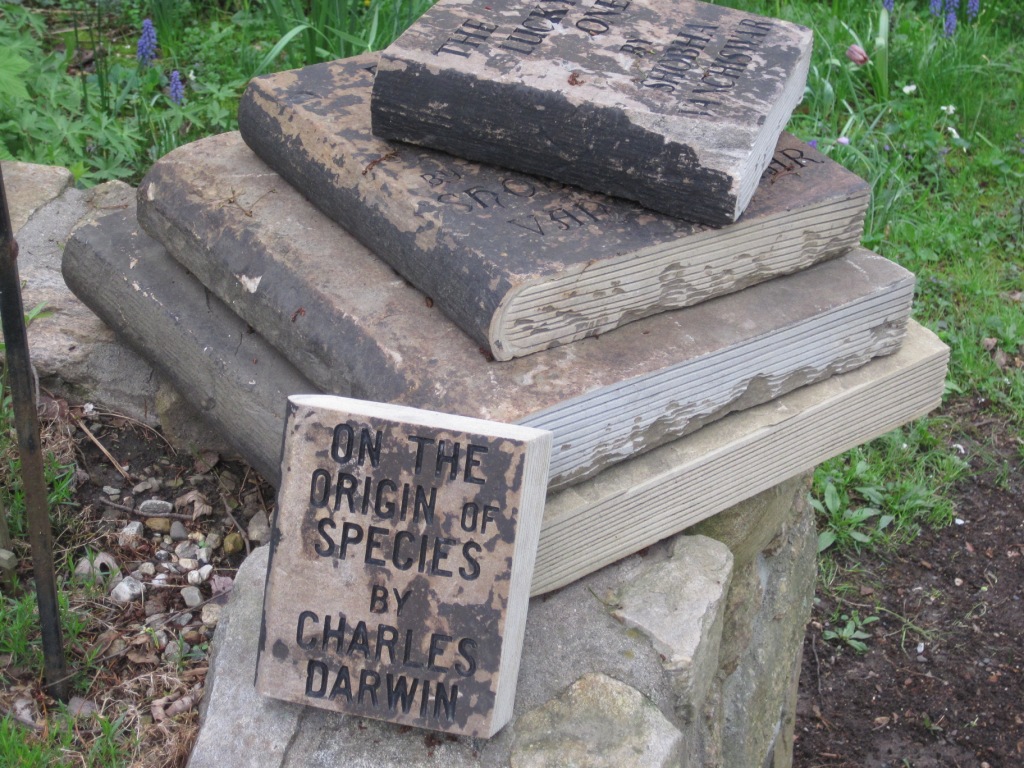
“It is not the strongest or the most intelligent who will survive but those who can best manage change.”
― Charles Darwin

Are you at the point where you feel you need to downscale your garden? Things can get overwhelming for so many different reasons. Gardens created when one was young and healthy can be daunting as the now older knees and back only bend or straighten when accompanied by groans or the energy level needs regular topping off with a nap. Personal life changes, work responsibilities, new passions can all prevent a gardener from getting to the garden consistently. You don’t want to stop gardening but you need to do less right? You love to tend to the garden but wish you could scale down the work – I know exactly how that feels. If only the garden could look fabulous without all the work …

Smile, breathe deeply and go slowly – Thich Nhat Hanh.
In other words, do not fret. A garden should not be a cause for anxiety. That would entirely defeat the purpose wouldn’t it? It is very easy to focus on how much there is to do. With a little planning, organizing and rethinking, you can have that beloved garden and still tackle your life. Create a garden that evolves with you.In my case, a garden is imperative so, whatever is going on elsewhere, I know to adapt the garden to that status.This,after all, is my sanctuary – where I come to restore balance in my heart.

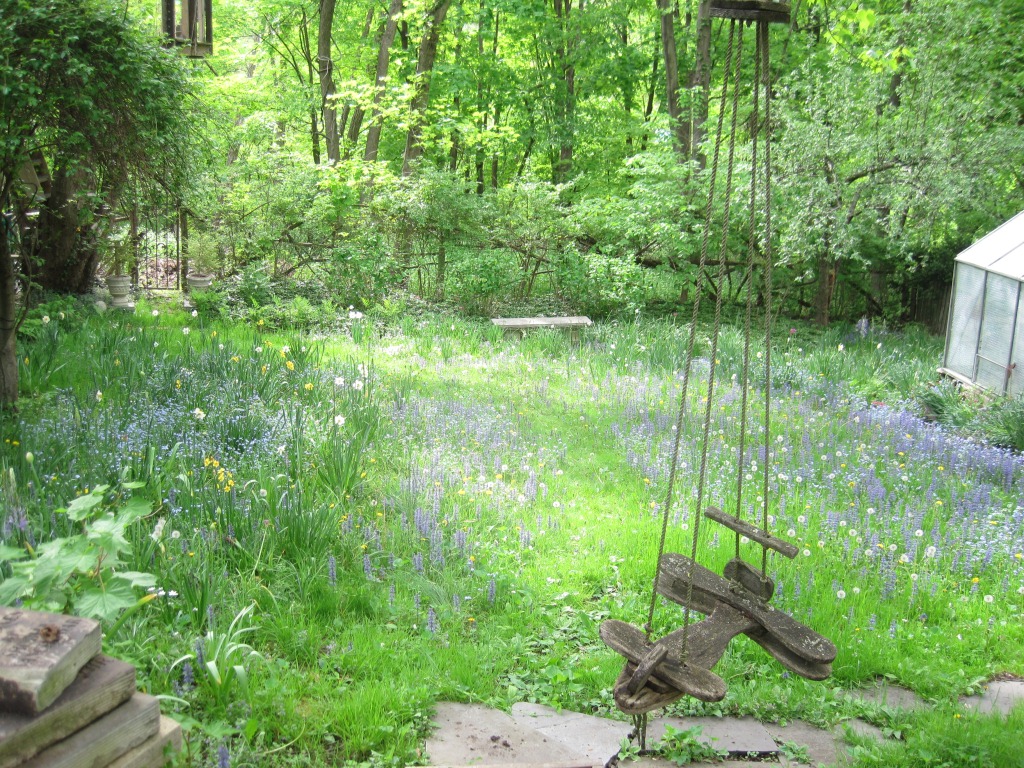
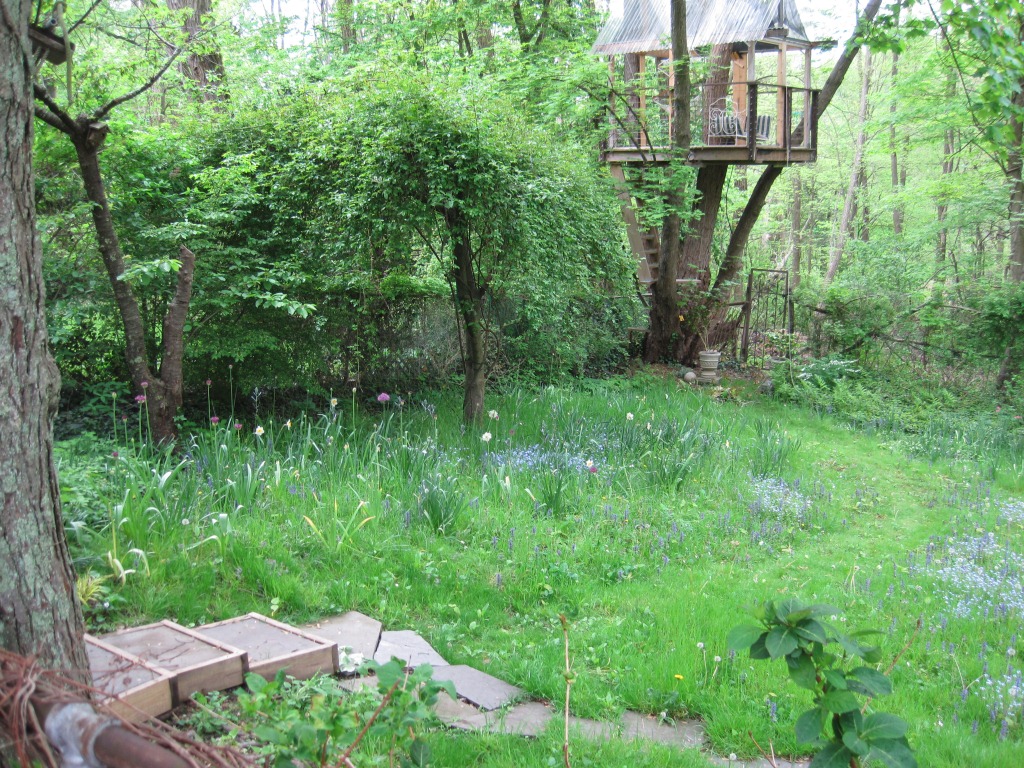
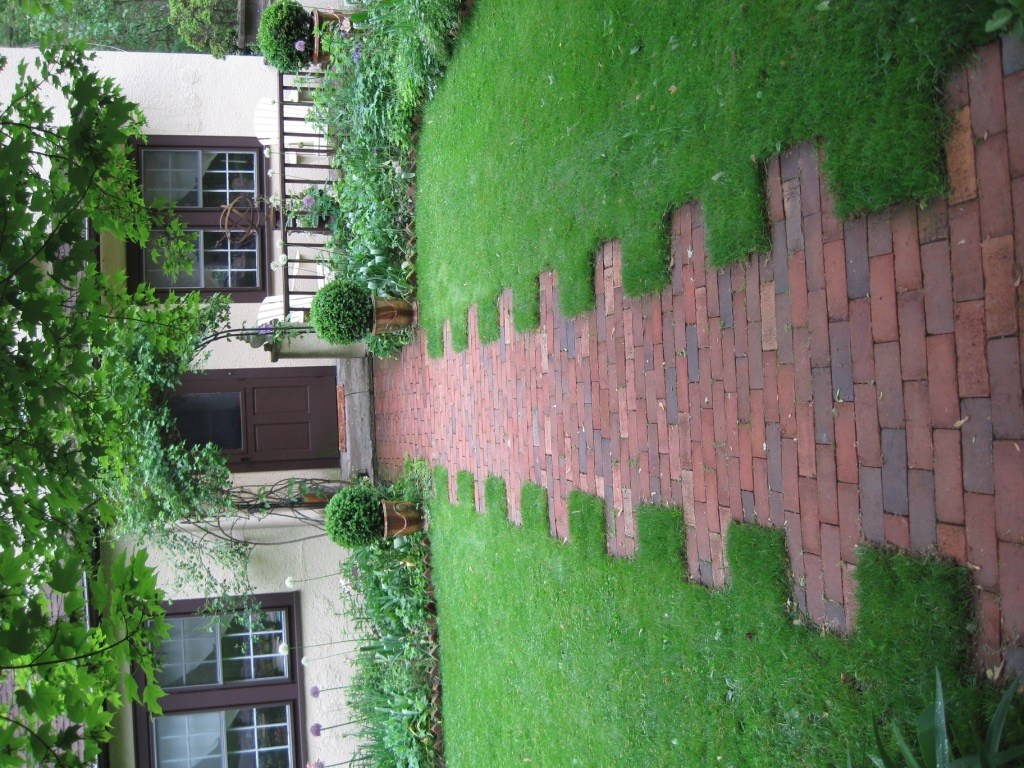
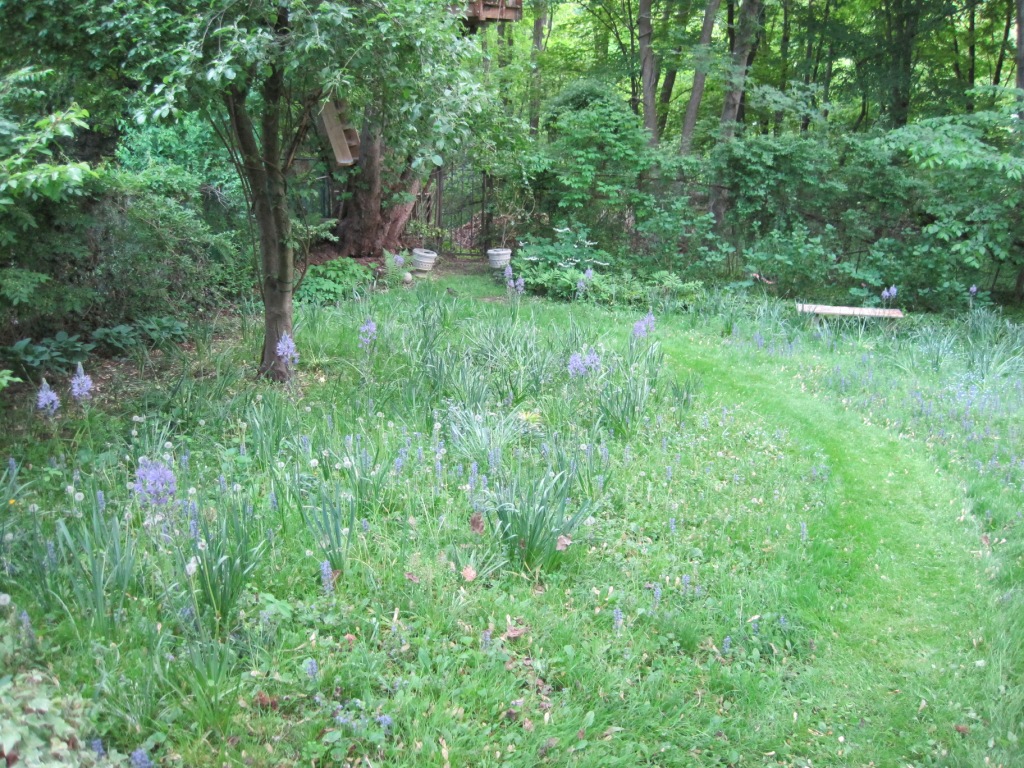
Lets examine those elements that take up too much time/effort and get practical. The first to come to mind is that ubiquitous green expanse – the lawn. That single feature consumes vast amounts of time, energy, products and money solely to look golf course beautiful. Such a waste. I’m not suggesting getting rid of it all together because some lawn is good. Just so long as there is enough to picnic, play a game (croquet not badminton) or for the sheer joy of having grass caress your bare feet. More is not needed. Reduce the lawn area by adding new trees, shrubs, flower beds and hardscaping. I converted the lawn in the back garden into a ‘meadow’. It gets mowed just twice a year. Next, stop desiring a lawn that does not include clover, the occasional dandelion, viola or runaway snowdrop. The plants we see as lawn weeds support very important wildlife. Raise the mower blade to keep the grass at about four inches. What hopes of lawn stripes and pristine grass you give up, will be replaced with more time to do other interesting things.

Shrubs and trees require minimal maintenance. In turn, they provide terrific focal points, create shady resting spots, food and shelter for birds, butterflies, bees and other good bugs, offer privacy and, year-round structure. So, plant more!

Between good mulch and ground covers, weeding becomes a task easily addressed. Spending just fifteen minutes to a half hour on an almost daily basis, will be sufficient to keep the garden looking smart. Plus, those minutes spent pulling weeds is an excellent opportunity to mentally sort out gnawing problems, decompress after a tough day, calm an overwrought mind or plan your next creative endeavor. This easy, repetitive effort is quite meditative. Multi-tasking that actually works!

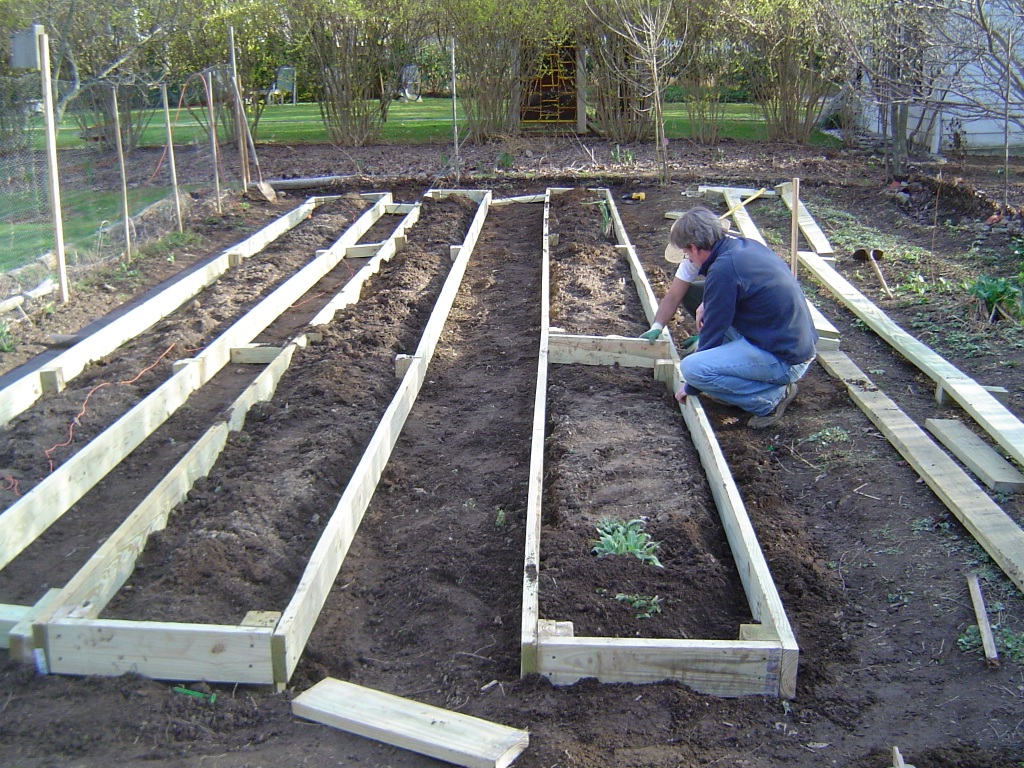
In the flower borders, adopt a policy of ‘right plant in the right place’. Avoid all others however tempting. Raised beds make it convenient for those with back or knee problems. Fussing, frustration and fuming will become a thing of the past.

Vegetable gardens require a fair amount of time and work. Grow only what you know you and your family enjoy and can consume. If this too is hard to cope with, give yourself permission to do away with the potager. It is okay. No one important will think less of you. Instead, join a Consumer Supported Association and pick up a weekly share of fresh, organic, local produce. Not only will you continue eating healthy but, your local farm community will be appreciative of your support. Go on-line and find the CSA that serves your area.

Finally, banish old beliefs of slaving in the garden. Promise yourself that you will enjoy it without guilt. Sometimes the grass may be a little long, other times the plants may be in need of deadheading. It is all right. Ignore the random weed and settle in to enjoy your piece of paradise. The pleasure is all yours.

My meadow in May. Camassias abound.

My meadow in May. Camassias abound.


Close up of the meadow

Close up of the meadow


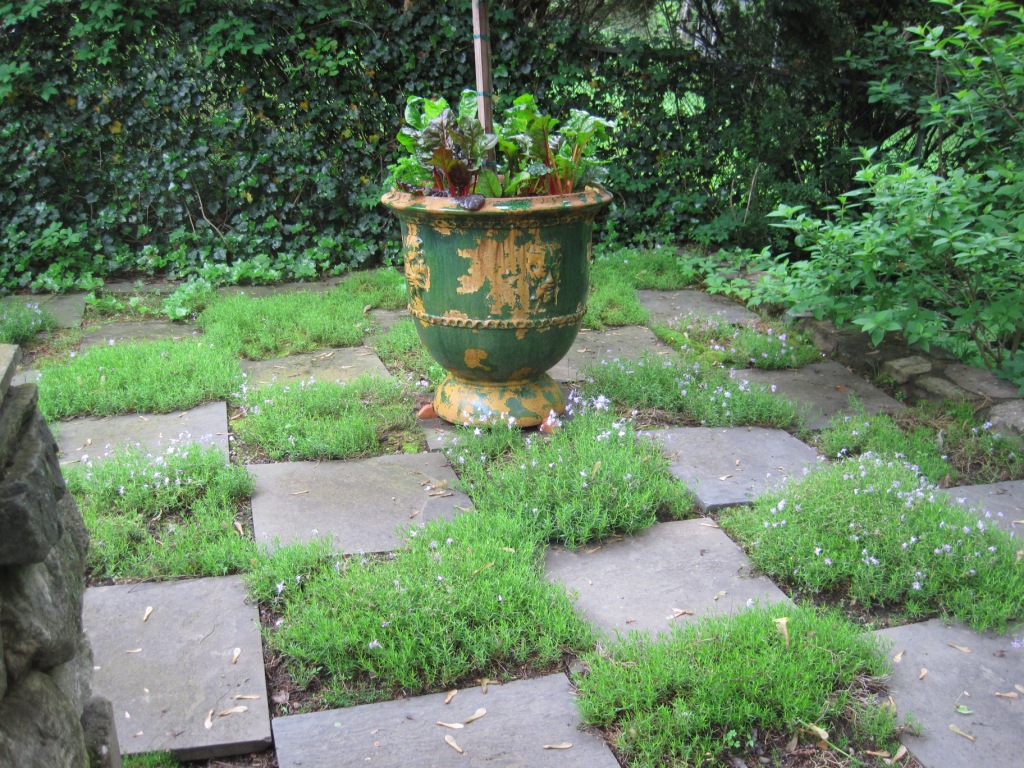
Creeping Jenny covers the ground in the side path. Pretty and functional.

Creeping Jenny covers the ground in the side path. Pretty and functional.


Raised beds in a potager

Raised beds in a potager


Raised bed
Flower beds at different levels

Flower beds at different levels


(c) 2013 Shobha Vanchiswar

Beyond The Season

When Does Fall …

When does fall
feel like fall?
When does one stop
to enjoy the ball?

Swirling confetti
Brilliant fireworks
Who pauses to see
the season’s perks?

Rushing to clean up
erasing the summer
Readying for winter
planning next year

What would happen
if we could just stay
amidst the leaf piles
in endless play?

The arrival of the holidays invariably catches me somewhat unprepared and taken aback. There is so much going on in the autumn that the thought of decorating, getting presents, planning meals and so on gets overwhelming. So the fall back ( no pun intended) is to keep it low key. That would be fine except, too often, I still fail to meet my own expectations. It is not as though I’m setting the bar too high – my plans are simple but even simple needs forethought. This year, I aim to do better.

Whilst going about the required chores in the fall garden, I’m preparing for the holidays as well.
In collecting seeds from plants, I make packets of them to give as gifts. The seeds go into pretty envelopes that are clearly labeled with all the relevant information. Additionally, I’ll attach a photo of the plant and mention good companion plants. Vegetable seeds will be accompanied with a favorite recipe.

With boxwood blight looming large, one must start considering planting alternatives. So when I purchase shrub honeysuckle or euonymus to experiment in my garden, I pick up some extras to give to a friend who is worried about her boxwoods. Lavender and catmint are other options – I’ll root cuttings from my garden and extras from those that thrive will also be presented to fellow gardeners.

Pruning is a chore that turns up some good staking material. A bundle of sturdy, natural stakes will always be much appreciated by any gardener.

The harvest of fruits, vegetables and herbs results in jams, jellies, sauces, chutneys, pickles, cordials and liqueurs. Who wouldn’t want to receive some of these? Additionally, herein are very handy staples for a soirée. Combine with crudités, artisanal cheeses, dried fruits, nuts, crackers and bread and voila! A cocktail party is in progress.

Redoing or reworking a part of the garden at this time is something to give myself and/or the spouse. Be it relaying the stones on the terrace, replanting a bed or repainting all the lawn furniture, getting it done now will give some immediate peace of mind and when spring arrives, I’ll be all set to enjoy the ‘gift’.

In that same vein, it is prudent to get the trees on the property checked out by an expert. Deal with the dead or diseased limbs/trees. Likewise, take care of trees that are at risk or pose a threat in case of storms. This single factor could save the huge expense and heartache of addressing possible damage. Its a gift one gives to oneself and loved ones. Except of course, some loved ones won’t know to value it!

During the process of clean up, I collect fallen nests, feathers, colorful leaves, berries on branches, pine cones and acorns, seed pods, vines, flowers such as hydrangea that keep their form when dry, evergreens and other interesting natural material. These are all that I will need to decorate the house for Thanksgiving and even Christmas. Simple and natural. And compostable!

Hundreds of bulbs will soon be planted in the garden. Some of them go into the refrigerator to be forced in the dead of winter. A forced hyacinth or crocus will be certain to banish the winter blues from the hearts of a few cherished friends.

Finally, a gift to Nature. A general clean up and tidying is good but I leave as is an area not easily observed. Messy and overgrown. This will provide a habitat for wildlife. shelter during winter storms as well as a breeding spot in spring. Birds, toads and numerous insects that are useful will be very grateful.

There you have it. I’m already calmer. Are you?

Milkweed seedpod

Milkweed seedpod


Rose hips to bring indoors

Rose hips to bring indoors


Pine cones for decorating

Pine cones for decorating


Grapevine prunings and dried hydrangea adorn an autumn table

Grapevine prunings and dried hydrangea adorn an autumn table


Someone who needs protection in winter

Someone who needs protection in winter


After a storm

After a storm


More storm damage

More storm damage


Some of the bulbs to plant

Some of the bulbs to plant


Forced hyacinth

Forced hyacinth


Lavender 'wand' to scent rooms and closets

Lavender ‘wands’ to scent rooms and closets

(c) 2013 Shobha Vanchiswar

Seeing The Forest For The Trees

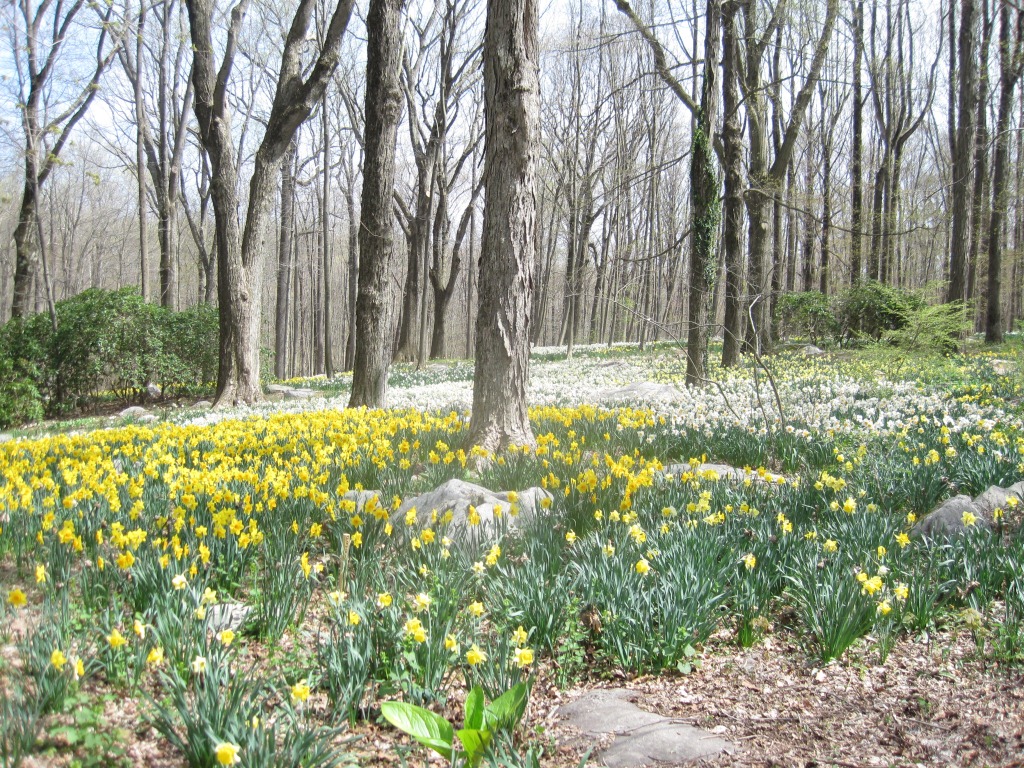
Autumn is almost a pre-spring sort of season. A great deal of what we do in the garden at this time of year is in preparation for spring. We clean up to make space for plants. We put in plants aplenty so they will get a head start. Bulbs are dug in in vast quantity with visions of a riotous printemps. There is a certain anticipatory excitement in the air.
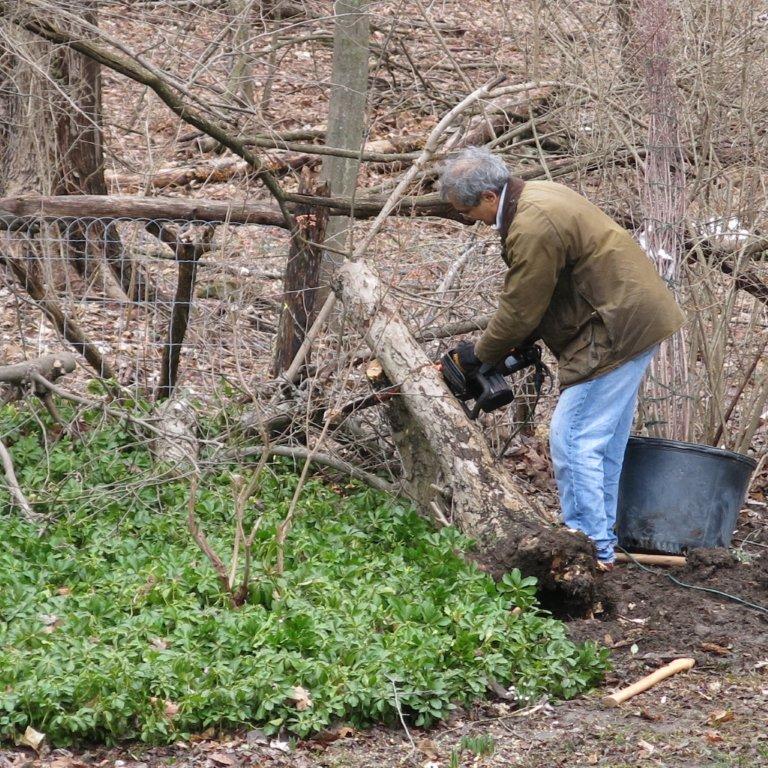
This is a very good time to plant trees. Too often, one gets so caught up in planting for ‘color’ that, the focus is on flowering plants and shrubs but seldom are trees the priority. I think it is clear that we are all aware of the environmental and ecological benefits of growing trees and yet, there is hesitation to commit to the task. For all the expenses one incurs in the garden, one could do much worse than going wrong on a tree. Since most of us start with fairly young trees, the cost of the tree and effort to plant it are not enormous. So should you think the choice of tree was a mistake or it fails to thrive, the matter can be easily remedied. However, removing a mature tree can be prohibitive – it behooves one to take the matter of tree planting seriously right from the get go.
We are connected to trees by our breath. The oxygen I need is put out by trees and in turn, the carbon dioxide the tree requires is what I exhale. We are each other’s life force. It is that simple. No further reason is required to show why one ought to plant more trees.
With that in mind, let us consider how to choose the right tree for the right space. First and foremost, decide if you would like a native tree which will support our native fauna or if you are more keen on something exotic and atypical. If you are going for the latter, just try to ensure that there are already several native trees in place or else, you will be creating an environment that plays host to pests with no natural predators around. Fruit trees are a good compromise! It goes without saying that your choice of tree must be hardy in your region.
Height of the tree is perhaps one of the biggest traits to consider if it is not to outgrow the space. Labels do not always give accurate indications. Do your research and speak to experts prior to purchase.
The canopy spread is next. How wide the tree grows will again be a space issue. Consider buildings, other trees, power lines, gutters that could get clogged when leaves drop etc.,. This might not seem a problem when first planted but as the tree grows …. The corollary to this is choose a tree that can spread nicely in an open space. Too small is equally inappropriate.
Walls and buildings should not be too proximal to trees as their root system could cause structural damage. Keep in mind that roots spread as the tree ages.
Shape or form of a tree is the next factor. Upright or fastigate trees do well in smaller spaces but if shade is desired, go for round or v-shaped ones.
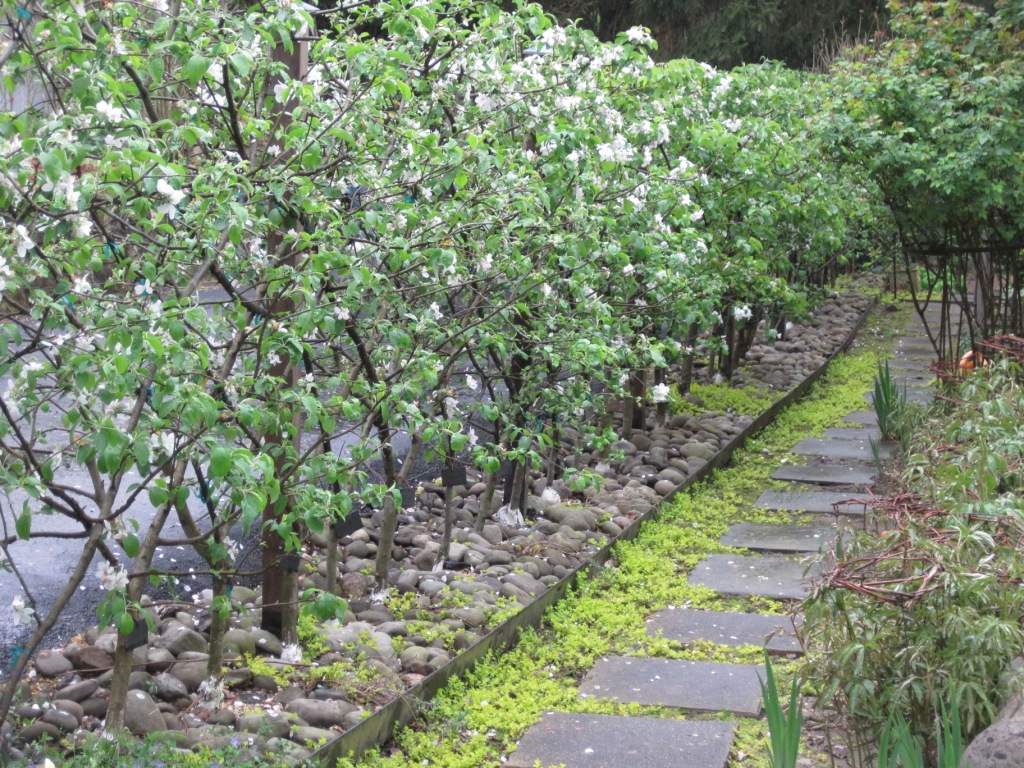
Trees can also be trained as pleaches and espaliers which provide visual interest and function as fences or screens. Espaliers are excellent for growing several trees in a restricted area. Trees for such purposes must be selected appropriately. Again, for choice and technique, do your homework.
Further selection is made depending on one wanting an evergreen or deciduous tree. The former provide a constant visual and is effective for maintaining privacy. The latter changes through the seasons and loses it’s leaves in winter when the bare branches lend graphic interest.
Trees vary in growth rate. In your mind’s eye you might see a full grown oak but it’ll be a while before that sapling gets there. Often, fast growers have shallow roots and are vulnerable to being uprooted in fierce storms. As trees grow, other areas of the garden will be affected by the shade they create. If a sun loving flower bed is in the vicinity, a few years from now, it might struggle to thrive.
Do you know your soil type? Some trees will do well only in the right soil. Water drainage, pH, sandy, clay or chalky are things to take into account.
How much light and water a tree requires are important. Choose and position accordingly.
Neighboring properties are also affected by the trees you plant. While your choice might be ideal for you, it could create problems for the neighbor. Be considerate. It is much more important to get along.
Learn about how specific trees are maintained. Pruning, watering and fertilizing vary.
Finally, think about how the tree will look all through the seasons. Include traits such as flowers, interesting bark patterns, foliage and fruit as you make your selection. Reflect on why you want to plant a tree – for the environment, to create shade, as a focal point, to reduce lawn space, prevent soil erosion, for privacy. Understanding your intention will help considerably in making a wise choice.
As I’ve said in the past, tree planting is a very vital part of stewardship for the land. We must do right for and by future generations. You may not be around when the oaks reach great heights but your effort will be much appreciated by your children’s children. Pay it forward.

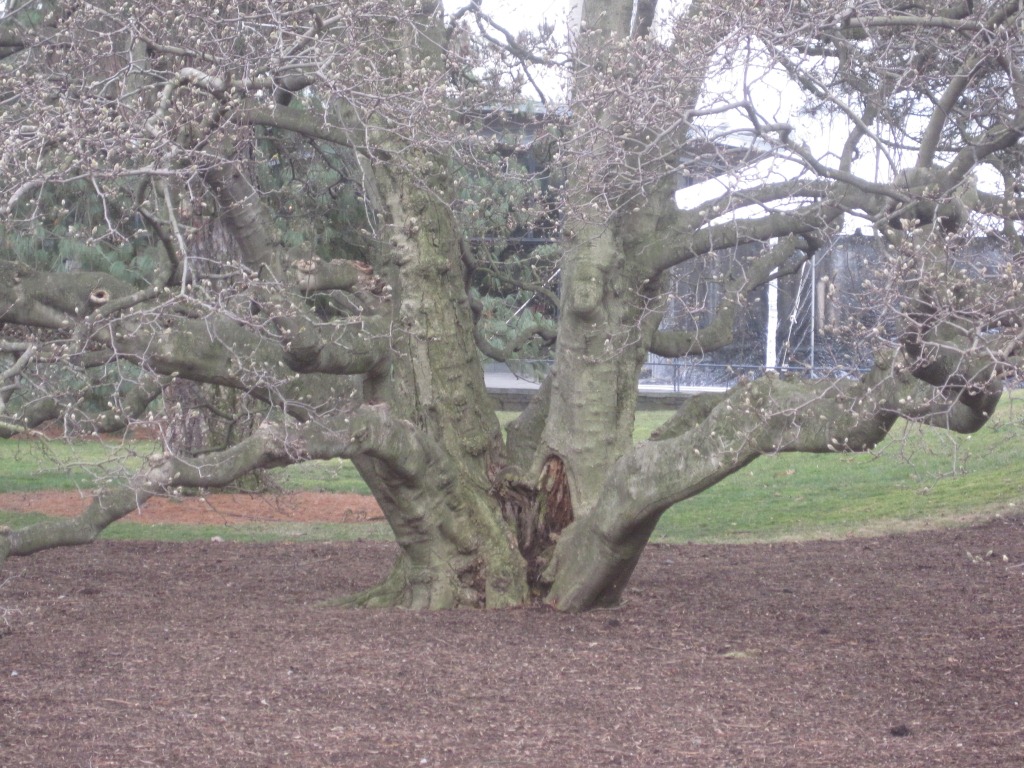
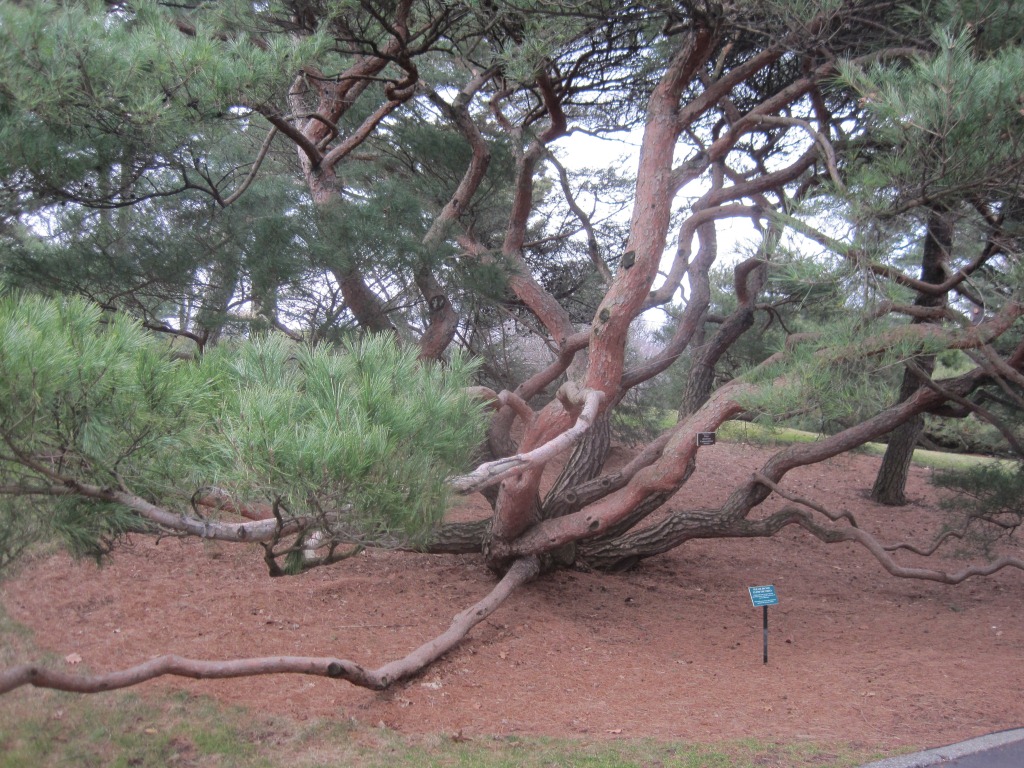
Note: A visit to a botanical garden is an excellent place to see and learn about trees. Do go!

Tree LuluTree NYBG 1
Tree NYBG 2

Young 'Belgium fence' espalier

Young ‘Belgium fence’ espalier


Cedar
Tree NYBG 3
Tree Giverny
(c) 2013 Shobha Vanchiswar