This Annual Dusk

This Annual Dusk

Amidst cold flames
licking crisp, blue skies
Tawny hues flickering
amongst the bronze
I stand separate
observing and alone.

Mesmerized by the bees
They urgently siphon
every last drop
from the cellars of asters
I remain rooted.

I should follow
their example, get busy
but I cannot
my spirit is unwilling
All around
bustle the squirrels
and retreating birds
All are busy but not I.

With the fading
of the garden
goes my desire
to seize the moment
To pick up summer’s debris
make ready for approaching winter
invest soundly in next spring
This season that serves
all others.

As weary as I am
of dog days
I’m loathe to let them go
I cannot prepare
for frosty nights
I shrink from the cold fingers
that wait to grasp
this piece of my heart
and keep it suspended
in time.

I wrote those lines exactly two years ago. It is so hard to ignore the shortening days. I know I’m not alone in feeling this way. However, I’ve begun practicing what I call “seasonal mindfulness”. With or without my consent, the turning of seasons is inevitable. So, I told myself to take my cues from my favorite teacher – my garden. It performs exactly as it ought no matter what comes its way. Resilient, adaptable, stoic and practical, nature makes each change a celebration. Every happening is an opportunity for new growth.

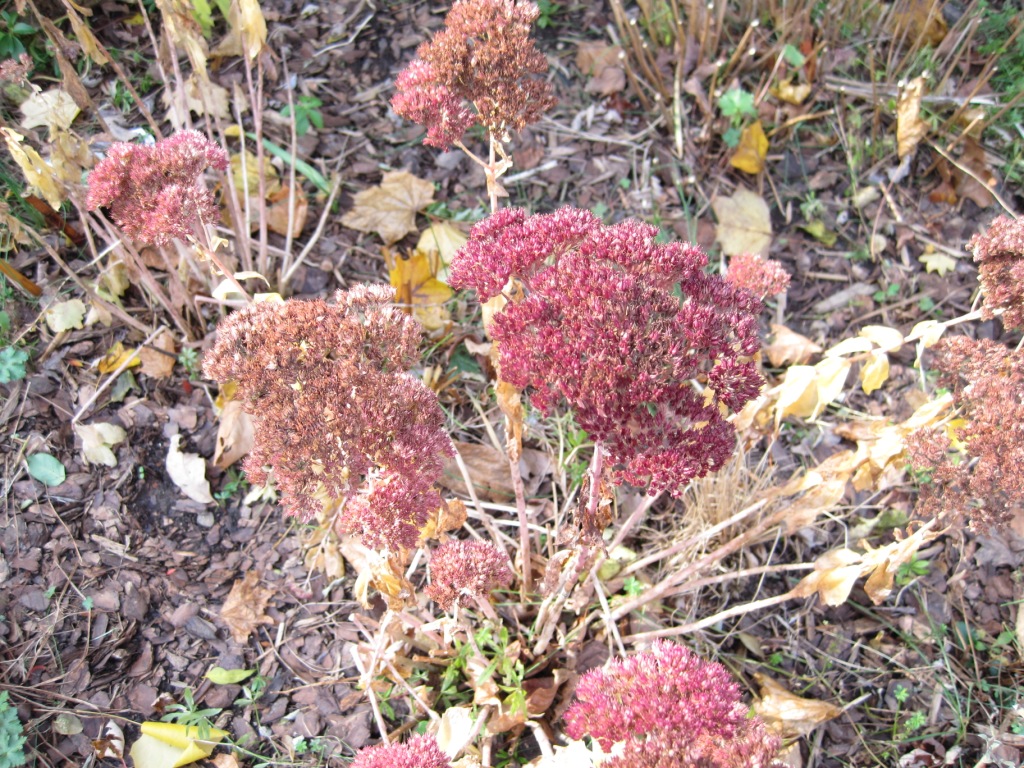
As I settle on a bench, I’m acutely aware of the russet hued leaves swirling around till coming to a rest at my feet. Squirrels ignore me as they charge past preparing for leaner times. No doubt I will find some of their treasures when I get around to emptying the large pots later in the month. The sedums are covered in bees these days. So focused are they that some forget to return to their hives on time; they spend the cool nights motionless on the flowers till the morning sun warms them up. Overhead, I watch flights of birds journeying their way south. Those are the wise ones who know to leave before it gets too late. None of these busy souls are lamenting the passing of summer. They are simply in the moment. I see that if I want to be mindfully present, I need to show up.

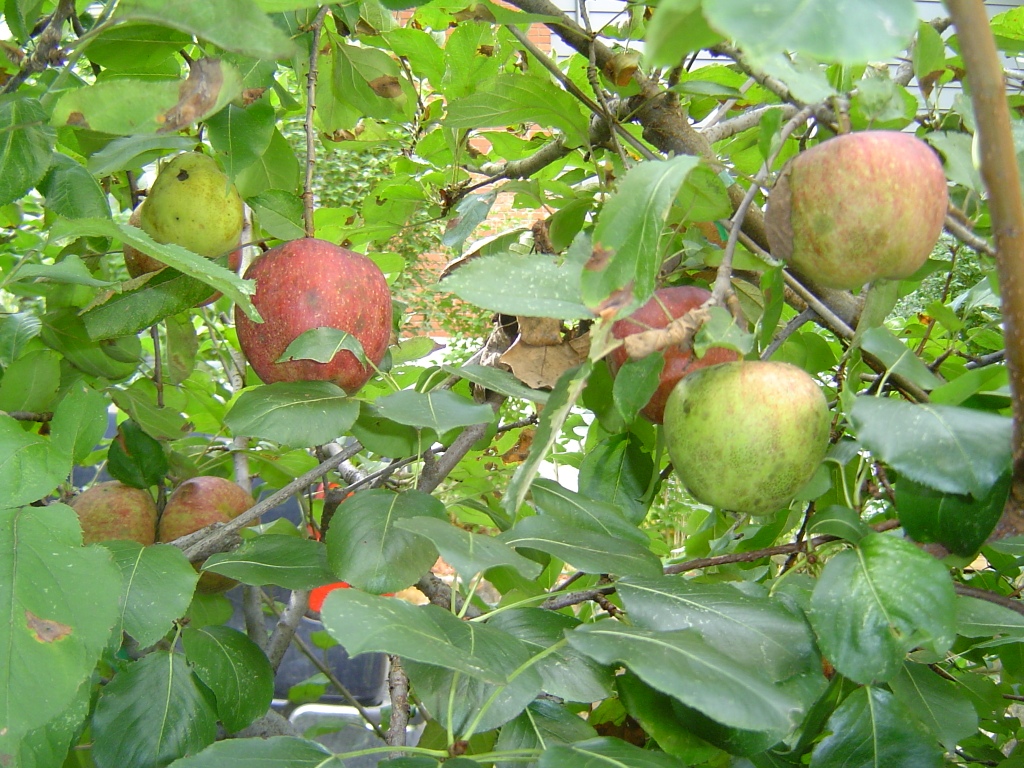
Life all around me has accepted the change. I follow suit. I inhale deeply – the air is edged lightly with crispy, cold crystals. I’m ready to join the autumnal do si do with my fellow creatures of the garden. I acknowledge the end of summer as I cut back plants, clean out beds and rake fallen leaves. As I work, I review the garden – did I accomplish what I wanted to do, was I true to my principals, could I do something differently? I get ready for winter ahead with the picking of apples from the espaliered trees yet to shed their foliage, drying bunches of herbs for stomach warming stews, canning the last of the tomatoes, freezing batches of basil pesto. The canicular days to come will be filled with memories of summer. As I plant the bulbs all over the garden, I’m brimming with hope – spring will return, light will linger longer and color will once again suffuse the somber, winter weary landscape.

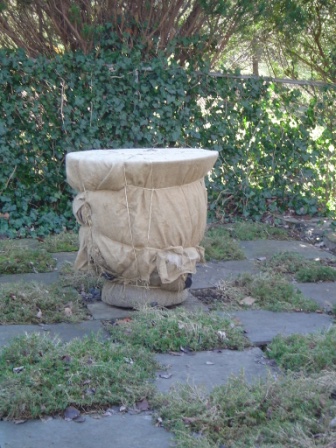
I enjoy making a ceremony of welcoming autumn. My chores in the garden are rituals. They bring my mind to the present. As I savor the last of the figs and move the trees into sheltered space, I marvel at the warm, vivid colors of the leaves. The ornamental grasses rustle and wave seed heads that shimmer in the late afternoon light. I’m struck anew by the beauty of the season. There is a sacred silence within my heart.

In living in rhythm with nature, I honor the gift I’m proffered – the continuing chance to re-do, to improve, to grow. Myself as well as the garden.

Apples awaiting

Apples awaiting


Bulbs awaiting

Bulbs awaiting


Figs awaiting!

Figs awaiting!


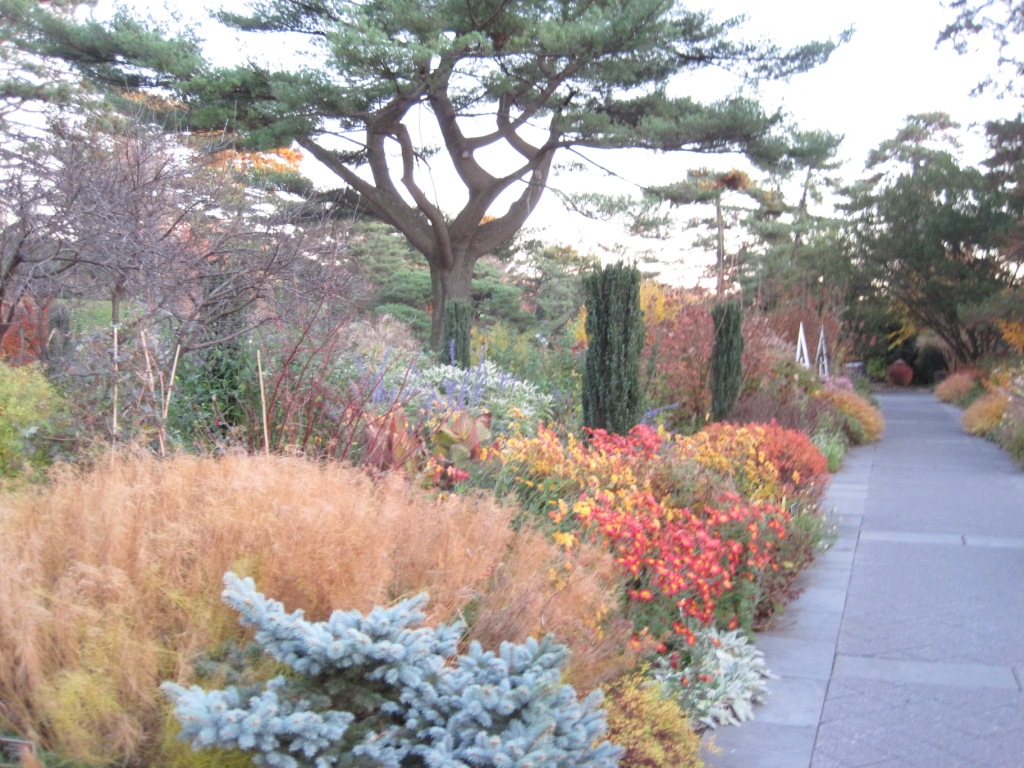
Glorious autumnal colors. At NYBG.

Glorious autumnal colors. At NYBG.

Own It!


In search of my mother’s garden, I found my own.
– Alice Walker.

Some time back, I had the pleasure of visiting a garden so lovely that my first reaction was that I must be at the wrong place. I’d arrived to meet with a client who had said she needed to do over her entire property. In our communiques, she had failed to mention that there already was a mature garden in place. I was puzzled about what was needed. Having arrived a bit early and ahead of the client’s return home, I took a walk around the grounds.

This beautiful garden was lush. Ancient oaks, tall cedars, American poplars and majestic beeches stood around like sentinels. Well manicured lawns dotted with large flower beds filled with all sorts of plants begged for closer examination. Roses abounded. In fact, a quick count said there were 18 types of them. The boxwoods that edged all the beds were meticulously clipped and shaped. This was no simple garden. Much work had gone into its making. It came as no surprise when I learned that the previous owners had created the gardens when they had built the house some forty years ago. I was beginning to understand my clients dilemma.

Nobody wants to destroy an existing good garden. The guilt alone would keep one awake for eons of nights. But, times, tastes and circumstances change. How much is a new owner obligated to maintain what is in place? Neighbors tend to adopt a certain proprietorial attitude and count on the garden remaining as is. “ Hope you will keep the Smith’s garden going! You are very lucky to have a ready made one! This has always been such an asset to the neighborhood!” Is this reasonable? What is the new owner to do?

It is possible that the new owner has the desire, skills, time and means to keep the ‘inherited’ garden as is. But that is hardly ever the case. One does not usually purchase a home to become the caretakers of another person’s passion. One must claim the place for oneself.

Gardens are never static. Their very nature is to change – through the seasons, fluctuations in the weather patterns, the gardener’s ever changing mind and, the inevitable effects of time. Like all living things, gardens age. A garden works best when it reflects the owners tastes. Even when restoration of gardens occur, they are invariably interpretations of the original. Coming back to that question, what should the new owner do?

First and foremost, the owner needs to assess his/her own attitude to gardening. Its importance, one’s interest, taste, needs and means. Even if the existing garden is exactly what is wanted, is he/she going to be able to maintain it? Happily, there is no immediate rush. As with any new property, it is wise to wait the year to see the garden through all the seasons. This wait period gives a very clear idea on what it takes to keep it up. Make note of what one does and does not like. Take plenty of photos because the memory will fail. I guarantee.

With such a list in hand, add other factors such as budget, time, sustainability, alternatives to those plants that must go – you get the idea. Unless, you are a seasoned gardener, it helps to get the advice of either a professional or a veteran gardener.

Old gardens often have exotic plants. As long as they are thriving, it seems logical to keep them. However, a little research will enlighten you if they are high on upkeep, prone to disease etc. Also, a garden today should, in good conscience, have a reasonable quantity and variety of native plants. This is the only way to bring up the numbers of our native pollinators and pest controllers. It behooves every gardener to maintain the right equation of natives and non-natives in the garden. This is particularly true of large shrubs and trees. With this in mind, the flower beds can be redone. Large lawns can be shrunk with the addition of trees and shrubs.

Gardens should be in keeping with current knowledge and practices. This involves the aforementioned native plantings, application of organic materials to promote growth as well as control pests, consumption of less water, reduction in the use of fuel powered tools and, catering to the personal needs and style of those who will enjoy this space. Time is always at a premium. It then is logical to eliminate elements that demand too much time and energy. Fussy plants, in my opinion should be got rid off altogether. A garden must always suit the lifestyle of the owner.

So, what did my client do? The handsome trees remained as did features like pergolas, benches and pond but the flower beds and lawns were disposed off. All the banished plants were disbursed amongst the neighbors so they could have a piece of the previous garden. Being a chef/caterer, the owner put in a huge vegetable garden – one that would supply all her needs for fresh herbs and produce. Soft fruit shrubs were added. The plots also boast plenty of flowers so they can be used to adorn the tables at events. It is a practical garden but still very beautiful.

I recall the much publicized outrage when England’s Christopher Lloyd ripped up the roses from his already renowned gardens at Great Dixter. He went on to replace them with the vivid oranges, reds and yellows of plants more tropical in nature. He was simply claiming his ancestral home for himself. It had to be a reflection of his personality. This new style went on to become much admired and today, it continues to evolve under the care of Fergus Garret who was Lloyd’s head gardener.

The process of taking ownership of the garden and putting your personal stamp on it, is merely creating an horticultural palimpsest. While the original is effaced, traces of it will remain. And that, is perfectly okay.
Enjoy some seasonal photos:


(c) 2013 Shobha Vanchiswar

Forever Summer

I’m clinging fiercely to summer. Vacation is over, school is well underway, the work load is mounting, tree tops are glowing yellow-orange and the early mornings bear a distinct chill. Still, I’m celebrating summer. Not the sticky heat of the season or it’s bug filled evenings. Its the attitude we adopt every summer that I’m keeping close to my heart.

The farmer’s markets burgeon with the bounty of summer. Tomatoes, basil, peaches, eggplants, squash, corn and figs jostle for space with the new apples and pears that announce the change of season. As days gradually get shorter and sweaters are resurrected, our minds start looking ahead to Halloween, Thanksgiving and further on. The pace picks up. Summer quickly becomes a distant memory. While my favorite seasons are spring and fall ( in that order ), it is the summer mentality that I wish we would hold on to for ever.

How is it that one automatically relaxes and lightens up in this time of school breaks, fireflies and fireworks? How is it we are so willing to put up with humidity, bad hair days, mosquito bites, sun burn, jelly fish and, monster weeds? Could it be the extra hours of sunshine, the higher temperatures, the fresh produce, bare feet and open beaches? We smile more, complain less and savor the days of this light filled trimester with an eagerness rivaled only by children on Christmas morning. Wish we could be this way forever. But alas, all good things must come to an end. Must they?

I seek my answer in the garden. Here lies the nexus of seasons. While the hydrangea are in full bloom, the asters are beginning to open. As the tomatoes ripen, the grapes are ready for harvest. The apples turn rosy while the pelargoniums show no sign of fading. Seed pods rattle and ornamental grasses swish. Birds get ready for long flights as squirrels prepare to settle down. Roses still blush when bees come calling. Things do not stop in the garden. Life continues in all its rich ways. As one season comes to a close, another starts. It is all good. Appreciating what is happening right now only to welcome what comes next is what the garden is instructing me to do. The cycle of seasons is eternal so there is no need for tearful adieus to summer. After all, would I pause to appreciate a fresh fig if I could pluck one off the tree all through the year?

Instead, I gather basil so there is pesto to flavor the meals that will warm us after a brisk snow fight. The concord grapes are transformed into jam for the many sandwiches that will be consumed through the school year. Arm loads of hydrangea are dried for arrangements at the Thanksgiving table. Seeds are collected for next years crops of chillies, sweet Williams, tomatoes, nasturtiums and peas. One grows pumpkins in summer but they are ready only in autumn. Bulbs are planted in autumn so we have a display in spring but first, a necessary winter must be passed . One season continues into another.

It is simply about embracing fully what each moment has to offer. Take one’s fill of it. The effects will linger and perfume the times still to come.

While I cannot avoid my work related obligations, the daily slew of emails marked high priority, garden chores that are time sensitive or the pressures of an ever lengthening to-do list, I can approach them with the temperament of summer. I will factor in the down time we usually allow ourselves for that one season into all of the others. Be more laid back, less compelled to enforce self-imposed rules and deadlines. There is always time to enjoy every last drop of morning coffee, to push back from my desk and catch up with my daughter’s doings, to watch the moon rise, to have a proper conversation with my husband, to listen to my heart and acknowledge the miracle that is life. Every day.
Summer lives forever. Vive l’été.

Hydrangea

Hydrangea


Asters

Asters


Apples for the picking

Apples for the picking


Baptisia seed pods

Baptisia seed pods


Summer bounty at the market

Summer bounty at the market


Heritage rose

Heritage rose


Concord grape harvest

Concord grape harvest


Grape jam galore!

Grape jam galore!


(c) 2013 Shobha Vanchiswar
Through The Eyes Of Children

(Get yourself a cup of tea and settle in to read this longish post!)
School has started and with that, our lives are once again in sync with their schedules and activities. Play dates, music lessons, athletic practice and games, doctor and/or orthodontist appointments, tutoring, SATs, college visits, and so many other activities seem to leave very little free time for everybody. I don’t mean time spent watching TV or playing video games but that space in a day that provides real thinking, inspired creating to happen. When imagination can soar and the mind and body are engaged in pure, unadulterated fun. Do you remember those times? What happened? Somewhere, somehow, we sacrificed our unique, creative selves to conform to trends and succumb to everyday pressures. To make matters worse, we’ve, albeit unintentionally, impoverished our children in the imagination and play department.
Are you surprised by what I’ve just said? How can this be you ask – when you have provided your offspring a super-sized backyard swing-set, a trunk full of costumes, computer and video games, a whole room of toys, shelves of books and entire collections of movies. In addition, there are the gymnastic/ballet/karate/music/sports activities. How on earth could the young ones be deprived?
Think back. To your own childhood. What were the most fun times? I’m betting they had nothing to do with most of the aforementioned items. With the exception of books, everything else is either structured and/or telling one how to do something. They do not provide for that delicious sense of imagination and creative thinking. Instead of ready-made costumes, creating one from unlikely sources is more fun ( aluminum foil over cardboard swords, capes from mom’s old scarves, parchment paper fairy wings). Staging a play with original script, costumes and sets can involve days of creative activity as opposed to a couple of hours watching a video. Having the freedom to imagine alone and with others leads to all sorts of brilliant projects and memories. One acquires skill sets that will be handy forever.
When my daughter was very young, she would put up puppet shows using her stuffed animals as the various characters. Influenced by the classical music she has always loved, her shows were ambitious productions such as Bizet’s Carmen. She’d make out tickets and programs, provide ‘costumes’ to bears, dogs and such and in makeshift settings, we’d watch Pooh bear perform as Don Jose to Carmen elephant as a recording of the entire opera played in the background. It was hilarious but we didn’t dare laugh outright. In the puppeteer’s mind, they were as good as the Met Opera cast. The tough part was sitting through the full length production. Dinner was delayed till intermission, dishes and other chores awaited the finale. I’m so grateful that we taped these priceless performances.
Then there were those play dates when she and her friend(s) would enjoy her amazing third generation doll house. I’d overhear the ‘Darwins’ ( my daughter had decided very early on that Charles Darwin lived in said house) engaged in Sunday activities. The bewildered play date was informed that only Mrs. Darwin and children went to church “because Mr. Darwin was not sure about God and stuff”. I took such pleasure in hearing the adaptation of book to play!
The point I’m making is that children come completely equipped with imagination and skills to play and create on their own. All we need to do is give them that elusive luxury – unstructured time. Lots of it.
So now we come to providing for them in the garden. I’m just going to come out and say it – a play-set has absolutely no business in your yard. I’m not being judgmental. Just hear me out before you take umbrage. In my opinion, parks and playgrounds are meant for regular slides, swings etc., In one’s own garden, a simple swing from a tree is plenty. The one that hangs from our old red maple was frequently employed for certain dare-devil launches that made it a favorite amongst children. They’d watch the ‘demonstration’ by the young owner and then with some trepidation try it out for themselves. Before long, I’d have to start yelling to them to be a bit more careful.

The airplane swing suspended from the red maple

The airplane swing suspended from the red maple


A small tree is terrific for climbing. My husband recalls practically living in the guava tree at his childhood home. He and a friend devoured the fruits and shared adventures aplenty in that hideaway. A real tree house is the best getaway place of all – to read, write secret letters, conspire with friends, loll about, dream, surreptitiously observe the goings on below, escape adult scrutiny. Crawling under shrubs to hide or explore can lead to exciting discoveries of toads, caterpillars and nests. Fairy houses from twigs, leaves and bark await occupation, acorn tea cups set on tiny ‘stumps’ stand ready for a party. Alone or with a friend, there is so much to see, do and conjure in a garden. Later, a trip to the local playground will be a different sort of play with exciting possibilities of making new friends or watching the ‘big’ kids master the monkey bars.
Tree house conversations

Tree house conversations


Tree house aerie

Tree house aerie


Tree house concert

Tree house concert


Friends of mine had the Towers Of Death for their two boys. The boys played there endlessly for several years till they suddenly came to the realization that the Towers were no longer high or even remotely scary. In actuality, tree stumps of various heights randomly connected by planks of wood were all that spurred this death defying activity. But what lofty adventures were had in this space!

By providing children with a few, simple elements in the garden is more than enough to fire up their imaginations. They are experts at it. The adults actually spoil the whole thing. These days we can and are guilty of being over-cautious and obsessed with all sorts of potential dangers.

Yet, that absolutely ugly contraption that appears like a giant zit on the face of an otherwise lovely garden, is happily welcomed. I’m talking about the trampoline. The single major cause of countless playground related visits to the emergency rooms all across the country. If one must have such an eyesore to satisfy the precious heirs, then it behooves the extra effort to sink it flush with the ground. If I sound uncharacteristically harsh, so be it. I feel rather strongly about it.
As I prepare to get off my soap box, I’ll sum up with a suggestion – lets create gardens that work for all generations. All elements of play should be harmonious with the surroundings. This is a space that offers itself unstintingly to the curious, the creative, the engaged, the restless, the mindful, the observant and most significantly, the universal inner child.
I’m sharing below some photos I took of a truly charming public garden for children that I visited in Andover MA last month. It combines the elements of instruction and delight quite well. Importantly, it does not talk down to the children. That should be something for us all to keep in mind as we manage our own spaces and lives.

The Children's Garden at West Parish, Andover, MA

The Children’s Garden at West Parish, Andover, MA


Children's garden 2
Children's garden 3
Children's garden 4
Children's garden 5
Children's garden 6
Children's garden 7

Rules Of Engagement In The Garden

The first botanical garden was created in 1545 Padua, Italy. Inscribed on pillars at the entrance to the garden are rules for those who visit. I believe they are very pertinent even today. Here are the rules:

I Do Not Knock At This Main Gate Before The Day Of Mark The Evangelist ( April 25) And Then Not Before The 22nd Hour.
II Anyone Entering Through The Main Gate, Should Not Wander From The Main Avenue.
III Do Not Break Stems, Pick Flowers, Collect Fruit Or Seed, Or Pull Roots In The Garden.
IV Do Not Touch Young Shoots and Do Not Tread Underfoot Or Leap Over Flower Beds.
V The Gardens Are Not To Be Afflicted With Harm.
VI Nothing Must Be Done Against The Will Of The Prefect ( director of garden).
VII Any Contravention Of These Rules Will Be Punished With Fines, Imprisonment, Or Exile.

To these I’d like to add:

VII When Visiting The Garden, Feel Free To Praise It Lavishly. Preferably Within Earshot Of The Gardener.
IX Bring Along A Notebook To Write Down All Of The Brilliant Ideas and Designs The Garden And Gardener Provide.
X Mind Your Children But Do Not Threaten Them With The Ire Of The “Wicked” Gardener.
XI Do Not Mention Other Gardens In Comparison To This One Unless You Intend Using Names Like Versailles, Sissinghurst or Shangri La.
XII Every Visitor Is Obligated To Tell A Minimum Of Ten Others About The Marvels Observed In This Garden. Failure To Do So Will Result In Punishments Already Stated ( See Rule VII).
I think that covers just about everything relevant. I must now go in search of a suitable pillar preferably of ancient origin and, a well sharpened chisel.
Below are photos from the Wild Medicine Exhibit at the New York Botanical Gardens:
Wild Medicine/Padua 1
Wild Medicine/ Padua 2
Wild Medicine/ Padua 3
(c) 2013 Shobha Vanchiswar
Inspiration Comes In Generosity

Everybody seeks inspiration. It is what keeps us going, recharged and with new resolve. As a gardener, nothing spurs me on as visiting other gardens. Private or public, well known or not, large or small, other people’s gardens serve me big time. There is without question something to teach me, excite me or thrill me. In equal measure, the interest and enthusiasm of a visitor, will please the garden owner no end. Everybody wins.
It was just so on a recent trip to Andover, Massachusetts. I was there to visit with friends and work on designing a garden. The perfect weather made it very easy to succumb to distractions of the outdoor variety. Before long, I had temporarily shelved work so I could see this ‘fun’ garden in the neighborhood. And there it was – a riot of summer energy beckoning all who passed by. I could not stop smiling when I saw this front garden right by the street.
Giant sunflowers towered over purple coneflowers, zinnias, bee balm, phlox, hollyhocks, daisies, rudbeckias and other seasonal flowers. It was a squarish bed of raucous color and exuberance. Not particularly designed with any deliberate mix of shrubs and flowering plants or taking into consideration a deliberate combination of foliage, shapes and textures, this was very much a cottage garden. It was indeed pure fun. Clearly, the gardener had created it for the singular pleasure of passers-by. Such a generous, happy gesture.
As I paused to look from the car, the gardener herself returned home. It was only right that I get out, introduce myself and tell her how much I was enjoying her “public” garden. Typically, she was very pleased to hear this and went on to tell me more about her efforts and thoughts. She applies organic practices, keeps bees, grows her own vegetables and clearly loves doing it all. I got to see the rest of the garden, received a mix of sweet William seeds harvested right then, caught a glimpse of her passionate nature, appreciated her knowledge and experience and felt once again grateful to belong to this ever expanding circle of fellow gardeners. What an unexpectedly rich garden visit this turned out to be.
I hope Maria continues to offer such charm and beauty to her neighbors. I hope even more that some if not all will follow suit.
Enjoy the images of Maria Cusuman’s garden. Be inspired.

Maria's garden
Maria's garden 2
Maria's garden 3

Maria

Maria

(c) 2013 Shobha Vanchiswar
Consolation Prize

A couple of weeks ago, I went to the Wild Medicine: Healing Plants Around the World, Featuring The Italian Renaissance Garden exhibit at the New York Botanical Gardens. It was a beautiful day which, around these parts has become an increasingly rare occurrence. So it was but natural that I’d want to meander my way around the well known perennial gardens.
Everything looked healthy and robust. No leaves hung in various states of attack by pests. No plant lay prostrate gasping their last due to thirst and sheer negligence. No weeds poked maddeningly through the resplendent plants. All was as it should be. Just as I envision my own garden in the torrid month of August. However, as I wandered casually around these lush beds, my mind kept receiving images of my garden in its actual condition. Some evil gremlin was transmitting shots of my plants looking limp, disheveled and hungry, facing an advancing infantry of weeds in brilliant Roman formations, with squadrons of Japanese beetles standing by to strike amidst shock and awe. It was disconcerting at the very least.
Why can’t my garden look this healthy at this time of year? I kept asking myself this question as though I was expecting the answer to show up like graffiti on the large, slug free leaves of the happy hostas. So lost was I in my dissatisfied thoughts that I almost tripped over a water hose snaking all over the paths and being directed by an NYBG employee. And there was my answer!
First and foremost, unlike the NYBG, I do not have a cadre of helpers working round the clock on my garden. I work on many other things in addition to the garden. Which naturally means neither garden nor the other things ever turn out perfect. My help is sporadic and that too from semi-reluctant family members. Then, I’ve long made the choice ( took the high road so to speak) to not coddle my garden with watering. I only water plants in pots while those in the ground are expected to search out ground water and make it on their own. This eliminates fuss-pot plants. Only the truly hardy survive. As far as possible, collected rain water is used for the pots. Water used on the vertical garden is recirculated so excess does not go to waste. So there. After all, anybody can just keep pouring vast quantities of water but is that good practice in today’s water endangered/challenged world? Aha!
Feeling a bit better about matters at home, I spent the rest of my visit duly consoled and able to fully appreciate the sheer mastery of design in creating these beautiful gardens. The brilliant selection of plants, the play of color, shapes and continued seasonal interest. I bowed my head. I was in the presence of greatness.
When I returned home, I gave thanks to my garden for putting up with my rather hands-off style of gardening. Like children who turn out okay despite negligent parents, my garden is doing just fine.
Feel free to drool over these photos taken at the NYBG:

NYBG
NYBG
NYBG
NYBG
NYBG
NYBG

The NYBG waterlily and lotus ponds are lovely at this time of year.

The NYBG waterlily and lotus
ponds are lovely at this time of year.


P.S. The Wild Medicine exhibit is on till September 8. Get to it if you can! For details :www.nybg.org

(c) 2013 Shobha Vanchiswar

Nature’s Classroom

Of the various things that I do, gardening is the most satisfying and forgiving. By that I mean, when I paint or write, I’m forever questioning the quality of what I’ve just accomplished. It can always be improved. Or different. The work is right there staring at me asking for better. When I exercise or take a walk, I wonder if I’ve exerted enough. Invariably my conscience feels guilty and my body bears testimony to my sloth. I cook or bake and it ends up falling short of the perfect version begging for a re-do. But not the garden. It accepts whatever I do without reproach. I’m allowed to work sporadically or in bursts of zeal and energy. My mistakes are quietly endured and my successes are amply rewarded. It is my muse. No wonder I love to spend time in the garden.
I try to paint outdoors whenever the weather permits. The pleasure of creating to the accompaniment of bird songs, the steady thrum of bees and the gentle rustle of leaves as a breeze blows through is nothing short of sublime. Add to this the fragrance of flowers and herbs and you’re envisioning a work space that beats a corner office every time.
With Wi-Fi, I can do my writing, communications, reading and designing work in the garden. I admit that sometimes, I’m distracted by the beauty of what is in bloom, the visits of butterflies or the antics of the birds. But, I’ve learned to factor those moments in my schedule. And I’m all the richer for it.
For instance, cardinals thrill me. The sight of one instantly puts me in a good frame of mind. I think of them as good luck charms. Out of academic curiosity, I’ve been in search of their nests for years. They’ve always been honored guests in my garden but where they nested eluded me. Then a couple of years ago, whilst puttering in the garden, I spied cardinal activity in the ‘Heritage’ rose bush. In the fall, I went to inspect said bush and came upon the most loosely woven, delicate nest of thin peels of grapevine bark. I use grapevine prunings around the peony supports so, they had been very accessible to the cardinals as this rose bush sits right next to the peonies.
I don’t usually remove nests but there was simply no way this nest was going to survive the winter. So I brought it indoors to gaze and admire at leisure. Nothing other than the peelings were used. The cardinal is a minimalist! Such exquisite, sculptural work deserved due recognition. Since then, I’ve applied the same approach to my art – distilling things to the bare essentials. Thank you dear feathered friends.
More recently, looking up from writing, I watched a cardinal pair flit to and from the tangled canopy of Paul’s Himalayan Musk rose that scrambles up and drapes over an ancient apple tree. I sneaked under this ‘bower’ to look closer. Sure enough, there sits another filigree-like nest made solely of just one type of twig. I wish I could get a look at the eggs but a formidable dome of highly thorny stems thwart any such attempts. What a brilliant location. Perhaps once again in the autumn, I’ll try to get a more intimate look at the nest – from atop a ladder.
I wonder if cardinals have a preference for roses. It looks that way in my garden. More likely, they seek places that are not particularly friendly to inquisitive critters and certain humans. I could Google and learn all sorts of things from the proper authorities. But where is the romance in that? It is infinitely more rewarding to let the garden teach in its gentle, hands-on way. Much wisdom and wonder comes from merely hanging out in the garden.
Just this past Sunday, as I looked up from the newspaper, my eyes rested on the tall Angelica in the corner of the herb garden. For reasons I cannot explain, I decided to inspect it. Looking plump and content, rested a handsome Swallowtail caterpillar. It’s bright green color blended beautifully with the leaves of the plant. How marvelous is the human eye that is able to discern between the different shapes and hues of the same color. Similarly, we are able to spot weeds amidst similar looking plants. I was hoping the caterpillar would remain on the Angelica and form a chrysalis. It lolled on the herb two days in a row but when I looked today, I did not see any sign of it at all. Just some well molested leaves hanging off the main stem. No matter, I’ll patiently await the butterfly.
The learning never ends.

Cardinal nest of grapevine bark

Cardinal nest of grapevine bark


Paul's Himalayan musk rose bower over old apple tree

Paul’s Himalayan musk rose bower over old apple tree


Cardinal nest in the rose bower

Cardinal nest in the rose bower


Swallowtail caterpillar

Swallowtail caterpillar


(c) 2013 Shobha Vanchiswar
Where Have All The Hollyhocks Gone?

I’ve never stopped loving hollyhocks. With foxgloves and sunflowers, they are the mainstay of a happy ‘comfort’ garden. My comfort garden. Yet, look around: there are no hollyhocks anywhere in my slice of paradise. I cannot understand why. Did I get too cool for them? Was I rejecting my past? Have I forgotten my way? No, no and, no. Nothing so deep or intriguing. It just came to be so.
But look at gardens everywhere. So very few have these jolly flowers anymore. Unlike the much maligned gladiolus, they did not ever fall out of favor. In fact, ever so often, new and improved hollyhocks have been introduced. In stylish new colors. Longer lasting. Taller or shorter varieties. And still, they are not observed in abundance. I’m perplexed.
Curiously, almost all of us recall hollyhocks from our childhood. There are invariably nostalgic associations with this flower. I do believe that like comfort foods, there are comfort plants. Certain flowers, trees or even seed pods give us that same sense of solace as the foods do.
Just like the foods ( think mashed potatoes, mac ‘n’ cheese, rice with butter, hot cocoa), comfort plants hark back to our childhoods. To simpler, innocent, carefree times. One connects the flowers with cherished people like a favorite grandparent, an aunt who never talked down to you, a loving parent. Chances are they grew those plants in their gardens.
Thankfully, unlike the consoling foods which are often no longer considered healthy in large quantities, comfort plants can be grown in abundance. So why aren’t we doing just that? As trends come and go, we are led to consider other plants. Tastes change and we choose flowers that reflect who we are at that point. Depending on the style of the garden, specific selections are made. Similar to clothing, there are the dictates of fashion that guide us in the garden. One outgrows so many things so why not flowers?
I used to have hollyhocks in my garden till I fine-tuned it. It began to have a style, a real design, a philosophy of sorts. Not that hollyhocks ever contradicted any of these. They simply got left behind.
The same happened to cleomes which I’ve also rediscovered with joy akin to a child who has come upon a favorite stuffed animal from babyhood sitting in a corner of the attic.
I’ve come to the conclusion, that no matter what sort of garden one has, some if not all of one’s comfort plants should be included. If they cannot be integrated in the main design style of the garden, then perhaps a small section can be commandeered somewhere to offer a daily reminder of those treasured memories. For myself, I’m going to replant cleomes, hollyhocks, nasturtiums and giant sunflowers. The foxgloves and lilacs are already present. Sophisticated and chic they may not be but then, neither am I.

White hollyhocks
Pink hollyhocks

Summer exuberance

Summer exuberance


Cleomes

Cleomes


My watercolors of the flowers:
Cleome

Cleome


Nasturtium

Nasturtium


Sunflower

Sunflower


Hollyhock

Hollyhock


(c) 2013 Shobha Vanchiswar

Winds Of Change

When the winds of change blow, some people build walls and others build windmills. – Chinese proverb

As always, my gardening life is concomitant with all other aspects of life.

It has been a season for changes. As much as one is told that change is inevitable, one is never ready. Mainly because, we don’t know what, when or, how this will come to be. So we plod along and then come to a halt when things go awry. It then stands to reason that flexibility is key. Just as the pliable bamboo is able to withstand fierce storms better than the rigid oak, our minds need to react to unforeseen events with a certain elasticity.

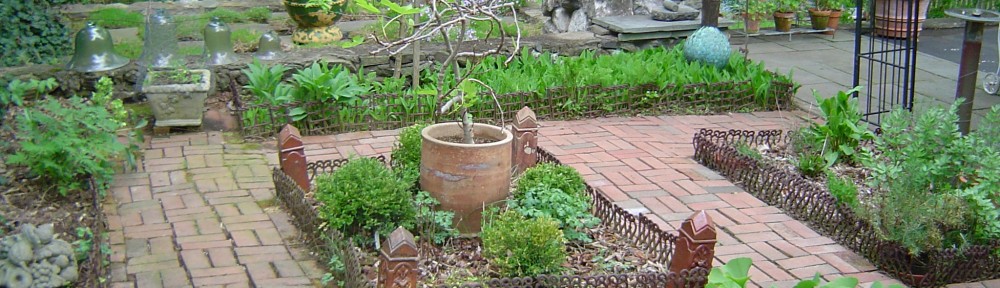
It began this year with my ‘checkerboard’ garden. When this garden was first designed and planted, it was spectacular. But over the years, it was not quite so and by last year, it was distinctly ratty looking. The creeping phlox ( P.subulata) was struggling. This was because the area was now shadier as the surrounding trees had grown. A suitable substitute had to be found. I decided on woodland phlox ( P. divaricata) which is often also called creeping phlox. And while I was going to rip up the old plants, it made sense to re-level the whole space which had shifted with the vagaries of chipmunks who had set up home beneath this raised area. With the pressure of Open Day just a few days away, this garden was completely overhauled. I will know next year how this rethinking has worked. I hope the new plants thrive and bloom their heads off next spring. In any case, a change in this garden was much overdue.


The vertical garden was another place needing some change. A number of ferns had not made it to spring. I don’t think it was the harsh winter that did them all in. I suspect it was the breakdown of the self-watering system when we were away last August that killed off some of them. Intense heat and no water is quite the death sentence for a fern. So while we’re still fine tuning the watering system, I decided to introduce assorted Heuchera into the fern mix. I must say, it looks quite lovely. Once again, while no one was home, the system failed and some areas of ferns look ragged if not clearly done for. But the Heuchera still look good. This vertical garden is still evolving and demands that elasticity of mind as well as a good measure of tenacity.

The aforementioned gardens are big projects but there have been a few smaller ones. Unexpectedly, this past June, I had to go to India for several weeks. Till the very last minute I took care of all the garden chores and I gave the family detailed instructions on its regular upkeep. And then I had to let go. Other business was more pressing. I tried not to fret about the garden and was reassured that chores were being done.

It was with a touch of apprehension that I returned. Although there was a great sense of joy in coming home, as soon as I stepped out of the car, I saw the brick walkway bursting with weeds. The window boxes above were gasping their last. And, the front perennial beds were in sore need of some restraint. I couldn’t even dream of seeing the rest of the garden. I’d be lying if I say I was not disheartened. Yet, I was aware of how the family had done their best to take care of matters for which I was very grateful. They’d also been busy with other things and had not quite registered my instructions with its implicit gravitas. I was proud of myself for not saying anything because I know I’d have deeply regretted it. Everybody had tried to the best of their ability. Besides, these problems were mighty fixable.

It would’ve been amazing if I could’ve come back to a pristine garden. But that would be absurd. My garden is never pristine. Even under my own watch. It really was up to my ability to go with the flow. No getting worked up. To accept and adjust to the disruption of plans and agendas. It was a simple matter of things being different from the way I do them. So thats what I did. To the betterment of all.

The walkway was weeded, the window-box plantings replaced and the perennials given a severe, summer trimming. Voilà! A neater, cared for look has emerged. I do however hold Mother Nature responsible for the way the lawn looks. Similarly, other areas of the garden are getting due attention. Meanwhile, criticisms were kept in check and feelings remain unhurt.

This spring and summer, I have learned a great deal. About myself, about those close to me and about life in general. Once again, the garden played a vital teaching role. I hope I have grown and that like the kite that rises with the wind, I too will rise with every wind of change that blows my way.

The original phlox garden.

The original phlox garden.

The new phlox garden

The new phlox garden

Enjoy the array of window boxes:

Window box in whiteWindow box in pink and blueWindow box in greensWindow box in pale pink and blueFrothy window boxWindow box in pfrothy pink(c) 2013 Shobha Vanchiswar