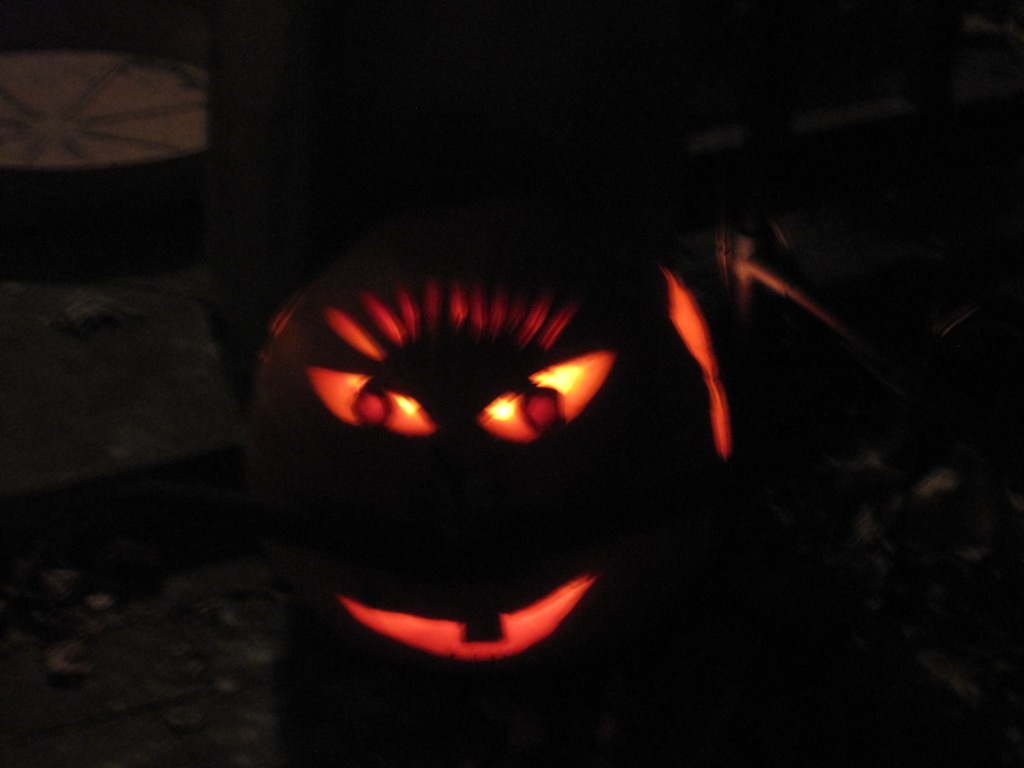
To Be Or Not To Be

It occurs to me that humans are quite possibly the only species that make deliberate decisions regarding the existence of other species. I’m not referring to self-survival associated decisions. Its the ones we make to suit our life styles I’m thinking about. We build houses to give ourselves good views and displace or dispose off whatever else lived there before. Land reclamation is casually achieved with no thought to effects on marine life close to shore or shoreline. “If a habitat does not suit, then its presence is moot.” We Homo sapiens do not easily compromise to coexist with other species. Control freaks – that what we are.

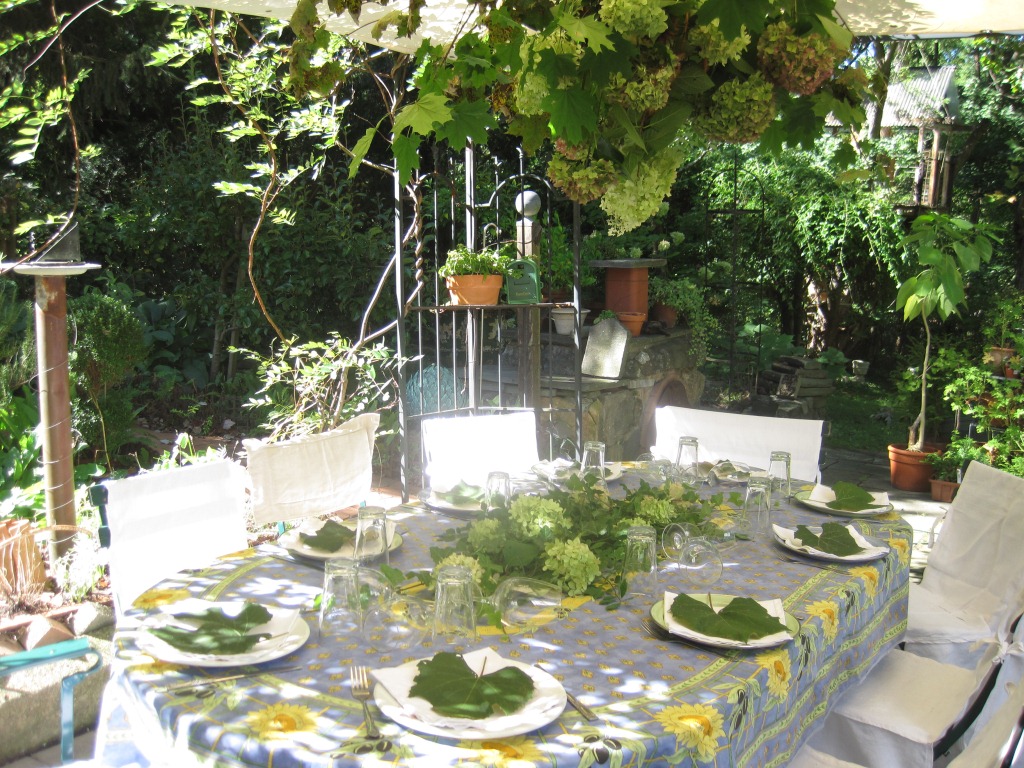
And so it came to be in my corner. I’d mentioned in a recent post that a bird was trying to settle into the chandelier above the dining table on the terrace. I was leaning towards letting it do so but other voices relevant in my life were leaning the other way. After all, with the weather warming up, dining outdoors is de rigueur. We wait all through the cold months dreaming of the many hours spent lingering at said terrace. Meals, poker games, painting, reading, rounds of Scrabble, writing and actual face to face conversations, this area is well used. A nest in the chandelier would preclude such happenings for the entire duration of its occupancy. Thus, it was decided that since the nest was not actually built, it would be okay to discourage all attempts to do so. Each evening, as I finished up in the garden, I’d remove the mess of twigs that lay strewn on the table as well as the ragged bits of paper that clung to the tole leafs of the chandelier. Judging from the sheer untidiness and obvious lack of architectural experience, I’d say this was the avian equivalence to a teenage pregnancy. It seemed like bird and I were playing a silly game. She tossed around stuff and I cleaned up. Each of us teasing/tormenting the other. I figured eventually she’d get tired and find another location well out of my reach and sight.

Then, it rained hard for two days straight. With no possibility of gardening, I happily went about my indoor chores. Come the first dry day after the deluge, and there it was – a sturdy nest solidly ensconced in the chandelier. I graciously conceded to the bird. Her determination and persistence to acquire this rather choice site for her future babies demanded and received my deep admiration. As far as I was concerned, Nature had spoken. It was no longer my place to deem where the bird was to build the nest.

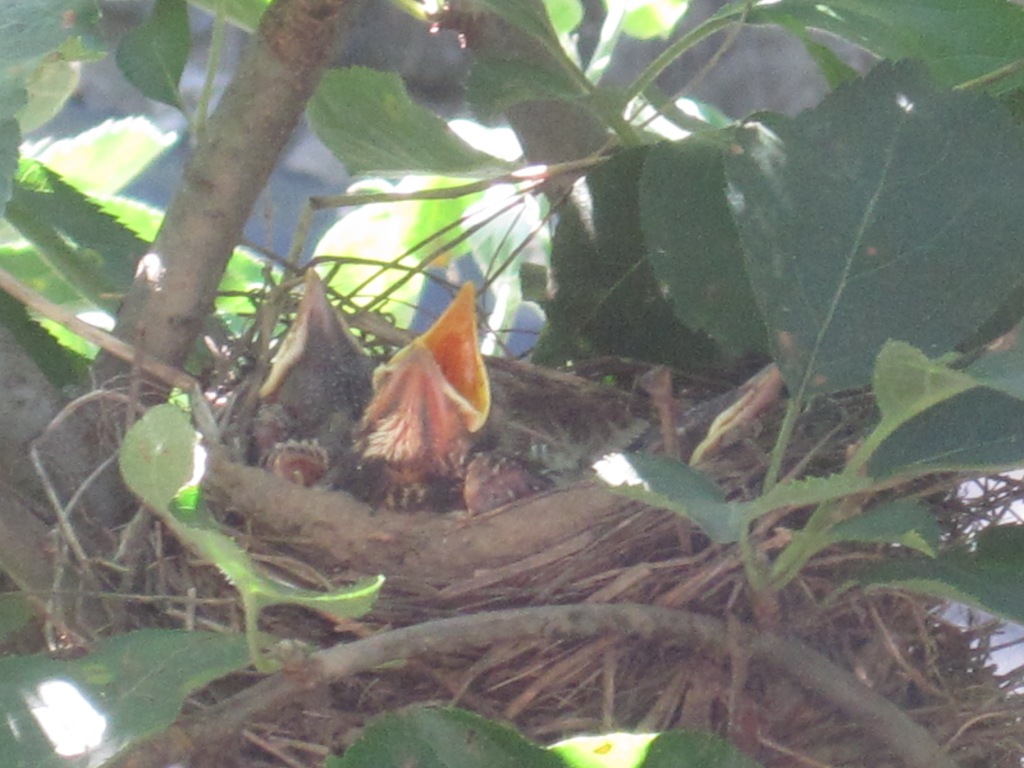
The nest looked clearly to be that of a robin. Kind of blocky and functional. Not particularly tidy – fibers and twigs still hanging or sticking out. Robins build that way. I was right. Soon, as I passed by doing my garden tasks, I’d see a robin hover around making disapproving sounds and keeping a keen eye on me. After what had happened between us in the early days, I didn’t blame her.

With a very strong table right beneath, I now had a perfect way to peer into the nest. So clamber atop the table I did. I still fell short by a few inches. With a too-good-to-be-true viewing opportunity such as this, I was frustrated but not put off. I contorted my hands whilst holding the camera and tried to take a photograph of the interior. Since I couldn’t see what my camera was pointed at, I made numerous attempts till my arms and shoulders hurt. Finally, just when I was ready to concede once again, I got the shot I sought. All the while, I was aware of the distressed mama bird making annoyed and anxious sounds. She stayed near by and I half expected her to fly at my face and poke my eyes out. I kept thinking safety glasses were in order.

I’m terribly thrilled to have that photo of four exquisitely perfect, brilliant Robin’s blue eggs but I also have a deep sense of shame and guilt for having traumatized the bird. I had behaved like paparazzi.
Standing a respectful distance from the nest, I asked for forgiveness. From now till the time the eggs hatch, the babies grow and fly away, there will be no dining under the nest. We will move the table to a spot away from it if we want to eat outside. It’ll perforce be in semi-darkness as if to echo the state of human intelligence. C’est la vie.

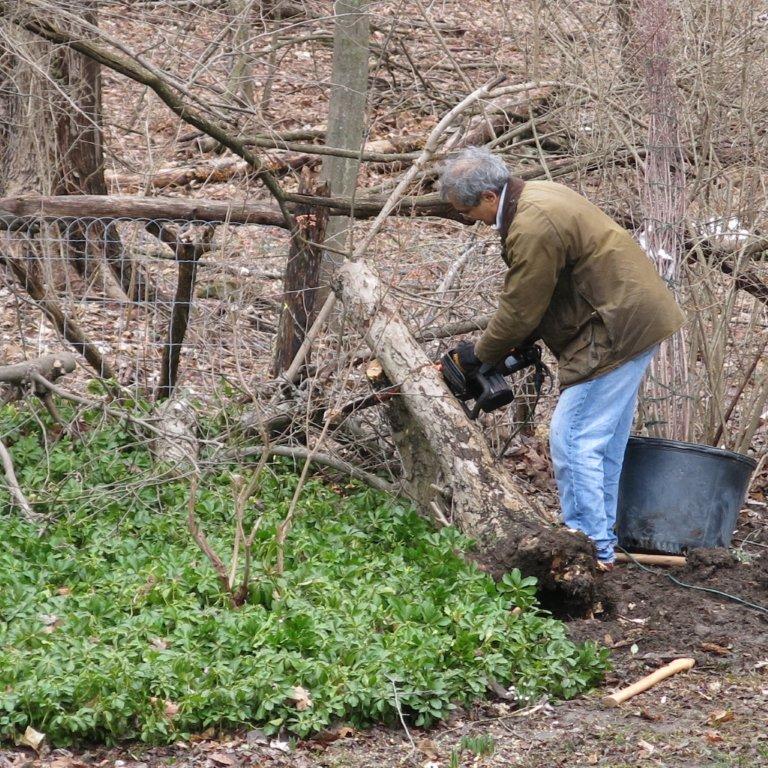
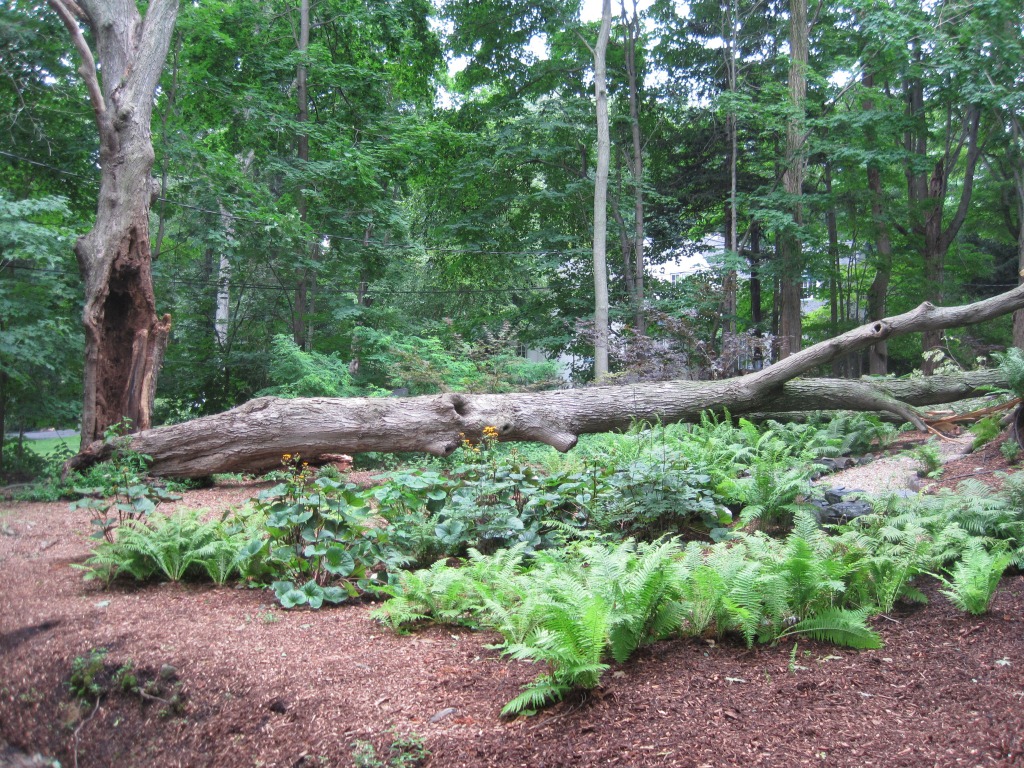
Along similar lines, a second event occurred this week. My neighbor had a silver maple tree taken down. This tree was huge. At least eighty feet tall and from what a tree expert once told me, it was perhaps close to a hundred years old. Understandably, it was a real presence in our lives. Its branches hung over our back terrace and gave quiet shade in the heat of summer. In the fall, it was the last to shed its leaves and we did not mind our share of them. Small price to pay for its majestic beauty.

Concerned about rot and limbs falling in storms, the owners had the tree removed last week. It took the highly skilled tree guys all day to take it down. Thats how big this tree was. I was already sad when informed the tree was to go but the intensity of my sorrow upon hearing the start of the buzz-saw, surprised me. I hadn’t realized just how much trees mean to me. And this elderly specimen towering over us all had earned its stripes. With the loud, steady thrum in the background, I thought about life, death, loss, love, friendship and so many other things. I offered up my deep gratitude to the tree. I apologized for what was happening to it. I wished it well and hoped it understood why this was happening. Mostly, I asked pardon for all the atrocities committed by my species. The necessary, the excusable, not so excusable as well as the unforgivable.

Être ou pas être?

Today, May 27 is Rachel Carsons birthday. Celebrate by being kind to this amazing, fragile Earth of ours.

How gorgeous are these eggs?

How gorgeous are these eggs?


Messy nest of the Robin family.

Messy nest of the Robin family.


The big silver maple seen behind the gazebo (under which live the Robins)

The big silver maple seen behind the gazebo (under which live the Robins)


Sans the majestic one. I wish I'd known to take more specific pictures of the tree.

Sans the majestic one. I wish I’d known to take more specific pictures of the tree.


Tree cutting in progress

Tree cutting in progress


No trace of the tree remains

No trace of the tree remains


(c) 2014 Shobha Vanchiswar
[do_widget “Blog Subscriptions (Jetpack)”]

Know Thine Enemy


Caution: the topic is important and this article is a bit long. So get yourself a drink of choice, settle into something comfortable and read.

As gardeners, we are in an age old battle with pests, marauders and acts of nature. Traps, sprays, baits, decoys and such have occupied the attention of every generation. Growers try to come up with hardier, disease resistant plants all the time. Inventors and scientists attempt to answer the besieged gardener’s prayers with new contraptions and devices while yet more scientists introduce new strains of bugs, genetically modified plants and compounds to do battle. Its always a case of trying to stay one step ahead of the enemy isn’t it?

Just as we treat our own ailments specifically, it behooves us to do the same with our gardens and crops. To truly understand the problem translates to going beyond addressing just the symptoms and targeting the causal agents themselves. General plant hygiene is a necessity. Regularly cleaned equipment and tools, uncontaminated compost, mulch, water and soil, proper air circulation are all part of good plant husbandry. Yet, despite our best efforts, disease and pests will appear. So its important to study up.

While it is beyond the scope of this site to enumerate all the problems and solutions, I want to emphasize that it is incumbent on each of us to take responsibility to learn about such matters and take the appropriate action. To that end, I’d like to summarize a talk I attended recently. Titled “Bees, Trees, and Berries: How global plant movement and change can affect our gardens” it was given by Dr. Margery Daughtery. Informative and interesting, Margery managed to convey a serious, heavy topic with humor and clarity.

To start with, the particularly hard and wild winter is some indication of the climate changes underway. It is up to us to adapt and cope. There has been the thought that the harsh winter might have helped in diminishing the presence of ‘stink bugs’ and other pests. Margery broke the news gently – not true. The pests will be slow to start but being rather well suited to the human lifestyle, they are fully capable of getting through rough times. Be warned and stay vigilant.

Microbes have the happy (for them) ability to mutate. So, as we introduce resistant plants and treatments, we can expect to see many of the pests mutate accordingly. This has been already observed in fungi that cause rust diseases. Meanwhile, something remarkable and alarming has been observed in Europe. The TRSV virus is a well recognized plant pathogen. Its genetic material is RNA. This has mutated and converted to get into the central nervous system of the honeybee. It is now thought of as a significant cause of colony collapse disorder in the European Apis mellifera. Scary right?

Regarding boxwood blight – first and foremost one must be certain the problem is indeed blight and not stress which can be due to the normal effects of winter or the heat of summer. There is a fungicide spray available to prevent the blight. Margery pointed out that it did not make ecological or economic sense to spray year round. Since spikes in the blight have been noted in certain months, it would be prudent to spray just before those periods. What is yet to be determined is exactly when would be those ideal times. Research has been slow. Stay tuned. On the up side, this disease is not wind borne and is slow to spread. Certain types of Korean boxwood appear to be more resistant. Many alternatives to boxwood exist. Let me know if any of you need more information.

Speaking of slow research, there is still no good news with the problem of powdery mildew in impatiens. For now, impatiens lovers are still advised to plant New Guinea impatiens.

The situation with the rose rosette nuisance, if a plant is affected, pull out the whole plant and dispose off with the garbage. Do not compost. Knock Out roses are observed to be more susceptible. Select hardier roses by looking up (Google) university sources whose research is the most reliable. Help steer Extension Centers like Cornell and botanical gardens by seeking and supporting their work. They really are our command central for all matters horticultural.

Planting native trees is one of the single most positive action we can take. Bringing balance to the ecology, maintaining equilibrium of the carbon-cycle and fostering the helpful fauna, forests cannot be beat. As I’ve said here many times, go forth and plant a native tree. Arbor is this Friday – observe it!

This talk was the third and final part of a series. The crux of it is that we must be vigilant about alien diseases and bugs that sneak in not only with plant material from other parts of the world but also hitch rides on palettes and crates for other imports. In my opinion, it is simple enough to say “Grow, make, buy, use American!” but much harder to implement. The world has shrunk and all countries are dependent on each other for so very much. Travel, commerce, tourism has grown. There is no turning back.But we can each do our part I should think?

In the garden, going native is much easier. These plants are naturally hardier, less fussy and more disease resistant. Plant non-invasive, well understood non-natives only. Obtain plants from reputable nurseries and growers – preferably local establishments. Keep in mind, the local places operate under the same conditions as you do. It stands to reason that their plants will do well in your garden.

It ultimately comes down to every gardener to familiarize him/herself with the problems, understand the causes and then act with intelligence and foresight. Know thine enemy indeed.

After such a serious piece, here are some cheery photos. This is why we garden! And remember – my garden is open May 10. Click on the Happenings page for details.
Osteospermum and pansies in urn
Primroses
Red tulips
Fringe tulips. Crystal Palace.
(c) 2014 Shobha Vanchiswar
[do_widget “Blog Subscriptions (Jetpack)”]

Of Mice And Me

This past Sunday, I made the first trip of the year to my favorite nursery. The sights and smells of the plants, the benign conversations with horticultural experts/plant lovers did something magical to my mood. I was enervated, optimistic and boy, did I have energy to take on the many tasks on my to-do list. Yes, thats what being amidst all things plant related does for me. This state of elevated spirits beats the ‘induced’ kind any day. It leads to creativity and productivity, spreads good will, no hangover follows and best of all, one remembers everything.

And joyfully thus, my gardening season is underway. For instant gratification, I picked up flats of primroses and pansies that will go into assorted urns, pots and window boxes. Now, mind you, as exciting as it is, there are challenges. My garden Open Day is fast approaching ( May 10) and given the severity and length of this past winter, time is short for getting the garden ready and spectacular. But that is not the most serious problem.

Of grave concern is the fact that orchard mice have attacked several of the apple trees in the espalier fence. How much damage has been wrought is yet to be determined. I can only hope that for the most part, the trees can heal themselves nicely. To replace any tree will not be easy. To remove a tree from within such an espalier arrangement and replant with a healthy tree of appropriate maturity requires some effort. There might well be more than one damaged tree. Oy vay.

When I first noticed the tell tale signs of orchard mice activity, I was immediately inclined to panic. I had this strong urge to pour poison and decimate the rodents. But thankfully, that feeling lasted just a minute. Okay, five minutes. I breathed deep and let myself relax. Strangely, my next thought was to consider how hard the winter must have been for the mice. The apple trees had not been touched all these years so, they must have been under a fair amount of stress to turn to my precious trees. I even envisioned that some of them were fiercely protective mothers doing whatever they had to for the wellbeing of their young ones. Sigh. How could I remain outraged?

Looking at it from another creature’s point of view helped adjust my own perspective. As much of an effort and expense it might be to remedy the problem, the fact is, the situation can still be fixed. Its not the end of the world. Am I happy then? No, my time, energy and pocketbook are not limitless but I’m not unhappy or upset either. I have forgiven the mice, accepted the problem and will now try to correct it the best I can. I will be discussing the matter with an expert so I can find out more about how to deal with it properly. Any insight gained shall of course be shared with all. If anybody has had a similar experience, I’d love to hear about it.

This is once again a reminder that we humans are not in charge. Nature is. And I must defer to her.

So, with the espalier problem on one hand, I look around the garden to counter-balance the status. The bulbs are piercing through the earth. Snowdrops and hellebores are blooming. The boxwoods look a bit winter weary but otherwise seem to have fared okay. And most excitingly, the Amelanchier I said I was going to plant, was purchased and ensconced in its rightful home yesterday. It is A. canadensis ‘Glennform’ – a shrubby type that is full of buds. I cannot wait to see it in bloom. It will lead the eye nicely across the meadow when viewed from the terrace. Once it was in the ground, I welcomed it to my garden, wished it well and promised that I would do right by it. I renewed my covenant with Nature.

Many, many chores remain and the garden is yet to reveal fully what plants could not take the winter. This is particularly true of the vertical garden. It is a vulnerable area and we are still learning what works and is needed. Ferns are slow in emerging so it’ll be cutting it very close to May 10 to determine anything. The suspense is killing!

As I dive into the season and begin my work, I’m just so excited and grateful to have my own piece of paradise. At the same time, I’m apprehensive about how to make it shine for the visitors in May. I know the ones who are gardeners themselves will understand about those aspects that simply cannot be helped and are due to the vagaries of the weather. But, I also want to please those who do not garden and rightfully come expecting to be delighted and impressed. Their opinions matter as much and I enjoy their comments equally. I’ll just have to work very hard and do my best won’t I? In the end however, whilst looking beautiful, a good garden must also teach. I hope all the visitors leave my garden suitably impressed and a little bit more knowledgeable and enriched.

Too often we forget that to have a garden to tend is to be truly blessed. We never really own it. We are but the caretakers and must share it with grace. Let the gardening begin!
Have I mentioned that my garden is open this May 1 from 10:00 am to 4:00 pm?! Do come, I really would like to meet everybody and share with you this piece of my heart.www.gardenconservancy.org/opendays

Orchard mice damage

Orchard mice damage


More damage by mice
Another photo of mice damage
Removing the old, apple tree.

Removing the old, apple tree.


The new resident.  A. canadensis 'Glenform'

The new resident.
A. canadensis ‘Glenform’


Hellebores in bloom

Hellebores in bloom


(c) 2014 Shobha Vanchiswar
[do_widget “Blog Subscriptions (Jetpack)”]

Love Will Keep Us Together

Even amongst those of us too jaded to get caught up in the much hyped Valentines Day observance, one cannot help being a little disarmed by the expression of a genuine ‘I love you‘. Am I right? I believe the positive response to any source of affection is integral to every living being.To love and be loved makes one secure and happy. No doubt all sorts of good compounds are generated in the biological systems and the result is an individual who functions better. One observes this clearly between humans, humans and their pets, amongst animals. Matters are not as obvious in the plant kingdom.

Love among plants? Sounds a bit far-fetched for you? That plants compete with each other for space, light and other resources is well known. The fittest (often the thug) survive. But, we don’t consider that perhaps, plants have a way to cooperate with each other that is yet to be fully understood by man. Empirical evidence of this abounds. Consider the fact that wherever grows poison ivy, there grows jewelweed. Now, that cannot be for human benefit can it? The fact that the nasty, itchy inflammation caused by poison ivy is effectively counteracted by the juice from the stem of jewelweed is incidental. I present to you instead – jewelweed attracts bees, hummingbirds and other such pollinators. While the birds are around they get to feast on the drupe-like fruit of the nearby poison ivy. Seeds of the ivy pass through the digestive tracts and and find themselves dispersed wherever the birds travel. Poison ivy flowers are inconspicuous and could not on their own attract the birds. In turn, the poison ivy keeps humans at a distance thus keeping the jewelweed safe and intact. It is win-win for the plants in question. Mind you, I have not found any research that has come up with an explanation for why these two plants live near each other. My own reasoning brings me ample satisfaction.

Okay, so ‘love’ might be too strong a word but there is definitely a detectable level of affection n’est pas? They seem to know how to thrive if they stay together. There are other examples of plants having mutually beneficial relationships. It was by studying such conditions that gave man the idea of companion planting. Case in point – the three ‘sisters’ of America. Corn grows well in sunshine but needs the ground weed free and mulched which is handsomely addressed by squash that contentedly scrambles all over the ground under the shade of the corn. Meanwhile, pole beans climb up the sturdy corn plants whilst fixing nitrogen in the soil.

Any natural woodland contains a vast assortment of plants. The upper-story and under-story specimens provide conditions that sustain each other. The same occurs in meadows and prairies. Together with the wildlife, there is more to be found growing together in nature than anything we could ever recreate on our own.

The point is, in nature, polyculture which is a more cerebral term for companion planting, is the norm. Diversity is key. It allows for a symbiotic relationship between plants, insects, wildlife, and ultimately our palates. Natural combinations of plants fend off pests and disease, make the best use of space, protects the soil, increase flower and fruit production and generally make a space more beautiful and interesting. This very same method works when applied in our own gardens. It works in vegetable, fruit and, flower gardens. In truth, we have yet to fully understand the entire science of how plants ‘know’ who their friends are and how to create the healthiest horticultural neighborhood.

For now, in my opinion, we know enough to extend that cooperative living to our own society. A little kindness and help, some closeness and yet enough space will be good for all. We’ll grow well, fend off enemies, celebrate differences, use our strengths, compensate for weaknesses, support each other and live in peace. Isn’t that what love is all about?

Happy Valentines Day everybody! May every day be filled with love.
Heart shaped stones
IMG_6631
IMG_6649
(c) 2014 Shobha Vanchiswar

Masterclass For Mankind

If you’ve been following my writings at all, you know I am an ardent disciple of nature. I learn all sorts of things by observing and working in the garden, hiking our preserves and generally enjoying the outdoors. Life lessons, science lessons, art lessons. My muse for painting, poetry and other worthwhile pursuits. So, I’m always interested in how others have absorbed and interpreted their understanding in nature. Boy! Have we learned plenty! Without the guidance from Nature, I doubt we’d have come this far.

From the beginning of time, humans have improved their lot by observing their natural surroundings. From eating plants and fruits sought by other animals to keeping warm by covering themselves with what inherently served the animal, man has been an avid student of nature. Early instruments of surgery were fashioned after different beaks of birds – emulating the specific function of the avian proboscis. Our ancestors studied plants and learned to use them for building shelter, water transportation, ammunition, clothing, medicine, cosmetics to name just a few applications. Water sources could be discovered by noting which types of plants grew near water. Not surprisingly, we are still acquiring valuable information and inventing lifesaving/life prolonging/ life enhancing products from the environment. Humans are like the 3M ad – “We didn’t invent ——, we just make it better”.

Consider the Fibonacci numbers or sequence that is applied amongst other things in computer algorithms. In mathematics, Fibonacci numbers, the Golden Ratio and Golden Spiral are commonplace. But, these occur all over the place in nature. It is Nature’s numbering system that makes plants grow efficiently. How leaves are arranged conforms to Fibonacci arrangement and it enables them to maximize their exposure to light. Similarly, seed patterns on sunflowers, pine cones, nautilus shells, our own inner ear spiral are all in Fibonacci patterns. Imagine how much humans have learned to design more efficiently and effectively from just this one mathematical factor!

Bringing matters to current times, there is now a new and better type of bicycle helmet on the market. It is made of intricately engineered paper. Yes, paper. Invented in the UK, it was inspired by the woodpecker. This bird pecks about ten times per second and each peck sustains the same amount of force as us crashing at 50 mph. How then does the woodpecker avoid concussion and further brain injury? Studies showed that there is soft, corrugated cartilage to absorb all the impact. The paper helmet mimics the woodpecker’s crumple zone. It improves upon the more common polystyrene helmets. Very cool right?

The latest and most waterproof material ever made to date was inspired by studying nasturtium leaves. Until recently, the lotus leaf was the gold standard. But upon observing the heightened waterproof character of nasturtium leaves, it was understood that the veins are what make it so additionally effective. Similarly, the Morpho butterfly has ridges on its wings. So, adding ridges to a silicone surface led to this state of the art material. It was invented here in the US and can be used in anoraks, wind turbines and aircraft engines.

Bioplastics from beetles, ink from insects and even bees being trained for cancer detection are all in the works. Apparently, it takes just 20 minutes to train the bees! The mind boggles at all the potential still waiting to be tapped in our great outdoors.

All of this just goes to show that it is incumbent on each of us to fiercely protect our forests, prairies, rivers and lakes. The very air we breathe depends on us doing right by it. At a personal level, we must safeguard our gardens by not only making them beautiful, but rich in natural flora and fauna. Where the soil is free of chemicals, where fruits and vegetables can be consumed directly from the garden, where flowers provide their pollinators only the purest of nectar. A garden where birds, bees, butterflies, bats and other beneficial creatures thrive, is a garden where mankind will thrive.

Don’t forgetmy garden is open on May 10 this year!

Rose - petals are in Golden Spiral!

Rose – petals are in Golden Spiral!


Echinacea - Fibonacci patterns again!

Echinacea – Fibonacci patterns again!


Nasturtium - inspiring scientists.

Nasturtium – inspiring scientists.


Lets invite the birds

Lets invite the birds


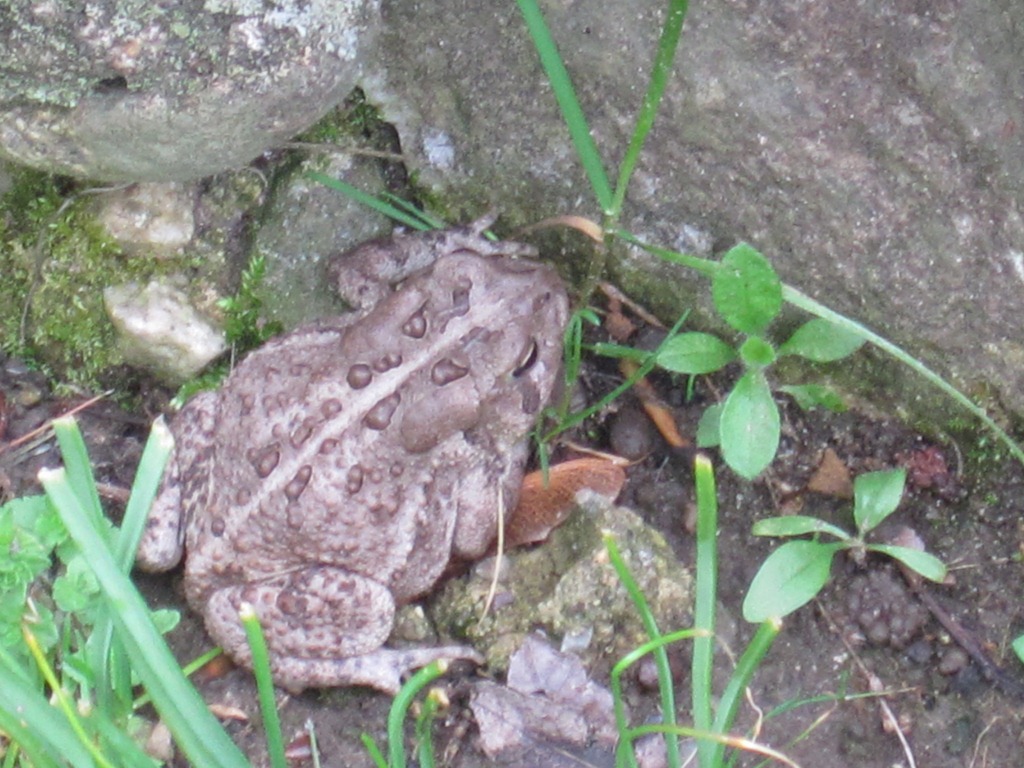
And the toads

And the toads


And the butterflies

And the butterflies


And native plants

And native plants


(c) 2014 Shobha Vanchiswar

The Healing Gardener

Last week, I expounded on Healing gardens. The discussion moves a natural step further – the responsibility that we have towards our gardens.

Although man has been gardening from time immemorial, often, it has been done to the detriment of the land. With the focus being on benefiting humans, the impact on the environment has been rather easily neglected. To create gardens abundant with the exotic and rare, lush lawns, orchards heavy with fruit and potagers putting forth vegetables from distant shores, a high price was payed.

Meanwhile, large tracts of land have been given over to urban development. Gradually, our forests and prairies have shrunk. Combine the loss of natural vegetation, introduction of alien species, use of chemical pesticides and fertilizers, indiscriminate use of water, liberal employment of gas driven machines and there we have our badly, wounded earth. Our bid for the impossibly perfect has only succeeded in exposing our own failures.

Dealing with the likes of powdery mildew that has decimated the impatiens, boxwood blight, Asian long horned beetle and so many others, one can be of the opinion that we have just alien pests to contend. But, in truth, our careless habits have also increased the populations of our own native pests. You see, when we reduce native plants, we also reduce the native ‘good’ bugs which keep the natural pests in check.

I will not go into more detail about all the negative actions and impacts. It is all known. As guardians of our land, we must move ahead with a resolve to make amends. It is not too late – this much we must believe. Otherwise, what is the point?

While we seek to be healed by gardens, we must first heal our gardens. Only then can we be better served. After all, what goes around comes around.

It is my fervent hope that we will each honor our covenant to nurture our gardens and green spaces to good, robust health. Here are a few guidelines:

Plant more native species. Banish all invasive alien specimens.
Adopt only sound, organic practices.
Use water judiciously. Collect and use rain water.
Support the presence of birds, butterflies, bees, bats, toads and other helpful critters. Grow plants that attract them. Provide ‘homes’ and water sources.
Compost all kitchen and garden waste. Use the compost instead of buying mulch or fertilizer.
Weed, prune, cut back and keep the garden nicely maintained.
Spend time daily in the garden. Absorb the good energy while giving it yours.

The growing season is yet to start in the garden but the time is ripe to get ourselves ready to do it right.

P.S.Save the date!:My garden will be open through the Garden Conservancy’s Open Days Program on May 10, 2014. Mark your calenders and do make plans to visit!

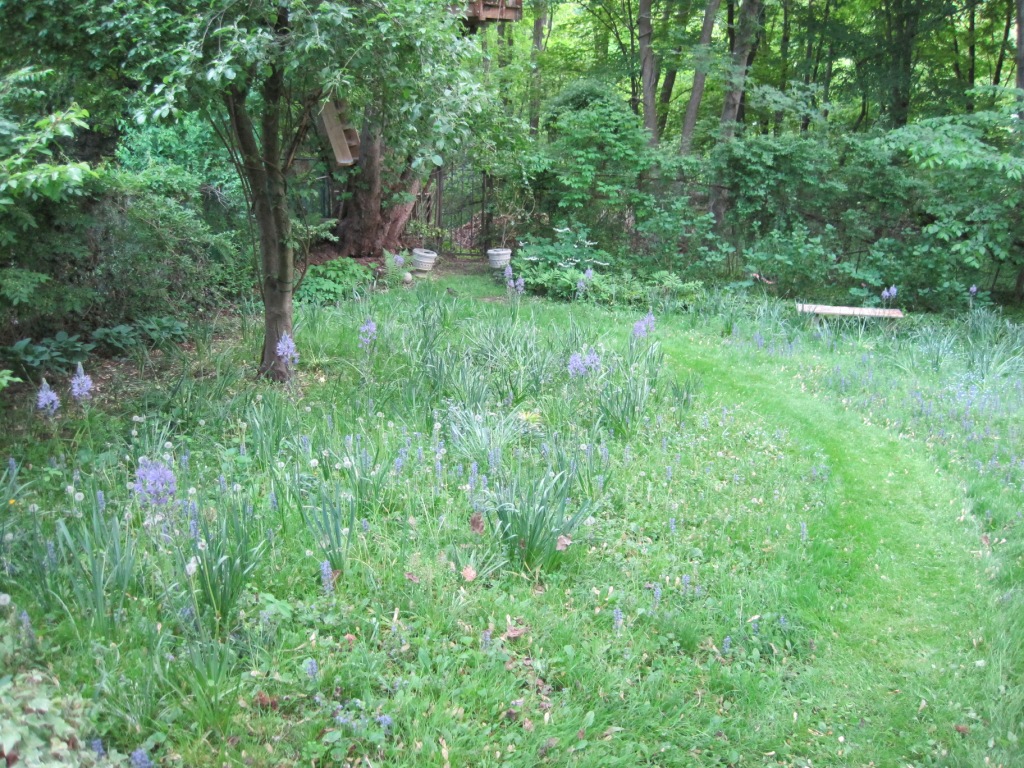
My 'meadow' - replaces replaces a lawn and supports lots of bees, butterflies and toads.

My ‘meadow’ – replaces replaces a lawn and supports lots of bees, butterflies and toads.


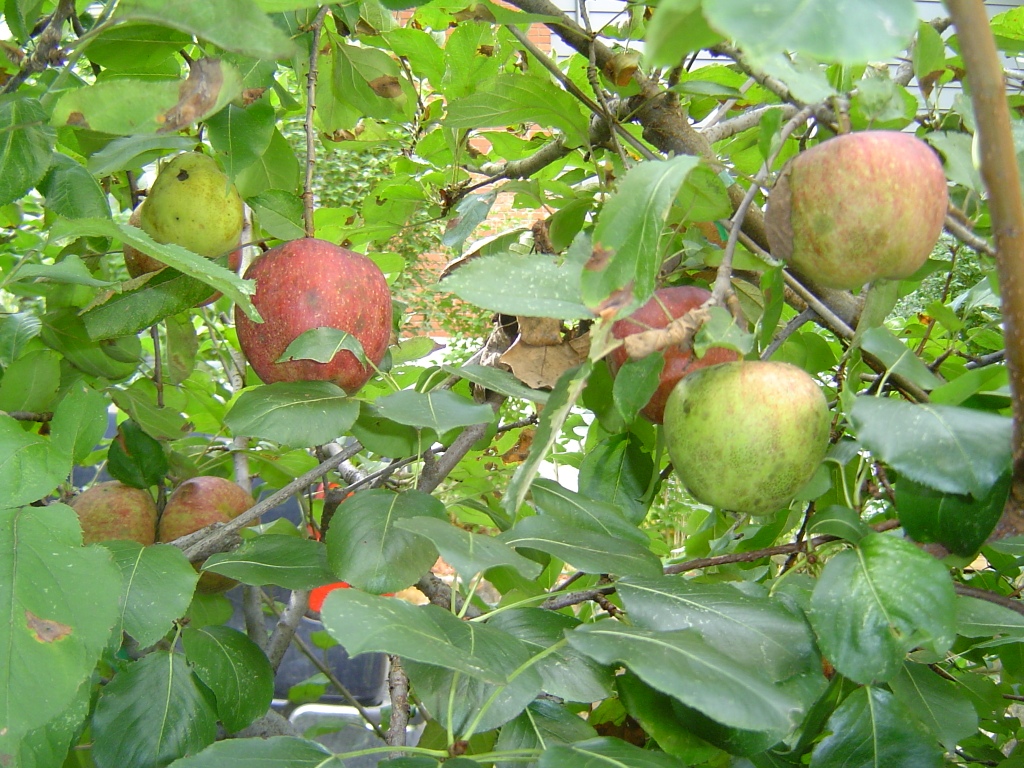
Organically maintained espalier heavy with fruit.

Organically maintained espalier heavy with fruit.


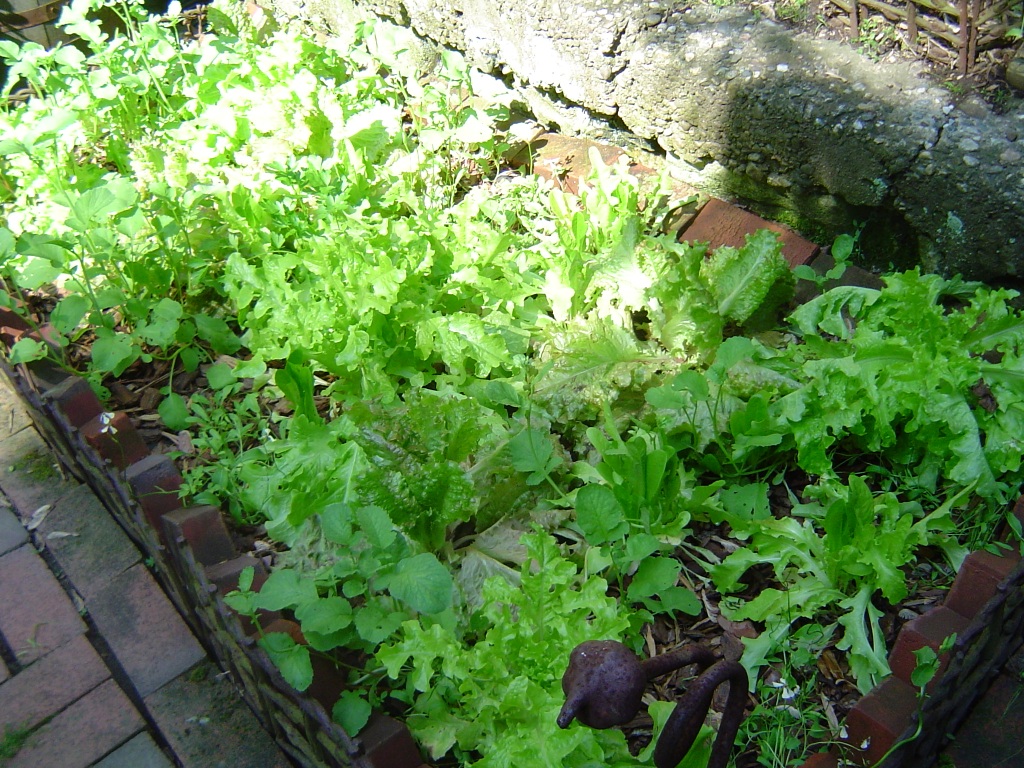
The salad bar

The salad bar


Hungry mouths in the espalier

Hungry mouths in the espalier


A frequent visitor

A frequent visitor


A surprise visitor in the meadow

A surprise visitor in the meadow


(c) 2014 Shobha Vanchiswar

Scary, Silly Make-Believe

With Halloween almost here, the excitement is palpable. Children are giddy with ideas about costumes and the anticipation of vast hauls of candy. Adults, whilst less excited, are still happy to participate. Especially in the pile of sweet treats that wind up on the kitchen table. Playing dress-up is fun no matter what age. Do you have a costume ready?

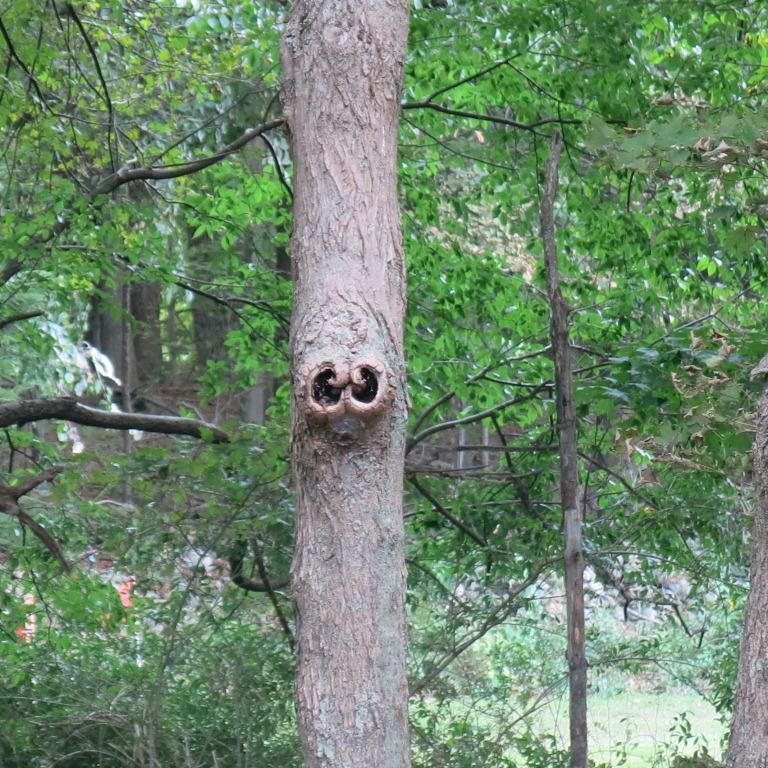
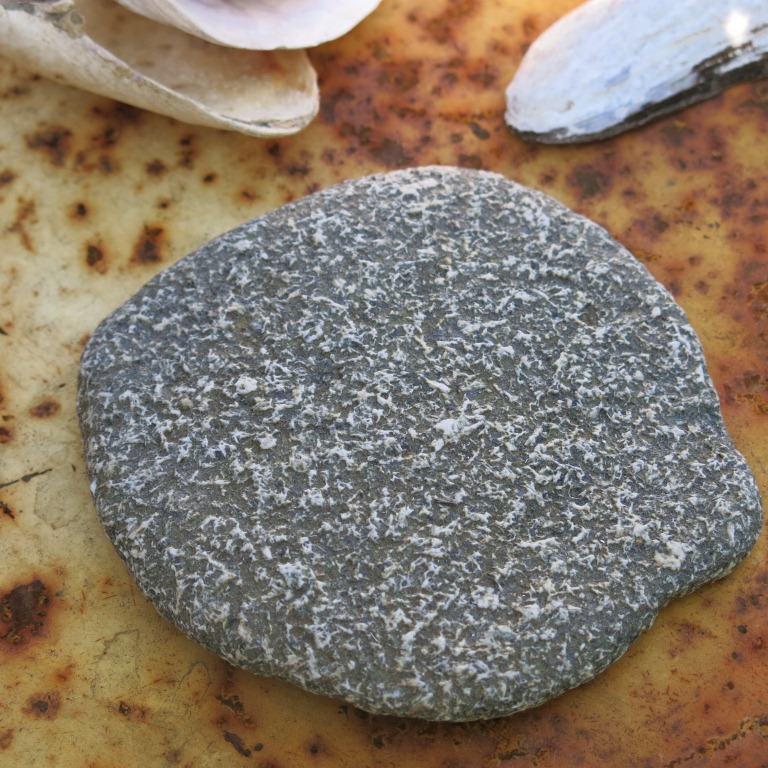
Pretending to be someone or something else is not simply an escape into another world. It is a means of self protection, a ruse to scare, to trap and then, there are those times when one inadvertently resembles a different subject. Despite all our human attempts to create costumes or reinvent ourselves, I firmly believe Nature is the master of disguise and intrigue. Butterfly wings patterned to resemble fierce, scary eyes, leaf hoppers looking like, well, leaves, bird calls that mislead predators, creatures that look like stones, animal furs designed to camouflage, flowers shaped to deceive pollinators, the list is endless. Detection, deception, duplicity and diversion are hallmarks of survival in the wild.

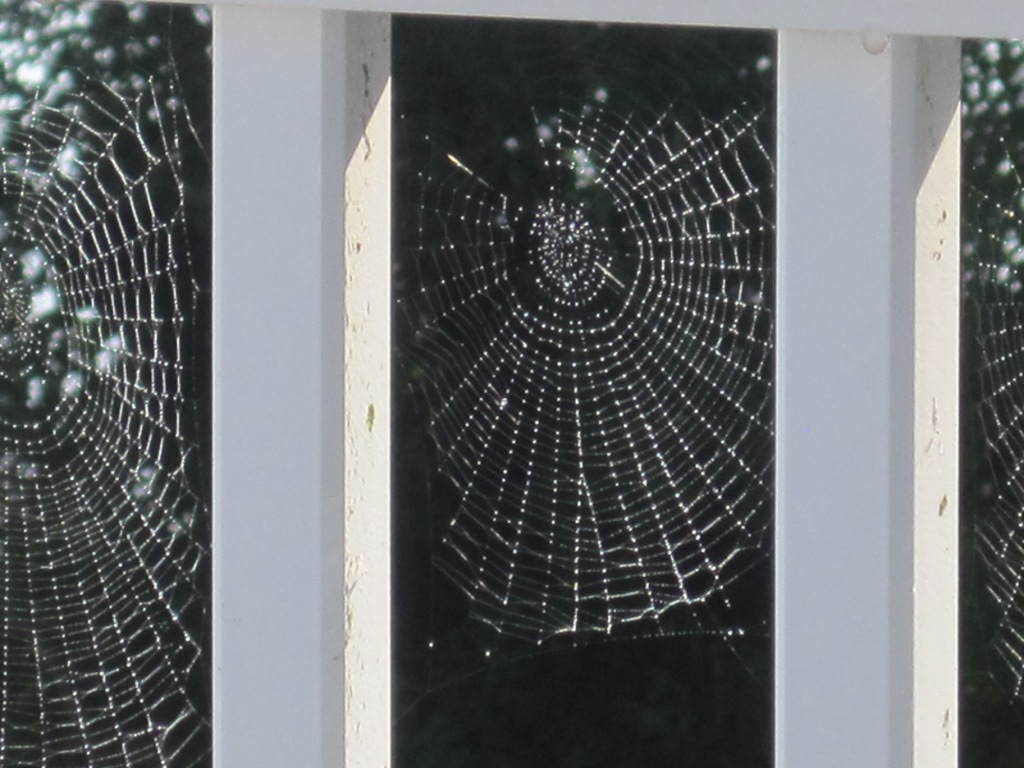
In the garden, I get such a thrill when I come across an object that looks like it is in costume by pure happenstance. In the spirit of Halloween, I submit a few such images. This week, lets set aside our lengthy to-do lists for a bit and join in the fun.

BOO!

Is that a spider in the tulip?

Is that a spider in the tulip?


Somebody is watching!

Somebody is watching!


Is it a stone or a sole fish?

Is that a stone or a sole fish?


Creepy, crawly lurking around.

Creepy, crawly lurking around.


The Dementors are here! Where are Harry and Dumbledore? ( Monkshood or Queen of poisons or Devil's helmet)

The Dementors are here!
( Monkshood or Queen of poisons or Devil’s helmet)


Will you walk into my parlor?

Will you walk into my parlor?


BOO!

BOO!


(c) 2013 Shobha Vanchiswar

Beyond The Season

When Does Fall …

When does fall
feel like fall?
When does one stop
to enjoy the ball?

Swirling confetti
Brilliant fireworks
Who pauses to see
the season’s perks?

Rushing to clean up
erasing the summer
Readying for winter
planning next year

What would happen
if we could just stay
amidst the leaf piles
in endless play?

The arrival of the holidays invariably catches me somewhat unprepared and taken aback. There is so much going on in the autumn that the thought of decorating, getting presents, planning meals and so on gets overwhelming. So the fall back ( no pun intended) is to keep it low key. That would be fine except, too often, I still fail to meet my own expectations. It is not as though I’m setting the bar too high – my plans are simple but even simple needs forethought. This year, I aim to do better.

Whilst going about the required chores in the fall garden, I’m preparing for the holidays as well.
In collecting seeds from plants, I make packets of them to give as gifts. The seeds go into pretty envelopes that are clearly labeled with all the relevant information. Additionally, I’ll attach a photo of the plant and mention good companion plants. Vegetable seeds will be accompanied with a favorite recipe.

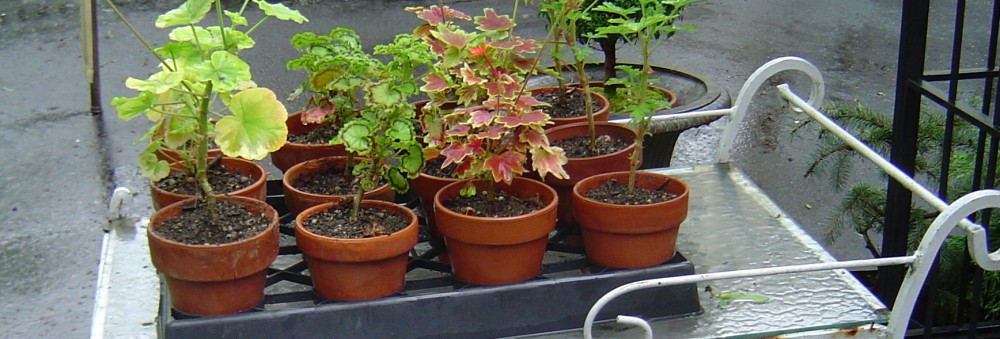
With boxwood blight looming large, one must start considering planting alternatives. So when I purchase shrub honeysuckle or euonymus to experiment in my garden, I pick up some extras to give to a friend who is worried about her boxwoods. Lavender and catmint are other options – I’ll root cuttings from my garden and extras from those that thrive will also be presented to fellow gardeners.

Pruning is a chore that turns up some good staking material. A bundle of sturdy, natural stakes will always be much appreciated by any gardener.

The harvest of fruits, vegetables and herbs results in jams, jellies, sauces, chutneys, pickles, cordials and liqueurs. Who wouldn’t want to receive some of these? Additionally, herein are very handy staples for a soirée. Combine with crudités, artisanal cheeses, dried fruits, nuts, crackers and bread and voila! A cocktail party is in progress.

Redoing or reworking a part of the garden at this time is something to give myself and/or the spouse. Be it relaying the stones on the terrace, replanting a bed or repainting all the lawn furniture, getting it done now will give some immediate peace of mind and when spring arrives, I’ll be all set to enjoy the ‘gift’.

In that same vein, it is prudent to get the trees on the property checked out by an expert. Deal with the dead or diseased limbs/trees. Likewise, take care of trees that are at risk or pose a threat in case of storms. This single factor could save the huge expense and heartache of addressing possible damage. Its a gift one gives to oneself and loved ones. Except of course, some loved ones won’t know to value it!

During the process of clean up, I collect fallen nests, feathers, colorful leaves, berries on branches, pine cones and acorns, seed pods, vines, flowers such as hydrangea that keep their form when dry, evergreens and other interesting natural material. These are all that I will need to decorate the house for Thanksgiving and even Christmas. Simple and natural. And compostable!

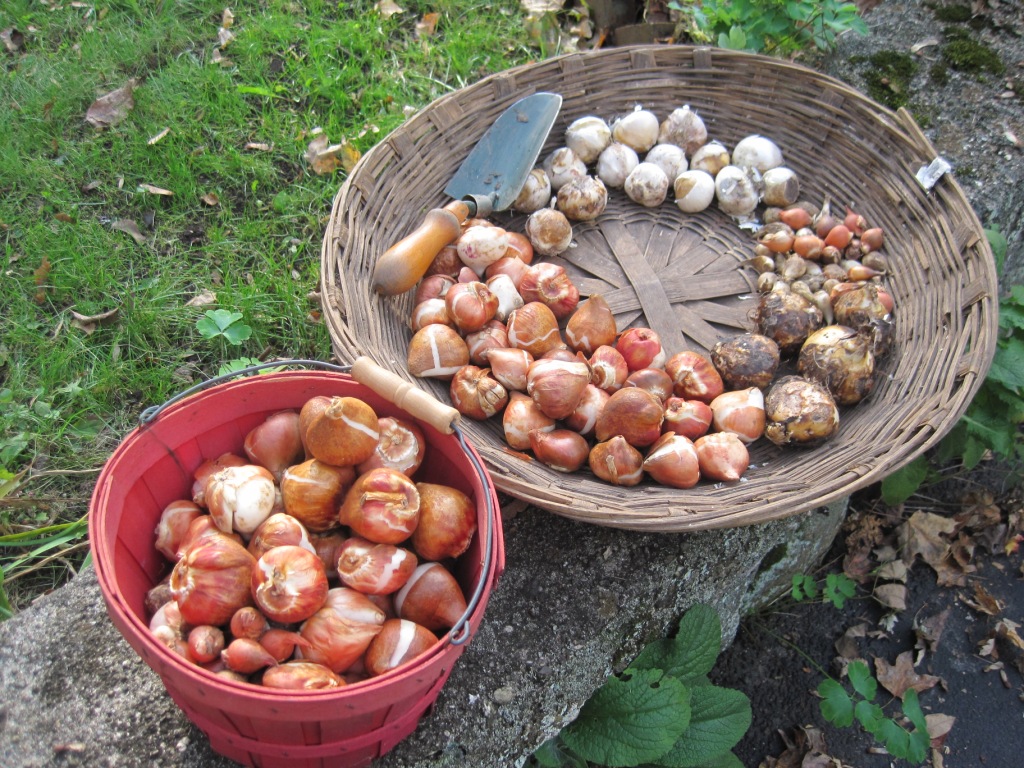
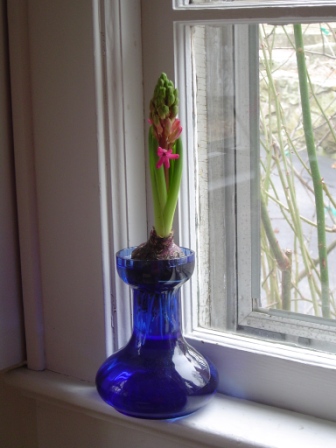
Hundreds of bulbs will soon be planted in the garden. Some of them go into the refrigerator to be forced in the dead of winter. A forced hyacinth or crocus will be certain to banish the winter blues from the hearts of a few cherished friends.

Finally, a gift to Nature. A general clean up and tidying is good but I leave as is an area not easily observed. Messy and overgrown. This will provide a habitat for wildlife. shelter during winter storms as well as a breeding spot in spring. Birds, toads and numerous insects that are useful will be very grateful.

There you have it. I’m already calmer. Are you?

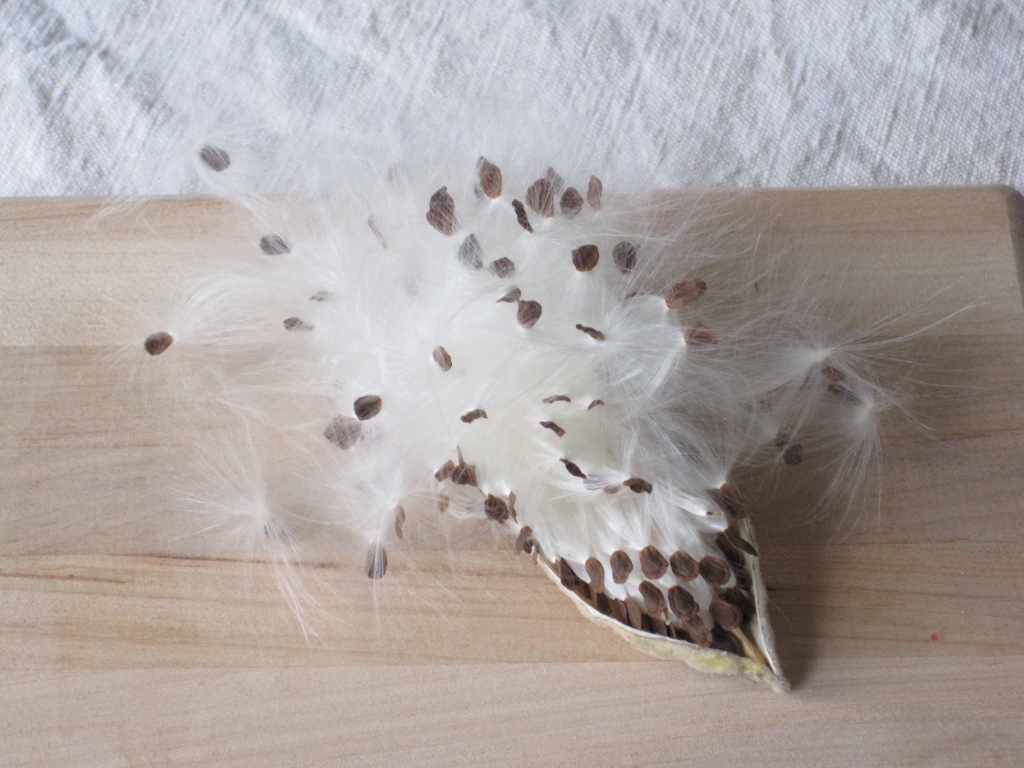
Milkweed seedpod

Milkweed seedpod


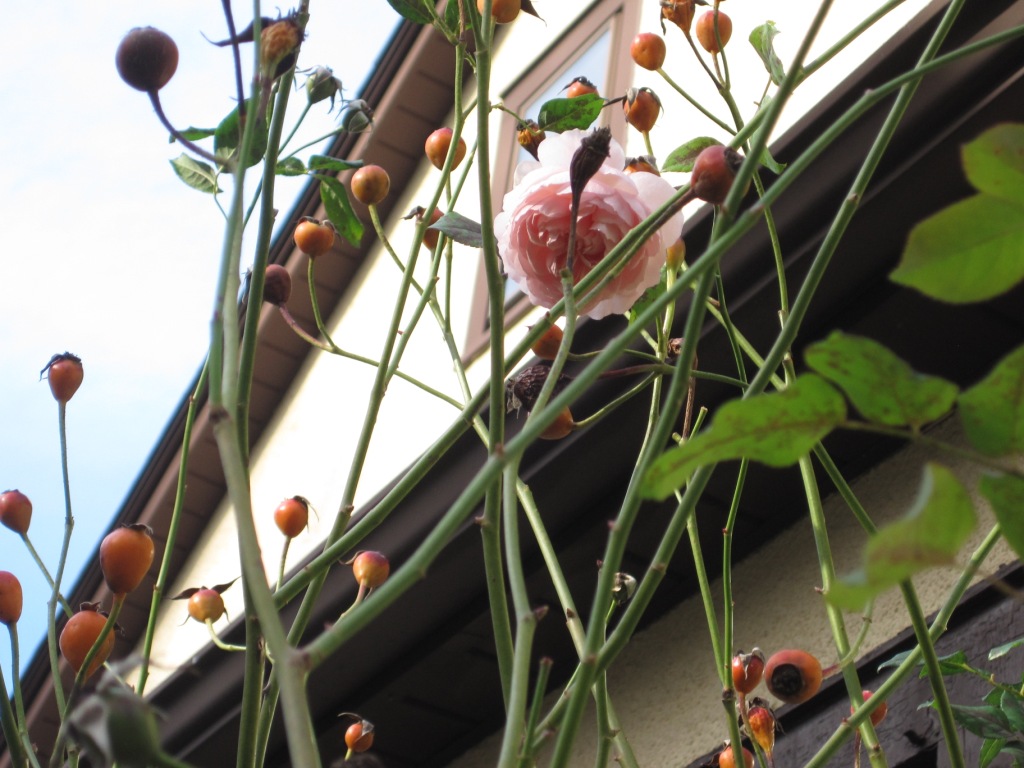
Rose hips to bring indoors

Rose hips to bring indoors


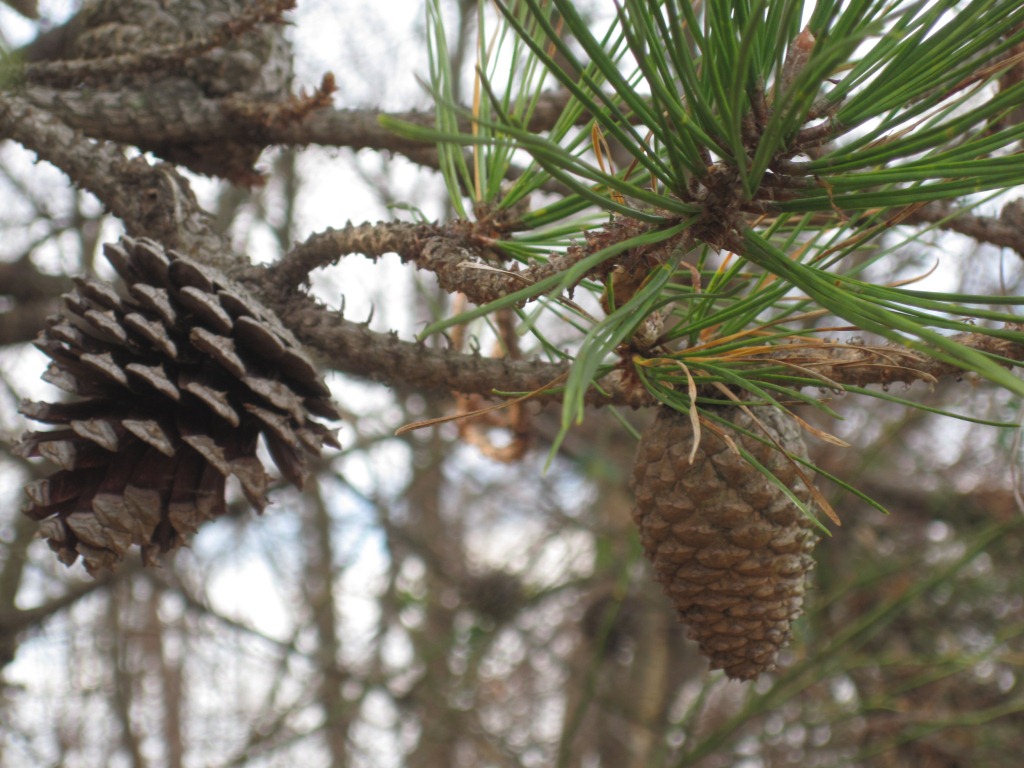
Pine cones for decorating

Pine cones for decorating


Grapevine prunings and dried hydrangea adorn an autumn table

Grapevine prunings and dried hydrangea adorn an autumn table


Someone who needs protection in winter

Someone who needs protection in winter


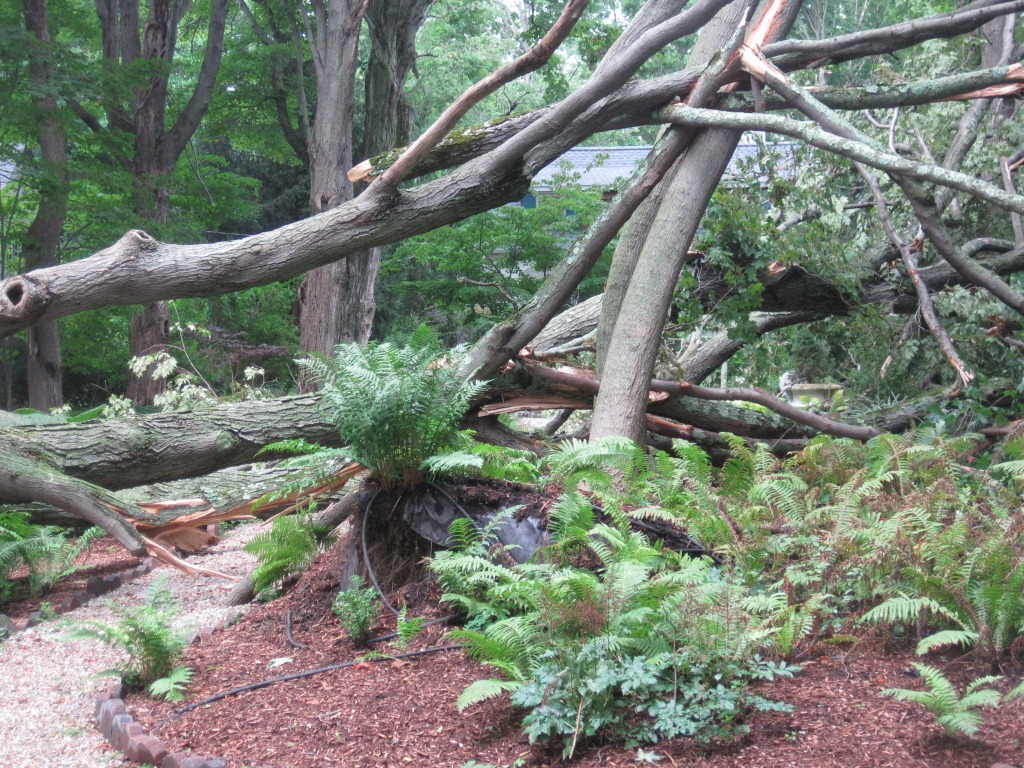
After a storm

After a storm


More storm damage

More storm damage


Some of the bulbs to plant

Some of the bulbs to plant


Forced hyacinth

Forced hyacinth


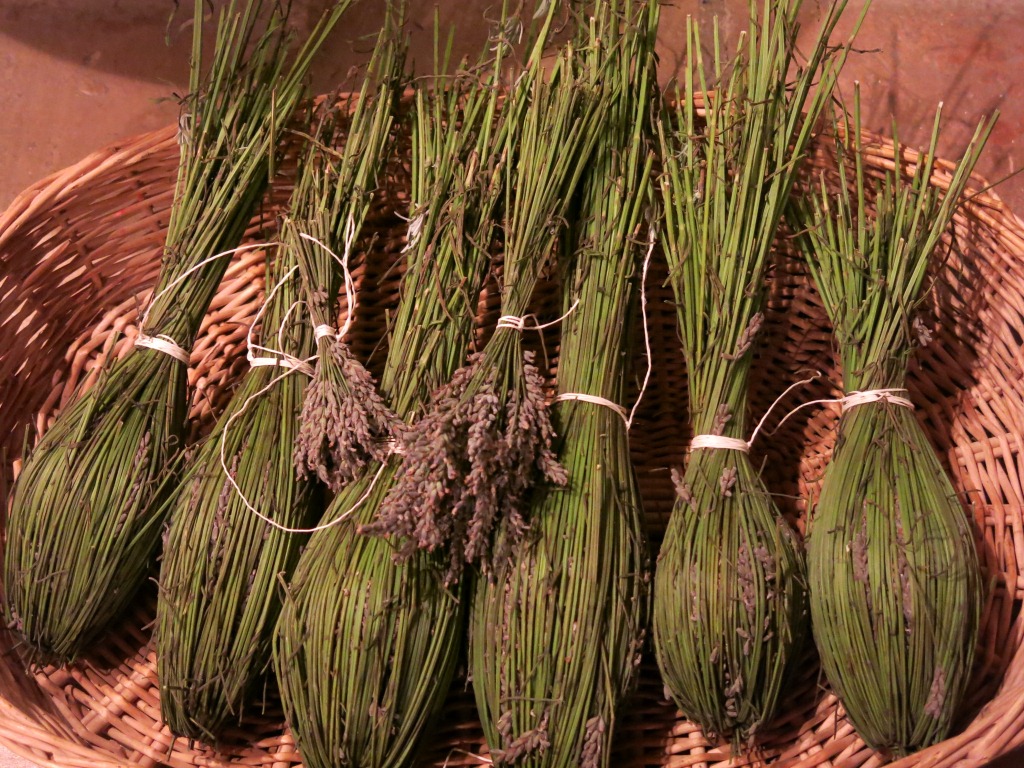
Lavender 'wand' to scent rooms and closets

Lavender ‘wands’ to scent rooms and closets

(c) 2013 Shobha Vanchiswar

Nature’s Classroom

Of the various things that I do, gardening is the most satisfying and forgiving. By that I mean, when I paint or write, I’m forever questioning the quality of what I’ve just accomplished. It can always be improved. Or different. The work is right there staring at me asking for better. When I exercise or take a walk, I wonder if I’ve exerted enough. Invariably my conscience feels guilty and my body bears testimony to my sloth. I cook or bake and it ends up falling short of the perfect version begging for a re-do. But not the garden. It accepts whatever I do without reproach. I’m allowed to work sporadically or in bursts of zeal and energy. My mistakes are quietly endured and my successes are amply rewarded. It is my muse. No wonder I love to spend time in the garden.
I try to paint outdoors whenever the weather permits. The pleasure of creating to the accompaniment of bird songs, the steady thrum of bees and the gentle rustle of leaves as a breeze blows through is nothing short of sublime. Add to this the fragrance of flowers and herbs and you’re envisioning a work space that beats a corner office every time.
With Wi-Fi, I can do my writing, communications, reading and designing work in the garden. I admit that sometimes, I’m distracted by the beauty of what is in bloom, the visits of butterflies or the antics of the birds. But, I’ve learned to factor those moments in my schedule. And I’m all the richer for it.
For instance, cardinals thrill me. The sight of one instantly puts me in a good frame of mind. I think of them as good luck charms. Out of academic curiosity, I’ve been in search of their nests for years. They’ve always been honored guests in my garden but where they nested eluded me. Then a couple of years ago, whilst puttering in the garden, I spied cardinal activity in the ‘Heritage’ rose bush. In the fall, I went to inspect said bush and came upon the most loosely woven, delicate nest of thin peels of grapevine bark. I use grapevine prunings around the peony supports so, they had been very accessible to the cardinals as this rose bush sits right next to the peonies.
I don’t usually remove nests but there was simply no way this nest was going to survive the winter. So I brought it indoors to gaze and admire at leisure. Nothing other than the peelings were used. The cardinal is a minimalist! Such exquisite, sculptural work deserved due recognition. Since then, I’ve applied the same approach to my art – distilling things to the bare essentials. Thank you dear feathered friends.
More recently, looking up from writing, I watched a cardinal pair flit to and from the tangled canopy of Paul’s Himalayan Musk rose that scrambles up and drapes over an ancient apple tree. I sneaked under this ‘bower’ to look closer. Sure enough, there sits another filigree-like nest made solely of just one type of twig. I wish I could get a look at the eggs but a formidable dome of highly thorny stems thwart any such attempts. What a brilliant location. Perhaps once again in the autumn, I’ll try to get a more intimate look at the nest – from atop a ladder.
I wonder if cardinals have a preference for roses. It looks that way in my garden. More likely, they seek places that are not particularly friendly to inquisitive critters and certain humans. I could Google and learn all sorts of things from the proper authorities. But where is the romance in that? It is infinitely more rewarding to let the garden teach in its gentle, hands-on way. Much wisdom and wonder comes from merely hanging out in the garden.
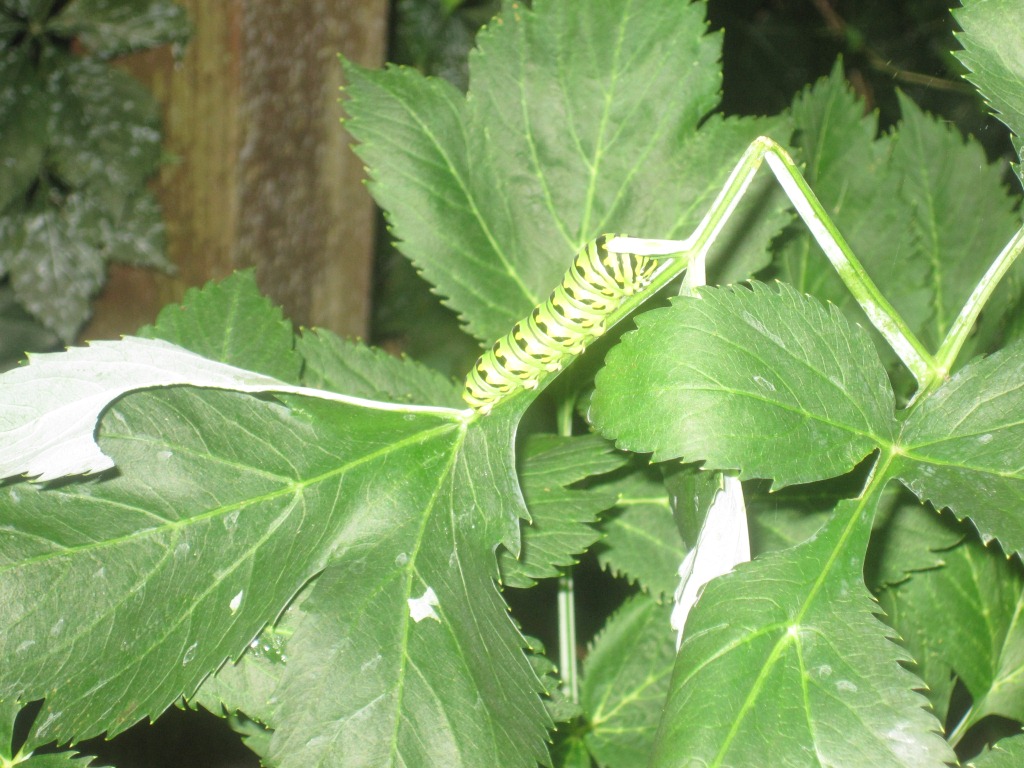
Just this past Sunday, as I looked up from the newspaper, my eyes rested on the tall Angelica in the corner of the herb garden. For reasons I cannot explain, I decided to inspect it. Looking plump and content, rested a handsome Swallowtail caterpillar. It’s bright green color blended beautifully with the leaves of the plant. How marvelous is the human eye that is able to discern between the different shapes and hues of the same color. Similarly, we are able to spot weeds amidst similar looking plants. I was hoping the caterpillar would remain on the Angelica and form a chrysalis. It lolled on the herb two days in a row but when I looked today, I did not see any sign of it at all. Just some well molested leaves hanging off the main stem. No matter, I’ll patiently await the butterfly.
The learning never ends.

Cardinal nest of grapevine bark

Cardinal nest of grapevine bark


Paul's Himalayan musk rose bower over old apple tree

Paul’s Himalayan musk rose bower over old apple tree


Cardinal nest in the rose bower

Cardinal nest in the rose bower


Swallowtail caterpillar

Swallowtail caterpillar


(c) 2013 Shobha Vanchiswar

The Cicadas Have Come A-calling!

You are asking “ Where? Where?” right? I had been hearing reports of the cicadas surfacing in Virginia and other parts of the country but couldn’t understand the silence in my neck of the woods. Not wanting to miss out, I dispatched my trusty scouts ( okay, husband and daughter) to explore the trails around the Cold Spring, NY area. I myself was unable to go as I’m currently wading in Mumbai’s monsoon mayhem which is in itself an adventure of a different sort. Wouldn’t you know it – the cicadas are out in full force in the Bear Mountain region. They are have been making merry and are dropping like, well, cicadas. So if you want in on this scene, hurry up and get to the area. If you cannot, enjoy the attached images and sound recording.

Why the critters are not showing up everywhere is a mystery. I haven’t as yet investigated the reason but I’m wondering if they are present in higher elevations because their cousins on lower ground were drowned out by the floods caused by recent storms as well as the consequent rising level of the water table. If anybody can bring clarity to this question, I’d love to hear it.

At a time when the weather all across the globe is topsy-turvy, it is comforting to know that the cyclical emergence of the cicadas can still be depended upon. For the moment, for this instance, just take pleasure in being part of this amazing, beautiful world and remain a believer. Keep faith.

Download and play video clips of cicadas below in high resolution…

Sound of cicadas

Digging a hole

Or play them low resolution…

Sound of cicadas:

Digging a hole:

WP_20130625

Cicada Holes

(c) 2013 Shobha Vanchiswar