Music In The Meadow. Part I

The meadow has been on my radar this year. And judging from the requests I’ve received, it seems so have many of you. Primarily, you have asked to know the full story of my meadow and what ever else I can share on that topic. Here goes!

Ever since I decided to do away with the lawn in the back garden about twenty years ago, I’ve pretty much let whatever grows remain as is. Except of course for scourges like garlic mustard. At the time, this was almost unheard of. I myself had never seen such a thing in a small, suburban garden. There was no handy literature on the subject available and it was way before Google. But I was very eager to try making a meadow ( of sorts). So I applied a dash of common sense and dab of creativity.

“ Like The Bumble-bee, What I Do Not Know Will Let Me Fly” Shobha Vanchiswar
Yes, I have often charged ahead based on that thought. Feel free to adopt it. It works.

The very idea of a meadow is romantic right? One pictures a spread of assorted wildflowers dancing in the breeze, butterflies flitting around, birds singing in chorus, the sun shining, a blue sky dotted with fluffy, blue clouds. All inviting one to run through it carefree and laughing. This is actually not far from the truth. A healthy, robust meadow is a habitat in balance. The diverse plants and animal/insect life make for a self-sustaining environment. So much more attractive than a lawn! How could I resist trying to create such a place in my corner?

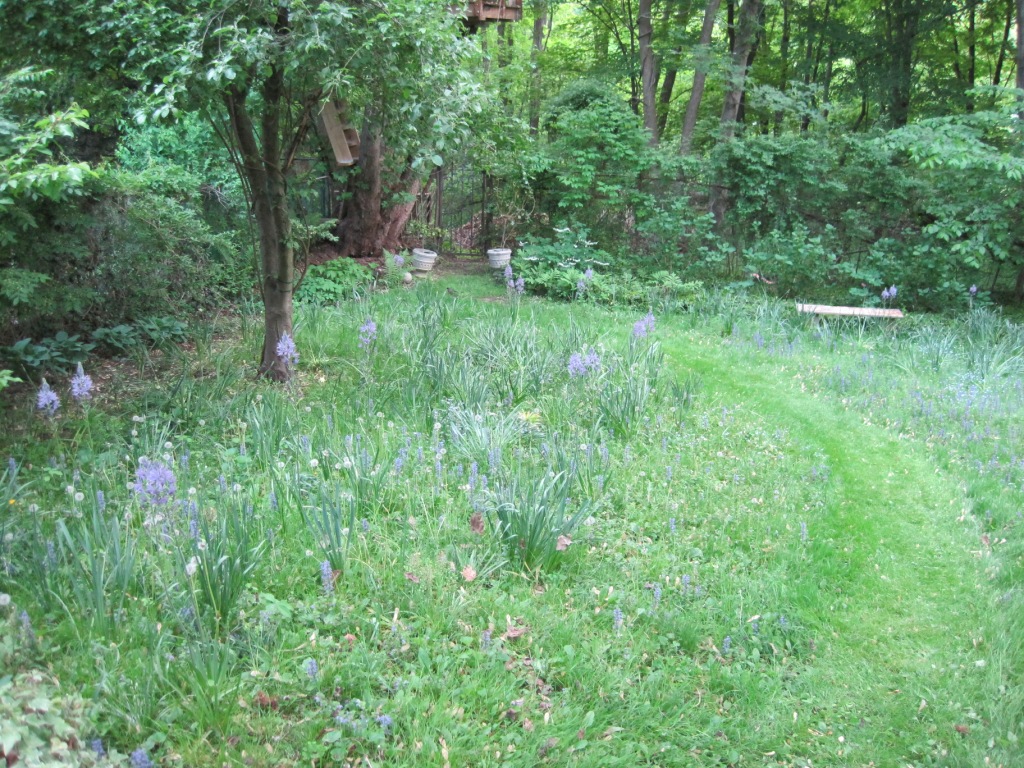
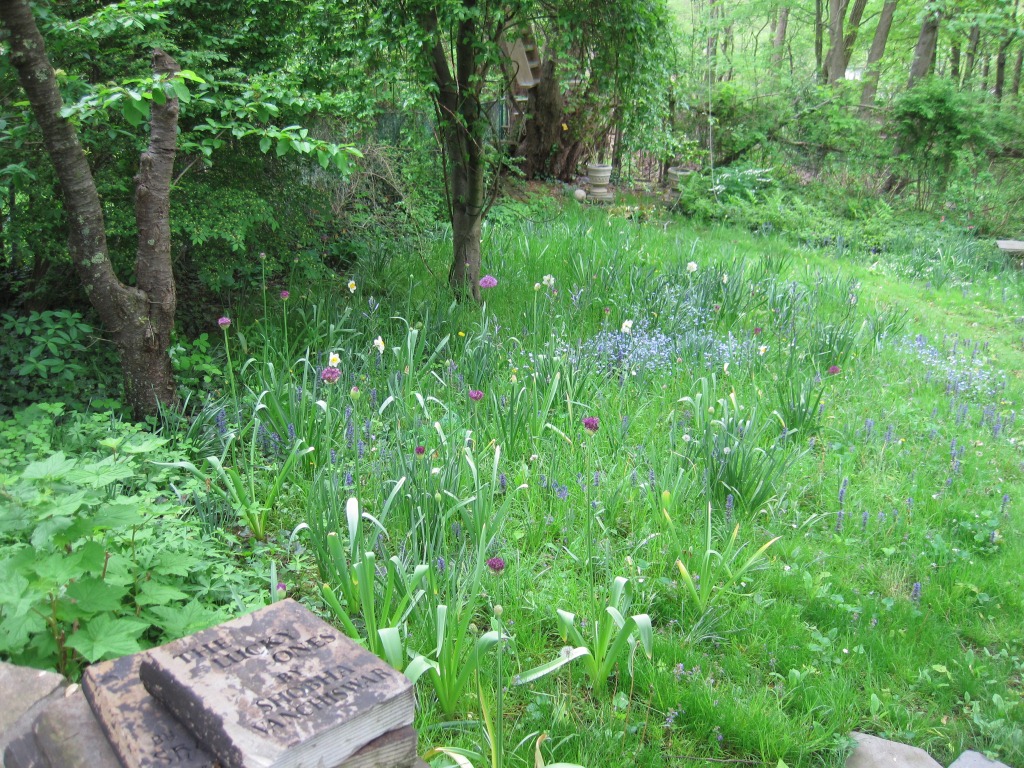
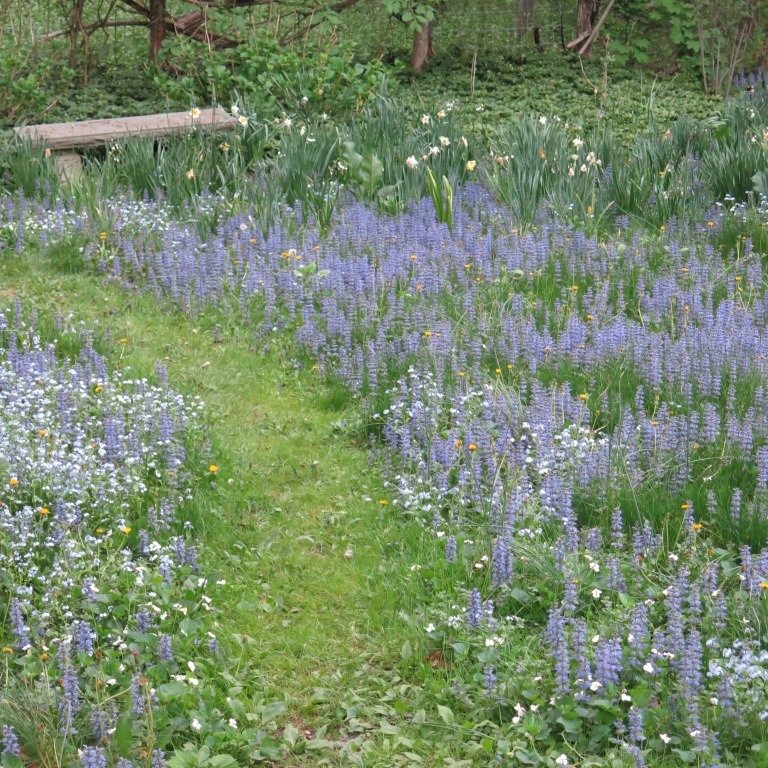
Like I mentioned, I stopped mowing the lawn and simply let it go ‘natural’.It took a few years for the lawn to give itself over to new settlers. Much slower than I’d expected but I had to see what really would grow. Turns out lots of green things. Not familiar at that time with the many native, wild plants, I had no idea what was what. But I did know that for the most part, wild plants are generally not given to big, showy blooms. If one compares a wild monarda to a cultivated variety, you will see what I mean. So apart from the happy splash of dandelion yellow and ajuga blue in spring, my meadow appeared mostly green. I wanted a little more oomph.

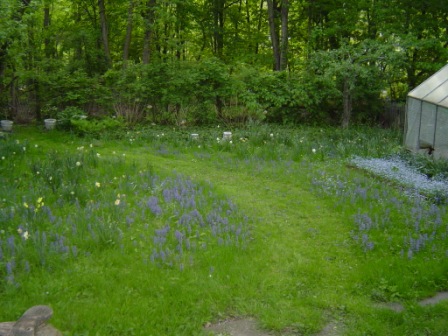
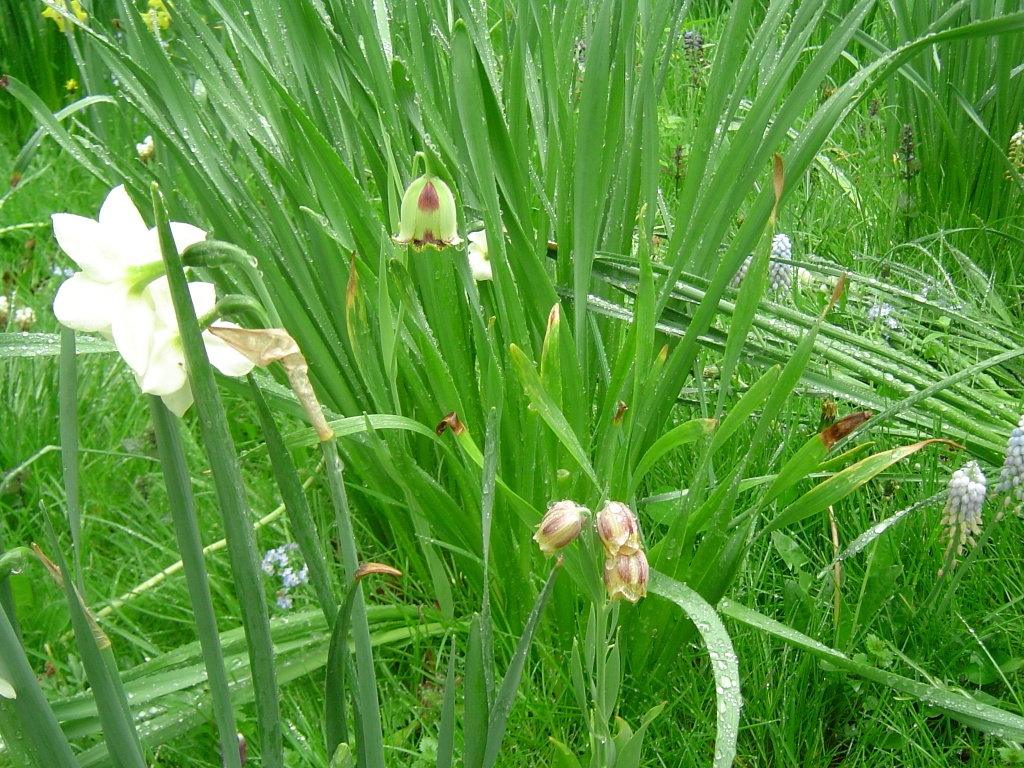
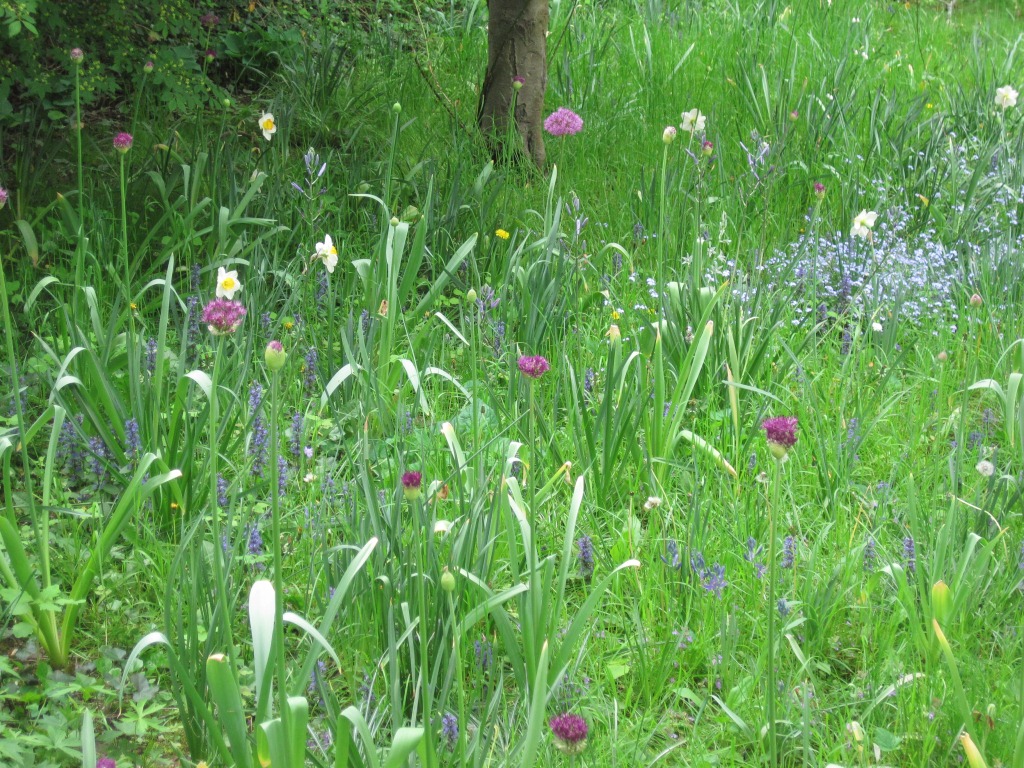
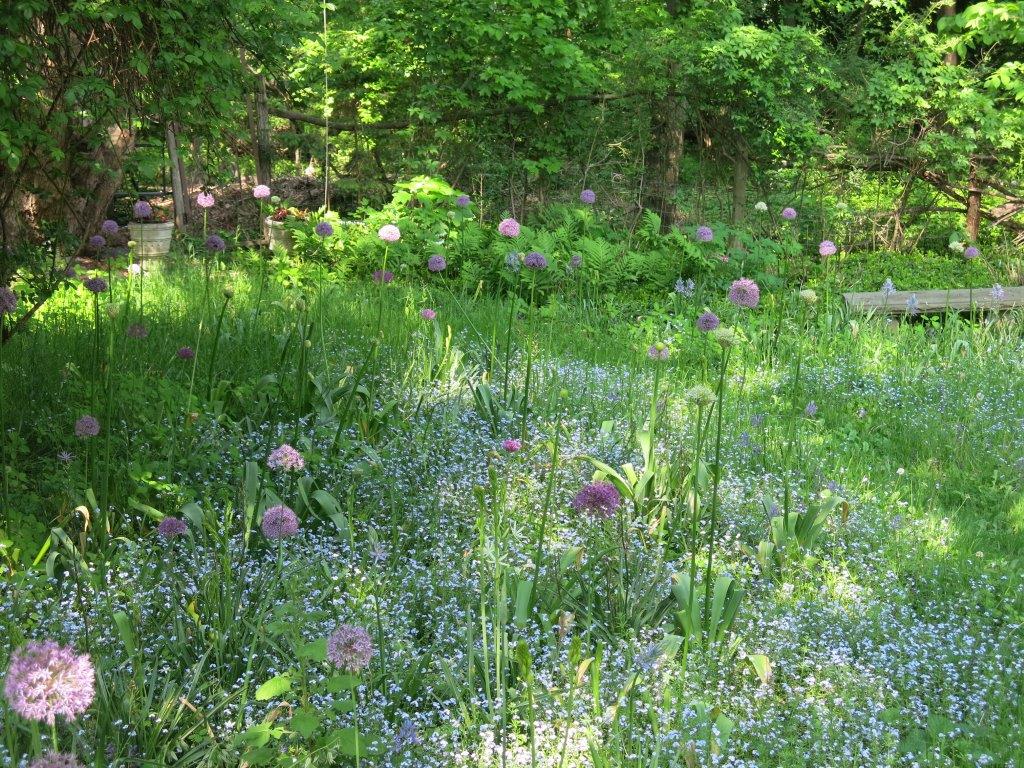
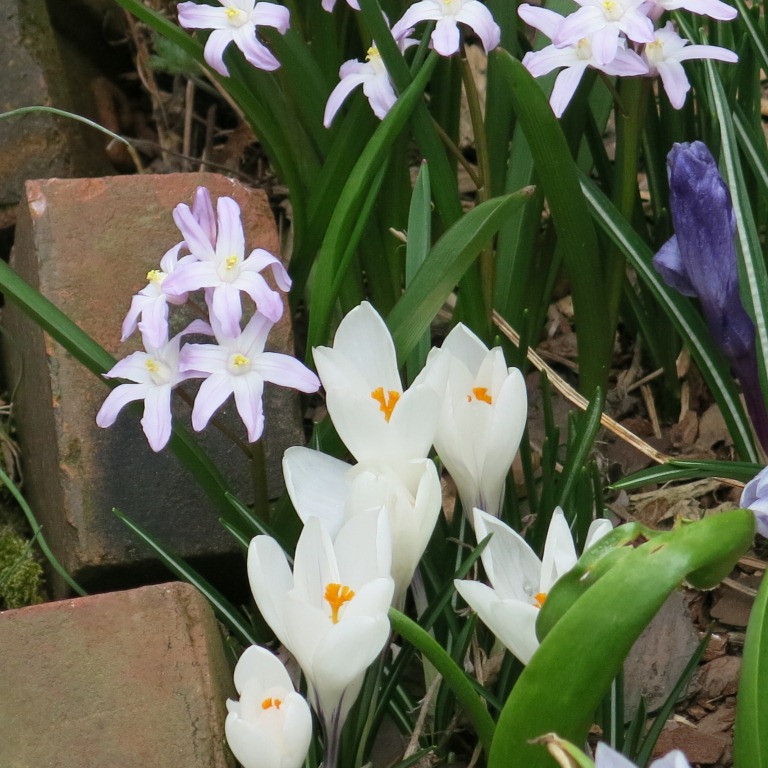
For spring color, not wanting to inadvertantly introduce herbacious plants that could upset the natural balance, I hit upon the idea of putting in bulbs. Not given to being invasive or harming the environment but instead bringing in beauty and cheer, they are a perfect choice. I started by planting hundreds of daffodils and over the years, I have added a whole host of minor bulbs such a crocus, wood hyacinths, leucojum, scilla, iris reticulata, anemones, ornithogalum (not so minor), small frittilaria along with a slew of alliums and camassia. The ajuga, mysotis and dandelions joined in quite naturally. All of spring, this part of the garden reigns supreme.

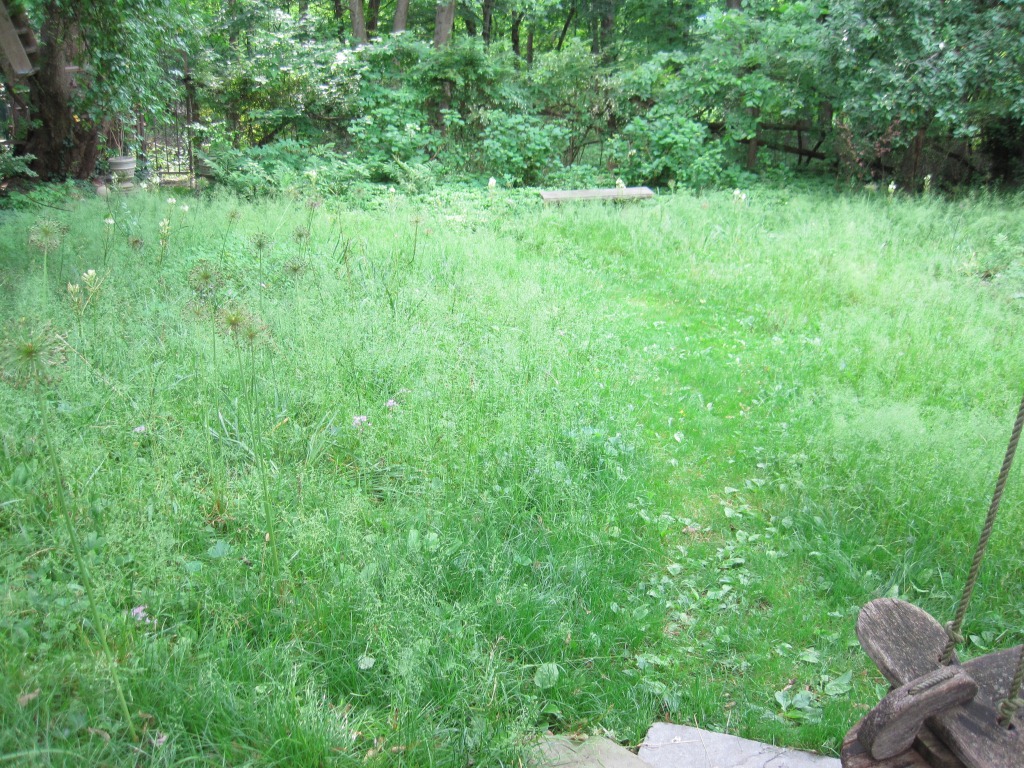
But for the rest of the growing season until the whole area gets mowed down, it looks kinda ‘meh’. And until recent years, I was gone for a good chunk of the summer so I didn’t particularly care. Out of sight, out of mind and all that. About four years ago, I started feeling a mix of guilt and responsibility to do right by the environment as well as my garden’s appearance. While the ‘meadow’ such as it is, is not harming anything and actually supports a variety of creatures, my state of inertia was losing ground.

In my mind (okay, also my heart), a meadow is like a symphony. The myriad flora and fauna make up a full orchestra. Every meadow-member has a part to play. Nature is the artistic director and conductor. She is also the composer. The gardener is the manager. The four seasons are like the movements in a piece of music. The tempo, rhythm, mood, melody, instrument voices, expressions can all be compared to how life in the meadow plays out. The slower, quieter winter movement, the fresh, eager, excited spring movement, the loud, exuberant movement of summer, and finally, the poignant, somewhat melancholic autumnal one. Yes, kind of like Vivaldi’s Four Seasons.

So you can understand my restless mind – I needed to improve my own meadow so it could play a strong, empowering symphony. It had not been allowed to perform at its fullest potential thus far. Many important sections of this orchestra were missing and so, the current concert was lackluster.
With this in mind, I began researching (three cheers for the Internet), talking to those more experienced with native plants, visiting native plant gardens like those at the NY Botanical Garden, Teatown Lake and Reservation, private properties, attending talks by the likes of William Bryant Logan and Edwina von Gaal. On road trips, I braked for meadows and investigated them. Behind the ‘researching’ hides my propensity to procrastinate. It buys time before screwing up courage and launching into big projects. I took my time.

Meadows are generally seen as large open spaces blessed with sunshine. My meadow is assigned a small space in semi-shade. The word meadow is a slight stretch. But it is too open to call it woodland. So meadow it is.

Native plants that could accept being in a suburban, somewhat obscure orchestra were sought out. They might seem unambitious but their skills and ‘sounds’ are no less commendable. I had to give them a fair audition.

Given that there were already many bulbs in place, there was no question of risking losing them by digging up the ground to plant mature native plants. Bulbs are expensive and so are mature plants. I had to source native plant plugs. Being small, plugs are easier to plant and in using them, the bulbs stood to go unscathed. Perfect solution right? Well, native plugs are not so easy to find. Then, last fall, a friend with a penchant for gardens and an interest in native wildflowers shared a source he had recently obtained. That single piece of information was received with the same enthusiasm as some of my friends demonstrate for sample sales at haute couture fashion houses

Finally, this year, I introduced a number of different plants to the meadow. Given the time pressure of my annual Garden Open Day in early May, getting these new additions in was something of a scramble. But it got done. And then I turned my attention to all the other demands of the season.

Native plants are hardier and tougher than non-natives – that gave me permission to not worry about the meadow. In the frenzy of getting the garden ready for Open Day, I failed to consider that it had not rained sufficiently and young plants need some extra TLC. By the time it occurred to me, we had already had a few super-hot days in addition to the lack of rain. And given that the meadow was now thick with growth, telling the young, new plants apart from the old, was near impossible. It was a sea of green. So I’m not really sure whether some if not all of the plugs have made it or if some decided to go dormant or if all bit the dust. I have since done some intermittent watering but it feels like closing the barn door after the animals have escaped.

Still, I’m optimistic. I suspect at least some of the plants would have pulled through. Patience is called for – I must give the meadow another full year before determining anything.

Meanwhile, I’ve been investigating meadow establishment further. Stay tuned for part II next week!
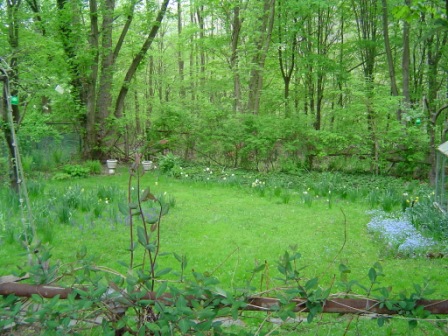
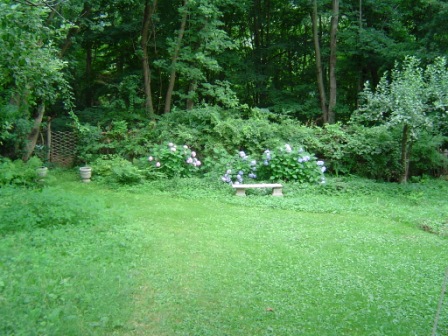
Early days. May 2005
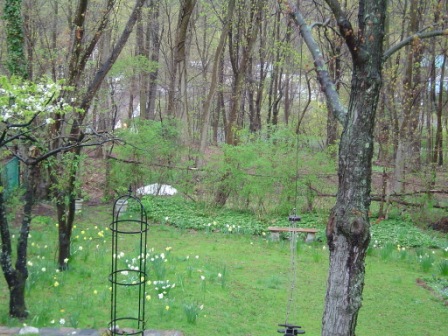
Early days. May 2005

May 20006

May 20006

June 2006

June 2006

May 2007

May 2007

June 2007

June 2007

May 2009

May 2009

May 2010

May 2010

May 2012

May 2012

Up close May 2012

Up close
May 2012

June 2012
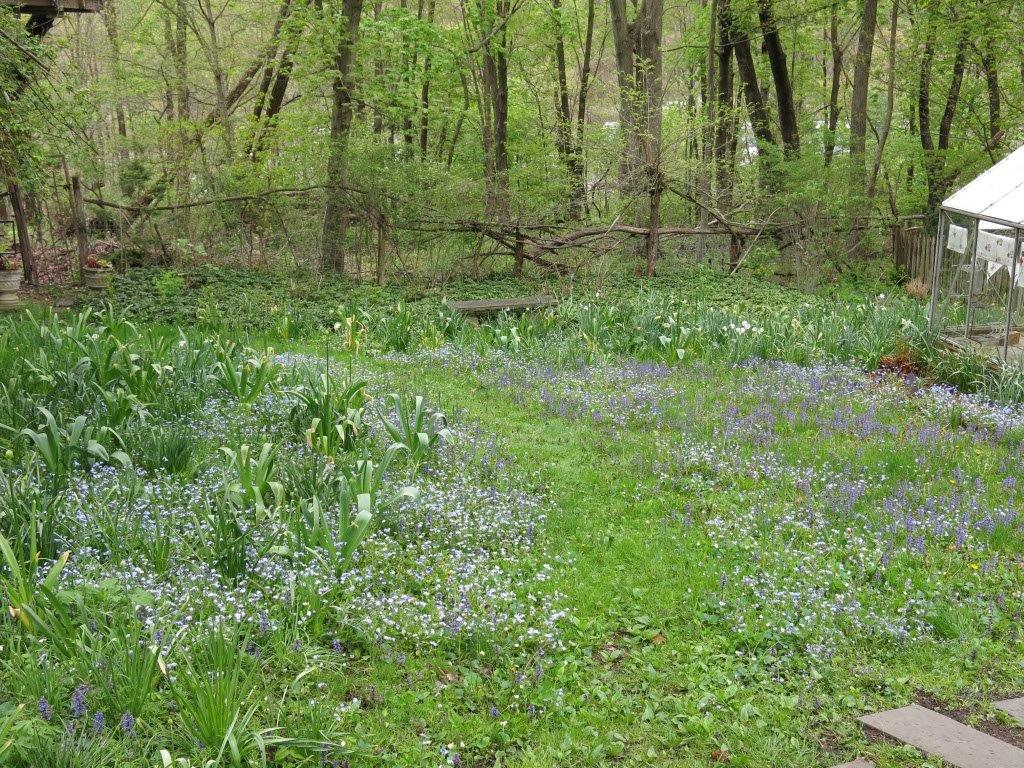
June 2012

May 2016

May 2016

Late May 2016

Late May 2016

(c) 2016 Shobha Vanchiswar

[do_widget “Blog Subscriptions (Jetpack)”]

Hugelkultur Is Happening!

If you haven’t as yet heard of hugelkultur, you will soon enough. Its time has come. Which is ironic when you consider that the concept is hundreds of years old. When I learned of it, my first thought was that this harked back to agricultural practices when nothing was allowed to go to waste. Environmentally sound, sustainable and actually quite intuitive, hugelkultur makes so much sense. You’ll see.

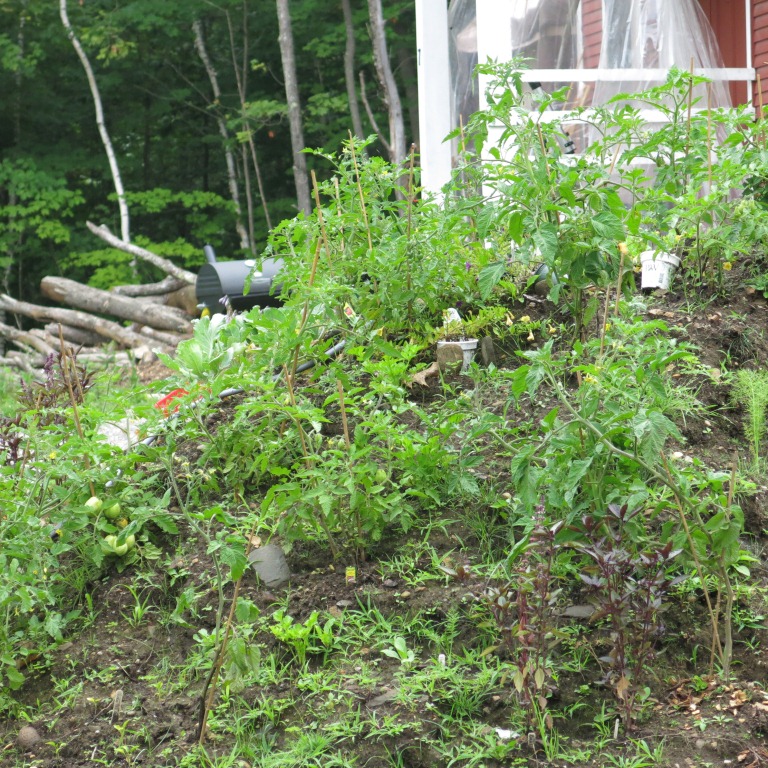
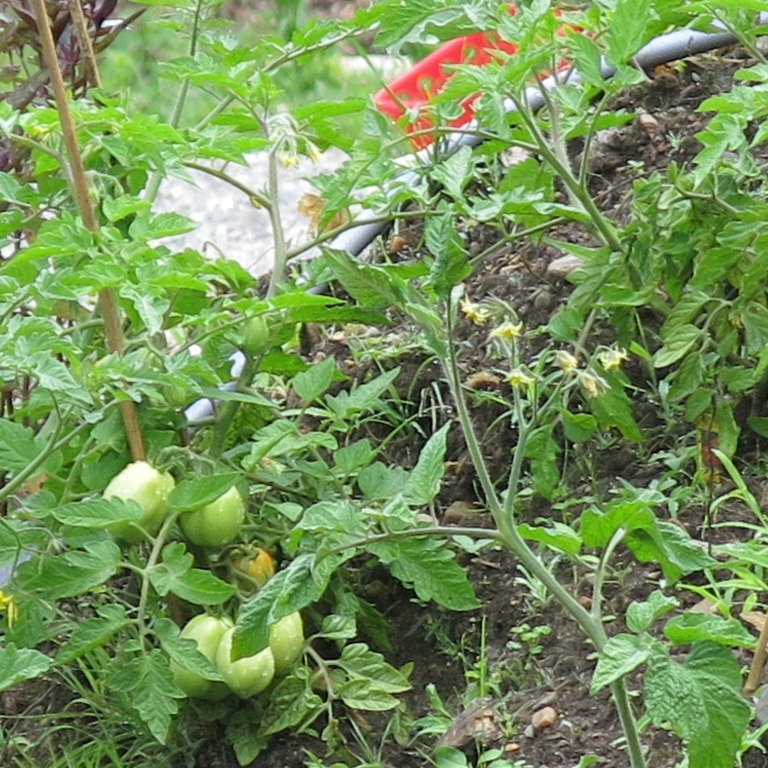
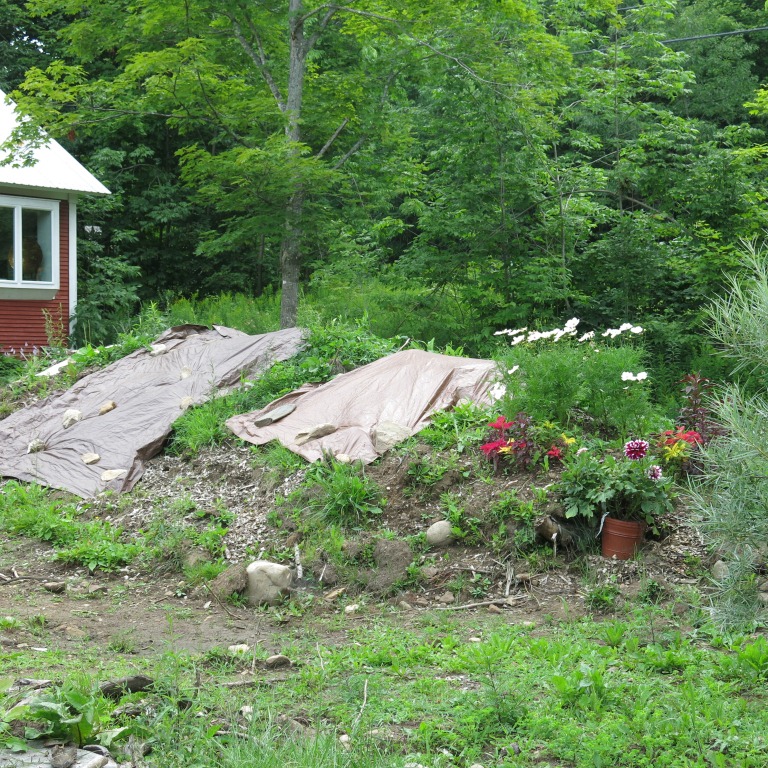
The very first time I saw hugelkultur being implemented was on a property in southern Vermont. What I saw looked, frankly, a bit appalling. The house and its corner lot looked shabby which in itself was not awful – the kind of place I assumed the owners were either physically or financially unable to maintain it. It happens. But what looked to me as deliberately messy was the front right quadrant. It had these big compost heaps on top of which grew haphazardly some tomato and other plants. There appeared to be no attempt to have it look tidy or purposeful. I took pictures of this because I loved how plants will grow wherever they can. It was a couple of years later that I read about hugelkultur and then recalled this property. It was not the best example but clearly the gardeners knew what they were doing. Just not very attractively. But, who am I to judge? I’m the one with the wild ‘meadow’ after all.

Hügelkultur is a German word meaning mound culture or hill culture. It was practiced in German and Eastern European societies for hundreds of years.
It is a process of composting in place using raised beds built in layers of wood debris and other compostable plant biomass. The method improves soil fertility, water retention, keeps the soil warm, supports microbial life that in turn enrich the soil, Traditionally, these beds are mounds or hills. The beds can however be built up like more traditional square or rectangle raised beds. A lasagna of sorts!

At a time when we are doing our best to recycle, reuse and reduce, hugelkultur is a godsend. It is in essence a permaculture technique and the beds are raised by layering organic material. Starting with the roughest material like rotting logs, topped with layers of thin branches followed by twigs and such, then grass clippings and other compostable garden waste, and finally, a layer of top soil. As the lower levels in the bed break down, they create most suitable environments for microbes necessary for healthy soil. This in turn permits better moisture retention and slow release of nutrients.

As the materials break down, there is some settling but by adding leaf mould and compost regularly, an ideal height can be maintained.

Instead of bagging the leaves and twigs for curbside pick-up, the materials can be put to use in the garden itself. No chipping or shredding needed.
As the wood decays gradually, it becomes a constant source of nutrients for the plants. In large beds, the nutrient output could be sustained for as long as twenty years. As the composting occurs, the heat generated extends the growing season.
When the logs and branches break down, there is an increase in soil areation. Hence, this method requires no tilling or turning over of the soil.
Wood can act like sponge. Rainwater is stored in the logs and branches and released during drier periods. Apparently, after the first year, with the exception of droughts, one may never need to water again.
Hugel beds also sequester carbon in the soil.
In essence, one can start such a bed by simply starting by building the layers from the ground up on the selected site. However, it is recommended that if you are starting on sod, then cut out the sod, dig in a trench with a depth of about a foot and then place the logs. Add the thin branches, the twigs and then the cut out layer of sod face down, followed by the other materials. A bed with steep slopes is the most recommended. This increases the surface area for planting and also avoids compaction from increased pressure over time. The steep sides means higher height and so easy harvesting. Greater the mass, greater the water retention.
Types of tree wood make a difference. Hardwoods are best as they decompose slowly but softwoods can also be used. A mix is ideal.
Woods that work best: Alders, apple, aspen, birch, cottonwood, maple, oak, poplar, willow (make sure it is dead or it will sprout).
Consider woods that are naturally anti-fungal, decay resistant or produce saps and tannins only if they are already well rotted. These are cedars, juniper, yew, eucalyptus, black cherry, camphor wood, osage orange, pine/fir/spruce.

Avoid altogether – Black locust (will not decompose), black walnut (juglone toxin), old growth redwood (heartwood will not decompose and redwood compost can prevent seed germination).

At this time, my small garden has no spot for experimenting with hugelkultur. But, I’m hoping one or more of you will give it a try. Please tell me if have already or are ready to try this method. I’m so excited about hugelkultur – it could be a game changer in our efforts to restore and maintain a healthy, ecologically sound environment.

Don’t forget – you can follow me on Instagram seedsofdesignllc

http://reyr6216d262cozsk3t8r171b6y.wpengine.netdna-cdn.com/wp-content/uploads/2014/09/sepp-fb-h-620x350.jpg

http://cdn.instructables.com/F0Z/HNK4/H01N60NH/F0ZHNK4H01N60NH.MEDIUM.jpg

http://extension.wsu.edu/clallam/wp-content/uploads/sites/25/2015/03/Hugelkultur-e1428518706183-198x198.jpg

The lot in Vermont I

The lot in Vermont I

Lot in Vermont II

Lot in Vermont II

Lot in Vermont III

Lot in Vermont III

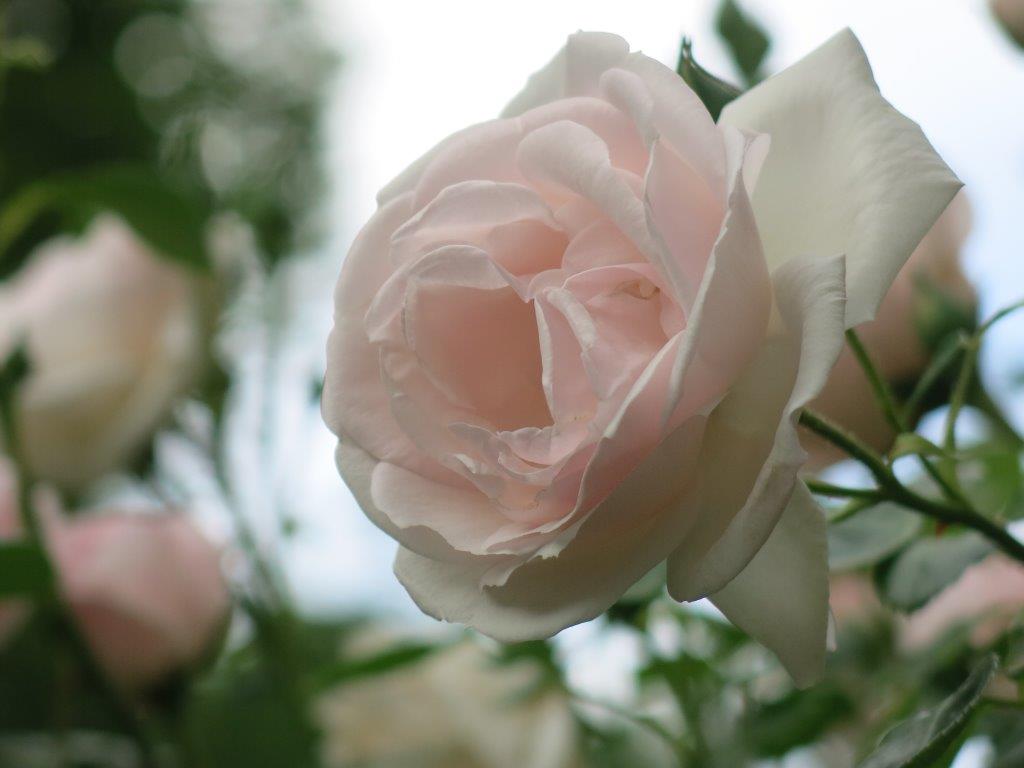
Bonus picture! A New Dawn rose in my garden.

Bonus picture! A New Dawn rose in my garden.

(c) 2016 Shobha Vanchiswar

[do_widget “Blog Subscriptions (Jetpack)”]


Growing Peace

You must be the change you wish to see in the world -Mahatma Gandhi
I had been thinking of a very different topic to write this week but, the tragedy in Orlando has channeled all thoughts to what we can do to heal our hearts and become whole again. This being a space for garden related matters, I don’t usually speak on other topics but this horrific event affects us all. It must affect us. I refuse to believe that mass shootings and other expressions of hate and intolerance have become the new normal.
And yes, gardens do indeed have a positive role to play.

We appear to have lost our way in this busy world. Somewhere along the line, we have become disconnected with each other. As much as we have more ways than ever to stay in contact, we are actually more distant than ever before. Is it really more satisfying to communicate via texts and tweets than taking the time to talk in person? Is FaceTime preferable to face-to-face time? Admittedly, these digital, electronic modes of communications are marvels and they certainly have a place in the big scheme. However, in no way do they replace the effectiveness of personal contact.

One could very well derive satisfaction from having a vast numbers of ‘friends’ and ‘followers’. But what does that really mean? Being a friend or a follower has responsibilities in both the real and digital world. What we say or do has impact. Does one not need to actually get to know people well before calling them friends? How do we become followers so readily and easily when we know nothing much about those we choose to follow? I seriously believe we have permitted ourselves to dull our innate instincts and social cues by the virtual ‘community’ that we have created.

Think about this hypothetical situation – you send a text or email to a friend asking how she is doing. She replies she is fine. And your day goes on its course. Later you hear that said friend has moved and you, while surprised, think nothing much of it. Weeks or more go by before you learn that your friend now resides in a halfway house and has lost custody of her kids. What? But her texts sounded fine! You feel terrible but how could you have known! We’re all guilty of similar lapses on our part – when we failed to do better.

So I ask, would it have been different if you had actually met? Looking into her eyes, reading her face might have indicated something was amiss. Her physical appearance could have said all was not well. Her tone of voice, her slowness to smile, the state of her hair or nails might have alerted you. Noting such details is only possible when we actually see the person. If we cannot make the effort to know the true state of our real friends, how then can we possibly gauge the state of the world around us?

It’s kind of like checking the health of the garden from the kitchen window. Until you go out into the garden and walk the paths around beds and borders, you cannot see the weeds, the pest damage, the growing buds, the emerging fruit or smell the roses. All might look well from afar but only on close examination can the ‘dis-ease‘ be observed.

I am convinced that while it can be daunting for any one of us to solve a crisis, if each of us just did our small part in tending to our neighbors, neighborhoods and participating as a community on a daily basis, we’d be making a real difference in the big picture. If we talk to our neighbors regularly, gather with family and friends often, volunteer weekly in community events, then we’d have a finger on the pulse of our surroundings. Any type of change will not only be noted but appropriate action can be taken as soon as possible. In the same token, we can share in each others good fortune. To celebrate the joys of those we care about enriches everybody.

While we cannot presume to remove or solve all the problems plaguing the world, there is a great deal to be achieved by our own small endeavors to make the world more beautiful and peaceful. If we want kindness, love, harmony and laughter in the world, then lets start by living more deliberately as kind, loving people. Live and let live.

While you’re at it, grow gardens of peace. An organically cultivated space free of toxic pesticides and chemical fertilizers, rich in flora and fauna, brimming with beauty and life affirming bounty can only improve the world. These gardens should not be restricted to our own private retreats. Imagine such thriving loveliness in our parks, playgrounds, traffic islands, median strips on highways, once abandoned land, anywhere that could use a dose of plant power. Gardens draw people to itself. They are meeting grounds. Just as it has been proven that by addressing the ‘broken window’ syndrome to decrease the crime in a neighborhood, making gardens in otherwise neglected areas serve to uplift a community. As communities get healthier and happier, the world gets healthier and happier. But, it must start with you and me.

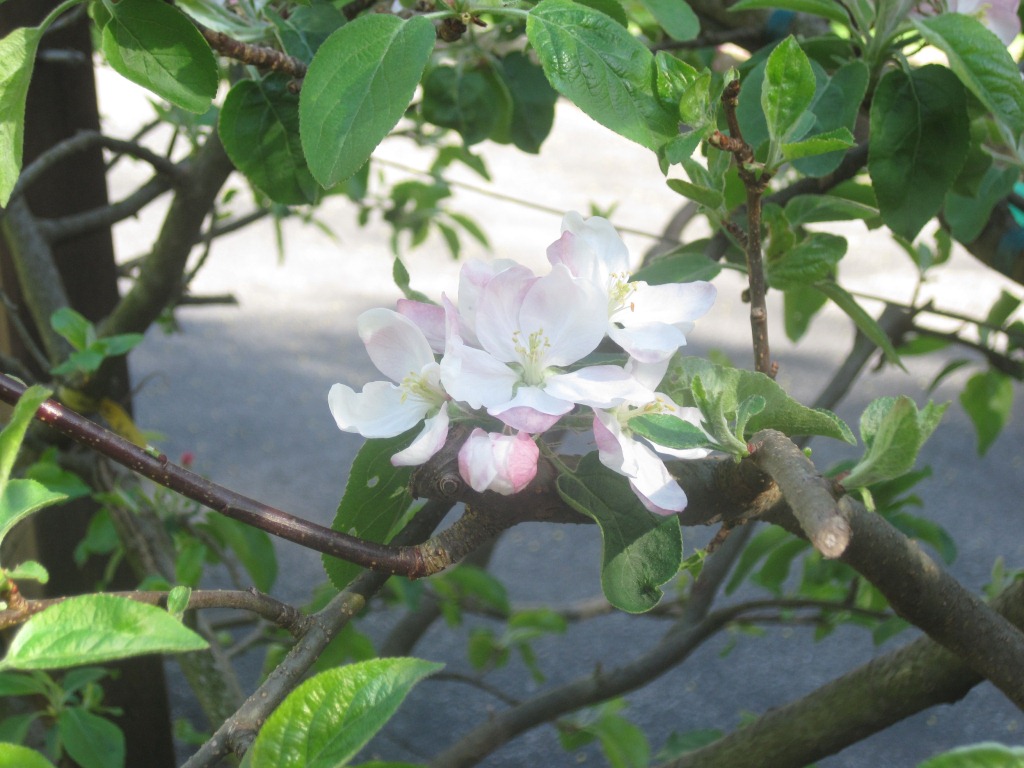
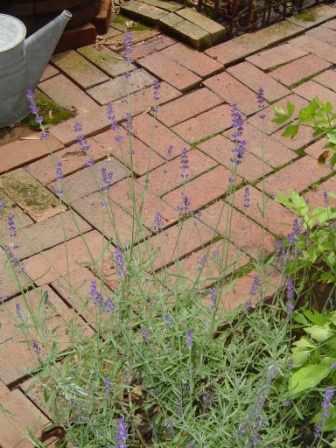
Note: I’ve included images of the five flowers that are symbols of peace. My garden grows four of them. I’m now looking for white poppies to plant …

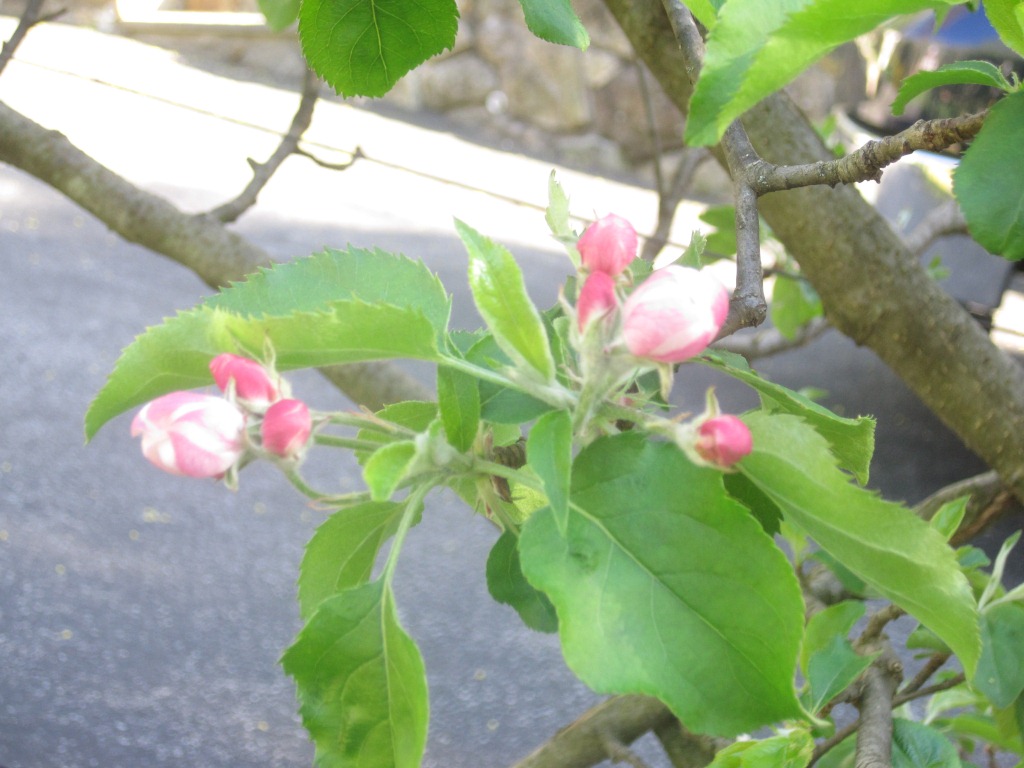
Apple Blossom

Apple Blossom

IMG_8720

Basil in pots

Basil in pots

Lavender

Lavender

DSC04931

White Poppy

Violets

(c) 2016 Shobha Vanchiswar

[do_widget “Blog Subscriptions (Jetpack)”]


Warming Up To April

Apart from that best forgotten April Fool’s Day of 70 degree weather, thus far this month, the days have been very much like winter. Snow, sleet, bone chilling winds and temperatures below freezing. I was not pleased but did my best to maintain a good attitude. I am chomping at the bit to get going in the garden.

Since it was too cold to bring plants out of the greenhouse or to get the young vegetable plugs into the potager, my focus has been on the three ‘R’s. Repairing, replacing and repositioning. Considering that the winter was relatively mild, there is surprisingly plenty to do to re-establish order. Admittedly, things age and then finally one notices that a structure needs urgent attention. The roping on the ‘fence’ that borders the front of the property had to be replaced and the posts straightened up. Easy enough.
(On the subject of fences, my neighbor’s fence that marks one side of the meadow has totally fallen apart. I’m hoping desperately that it is taken care of very soon. With equanimity and understanding.)

However, the stairs leading to the garden from the side porch were in bad shape. The whole structure had to be replaced. Much more work but this time, we were able to match the wood to the red cedar of the espalier and front fence posts as well as the new pergola in the back. Neither of those existed when the stairs were put in soon after we bought the house. At that time, we knew very little about thinking ahead. The effort to make it all cohesive has been successful – there is nothing to jar the eye and as a result, the plantings can take center stage.
This past weekend, the task got completed. The resident mechanical engineer came through with flying colors. I really am grateful.

There are still other areas to attend. Such as remedy the erosion in the area leading to the meadow. The water runs off here after heavy rainstorms and carries away soil. Similarly, paving stones leading to the greenhouse need to be reset. Water is such a powerful creator and destroyer.

The hold-up in garden work has also permitted me to plan more for the pop-up shop I intend to have on May 7, As this was an idea that came to me only recently, I have plenty of details to work out. But, I’m excited. It’ll be so much fun to share some of my garden inspired creations. Make sure you visit!

Taking advantage of Sunday’s rise in temperature, I got the potager and large pots planted up. It was such an unadulterated pleasure to finally feel the soil in my hands. This week promises to be more seasonal so, I expect to do more clean up, get the peony supports in place, start moving plants out of the greenhouse and generally spruce up the garden.

I have yet to assess how all the perennials have fared through the winter. The delay in warming up has slowed the greening of the garden. But, already it is obvious that four of the espalier trees need to be replaced. Fortunately, three of those were some of last year’s introductions so they are young enough to be easily removed. And, as if to comfort me and keep my spirits up, the ‘minor’ bulbs continue to bravely make their entrance. Taking over from the crocuses, the Muscari and Anemone blanda (grape hyacinths and Grecian windflowers) are now in bloom. The true hyacinths have also started flowering and perfuming the air. Pure heaven. And on Sunday, I spied the first of the early-blooming tulips. Makes me so happy.

With less than a month to Open Day, the pace of getting the chores done is frenzied. I’m keeping fingers tightly crossed that the return to normal April conditions continues and the plants look magnificent. Much rain is predicted this week so those showers had better deliver on the May flowers. Or else ….

Note: This should be fascinating!

Please come to the upcoming Rocky Hills Environmental Lecture by Edwina von Gal

Turning PRFCT: The Evolution and Adventures
of a Rational Naturalist

Wednesday, April 27, at 7:30 p.m.
Chappaqua Library
195 South Greeley Avenue
Chappaqua, NY

Admission free. No registration is required.

IMG_9032

IMG_1223

IMG_1227

IMG_1229

IMG_9033


(c) 2016 Shobha Vanchiswar

[do_widget “Blog Subscriptions (Jetpack)”]
Spring Break!

Spring arrived bearing snow this year. While I listened to forecasts that couldn’t pinpoint just how much snow to expect, I found myself crossing my fingers and fervently sending out messages to the universe to please, please spare us any real damage. Methinks I was heard. The crocuses, hellebores, snowdrops and scillas had been blooming for a week or so already but, the daffodils had just begun to unfold their sunny petals and I was concerned that they would be crushed. Thankfully, the flowers were spared. For a brief period the snow made everything white and pretty but in no time at all it had all melted away. Spring was once again underway.

But it got me thinking about how we approach life. So much time is spent in anticipating and planning that we don’t pause long enough to simply be. All winter long we look forward to the return of life in the garden. And then, when it starts to bloom, we get caught up in the chores and to-dos to get ready for summer. There ought to be a time we allow ourselves to be completely present in the garden. To notice the details, appreciate the beauty, get to know intimately the plants we nurture. How else could we learn to value what we have?

The same could be said of how we miss out on time with our children and other loved ones. We are so focused on doing what we think they need, that we fail to spend time with them doing nothing in particular. It is in that last ‘activity’ that we are given the opportunity to truly acquaint ourselves with our own. How often we have surprised ourselves by having a proper conversation when ‘trapped’ in a car! Or when sitting down all together for a meal where no electronic devices are permitted.

Young children are good at doing nothing and still observe and learn about their surroundings. While it might appear that they are unoccupied, they are in truth filling up on information about their world. They are living life. We could do well by giving ourselves such a break in our over-scheduled days.

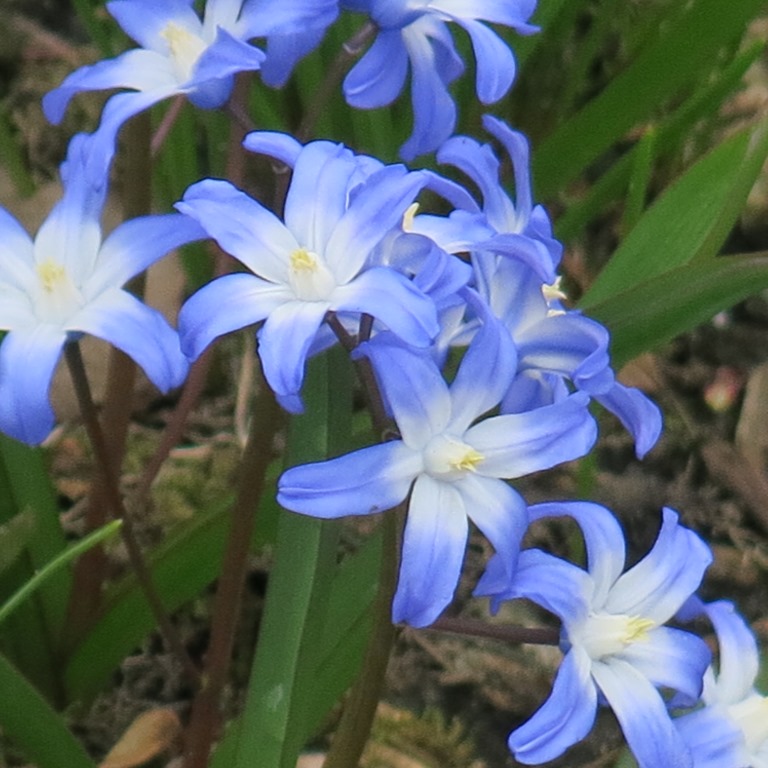
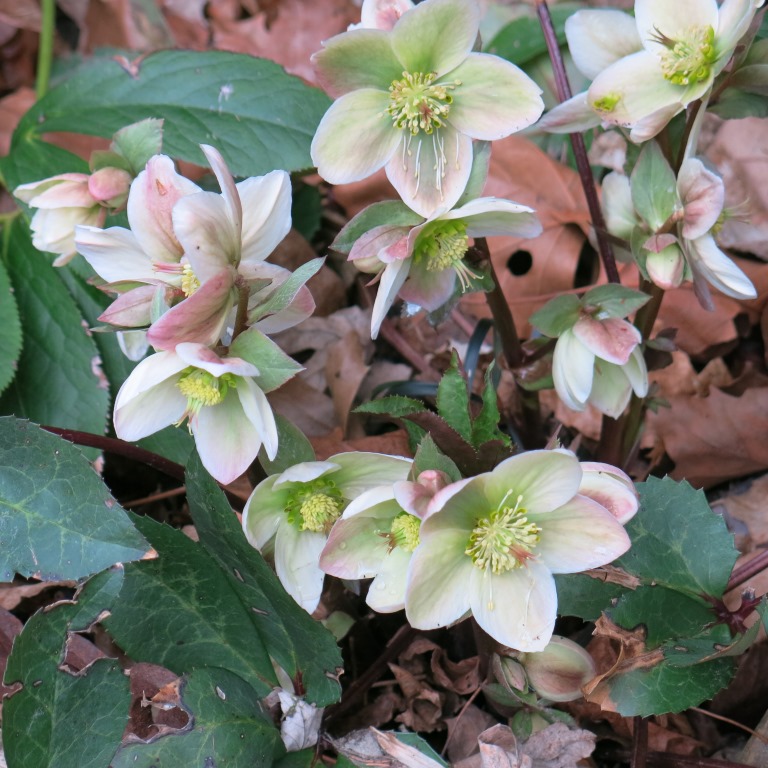
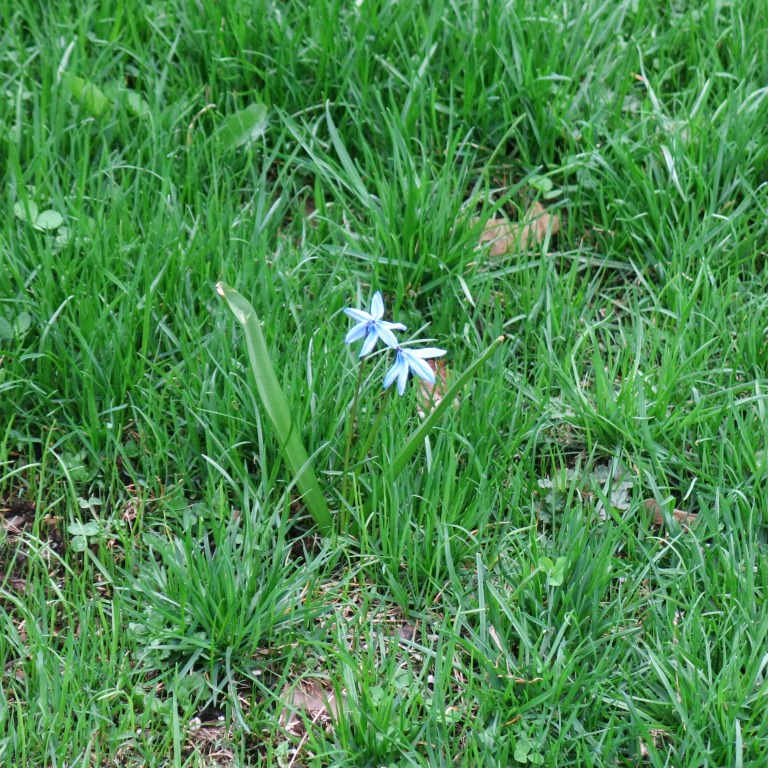
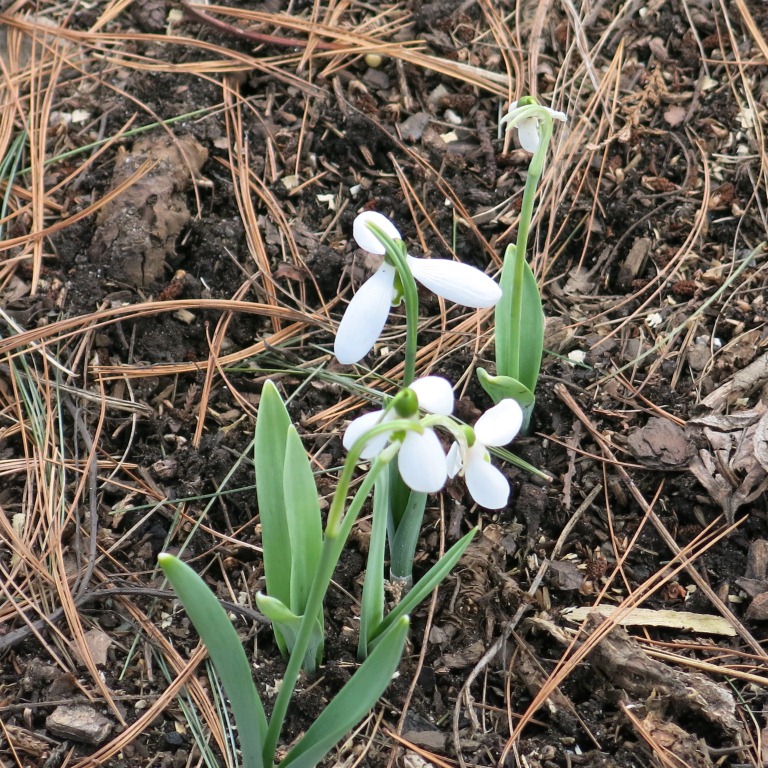
Because there was so much confusion about how much snow we might get, I was afraid all might be lost with the early bulbs. So I decided to go out and take photos of whatever was in bloom. Once I started photographing, I realized how much I neglect to notice at this time of year. The yellow crocuses bloom before the others. The wood hyacinths start two weeks after the crocuses – I’m usually so occupied with my spring chores that I notice these timid bulbs only when they are in full form. Yet, their slow progress is in itself a gentle reminder to savor every moment. The muscari are close to follow and their tight buds resemble diminutive, deep mauve wands. Soon they will reveal their lighter hued tiny bells. At this time, the roses are putting out new leaves – shiny and bronze. The hellebores have peaked and some are even bold enough to tilt their faces upwards. Their pastel colored flowers contrast strikingly with the rich jewel tones of the crocus. The pale yellow petals of the early daffodils glow softly in the sunlight. And I wonder how I might capture that luminescence in watercolor. So ethereal.

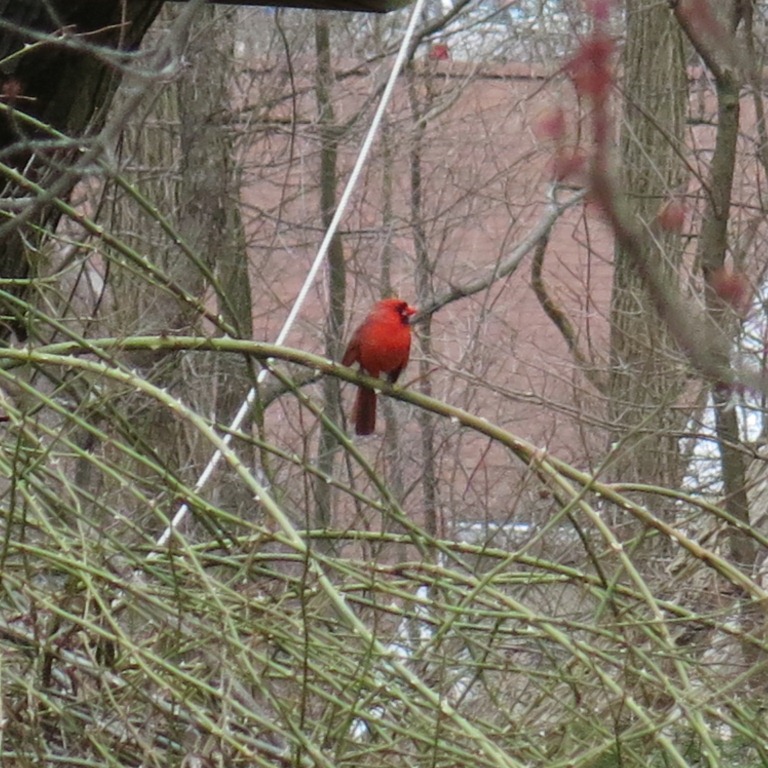
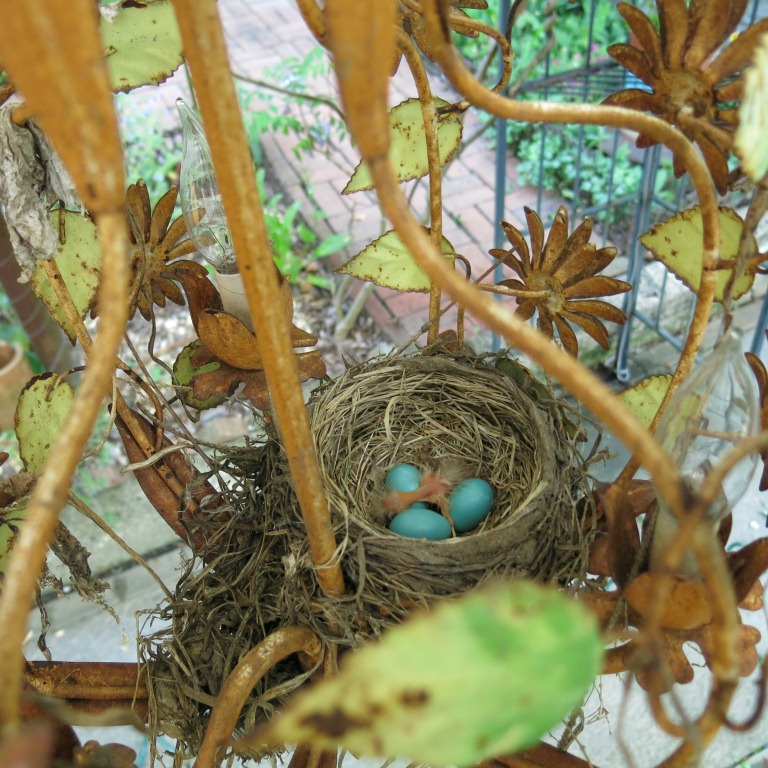
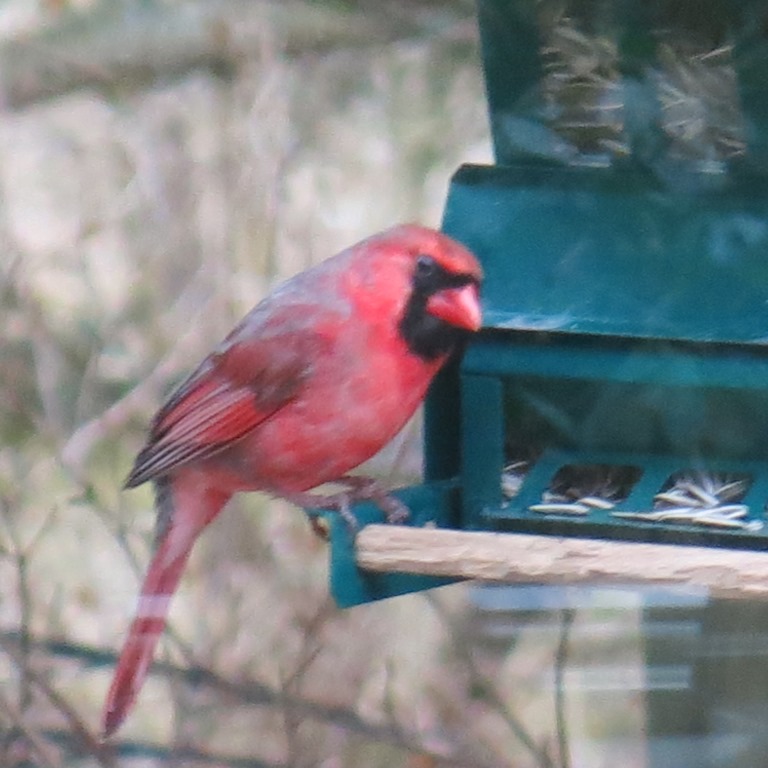
All the while, all manner of birds are making sorties to determine where they might set up their nests. I watch a pair of cardinals foraging in the meadow as though ensuring the food supply they will need once they have babies to feed. Their nest is clearly going to be amidst the brambly limbs of the Paul’s Himalayan rose that covers the very old apple tree in the meadow. This is a favorite amongst other birds as well. It seems the blue jays have elected higher quarters. I see them perched on the sugar maple.

Finally, I come back indoors to attend to other matters. The clock says I was away for a whole hour and that comes as a real surprise. I’d been so immersed in the goings on of the garden, that I’d shed all other thoughts from my mind. No wonder I felt so relaxed and high in spirit. I had taken a wonderful, life affirming break.

As I write this post, news of the terror attack in Belgium is flooding the airwaves. Another reminder that life is ephemeral. Here today, gone tomorrow. So this week, I’m taking an honest spring break. I’m going to enjoy this season of rebirth and renewal. The chores, and there are so many, will wait. I want to remember my todays.

Before I let you get to some lovely spring images below, here are some announcements:

Correction! My garden’s Open Day is now May 7. 10:00 am to 4:00 pm.

This week, I have art work on exhibit at the Phyllis Merriman Gallery in NYC. Do take a look if you can!

I have posted my most recent visit with the HIV children of Mukta Jeevan. I know you will be interested in reading on their progress. Click Girls Just Want To Have Fun!

IMG_5130

IMG_5133

IMG_5126

IMG_5143

IMG_5148

IMG_1563

IMG_1711

IMG_1733

IMG_1608

(c) 2016 Shobha Vanchiswar

[do_widget “Blog Subscriptions (Jetpack)”]


Nesting Instincts. Enlightened Gardening #3.

IMG_4073

Awwww! Right?!

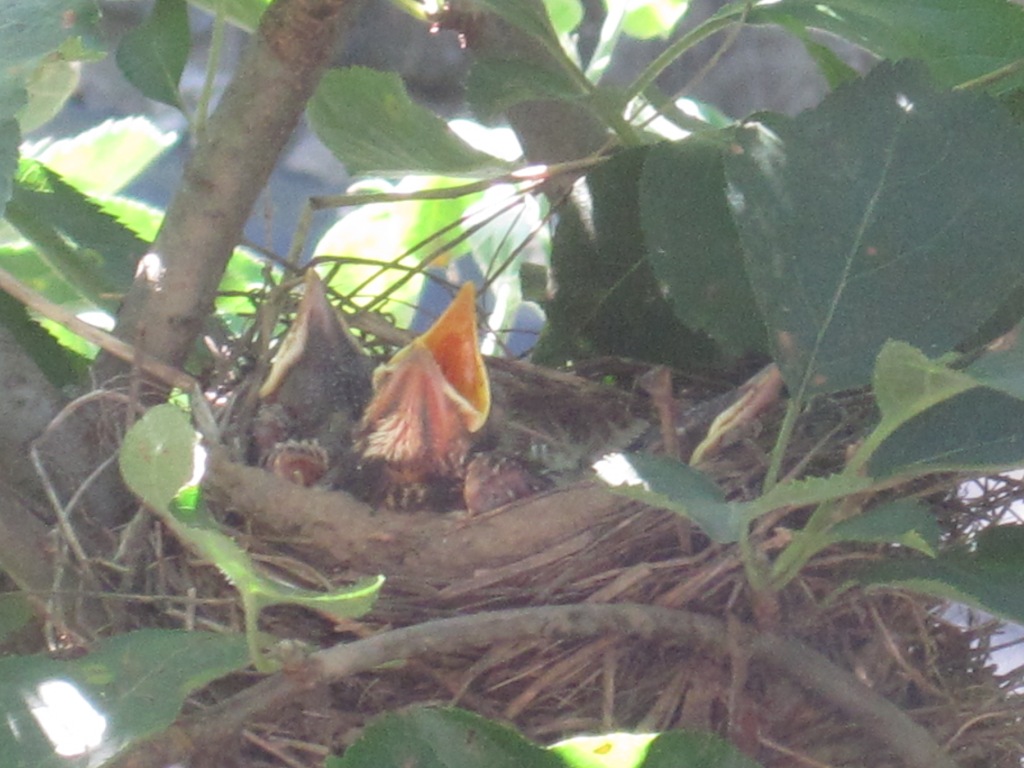
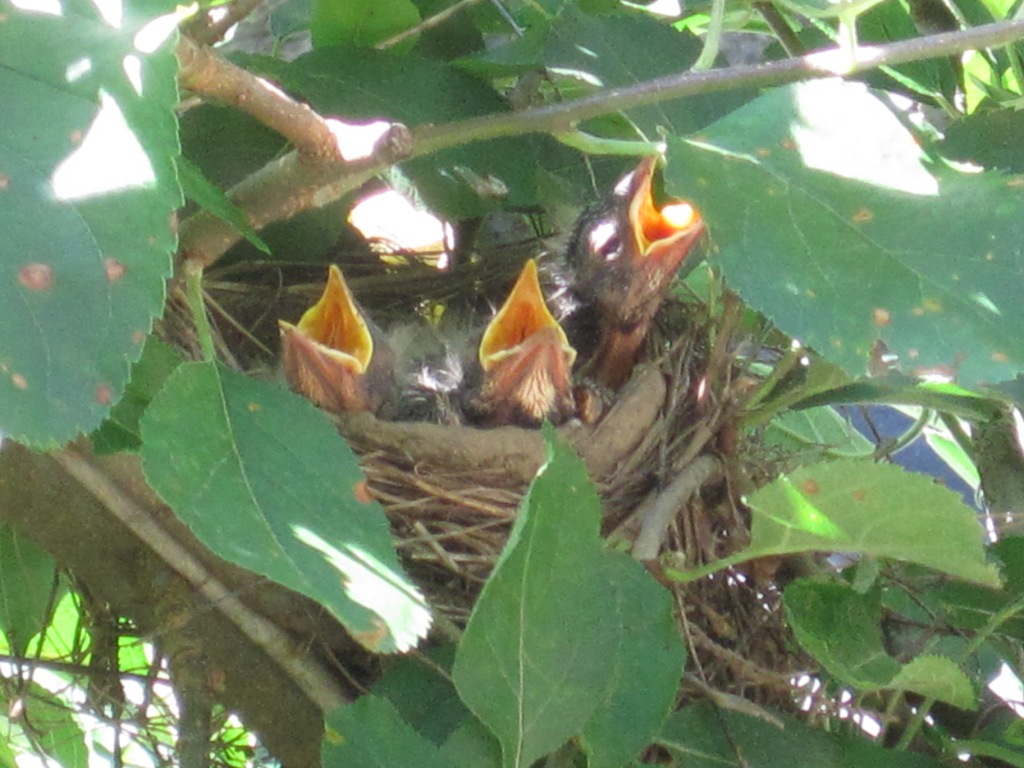
Nothing like the sight of babies of any species to turn us into mush. It simply cannot be helped. I never tire of seeing the homes the assorted garden creatures make. Bird nests are of course the most obvious. But solid looking adobe-like bee hives, papery nests of wasps, the large, messily put together squirrel abodes, the perfectly spherical beads of butterfly eggs on leaves of select plant, the cottony casings through which are visible the growing baby spiders are all the result of parents no less dedicated or anxious than we humans. In the role of parent, across genus and species, we can understand each other with total clarity and empathy. Is that not marvelous in itself?

A healthy garden will support all sorts of beneficial creatures. Any gardener worth her salt will do everything in her power to do right by her garden. Which brings us to part 3 of our goal to creating gardens with a conscience. Enlightened Gardening. Given all that we now know about the delicate balance in Nature, our role in impacting the environment and, how each living thing is connected to every other, it becomes imperative and urgent to do our part and do it well.

Imagine entering a garden that is lush with flowers, neatly clipped hedges. Even some clever topiary. Mature trees. Green lawns. Exquisite statuary. Sounds lovely so far? But now notice the quiet. No hum or buzz or shriek or trill or hurried rustle. Dead silence. Begins to feel strange? Then notice the absence of all animal life. No sign of movement but for a passing wind. Nothing flitting, flying, scurrying or hopping. I can already sense my panic. Like a child in an Halloween haunted house. Something bad is about to happen!

And that is what animals bring to our gardens, our world. Not only do they perform basic necessaries like pollination and pest control but they bring in the full spectrum of life itself. We could not function without them. Our spirit would be lost.

So, starting with including indigenous plants, a garden must offer a safe haven for beneficial creatures. Thickets and brambly shrubs for certain types of bird nests and other insects to find shelter and avoid discovery by their predators, Trees for other birds and squirrels. Discrete piles of fallen branches and upturned pots to give safe harbor to toads and garden snakes. Bird houses, nesting boxes, bat houses, bundles of narrow, hollow cylinders of wood or bamboo to encourage bees to take up residence.

Just like humans, other creatures also look for the ‘right’ neighborhoods. If you’ve ever watched birds check out possible nest building sites or houses already in place, you’ll know how carefully they consider the options. Safety, privacy, availability and access to food, light and wind exposure are factors uppermost on every animals mind. Sound familiar?!

It is in the interest of all concerned parties that the gardener does her bit to create the appropriate environments for the valued creatures. If we want them to grace us with their presence, then we must do the needful. Apart from a choice of housing locations, there must be available water and food. A water-bath, a fountain or a pond will suffice. Appropriate and diverse plants for food. Birds are good at scouting out where to get bugs and worms as well. If the garden is organic, then the food and water will be naturally clean. For us and for our fellow residents.
In very early spring, I put up a ‘nesting wreath’. A bunch of grapevine clippings are woven into a circle. To this I loosely attach natural fibres like cotton, jute or wool, feathers, twigs, hair, ribbons of colorful paper, dried flowers and leaves, moss and such. A little reservoir of nest building supplies to encourage the avians.

We provide a healthy place for them to live and raise their babies and they return the favor. No doubt we also provide each other a certain amount of entertainment in the bargain. Isn’t this how life is best lived?

IMG_4116

IMG_2435

IMG_9316

IMG_6948

IMG_5105

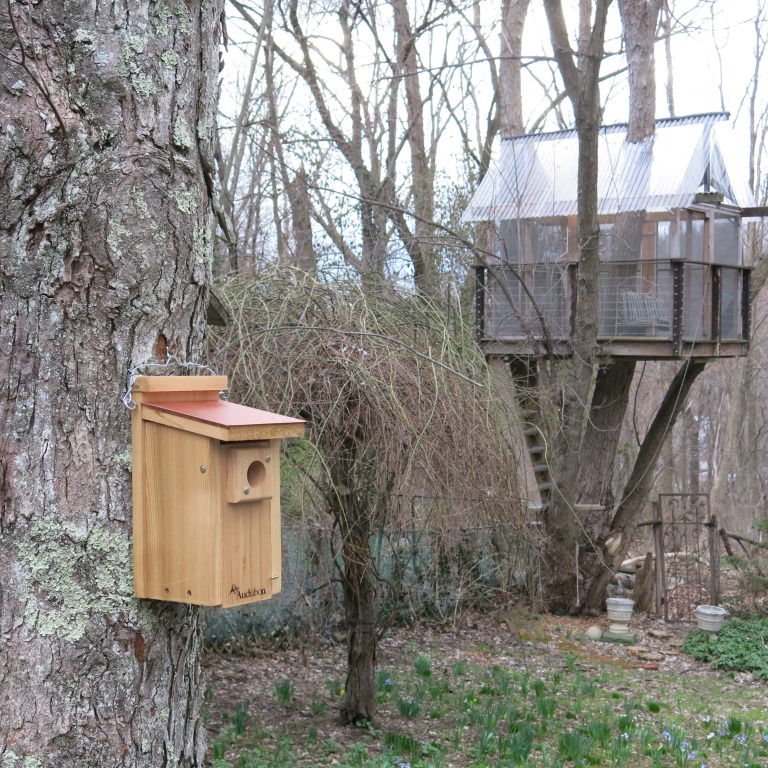
This bluebird house is not in the ideal location but I'm optimistic. It hosted wrens last year. Maybe this year I'll try to move it to a more appropriate location.

This bluebird house is not in the ideal location but I’m optimistic. It hosted wrens last year. Maybe this year I’ll try to move it to a more appropriate site.

The meadow is a veritable smorgasbord - nectar, worms, other bugs ... At the same time, it is a safe haven for some creatures.

The meadow is a veritable smorgasbord – nectar, worms, other bugs …
At the same time, it is a safe haven for some creatures.

IMG_5771

(c) 2016 Shobha Vanchiswar

Organically Certified – Enlightened Gardening #2

I’ll say it right off – keeping an organic garden is not so easy. I’m not saying it is difficult but it does require greater vigilance and prompt, timely measures. Compared to freely applying chemicals preventively and pro-actively, organic practices are somewhat more demanding. But isn’t that worth it if it means not polluting the air, soil or water? Are our children and pets not worth that effort? They should be able to play freely in the outdoors without worry of getting sick from chemicals in their environment. Preserving the health of our world is the legacy we pass on to future generations.

Last week I regaled you with the power of compost on your lawn. In truth, it is essential everywhere in the garden. I know it is hard to believe that this one ‘product’ can be fertilizer, mulch and thereby weed suppressor and water-conserver all in one. But that is only because the manufacturers of chemical/synthetic fertilizers and pesticides have done an excellent job of telling us otherwise. This is no different from baby food manufacturers who in the mid-1900’s convinced women that the factory made formulae were superior to breast milk. But we now know better don’t we? Enough said.

I use compost on lawn, flower beds, pots, vegetable plots, around fruit trees and shrubs. Literally everywhere in the garden. In the beds, I do cover the compost with a layer of cedar wood chips for both aesthetic reasons as well as to create a hindrance to the vagaries of digging critters like squirrels, dogs and cats. No other product needed.

On the few occasions when additional feeding and spraying is required as in the case of nurturing the apple and pear tree espalier fence, only organic products like seaweed and fish emulsion and dormant oil spray are used. Producing organic fruit is a particular challenge and I’ve learned to deeply respect the farmers who supply our markets.

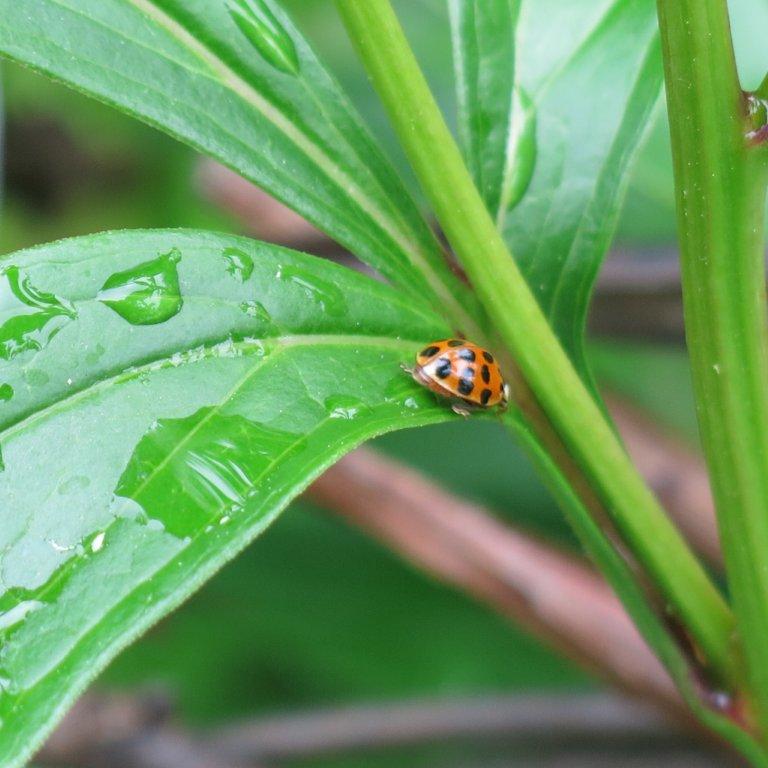
In conjunction with maintaining an organic garden, it is imperative that the plants one selects are largely native plants. Native flora attract native fauna. These native fauna will not only pollinate cheerfully but they will also safeguard the plants from predators. Think ladybugs eating aphids, birds picking off pesky beetles and caterpillars, bats devouring mosquitoes etc., Research has shown that when a plant is attacked by pests, it does two things. First, it changes its leaves by making them less nutritious and then, it releases chemicals like jasmonic acid that act like ‘screams for help’ which are signals picked up by beneficial insects that zoom in to feed on the pests thus protecting the host plants. Even more interestingly, planting the right plants alone does not bring in the right insects. The pests must arrive first, do some harm to which the plants ‘cry out in alarm’, and only then will the predators show up. There is an implicit protocol or line of action that ensues. While we are still trying to understand these highly complex and rather impressive phenomena, we can purposefully create the correct balance of flora and fauna thereby doing right by the environment.

Whether one uses chemical or organic pesticides, we are not simply taking care of specific pests. The products are broad-based killers. So even the good guys are wiped out. It is important that we do not use any product if we can help it. For example, dormant oil spray is applied to smother the eggs of pests such as aphids, certain mites and scales. But it will also cover everything else. So, when it is sprayed is crucial. The window is small – when temperatures are above freezing for more than 24 hours but not yet too warm,when  rain is not expected for a few days and, before leaves are put out and the buds have not as yet opened. Miss that time and then don’t bother. It’s too late! Or else you risk choking the leaves so they are unable to photosynthesize properly and, coating opening buds making them unpalatable to arriving pollinators.

My general principle is to keep it simple. As few or no products. Accept that organic fruit may not look perfect. They will however taste wonderful. The sheer, unadulterated joy of biting into an apple right off the tree is priceless. Or, how about a carrot freshly pulled up from the earth and gently rinsed to get the grit off before crunching into its crisp, sweet, orange flesh? Imagine having no worries when you pluck nasturtiums and roses to add color, taste and beauty to your salads and desserts. Scented geranium leaves to perfume lemonades. Chemical-free catnip for your cat. Are you catching the organic spirit?

So first, get yourself started with a collection of native plants. ( see my article from 2 weeks ago Giving Back To The Future for sources) and organically produced vegetable seeds and/or plants which are available at any good nursery. Set up bird baths, nesting boxes and hidey-holes for beneficial fauna to take up residence. Set up your own composter and feed it garden and kitchen waste. Until you start generating your own compost, purchase it from local nurseries. Your town, like mine, might have a place to get free compost. ( For a nominal fee, they will even deliver large amounts of compost or wood-chip mulch).

Get to know your plants intimately. Learn their appearance and habits. This will prepare you to notice right away if something is amiss. Act promptly and prevent further damage.

Now you are in the organic business. Get to work!

The hyacinths inside the house have bloomed and the air is redolent with their perfume. Sheer heaven. Meanwhile outdoors, snowdrops and some hellebores are in bloom. Distinct signs of spring! Enjoy the images below:

IMG_8830

IMG_8832

IMG_8833

IMG_8835IMG_8838

IMG_8840

IMG_5003

IMG_5014

(c) 2016 Shobha Vanchiswar

[do_widget “Blog Subscriptions (Jetpack)”]
Lawning Ahead. Enlightened Gardening #1

Winter is entering its final quarter. Are you ready to implement all those garden plans and resolutions? You want to go organic, grow some if not all your veggies, have something in bloom all year long, create a more casual garden to reflect your lifestyle, set up the patio so you can enjoy al fresco meals as often as possible, provide the children with a space that fires their imagination and finally, it all seemed so doable in January but now, you are daunted. Am I right?

Well, you are not alone. It is quite common to feel a bit overwhelmed and not know how or where to start. I get asked about this all the time. Let me reassure anybody who has doubts that all of those goals are not only well within reach but can be achieved this very year. The only thing you need to begin is a deep desire to do what it takes. Make time in your schedule, set aside a minimum of an hour every other day ( every day is better) and a good half day of the weekend ( a whole day is better!). You might not need all that time each day but then, you can use it to just sit and enjoy the garden. I guarantee you will get hooked to puttering in your corner of paradise. It just feels so good!

After hearing from many readers, I’m happy to discuss the several tasks and habits to cultivate (!) that will get you creating the garden you want.

Lets start with the lawn. That ubiquitous green swathe that seems to be the dubious prize of most property owners. A healthy, verdant, well manicured monoculture lawn has become the unofficial American symbol of success. And the struggle to maintain said lawn is the “successful” American way of life. Really America? After all that we now know about the huge cost to the environment and wallet in the upkeep of such a feature, are we still going to continue hankering after this shallow dream? Think about that.

So, if you are keen on such a perfectly superficial and downright wasteful element in your garden, then this article is probably not for you. But, before you leave this site, just pause to ask yourself why you think you must have that pristine lawn and why you are so willing to work so hard to keep it that way. Do you truly believe that such a lawn means you ‘have arrived’? You like having the ‘pure green’ space? You enjoy spending unnecessary amounts of time, money and effort in the pursuit of such a thing? Are you at peace with yourself? Do you believe climate change is not impacted by human activities?
If you said yes to at least three of those questions, then it really is not useful for you to read on. You’re excused.

For the rest of you I have excellent news! Giving up on that perfect lawn is most liberating. You will save time, money, energy ( yours as well as natural earth resources) and at the same time create a healthy, thriving environment.

Take a look at the size of your lawn. Does it need to have those dimension or could you whittle it down? The reduced lawn will make room for more plant beds, shrubs and/or trees which will only enrich the garden. Of course, mowing will also be quicker.

After determining how small ( or big ) a lawn you are happy to live with, banish the thought of it supporting that single crop of grass. The green color that serves as counterpoint to the flowering beds can be from a diverse array of ‘lawn’ plants. Leafy jewels once considered as weeds in the conventional lawn are now free to sparkle. For the most part, this ‘new’ lawn will be a canvas of green but, every now and then, little color will spark it up. Violets, bugleweed, scilla, crocus, clover, forget-me-nots, ajuga, grape hyacinths, wood hyacinths and yes, dandelions. That last one is one of the earliest sources of nectar for bees and hummingbirds. But understandably, one doesn’t want dandelions taking over entirely. Here’s what I do – in my tiny lawn in front, I pull up all dandelion plants in the spring and then only remove the flowers the rest of the growing season. In the ‘meadow’ however, I depend on the dandelions following on the heels of the daffodils and clashing madly with the blues of the forget-me-nots and ajuga flowers. It is such a happy-making sight.
The other lawn flowers are given complete freedom.

Maintaining this type of lawn is easier than you think. I have one word – compost! Compost doubles as fertilizer and mulch. No more chemical fertilizers ever again. By supporting diversity, friendly insects will arrive and they in turn will take care of the pests. No more pesticides ever again. Mulch will restrain true weeds like crabgrass as well as stop the lawn from drying too quickly and hence the frequency and quantity of water consumed will be reduced. Finally, mowing with the blade set at a height of 4 to 6 inches, means you will not have to mow as often. Lawn clippings left on the ‘grass’ after mowing will also mulch and enrich the soil as they decompose into it. Keeping the grass a bit higher will also help in conserving the moisture in the soil. All good!

Consider how this one shift in practice will reduce the volume of chemicals polluting the water-table, save use of water, cut down on fuel use, lower air and noise pollution, create a clean, healthy area for pets and children to play and still look provide the coveted green backdrop.

A 3 inch layer of compost spread when aerating and seeding the lawn in spring will go a long way. I feed this area once again in early summer and finally after leaf raking in the fall. That is it. Imagine how freeing this process is compared to the constant demands of the old, perfect lawn! Are you game to get started?

Whatever will you do with the new found free time?!!

My tiny front lawn - hardly pristine but looks good right?!

My tiny front lawn – hardly pristine but looks good right?!

The lawn nicely complements the perennial beds on either side.

The lawn nicely complements the perennial beds on either side.

IMG_3472

The meadow!

The meadow!

IMG_5458

IMG_5486

IMG_5698

IMG_2261

IMG_3451

IMG_3461

(c) 2016 Shobha Vanchiswar

[do_widget “Blog Subscriptions (Jetpack)”]
Giving Back To The Future

Something happens in mid-February. With the sap rising in the sugar maples, my gardening spirit goes into high gear. I get fully vested in preparing for the growing season. While I might have luxuriated in dreaming my way through seed and plant catalogs in December and January, come February and I’m raring to start doing garden things.

The amaryllis have been blooming beautifully since the New Year and I just got the hyacinth bulbs that had been cooling in the refrigerator since early to mid-November into bulb forcers.. Does this gardener’s heart a whole lot of good to see them sitting in their jewel-toned glass vases twinkling with all the promise of the spring to come.

This year, my plans for the garden are focused primarily on native wildflowers. It is very much in keeping with my continued efforts towards stewardship of land. Restoration of the landscape to a healthy, indigenous state is a critically important step. It is the only true legacy we can be proud to leave for future generations. I firmly believe that by bringing back what is native to our region is critical before we can pass on the trowel to those who will inherit it. Reinstating the flora and the fauna will follow. Balance will have been re-established.

If each gardener added regional native plants, then ‘habitat corridors’ will be created for free passage of pollinators and helpful wildlife that protect and/or support the plants. The natural symbiosis that is the foundation of a stable ecosystem.

My ‘meadow’ is the natural choice for introducing native wildflowers. However, it is not a simple matter of scattering seeds and expecting the plants to happily emerge. First of all, seeds from the wild are notoriously finicky. Probably evolved to give themselves the best chance for successful propagation, the seeds will germinate only when conditions are ideal. Often, depending on the species, they could take months or years to show signs of life. All of this might be proper for Nature’s normal habits but for a home gardener, it can be torturous waiting. And waiting..

Hence, I’ve forged a two-prong approach. To get the meadow established with plants starting this spring, I needed to procure said plants. Since this area has numerous bulbs already in place, I cannot risk destroying them by digging into the soil to put in mature plants. The solution was to source native wildflower plugs. Not so easy to come by. By discussing with fellow gardeners and researching on my own, I was delighted to come up with North Creek Nurseries. My plugs were obtainable! The additional bonus of the plugs is that they are that much easier to plant. This is a tremendous relief for my back and knees as they were dreading the labor of dealing with a large volume of grown-up plants.

Given that the meadow gets dappled sun, my selections are restricted to plants that are fine with that condition. The order has been placed. Shipment should arrive late April. Already I can ‘see’ the meadow shimmer with columbines, pink turtleheads, yellow sneezeweed, toad’s lily, wild bergamot ….

Meanwhile, the scientist in me was interested in working with seeds. I wanted seeds legitimately sourced from the wild. Plants from such seeds are quite different from their cultivated counterparts. If we are serious about restoring to our countryside and cities true native plants, then we must propagate from those seeds. Enter the Wild Seed Project. Based in Maine, its goal is to bring back the natural flora of Maine to Maine. Fortunately, those of us living in other similar regions of the country can purchase appropriate seeds from them.

Serendipitously, this past December, I was given a bunch of seed packets from Wild Seed Project. A gift of the best kind! Most of the seeds need a period in the cold after being sowed in pots. I have now done just that. My ‘babies’ wait in a sheltered part of the garden for their spring awakening. I will do my very best to attend to them as required and anticipate their germination with patience. Those who know me well are probably smiling with skepticism. Just watch. I’m going to show you a side of me you have never known. Patient and persevering. Wipe that smirk off your face!

Note: North Creek Nurseries supplies wholesale quantities – far more than the typical garden might require. So, team up with friends and neighbors, garden clubs and such, to order. The bonus will be creating native habitats in whole neighborhoods or communities. All good!

Wild Seed Project has a wonderful website and e-newsletter chock full of information and beautiful photos. Their efforts in Maine ought to be emulated in all the other states. Lets get started! I see this as a wonderful project to be taken up by towns and cities, private and public gardens, Girl and Boy Scouts, garden clubs, local Rotary clubs, schools and every other person or group that cares about what happens to our environment.

Below are a few images of the beauty of native flora and fauna:

Joe Pye

Joe Pye

Monarch butterfly on asters

Monarch butterfly on asters

IMG_2745

Echinacea

Echinacea

Hummingbird at work

Hummingbird at work

Bees on asters

Bees on asters

Pink turtlehead

Pink turtlehead

Closed Gentian

Closed Gentian

Sneezeweed

Sneezeweed

Yellow Lady's Slipper

Yellow Lady’s Slipper

Columbine

Columbine

(c) 2016 Shobha Vanchiswar

[do_widget “Blog Subscriptions (Jetpack)”]
← Back

Thank you for your response. ✨

Smarty Plants

As adamant as we humans are about being the most superior of all living things on this planet, I am compelled to differ. To begin with, I don’t think our time on earth should be focused on proving our dominance over everything else. In doing so, we expend enormous efforts and do considerable damage to the entire planet. We go well beyond what we need to do to survive and thrive. It seems we reach for excess in all areas. Food, shelter, clothing, safety, comfort …. We commit acts of unspeakable violence for reasons of wanting more than we need. Of course, we often disguise our true intents in the name of doing good. To put it plainly, humans love playing God. A greedy, selfish, wrathful God.

But look around at those other living beings with whom we share this world. Not a single animal or plant takes more than it needs to live and procreate. I am particularly in awe of plants. They truly rule!
Think about it – while humans cannot exist without plants, the reverse is not true! What would we eat? How would we build our homes, feed our animals, make our clothes, obtain life saving medicine? All of our celebrations and observances incorporate plants in some form or other. Meanwhile, plants themselves can grow happily without us altogether. Take away plant life and you effectively end our race.

How plants live is mighty clever. Whatever they need, comes to them. The pollinators, the rain, the sunlight, the wind. Their seeds, distributed by creature or wind, establish themselves wherever conditions are ideal and calmly continue the family line. When the climate turns unusually harsh as in a drought, plants are known to go dormant and/or set seeds in quantity so the species can be preserved for when circumstances return to normal. Research has shown that when a tree is attacked by a pest, it sends out chemical signals to neighboring trees which in turn arm themselves by synthesizing compounds that could help repel or harm the pests.

To protect themselves, the kingdom Plantae has developed a plethora of weapons. Disguises, thorns, chemicals that kill/repel/cause sickness or allergies, bark, fatty coats, trapping mechanisms and, in some cases even ensuring that animal ‘bodyguards’ are always at hand. Pretty cool right?

Plants have evolved to look or smell nice to those they need for pollination. In fair exchange, they offer their nectar or fruit. And if humans choose them for their gardens or farms, well, what the heck, the odds of survival just got better.

They respond to seasons with aplomb. Highly tuned to even the teeniest shifts in weather and temperature, like state of the art, well-oiled machines, they will launch themselves to grow, set fruit, enter senescence and dormancy right on cue. Ingenious and resilient, flora outdo fauna by far. And compared to Homo sapiens, they are, in my opinion, the most superior of beings.
Lets start treating them with due respect. Each time I bite into an apple, enjoy a cup of coffee, fix a salad, treat a cold with Echinacea, perfume myself with rose water, sit under the shade of a tree, use my wooden dining table, select a linen shirt, receive a gift of flowers or, go about a myriad quotidian activities, I will do so with heartfelt gratitude and humility.

Life with plants is very good.

The images below demonstrate our dependence on plants:

IMG_1020

Kinhaven1 079

IMG_4349

IMG_7234

IMG_7566

IMG_6363

IMG_6952

IMG_9341

IMG_0332

IMG_0683

IMG_0852

IMG_3993

IMG_3906

IMG_4760

(c) 2016 Shobha Vanchiswar

[do_widget “Blog Subscriptions (Jetpack)”]