August Audit

Here we are in late August. Summer’s end is in our sight-line. And so it’s time to assess the garden. The highs and lows, the whats and whys of the growing season must be noted. From this, we learn and take steps to make our gardens healthier, more productive and beautiful.

Looking around my garden, I see those plants that need to be reined in severely. In the meadow, ornamental raspberries and woodland anemones are the regular offenders which, this fall, will be ruthlessly handled till very small versions of themselves remain. The asters which are only a little less prolific are also targeted for serious editing – they will be drastically divided and distributed amongst fellow gardeners. Each of these plant types are legitimate and beloved residents of my garden but if not given diligent oversight, they get too full of themselves and aggressively thwart their neighbors freedom to exist. As a result, they must quite literally be cut down to size.

It’s with some concern I’ve noted that the milkweed are nowhere to be seen. Before I simply plant in fresh replacements in the Fall, I must determine the reason for their loss. Were the emerging shoots subjected to harsh weather in late spring? Or did the aforementioned thugs vanquish them by moving into their space? Surely it cannot be a pest? I have to do some investigation.

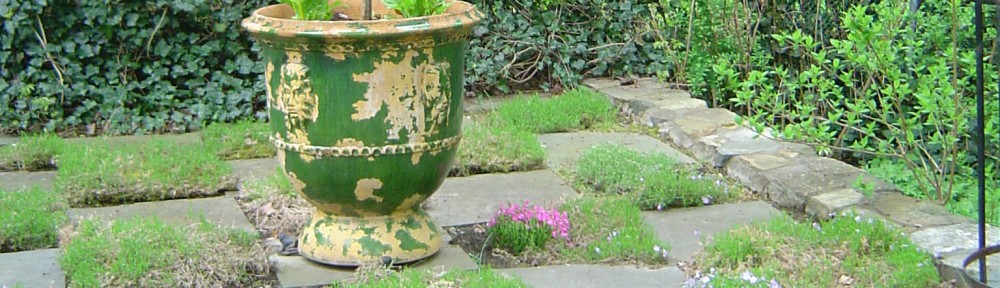
In the checkerboard garden, overhead conditions have changed as the neighbor’s cedar has grown quite mighty. All the shade it now provides means the creeping phlox no longer thrives. Instead, moss has moved in and columbines have self-seeded extensively along with forget-me-nots. I’m debating if I should see how this plays out next year or if I ought to include something to carry this area from spring into summer this Fall. Perhaps the shorter, clumping allium like A. millenium which blooms in summer? A single clump in the center of each mossy green square would look fetching but I wonder if the paucity of sunlight would once again be a problem. Another investigation to add to my growing list.

A few plants have made no appearance in the perennial beds in front. They were planted only last fall so its possible they struggled with inclement weather conditions since then and lost the fight. Or did the nasty Spotted Lantern Flies devour them as they did the young marigolds I’d planted around the new elephant sculpture in the herb garden? This might remain a mystery.

I see that matters like these plus the chores that need rescheduling to align with the changing climate ( which I will get into next week) will keep me from remaining idle for quite a while. The lazy, hazy days of summer are indeed over.

Watercolors of some of the plants that need attention –

The bullies –

The self-seeder –

Missing in action –

Victim of the Spotted Lantern Fly –

(c) 2025 Shobha Vanchiswar

[do_widget “Blog Subscriptions (Jetpack)”]

August Surprise

After a mostly brutal July, August has entered the building. A very uncharacteristically agreeable entrance at that. The weekend weather was nothing short of stellar. With a temperature high of just mid-70s, lows in the mid-60s, humidity that was barely perceptible and light breezes gently stirring up the air, it was exactly what was needed. I stayed out in the garden the entire time. Some work got done but honestly, I spent most of my time simply basking in the deliciousness of it all.

This week doesn’t look half bad either. Dare we expect this month to redefine our summer?

But before I put up the hammock and indulge in my tall stack of summer reads, there’s the monthly list of chores to consider. And consider I shall.

What To Do In August –

1. Harvest the vegetable patch regularly. If you’re overwhelmed with the bounty, offer them to food kitchens, friends and neighbors. Also, consider canning vegetables and fruit. They are mighty handy to have on those days in winter when you crave summer fare. Not to mention the crazy times when cooking is simply not possible.

2. Keep weeding. Even when it is hot, hot, hot, weeds continue to thrive. Early hours of the morning are most enjoyable – cooler and fewer biting bugs.

3. Water as required.

4. Mow as usual. Again, do the right thing and keep blades at 3 1/2 to 4 inches high. Let the clippings be as very soon they will disappear into the soil and enrich it.

5. Continue to deadhead and trim back. This keeps the garden tidy. Seeds that you wish to harvest can be left on the plants till they are ripe and ready.

6. Take cuttings of plants for rooting. Doing it now will provide enough time for growth before planting in the fall or bringing indoors in winter.

7. If you’re going away, arrange to have someone water the garden and keep an eye on things.

8. Prune wisteria and anything that is overgrown.

9. Watch for pests and/or disease. Use organic treatments.

10. Keep birdbaths filled with fresh water.

11. Spend as much time as possible in the garden – autumn approaches! Eat, read, snooze, throw parties, paint, write, meditate, pay bills, enjoy the garden.

If you haven’t as yet ordered your bulbs for fall planting, do it now!

Hummingbird gracing the Agapanthus

(c) 2025 Shobha Vanchiswar

[do_widget “Blog Subscriptions (Jetpack)”]

At Last!

At last it’s feeling like a normal August. Warm but not insanely so. Humid but not soupy. After weeks and weeks of awful conditions, I spent this past weekend deliriously happy to be in the garden. Mosquitoes notwithstanding, it was sheer joy to be taking care of a myriad chores.

The weeds had gone to town – clearly they thoroughly appreciated the fact that they could thrived unfettered whilst the gardener took refuge from the high temperatures and/or heavy rains. A good number of hours were spent at this task. Many areas got divested of the opportunists and you could almost hear those spaces breathe with relief. Things are now looking cared for so the Horticultural Social Services will not find reason to take away my custody of this piece of paradise.

I cut back plants both in beds and in pots giving them the chance to rest a bit before putting out fresh growth. They should do well till the fall weather arrives. A few plants will even put out a second flush of flowers.

Some of the younger espaliers were in desperate need of pruning – in order to keep their assigned patterns, all wayward limbs were removed. The persimmon candelabra, quince cordon and magnolia fan look so much better now. Espalier is all about training plants to grow in a specific design and oversight is necessary to train and maintain them accordingly.

After cutting several branches of the magnolia, it seemed too much of a shame to simply toss them on the compost heap. They deserved to be made into a wreath or garland. But I knew the leaves needed a treatment of sorts to keep their fresh look. A quick search online gave me the method to use – Submerge the magnolia leaves in a solution of glycerin and hot water (1:2 ratio) for 4 days, then let them dry off fully before using them. Simple right? Certainly worth a shot.

Our local pharmacies do not carry glycerin so it was ordered online and by weeks end the treatment should be underway. If all goes well, a nice homegrown magnolia wreath will be adorning the front door this holiday season. Fingers crossed.

It wasn’t all work in the garden. Al fresco meals were enjoyed. I observed the hummingbirds jockey for first dibs at the feeder while they also made their rounds of the hibiscus, agapanthus and the charming red trumpets of the cardinal vine. The goldfinches seem to have made claim of the coneflowers growing madly at the base of the Concord grape arbor. In the meadow, the Monarchs have discovered a myriad of treats.

Does this gardener’s heart good to see the garden being graced by them all.

After too long I am at last thoroughly enjoying puttering around the garden. May August make up for the disappointment of June and July.

Sharing more photographs taken by @brosnahan_arts –

(c) 2024 Shobha Vanchiswar

[do_widget “Blog Subscriptions (Jetpack)”]

Summer Blast

It’s certainly been a particularly hot summer so far but, this week, we expect to get a bit of a break. For at least a few days, temperatures will drop somewhat. However, there’s a chance of rain throughout. Having just returned from powerful monsoon rains in Mumbai, I’m less than pleased. Every cell in my body feels quite water-logged. I crave cool, dry weather.

That said, I’m immensely pleased to be back at home. Seeing that the garden was in good hands in my absence gives me time to simply appreciate what’s blooming while I shed the fatigue of a very long flight and the inevitable impact of jet lag. I have already noted that the mosquitoes missed me dearly. Between getting out of the car, unloading the luggage and making it to the front door, I was greeted very enthusiastically. Every exposed part of my limbs was savagely bitten. What a welcome!

So here we are in August and it is imperative that one makes the most of it. Whatever be the weather. In addition to the August To-Do list, I must prepare for the drainage project that is scheduled to start next Monday. Just when the summer phlox are blooming brightly and the Joe Pye are poised to join in, they, along with several other plants must be uprooted and kept happy and safe. Fingers crossed they will not be too upset.

August To-Do

1. Harvest the vegetable patch regularly. If you’re overwhelmed with the bounty, offer them to food kitchens, friends and neighbors. Also, consider canning vegetables and fruit. They are mighty handy to have on those days in winter when you crave summer fare. Not to mention the crazy times when cooking is simply not possible.

2. Keep weeding. Even though it is hot, hot, hot, weeds continue to thrive. Early hours of the morning are most enjoyable – cooler and fewer biting bugs.

3. Water as required.

4. Mow as usual. Again, do the right thing and keep blades 4 inches high.

5. Continue to deadhead and trim back. This keeps the garden tidy. Seeds that you wish to harvest can be left on the plants till they are ripe and ready.

6. Take cuttings of plants for rooting. Doing it now will provide enough time for growth before planting in the fall or bringing indoors in winter.

7. If you’re going away, arrange to have someone water the garden and keep an eye on things.

8. Prune wisteria and anything that is overgrown.

9. Watch for pests and/or disease. Use organic treatments.

10. Keep birdbaths filled with fresh water.

11. Spend as much time as possible in the garden – autumn approaches! Eat, read, snooze, throw parties, paint, write, meditate, pay bills, enjoy the garden.

Note: I’m sharing some beautiful images taken by my nephew and artist @Brosnahan_arts I love his keen eye and artistry. I will share more of his photos next week.

(c) 2024 Shobha Vanchiswar

[do_widget “Blog Subscriptions (Jetpack)”]

August Doings

Between all the heatwaves and thunderstorms, it’s been hard to take care of the garden chores I’m sure. I return home in a couple of days but as the assistant gardener has kept me in the domestic loop, I realize it has been somewhat of a challenge to get things done. As in all matters, one simply does ones best. No point in fretting and fuming over things not in ones control. From a quick glance at this week’s weather forecast, it looks favorable so, lets get a start on the August chores shall we?

What To Do In August –

1. Harvest the vegetable patch regularly. If you’re overwhelmed with the bounty, offer them to food kitchens, friends and neighbors. Also, consider canning vegetables and fruit. They are mighty handy to have on those days in winter when you crave summer fare. Not to mention the crazy times when cooking is simply not possible.

2. Keep weeding. Even though it is hot, hot, hot, weeds continue to thrive. Early hours of the morning are most enjoyable – cooler and fewer biting bugs.

3. Water as required.

4. Mow as usual. Again, do the right thing and keep blades at 3 1/2 to 4 inches high.

5. Continue to deadhead and trim back. This keeps the garden tidy. Seeds that you wish to harvest can be left on the plants till they are ripe and ready.

6. Take cuttings of plants for rooting. Doing it now will provide enough time for growth before planting in the fall or bringing indoors in winter.

7. If you’re going away, arrange to have someone water the garden and keep an eye on things.

8. Prune wisteria and anything that is overgrown.

9. Watch for pests and/or disease. Use organic treatments.

10. Keep birdbaths filled with fresh water.

11. Spend as much time as possible in the garden – autumn approaches! Eat, read, snooze, throw parties, paint, write, meditate, pay bills, enjoy the garden.

Note: More images sent to me on what’s happening in my garden

(c) 2023 Shobha Vanchiswar

[do_widget “Blog Subscriptions (Jetpack)”]