Darkness To Light

This holiday season is not going the way the world had hoped. The best laid plans have been upended. We are once again struggling with what feels like deja vu. Haven’t we been through this already?

Determined to fight any feeling of melancholy, I’m once again taking my cues from nature.

It’s the winter solstice today. The shortest day of the year. But, from tomorrow, the days begin to grow. Albeit by just one minute a day, it’s a positive development. Psychologically, this single fact shifts my attitude – I feel so much better. I take it as a sign of hope and positivity. Frankly, what other option is there? I simply must believe that things will improve.

As I walk around the garden, I start noticing other signs of hope. Furry buds on the magnolia tell me to expect a lovely show in a few months. On the climbing hydrangea, the buds like long grains of rice sit tight and firm as though letting the world know that they’re here on a mission. I reach beneath last years leaves and gently dig around at the base of the hellebores – sure enough, I see the early signs of growth. All of this is so full of promise. What at first appears to be a garden in hibernation is really one where life is very much happening. It never stopped.

I’m being guided to see the hope. Light will return and spring will burst forth again.

I step back into the house renewed and ready to embrace the quiet joys of winter.

Note: The two poems below were written in previous Decembers and I’m happy to revisit them from time to time. They remind me to lean into the light.

Dark And Light

The light of day

sparkles honest

Cobwebs shimmer

rewards promised

Hope soars

confidence shines

Courage accompanies

mountains to climb

Sunrises occasion

plans anew

Clarity surfaces

Beliefs ring true

Nightfall arrives

slow and sure

Shadows lurk

luring fear

Darkness imposes

time to remember

Review, regret

call to surrender

Sunsets precede

hidden dreads

Anxiety reigns

awake in bed

Reality lies

in plain sight

there’s nothing in the dark

that’s not there in the light.

******

Trimming The Tree

Love hangs memories

on awaiting arms

twinkling happy thoughts

as new stories get written.

While the past is shared

the present unfolds itself

into the future.

This tree belongs to my daughter. We got it for her when she was very young. Each ornament is a story, a memory, an expression of love.

(c) 2021 Shobha Vanchiswar

[do_widget “Blog Subscriptions (Jetpack)”]
Home For The Holidays

If we’ve learned anything these past two years, it’s just how singularly important our homes are. Under the definition of home, I include with the physical house, the family/friends/pets we live with, the garden/favorite park, the neighborhood. and the community in which one is privileged to live. What contributes to our well-being are a string of linked people, groups and spaces. It makes sense then, that we each must do our part for ourselves and each other to be healthy and well.

Taking the concept of home as my theme for the holidays, I decided that all the decorations would be things I already had and/or could find in the garden. The big bay standard was already the Christmas tree but what of garland or wreath? Other adornments?

Because of a family member’s allergy to evergreens, no traditional evergreen tree, garland or wreath. Not a problem. Bay standard holds itself very well in lights and all the ornaments collected/made over decades. As I’ve said in previous posts, foraging the garden was in order for the garland.

All the hydrangea flowers cut for autumn displays were sprayed in gold. I could’ve left them natural but the holidays deserve a bit of pizzazz. They look positively glamorous in gold – I’m so thrilled. On lengths of grapevine from the arbor, the gorgeous golden clusters were attached with wire. It looked good just that way. But why stop at good? I inserted beautiful leaves from the magnolia espalier – the top surface of glossy, dark green contrasts so strikingly with the suede brown underside. They add that bit of extra elegance to the garland for sure. But, I needed something for whimsy. Whatever remained of the beauty-berries after the birds had finished were salvaged and the stalks were inserted in the garland at random. I think it all comes together very nicely – pretty, festive, sophisticated yet with hints of carefree. For all that it is really just a simple, sweet creation from the garden. Every time I look at it, it reminds me of the generosity of the garden.

The amaryllis coming along in various pots and candle lights in the windows round out the holiday decor. That’s it. Exactly to our taste. Nothing extravagant or ostentatious.

The gifts we’re giving are all either homemade ( lemon marmalade, gingerbread cookies) or products that are meant for personal or household chores – they are not only gentle to humans and the environment but eliminate the need for plastic containers altogether. Think dish-washing soap and powder, cellulose cloths for cleaning and wiping, toothpaste and mouthwash tablets and biodegradable dental floss made from plant material. We made the switch to all these and other products over a year ago and have been pleased with them. I figure that gifts expressing our shared concern for the health of the environment and ourselves would encourage the recipients to make the change as well.

My remaining gifts fall into two more categories. Products whose purchase goes entirely to a good cause ( WWF, cures for certain diseases, UNICEF, social justice, etc.,) is one. The other is memberships to worthy organizations such as museums, botanical gardens, historical societies local to but not frequented by the recipient.

Gifts from the heart that reflect our homes, our values and our interconnectedness to everything and everybody in the ultimate home that is our beloved planet Earth.

Amaryllis ‘lemon drop’ has begun the festivities

Meyer lemon harvest

Lemon marmalade.

Hydrangea clad in gold

Beautyberries

Magnolia leaves

The finished product

(c) 2021 Shobha Vanchiswar

[do_widget “Blog Subscriptions (Jetpack)”]


December Deals

The garden is finally put to bed. All the clean up and cut back is done. The biggest pots and oak water barrel are cozily wrapped in plastic topped with burlap – they sit like packages waiting to be discovered. The meadow had its annual cutback and now lies with a nice covering of fallen leaves that offer all manner of sustenance and refuge to wildlife. The surrounding shrubs remain uncut – they lend some winter interest but more importantly, they too provide shelter and some more food for active critters.

The tiny greenhouse is home to so many tender perennials and tropicals that the small table and chair placed in for WFH respite is a very tight squeeze. Still, it’s always wonderful to spend time in there. The lemons were harvested over the weekend. They sit looking so beautiful – orbs of captured sunshine. I’ve set aside time to make a big batch of lemon marmalade tomorrow. That stuff gets consumed so rapidly that I might have to restrict it to ‘Sunday breakfast only’. No doubt , it’d lead to a mutiny!

Similarly, the many jars of basil and nasturtium pesto, pear brandy and limoncello, Concord grape jelly and vegetable stock made from the bounty from the garden through the fall, will bring great pleasure to many winter meals.

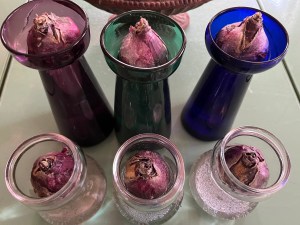
What remains to be done are maintenance chores like getting tools with blades sharpened, restocking on twine, stakes and such, bringing back order to the garden workbenches and shelves, checking what needs replacing or repairing and acting accordingly. I have the hyacinth forcing vases cleaned and ready for action for when the time is right to get the cooling bulbs out of the refrigerator.

Making our holiday decorations from materials found in the garden and woods gives me a wonderful sense of comfort and joy. The garden provides through all the seasons. That is the best deal of all.

Amaryllis coming along

Lemons!

Meadow under cover of leaves

Greenhouse

Greenhouse

Sedum seed heads

Echinacea seed heads

Rose geranium lemonade and nasturtium pesto

Bundles of bouquet garni – to flavor soups and sauces.

(c) 2021 Shobha Vanchiswar

[do_widget “Blog Subscriptions (Jetpack)”]


Keeping It Natural

It’s quite wonderful that the holiday season coincides so nicely with the garden being put to bed. It makes it easier to have to retreat indoors. The festive time requires decorations and what better way to lift our spirits and spread good cheer than letting Nature dictate the theme

Given everything that has affected us this year, I’m determined to go about the holidays with thought and mindfulness.

Lets not get upset about supply chain problems, Christmas tree shortages, less than fully stocked stores or other news that increases the level of anxiety. Instead of complaining, this is a call for creativity. I’m going to do my best to stay focused on what I can actually control. In many small ways, I intend to do my part in mitigating some of the problems we face and are concerned about.

To begin with decorations, I’ve always kept it simple. Strings of LED lights and family ornaments adorn the big bay tree standard that stands-in for the traditional Christmas tree. My daughter is allergic to evergreens but honestly, we are quite happy with the bay. Similarly, the mantel will be decorated with a garland of foraged materials from the garden and woods and more strings of lights. An electric candle light at each of the windows adds a great deal of charm. Several amaryllis started a few weeks ago should be blooming through the holidays into the New Year. A lit fireplace and real candles completes the whole scene. Over the years, we’ve made pomanders with oranges and the fragrance of citrus, cloves and cinnamon just says ‘HOLIDAYS!’. And lets not forget all the yummy aromas that come from the kitchen when baking is underway. Add a good playlist and we’re done. Seriously, does one really need anything more to set the stage for celebrations?

Similarly, for the gifts, I’m giving only things where either the proceeds serve a cause I support (cozy house slippers from the World Wildlife Foundation) or are products that will introduce the recipient to living in a more sustainable, environmentally healthy manner. That’s good stuff like household detergents, dental and body hygiene products made from natural, plant-based materials and packaged in what can be easily recycled or composted. No plastics whatsoever. I also support local businesses and artists/artisans. These are some of my humble efforts to put my money where my heart is and do right by Earth and all who call it home.

Keep it simple. Keep it natural. Nature’s beauty cannot be beat.

Note: In keeping with the natural theme, I’m sharing images from this years Holiday Train Show at the New York Botanical Gardens. I just love this event so much and every year I’m delighted and inspired by the creativity and beauty of the display of iconic buildings and plantings.

(c) 2021 Shobha Vanchiswar

[do_widget “Blog Subscriptions (Jetpack)”]


Shared Wisdom

Gardeners are the best sharers don’t you agree? From produce and plants to cuttings and advice, we share generously. It’s no wonder then that we love being in each others company. And the longer I garden, the more there is to learn.

So this week, I’m passing on three things I learned recently.

#1 – As we well know, comfrey makes a most effective organic fertilizer. The usual method is to fill a bucket or other container with comfrey leaves, add water, cover tightly and let it sit for some weeks. Over that time, the leaves breakdown and the whole turns into rich, liquid plant food. Simple. The reason for that tight cover is to contain the odor – it stinks to high heaven. The final product is diluted as necessary to feed the plants.

I’ve just learned of another way to use comfrey. Dry the leaves, crumble them and sprinkle into pots to boost seedlings and plants. This past weekend, as I was putting the herb garden to bed, I cut back vast amounts of comfrey. I’m going to dry some of it. Towards the end of winter, the plants in the greenhouse will receive a generous serving of dry comfrey to get them ready for the move outdoors.

If there is a prolonged spell of rain during the growing season as it was this past summer, the dry comfrey will come in good use. A liquid feed on wet days would be useless.

#2 – Right after the last snowfall last winter, I sprinkled Shirley poppy seeds all over a snow covered area in the meadow where I wanted them to bloom. As the snow melted, the seeds would settle on the earth and take root. I’d heard that this very simple method worked well. Not for me. It was a total failure.

But last week, I learned of a better way. Mix the seeds in sand, sift this over the planting area. Tamp down with a brick or board. Give a misting of water. Seedlings should appear in about 3 weeks. Thin out as needed. I’m going to try this next year.

#3 – My Brugamansia did not put up a good show of flowers this year. I blamed the crazy weather. But, on reflection and remembering another tip I’d picked up a while back ( and forgotten), this plant needs very diligent feeding. So, starting next growing season, weekly doses of dry comfrey are in order. Will report back in a year!

I’d love to hear your tips – please share!

Mature common comfre

The lesser known blue flowered comfrey

Comfrey (by the sculpture) in early spring


Poppies

From my seedpod series – watercolor of poppy pods/heads

Watercolor of poppy

Brugamansia

My watercolor rendition

(c) 2021 Shobha Vanchiswar

[do_widget “Blog Subscriptions (Jetpack)”]


On A Wing And A Prayer

The great bulb planting effort continues. As the meadow got embedded with a vast mix of camassia, alliums, hyacinthoides and fritillaria, it struck me yet again how much optimism is required in the work of gardening. With no guarantee of success and so much left to the mercy of Nature, a gardener must go largely on hope and faith. One can do everything right but without the benevolence of the weather/climate gods, it can all go wrong.

Through setbacks and struggles, failure and fumbles, the true gardener persists. We learn something from every outcome, get better, get stronger and, trust that things will work out in the end. When they do, we are grateful. We don’t achieve anything alone. Our dependence on Nature is something we understand all too well.

The rotund bulbs encased in thin, papery layers look innocuous. One would hardly suspect that each will yield a plant that will transform the spring garden into a most beautiful celebration of the season. That is the promise the bulb holds within. The gardener fully believes in that promise just as she does in every seed and plant that is sowed. Both bulb and gardener, do their best and leave the rest up to the powers that be. That is pretty much all one can do. Simply do ones best and keep faith that it’ll be all right.

Hmm. It isn’t always easy to work hard when much is uncertain. Or stay positive when things go wrong. But, gardening has taught me repeatedly that if I work diligently with good intent and believe in a good outcome, most often it will. And when the results are less than ideal, to accept it with grace because all is not lost – a new opportunity to try again will come around next year. The garden keeps giving new chances.

I’ve also learned that sometimes, the fault lies within me. My expectations were unrealistic or, that I had not done my part as well as I ought. The next time around, I will do better.

That’s a life lesson well worth learning early.

Here are some images of bulbs in bloom this past spring and preparing for the spring to come:

Mix of bulbs waiting to be planted

A drill is very useful

Planting bulbs in the meadow

(c) 2021 Shobha Vanchiswar

[do_widget “Blog Subscriptions (Jetpack)”]

Bulb-Manic Season

My mania showed this past weekend as I unpacked the shipment of bulbs. Sorting and combining the bulbs for the assigned areas is easy. Looking at the quantity at the end is hugely intimidating. What was I thinking when I placed the order way back in summer?

I was dreaming of swathes of color in myriad shapes all through the spring. Old favorites and a good measure of new choices. A few deeply coveted but pricey ones. In my mind’s eye, I saw bursts of early, minor bulbs announcing the arrival of spring. Then a wild party of loud, happy daffodils and fritillaria seeming to rise and bob from a gurgling brook of blue scillas and hyacinthoides frothing with blue and white muscari. Followed by an impressive parade of alliums and camassia accompanied by ornithogalums and nectaroscordum (now classified as Allium siculum). And that was just the meadow.

In front, a riotous mix of tulips punctuated by the dark purple/plum beauty of precious F. Perica, will be the stars of the season. Later, the irises, alliums, camassia, nectarosordums will weave their magic with the emerging perennials. That’s what I was thinking.

Confronted now by about a thousand bulbs I did pause briefly (very briefly) to question my sanity. My family, severely guilt tripped into helping with bulb planting have actually come to terms with what they recognize as a mania in me. But being long-suffering sports and wanting to avoid any more guilt I might lay on them, they went to work.

The front garden has been completed. The meadow will wait till next weekend. I also potted up a slew of bulbs – covered securely they will spend most of the winter outside in a sheltered spot and safe from curious critters. In late winter, as the bulbs awaken and start emerging, the pots will be brought inside to jump start our spring. Just in time to revive our winter weary spirits.

I put in a bunch of hyacinth bulbs for cooling a month ago – they will be ready for forcing in January. The perfect antidote to the winter blues that start setting in post-holidays. This past week, I started a fair quantity of paperwhites and amaryllis. The former should be ready for Thanksgiving and the latter will enhance the holiday atmosphere through December.

With so much joy to offer, is it any wonder that I’m completely mad about bulbs?

Note:Enjoy the images below. I’m particularly pleased with the success of my all-natural witch and cat – neighbors walking by took photos and selfies, children thoroughly bought into the display and even stroked the cat repeatedly! On Halloween, many took their family pictures with witch and cat. I absolutely loved knowing that I was able to give my neighborhood some joy and fun. After the dismal holiday last year, we all deserved a very happy Halloween.

Said witch and her pet head to the compost heap in the woods today. The pumpkins will be split open to not only help with their decomposition but many woodland creatures will be able to feed on them.

I put in my watercolor rendering of some bulbs because at this time, bulbs are growing only in pictures and my mind.

Natural born witch and cat by day.

Sorting bulbs

Potting up

(c) 2021 Shobha Vanchiswar

[do_widget “Blog Subscriptions (Jetpack)”]

Timely Tasks

It’s been a hectic pace in the garden. I spent the weekend entirely attending to seasonal demands. The tiny greenhouse is now packed to to the gills with the tender members of the garden. Taking advantage of the extended warm weather, I took my time to carefully trim and clean all the plants (and pots) before moving them into this prime space.

With some of the clippings, I started root cuttings. A nice variety of various geraniums both fancy leaved and scented, bay, rosemary, boxwood, myrtle, plumbago (an experiment) and Dichondra. Little bundles of bouquet garni were made with more clippings of bay, rosemary and thyme – they will be used through the winter to flavor hearty stews, soups and sauces. I made several batches of nasturtium pesto to freeze and some bottles of rose-geranium lemonade.

All the snakeroot was pulled out – this native is simply too aggressive. It had spread itself all over and was choking any plant that got in its way. A true thug. With the removal, I could feel the garden give a sigh of relief.

In comparison, the ornamental raspberry seemed almost shy. Almost. That got ruthlessly edited but not eliminated. A small bit was left in the meadow and will be monitored closely so as not to let it get unruly again. In the newly opened up space, I’ll add asters and other well-behaved natives.

A weed patrol was also conducted. They too take advantage of unseasonable warmth but I’m determined to prevent any of them setting seed. I know weeds are wily things yet hope springs eternal.

As other pots are relieved of their annual contents, they are washed, dried and stored away. It’s a lot of effort but so important for plant hygiene. Come spring, I’m always thankful for the work I did in the fall. With pots clean and ready, it is so pleasurable to get them planted whilst waiting for the plants in the ground to catch up.

All the discarded potting soil,clippings and fallen leaves mean the compost pile in the woods is well fed in autumn. Each spring, it is such pleasure to get rich compost from there. If you haven’t got a composter set up, this is a good time to begin.

Finally, for fun, a pumpkin witch and her cat took up residence in the front garden. Just in time for Halloween. Already they’ve become quite popular and the subject of many photographers as they pass by. Halloween was such a sorry affair last year that I wanted to do my part in making this year much better.

Made up of pumpkins/gourds and other garden materials, they will retire in total to the compost heap after the holiday. Win-win for all.

Full disclosure – I’m also hoping to set an example by demonstrating that using natural, compostable materials is environmentally responsible and can still be fun and creative.

Note : One week to go before my PHS talk! Don’t forget to sign up!

Natural born witch and cat by day.

By night

Clipping, cleaning and washing in progress

Awaiting propagation

A load of leaves headed to the compost

Bouquet garni ready for use

Rose-geranium lemon cordial and nasturtium pesto

(c) 2021 Shobha Vanchiswar

[do_widget “Blog Subscriptions (Jetpack)”]


Go Forth And Propagate!

I’m propagating this week. A bit behind schedule but then so is the season. Earlier in the year, whilst giving the boxwood and myrtle topiaries a trim, I started some cuttings which have taken root and seem to be doing well. So my focus now is on doing the same with scented geraniums, rosemary and bay. I’ve had good success with them over the years – great returns for minimal effort. A piece of stem bearing a couple of leaves and cut just above a leaf node inserted into moist potting soil is all that’s required. Monitor the pot and you know roots have been set when you see new growth. While it is not absolutely necessary, just to be on the safe side, I dip the cut end in rooting hormone powder before putting it in the soil.

This year, I fell in love with Dichondra Silver ponysfoot. It seems just as easy to propagate – Dig out some pieces of stem with roots attached and replant in potting soil. Keep moist and when it shows new growth, it can be relocated wherever desired. And I do desire greatly!

Other propagation to do is by division. Some of the heirloom irises are on top of the list. They were given to me by a friend when I first started on my present garden many moons ago. Gifts from other gardeners are always so precious. There are ferns, heuchera. Echinacea and asters that also need to be divided and replanted.

Meanwhile, the ornamental raspberry, native anemone and snakeroot need to be ruthlessly thinned out. They are aggressive so I’m not sure if I should give any away or simply toss the lot onto the compost heap. The pink turtleheads have self-seeded happily so some of those young plants will be pulled out and potted to give away.

The cardinal vines and plumbago were such a joy this year that I’m looking io generate more. Should I simply cut the plants back, dig up, split up and pot up? Can cuttings be rooted? Or is starting from seeds the best? Something to learn!

Friends have already stopped by and helped themselves to various seeds straight from the plants. What remains are for the birds. I’m not saving any seeds this year as I’m relying on self-seeded surprises.

Propagation. It’s a good thing.

Note: Click here for details on my upcoming talk to the Pennsylvania Horticulture Society.

Rooting cuttings

Dichondra looking lovely

Plumbago

A bed completely overrun by snakeroot

Fall in the meadow

The ornamental raspberry in the foreground tends to eclipse its neighbors

Vertical garden has that tapestry vibe

Nasturtium looking pretty

Snakeroot (Ageratina) throttling R. Boscobel

Asters gone wild!

(c) 2021 Shobha Vanchiswar

[do_widget “Blog Subscriptions (Jetpack)”]

October Overdrive


In these parts, the gardener shifts into overdrive in October. Lots to be done and it is often a race against time.

We rush to safeguard tender plants before the first frost. Harvest the remaining warm weather vegetables and fruits. Gather seeds to save for next year. Cut back, clear, clean, cover. Provide protection, put away, plant anew. Divide and redistribute. Finally, dig in all the bulbs that arrive just in time. And all along, squeeze in some time to enjoy the season because all too soon, we will be spending more hours cocooned indoors.

This year, due to changing weather patterns, it feels as though the fall hasn’t quite started. Trees are still quite green and few are showing any other color. Most likely there will be no real autumn color display. The leaves are simply going to turn crisp and brown and drop to the ground. Sad, I know but, all the more reason to take climate change seriously and do our part to mitigate it as much as possible. Instead of complaining lets all collectively respond with positive, proactive efforts.

I invariably feel a bit overwhelmed at this time. There is a long list of chores. I’ve found by prioritizing and breaking down the tasks helps greatly. Starting with getting the greenhouse cleaned and ready and moving in the pots of tender plants, I move on to dividing to replant and severely thinning out overzealous residents. Then I collect seeds, cut back and clear the spent plants. While some are left to serve the birds and give some winter interest, for the most part, I cut down the perennials. This is to facilitate the bulb planting that must happen between all the perennials and, also to give the garden a head-start in the spring as the garden’s Open Day happens early to mid-May when once again the list of tasks is long and time is short.

So, off to the garden I go. No time to waste!

Here is the list of October to-Dos:

1. Yes, weeding continues!
2. Time to plant perennials and trees. Give a good dose of compost to each. Water regularly. Perennials already in place can be divided and planted as well.
3. Cut back all spent plants except what is needed for seasonal interest.
4. Collect seeds. Store in labeled envelopes in a cool, dry space.
5. Last call to root cuttings of geraniums, coleus, rosemary etc.,
6. Get all pots of tender perennials into clean greenhouse or other winter shelters. Wash plants and pots thoroughly first – minimizes pest infestation.
7. Plant bulbs as weather gets consistently cooler. Bulbs can be planted until soil freezes solid.
8. Rake leaves. Add to compost pile or deposit in woods.
9. Give compost heap a good stir.
10 Clean out vegetable garden except for cool weather plants that are still producing. Apply several inches of compost on cleared beds. Plant green manure to enrich the soil – optional.
11. Clean and put away (or cover) outdoor furniture.
12. Check what needs repairing, repainting, replacing and get to it!
13. Lift tender bulbs, corms and tubers. Store in dry, frost-free place.
14. Drain and close all outdoor water faucets. Empty rain barrel and hoses. Store.
15 Clean all equipment and tools. Store neatly.
16. As temperatures plummet, protect tender shrubs and immovable  frost sensitive pots and statuary. I cover the former with burlap and for the latter, I first cover with sturdy plastic and then use burlap so it looks halfway decent.
17. Remove suckers from ornamental and fruit trees. Prune roses and wisteria and secure them well. Remove dead and decaying limbs from all plants.
18. Fill up bird feeders. Keep them filled through the winter. Put up nest boxes for the spring.
19. Get into the autumnal spirit – fill window boxes and urns with seasonal plants and produce.

Note: On October 26, I’ll be talking to the Pennsylvania Horticultural Society about how to think out of the box in a small garden with focus on espalier and vertical gardening. This is a virtual talk so everyone can attend!

Some scenes of my garden as it looks right now – wild and winsome!

Photo by @dorothydunn

Photo by @dorothydunn

Photo by @dorothydunn

Photo by @dorothydunn

(c) 2021 Shobha Vanchiswar

[do_widget “Blog Subscriptions (Jetpack)”]