Powering Through

What a glorious weekend it was. After a week of wet, cold days, I was beginning to feel somewhat hard pressed to remain thankful for the rain that had eluded us for so long. Then Saturday arrived glowing in sunshine and temperatures that were Goldilocks perfect. The sort of day that gardeners pray for. And we made the most of it. So much got done.

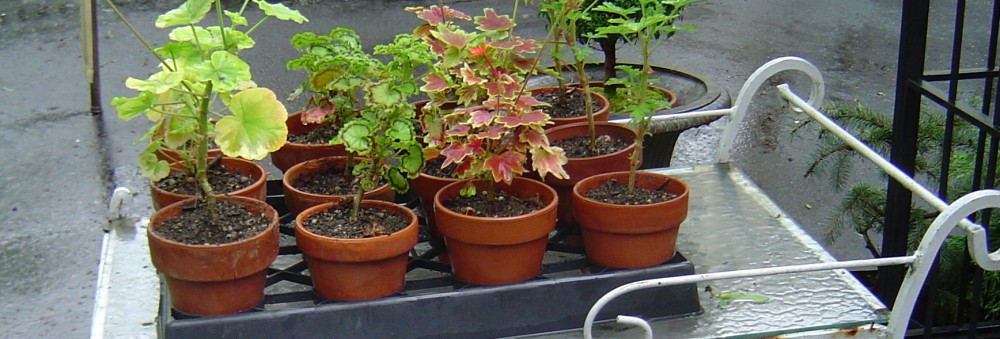
Big tasks like moving large, heavy pots to their assigned positions for the rest of the growing season to smaller ones such as potting up annuals for immediate prettying up. The summer window boxes are up, boxwood and other topiaries all got a tidying trim, hummingbird feeders recommissioned, dormant oil sprayed on the fruit trees and a myriad other chores were completed. I also have an unexpected project which I will reveal in due course. Fingers crossed it’ll pan out and rise above all expectations. There’s a clue in that last line!

Open Day is less than two weeks away and things are coming together nicely. With warmer temperatures forecast this week, I expect the many plants bearing plump buds will burst forth in bloom. Timing is everything so lets hope all goes well. I really don’t want to tell visitors that they should’ve seen the garden a week earlier.

A week ago, our county,s Department of Fisheries gave out minnows for free as part of a mosquito control effort. We went and got ourselves some. They were put into the trough which could be much too small a container but certainly worth a try. Lets see. I desperately want it to work.

Regular weeding and deadheading has commenced in earnest. This really helps to stay on top of it and prevents that feeling of being overwhelmed. I’m also aiming to be more consistent with picture taking. While it seems as though I’m always taking a million photos, I often fail to capture key images and moments that will help me understand, appreciate and plan forward. Ditto making notes in my garden journal where its important to mention what tasks got done and whats in bloom each week. I generally start out well and then, about now, when it gets really busy, I procrastinate and end up giving up on journal entries all together. It’s not the worst thing to do but as one who likes keeping records, it just makes me feel bad to lapse.

And so it will go on as May 20 approaches – it’s all about getting ready for YOU. Hope to see you in my garden!

Note: This Friday and Saturday, May 12 & 13, I will be selling my notecards and products from the Printed Garden Collections at the PlantFest at TeaTpwn Lake Reservation. If you live in the area, DO NOT MISS THIS EVENT!

Also, I’m so pleased share that my painting ‘New World Symphony’ has been selected for the @katonahmuseumartistsassociation juried show ‘Rhythm, Rhyme And Harmony’. The exhibit runs from May 12 to June 9 @bethanyartsorg

All are invited to the opening reception this Friday May 12 6:00 – 8:00 pm.

(c) 2023 Shobha Vanchiswar

[do_widget “Blog Subscriptions (Jetpack)”]

April Antics

It’s been quite a week! It started pleasantly enough. Perhaps a few degrees above normal (which is what these days?!) but so comfortable to get things done. Then, the temperatures spiked – we had a heatwave! Almost 90 degrees for three days! With it already being so dry, the heat caused serious concern. Suddenly, watering the vulnerable plants was high priority. Spring plants that had begun blooming began to wilt. It broke my heart to see many of the daffodils so short-lived. Hardly seemed fair. The apple blossoms caught up with the pears and that is an unusual sight. I’m uncertain what that means regarding pollination and fruit formation but nevertheless it’s a pretty sight. And the tulips coming along nicely were jolted into bloom before they’d reached full height. All shorties in flower presently.

In the meadow, the fritillaria have also begun flowering. While they look good, they’re out of sync with the sedge that should be complementing the bobbing snakeheads with their sap green spikes of new growth. The sedge are not quite ready, As a designer and artist, I’m frustrated and disappointed. As a gardener, I’m gravely worried. But, there’s nothing immediate to be done about the current weather pattern so I’m here for the seasons beauty such as it is.

By weeks end, it had mercifully cooled off so the heavy work of emptying the greenhouse of all the winter residents could be accomplished. This task is truly physical – moving the big pots to their various outdoor locations is no picnic.

Each pot also gets a thorough tidying up. A proper trimming, removal of dead growth and any other necessary sprucing. Once every pot is installed in its spot for the season, they’re all given a good dose of organic feed. Helps them get on with the business of growing and flowering and/or fruiting.

It was a long, busy, tiring but very satisfying day. And then it rained at night. Hallelujah.

The very recently emptied greenhouse was cleaned of all winter detritus and is now housing several pots of dahlia tubers being pampered awake in rather cozy quarters. The top layer of the pots have been sown with seeds for micro-greens. I figure we can enjoy the nutritious leaves of peas, beets and broccoli in spring salads until the dahlia growth emerges through and takes over.

I still have other seeds like quince, cardinal vine and nasturtiums to start. The quince will be interesting as I’ve never started those before – they were a gift with an impressive provenance. The seeds are from quince that grows at the Metropolitan Museum’s Cloisters. I feel the pressure! The quince growing in my garden was obtained as a young plant from Hortus Gardens. I think I’ll ask them for advice.

This past week, I had the privilege of previewing the much awaited and immensely popular Lyndhurst Flower Show. It was wonderful. Each of the rooms were decorated by different floral artists resulting in a diverse array of creative, sumptuous, inspired displays. I loved it all. Three in particular stood out for me.

First, was the dining room flooded by the paper creations of lotuses by artist Sourabh Gupta and his team that took my breath away. So very original and beautiful. Do look up his work @sourabh_gupta

The there was the kitchen below – opulently festooned with flowers in bright citrus hues matched with similarly colored vegetables and fruits awaiting the deft hands of the cooks to create meals for the family upstairs, the room was just lovely.

Next door, was the servants dining room and it was adorned with a more simple, organic, free-form arrangement reflecting the humble nature of the space it occupied.

I really appreciated how the arrangements in both rooms were so marvelously interpreted by the individual artists. They spoke volumes.

The flower show was sold out for both days of its tenure. It gives me so much pleasure to imagine the many people who were cheered, awed and inspired by it.

All in all, it was indeed quite a week.

Note: Don’t forget to get tickets for my garden’s Open Day on May 20.

Some images from the Lyndhurst Flower Show and some from my garden right now –

The Dining Room-

The Servant’s Dining Room And the Kitchen –

A couple of other rooms –

In my garden –

(c) 2023 Shobha Vanchiswar

[do_widget “Blog Subscriptions (Jetpack)”]

April Flowers

Is April the new May now? That’s exactly what it looks and feels like doesn’t it? The season is moving at a pace I’m finding hard to manage – there’s too much to do all at once. What typically starts slowly with the sweet sightings of snowdrops and winter aconites shyly blooming and gradually picks up momentum as the days lengthen and the earth is coaxed awake has been replaced this year with the garden exploding into bloom like a runaway train. Mind you, I’m enjoying seeing what is in bloom every day but it is all too much too soon. Whatever will May look like?

And it has been very dry. No April showers thus far. Add the unseasonably high temperatures and here we are – under threat of brush fires. In my county, there have already been some minor fires in woods and preserves. Frankly, I’m nervous. At this rate, we could be facing moratoriums on watering which will of course lead to loss and damage to our gardens and fields. The potential for greater consequences cannot be overlooked.

I’m allowing myself the luxury of enjoying the flowers in bloom. The daffodils are having a divine moment – so joyous and celebratory. I cannot imagine anybody not smiling upon seeing them trumpeting in sunny hues. I do believe that daffodils are the sunflowers of Spring.

The early magnolias all over the area are spectacular this year. As were the cherry blossoms. It’s hard to complain in the presence of such beauty.

The temperature today hit 80 degrees. Predicted to go up to 84 tomorrow. And the day after. Yikes! That could mean the flowers won’t remain in bloom for too long. Makes me feel cheated. After all the back-breaking work of bulb planting in the fall and dreaming of the spring all through winter, it simply is wrong if one is not awarded the right amount of time to bask in the glory of bulb season.

The pear trees have started flowering and the later bulbs are rapidly emerging and growing. I’m hoping the bees and butterflies show up soon. No pollination, no fruit. I should probably put up the hummingbird feeders soon. Tender perennials like the bays, figs, agapanthus, brugamansia and such have been brought out from their winter dwellings a few weeks ahead of schedule.

Spring is my favorite season and I revel in the chores. Except this year, I’m feeling rather overwhelmed by how much needs to be done quickly. Everything everywhere all at once!

Peony supports are already up. Vegetable bed planted up with cool weather greens. Annual herbs potted up and set out. The watering system of the vertical garden is in full operation. By weeks end, the greenhouse will be completely emptied of the citruses and other tropical treasures. After a proper cleaning, said greenhouse will be housing dahlias in pots. The tubers in storage have survived all right and shall be reawakened in pots of fresh soil.

Despite my trepidation about climate change, I’m resolved to be present in the moment. This season of renewal comes by just once each year and I cannot waste it. Each day I’m making time to simply appreciate the flowers, the new growth, the birds and to certainly, take advantage of the warm weather to get things done.

The optimist in me is willing the weather Gods to ease up and bring back more seasonal temperatures and some life affirming rain. I couldn’t call myself a gardener by any measure if I didn’t think wishfully. It’s mandatory – says so in the Gardeners Handbook.

Note: Remember my Open Fay is May 20 – get your tickets and come visit

(c) 2023 Shobha Vanchiswar

[do_widget “Blog Subscriptions (Jetpack)”]

Changing With The Climate

In the past couple of weeks, we’ve been blessed with some gorgeous spring weather. It’s such a joy to commence the seasonal chores in the garden when the sun is shining and the temperature is Goldilocks perfect – not too hot or too cold. It’s only when I’m reminded of the date that I’m pulled out of my state of contentment to face the fact that everything is happening too early. Climate change is definitively afoot.

Every chore accomplished lately is at the very least 2 weeks ahead of schedule. My notes from past years tell me so. Even the avian house hunting season is well underway. That typically happens only in April. As a result I’m making sure the birdbath is frequently replenished with water. I’m also considering advancing the week the hummingbird feeders get put out.

Its been a very dry winter and lately, there’ve been days when the wind has been strong. The earth is parched and there’s no telling if or when the water table will rise sufficiently to set our minds at ease. It’ll be interesting to see which plants prove resilient and which ones struggle or succumb to the new conditions.

In the last couple of years, I’ve noticed a significant reduction in the number and variety of birds, butterflies and bees in my garden. It has been positively disheartening. There have been moments when I’ve felt very discouraged because my best attempts have seemed inadequate. Am I making any difference at all? And it is so utterly frustrating to see how abysmal the response is from those who should, by now, know and do better. In my neighborhood alone, it appears the climate crisis has hardly changed the way most homeowners are tending their land.

I’ve spent a good amount of time fretting about climate change. Its impact will be global but one can only act local. And I’m resolved to keep doing the right thing.

It is time to see these changing times as a challenge to garden not just better but different. On my part, I see this as a learning period – how to garden in what will ostensibly be a different growing Zone altogether. A dryer, warmer climate I imagine. From Zone 6 to 7 in the near future? This could mean saying adieu to some cold loving favorites but it’s yet to be seen which ones specifically. For the time being, it might just result in earlier, shorter springs and longer summers. Milder falls and winters. This also implies that I could try growing plants that wouldn’t take to Zone 6 at all but 7 would work. Crepe myrtles and certain gorgeous camellias come to mind.

With new conditions, what we consider native will also change.The scientist in me is intrigued by the possible experiments. And the artist in me must design anew. All is not hopeless!

All the native plants in my garden should be fine for the present but I’m concerned about the native fauna. So I’m adding not only birdhouses but bee houses to attract some of our myriad native bees. They’re mostly solitary and sting free.

Given that water will become a growing scarcity, I’m going to start researching gravel gardens. As I’d mentioned last week, this year I’m experimenting with Eco-Grass offered by Prairie Moon Nursery in my tiny front ‘lawn’ . It is a hardy grass that sends deep roots into the earth and requires less watering. Zone 6 could be a bit cold for this variety but, I’m taking my chances. That’s what experiments are all about after all.

I’m predicting that this year will be quite instructive to all who tend to the land. And together, we will adapt and change as needed. No stick in the mud in our lot! Am I right?

Some images from what’s happening in the garden and glimpses into the greenhouse – –

(c) 2023 Shobha Vanchiswar

[do_widget “Blog Subscriptions (Jetpack)”][do_widget “Blog Subscriptions (Jetpack)”]

Spring Has Sprung

Today, is the first full day of Spring. A celebration for sure! I’m additionally relieved because now I can cease fretting about what’s coming up too early. For now. Should the weather warm up too quickly, it’ll be back to worrying about the state of garden and globe.

The hellebores and crocus heralded the arrival of Daylight Saving Time. The birdsong has grown louder. I’m absolutely loving the longer days. How wonderful it is to take a turn around the garden after a full day of work and decompress in the lingering light. It’s these small, simple moments I cherish greatly.

The pace of doing chores has picked up. As planned, the neighbor’s hedge got trimmed, additional birdhouse and bee-house were installed. There’s always so much publicity about encouraging honeybees in the garden but we really should be promoting the myriad native bees – they’ve co-evolved with the native plants. Most are loners and harmless. Every gardener should be encouraging them to take up residence in their gardens. In mine, there are now three such houses in different location. I expect to add another in the middle of the meadow. There are also discreet piles of sticks and such for those bees that prefer rustic homes.

Fun fact – Carpenter bees are the pollinators of choice for milkweed. The interior of the milkweed flowers are too sticky for insect lightweights. They get stuck. When you observe butterflies alighting for a nectar fix, look closely and you will see that they are not in the flower but instead, they alight offside and are careful to stay away from the sticky center. The carpenter bee is the only one large, smooth and heavy enough to get into the flower and thus become its prime pollinator. Even the fuzzy bumble bee is not heavy enough. I imagine they would get their fuzz removed if they tried sneaking into the flower. Bee waxing!

Once I learned this fact, I’ve begun taking a kindly view of these special bees. To keep them away from making homes in my wooden pergola, I provide them with alternatives by way of logs placed closer to where the milkweed grows. A spray of lemon oil and cinnamon on the pergola is said to help keep them at bay.

The tiny front lawn has been de-thatched thoroughly – it’s always amazing how much matting happens annually. The area gets aerated by stomping around in spiked shoes and making many small holes all over. Seeding will happen any day now – I’m awaiting the Eco-seed I ordered from @prairiemoonnursery. I shall report how this seed variety turns out.

Next on tap are chores like recommissioning the rain barrel, starting up the recirculating watering system of the wall garden to get it growing again, feeding the fruit trees and, as the temperatures climb, slowly bringing out plants from the greenhouse.

There’s a nice rhythm that happens at this time. As plants begin growing and flowers bloom and the birds build nests, the garden chores get done. Everybody is busy tending to their own business in a companionable manner.

The early daffodils will start trumpeting very soon. I can’t wait!

New bee house on an espalier post

Other daffodils pushing through

Snowdrops still going strong

Ready for reseeding

New birdhouse within the grapevine

Hellebores –

(c) 2023 Shobha Vanchiswar

[do_widget “Blog Subscriptions (Jetpack)”]

Good Gourd!

Apologies! I’m a week late in posting this article that’s a follow up to my last article – got struck down with an unknown bug that put me out of action all of last week.

Allow me to introduce you to a jewel of a garden in Brooklyn, New York. Both Mei and Ying grew up in the rural southern province of Guangdong in China where their families cultivated the land for rice and vegetables for the market. Food to feed the family was also grown. Life was not easy and there were many to feed. They were put to work as soon as they were old enough.

Coming to the USA as a young couple, they knew all about hard work and as soon as they got a home with a backyard, they set about creating a vegetable garden to feed themselves and their two daughters. Vegetables innate to their culture and cuisine.

With no thought to doing anything extraordinary, applying methods they grew up with, Mei and Ying have created a stunning little garden. It burgeons with all manner of gourds and squashes, scallions, garlic and other vegetables. The main planting area is a raised bed about 16 feet in length, 8 feet in width and 30 inches in height. Gourds and squashes clamber and twine upwards on vertical supports to form a lovely verdant canopy over the whole space which I’m guessing is about 25ft x 18ft. The fruit hang fabulously pendulous. Standing beneath felt almost sacred.

Seeds are saved and/or exchanged with other Chinese families in the neighborhood. Occasionally, seedlings are purchased in Brooklyn Chinatown. Gourds seeds are started indoors and transplanted when consistent warmer temperatures prevail. Usually mid-April into May. Scallions and garlic are planted earlier as they can take cooler temperatures. Garlic cloves are planted directly in pots.

As we all know, old lessons learned from the old country are currently trending but Mei and Ying are only doing what they’ve always done – using compost, collecting rain water, applying organic products like Neem for pest control. Slugs are aplenty so they often wait for dusk and then, using a flashlight, they pick off the offenders. Birds that like to nibble on the young plants are thwarted by their pet cats. You see, ‘old-fashioned’!

I was struck by the similarity in the traditional practices in India and all across the globe. We are all more alike than we can imagine. Certainly, meeting Mei and Ying felt natural. Our backgrounds are worlds apart and yet, our values are the same. We’re also similar in age and share a passion in gardening. Gardens bring people together!

P.S. A big thank you to Mei and Ying’s daughter Jessica for making this wonderful visit happen!

Note:The images you see below were taken in the fall at the tail end of the growing season. It was already cold but their garden still looked impressive. With any luck, I’ll get to see the garden again this summer. Fingers crossed!

Ying and Mei

Rain barrels

(c) 2023 Shobha Vanchiswar

[do_widget “Blog Subscriptions (Jetpack)”]

Please Call Me Old-Fashioned

Thirty years ago, we, a young couple bought this property. Not having family to guide us in this milestone event, we were naive and pretty much flying blind. Well meaning friends had lots of advice most of which we found puzzling or confusing. Some referred to it as a ‘good starter house’. Starter house? An old house on a quarter acre within walking distance to the center of town, the library, post-office and train station seemed quite right for us. For us, it looked perfect. A well-built house with three bedrooms felt spacious and the space outside was just the ideal size for us to do all the work by ourselves. We really couldn’t ask for more. And we still don’t.

While the house was sound but needed some updating, the property had been vacant for more than a year. There was no garden to speak of – it was a mess. Weeds had quite literally become trees and the adjoining woods in the rear had started moving. After much clearing and tidying through the first year, what we had was a blank canvas. Realizing my dream of a garden could commence. My own garden. My first garden. A real garden – the handful of plants in pots that I’d nurtured in college did not count. The fact that until now I’d only lived in apartments in big cities did not daunt me. Having spent my childhood in India meant I was going to have to learn all about a whole new range of plants. That did not bother me either – after all, if nothing else, graduate school teaches one to research any topic very well. This was before Internet and search engines – the ‘old-fashioned’ way. I had always dreamed of creating a garden of my own and I was ready.

I applied common sense, techniques I’d observed in India, design ideas learned from visiting countless gardens across three continents, and the knowledge I’d acquired as a scientist. Simultaneously, I read up on American plants and gardening in the north-east. While the plants were new to me, how I went about creating my garden was pretty much based on the aforesaid facts. I knew that composting, collecting rain water and applying strictly organic methods were non-negotiable practices for my garden. All of which made several people call me quaint and downright old-fashioned. These were the heydays of Round Up, copious applications of chemical fertilizers and endless use of water. I was not offended by the adjectives. It actually amused me that time tested, sound ecological methods were being mocked.

Very early on, my husband and I were busy one weekend creating two beds for perennials in the front garden. We were placing bricks to delineate/edge the beds. At different times, passersby would stop to watch and make conversation and it was interesting how often we were told that they had very recently seen Martha Stewart demonstrate this same style of brick edging and how trendy it was. Hearing this made us laugh after the well-meaning person had moved on. We were actually emulating a very common and old style of edging done in India and in many other counties. There was absolutely nothing new about it. To be fair, when I later checked it out, Martha herself was not taking personal credit for it either.

After seeing the enormous waste of time, effort and resources like water, I determined that it was futile to try maintaining a lush grass lawn in the lower back garden. And that’s how the concept of a ‘meadow’ of bulbs and native plants was born. Similarly, the handkerchief sized lawn in front was happily permitted to include clover and such – all I wanted was a restful, green canvas to contrast with the exuberant flower beds. Pristine lawn was decidedly unwelcome. It simply felt healthier and correct this way.

Judicious application of organic pest control has been a mainstay – Neem, dormant oil, and baking soda are used only as needed. Compost acts as both fertilizer and mulch almost everywhere. In flower beds, layers of cardboard and/or layers of newspaper are first put down over the soil and around the plants and then topped with cedar bark chips to mulch and at the same time look attractive. As paper and chips degrade, they enrich the soil. Mulching works marvelously to suppress weeds and hold in moisture.

The very small bits of ‘lawn’ are mowed with a manual reel mower with the blade set at 4 inches. Clippings are left to revert back to the earth. Similarly, we’ve never used gas powered leaf blowers. An electric blower is used after good old-fashioned raking has done most of the job.

Old-fashioned” methods they are all. I proudly garden on the shoulders of past generations of gardeners who knew better and did what was good for the earth and all her inhabitants. As I’ve mentioned many times, gardeners are stewards of the land. That is a responsibility I take very seriously. Call me old-fashioned. Please.

Note: Next week, I will share an urban garden that is also ‘old fashioned’ but blows my mind! Stay tuned.

Here are some ‘before’ and ‘at present’ images of my garden. It’s come a long and I’ve enjoyed the journey. The garden is still evolving as a garden must. I wish I had more of the ‘before’ photos but, in those days, the i-phone was but an idea.

Before –

Now –

The tiny ‘lawn’ in front. It’s actually full of insect friendly tiny plants.

Note the rain barrel

The path through the meadow is all the mowing that happens in the back.

Meadow in May

(c) 2023 Shobha Vanchiswar

[do_widget “Blog Subscriptions (Jetpack)”]

Call To Action

Snowdrops are up in the meadow. It is undoubtedly a joyous sight but, this year, it comes with a sense of unease. It is way too early to see them in my garden. About month early at best. What’s next?

With a mostly mild winter and no snow at all thus far, it looks ominous. I’d like to think there’s still time for winter to pick up its pace and sock us with polar vortices, blizzards and tundra like conditions but I’m also nervous that such extreme weather this late in the season could put paid to many plants and creatures already awakened.

This past weekend, the grapevine got pruned – a task that typically gets done further along in winter. With day time temperatures spiking consistently to the low-50’s, it seemed prudent to get the job done before any new growth could be detected. It’s quite disconcerting and I feel like I’m flying blind in figuring out the best way to address this abnormal weather pattern.

I’m not one to panic easily but in all honestly, I’m seriously worried. We are at an inflection point in the climate crisis. That change is happening is obvious but how much and what kind of change are the big questions. And what can we do about it? For now, there are no easy answers. However, it sure is time for each gardener and/or property owner to step up their roles as stewards of the land. Whatever we’re doing for the cause, lets do better. Much better.

It’s true, every single person is required to take action to mitigate climate change but I genuinely believe that gardeners are the first responders in this crisis. While governments, corporations and industry make new policies and implement and enforce better regulations, we gardeners ( farmers too) already have our boots on the ground. We see the what is going on in real time. Our actions matter.

So, I’m putting a call out for us all to review our current practices and resolve to do much more.

To get you started, here are a few things to consider –

1. Water. Reduce consumption, Redirect soap-free gray water, collect rain water, reuse cooking water (from boiling things like eggs, pasta, veggies) to water the garden. Choose less thirsty plants from now on. Remove the greediest ones.

2. Go entirely organic. Start composting and use the compost instead of chemical fertilizers and non-degradable mulch.

3. Go mostly native – the plants are less fussy, are hardy and resilient. Non-native selection should be non-invasive and ecologically supportive. 70% native plants to 30% non-native is a decent balance. But, make the extra effort to up the natives. Go on. You can do it.

4. Reduce lawn space. What lawn is there, set the mower at a height of at least 4 inches. Leave clippings to decay and enrich the soil.

5. Plant native trees. Choose an American oak if location and space permit. Amelanchier (shad blow) are great four season trees for small gardens.

6. Reduce plastic usage. Purchase bare-root plants or those in easily biodegradable pots. Urge your nurseries to stock up accordingly. I wish growers would take back plastic pots to reuse.

7. On the subject of nurseries – go local. Avoid big box stores. Support small, family owned businesses. Remember, regional farms grow plants best suited for your climate. Keep the carbon footprint down and raise the local economy. Everybody and the climate wins.

This is a broad list for all gardeners. There is plenty more depending on ones own location and circumstance. Lets get to it. There is absolutely no time to waste.

Meanwhile, I’m going to accept the weather such as it is. I intend to make the most of it by spending more time outdoors, basking in the sunshine, listening to birdsong and observe the unfolding of the season. While I cannot ignore the pit in my stomach, I must be intentional in how I choose to spend my days and be fully present for them. The snowdrops are here, one must indeed enjoy them.

Compare and Contrast –
Top – February 2022
Bottom – February 2023

Grapevine all pruned and tidy

Snowdrops

Crocus pushing through

Columbine

Climbing hydrangea in bud

Hellebore

Emerging herbaceous peony

(c) 2023 Shobha Vanchiswar

[do_widget “Blog Subscriptions (Jetpack)”]

February Dreams

Did January just breeze by? It’s hard to believe we are already a month into what still feels like the new year. I can sense the collective restlessness of gardeners in the northeast. We’re chomping at the bit for spring preparations. But, the shortest month can feel like the longest. It’s usually when winter decides to do her worst. This year however, we might actually welcome a decent dose of snow and sleet. Thus far, we have had almost no snow to speak of. Even the temperature hasn’t dipped sufficiently or long enough into its typical range. Makes one deeply uneasy. Who knows what this will mean for the seasons ahead. Its anyone’s guess really.

But we gardeners are eternal optimists. We plan for the best. Familiar as we are to the vagaries of Mother Nature and horticultural setbacks, we persist in dreaming and striving for the most positive outcomes. There is simply no other way. And so, we spend February conjuring up the most perfect garden yet. As yet too early to start any real work but for some late winter pruning, this is the time to solidify all those random ideas and visions. Gather up information, draw up plans, create a master to-do list, place orders for seeds and plants, get all tools and materials ready, schedule any hardscaping work – it’s all about getting ready.

I personally appreciate that February makes it impossible to actually do anything but plan and prepare. Otherwise, we’d plunge into action willy-nilly and let the garden get out of hand. I speak from experience. My early days in the garden were fraught with misguided eagerness and expenses. Impulsive actions resulting in expensive mistakes. It’s not just about money spent but also the time and effort wasted.

Taking this month to organize will make the work ahead that much more enjoyable and productive. It has taught me to be a smarter gardener.

The hyacinths have been removed from the refrigerator and placed in their pretty glass forcers. It keeps the momentum of spring dreams going.

Things To Do In February

(Much of the items in the January list are applicable here. Do check that list as well) 

  1. Stay on top of effects of snow and storms. Take quick action.

  2. Keep bird feeders full. Whenever possible provide water.

  3. Get garden plans and designs ready.

  4. Check garden supplies. Does the hose need repair or replacing? Is there enough soil, organic fertilizer, twine, stakes etc.,? Make a list and do what is needed.

  5. Towards the end of the month, prune roses, wisteria, grape vines and fruit trees.

  6. Cut back ivy on walls and fences before birds start nesting. Brightly colored stems of Salix and Cornus should be cut back to about 6 to 10 inches from ground. This will encourage brighter color next spring.

  7. Prepare for seed sowing. Get seed flats clean and ready. Check if there’s enough seed growing medium.

  8. Order seeds. Once seeds arrive, write labels and clip to each pocket. This saves time later when there is so much else to do.

  9. If there is not much snow, cut back old leaves on Hellebores. New growth and flowers will be emerging. Cut back other perennials that were skipped in autumn.

  10. Attend to indoor plants.

  11. The New York Botanical Garden’s annual orchid show opens in March. Do reserve your tickets and go! It’ll banish winter blues and get you inspired.

  12. Renew ( or join) your membership to the Garden Conservancy. Place your order for the Open Days directory. Once you receive it you can start scheduling visits to beautiful gardens near and far. Inspiration is only a garden visit away!

Note: The art exhibit at the The View is still on. Do take a look if possible!

Some images of spring to get you dreaming –

(c) 2023 Shobha Vanchiswar

[do_widget “Blog Subscriptions (Jetpack)”]


Keeping Calm And Carrying On

January is a great time to catch up on that pile of books and magazines that go neglected when one is busy in the garden. I invariably have a clutch of garden magazines to peruse and because their corresponding month(s) have already passed, I generally take note of plants and advice to implement for next year. A sort of rough list of long term to-do items to consider when I finally make my grand plans and preparations for the gardening seasons to come. This is a pastime I really look forward to – it’s an activity filled with possibilities and dreams. So, there I am eager to take my time to reflect and regroup as mentioned last week when I’m rudely sent into panic mode – I’m way behind on schedule! My garden is simply not ready!

I’d observed that this January, my pile of magazines was kind of small as all of last year, I’d been fairly good about reading the periodicals soon after they arrived in the mail. Settling down to enjoy this modest stack, I quickly found myself drooling over images of swathes of snowdrops blanketing countryside gardens, bouquets worth of hellebores blooming in gardens small and large, pansies bravely showing their faces above snow laced earth and other plants stretching awake. All happening in real time. Looking around my own plot, I gazed upon a garden in hibernation. Like the night before Christmas, nothing was stirring. How could this be?!

I had yet to prune the grapevine and roses. For goodness sake, the holiday decorations had only been recently removed. How then could there possibly be signs of spring awakening? Scrolling quickly through Instagram, I came upon post after post depicting the same early spring flowers perking up gardens. Some even had daffodils ready to unfurl bright yellow petals. I could feel the growing pit in my stomach. And then, it hit me – I’d become so absorbed in my reading and salivating, that it’d completely escaped my mind that I was following/reading what was happening in England. Whew! What a big relief.

With milder winters than ours in the northeast, the UK enjoys winter blooms that we typically associate with early spring. However, even for them this is a bit earlier than usual to see daffodils readying to bloom. They too have had an odd winter thus far. From too cold to crazy rain the weather has been capricious. It has me wondering how our own strange winter to date will impact the seasons ahead. Will spring be early? I hope not! Anticipating it is a giddy thrill I do not want abbreviated. Besides, past experience has shown an early start generally means a short spring with summer arriving all too soon dragging with it deplorable heat and humidity. I hate that. I could live with spring forever.

But, this is conjecture. I cannot worry about what I cannot control. Time will reveal what is to be. For now, I’m just going to revel in the doings in England and dream about my spring garden to come. I’ll keep calm and carry on. Stiff upper lip and all that.

Note: Since we’re in dream mode, I’m sharing images of some of my watercolors instead of garden photos –

(c) 2023 Shobha Vanchiswar

[do_widget “Blog Subscriptions (Jetpack)”]