Go Forth And Propagate!

I’m propagating this week. A bit behind schedule but then so is the season. Earlier in the year, whilst giving the boxwood and myrtle topiaries a trim, I started some cuttings which have taken root and seem to be doing well. So my focus now is on doing the same with scented geraniums, rosemary and bay. I’ve had good success with them over the years – great returns for minimal effort. A piece of stem bearing a couple of leaves and cut just above a leaf node inserted into moist potting soil is all that’s required. Monitor the pot and you know roots have been set when you see new growth. While it is not absolutely necessary, just to be on the safe side, I dip the cut end in rooting hormone powder before putting it in the soil.

This year, I fell in love with Dichondra Silver ponysfoot. It seems just as easy to propagate – Dig out some pieces of stem with roots attached and replant in potting soil. Keep moist and when it shows new growth, it can be relocated wherever desired. And I do desire greatly!

Other propagation to do is by division. Some of the heirloom irises are on top of the list. They were given to me by a friend when I first started on my present garden many moons ago. Gifts from other gardeners are always so precious. There are ferns, heuchera. Echinacea and asters that also need to be divided and replanted.

Meanwhile, the ornamental raspberry, native anemone and snakeroot need to be ruthlessly thinned out. They are aggressive so I’m not sure if I should give any away or simply toss the lot onto the compost heap. The pink turtleheads have self-seeded happily so some of those young plants will be pulled out and potted to give away.

The cardinal vines and plumbago were such a joy this year that I’m looking io generate more. Should I simply cut the plants back, dig up, split up and pot up? Can cuttings be rooted? Or is starting from seeds the best? Something to learn!

Friends have already stopped by and helped themselves to various seeds straight from the plants. What remains are for the birds. I’m not saving any seeds this year as I’m relying on self-seeded surprises.

Propagation. It’s a good thing.

Note: Click here for details on my upcoming talk to the Pennsylvania Horticulture Society.

Rooting cuttings

Dichondra looking lovely

Plumbago

A bed completely overrun by snakeroot

Fall in the meadow

The ornamental raspberry in the foreground tends to eclipse its neighbors

Vertical garden has that tapestry vibe

Nasturtium looking pretty

Snakeroot (Ageratina) throttling R. Boscobel

Asters gone wild!

(c) 2021 Shobha Vanchiswar

[do_widget “Blog Subscriptions (Jetpack)”]

October Overdrive


In these parts, the gardener shifts into overdrive in October. Lots to be done and it is often a race against time.

We rush to safeguard tender plants before the first frost. Harvest the remaining warm weather vegetables and fruits. Gather seeds to save for next year. Cut back, clear, clean, cover. Provide protection, put away, plant anew. Divide and redistribute. Finally, dig in all the bulbs that arrive just in time. And all along, squeeze in some time to enjoy the season because all too soon, we will be spending more hours cocooned indoors.

This year, due to changing weather patterns, it feels as though the fall hasn’t quite started. Trees are still quite green and few are showing any other color. Most likely there will be no real autumn color display. The leaves are simply going to turn crisp and brown and drop to the ground. Sad, I know but, all the more reason to take climate change seriously and do our part to mitigate it as much as possible. Instead of complaining lets all collectively respond with positive, proactive efforts.

I invariably feel a bit overwhelmed at this time. There is a long list of chores. I’ve found by prioritizing and breaking down the tasks helps greatly. Starting with getting the greenhouse cleaned and ready and moving in the pots of tender plants, I move on to dividing to replant and severely thinning out overzealous residents. Then I collect seeds, cut back and clear the spent plants. While some are left to serve the birds and give some winter interest, for the most part, I cut down the perennials. This is to facilitate the bulb planting that must happen between all the perennials and, also to give the garden a head-start in the spring as the garden’s Open Day happens early to mid-May when once again the list of tasks is long and time is short.

So, off to the garden I go. No time to waste!

Here is the list of October to-Dos:

1. Yes, weeding continues!
2. Time to plant perennials and trees. Give a good dose of compost to each. Water regularly. Perennials already in place can be divided and planted as well.
3. Cut back all spent plants except what is needed for seasonal interest.
4. Collect seeds. Store in labeled envelopes in a cool, dry space.
5. Last call to root cuttings of geraniums, coleus, rosemary etc.,
6. Get all pots of tender perennials into clean greenhouse or other winter shelters. Wash plants and pots thoroughly first – minimizes pest infestation.
7. Plant bulbs as weather gets consistently cooler. Bulbs can be planted until soil freezes solid.
8. Rake leaves. Add to compost pile or deposit in woods.
9. Give compost heap a good stir.
10 Clean out vegetable garden except for cool weather plants that are still producing. Apply several inches of compost on cleared beds. Plant green manure to enrich the soil – optional.
11. Clean and put away (or cover) outdoor furniture.
12. Check what needs repairing, repainting, replacing and get to it!
13. Lift tender bulbs, corms and tubers. Store in dry, frost-free place.
14. Drain and close all outdoor water faucets. Empty rain barrel and hoses. Store.
15 Clean all equipment and tools. Store neatly.
16. As temperatures plummet, protect tender shrubs and immovable  frost sensitive pots and statuary. I cover the former with burlap and for the latter, I first cover with sturdy plastic and then use burlap so it looks halfway decent.
17. Remove suckers from ornamental and fruit trees. Prune roses and wisteria and secure them well. Remove dead and decaying limbs from all plants.
18. Fill up bird feeders. Keep them filled through the winter. Put up nest boxes for the spring.
19. Get into the autumnal spirit – fill window boxes and urns with seasonal plants and produce.

Note: On October 26, I’ll be talking to the Pennsylvania Horticultural Society about how to think out of the box in a small garden with focus on espalier and vertical gardening. This is a virtual talk so everyone can attend!

Some scenes of my garden as it looks right now – wild and winsome!

Photo by @dorothydunn

Photo by @dorothydunn

Photo by @dorothydunn

Photo by @dorothydunn

(c) 2021 Shobha Vanchiswar

[do_widget “Blog Subscriptions (Jetpack)”]


Weather Perfect


Since last Friday, we have enjoyed some amazing weather here. Sparkling with sunshine, blue skies and just right temperatures for spending days comfortably outdoors and nights under cozy blankets but with windows wise open. It truly doesn’t get better than this. Delicious is the best word to describe how I feel.

The garden has perked up too. Despite the shift in light and temperature that hints at the change in season, the plants are not ready to give in. They continue to bloom like its still summer and even the leaves remain a vibrant green. For certain, we’re behind in the fall-color schedule. Given the unpredictable pattern of the seasons this year, I’m not complaining. Instead, I’m determined to revel in the current gift of sublime weather.

Slowly, okay reluctantly, the fall tasks are being approached. First in line is the greenhouse – it needs emptying and a thorough cleaning. Until this is done, the tender perennials in pots cannot be clipped,, cleaned and moved into it. The tomatoes in the greenhouse are still doing well so the pots have been shifted outside where they can continue to ripen. Bereft of contents, the greenhouse now awaits a thorough ablution. I actually enjoy this task. Working with water means getting wet and that prevents me from feeling hot from the exertion. There’s a certain childlike fun to be had here – splashing, spraying, scrubbing. It helps enormously to undertake this chore when the day is dry and sunny so the interior can dry completely and quickly. Working in the garden that is still looking wildly voluptuous is a beautiful bonus.

Whilst the greenhouse is drying, I start on the plants that will be residing in the greenhouse through the winter. After an elimination of all dead, weak and unsightly limbs or leaves and a general trim to restore shape, every plant and pot receives a good bath to remove dust, debris and any pesky interloper. Once dry, they are moved and arranged in their winter quarters.

This is what I’m focusing on this week. Apart from some rain today, the days are expected to meet the requirements for the task. And I’m very ready. Cleanser, water, action!

Note: The images below are some of the spaces I’ve visited in the past week:

(c) 2021 Shobha Vanchiswar

[do_widget “Blog Subscriptions (Jetpack)”]

Press Reset

While I’ve given myself a garden hall pass this month, it doesn’t mean I’ve stopped thinking about all matters of gardening. It’s been really nice to do the bare minimum in the garden as the weather has improved – gives one the freedom to bask in the sunshine without guilt. That’s a really rare thing as gardeners are perpetually filled with guilt because there is always and forever several things wanting attention. Having decisively given myself permission to take it easy has been liberating. It’s so much more fun to be amidst the plants and observe the goings on sans reservation.

However, the mind is always working. In a good way. By letting the garden sort of do its own thing, I see how it’s quite apparent that we gardeners, need to reset our artistic expectations of our gardens. Rather than wielding a strict hand on the aesthetics, we must loosen up to work more with nature and changing climate. Our gardens should reflect an awareness of environmental and sustainable requirements, be sympathetic to the needs and habits of native flora and fauna.

I’ve often referred to my meadow as an area of controlled chaos. This is primarily because the native plants have a tendency to look wild as they are let to self-seed and edited only when a plant is trying to overpopulate itself in a thuggish manner. With the knowledge that the fittest, the ones most suited to the conditions offered here do best, I learn from the plants. As much as I might desire a more varied array of natives, and I’m willing to trial them all, I have learned to acquiesce to the workings of nature. What thrives supports a happy number of pollinators and is an ecologically beneficial environment. That is after all the whole point of what I have attempted.

On the other hand, I had originally designed the beds in the front garden to be more traditional – tidier and charming like a cottage garden. More in keeping with what might be universally appreciated by viewers from the street. This is pretty much still true through spring when the bulbs are the principal players. However, over the years, I have replaced the more demanding/cantankerous yet popular summer perennials with natives. I did so for two reasons – one was that the native plants are hardy, reliable and low maintenance. The other was to give a visitor a preview of what is to come as they gradually make their way to the meadow in the far back. Design-wise, it provided continuity instead of giving the garden a split personality. Consequently, the beds take on a wild look in summer and fall. But how they hum, buzz and flutter with pollinators! There is so much more life and movement than ever before.

Both, the front beds as well as the meadow don’t require watering except in times of severe dry spells. A dose of compost and cedar mulch keeps the front beds relatively weed free and helps the soil retain moisture longer. The meadow requires no such applications whatsoever. All in all, so much better for the environment as well as the gardener.

It’s true that many perennials peter out early. This point occurred to me every year until more recently I accepted that I must use annuals to fill in those gaps of color in certain places like the terrace and around the side porch. This is no different from the window-boxes and pots that are filled with annuals to pep up the aesthetics.

Keep in mind, those perennials that have finished blooming, continue to serve. The seed heads ripen and feed the birds and other creatures as they prepare for the cold season ahead. In addition, their intricate designs and shapes have inspired me to paint them. I have a wonderful series going!

Ultimately, the looser, wilder native plantings, respond best to the dire calls for longevity, sustainability and sound ecology while still looking beautiful. It really is time to reconsider our gardens and adapt our design sensibilities accordingly. A shift in mindset makes us winners all around.

Fall is a good time for planting native perennials – get cracking!

Note: Last Saturday, I visited the gardens at Hay Honey Farm in New Jersey. I was thrilled to see that they too have a meadow similar to mine and even the other borders have the same natural sensibilities as mine. Except, theirs are far more extensive and better maintained!

My wild show: One gardener’s paradise and anothers hell?!

(c) 2021 Shobha Vanchiswar

[do_widget “Blog Subscriptions (Jetpack)”]

Plant Perspective

Last Sunday was most wonderful. The day sparkled in September sunlight with comfortable temperatures and a promise of fun to come. I was scheduled to attend the plant sale at Hollister House in Washington. CT. Following a gap of almost two years, the anticipatory thrill felt new and yet, oh, so familiar!

This was no ordinary plant sale. You were not going to find the most trendy or popular plants. Small growers in the Northeast who specialize in the less common, the special, some rare and others just less known. Many native plants. Most importantly to me, for the most part, they’re grown in the open so they are proven to be hardy in this region. I had missed these plant sales and chatting with the growers themselves. Nothing like firsthand knowledge. For those who’re familiar with these purchasing opportunities know exactly how wonderful they are. So friendly, helpful and modest about their valuable work.

I went with no list or plan about buying anything. Honestly, I simply needed to be in the midst of such an event once again. However, knowing myself and certain that I’d come upon irresistible plants, I went armed with cash, checkbook and credit card. Sensible shoes too. I was not disappointed.

Note: not all vendors accept credit cards.

The sheer joy of being in a spectacular garden, seeing familiar faces and confronting the myriad plant possibilities made me giddy. Having a glass of wine in hand elevated the experience to sublime.

Chat and purchase I did. I bought some must-haves and some cannot-live-withouts. Heaven!

To get really serious for a moment, it is of the highest importance to champion our regional growers. Locally grown plants do better. Supporting these nurseries also means supporting the economy of where we live. Often, they grow plants that could be at risk of being lost or forgotten but are valuable to the preservation of native fauna and flora. I purchased two yellow Slipper orchids – they are hard to source so I was very pleased to find them here.

Many growers also offer interesting, special non-native treasures. Bear in mind, as long as about 70% of the plants in your garden are native/eco-beneficial, it is perfectly fine to have some non-native, non-invasive treasures. Case in point, I bought a new-to-me peony – P. obovata Japanese Pink. Take a look at their bright seedpods in the image below.

Simply put, these folk are vital to how and why we create gardens. Support them – they’re heroes. Look for similar plant sales or visit them directly. You will not regret it.

A word about Hollister House. It is a most wonderful garden that appeals to all the senses. The painterly color combinations, textures, fragrance, shapes, sounds of water and pollinators and, designs of the many rooms cannot fail to delight and instruct. My daughter who grew up being taken ( dragged she says) to many, many famous, fabulous, unique and also not so well-known gardens, declares Hollister House as the best garden she’s ever visited. Do check out their website and plan a visit.

Now, I must get into the garden to install my cache of new plants.

Some nurseries to check out:

McCueGardens – 47, Hartford Avenue, Weathersfield, CT 06109

Broken Arrow Nursery – www.brokenarrownursery.com

Cricket Hill Garden – www.crickethillgarden.com

Falls Village Flower Farm – www.fallsvillageflowerfarm.com

Note: Some images of the gardens at Hollister House and plant growers –

Seedpod of P odovata

(c) 2021 Shobha Vanchiswar

[do_widget “Blog Subscriptions (Jetpack)”]


September Self-Care

September

September slips in

quiet, unnoticed

Whispers softly

“I’m here to take Summer down!”

Bit by bit the garden succumbs.

– Shobha Vanchiswar

September II

September curls cool tendrils

soothing sun bright flowers

weary and worn

from a wild summer.

– Shobha Vanchiswar

I’m taking it slow this month. Just the essential chores. Nothing else. After a summer that was less than stellar, I’ve decided to give myself September to be in the garden simply to enjoy everything. I want to listen to the birds and distinguish their songs, let the hum of the bees lull me into a pleasant nap, follow the butterflies as they flit from flower to flower. I’m going to use this time to examine the flowers closely as though I’ve never done it before. Observe the daily changes in the ripening seedpods and be present when they burst open to release the next generation primed for continuity. As the light grows soft and low, I will soak in as much the sunshine as the hours allow. During the day, I will paint and read and stare in the garden and, when darkness descends, I’ll remain to dance with the last of the fireflies. This is my idea of self-care. Self-Care September.

Note : Click here for garden chores in September.

(c) 2021 Shobha Vanchiswar

[do_widget “Blog Subscriptions (Jetpack)”]

Complaint Box

It feels as though I haven’t as yet got into a summer state of living. Admittedly, my trip to Mumbai swallowed up a few weeks of the season but, that shouldn’t get in the way of feeling it. I put the blame squarely on the weather. It has been way too hot and oppressive to enjoy the days as we’d like. I measure my level of participation by the amount of time I spend in the garden – eagerly and with pleasure.

Typically for me, summer days in the garden are best savored in the early hours of the morning and late afternoon into the evening. High temperatures and humidity do me in so, I avoid those mid-day hours. This year, it’s been unprecedentedly hot and muggy even in those ‘bookend’ hours. I have found it really difficult to work in the garden. As for lingering and simply reveling in the garden goings on, it’s been unbearable. In addition, the biting bugs are in abundance and attack immediately. Using repellents when the skin is already sweaty and hot is not at all pleasant. As a result, time in the garden has been reduced to the bare minimum – just enough to get routine chores done. I deeply miss being able to live in the garden. From dawn to dusk.

Returning home after time away has presented an abundance of work. The garden had run amok. And it has been really challenging to bring back some order. As I’d mentioned last week, I have a deadline. The Digging Deeper event is this coming Sunday and like every self-respecting gardener, I want my garden to look its seasonal best. Last week’s heat put paid to any garden work. Working in temperatures in the high 90s but felt like the 100s would’ve been downright dangerous. So I took care of myriad indoor tasks. The weekend ended up being a marathon of chores. The family rallied like champions. Much got done. Pruning, trimming, weeding, editing, clearing, thinning – it felt endless. Yet, much remains and the clock is ticking as once again, the weather is going to get unpleasant.

In the end, after our best efforts, matters will be what they’ll be. And all who attend on Sunday will surely understand because they are all gardeners. I fully expect all to empathize and eagerly anticipate some commiseration on how this summer has been less than ideal. Misery loves company after all.

Note; With a view to Digging Deeper, I’m sharing images of the espalier fence and the vertical garden. Sign up if you want to learn how to add these features to your own gardens!

(c) 2021 Shobha Vanchiswar

[do_widget “Blog Subscriptions (Jetpack)”]

July Ripples

July

July comes in many waves

surges first in stars and stripes

then butterflies surf garden sites

spilling over in swells and sprays

as heated rollers collapse the days.

– Shobha Vanchiswar

The past week has been trying. The heat wave followed by heavy rains pretty much kept me indoors. In the beginning, it was kind of fun to have legitimate reason to loll in air-conditioned comfort and read at leisure. But after a couple of days, I started fretting over the garden. When I finally ventured out, as expected, the weeds had made great strides. A few days without vigilance and the hooligans had gone to town. What weeding could be done between rain showers was done. But that’s it. It just wasn’t possible to do more.

This week is once again fraught with erratic weather but I think I can no longer take it easy. There’s more weeding, plenty of deadheading and cutting back awaiting. The spice bush and climbing hydrangea are being strangled by Virginia creeper that somehow escaped notice till now. And the ornamental raspberry is threatening to overrun the meadow. The bees love it so, thus far, I’ve been reluctant to disturb their bliss. It’s going to be quite a job to pull out a substantial chunk of this hardy plant but I cannot afford to delay– several other plants in the vicinity are being smothered.

Meanwhile, with all the warmth and humidity, the snail and slug populations have exploded. A real bumper crop. Aaaargh!

The list of chores grows and the weather refuses to cooperate. So I’m left with no choice but to get out and get on. Sigh. My pile of summer reading must wait.

Note: Some images of whats doing in my garden at present –

Milkweed

Ornamental raspberry

Coneflowers

Nasturtium

Canna

Gardenia

First fig

Day lily

R. strawberry hills

Astilbe

Acanthus rising

(c) 2021 Shobha Vanchiswar

[do_widget “Blog Subscriptions (Jetpack)”]

May Flowering

As if on cue, May kicks things up by several notches in the garden. Almost overnight it appears that the plants are growing exponentially. Color is popping up all over the place and I can’t get enough. Spring green is my favorite shade of green. Against this backdrop, the flowers are at their finest. There are none better than May flowers in my opinion. March/April flowers cheer the winter weary mind and June onwards, the blooms must compete with the many, heavier greens. But in May, it is all in beautiful harmony.

With a couple of warm days, the tulips have shot up. The front beds are having a wild party. Tulips have such a way of looking elegant and wanton all at the same time. Makes all the hard work of bulb planting in the fall a worthy effort. Bulbs are a necessary part of my spring garden. I cannot dream of doing without. The joie de vivre they bring is simply incomparable. Whilst bulbs can be expensive, I’m happy to forgo all other bijoux just to have the budget for a big order of bulbs. More is more is the edict of bulb planting. So no skimping on the numbers. My advice is to do as I do – put aside as much funds as you can, learn to do without things that don’t bring you any joy – like eating out with anyone you don’t truly adore or buying expensive lipstick that nobody is going to see behind your mask. You will never regret your bulb obsession.

The apple blossoms are in their pink and white finery. I’m considering doing the deed with a paint brush as I’m not certain the bees are as busy as they ought. I want to be sure there will be an apple harvest this September. A cool spring last year kept the bees away and we had no homegrown apples at all.

In the meadow – as the daffodils and snakeshead frittilaria are waning, the leucojum, forget-me-nots, violas and dandelions are performing as sweet fillers before the alliums and camassia get going. The many native plants have put forth strong growth. They will take over once the bulb show is over.

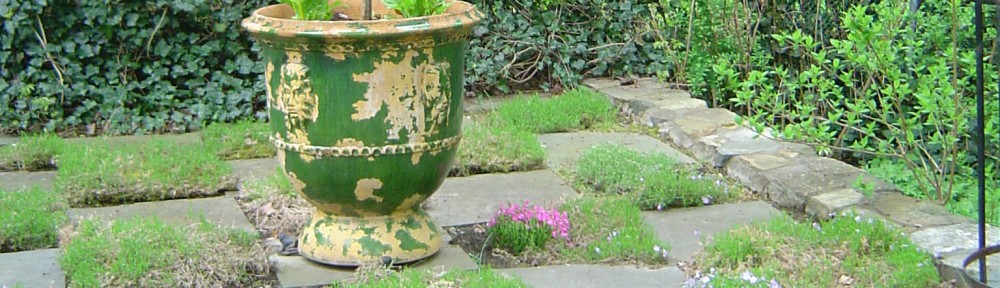
The creeping phlox in the checkerboard garden are beginning to flower. This is always a very precious interlude and I’m very glad I designed it so many years ago.

Over the past weekend, cool weather greens were planted in the vegetable bed. With the greenhouse emptied and cleaned, the new self-watering pots were installed and planted up with tomato plants. They are now sitting pretty in the confines of their glass house. Such luxury.

Everywhere in the garden, buds are plumping up. The pulse quickens at the sight of old flower friends returning for their annual stay. I feel very privileged.

The garden is open for business. The business of outdoor living.

Note: I’m in the following art shows. Please do visit them all. In person viewing is back – so exciting!

Arts Westchester Show’ Together ApArt.’ May 7 – August 3. Free but appointment required. In-person viewing starts May 7. It can also be viewed online but I don’t have a link as yet. I have art and poetry in this show.
 
New York Affordable Arts Fair ( New York Art Students League booth) 20-23 May. Buy tickets online. Tickets are going fast!
 
Katonah Museum Artist Association presents ‘Ricochet’. Online show. May 15 – June 13.
 
Do not forget! My garden’s Open Day is June 5. Digging Deeper on August 22. Preregistration required.
 
Come, let’s tip-toe through the tulips-
(c) 2021 Shobha Vanchiswar
[do_widget “Blog Subscriptions (Jetpack)”]
 

April Flowers

Is it just me or is 2021 rushing by? After waiting impatiently for spring, I’m surprised that it’s already the end of April. There’s a fullness in the garden that makes me stop and wonder ‘how did all this happen so fast?’ I still have so many seasonal chores to do that it feels like a race to catch-up.

The fruit trees and roses were given a good feed over the weekend to get them prepared for the hard work ahead. The pear blossoms are fully out and look ravishing. I spotted a bee flitting around them yesterday so fingers crossed that there will be a good harvest in the fall. The apple blossoms are just emerging and the fat buds stained a pretty pink are a joyous sight I’ve come to wait upon rather anxiously. All too often in past years, a sudden cold spell has kept the bees away and put paid to potential fruit.

When temperatures were predicted to dip below freezing this past Friday night, we rushed out to protect the pear trees burgeoning with bloom. Happy to report the flowers came through unscathed.

My new ‘field’ with the sedge, white violas and snakeshead fritillaria continues to delight. Forsythia and Amelanchier, in yellow and white respectively, echo the colors of the daffodils which are still going strong in the meadow. The myriad other plants are emerging strong and getting ready to succeed them with their own flowers. Spring never fails to thrill.

Out front in the perennial beds, the tulips have begun blooming and each day brings more color and excitement.

Everywhere one looks, there is new growth to see. The succession of flowers carries one through the seasons and I’m always wanting to slow the pace just so I can luxuriate a while longer with each plant at its best. Spring picks up momentum as it proceeds and it can overwhelm the senses – what a happy state to be!

As May is nipping at April’s heel, I’m trying to get the greenhouse emptied out. The pots of citrus, jasmine, gardenia and Datura have been enjoying their extended stay in warmth and comfort. But, its getting time to get the greenhouse cleaned and prepared for its summer job of nurturing tomatoes and other summer veggies. I’m very eager to commission the self-watering pots I purchased in December. They are big and should accommodate the plants very handsomely.

The new-ish oak barrel I received from a brewer friend needs to be set up for its new role as rain barrel. The old barrel served very well for many years but is now falling apart. I might still be able to salvage the bottom half and use it to house new plants that are not quite ready for permanent homes in the garden.

The new birdhouse that was set up in the front appears to have its first occupants. I spied a wren going in and out over the weekend. While I’d hoped for bluebirds, I’m content with the wrens. I just don’t want the English sparrow to become a fixture in my garden.

The vertical garden is filling up with heuchera and ferns once more. In a month, this wall will start looking lush and textured once more.

Oh! How I love Spring!

Note: Do not miss out on these opportunities!

  • My garden’s Open Day is June 5.  The Garden Conservancy has worked very hard to make Open Days happen with Covid compliant policies in place so do be sure to get all the information. I cannot wait to welcome everyone into my garden.
  • Do not forget your Mother’s Day shopping! Order now!
  • I’m super excited to be participating in Together ApArt at the ArtsWestchester’s Gallery– I have art and poems in this show. It’s a return to in-person gallery shows and that in itself is really significant. We can, once again, experience art as it ought. Your attendance will be greatly appreciated. Here too, visits require appointments – a sign of the times we live in. For those of you who live farther away, the show is also on-line so do take a look!

Some of the goings on in my garden right now –

(c) 2021 Shobha Vanchiswar

[do_widget “Blog Subscriptions (Jetpack)”