Garden Therapy

It’s hard to imagine anyone going about their daily lives and not feeling the weight of the war in Ukraine. I personally find myself unable to stop thinking about what the Ukrainians are experiencing. While, like so many others, my family and I are trying to help them and their cause as much as we can, it still feels inadequate and heart-aching. It’s difficult to get away from the sadness and horror.

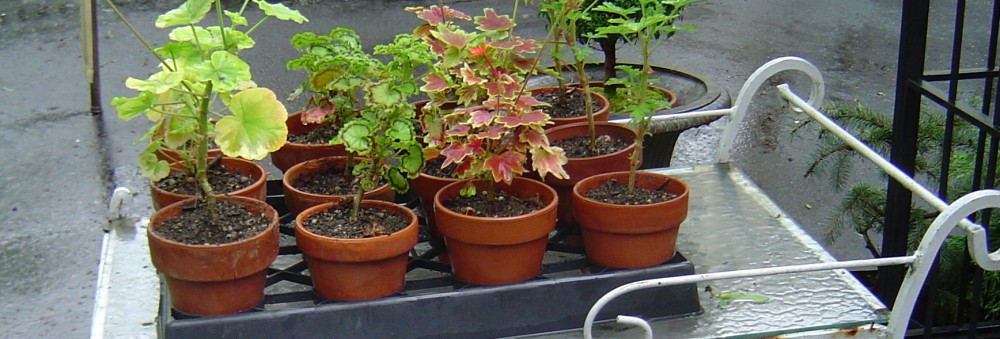
In times like this, the privilege of having a garden, however small, is very comforting. One does not often think about it but, being able to oversee a plot of earth is truly an honor and a blessing. A garden must never be taken for granted.

For one, at its best, the chance to care for a piece of earth is an opportunity to nurture and protect our global environment. One garden at a time. Imagine if every gardener applied her/himself with sincerity how big an impact we could make. As Doug Tallamy puts it, we’d have created the biggest national park in this country. Now, consider that on a worldwide level. Powerful right?

A garden helps us feed ourselves. If not complete self-sufficiency, at least partially supporting ourselves is not only gratifying but it is empowering. Recall the concept of Victory Gardens. Particularly in times of war when rations are imposed as food becomes scarce, being able to supplement ourselves from the garden can make all the difference. Going a step further, we can share the bounty with neighbors and beyond. After all, we are in this together so together we will overcome.

Working in the garden is healthy and healing. The magical combination of fresh air, sunlight, sights and smells of plants, sounds of birds and bees, the feel of the breeze on our faces and soil in our hands and, the physical work of gardening, results in a mental, physical and spiritual transformation. I cannot think of any other activity that equals the power of gardening. Can you?

In making and growing a garden, we create beauty that changes not just the local landscape but also changes anyone who works in it or visits it. Bad moods are improved, sad hearts are comforted, low spirits are uplifted and, joyous emotions are celebrated.

So, as we do what we can to help mitigate the current crisis, let us use our gardens to help ourselves and the world at large. For those without gardens, volunteer at your local public gardens or ask to assist a friend in their garden. If possible, create a garden – a simple collection of plants in pots counts. I promise, you will never regret gardening.

To garden is to keep hope alive. Gardens are places filled with optimism and faith tin the future.

Note: I’m sharing images to put a smile on your face and a spring in your step:

(c) 2022 Shobha Vanchiswar

[do_widget “Blog Subscriptions (Jetpack)”]

March Moves

Can’t you just feel the approach of spring? The light feels brighter and days are distinctly longer. As the sap rises in the trees and the buds begin to swell, the pulse quickens and spirits soar. It’s time to get moving in the garden!

Things To Do This Month

  1. Cut some forsythia and pussy willow branches for indoor forcing. Place in water and keep in a cool place until the buds are swollen. Then move them to a location where they can be viewed as the blooms burst forth. A lovely prelude to spring.

  2. As snow melts, start clean up process. Twigs and other debris can be removed. Protect the still wet areas of grass and beds by first placing cardboard or wood planks and stepping on those instead. They help distribute the weight better.

  3. Later in the month, remove protective burlap and/or plastic wrappings and wind breaks.

  4. Get tools sharpened. This includes the mower blades.

  5. Commence indoor seed sowing. Begin with the early, cool weather crops. Read seed packet instructions and calculate dates for planting out.

  6. Order plants that will be required for the garden as soon as the ground has warmed up. Let your local nursery know your needs – they will inform you know when shipments arrive.

  7. As soon as possible, once snow is all gone and soil has thawed, spread compost on all the beds including the vegetable plot.

  8. Finish pruning fruit trees, grape vines and roses early in the month.

  9. Take an inventory and stock up on whatever is lacking. Soil, gloves, mulch, stakes, twine, tools, water retaining crystals, grass seed, pots, hoses etc.,

  10. Survey the garden and see what needs replacing, repairing or painting. Schedule and do the needful.

  11. Start bringing out or uncovering outdoor furniture. It’ll soon be time to linger outdoors!

  12. Get Open Days directory from Garden Conservancy – www.gardenconservancy.org. Mark your calendars to visit beautiful gardens in your area. Come to my Open Day on May 14 between 10 am and 4 pm. I’m looking forward to seeing you!

Let’s get on with it.

Current glimpses of what’s doing in my garden –

Swelling buds on climbing hydrangea

Snowdrops braving the snow

Hyacinths coming along indoors

My watercolor of a snowdrop

Forced bulbs from a past year

(c) 2022 Shobha Vanchiswar

[do_widget “Blog Subscriptions (Jetpack)”]

Designing Seeds

I’ve been seed obsessed for a while. Each seed is a whole world unto itself. The future, yours and mine and every other life form depends on the survival and viability of seeds. Seen as symbols of hope and prosperity, the importance of seeds cannot be overstated. We know that much for sure.

And so, we harvest and collect seeds. We preserve and store. We sow and grow. Fruits, vegetables, flowers, herbs, medicinals – everything we need is sought and coveted. National and international repositories keep all known seeds for future needs and by doing so they strive to secure our future.

At this time of year, gardeners in the northern hemisphere are gearing up to sow seeds for their gardens. As am I. However, due to time and schedule constraints, I’m not planning to start too many. Instead, I’m going to make seed bombs to disperse. It’s an experiment so I’ll just have to see how it all turns out. The scientist in me is excited about the experiment. The gardener in me is skeptical – the whole thing seems a bit iffy.

My reasoning is, instead of directly sprinkling seeds such as poppies wherever one wants them to grow, seed bombs could increase the chance of success as they will hold the seeds down, perhaps safeguard them from birds, and, when weather conditions are right, supply the seeds with an immediate boost of nutrition. Sort of give the seeds a leg up. Similarly, instead of struggling to squeeze in seedlings amidst established plantings, seed bombs might serve better.

Like I’ve already said, it’s an experiment. For very little investment in time, energy and money. If it succeeds, the returns could be big. Fingers crossed. Click here for the link to the website and recipe I’ll be using to make the seed bombs.

But it is not just seeds to grow that have my attention. I’ve become deeply enamored with seedpods, heads and capsules. In examining them to paint, the diversity and ingenuity of these vessels just blows my mind. Each design is not simply functional but also very beautiful. To my eyes, they are as striking as flowers.

I’m awed by how the plants have evolved so their seed dispersing structures are exquisite in form and function.

Some plants like hellebores , drop their seeds around themselves and keep their babies close. Columbines are more about independence and spread their seeds away from themselves, giving their progeny greater freedom to thrive but still in the same neighborhood of the parent. And then there are the likes of milkweed and dandelion that let the wind carry the seeds much further away. It occurs to me that we, human parents, can identify with these methods. Am I right?!

Seeds – where would we be without them? Would we even be?

Here’s a small sampling of seedpods I’ve painted:

Swamp mallow

Baptisia, false indigo

Tree peony

Magnolia grandiflora

Milkweed

Columbine

Wisteria

Poppy

(c) 2022 Shobha Vanchiswar

[do_widget “Blog Subscriptions (Jetpack)”]

Carpe Diem!

There I was all draggy with jet lag last Thursday when presented with unexpectedly balmy weather. 51 degrees F in early February is not common and the weatherman promised three whole days of it. So what was I going to do about it? For starters, all thoughts about slowly getting back into the groove of winter idleness had to be put aside. This gift of sunshine and warmth simply could not be overlooked.

On the first day, which was also my first day back, a good walk around the neighborhood was in order. A reconnaissance of sorts – checking out my neck of the woods as though mighty changes could’ve occurred in the two short weeks I’d been away. There was a fair amount of snow everywhere with patches of tired looking terra firma showing through. Not particularly pretty but hopeful of spring not being too far off.

I returned to my own garden and noted where the snow had melted completely, where traces lingered and where it remained in quantity. I conduct a studious observation every year because all the micro-climates are revealed by snow melt. The varying amounts of light in the different parts of the garden dictate which plants are likely to thrive or struggle. Even nano-climates can be exposed. This pattern can change year to year as trees or shrubs grow or die, new constructions come up or old ones torn down. Even the introduction of a car park can influence the situation. I take mental notes and lots of photographs.

Then, keeping the approach of Valentine’s Day in mind, I decided to make the effort of creating an fun ephemeral sculpture to mark the day. Knowing the snow would melt fast in the current mild temperatures, I decided to act immediately. Using a nifty mold, I made a couple of dozen snow hearts. And then put them all in the freezer to keep for the eve of Valentine’s when the whole work would be assembled. Thinking ahead with the weather in mind is a hallmark of all gardeners. Comes in handy for other matters too.

When Saturday, the warmest of this mild spell, came along, I announced to the family ( much to their surprise) that all hands on deck would be required in the garden. Pruning was on the agenda. Grape arbor, all the climbers and shrub roses and the espaliers of fruit trees. This is a tall order. Hence the need for all available deckhands. We had this window of one day before the temperatures would plummet.

An prune we did. Honestly, it was glorious to be outdoors. I guided my daughter through her first attempt with the roses – this felt rather special to me. A passing along of lessons to the next generation.

Grapevine clippings were stored away for camouflaging the peony supports later in March. And so the day was spent clipping and cutting till all got done just as the sun began to set. Truly, the day was a divine gift. Often the task of prunings gets significantly delayed because of huge amounts of snow still in place and temperatures being very low. At other times, one is surprised by warmer weather and fails to take advantage of it. This time however, we really did seize the day.

Whilst working, I became aware of the birdsong that was keeping us company and that reminded me to clean out the two birdhouses. Which was just as well because, shortly after removing the previous years nesting material and getting the houses refreshed, I spied a wren checking out one of the houses. It too was making the most of the warm day.

I also took out the hyacinths cooling in the refrigerator and got some potted up and others into forcing vases. The joy of monitoring the bulbs as they awaken and grow is what keeps me in a very good state of mind till the garden outside comes alive.

And then, on Sunday, temperatures not only plummeted overnight, but we awoke to a most beautiful snow clad garden. What a difference a day makes.

This was a most wonderful homecoming. Jet lag lingers but the spirits are revived.

Grape vine pruning

Vine clippings to conceal the mechanics of propping up the peonies

Rose pruning lesson in progress

Bird house to be cleaned

Pattern of snow melt

Climbing hydrangea in bud

Snow hearts

The sculpture

Sunday snowfall

Hyacinths ready to go

(c) 2022 Shobha Vanchiswar

[do_widget “Blog Subscriptions (Jetpack)”]


February Fervor

February Fervor

Golden sunsets

part leaden skies

Frost and fire

earth shifts and sighs..

Wild, untamed

landscapes wait

Restless slumber

at Spring’s gate.

Crystal snow

melts in drips

Plumping roots

greening tips.

Flowing sap

send hearts aflutter

Weather and emotions

soar and splutter.

Shobha Vanchiswar

A poem I wrote a few years ago to sum up February.

I’m heading back home today after a couple of weeks in Mumbai, India. So eager to check on the garden and get the cooling hyacinths started in the forcing vases.

Note – The images below are ones I took the same February I wrote the poem:

(c) 2022 Shobha Vanchiswar

[do_widget “Blog Subscriptions (Jetpack)”]

February Foward

I’m currently enjoying some mild temperatures in Mumbai. While this is not a vacation per se it still feels good to get a bit of warmth. For reading material, I’d brought my rather large stack of garden related periodicals with the sincere intent to get through them all. Progress has been slow. But the two I’ve read thus far have certainly jolted me out of my winter induced stupor. It’s time to jump into action – seeds to get started, pruning of fruit trees, list of plants to acquire, repairs and/or replacements to be made and various other odds and ends.

Closely following the big snowstorm that blasted the northeast over the past weekend, I confess to selfishly hoping my little garden would be spared any damage. About 7 inches of snow fell – enough to be an event but certainly nowhere near a calamity. I breathed a sigh of relief because worrying from a distance is always more stressful. The imagination can be cruel.

Meanwhile, my lovely English gardening magazines reminded me that the winter aconites and snowdrops are up and blooming in their part of the world. So, here I am in 80 degree weather, reading about spring awakening in the UK and snow blanketing my garden back home. All together a bit confusing. I’m itching to get started on preparations for spring but know it is really not yet time – the feeling of urgency is only because those pretty pictures of early bulbs and seed flats full of seedlings are making me think I must be behind schedule. The pleasant warmth I find myself in only augments the sense of being tardy.

I get back home in about ten days. At that time, the hyacinths cooling in the refrigerator will be brought out and forced. That’s the sort of early spring that will actually be happening. Towards the end of the month, if weather permits and barring mounds of snow preventing moving around the garden, the fruit trees, grapevines and roses will be pruned. As March rolls up, seeds will be started. I’m eagerly awaiting the rather charming cart ordered from @gardeners – a metal number in cheery yellow with a grow light system to coax seeds to unleash their potential in the lower shelf. The top shelf I have assigned for reviving the small topiaries that get weary of the greenhouse by this time. I plan to station the cart somewhere in the house where I can monitor it closely and gaze fondly at the seedlings as they emerge. And the sunny color will surely banish any and all grumpiness.

All good things to anticipate. February doesn’t look so bleak after all.

In the greenhouse right now. (I get updates on request!)

In bloom right now

Hyacinth forcing 2021

A few of the seed sources

How cute is this cart?!

(c) 2022 Shobha Vanchiswar

[do_widget “Blog Subscriptions (Jetpack)”]

Boning Up

I love the way the garden gets defined by the snow. Snow in its stark whiteness, highlights the bones of the garden. Even as it blankets everything, it reveals the design and lay of the land. There are highlights and low-lights that emerge to give a new understanding of the effect of the various elements in the space and their relation to each other. One hardly designs a garden for the snow but it is always gratifying to see an entirely new dimension revealed by it.

Winter is always a good time to asses the bones of the garden. Devoid of foliage, the garden is laid bare for scrutiny. Too much or too little structure, a need for some additional plantings or focal point, even what alterations or repairs are necessary. Add a coat of snow and it gets even more telling. Subtle gradients can be seen more clearly, Sunlight on the snow exposes how light hits the garden. Shadows from trees and buildings tell of the extent to which they impact the plantings. As the snow melts, the different micro-climates can be observed – where it melts first and where it remains cold longer helps the gardener plant appropriately. There is so much learned.

As an artist, when painting snow scenes, I have to observe even more closely.. Exactly how the light hits the ground, the angle of the shadows, dips and inclines, areas that are either particularly interesting or too bland and discerning colors in what seems like a very white canvas.

This observation has proven even more educational than simply taking photographs. In fact, I believe it has improved how I compose my photos as well as the garden.

Best of all,, both, painting and taking photos keep me in the moment. A valuable lesson in mindfulness.

Watercolor

Watercolor

Watercolor

Watercolor

Watercolor

(c) 2022 Shobha Vanchiswar

[do_widget “Blog Subscriptions (Jetpack)”]


Put A Name On It!

As a scientist and a gardener, I’ve always found nomenclature to be very important. The scientific name of a living thing is full of information and not simply a tag by which they are referred. But, that is not what I want to discuss. I’m thinking more in terms of what words we choose to designate the spaces in our property.

To start, I cannot for the life of me understand why a garden is ever called a yard. A yard is for junk, trains, lumber, school, stock, barn, grave and such. A holding area. A garden is not synonymous with yard. When you hear the Y word, do you really ever envision a plot of land lush and lovely? But you do when you hear the G word. A yard does not imply a lovingly tended area but a garden definitely does. You see?

I have no doubt that what we name things matters. How we view, use and care for something is impacted by how we reference it. I’m not done. I have one other similar peeve.

Consider the deck versus terrace/patio/loggia/veranda/lanai. The deck sounds ordinary– functional and convenient. As a noun, it is also a part of a ship or a pack of cards. Not necessarily something that belongs to a garden. All the other aforementioned synonyms evoke an area distinctly designed for relaxation with a pleasing backdrop of plants and flowers. Am I right?

So, with that in mind, consider the various parts of my garden. Front garden with front porch looking on to it – an inviting, pretty place leading to the house. The espalier allée or peony walk on the side escorts you to the potager, terrace and checkerboard garden. Beyond, is the meadow that plays host to the greenhouse and tree-house. And coming up the other side one walks by the vertical garden. And there you have it. You just got a garden tour.

The alternate would be – front yard, side path, vegetable/herb plot, deck, back yard, plant

wall. Which tour would you want to take?

Be honest.

Note: Enjoy a quick tour of my garden

Front garden

Espalier Allee or Peony walk

Side porch

Potager

Potager and side porch above

Potager and terrace

Terrace

Checkerboard garden

Meadow

Vertical garden

(c) 2022 Shobha Vanchiswar

[do_widget “Blog Subscriptions (Jetpack)”]


Start Me Up

Day 4 of 2022 and it is finally feeling like winter. On January 1, it was a balmy 60 degrees. Given all the ‘unprecedented’ and ‘record weather’ events, it tells me to expect more of the unexpected. And we must be prepared to pivot, remain flexible and possibly most importantly, adapt to circumstances.

Meanwhile, I’m getting on with the January garden chores. Here’s to 2022 – may we and our gardens thrive and spread goodness all around.

Things To Do In January

  1. Survey the garden after every storm or snowfall. If any damage such as broken branches or torn off protection has occurred, try to fix it as soon as possible. Likewise, large icicles hanging from roof edges pose a threat to plants below: shield the plants if the icicles cannot be removed.

  2. Take down holiday decorations. Before disposing off the Christmas tree, cut branches to spread as mulch on flower beds.

  3. Keep bird feeders full. Whenever possible, keep water available for the birds.

  4. Inspect stored tubers, corms and bulbs for signs of mold and rot. Get rid of any that don’t look healthy.

  5. This is a good time to examine the ‘bones’ of the garden. Make notes of what needs developing, changing or improving.

  6. Make icy paths safe by sprinkling sand or grit. Avoid toxic de-icing products.

  7. If ground is wet/soggy, take care to protect the sodden areas by not walking on it too much. Better yet, protect it by putting down a temporary path of wood planks.

  8. Take an inventory of garden tools. Get them repaired, replaced or sharpened.

  9. Gather up seed and plant catalogs. Start planning for the coming season.

  10. Begin forcing the bulbs kept cool since late fall. Time to start an indoor spring!

  11. Keep an eye on indoor plants ( in the house or greenhouse). Inspect carefully for signs of pests or disease. Act right away if either is detected. Organic practices only please.

  12. Still on indoor plants: water as needed, rotate for uniform light exposure, fertilize every two to four weeks. Remove dead or yellowing leaves.

  13. Enjoy the respite offered by this cold month.

Note: I have a painting in a global show online. Please do take look – it’s on Human Rights and there are some powerful works.The exhibition duration is from December 19 2021 till January 23, 2021.

If you like my work, do ‘like’ it and leave a comment. And spread the word to others! I’d love for a gallery to take note and give me the opportunity to exhibit the whole series. Your help in publicizing is much appreciated – Thank you!

Here’s what’s doing in and out of my garden –

Pumpkins saved from the fall for still life painting!

Watercolor

Amaryllis

(c) 2022 Shobha Vanchiswar

[do_widget “Blog Subscriptions (Jetpack)”]

Performance Review 2021

The final week of 2021. One can’t help but think about the year in review and anticipate the one to come. On my part, I’ve shifted the way I’m examining 2021 in the garden. Instead of looking at how things fared in the garden, I’m taking a hard look at my own efforts as a gardener. Instead of simply considering how weather, pollinators and pests contributed to successes and failures, I’m reviewing how my performance has impacted the garden.

In the latter part of winter, I was filled with hope and energy and got columbine seeds started. The seeds had been stratified weeks earlier and were duly sowed in starter pots. I’d hoped for a plethora of seedlings to plant in the meadow. It was a complete failure. While I’d been told by experts that starting columbines was not simple, I had not expected total defeat. Thinking back to that time, I see how I neglected to closely monitor the seed flats. I kinda let the seeds manage completely on their own as I got distracted with myriads of other seasonal tasks in the garden. Well, I shouldn’t have been surprised when not a single seed sprouted. What I’ve learned is that I shouldn’t take on something I don’t have the time/skills/conditions required. While this effort was not a big financial investment, it was a very visual reminder of my gross negligence. I’m duly shamed.

When the weather gets too warm and humid, I always retreat indoors. It’s not only very buggy and uncomfortable to be outside but, conditions are ideal for migraines to plague me. I’ve learned to be preemptive and stay inside. This year, the summer atmosphere was mostly unpleasant. We had weeks of bad weather. I barely got in the garden and endlessly complained about how the weather had created unhealthy conditions for the plants. But I took no personal ownership. I should’ve found moments in the cooler periods in the early hours of the mornings to do a pest check, some staking or a spot of weeding. I could’ve helped the beleaguered plants in pots by feeding them weekly (instead of sporadically) to counteract the loss of nutrients by the incessant rains. I admit I used the excuse (valid as it was) of migraines to conceal my laziness. Ashamed I am. Thoroughly.

On the positive side, timely pruning and trimming resulted in those plants looking healthy and happy. My foray into hot colors for the potager and terrace was very successful. Due diligence resulted in a very good grape harvest. The plants that were too vigorous and smothering their neighbors were dealt with – creating more breathing space all around. I finally addressed the wisteria that was in the wrong place and replaced it with a magnolia espalier. The wisteria is now in a friend’s garden where it has a much more suitable home.

Open Day and Digging Deeper were not only successful but brought me so much joy to once again be amidst like-minded, garden crazy people. My kind of folk.

I’ve begun taking steps for next year. Inspired by the stunning flowers I saw in other gardens this past year, I’ve ordered dahlia tubers for the first time. I’m hoping to source and order flats of native columbine seedlings for the meadow. If I can get them early enough, I will nurture them along responsibly. In the coming weeks, I plan to get organized and ready for spring. And I’m creating a game plan to mitigate my laziness.

And now, the greenhouse beckons. Some faffing and fussing is in order.

January

February

February

March

April

April

May

May. Marco Polo Stufano, Timothy Tilghman na his wife Renee visit.

June. Open Day

July

August

September

October

November. Bulb planting.

December. Gifts from the garden.

(c) 2021 Shobha Vanchiswar

[do_widget “Blog Subscriptions (Jetpack)”]